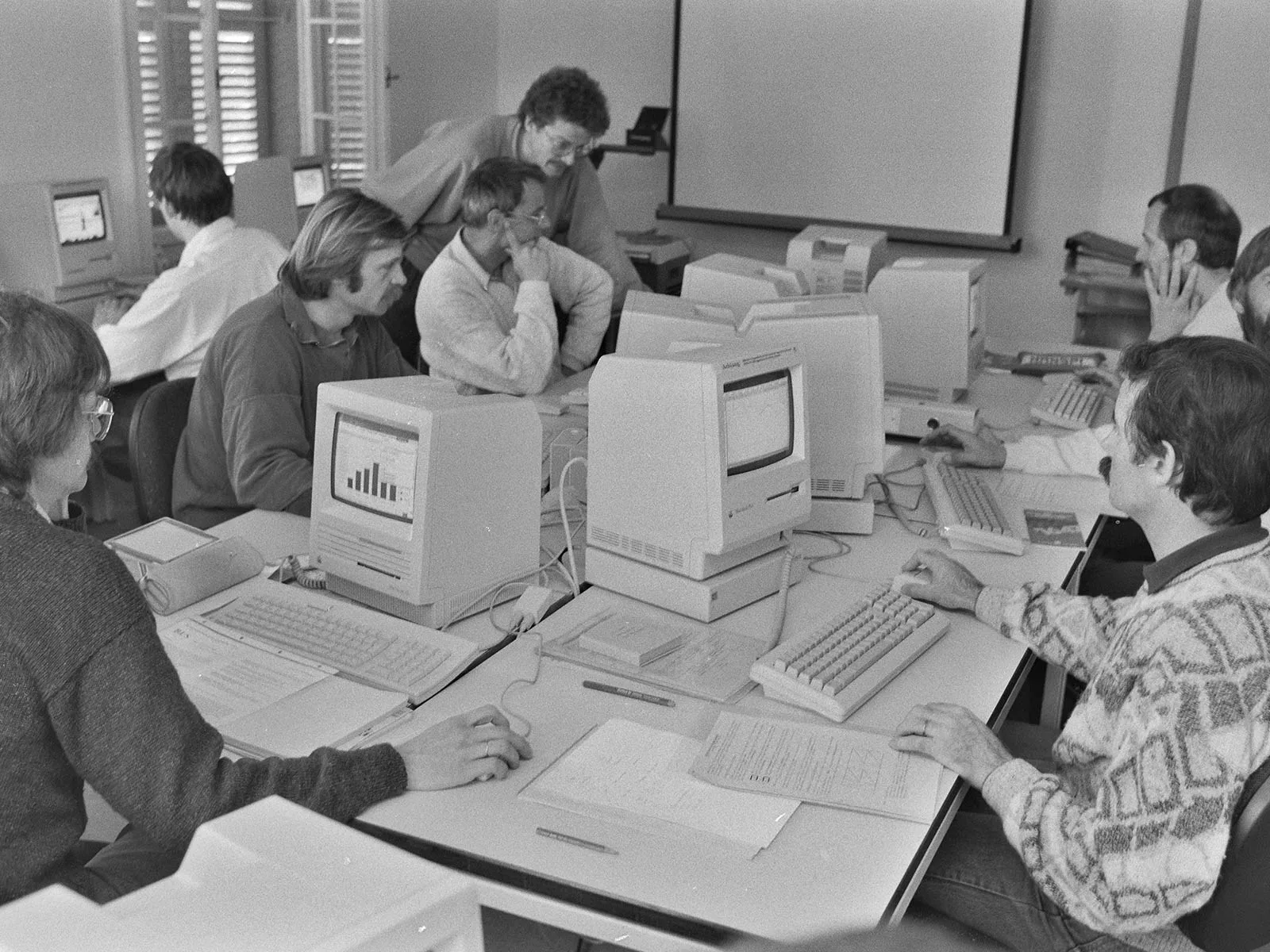
Computer training for Bern’s teachers in Köniz, 1990.
Computer training for Bern’s teachers in Köniz, 1990. Swiss National Museum / ASL

Bern: an early mover in the classroom technology revolution

The canton of Bern introduced information technology as a subject in schools during the 1990s and organised computer training for teaching staff. It was one of the first cantons to embrace technology in education.

Andreas Walter

Andreas Walter

Andreas Walter reads history of the contemporary world and ancient world studies at the University of Zurich and works at the Schaffhausen State Archive.
March 1990: a small room in Köniz, canton of Bern, full of tables and computers. The men look attentively at the screens in front of them while they carefully move the mouse around. Contrary to first appearances, this is not a computer club in session but a training course for teachers.
The scene is observed by journalists and press photographers (see box). They will report later on the project to introduce IT classes to schools. Other training rooms were set up in the canton and new computer systems were purchased with CHF 950,000 of cantonal funds. The idea was to bring computer training to teachers and facilitate the introduction of IT as a new school subject in primary and secondary schools.
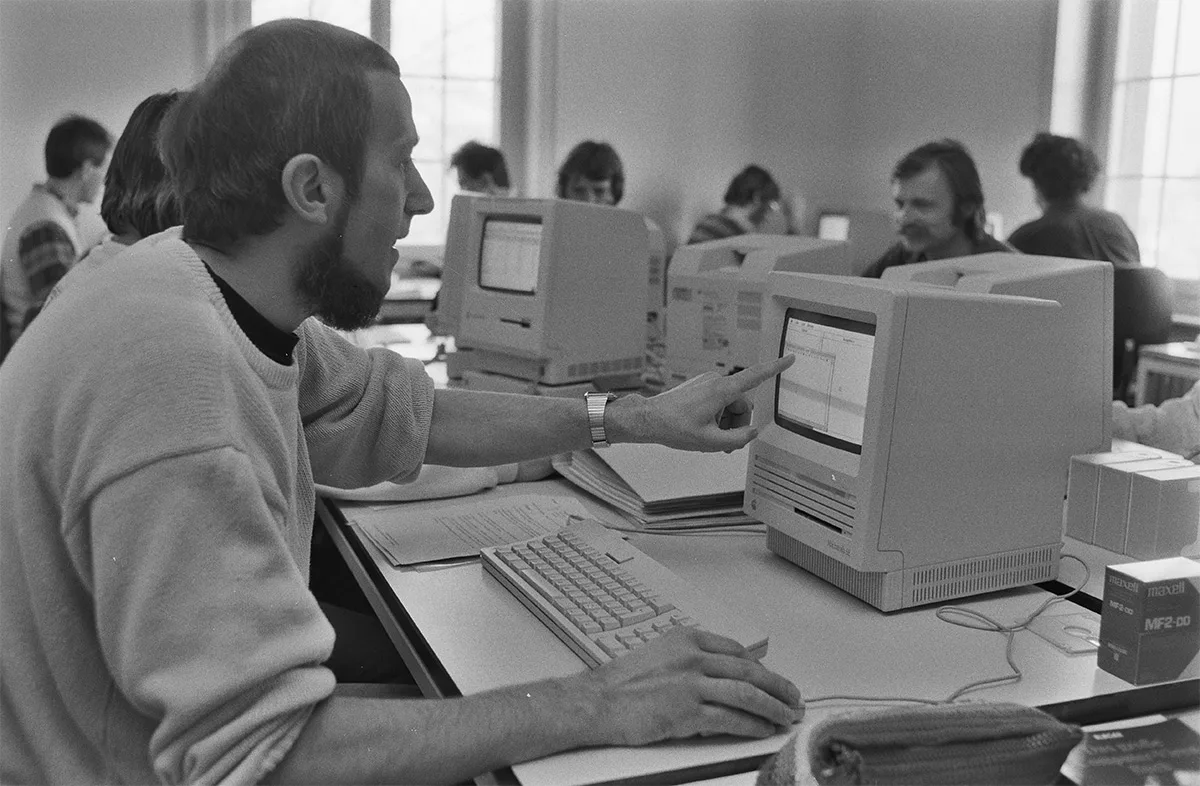
Is that the cursor? Teachers also had to familiarise themselves with computer programs.
Is that the cursor? Teachers also had to familiarise themselves with computer programs. Swiss National Museum / ASL
The plan was to organise a phased integration of IT classes. By 1995 all schools in the canton were to have sufficient numbers of adequately trained teachers and computer workstations to run IT classes as per the curriculum. The aim was to incorporate IT into the school study programme over the long term and make it a part of normal lessons. Some experts took a critical view of the use of computers, calling them a mere “tool”. They wanted IT lessons to include a deeper understanding of how computers work including learning programming, similar to the way science was taught. These experts argued that pupils were not to finish school without a good grounding in IT, a position that was echoed in political circles. At the same time, however, the canton did not want “little programmers with square eyes” according to the responsible Cantonal Councillor Leni Robert. That was despite the promising career prospects in the computer industry and rapid rise of the IT sector boosting future demand for technology whizzes.
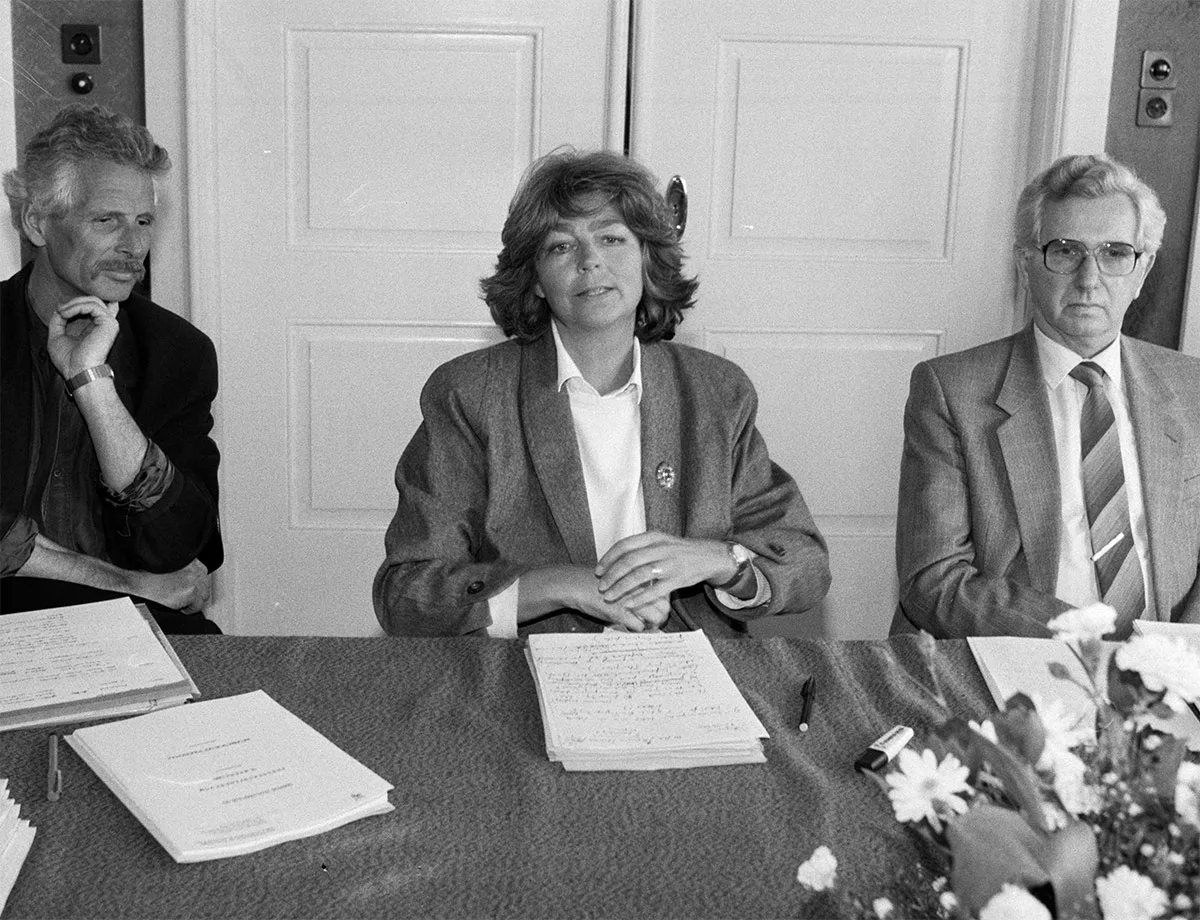
Bern’s Minister of Education Leni Robert stressed that schools needed computers at the March 1990 press conference, while at the same time advocating a measured approach to technology.
Bern’s Minister of Education Leni Robert stressed that schools needed computers at the March 1990 press conference, while at the same time advocating a measured approach to technology. Swiss National Museum / ASL

When Apple bore fruit in the classroom
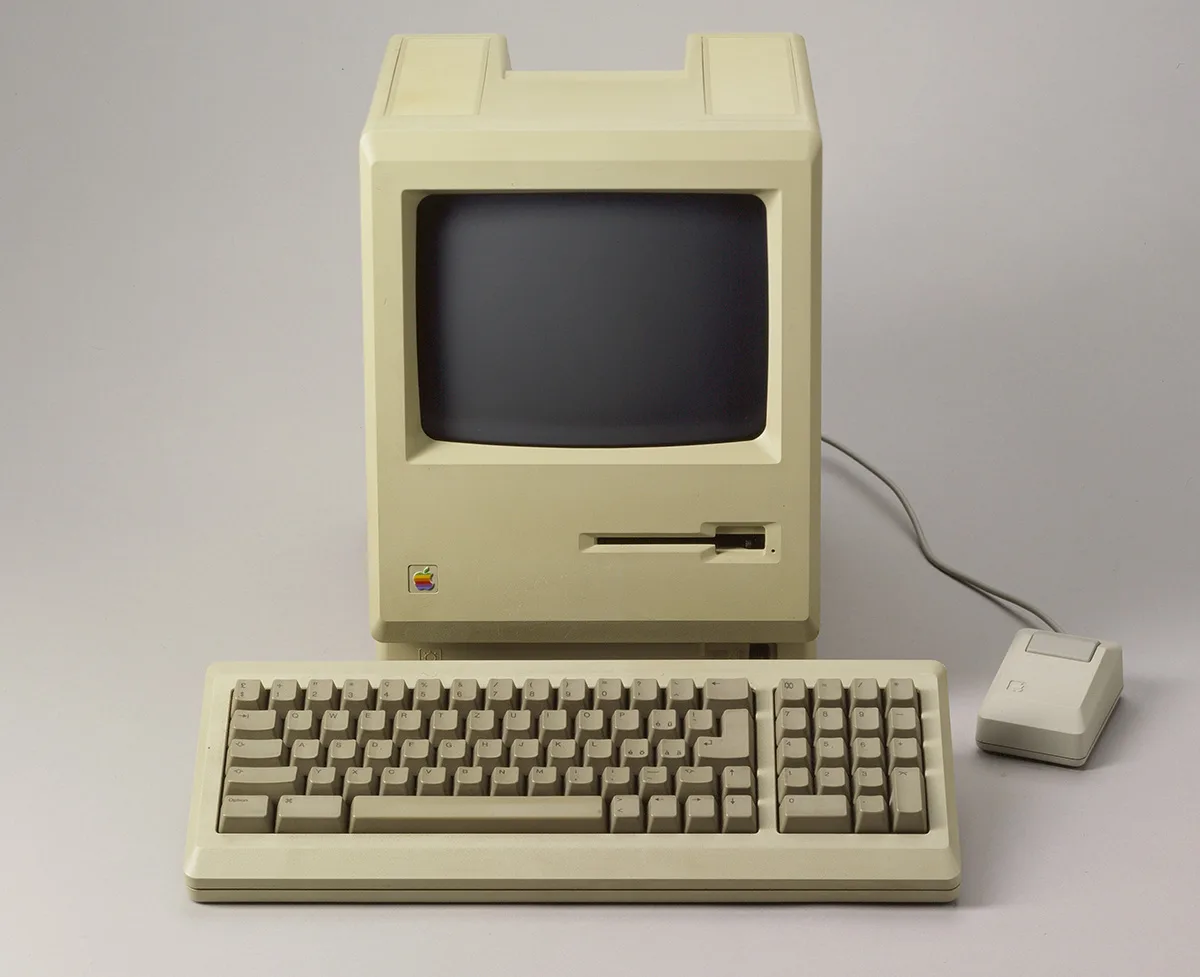
The communes were responsible for selecting and purchasing the new computer systems. The Apple Macintosh was becoming popular at the time as were the PCs with the MS-DOS operating system.
The Macintosh was marketed as the “computer for the rest of us”. It was the culmination of technical, social and economic developments going back to the 1970s when technology companies began to focus on developing more powerful microprocessors offering better value for money. At the same time technology enthusiasts – inspired by the idea of a computer for the people – backed the spread of computer technology. This led to the rise of the hobby computer for IT enthusiasts. Progress in hardware and software soon led to user-friendly and affordable computers for the home. Apple was engaged in an expansive marketing strategy at the time. During the 1980s thousands of Macs were provided cheap to universities as part of the Education Consortium programme. Over the next decade, the company invested heavily in its production site in Cork, Republic of Ireland to better serve the European markets, including Swiss schools.
The use of computers in education progressed quickly, not least due to Apple. Pictured is an Apple computer from 1984.
The use of computers in education progressed quickly, not least due to Apple. Pictured is an Apple computer from 1984. Swiss National Museum
The Macintosh was also used to train the teachers in Köniz. However, despite their compact and well-designed outward appearance, these early versions of a home computer were not yet the finished article. The Macintosh Plus that came out in 1986 was prone to overheating when used intensively due to a design fault, which damaged the hardware. That’s why the monitor in Köniz had a sticker in the top corner of the screen telling users not to place anything on top of the computer as it would restrict the air circulation.
The slow progress in bringing IT classes to schools in the canton of Bern from 1990 was not reflected in other Swiss educational establishments. According to a study by ETH Zurich in 1989, about 16,000 computers were in use – mainly in upper secondary level and vocational schools. In primary and secondary schools, by contrast, only 20 to 30 percent of pupils used computers in class.

The spread of the computer

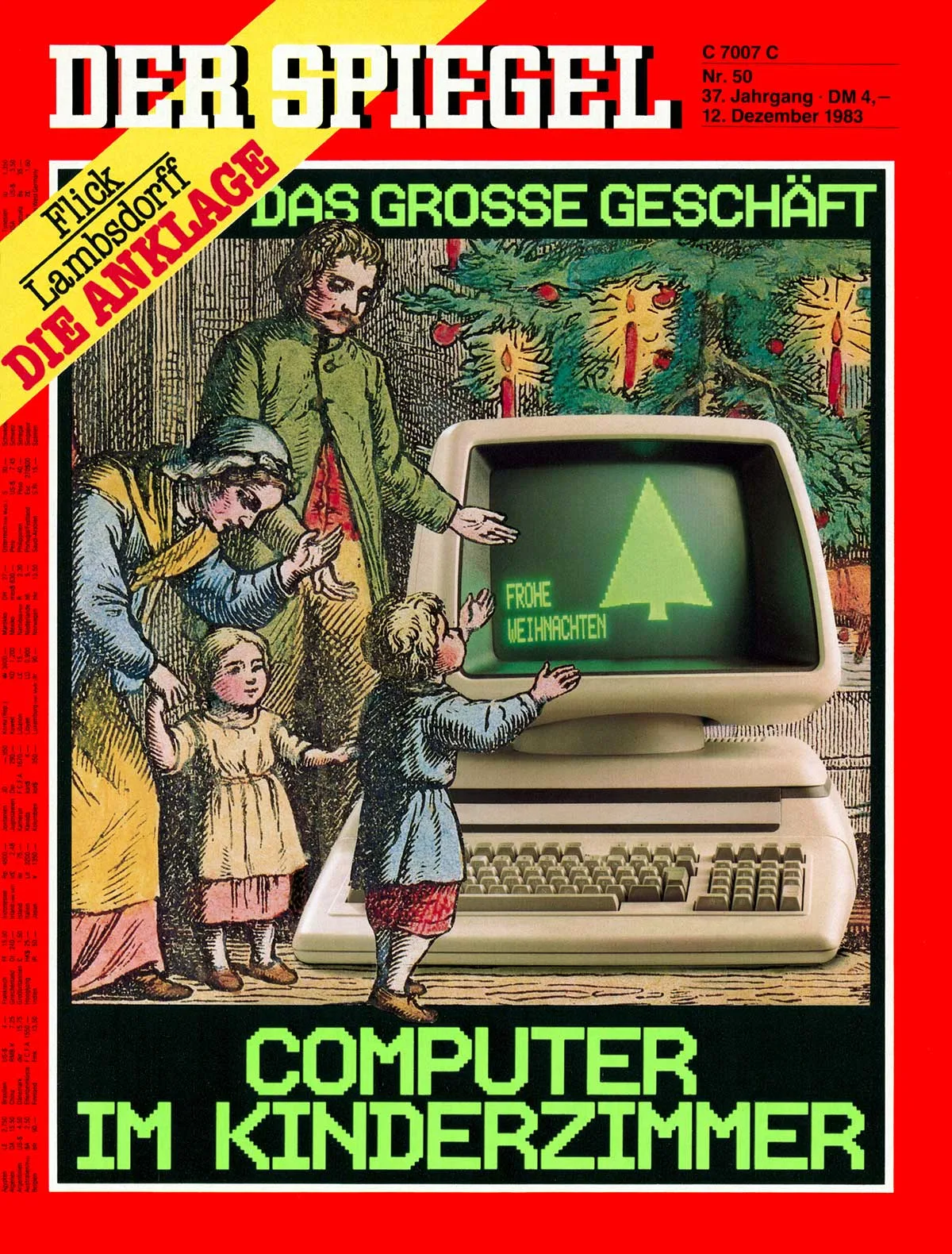
The computer proved more of a hit in the home. The Commodore 64 home computer was a top seller when it came onto the market in 1982. German current affairs magazine DER SPIEGEL dedicated its 11 December 1983 edition to the ubiquitous addition to children’s bedrooms with the title ‘Das grosse Geschäft’, which loosely translates as big business. Some young people even talked about the money they were earning from writing their own programs – riding the crest of the technology wave.
Front page of the German magazine DER SPIEGEL from 11 December 1983.
Front page of the German magazine DER SPIEGEL from 11 December 1983. © DER SPIEGEL
Does that mean the canton of Bern was playing catch-up in 1990? On the one hand, the canton qualifies as an early mover by deciding to introduce IT classes from primary school level. Moreover, the phased introduction of computers to the classroom allowed teachers to keep up to date and the machines became cheaper and more powerful as technology advanced. At the same time, the rise of the computer was an inevitability in the 1990s. While teachers in Bern were attending their IT training, more children and young people were becoming intuitively used to computers as they used them for gaming at home. The computer increasingly became an everyday item, whereby it also benefited from companies like Apple bringing computers to the masses with its slick marketing.
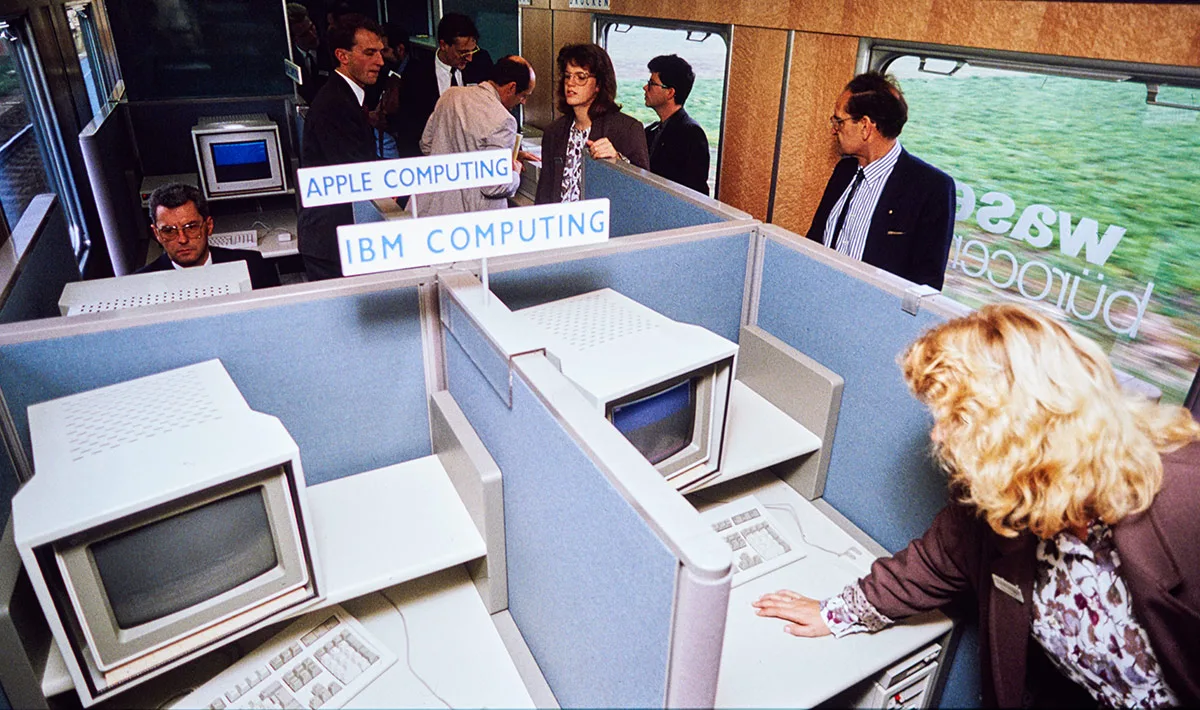
The SBB also responded to the computer boom and set up a mobile office in 1988 offering a telephone, fax and photocopier plus a PC.
The SBB also responded to the computer boom and set up a mobile office in 1988 offering a telephone, fax and photocopier plus a PC. Swiss National Museum / ASL
The introduction of IT to the classroom was thus not solely due to a forward-looking education policy. It was more part of a larger technological and social – as well as economic – development, which is still going on today.

The press photo agency ASL

Actualités Suisses Lausanne (ASL) was founded by Roland Schlaefli in 1954, and until its closure in 1999 was the leading press photo agency in western Switzerland. In 1973, Schlaefli also took over the archive of Agentur Presse Diffusion Lausanne (PDL), founded in 1937. The holdings of the two agencies comprise approximately six million images (negatives, prints, slides). In the broad range of subjects covered, there is a focus on federal politics, sport and western Switzerland. The agency opted not to take the step into the digital age. Since 2007, the archives of ASL and PDL have been held by the Swiss National Museum. The blog presents, in a loose chronology, images and photo sequences that particularly stood out when the collections were being recatalogued.


Further posts