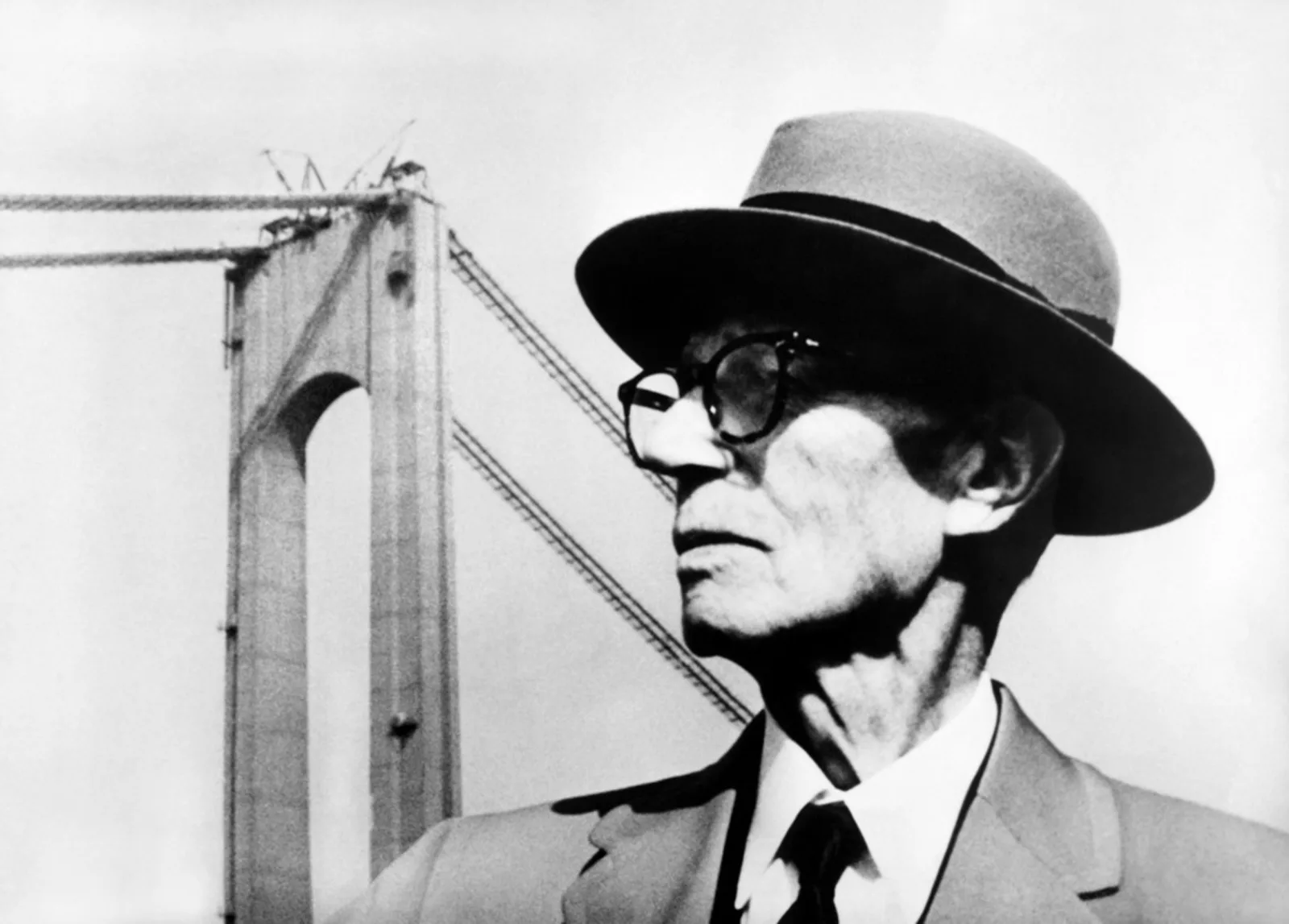
The bold ambitions of engineer Guillaume Ritter
In the late 1860s, the rural canton of Fribourg was staking everything on industrialisation. Guillaume Ritter, a young engineer from Neuchâtel with bold plans for revolutionary ‘long-distance mechanical power transmission’ therefore came along at just the right moment.

Thomas Weibel
Thomas Weibel is a journalist and professor emeritus of media engineering.
In the 1860s, Fribourg was not a prosperous city. The main goods traded were livestock, cheese and wood. The economy was dominated by agriculture, with straw plaiting workshops, tanneries and mills dotted about. Most of the population was poverty-stricken, and the number of households reliant on poor relief funds was growing all the time. As the prefect of the Sense district wrote in a report in 1864, there were fears that riots could break out. A reader’s letter published in the newspaper Le Confédéré on 9 October 1867 even warned about “a great danger if the problem of widespread poverty among the working classes [was] allowed to fester for much longer.” The canton was pinning its hopes on modern industrial companies, with the railways powering industrialisation. The cantonal authorities therefore started building the first railway line in 1856, and the Bern-Lausanne line that passed through Fribourg opened in 1862.

The central location of the medieval city of Fribourg seemed ideally suited to Ritter’s lofty plans, which included building huge grain warehouses and making the city a key trading centre for the European flour trade. He dreamed of building a holiday resort on the bank of the new reservoir, including a restaurant, a music pavilion, a casino catering to 50,000 tourists a year, and a railway to travel the 13 kilometres to the summit of La Berra at 1,719 metres altitude.

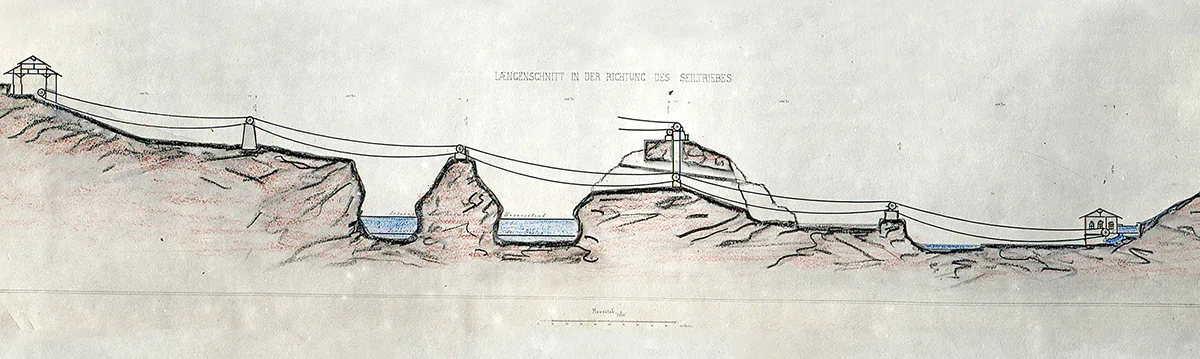
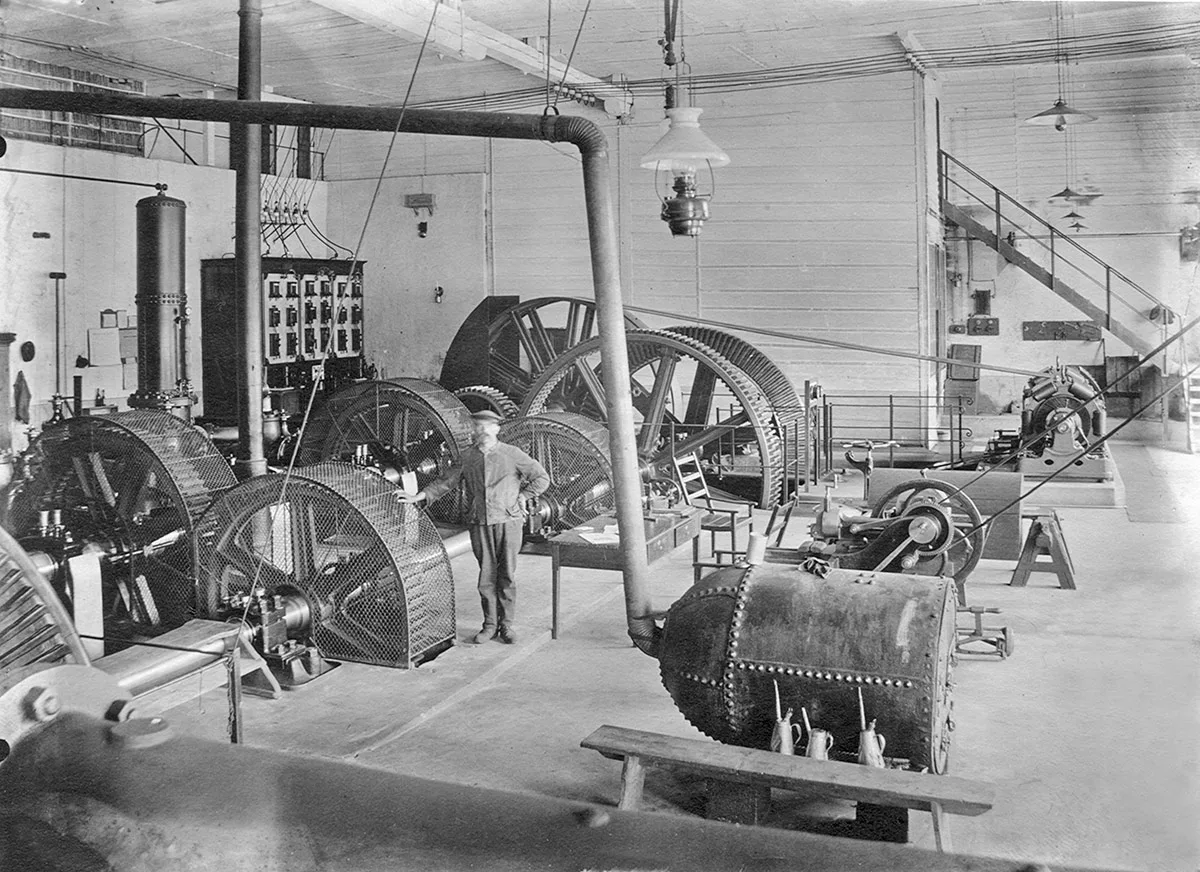
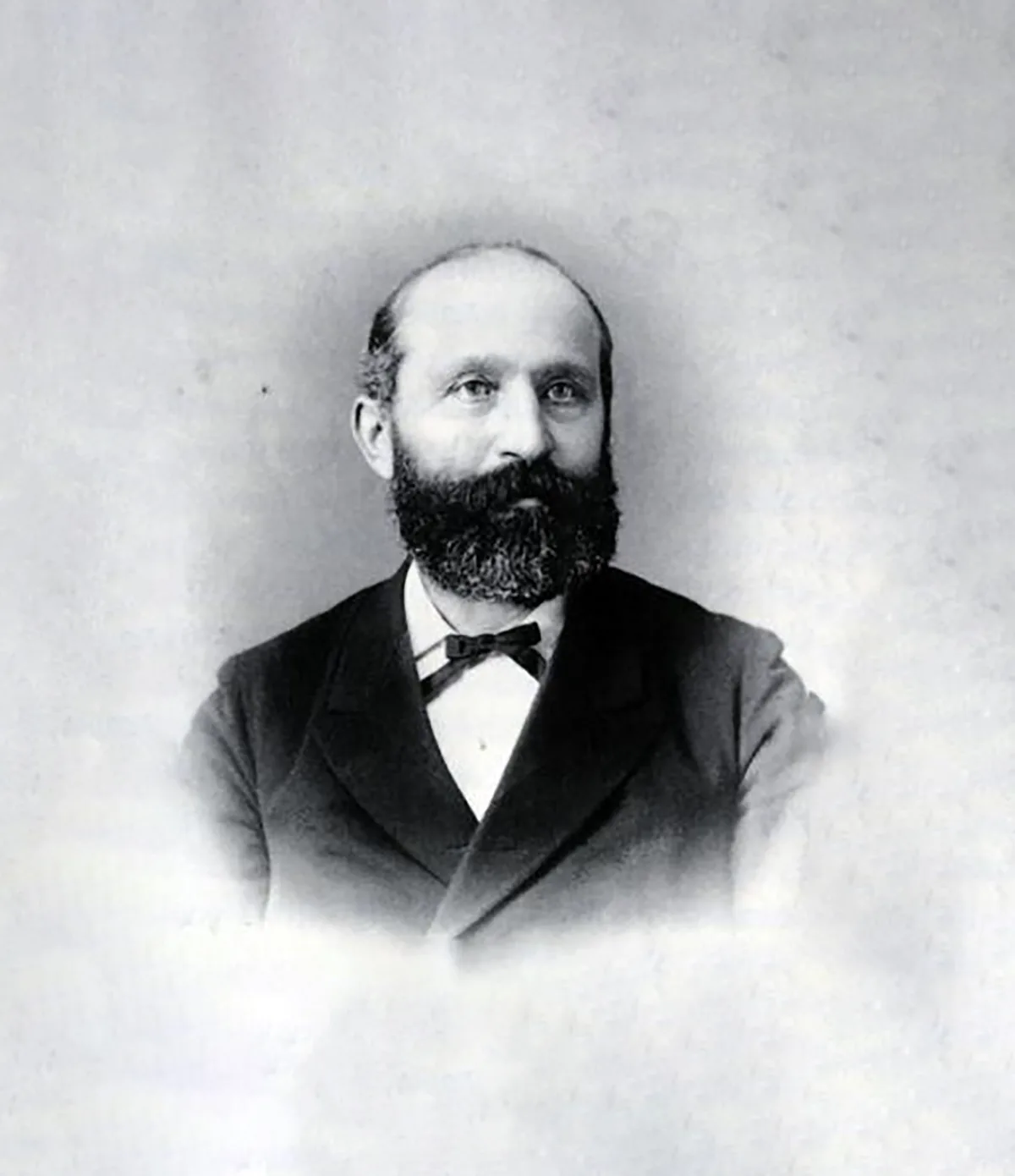
During the liquidation of Ritter’s company, the city and Canton of Fribourg found themselves at loggerheads. The cantonal authorities wanted to prevent the new industrial facilities in the Pérolles district being handed over to the city. They negotiated in secret and ultimately bought up the General Water and Forestry Company. As the new owner, the Fribourg Cantonal Council decided to dismantle the steel cables and pillars and instead to use the Pérolles power station to produce electricity. Ritter’s erstwhile company became the Freiburgischen Elektrizitätswerken, which eventually gave rise to the modern-day Groupe E in 2006.
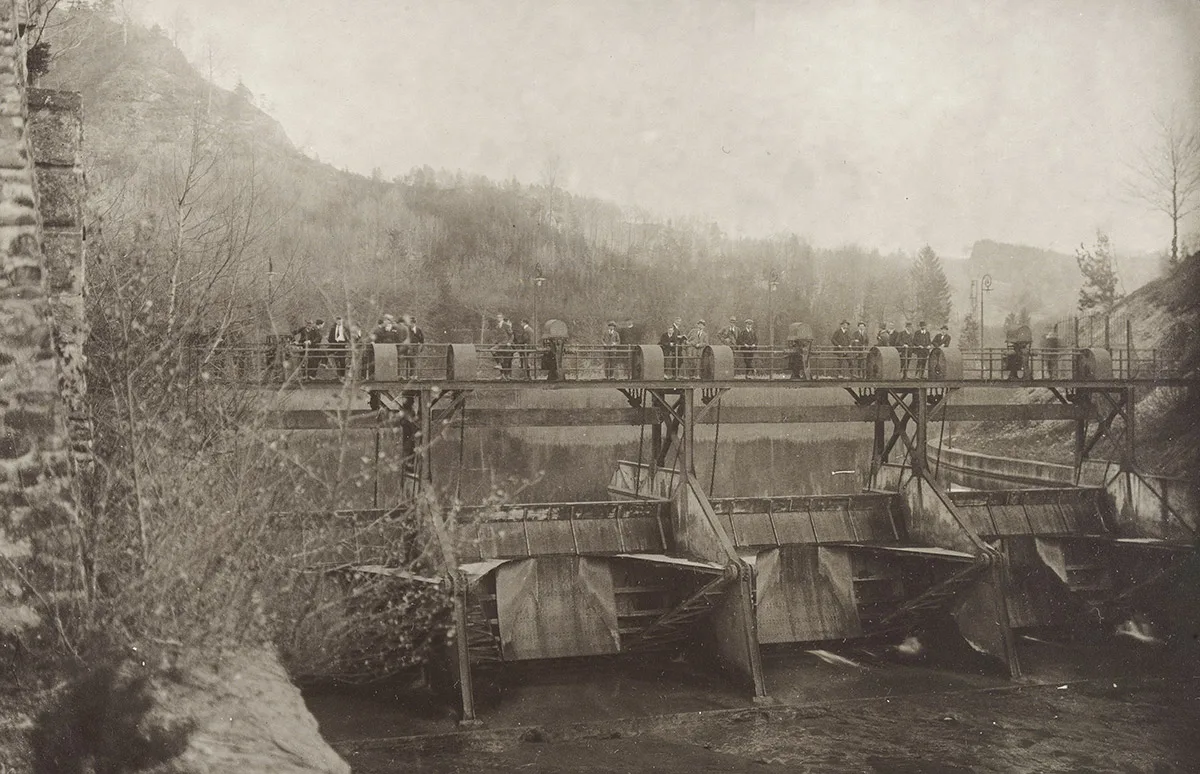

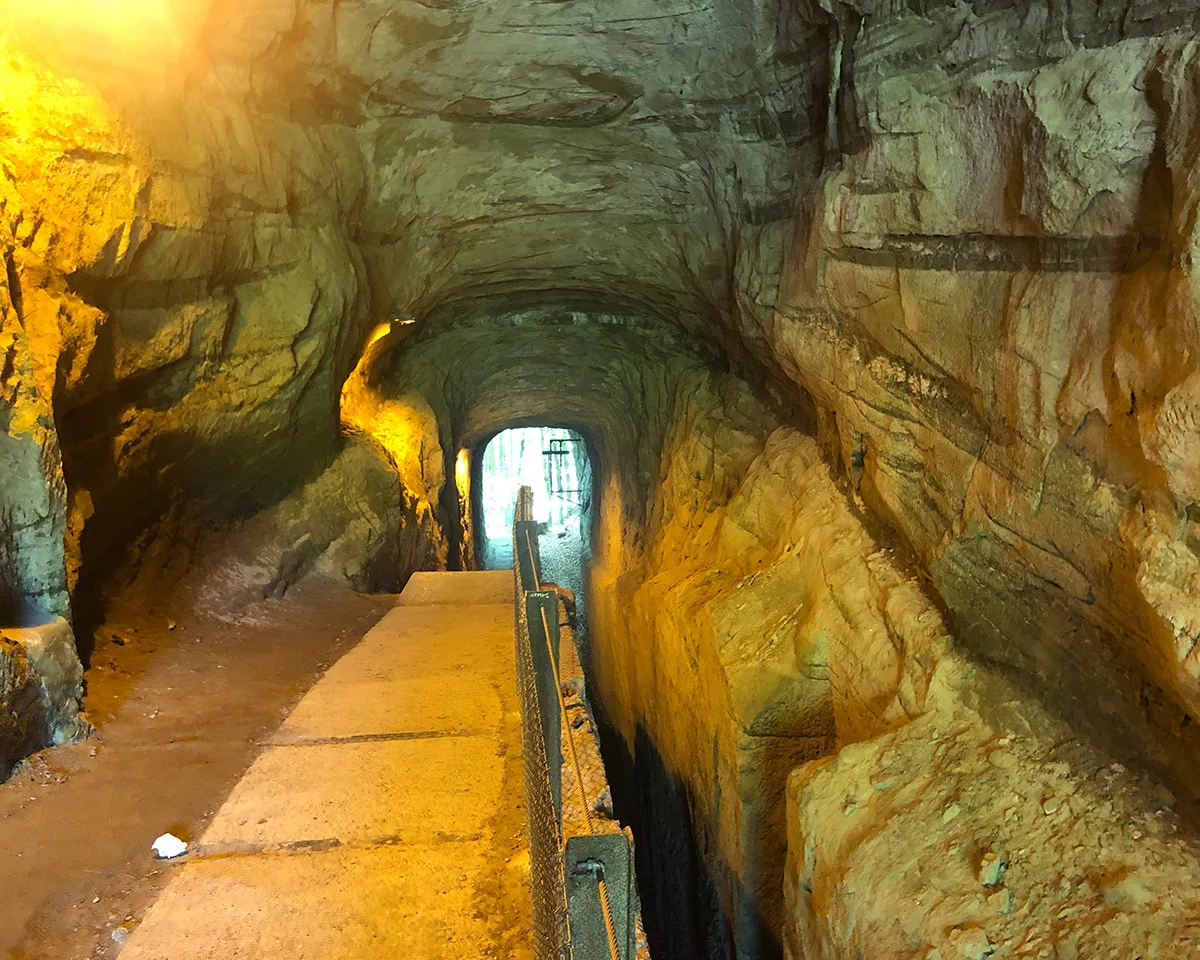
Vestiges of the past: the foundations and cable galleries of Guillaume Ritter’s former construction.