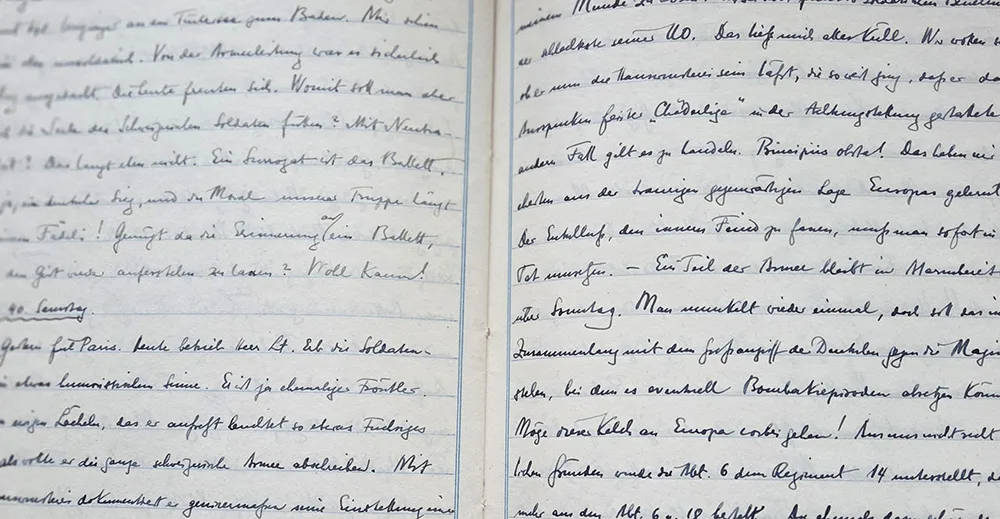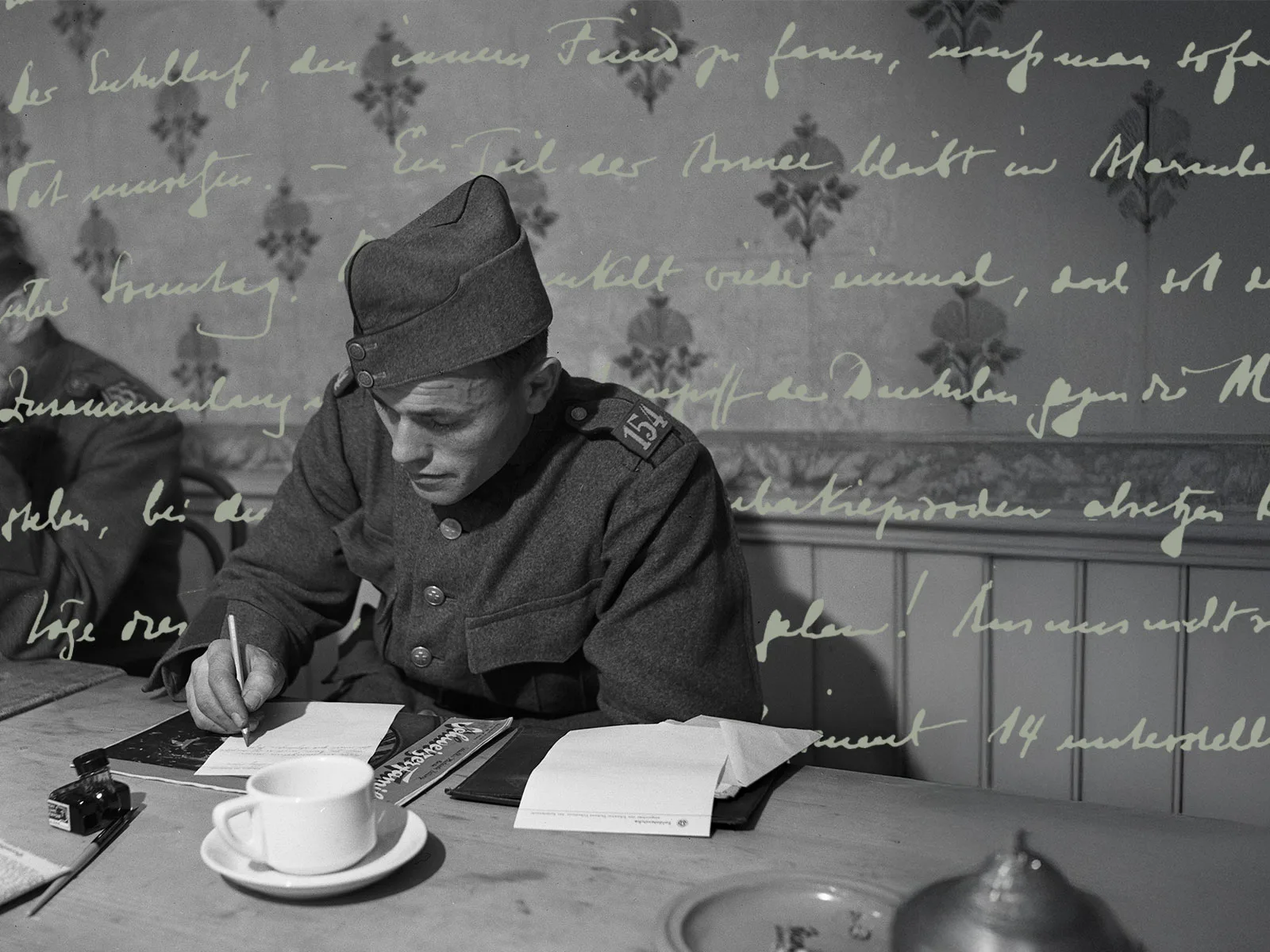
Letter-writing was part of everyday life during the Second World War, as depicted in this photo from 1942. Some people, like Marcel Beck, also wrote diaries.
Letter-writing was part of everyday life during the Second World War, as depicted in this photo from 1942. Some people, like Marcel Beck, also wrote diaries. Photos: Swiss National Museum, Jakob Tanner

Hammer and sickle on the Gotthard

Medievalist Marcel Beck kept a diary throughout his military service. It reveals a different, rarely seen side of active service during the Second World War.

Jakob Tanner

Jakob Tanner

Jakob Tanner is Professor Emeritus of Modern History at the University of Zurich. Between 1996 and 2001, he was a member of the Bergier Commission.
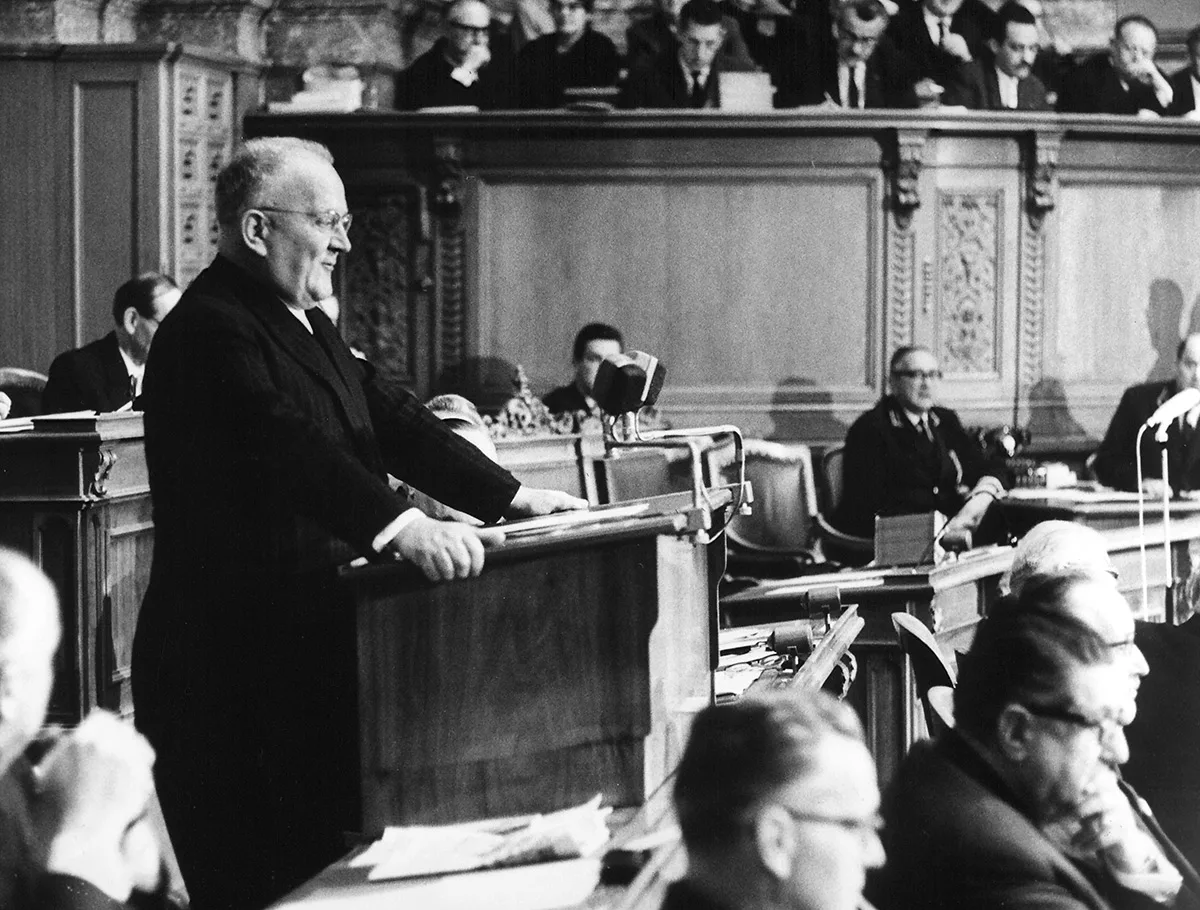
Medievalist Marcel Beck was known to be argumentative and made no attempt to keep his political views to himself, not even when teaching as a university professor. He was given to offering a sweeping critique of world politics and of the federal political apparatus in Bern at the start of each of his lectures on Byzantine studies. These were known at the university as “Beck’s booming weekly review”.
Born in Bogotà in 1908, Beck studied history, ecclesiastical history and classical philology in Geneva, Zurich and Munich from 1926. After earning his doctorate, he worked at the MGH Institute in Berlin until 1935 on the Monumenta Germaniae Historica, a large-scale German project devoted to publishing critical editions of medieval source material. He then moved to Freiburg im Breisgau, where he spent the next two years as a research associate. In other words, Beck was living in Germany when the National Socialists seized power and he witnessed their use of force in establishing a dictatorship. He returned to Switzerland in 1937, joining the staff of the National Library in Bern.
Beck accepted a professorship at the University of Zurich in 1947. He made a name for himself during the Cold War as a trenchant critic of Swiss historical myths and neutrality. He was a member of Zurich’s Cantonal Parliament from 1955 to 1963, representing the Democratic Party, before gaining a seat on the National Council in 1965. He stood again in 1967, this time as an independent candidate, but was not re-elected. Beck retired as a professor in 1978 and passed away in Winterthur in 1986.
Marcel Beck addressing the National Council in 1965.
Marcel Beck addressing the National Council in 1965. Dukas / RDB

Marcel Beck’s diary

Diary of Marcel Beck.
Between 1974 and 1976, Marcel Beck published several short extracts in the Badener Tagblatt newspaper from a diary he had kept during the Second World War, and which was subsequently believed to have gone missing. It was acquired from a private owner by Jakob Tanner a few years ago. The diary consists of a total of 9 journals, whose more than 1,100 pages are covered in dense writing.

Packed full of detailed descriptions and uncensored observations, this diary, which is being presented here for the first time, differs from the many surviving war diaries kept by military units and contains no trace of what Beck referred to in 1976 as the tendency to “see the past through rose-tinted spectacles”. It offers a fascinating insight into the world as experienced by a non-conformist conscript solider, who was always seeking to understand what was happening locally (in the “microcosm”) in terms of the broader horizons of interpretation of global politics (the “macrocosm”).

This first blog post gives an account of Beck’s experience of day-to-day life in the military and his view of the dramatic first year of the war. The second part deals with the time following Beck’s first discharge from active service at the end of 1940 and focuses on the political projects for the future in which he was involved.

Memories of active service

Corporal Marcel Beck, now 31 years of age, reported to Battery 112 for active duty as a vehicle driver on 2 September 1939. According to his first diary entry, everyone was “resolute, knowing that it would have taken nothing short of a miracle to prevent the war.” He summed up the mood during the general mobilisation of the Swiss armed forces in the words: “Very few tears, but no jubilation either. One can say, with a certain amount of pride, that our nation shows great maturity.” Musing that the “blatant heinousness of Germany’s political leaders” was so obvious for all to see that no man “however peace-loving” could help but feel “a desire to fight,” he called on God to “protect us from this Moloch to the North.” Right from the outset, Beck expressed a strong affinity with the Allies, placing his trust above all in the grit and military clout of the British, and referring to his “faith in England” on several occasions.
Film clips of the general mobilisation in 1939 (in German). SRF
The reports in his diary jump back and forth between everyday life as a soldier and the course of the war around the globe. While amazingly well informed about how events were unfolding elsewhere, the writer took a loftier stance when delivering his judgement on army routine. Initially, he wrote about things that surprised him. To solve a pressing problem, he invented a “latrine” with arm rests, which immediately proved highly popular with the rest of the battery. He complained about the lack of “sensible weapons” among the troop and hoped, at the end of September 1939, that Western Europe would “stand firm and not let itself be intimidated by grisly gestures”. These thoughts flew in the face of reality: many of those acting as military superiors were not up to the role, a fact that was causing “anger and bitterness” to grow among the ranks. Dissatisfaction with the behaviour of officers, enforced idleness and “deadly boredom” began to escalate during the long winter of 1939 and the spring of 1940.

A minor dispute over William Tell
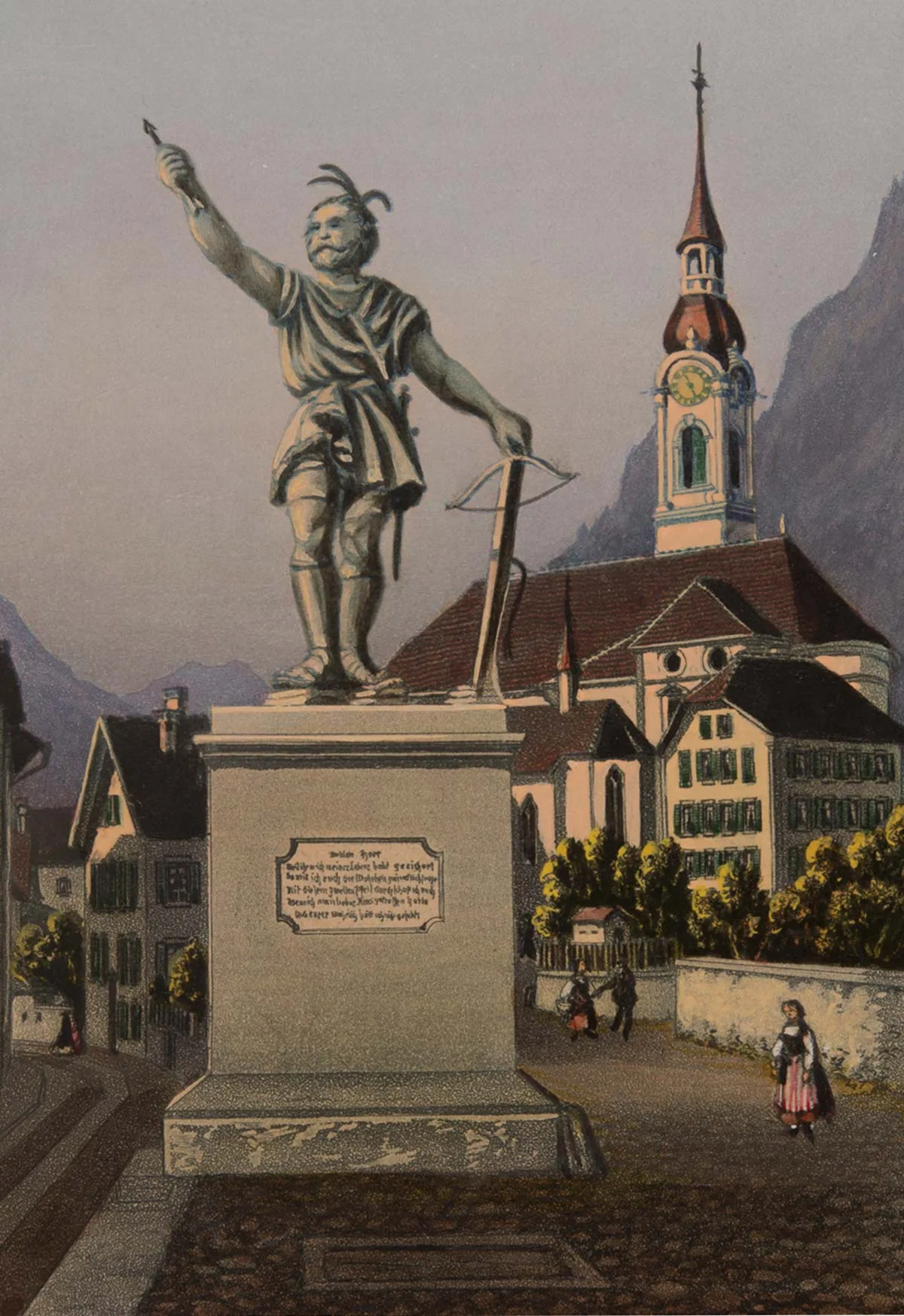
At the beginning of May 1940, there is an entry recounting a discussion about William Tell. One corporal had proclaimed that it was “all a legend”, apparently pronouncing the world ‘legend’ in high German as opposed to his normal Bernese dialect so as to lend more “gravitas” to his words. “Tell had never existed. All complete nonsense, (…) Tell was no different to Snow White”. A sergeant had then come to Tell’s defence, arguing that “the Tell Chapel and the spot where Tell had leapt from the boat could still be seen with one’s very own eyes today” and that “it was all set down in the writings of old”. Beck came to his aid, declaring that he spoke “like a man of good common sense” and like someone who had “not yet been spoiled by the rationalist methods of socialist teachers”. Because “leaving aside the fact that our forefathers were unable to gain liberation from the Habsburgs through diplomacy alone,” he felt sure that the “mettle” displayed in the Tell legend had played a greater role in helping to establish Switzerland as a nation. In which case, it simply could not “be permitted to be destroyed”. For him, Tell was “a symbol of Swiss strength (…) a reality” and there had “even been many Tells. Therefore, honour to whom honour is due.”
Marcel Beck put up a spirited defence of William Tell during an argument with his fellow soldiers. 19th-century print.
Marcel Beck put up a spirited defence of William Tell during an argument with his fellow soldiers. 19th-century print. Swiss National Museum
When the Germans launched their blitzkrieg against the West on 10 May 1940, marking a new phase in the war, Corporal Beck observed that the second general mobilisation of 11 May 1940 was met with great indifference: “It is a matter of self-protection. We have grown accustomed to alarming news. And as far as the threat of war is concerned, I expect that every man in Switzerland has come to terms with it and rationalised it to his family back home.” Beck sought to counter defeatism. It was clear to him “how terrible a German victory would be” and he believed it would be better to be swallowed up by the war “than to fall into slavery to the Third Reich”.
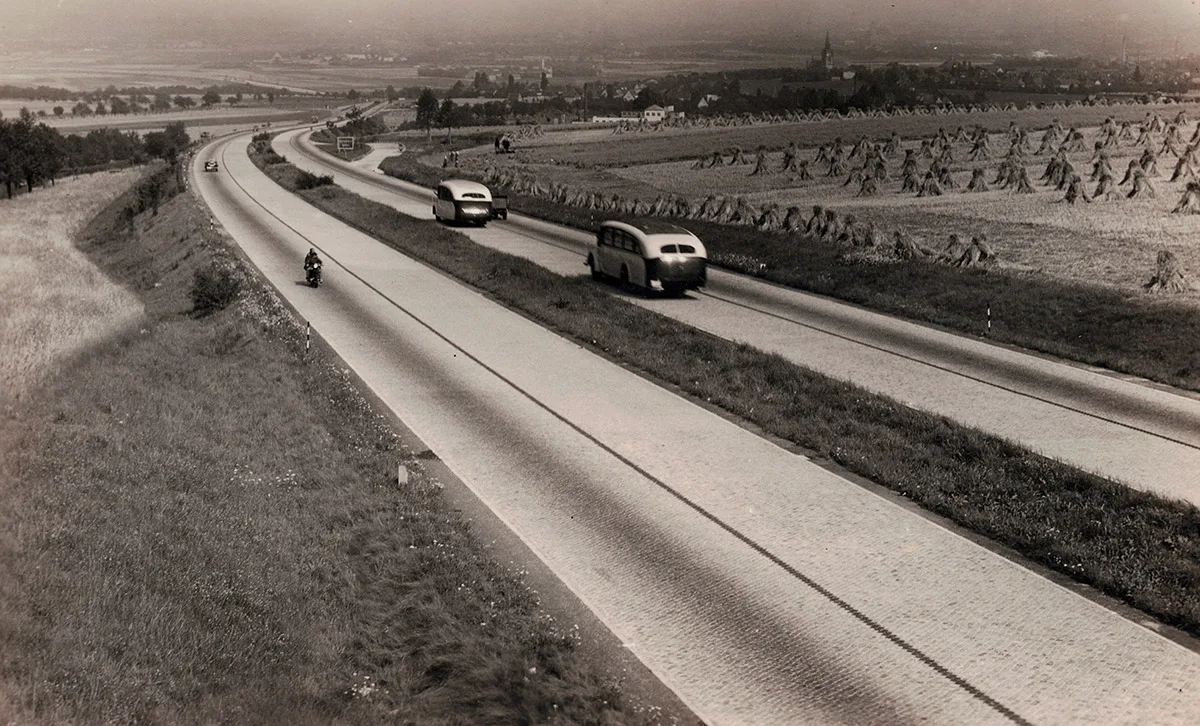
Despite invoking a “fighting spirit” and the “will to resist”, Beck also speaks of the “bitter necessity of accommodation with the Axis powers from an economic point of view”. However, he argues that such accommodation must not be allowed to transmute into “spiritual or intellectual subjugation”. He reluctantly registered the fact that not everyone in the troop was averse to the idea of “German hegemony in Europe”. Writing about Hugo Erb, the future car dealer, he noted that “Lieutenant Erb is delighted. The 20-year-old grins from ear to ear. (…) You see, Erb thinks purely in commercial terms and only of his father’s car dealership. And Germany is now the promised land of motorisation.”
The Reichsautobahn motorway system, pictured here near Dresden, promised burgeoning sales for the motor trade.
The Reichsautobahn motorway system, pictured here near Dresden, promised burgeoning sales for the motor trade. Wikimedia
On the subject of politics in Switzerland, Beck was tormented by thoughts of renewal. On 30 May 1940, when it became apparent that France was about to fall, he wrote: “More and more it seems to me that the stage will soon be set for Europe’s social foundations to be shaken to the very core.” Recounting a conversation with his wife during a short period of leave, he noted that both were already clear in their minds about where they would stand “were there to be a revolution from below here, not incited by any particular country but sparked by the force of general developments in Europe” as there were “powerful forces here needing to be discharged”. Beck sums up his convictions thus: “Hitler, the embodiment of evil, will not emerge victorious, but the world revolution will seek us out”.
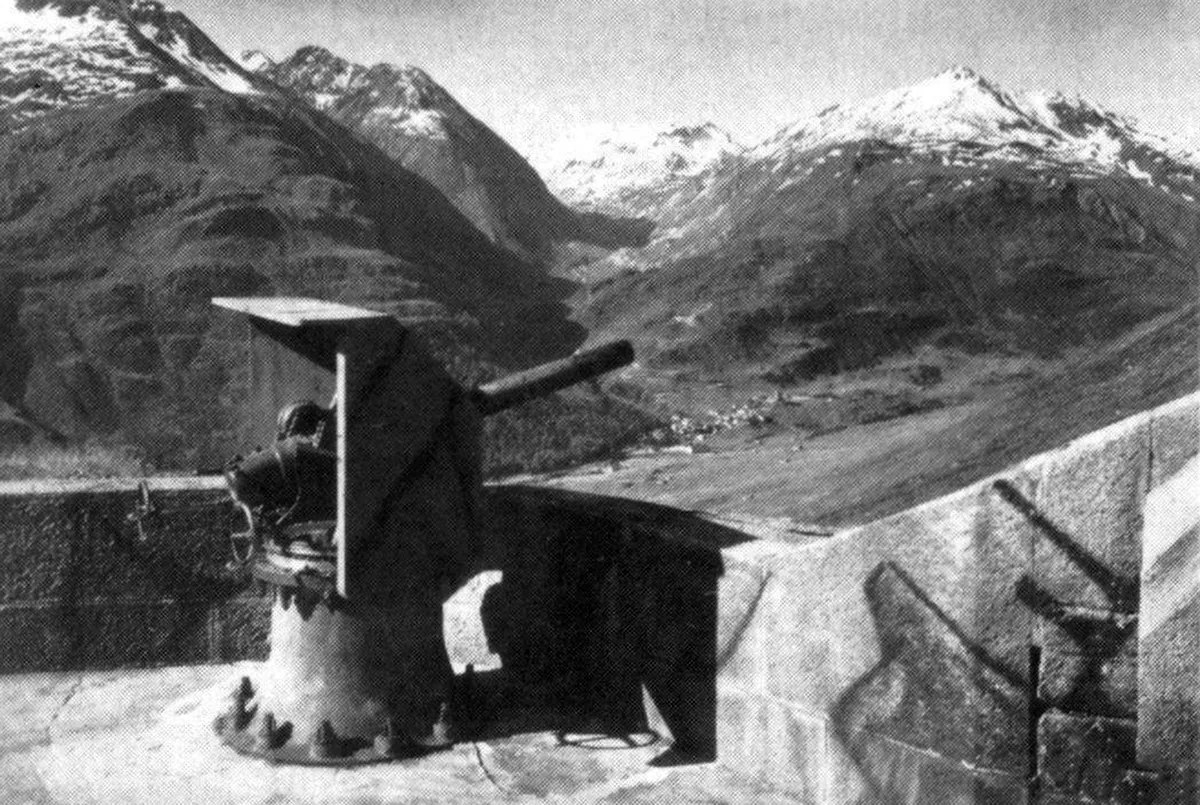
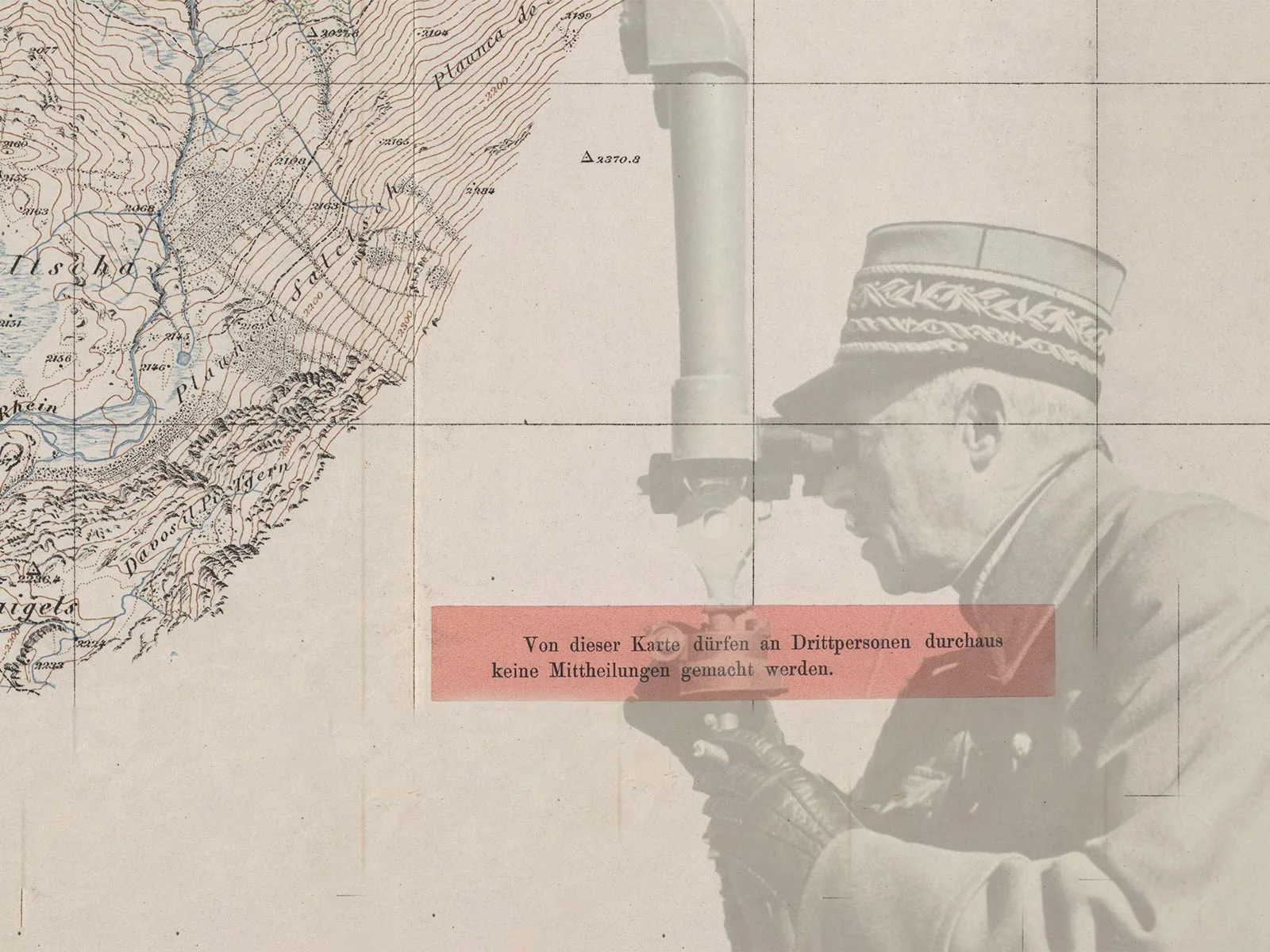
The army’s retreat to the Alps once Switzerland found itself surrounded by the Axis powers was an unspectacular affair. Three days prior to General Guisan’s announcement of the country’s defence plans in what has become known as the ‘Rütli Report’, and which Beck does not even mention in his diary, the battery moved from its base in the canton of Aargau to Hospenthal in the canton of Uri on 22 July 1940. “So, we are part of the Gotthard troops, which occupy something of a special position within the Swiss Armed Forces. Being called upon to serve the fatherland in the midst of this sublime mountain landscape fills me with something akin to pride.” Beck thought he detected the reason for this withdrawal into a hedgehog defence in the “new strategy, which the General Staff has been forced to adopt since we have effectively come to fear the same opponent on all sides.” He repeatedly contrasts the “granite majesty of the Gotthard” with the “meagre virtues of the valley”. Interaction with the local inhabitants provided a welcome change. On 31 July, for example, 16 men were “ordered to help with the haymaking at Realp. That evening, every single one of them was convinced that they had just spent one of their most pleasant days in service.”
Fort Bäzberg was part of the redoubt. Hospenthal can be seen in the background.
Fort Bäzberg was part of the redoubt. Hospenthal can be seen in the background. e-periodica
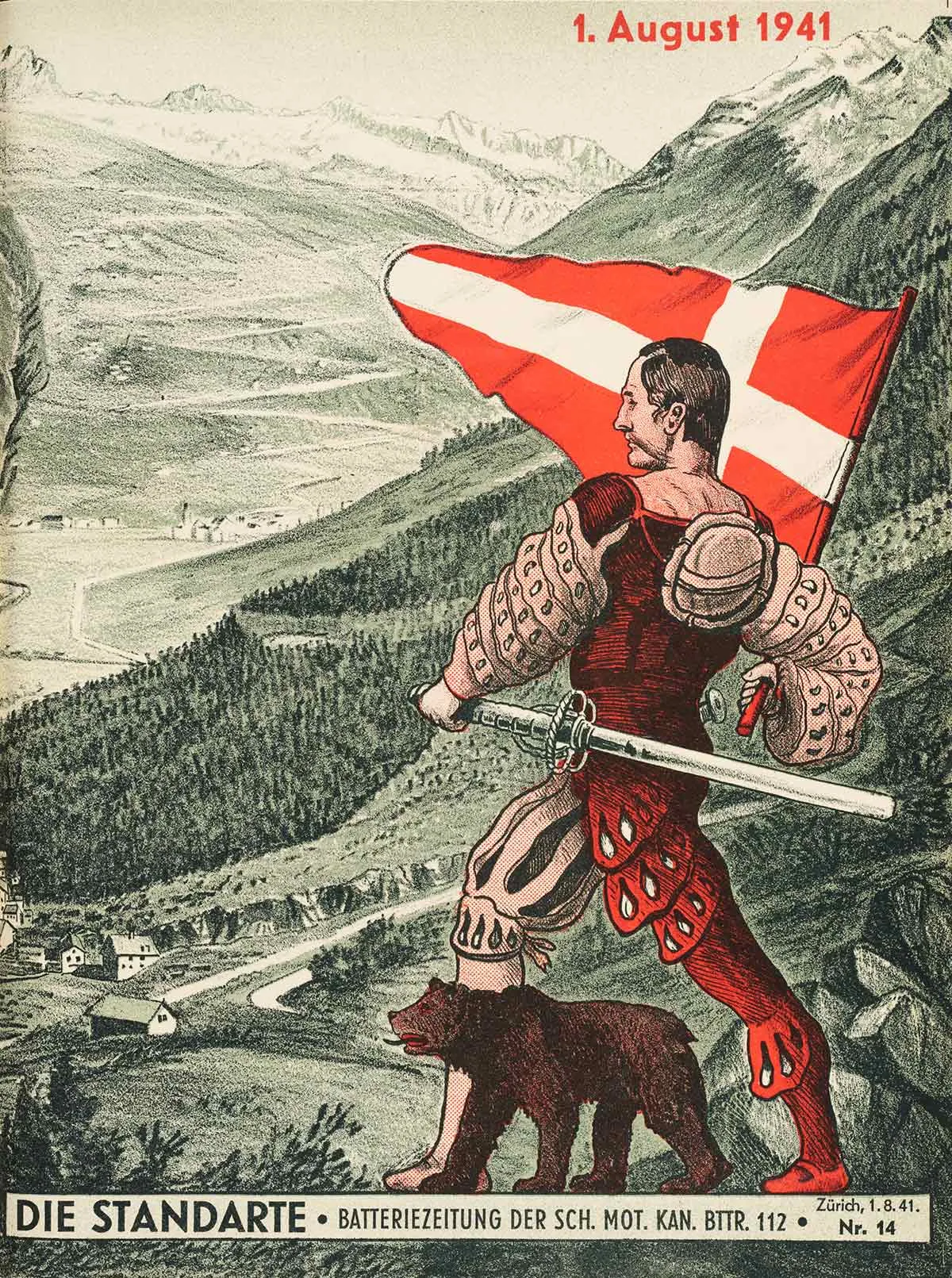
But military routine remained sobering. In addition to the daily drill – referred to as “boring for oil” – the troop built a high-altitude road. The diary contains vivid depictions of the heady mix of excessive alcohol consumption and a lack of hygiene: the “symbolism of throwing up” became coupled with a “love of dirt”. Although not unduly troubled by this, Beck did see room for improvement. Time and again, he refers to his substantial contribution to the battery’s own newspaper Die Standarte between autumn 1940 and July 1943. Seventeen issues were published with the aim of boosting the men’s morale.
The cheeky texts in the military newspaper Die Standarte were designed to boost the morale of the troops.
The cheeky texts in the military newspaper Die Standarte were designed to boost the morale of the troops. Swiss National Library, general collection
Nevertheless, Beck felt a sense of unease about the unfolding war. He saw the targeting by Swiss anti-aircraft brigades of a fleet of British bombers passing through Switzerland on its way to northern Italy as a “calamity for neutrality” that turned the concept of neutrality into “something pitiful”. Beck was concerned that many appeared to already have given up hope in the British, putting this down to an “obsession with the Axis powers” that was “simply not curable”. He implied that “circles within our Swiss government” were “well-disposed towards the Axis powers”, making them no exception. For these people ‒ “Oh you cowardly and deceitful neutrality-loving toads” ‒ the wailing of sirens only served to “stoke the anger felt towards the already unpopular British”. In light of this situation, he felt that the civilian population had undoubtedly been “left with the impression that the military had served its time. (…) The notion of the average soldier selflessly acting in defence of the greater good is on the point of disappearing.” With the military top brass failing to provide any enlightenment, speculation was running wild: “Take, for example, the labourer who believed that the barbed-wire entanglements in front of the National Bank were not there to keep out the Germans, but were meant for the workers.”
All of which put Beck in the mood for provocation. On 9 October 1940, he formed part of a small group ordered to put up kilometre stones along the newly built road. “For a laugh (…) we chiselled and scratched a hammer + sickle onto one stone. We looked forward to the storm in a teacup.” However, on returning to the barracks Beck began to have doubts. A sergeant, who served as a policeman in civilian life, explained to him that he could be “hauled before the Military Divisional Court” for that. There was nothing for it but to grasp the bull by the horns: “I will rush out first thing tomorrow and remove the fateful emblem with a hammer before any other human eyes fall upon it.” He was only partly successful – the affair would later come back to haunt him!
Marcel Beck was demobilised in November 1940, a day he had been waiting for “for one whole year.” He bid “farewell to the mountain valley” fully aware that “our troop is being discharged not as a demoralised unit but in the best frame of mind. Almost better than a year ago”. As the battery’s newspaper would continue to be published, the “life of the unit” was not coming to an end, and Beck noted that he would now “with the greatest confidence (…) start writing my ‘war diary’ on leave”.
Switzerland’s National Redoubt strategy affected Marcel Beck directly. He was a member of the troops stationed at Hospenthal (Uri) in the Gotthard massif. Excerpt from Adolf Forter’s 1948 film ‘Wehrhaft und frei’ [Well-fortified and free]. Historic Admin

Further posts