Shedding light in the dark: the lantern in front of the Kulm Hotel was one of the very first electric lights in Switzerland. Animation by Klaas Kaat. Wikimedia

The hotelier who saw the light

Johannes Badrutt sought to offer guests at the Kulm Hotel in St. Moritz a truly exclusive experience. He built Switzerland’s first hydroelectric plant and installed its first electric lighting system in the hotel dining room – and all before Edison had invented the light bulb. An historic event with unexpected results.

Helmut Stalder

Helmut Stalder

Helmut Stalder is a historian, publicist and book author specialising in economic, transport and technical history.
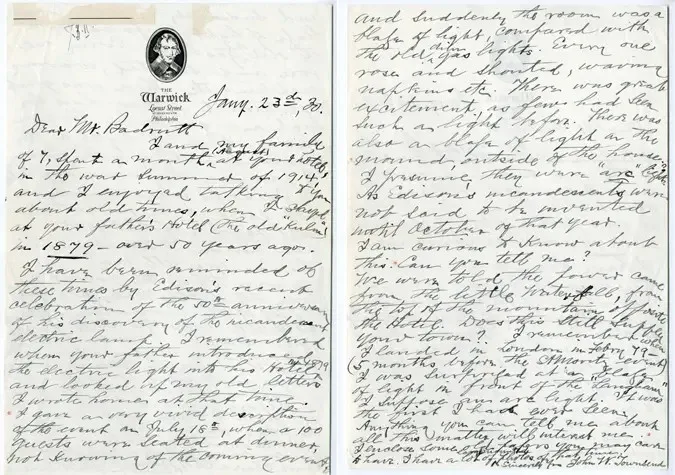
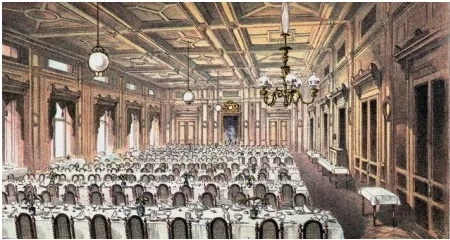
On the evening of 18 July 1879 an illustrious gathering of 100 guests assembled in the grand dining room of the Kulm Hotel in St. Moritz for dinner. Known as the premier establishment in town, the hotel attracted a discerning clientele all year round and was especially popular with the British. On this particular summer evening, Johannes Badrutt had a very special treat in store. As the guests took their places at the long table d’hôte and twilight began to fall, he switched on the lights. To everyone’s amazement, it was not the dim light of gas lanterns or paraffin lamps that shone out. Instead, the dining room was bathed in the warm, daylight-bright glow of numerous electric lights. Badrutt had installed Switzerland’s first-ever electric lighting system at his hotel. The impact was sensational, leaving the guests giddy with excitement. A certain John W. Townsend from Philadelphia was still able to recall the scene decades later: “Everyone got up from their seats, cheered and waved their serviettes in the air”. In a letter composed in 1930, and which is now part of the Badrutt’s Palace Hotel archive, he wrote: “There was a great deal of excitement as only a few of those present had ever seen such a light before.”
Letter written by John W. Townsend in 1930 describing the first electric light in the dining room of the Kulm Hotel as experienced on 18 July 1879.
Letter written by John W. Townsend in 1930 describing the first electric light in the dining room of the Kulm Hotel as experienced on 18 July 1879. Badrutt’s Palace Hotel Archive
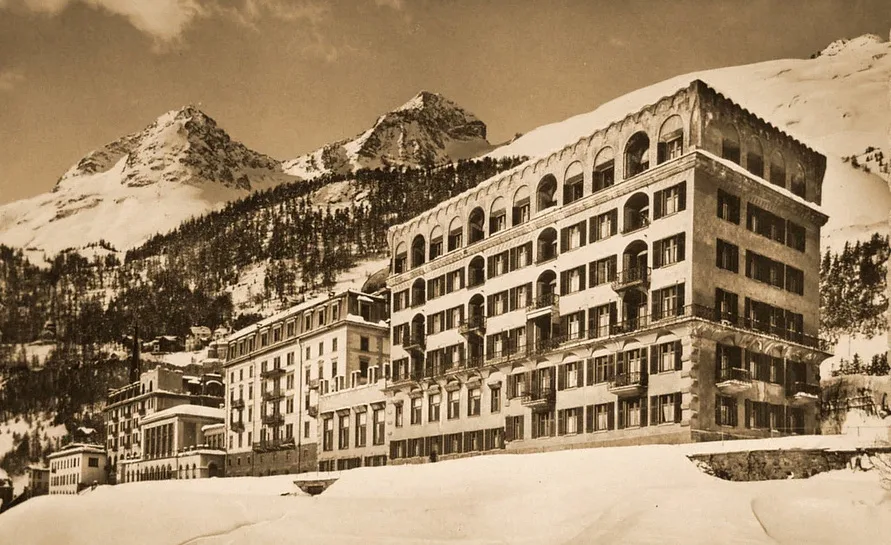
The Kulm Hotel circa 1900.
The Kulm Hotel circa 1900. Kulm Hotel

All the rage in Paris

Johannes Badrutt was a shrewd hotelier with a sixth sense for how to please the moneyed clientèle of the belle époque. Born in 1819, he initially worked in his father’s business, selling building supplies. In 1858 he sold the family home, a hotel in Samedan previously run by his parents, in order to acquire Pension Faller, a small guesthouse high above the lake in St. Moritz that he and his wife Maria Berry had been renting for some time. The railway line to Chur opened that same year, making it easier for tourists to travel to the Engadine region. Badrutt gradually built up the property, transforming it into the luxurious Kulm Hotel St. Moritz. He even kept it open for business throughout the winter and is now credited as the man who invented the winter tourist season.
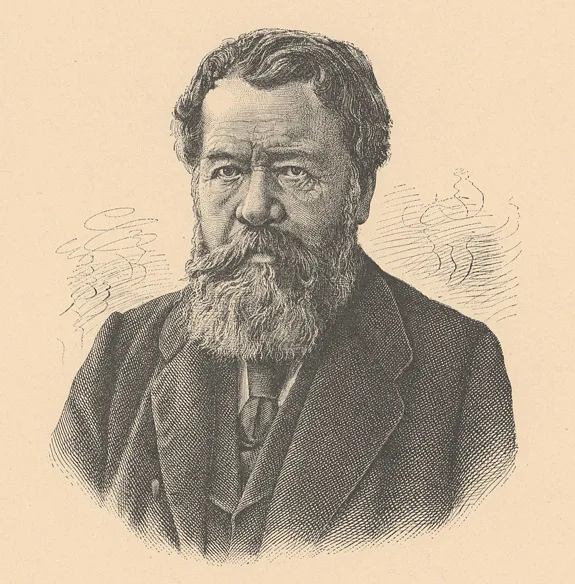
Portrait of Johannes Badrutt
Portrait of Johannes Badrutt Zentralbibliothek Zürich
Always on the lookout for the latest technical advances, the hotel pioneer visited the World Fair in Paris in 1878. The attractions at this exhibition showcasing the achievements of nations included a giant aquarium, a tethered balloon and the head of the Statue of Liberty, which France intended to gift to the United States.

But the most sensational technical invention on display was electric light. One year earlier, Russian engineer Pavel Yablochkov had lit up the interior of the Louvre building with his ‘electric candles’, a brand new type of carbon arc lamp, for the first time. Around 1,000 of these were used at the World Fair to illuminate the Avenue de l’Opéra and the Place de L’Opéra and – the crowning glory – the Palace of Versailles. For the first time ever, Yablochkov’s system enabled light to be ‘subdivided’ so that several lamps could be run simultaneously from the same power source. The visitors to the fair were bowled over and enchanted. Up to that point, paraffin lamps had cast only a dim light while the pale glow produced by gas lamps had given people’s faces a greenish tinge that made them look sickly ‒ as can be seen in the portrait of dancer May Milton in Henri de Toulouse-Lautrec’s ‘At the Moulin Rouge’. Electric lighting, on the other hand, turned night into day and gave the members of high society a healthier-looking complexion. Johannes Badrutt decided on the spot to introduce electric light at his Kulm Hotel.
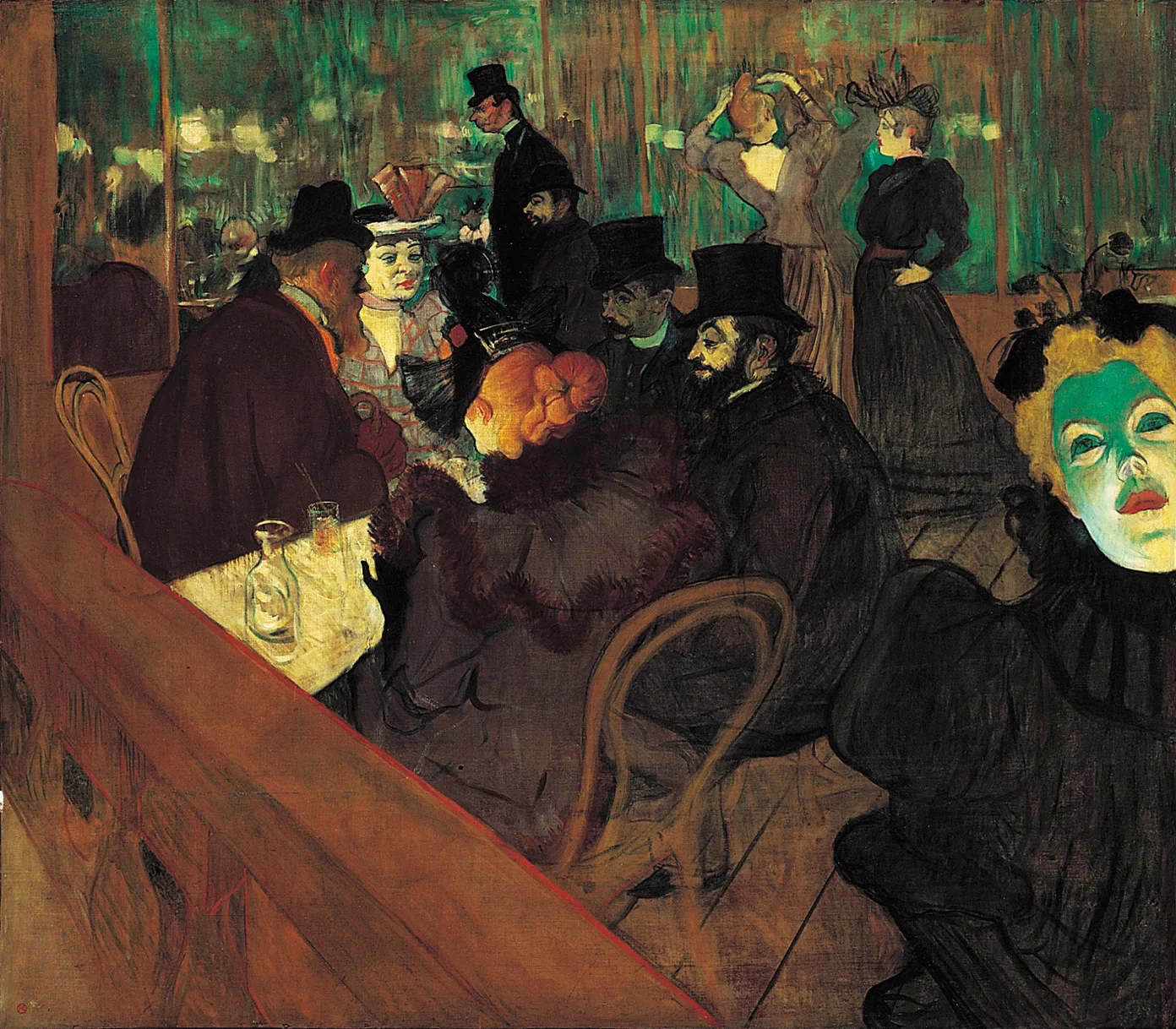
The advent of electric light did away with the greenish hue produced by gas lamps. ‘At the Moulin Rouge’ by Henri de Toulouse-Lautrec, 1892-1895.
The advent of electric light did away with the greenish hue produced by gas lamps. ‘At the Moulin Rouge’ by Henri de Toulouse-Lautrec, 1892-1895. Wikimedia

Original power plant fed by village brook
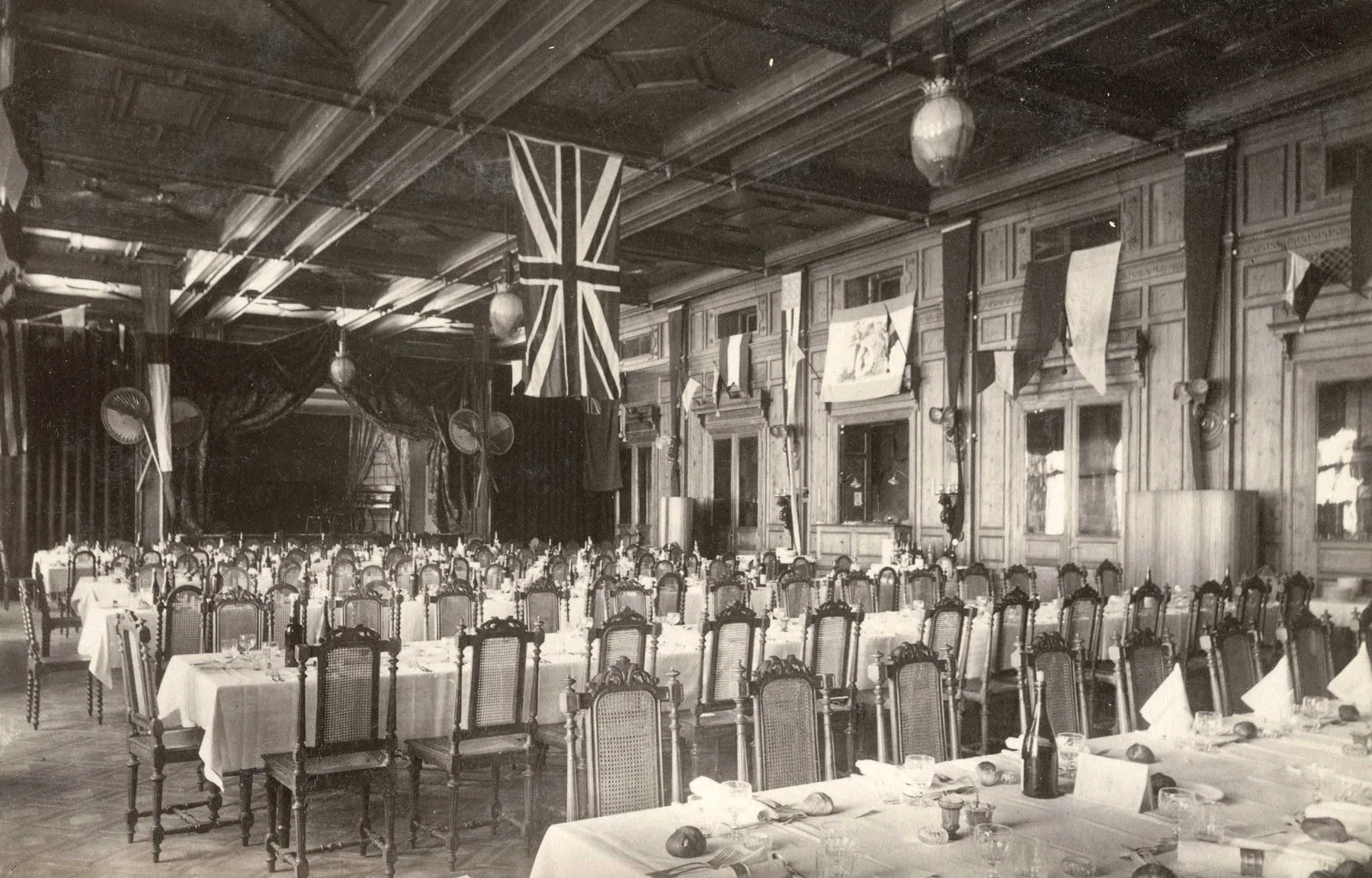
That same year, Badrutt constructed a hydropower plant with an output of seven kilowatts. Fed by water from the Brattas stream above the hotel, a turbine powered a small generator in the hotel’s carpentry workshop, effectively making it Switzerland’s first hydroelectric plant. It generated sufficient power for the lights in the wood-panelled dining room, further lights in one of the lounges and the first electric street light on the hotel forecourt. Badrutt’s lighting system used carbon arc lamps, which created an arc of electricity through the air between two carbon rods and were capable of burning brightly for a reasonable length of time. The Yablochkov system did away with the tricky mechanism for feeding new carbon rods, which burned consistently for around 90 minutes before having to be replaced.
The dining room where electric light shone out for the first time in Switzerland on 18 July 1879.
The dining room where electric light shone out for the first time in Switzerland on 18 July 1879. Graubünden Ferien
In this photograph, the new carbon arc lights can be seen on the left and the old paraffin lamps on the right.
In this photograph, the new carbon arc lights can be seen on the left and the old paraffin lamps on the right. Dokumentationsbibliothek St. Moritz
The hotel’s guests were captivated by this major advance and it was soon reported on by the press, including the Neue Zürcher Zeitung newspaper. While feigning indifference, as though electric light were the most normal thing in the world, it featured a small notice on 22 July 1879 stating that:

“For several days now, the highest resort hotel in Europe, situated at 1,856 metres above sea level, the Engadiner Kulm in St. Moritz, has had electric light. – A turbine driven by 100 metres of water pressure powers the electric motor, which, via two closed circuits, feeds six to eight (Yablochkov) lamps, each with a luminous intensity equivalent to 30-40 gas flames. These illuminate the forecourt, the lounge, the grand dining hall with its distinctive Engadine-wood panelling, and the spacious kitchen. – The electric lighting system was installed by Stirnemann und Compagnie of Zurich and would appear to ensure complete operational reliability. This kind of light has long been known for its safety, ease of operation and low installation costs. In this case, the operating costs are limited solely to the expenditure for the carbon rods (candles), each of which can burn for 1½ hours.”
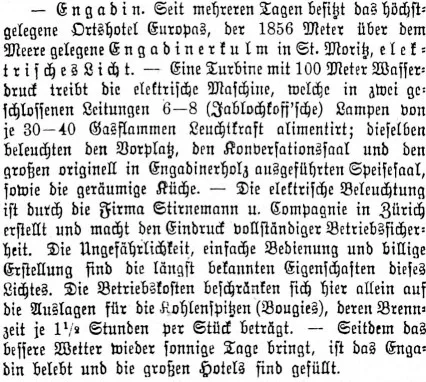
The NZZ newspaper featured a report about the innovation at the Kulm Hotel.
The NZZ newspaper featured a report about the innovation at the Kulm Hotel. e-newspaperarchives
It is worth noting that Badrutt commissioned his lighting system as a private businessman and that he was one of the earliest private adopters of the Yablochkov arc lamp. He installed electric lighting in his hotel some time before Thomas Alva Edison was granted a patent in early 1880 for his light bulb with a filament of carbonised cotton thread, which would gradually enter into widespread use. In other words, Badrutt was not simply a hotel pioneer, he was also a pioneer of electrification in Switzerland.

The early electrification of the Kulm Hotel was a luxury that attracted wealthy tourists. It signalled modernity and was one way in which the upper classes could set themselves apart from the common people. Badrutt used his arc lamps and power plant as a unique selling point in an 1882 brochure and continued to install all manner of electric lamps in his ever-expanding property.
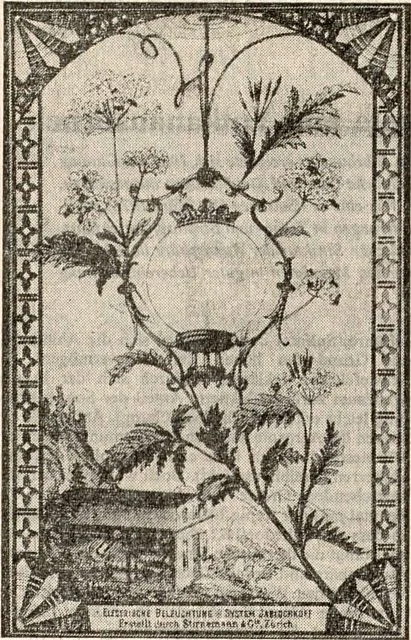
An 1882 marketing brochure for the Kulm Hotel in St. Moritz, portraying an arc light and Switzerland’s first hydropower plant.
An 1882 marketing brochure for the Kulm Hotel in St. Moritz, portraying an arc light and Switzerland’s first hydropower plant. e-newspaperarchives
To meet the increasing demand for electricity and ensure a stable power supply in the winter months, he commissioned a larger power plant at the start of 1888 at the outlet of the Inn Gorge. Capable of generating 88 kilowatts, it was the largest plant in the canton of Graubünden at the time. Electricity could now be used to provide all modern conveniences such as light, ventilation and elevators, and to illuminate the hotel’s imposing facade, thus spreading the light of progress that has been enticing well-heeled visitors from all over the world to the Engadine region ever since.

Further posts