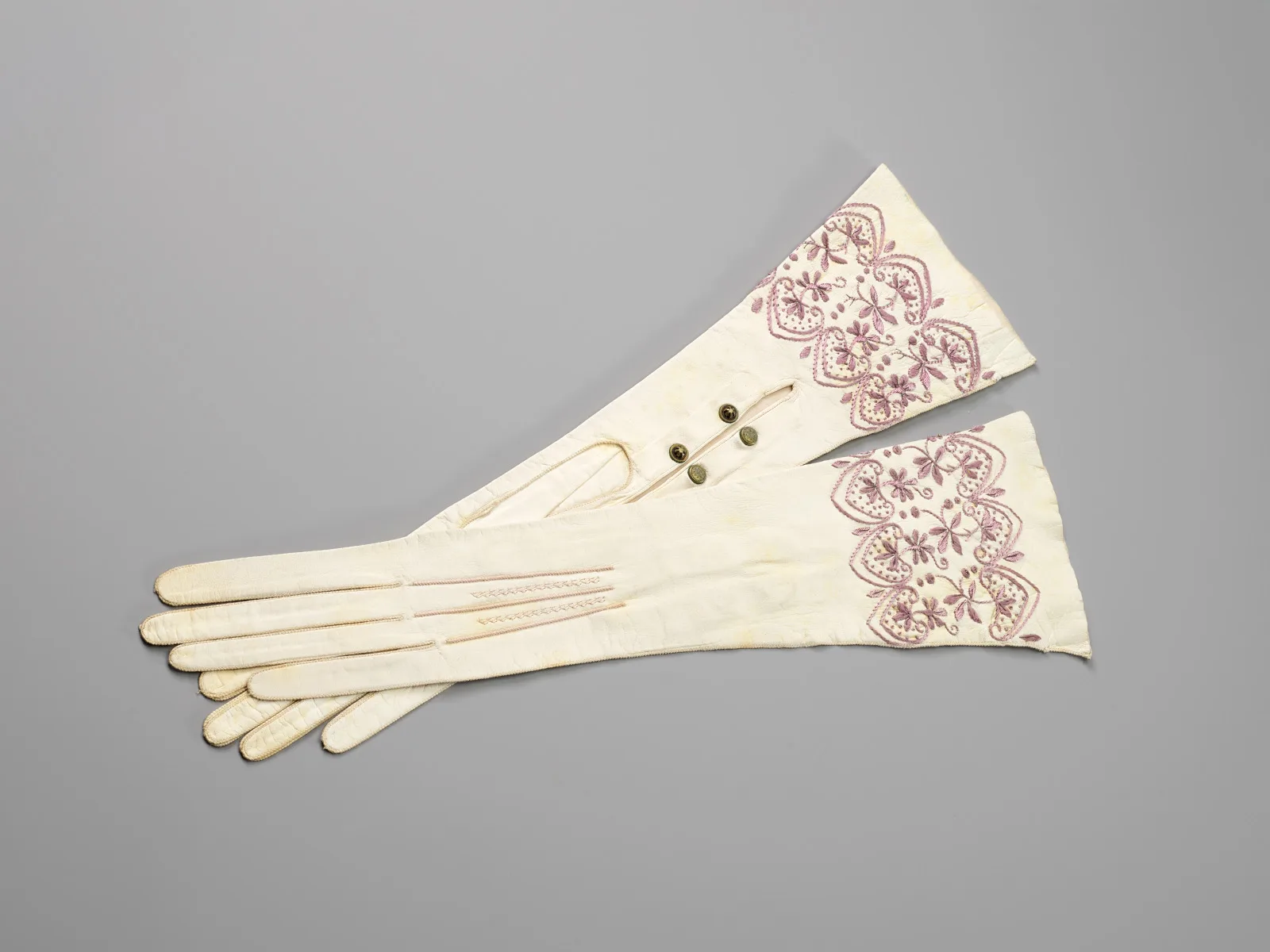
Ladies’ kidskin leather gloves with mother-of-pearl buttons made by the Wiessner company, pre-1900.
Ladies’ kidskin leather gloves with mother-of-pearl buttons made by the Wiessner company, pre-1900. Swiss National Museum

The Zurich glove maker that won over the hearts (and hands) of Switzerland

Back in 1920, a pair of fine leather gloves bearing the Wiessner label was a must-have fashion accessory for distinguished ladies and noble gentlemen in cities across Switzerland. The family business achieved great fame throughout the country – until luxury gloves went out of fashion.

Jasmin Mollet

Jasmin Mollet

Jasmin Mollet is an art historian currently working as an assistant curator at Basel Historical Museum

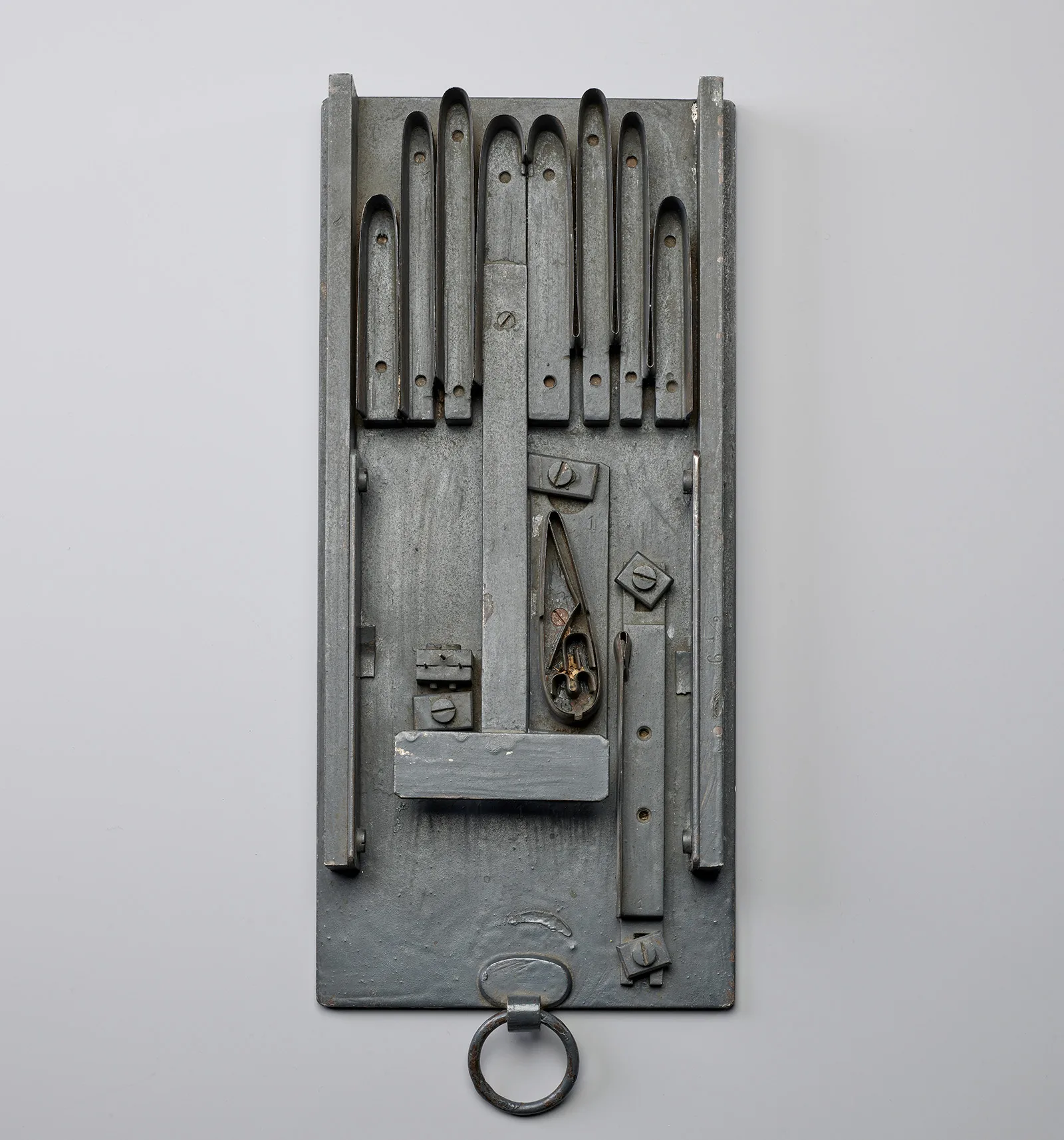
The beginnings of glove making in Switzerland were based on an important invention that facilitated the laborious process of cutting leather: the Jouvin cutting die. Glove maker Xavier Jouvin (1801–1844) from Grenoble – the centre of France’s glove making industry – studied a range of different human hands, which he broke down into 320 hand types in a table. He then translated this into 32 glove sizes. In 1834, he filed a patent for his standardised glove sizing system, and in 1838 for a cutting die known as the main de fer (iron hand), which allowed the sizes to be cut simultaneously from several pieces of leather. And so the Jouvin system of glove cutting was born, and leather gloves could then be manufactured more efficiently on a large scale. The Jouvin system spread rapidly in Europe and was also used by glove maker Johannes Wiessner from Oberahorn in Bavaria. Wiessner moved to the Riesbach district of Zurich in the first half of the 19th century and founded the company J. Wiessner in 1850. It comprised a glove making factory and from the 1880s a shop, located on the former Sonnenquai (now Limmatquai) in Zurich.
Cutting die for gloves using what is known as the Jouvin cutting system, 1875–1900.
Cutting die for gloves using what is known as the Jouvin cutting system, 1875–1900. Swiss National Museum
Wiessner used the Jouvin cutting die in his factory to produce ready-to-wear gloves as well as custom-made pieces. He specialised in the finest ladies’ ‘Joséphine glove’, and the waterproof Russian leather riding glove. Although these gloves could by then be mass produced, making them more widely accessible, they remained a luxury product fashioned from valuable leather. Their sophisticated designs featuring embroidery, ornamental seams and openwork meant they could nevertheless be very expensive. And those with the means to do so still preferred to have bespoke gloves designed to their requirements. In that respect, Wiessner had a virtual monopoly in Switzerland as up until 1870, his was probably the only leather glove factory in Switzerland besides the Lausanne-based company A. Brouilhet. Most gloves were imported from countries with a longer tradition of glove making, such as France. The guide to the Swiss National Exhibition of 1883 illustrates how advanced the manufacture of gloves was in Wiessner’s workshop. In the work gallery of the manufacturing section, visitors could watch Wiessner use the Jouvin cutting die to produce “a pair of fine kid gloves in no time at all”. And Wiessner was in tune with the times: his elegant kidskin leather gloves were frequently worn with the lightweight chemise dresses popular at the turn of the 20th century. The long, close-fitting leather glove often extended above the elbow and by 1920 had evolved to become a must-have accessory to round off a fashionable lady’s outfit.
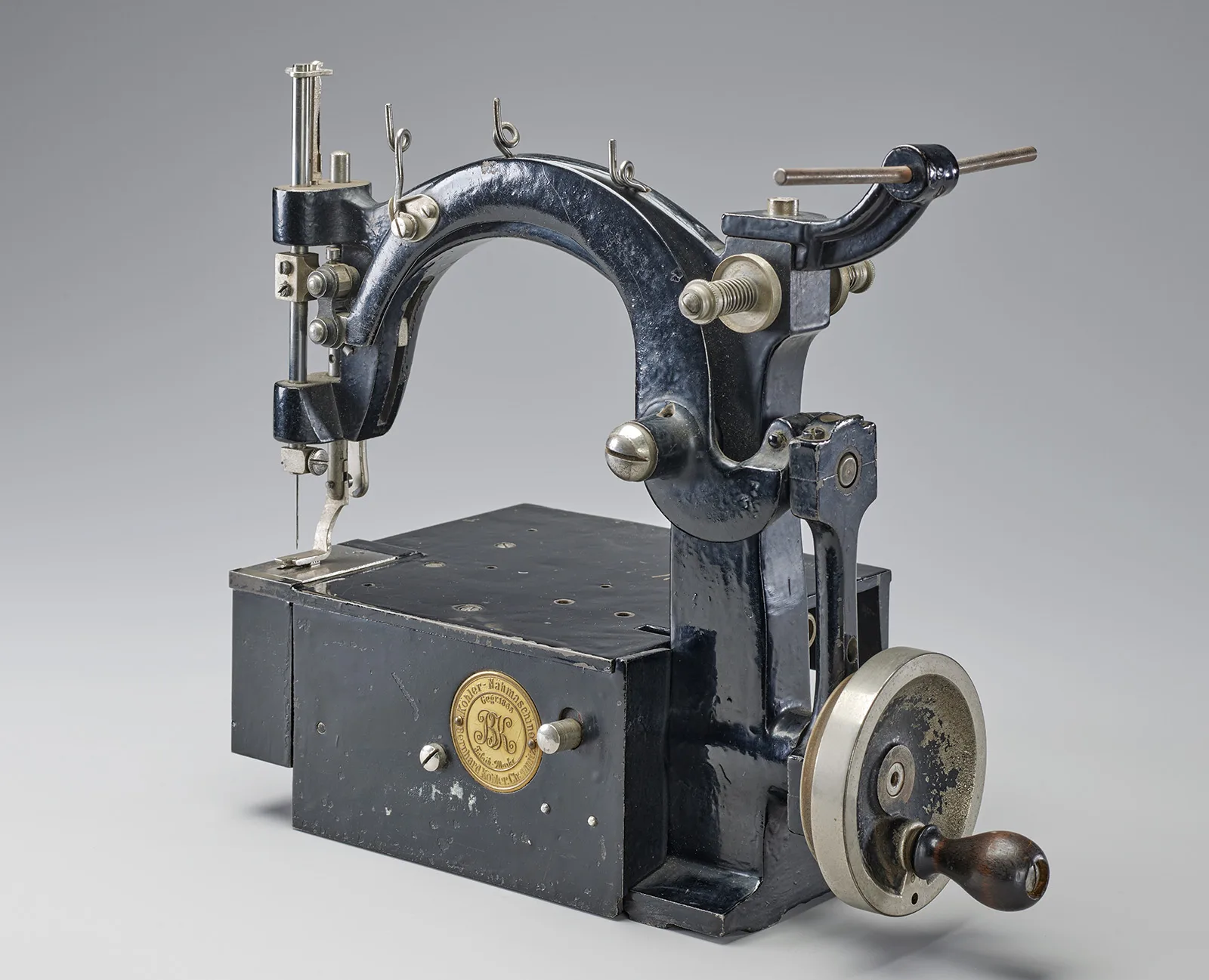
The development of the sewing machine made glove production more efficient. In the time it took to stitch together one glove by hand, several pairs could be produced using the motorised sewing machine. Sewing machine with motor and hand crank from the Wiessner glove making company.
The development of the sewing machine made glove production more efficient. In the time it took to stitch together one glove by hand, several pairs could be produced using the motorised sewing machine. Sewing machine with motor and hand crank from the Wiessner glove making company. Swiss National Museum

A mark of quality

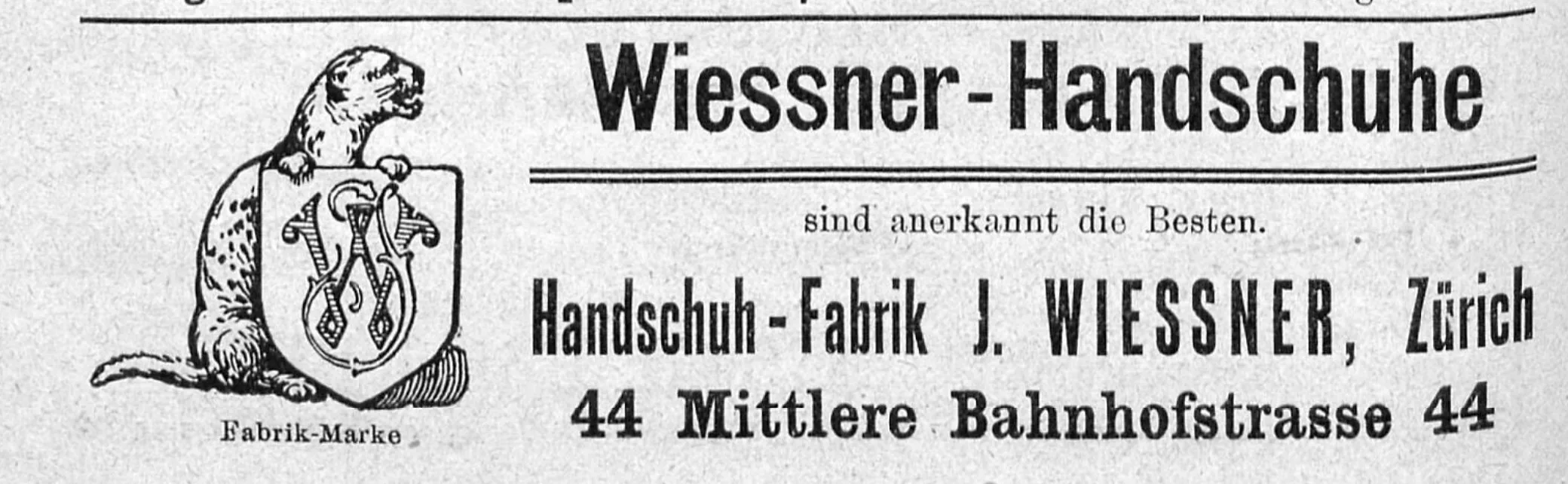
In 1894, leather gloves made by J. Wiessner were described as “a truly delightful rendering of many different materials” and a sign of “exquisite taste” in the catalogue accompanying the Zurich cantonal trade exhibition. The company used the status that the Wiessner label had achieved by 1905 to advertise its wares. For example, Wiessner placed advertisements in Swiss magazines featuring the brand name alongside the slogan ‘recognised as the best’. The gold medal that the company won at the 1914 Swiss National Exhibition in Bern cemented the quality that customers had come to expect.
Advert for the company J. Wiessner with the slogan ‘Wiessner Handschuhe sind anerkannt die Besten’ (Wiessner gloves are recognised as the best) and the brand name, 1905.
Advert for the company J. Wiessner with the slogan ‘Wiessner Handschuhe sind anerkannt die Besten’ (Wiessner gloves are recognised as the best) and the brand name, 1905. e-periodica
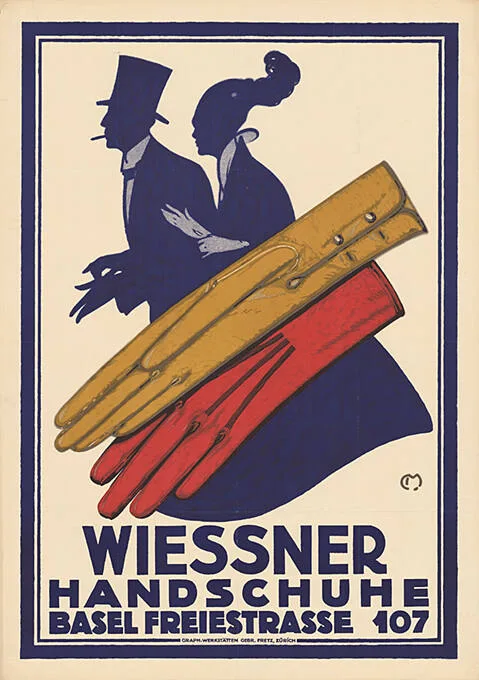
Fine leather gloves for fashion-conscious, upper-class ladies were not Wiessner's only line of business. It also made standard-issue military gloves, which allowed the company to continue operating during the world wars, and therefore to stay afloat. From 1915, Wiessner expanded throughout Switzerland, opening further stores in Basel, Lausanne and St. Gallen, and adding an outlet in Neuchâtel in 1938. The shops in French-speaking Switzerland were called ‘à la Belette’ and, like all other branches in Switzerland, were managed by members of the Wiessner family as a Wiessner & Co. limited partnership. Besides their own gloves, they also sold other fashion items, such as hosiery and men's ties, as well as care products for gloves. As the family business grew, Wiessner became an established fashion label in Switzerland.
Poster advertising a branch of the Wiessner company in Basel, 1917.
Poster advertising a branch of the Wiessner company in Basel, 1917. Schule für Gestaltung Basel

Innovative spirit and design

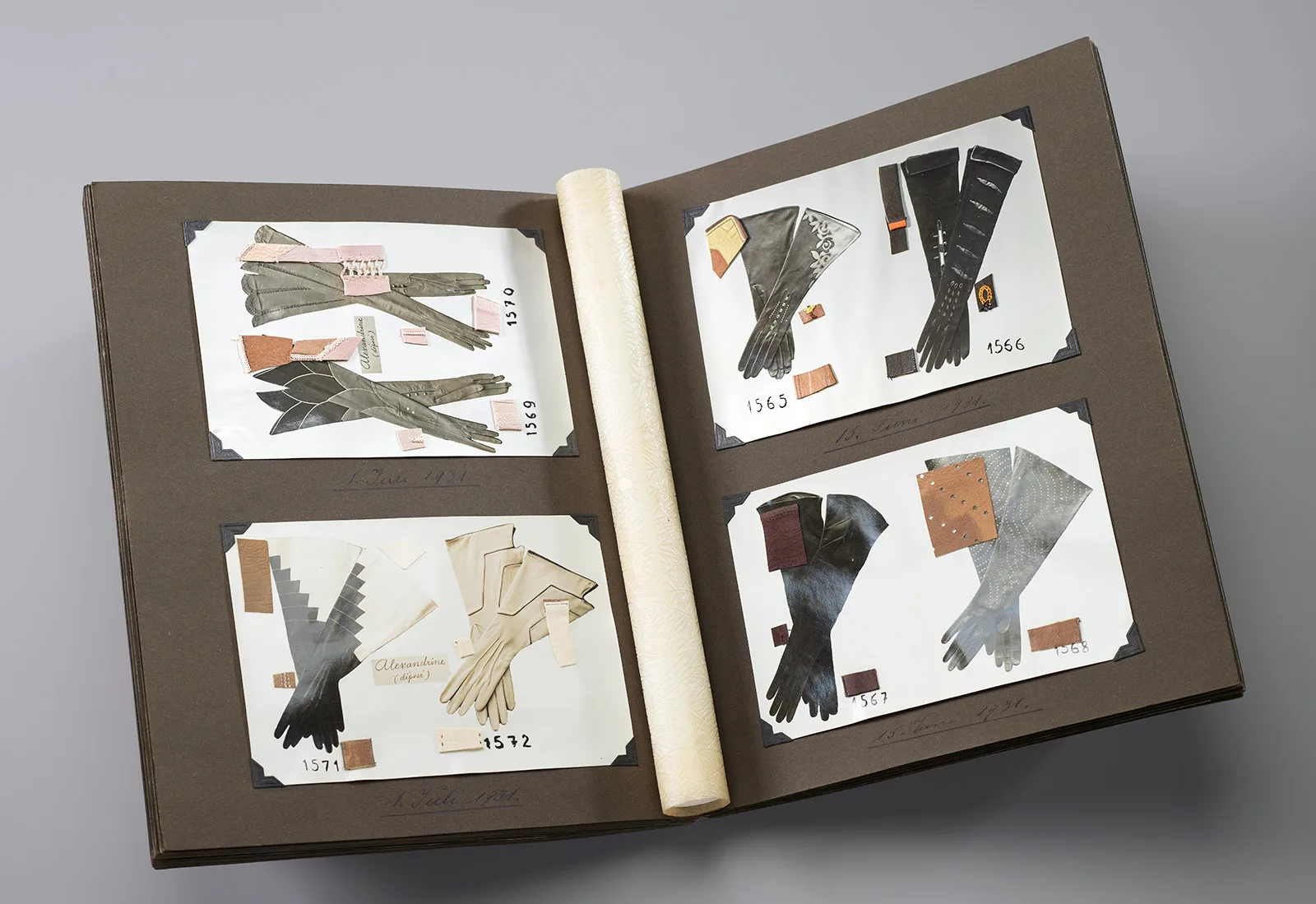
The company’s pattern books still provide evidence of the wide range of designs that Wiessner offered. The different leather colours and embellishments along with the avant-garde designs show that the company very much had its finger on the pulse. As early as 1904, Johannes Wiessner filed his own glove cutting die with the federal patent office. The pattern books document more than just the company’s own designs, however. Designs with the term ‘Alexandrine’ refer to those by the Paris-based label of the same name, which were bought and copied by glove makers throughout Europe. This is how Wiessner brought the latest fashions from Paris to Switzerland. In-house and third-party designs alike were marked with a brand stamp on the leather interior of the glove, either on the cuff or on the flap. In order to protect his own designs from forgeries, Wiessner filed a copyright in the Swiss Commercial Gazette.
Pattern book of Wiessner glove makers 1931–1932, featuring designs by the Paris-based label Alexandrine (left-hand side).
Pattern book of Wiessner glove makers 1931–1932, featuring designs by the Paris-based label Alexandrine (left-hand side). Swiss National Museum
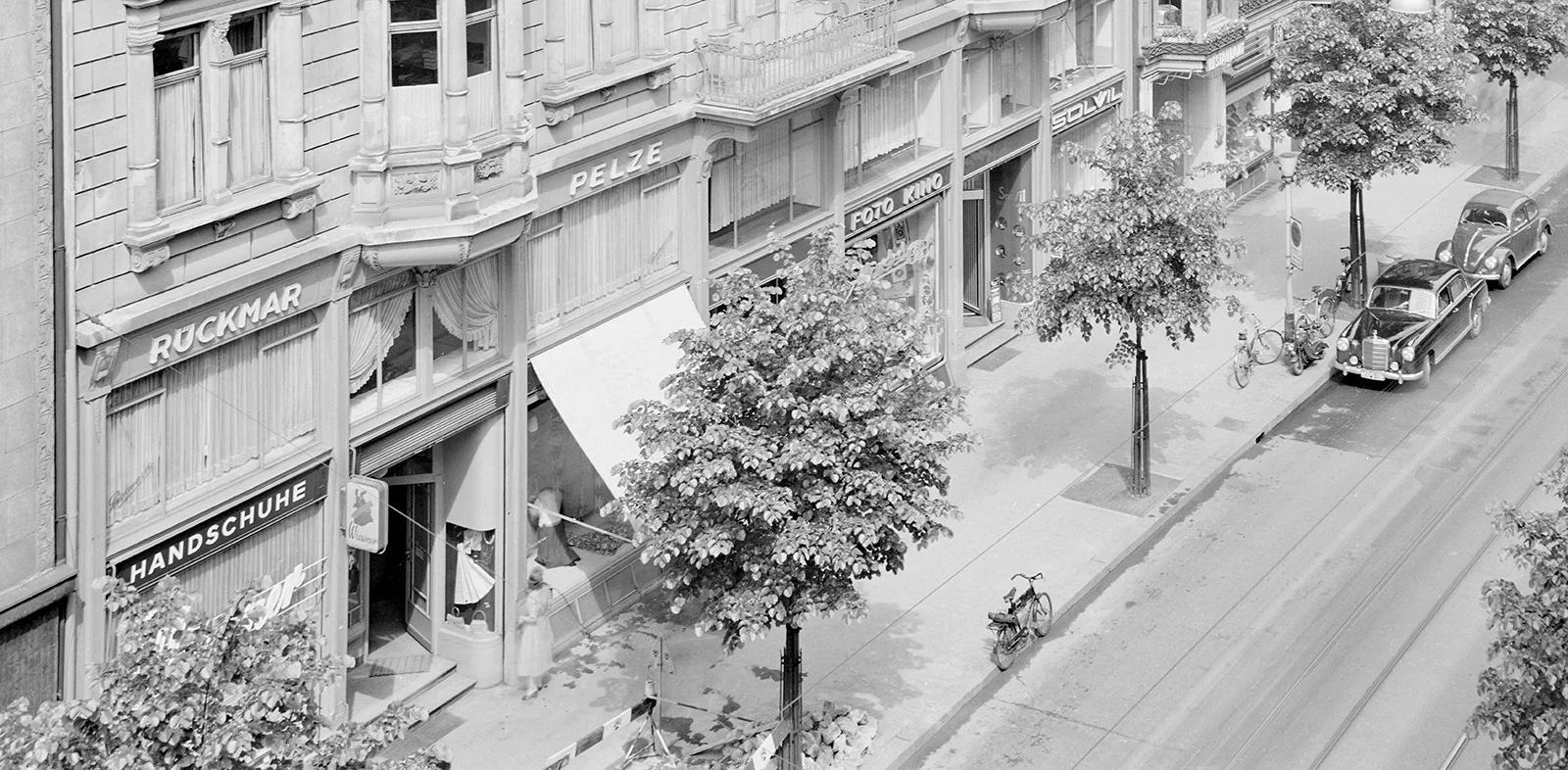
The popularity of Wiessner’s gloves was not only down to the unique designs imported from Paris, but also to Wiessner’s continuous presence at public events right up to the 1950s. For example, Wiessner supported fashion shows in Zurich, including that of the Paul Rückmar company, which opened its store selling fur goods directly above Wiessner’s shop at Bahnhofstrasse 35 in 1956. The fashion shows were covered in depth by the women’s magazine Schweizer Frauenblatt, which also featured other well-known brands that contributed accessories to the shows, such as Bally. Wiessner was also represented as a special Zurich-based artisanal business at the Saffa (Swiss Exhibition for Women’s Work) in 1958.
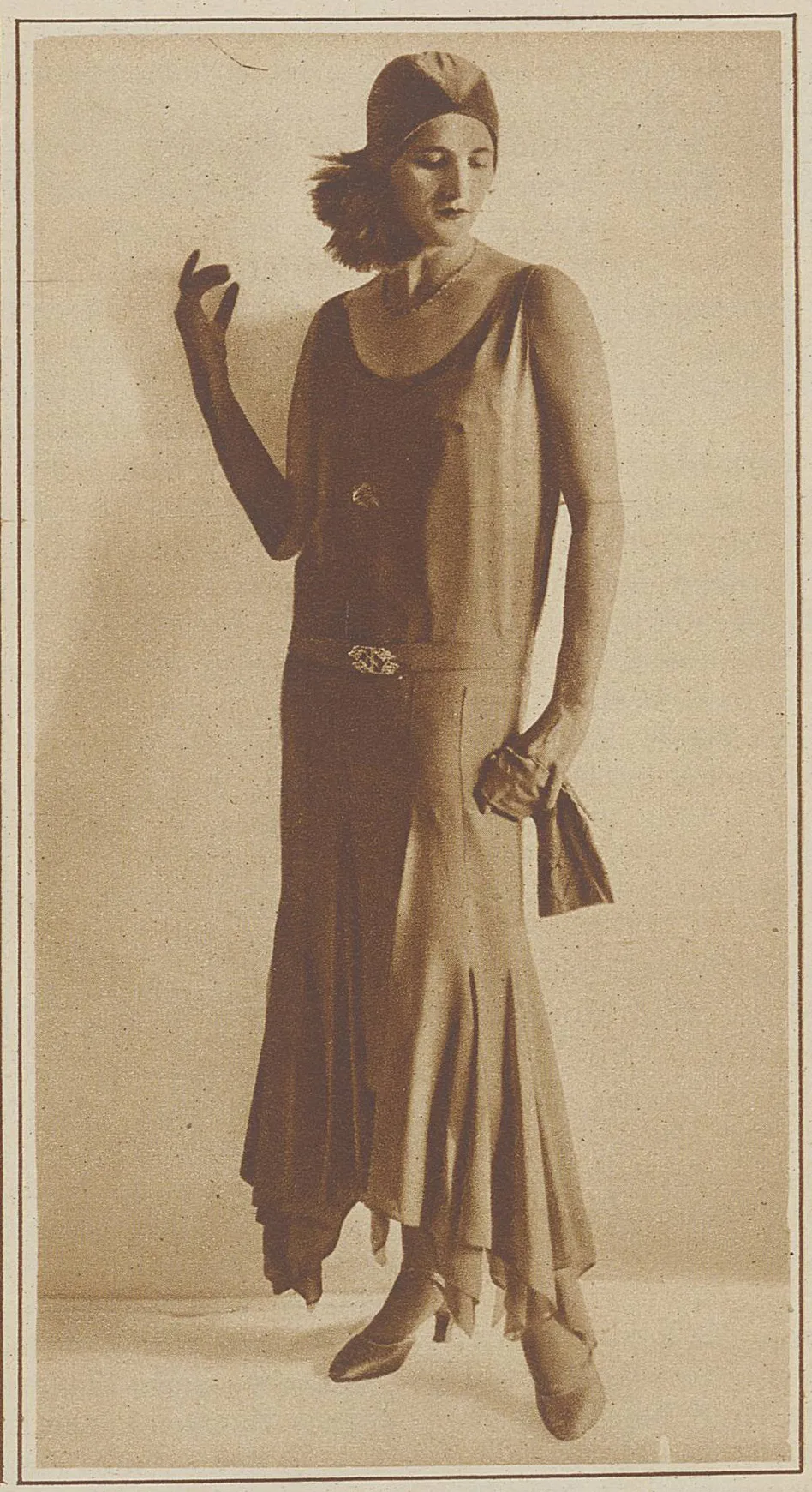
A model presenting the latest fashion at the Grieder-Doelker fashion show at the Baur au Lac hotel Zurich, 1929. Wiessner’s gloves lent the fashion show a "new-found elegance extending right to the fingertips".
A model presenting the latest fashion at the Grieder-Doelker fashion show at the Baur au Lac hotel Zurich, 1929. Wiessner’s gloves lent the fashion show a "new-found elegance extending right to the fingertips". e-periodica

From the workshop to the National Museum
By the 1960s, the elegant, embellished leather glove was seen by the younger generation as too ladylike and no longer fashionable. The era of the perfect outfit with matching shoes, dress, hat and gloves was over, and gloves slowly fell out of use as a fashion accessory. The fact that gloves were no longer a must-have item put pressure on the manufacturers. In addition, leather gloves – like other accessories – were increasingly being manufactured cheaply abroad. Companies like Wiessner & Co. that still stood for quality could not, and did not want to, compete with low-wage foreign manufacturers working with cheap materials, such as artificial leather made from synthetic polymers. In the end, Wiessner had to officially dissolve the limited partnership in 1983. During the preceding liquidation, in 1971, the company handed over the equipment from its glove making workshop to the Swiss National Museum. Items included the iron hand used for the Jouvin cutting method, which is still used in glove making today, for example by Hermès in France or ROECKL in Munich – one of the few remaining glove manufacturers that is still run as a family business.
Wiessner store at Bahnhofstrasse 35 in Zurich, 1956.
Wiessner store at Bahnhofstrasse 35 in Zurich, 1956. Baugeschichtliches Archiv Zürich

Accessories. Objects of desire

18.07.2025 12.04.2026 / National Museum Zurich
Accessories have always been more than mere decoration: hats, scarves, gloves, bags and shoes reflect social, political and religious affiliation, denote power and status, protect and give form to the body, or represent the latest fashions. The exhibition features items from the Swiss National Museum collection to show how accessories are shaped by social change. From the strict dress codes of the early modern period to current-day trends that play with gender norms, the exhibition takes a look at fashion history from head to toe.

Further posts