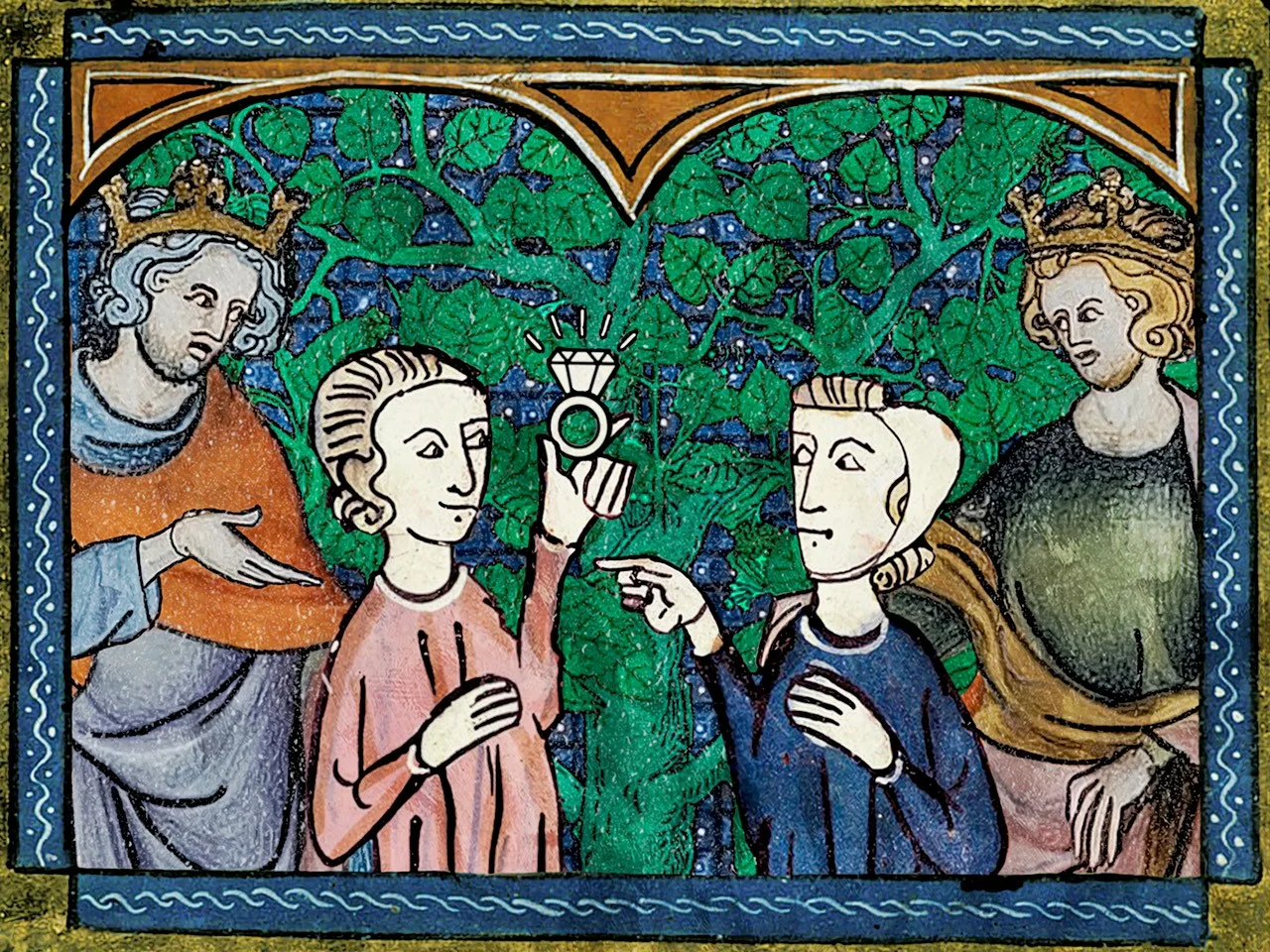
On 25 December 1055, a royal engagement took place at the Lindenhof in Zurich. Illustration by Marco Heer.

A royal betrothal at Zurich’s Lindenhof

The Lindenhof hill in Zurich was the site of a royal palace from around the year 850. Carolingian kings and rulers of the Holy Roman Empire regularly spent time there as they travelled around the realm. The Lindenhof experienced what was perhaps its finest moment in 1055.

Anuska Merz

Anuska Merz

Anuska Merz is studying General and Economic History at the University of Zurich. She works at the Staatsarchiv Zürich and is a member of the editorial board of the journal etü.
Over the Christmas period in the year 1055, Zurich briefly became the centre of European power politics when a major ceremony of great political relevance was held in the palace on the Lindenhof hill: the betrothal of Henry IV to Bertha of Savoy. As the son of Henry III, the reigning Holy Roman Emperor, the younger Henry was the designated successor to his father’s throne. The emperor arranged the betrothal in a calculated attempt to shore up his weakened position. The princes of the realm were not happy with the way Henry III governed and even more incensed that he had named his son co-ruler in 1053. The future Henry IV’s betrothal at the age of five to four-year-old Bertha, the daughter of Otto of Savoy, who was also the margrave of Susa-Turin, was intended to bolster Henry III’s influence in northern Italy at this time of crisis.
Following the couple’s betrothal, Bertha was raised alongside her future husband’s family at the Salian imperial court – a common scenario among European nobility at the time. Henry III died less than a year later, thus making Henry IV king in his own right while still a child. However, his mother Agnes served as regent until he reached the age of majority. The betrothal festivities at the royal palace on Zurich’s Lindenhof hill marked both the high point and end point of its history. But for Henry IV, they marked the beginning of his journey through life.
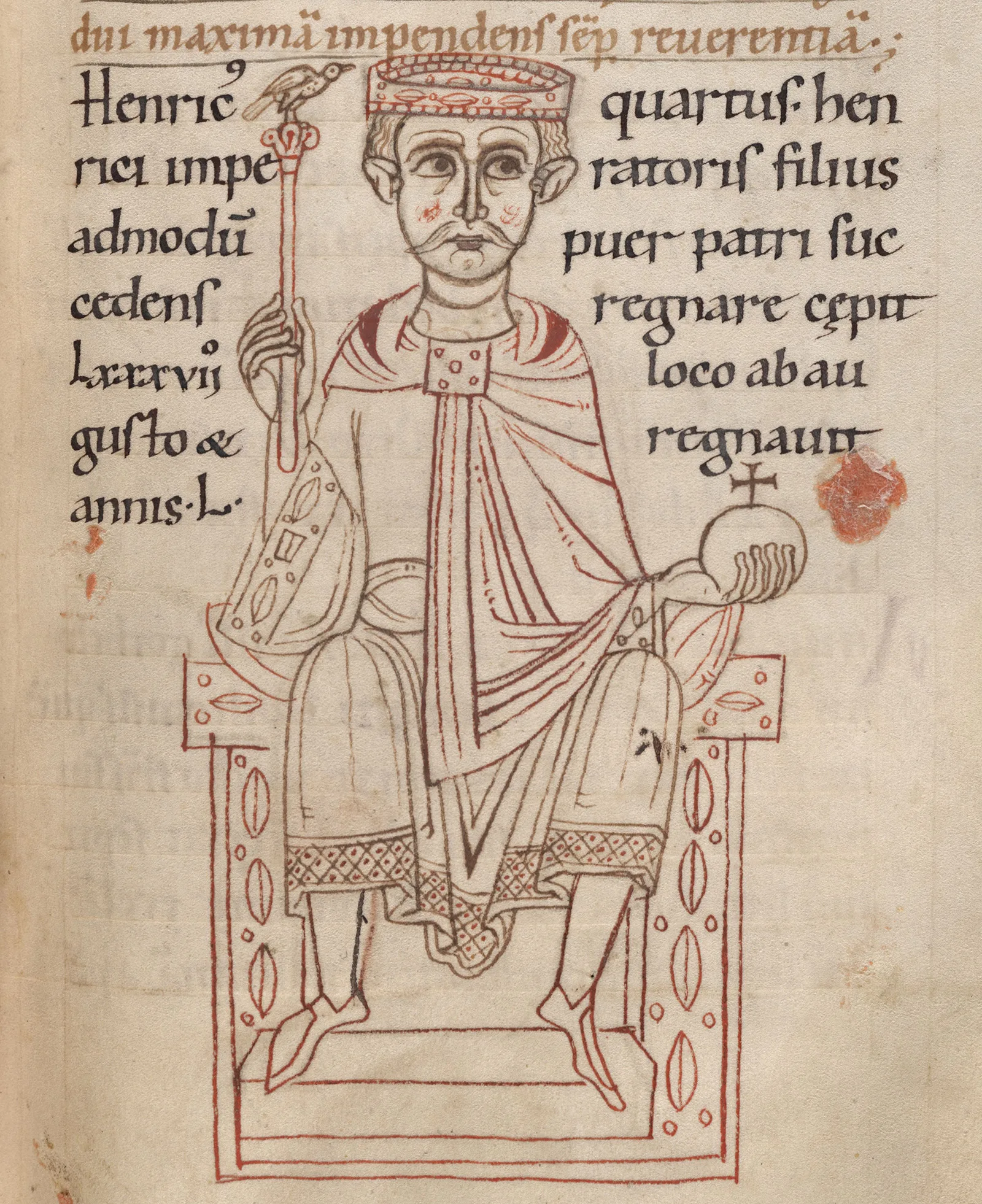
Depiction of Henry IV from the 12th century.
Depiction of Henry IV from the 12th century. Wikimedia

An unsullied queen?

The life of Henry IV was chronicled by a number of writers of the period. The fullest, albeit decidedly critical, account of Henry’s actions can be found in the Annals of Lampert of Hersfeld, a monk. Lampert’s writings record the history of the world as he knew it up to 1085, with the entries composed from the 1040s onwards containing highly detailed descriptions of events. They include vivid depictions of battles, the recounting of disputes between the princes and the king, and reports on the laws enacted by the latter. The monk also wrote about periods of drought and comet sightings, as well as setting down rumours and gossip and commenting on the events he documented.
Thus Lampert is able to provide us with some salacious details regarding the Hoftag assembly convened at Worms in 1069. It was on this occasion that Henry IV announced to the princes and bishops present that he wished to dissolve his marriage to Bertha. According to the chronicler, the young king claimed that he and his wife were so ill-suited that “he was unable to have marital relations with her” – in other words, the marriage had not been consummated. He did at least assure the gathering that he had kept Bertha “as he had received her, undefiled and in a state of unimpaired virginity,” so that there could be no obstacle to her marrying again. Those present found the matter “unseemly” and “utterly inconsistent with royal majesty” but no-one was willing to rebuff the king and so the decision was put off. It was only when Pope Alexander II threatened to excommunicate the king and refuse to crown him as emperor that Henry IV abandoned his attempts to obtain a divorce. The unhappy marriage lasted until 1087, ending only on Bertha’s death.

Accommodation fit for a travelling king
However, Lampert’s chronicle is much more than a treasure trove of medieval gossip. It is also an important source when it comes to reconstructing the itinerarium of the travelling court ‒ the routes followed and locations visited. Henry IV was an itinerant king, meaning he had no fixed residence or centralised (capital) city from which he governed. Instead, he constantly moved around his vast empire, stopping off at different places throughout the year. The various palaces (the German word Pfalz is derived from the Latin palatium) served the itinerant ruler as seat of government, defensive base and accommodation, and each came with its own permanent staff and steady stream of supplies.
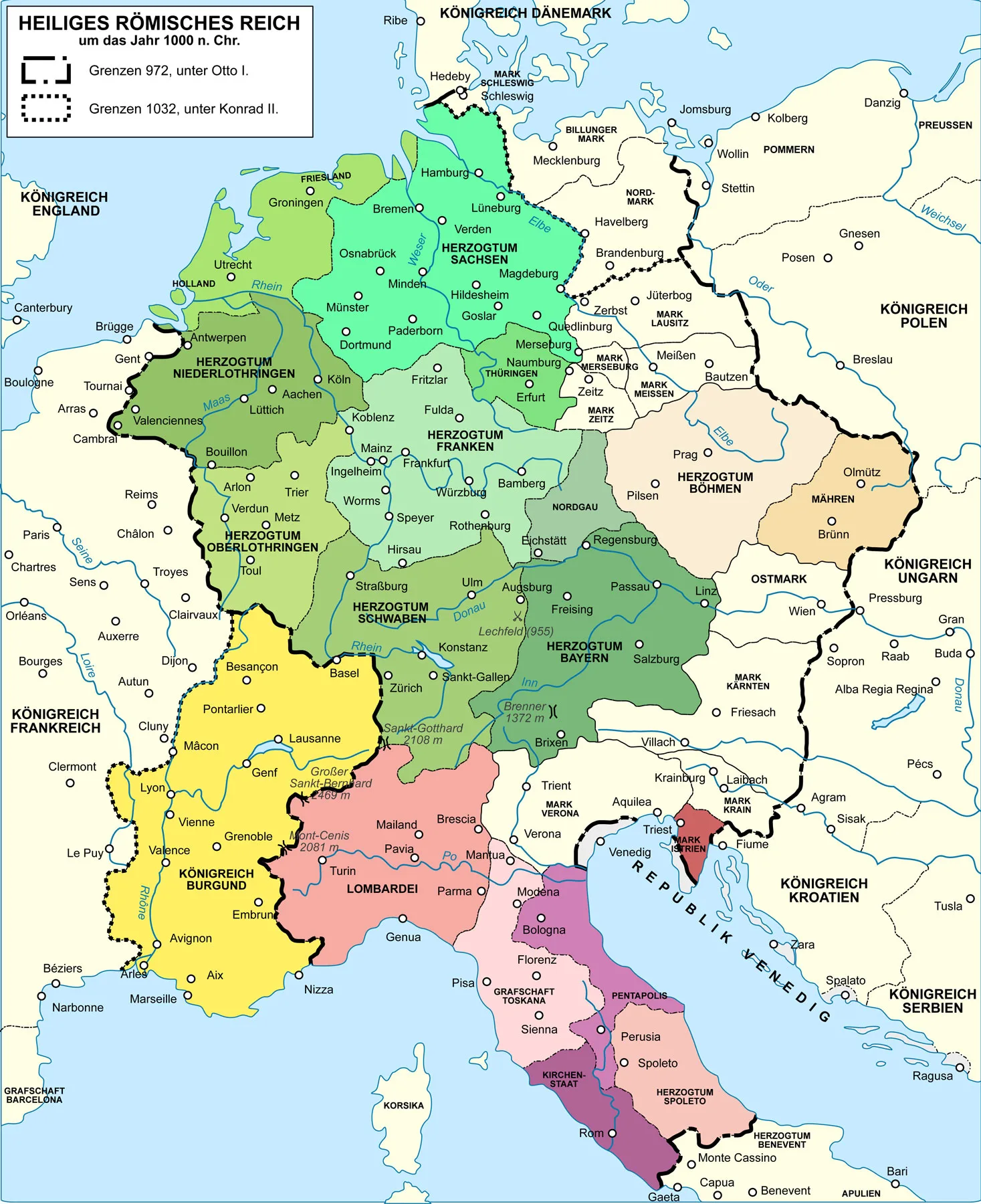
The Holy Roman Empire circa 1000. The empire was an elective monarchy, dominated by various royal houses. The elected king attained the title of emperor on being crowned by the pope.
The Holy Roman Empire circa 1000. The empire was an elective monarchy, dominated by various royal houses. The elected king attained the title of emperor on being crowned by the pope. Wikimedia
The size of the empire was one of the main reasons for this way of life. Although it may now strike us as inconvenient and burdensome, this form of government was practiced by the kings and emperors of the Holy Roman Empire from the days of the Carolingian dynasty right through to the late Middle Ages. Circa 1000, the Holy Roman Empire not only covered the territory of modern-day Germany, it also stretched as far as what are now the Benelux countries and eastern France to the west, the current-day Czech Republic and Austria to the east, and Rome to the south. What we now call Switzerland was also once part of the Holy Roman Empire. Moving around in this way enabled the Holy Roman Emperors to broadcast their presence in different places and to interact in person with the local princes. It allowed them to gain their own impression of the areas they ruled over and to administer justice there. And these visits presented ample opportunities for showy displays of pomp and ceremony.

Denial of hospitality

Henry IV was no different: he visited many different places during his lifetime. He was born in 1050 at the palace in Goslar, baptised in Cologne, anointed king in Aachen and, as we have already seen, betrothed in Zurich. At the assembly held in Worms in 1065, 15-year-old Henry was finally deemed to have come of age. He then became sole ruler of the Holy Roman Empire. Bertha was crowned queen in Würzburg one year later. The entries in Lampert’s chronicle state that in 1065: “the King celebrated Christmas at Goslar, Easter at Worms.”
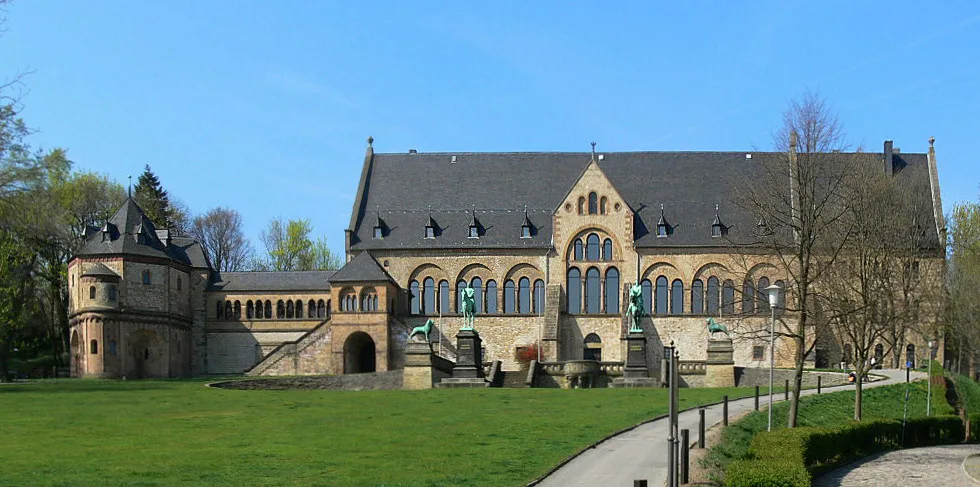
The Imperial Palace in Goslar. This is where Henry IV was born.
The Imperial Palace in Goslar. This is where Henry IV was born. Wikimedia

Royal court constantly on the move

The king was accompanied on his travels by a sizeable entourage composed of his family, an army and the entire royal court. Its members included the holders of high-ranking offices, such as the chamberlain (treasurer), the marshal (stable master), the steward (kitchen master) and the cup-bearer (who poured and served the drinks), councillors, lawyers to hear cases and oversee the administration, scholars, tutors, poets and minstrels. The king also needed a variety of male and female servants to perform guard, military and escort duties.
The size of the royal court was another reason for its itinerant form: being able to fall back on a non-centralised supply of provisions was advantageous when it came to the court’s upkeep and organising feasts, hunts and tournaments. The enormous burden associated with accommodating the ruler and his entourage could only reasonably be imposed on any one place temporarily.

Spoilt for choice

The choice of destinations was determined by a number of factors. In addition to commitments such as warfare, invitations to festivities and the convening of royal assemblies, the king was expected to grace the princes and bishops of the realm regularly with his presence. Visits to allies and relatives and a desire to return to places that played a key role in the king’s own life were all part of the journey. The itinerary planning varied from monarch to monarch, and individual rulers and their dynasties often had different heartlands. Goslar, for example, was the favourite palace of the Salians.
Historian Rudolf Schieffer has analysed the route followed in 1017 by the last emperor of the Ottonian dynasty ‒ yet another Henry, this time the Second (973/8–1024). Chronicles and official documents tell us of 26 stays in 21 different places. Given that the court would have been capable of progressing at 25km a day, according to Schieffer’s estimates, many of the places on the itinerary would have been too far apart for it to cover the entire distance without intermediate stops. Schieffer comes to the conclusion that Henry II and his entourage must have stayed overnight at some 50 different locations, of which the royal palaces formed the minority.

Monarchs at the Lindenhof

The Zurich palace had already passed its heyday by the time Henry IV came to reign. Yet its history reaches back much further: the Carolingians first erected a palace on the Lindenhof hill in 850 on top of the walls of the old Roman fortification – probably around the same time as the founding of the Fraumünster Abbey. There is no evidence that Carolingian kings were ever present in Zurich, but it seems highly likely.
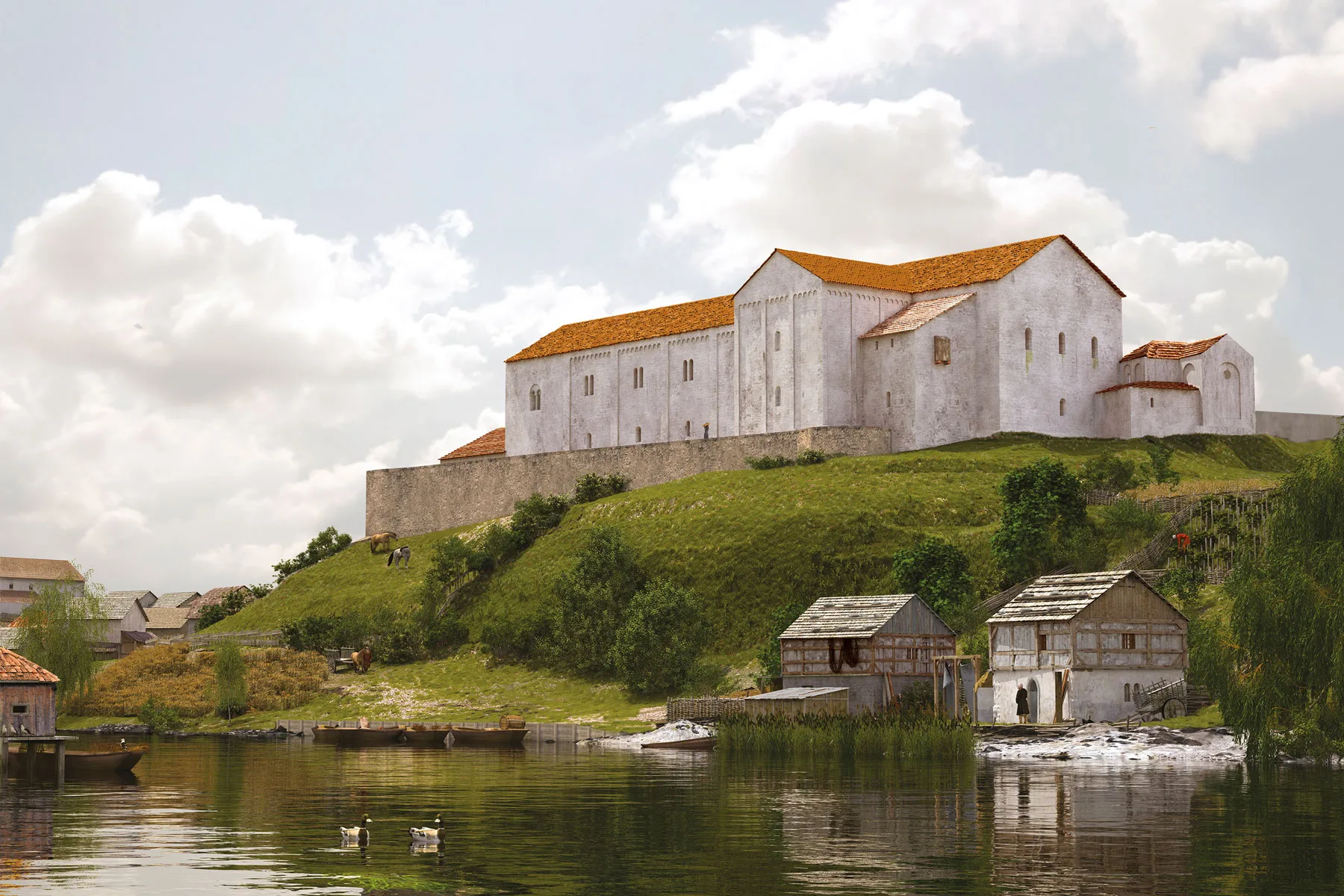
Digital reconstruction of the Carolingian palace: this is what the palace at Lindenhof might have looked like in 878.
Digital reconstruction of the Carolingian palace: this is what the palace at Lindenhof might have looked like in 878. Amt für Städtebau Stadt Zurich, Archäologie / Marco Bernasconi
Image 01 of 03
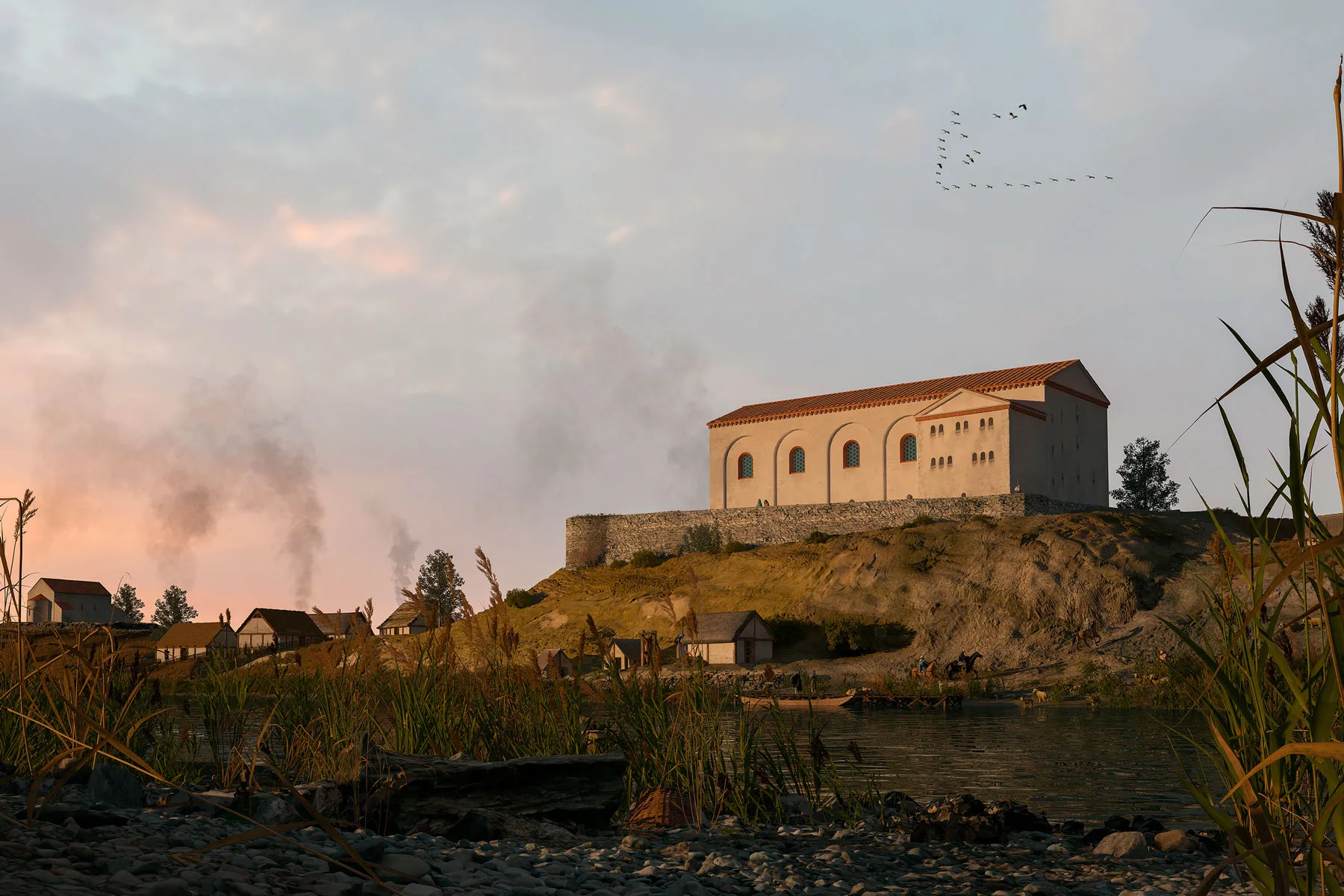
The Carolingians were succeeded by the Ottonians, who built a whole new palace in Zurich. In the year of Henry IV’s betrothal to Bertha of Savoy, a monumental two-storey construction stood on the Lindenhof hill.
The Carolingians were succeeded by the Ottonians, who built a whole new palace in Zurich. In the year of Henry IV’s betrothal to Bertha of Savoy, a monumental two-storey construction stood on the Lindenhof hill. Amt für Städtebau Stadt Zurich, Archäologie / Marco Bernasconi
Image 01 of 03
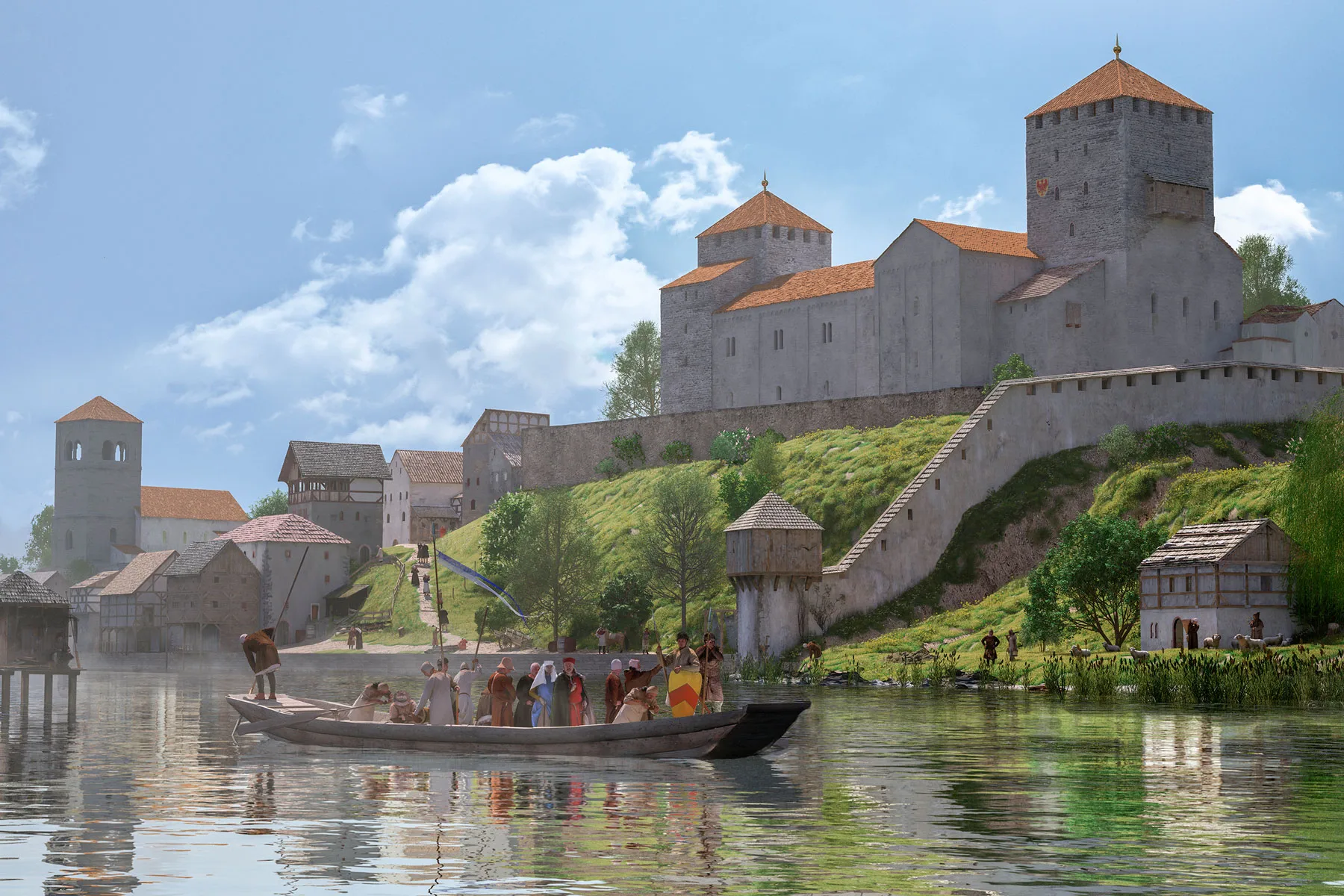
The royal palace in Zurich had been transformed into a fortified citadel by around 1218.
The royal palace in Zurich had been transformed into a fortified citadel by around 1218. Amt für Städtebau Stadt Zurich, Archäologie / Marco Bernasconi
Image 01 of 03
The palace in Zurich is the only one of its kind on modern-day Swiss territory. However, written records indicate that there were five more royal estates, although archaeological traces of only one survive: in Zizers, Graubünden. Royal estates were smaller in scale than the palaces, but like them they were crown property belonging to the current emperor or king. The origins of the Zizers estate date back to the early 9th century and its demise to the 11th or 12th century. It was probably used by the Ottonian dynasty as a stop-off point on the route to Italy. Unlike the palaces, these smaller estates would not have played host to prestigious events. They served to provide accommodation, food and other necessities to the royal travelling party.
The Ottonians, who followed on from the Carolingians, began visiting Zurich more often from the mid-10th century. Records confirm the presence of kings of the realm at the Lindenhof on ten occasions between 1004 and 1055. However, for unexplained reasons, the Ottonian dynasty tore down the Carolingian palace and built an even larger one in its place. Given Henry III’s repeated forays into Northern Italy, Zurich’s favourable location made it a key royal residence for this particular Salian emperor. However, there are no further records of royal visits to the Lindenhof following the betrothal of his son, the future Henry IV, in 1055. It marked the end of the Zurich palace’s life as lodgings for travelling kings.

Further posts