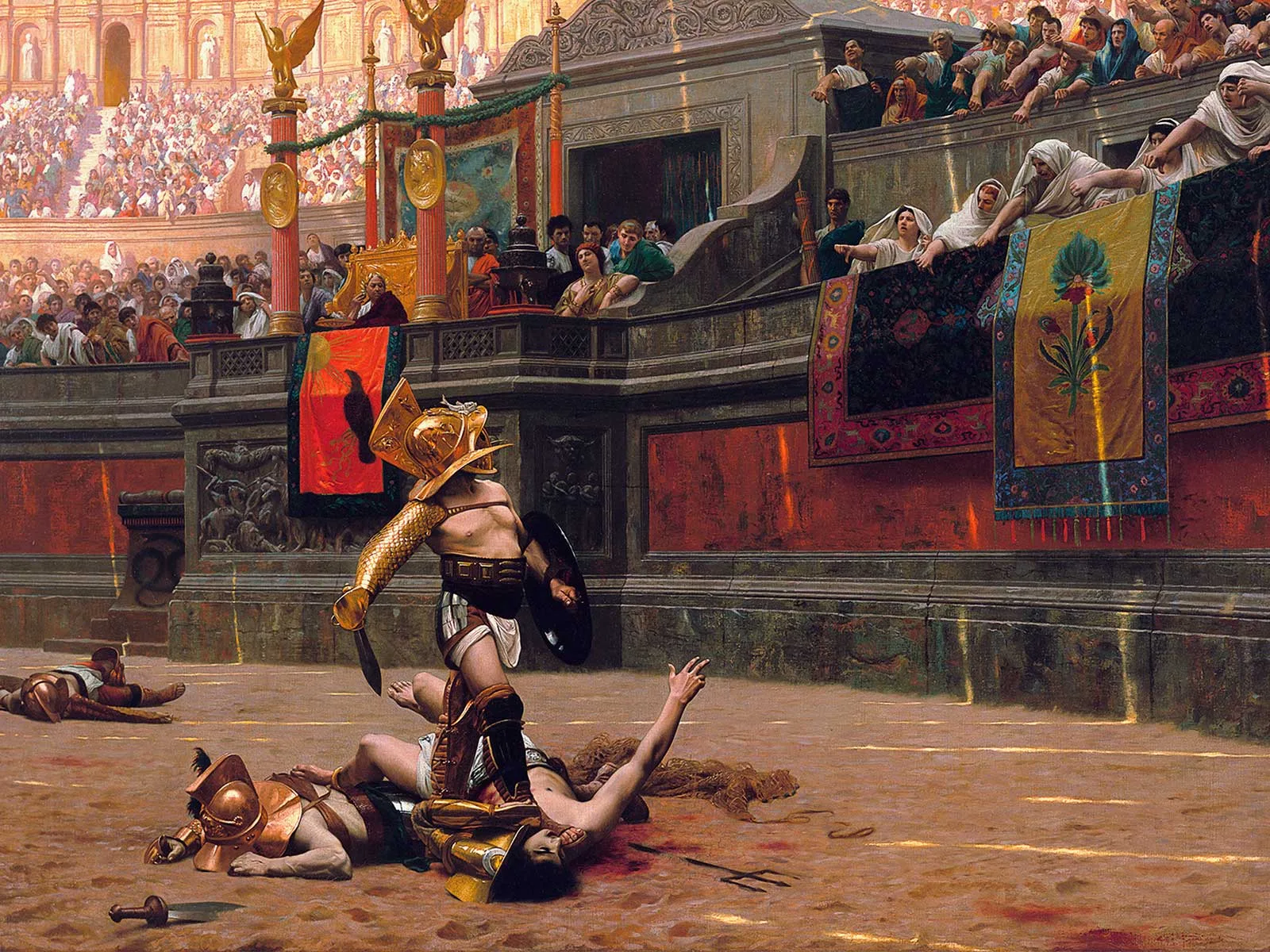
Pollice Verso, with a turned thumb. Often the fate of a defeated gladiator was in the hands of the crowd. Painting by Jean-Léon Gérôme, 1872.
Pollice Verso, with a turned thumb. Often the fate of a defeated gladiator was in the hands of the crowd. Painting by Jean-Léon Gérôme, 1872. Wikimedia

Gladiators — tragic heroes

Gladiatorial fights were among the bloodiest spectacles of the Roman world. They were also extremely popular on the territory of what is now Switzerland.

Eva Carlevaro

Eva Carlevaro

Eva Carlevaro is a historian and editor of the journal Archäologie Schweiz.

In December 2021, archaeologists made a surprising discovery in Kaiseraugst in the canton of Aargau. During the construction of a new boathouse for Basel’s rowing club, they uncovered the remains of a previously unknown Roman amphitheatre. The structure was around 50 metres long and 40 metres wide and it was located directly adjacent to the Castrum Rauracense, a Late Roman fort.
The discovery of a coin during this building work was particularly enlightening, as it was minted under Emperor Constantius II in the period 340–341 CE. As both Constantius II and the later Emperor Julian evidently spent time at this fort, it is quite possible that the building of the arena was connected with the imperial presence in the region. The uncovered amphitheatre is the youngest known example in the whole of the Roman Empire. Its discovery shows that even in Late Antiquity events were still taking place in such arenas. It remains unclear, however, whether gladiatorial combats were still actually held there, or whether it was used more for animal baiting and other performances.
TV report on the sensational discovery made in Kaiseraugst in 2021. YouTube
What is certain, however, is that Augusta Raurica, which we now know to have possessed three amphitheatres, was an important venue for such gladiatorial games over several centuries. But who were these people who died in the arenas for others’ entertainment? And why were such bloody sports so popular in Roman times?

Burial ritual of the Etruscans

Gladiatorial games are thought to originate in Etruscan burial rituals – ceremonies during which men fought in honour of the deceased. The blood spilled was seen as a sacrifice for the dead. The Romans adopted this tradition and made it one of the most popular forms of entertainment of their time. The first historically documented gladiatorial fight took place in Rome in 264 BCE. What started as a private homage to the dead evolved over centuries to become a state-organised mass spectacle known as munera. Amphitheatres subsequently cropped up in many towns and cities across the Roman Empire – there are currently over 200 known sites throughout Europe. In modern-day Switzerland alone, there are eight known amphitheatres.
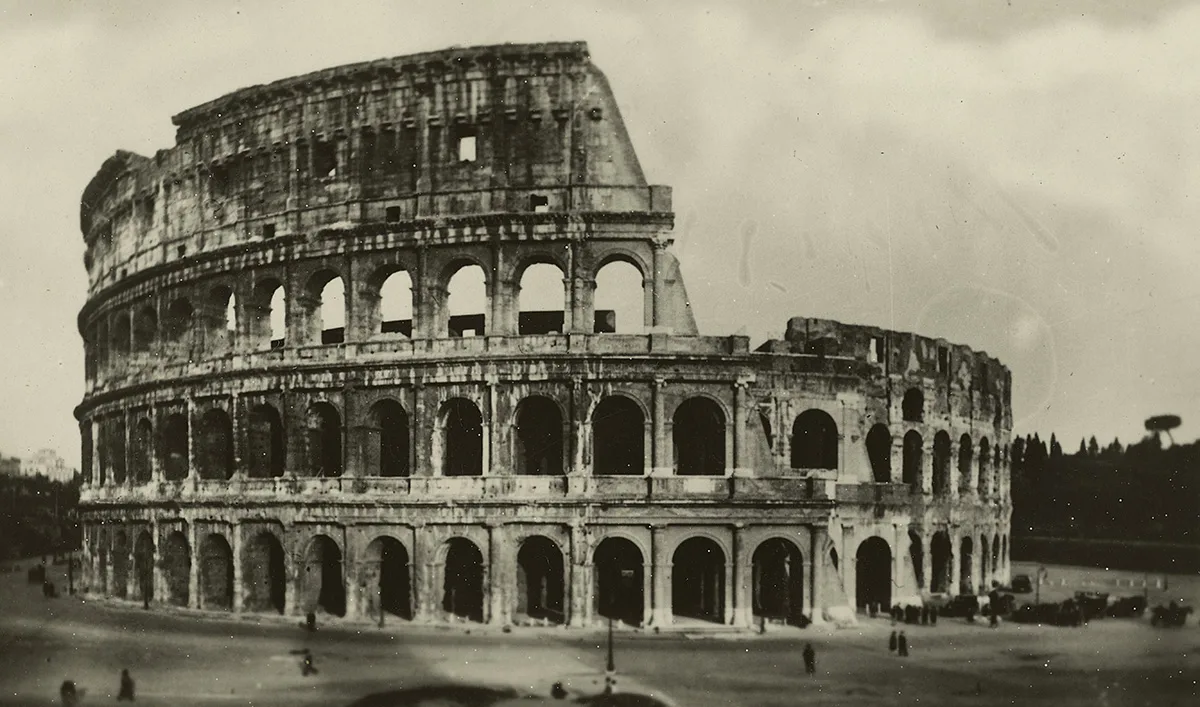
The Colosseum in Rome: the world’s most famous amphitheatre.
The Colosseum in Rome: the world’s most famous amphitheatre. e-pics
Most gladiators came from the lower social classes. Often they were prisoners of war, slaves or convicted criminals that were forced to fight in the arena. But the world of gladiators was more complex than it may first appear. Some free men also opted for this dangerous life. Known as auctorati, they enrolled for a certain length of time – sometimes driven by a thirst for adventure, but more often due to financial hardship. Women also occasionally appeared as gladiators.
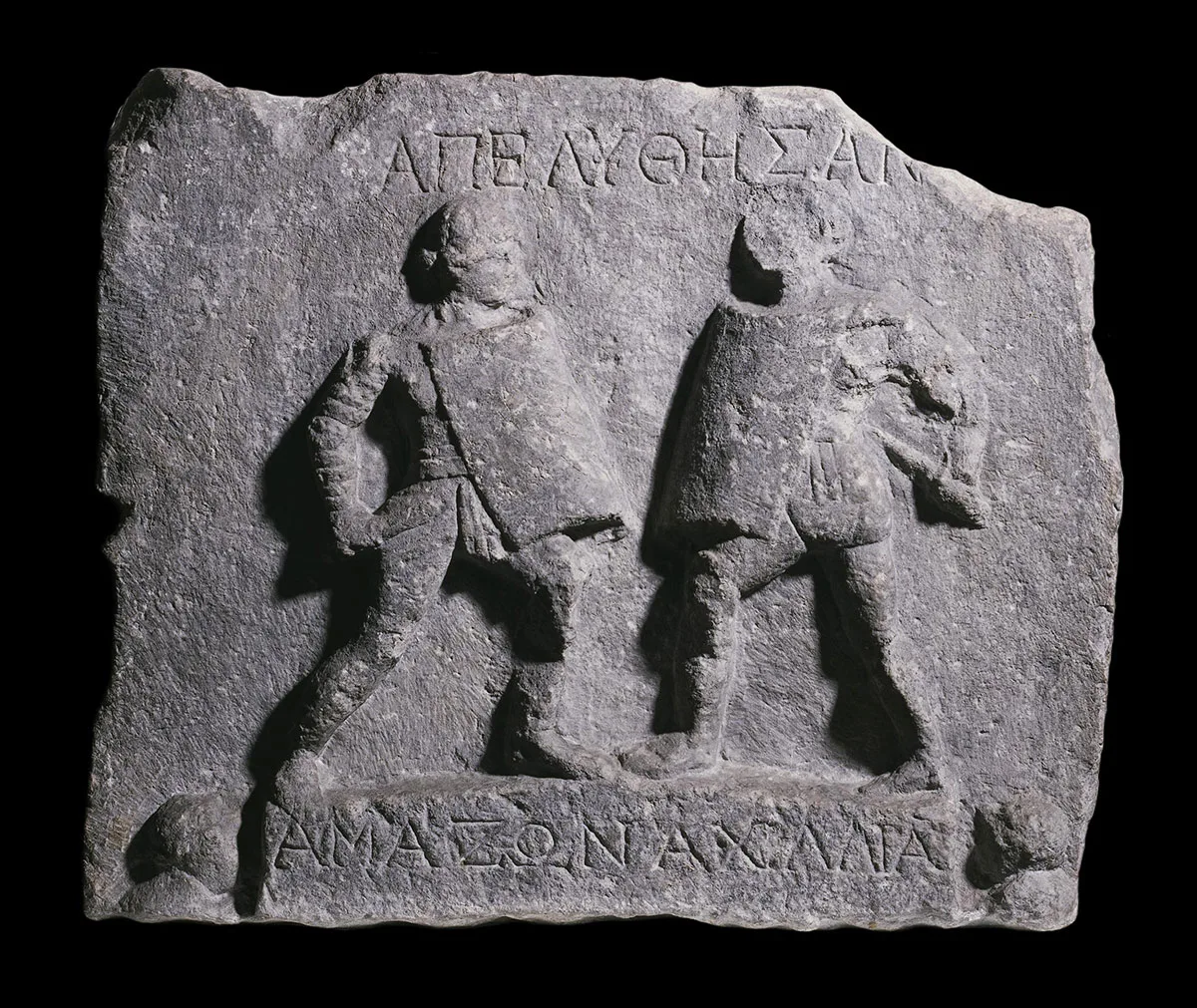
A marble relief from Halicarnassos (Turkey) shows a gladiatorial duel.
A marble relief from Halicarnassos (Turkey) shows a gladiatorial duel. © The Trustees of the British Museum
A gladiator’s life was highly regimented. The combatants lived and trained in special schools or barracks, known as ludi. They were supervised by a trainer, or lanista. Gladiators usually started training with a wooden stake before they went head to head with blunt practice weapons. Despite the brutality of the arena, the medical care they received was surprisingly advanced, as gladiators were a costly investment. Their diets were also carefully tailored. Gladiators were often called ‘barley eaters’ as their diet mainly consisted of grains and plant-based foods. This helped them build muscle mass while developing a protective layer of fat. Inside the gladiator schools, the fighters formed a community, which was known as the familia gladiatoria.
A day in the gladiatorial arena followed a set structure. It started with the pompa, a ceremonial parade as the gladiators and organisers entered the amphitheatre. Animal baiting and the execution of criminals would often take place in the morning. The actual gladiatorial fights – the highlight of the event – would then be held in the afternoon. Contrary to modern-day notions, these games were not a chaotic bloodbath. A referee strictly enforced the rules. A fight usually only lasted ten to fifteen minutes. The organiser often let the crowds decide whether the defeated gladiator should be spared. The life expectancy of a gladiator was short and many died after just a few fights. Successful combatants, however, could earn glory and rewards. In rare cases, they were even granted freedom – symbolised by a wooden sword, known as a rudis.
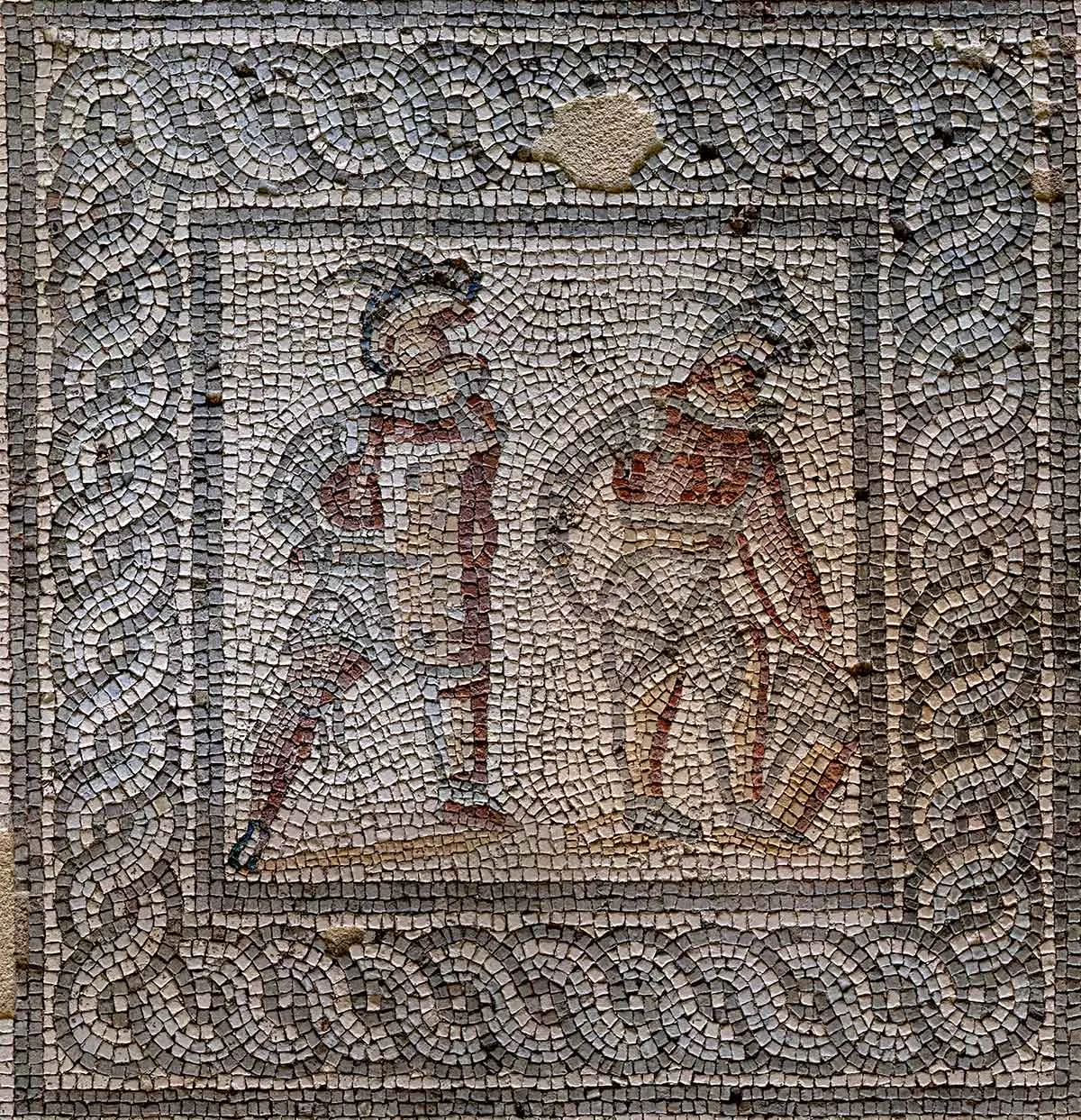
Gladiator mosaic from Augusta Raurica dating back to the 3rd century CE.
Gladiator mosaic from Augusta Raurica dating back to the 3rd century CE. © Augusta Raurica, Susanne Schenker
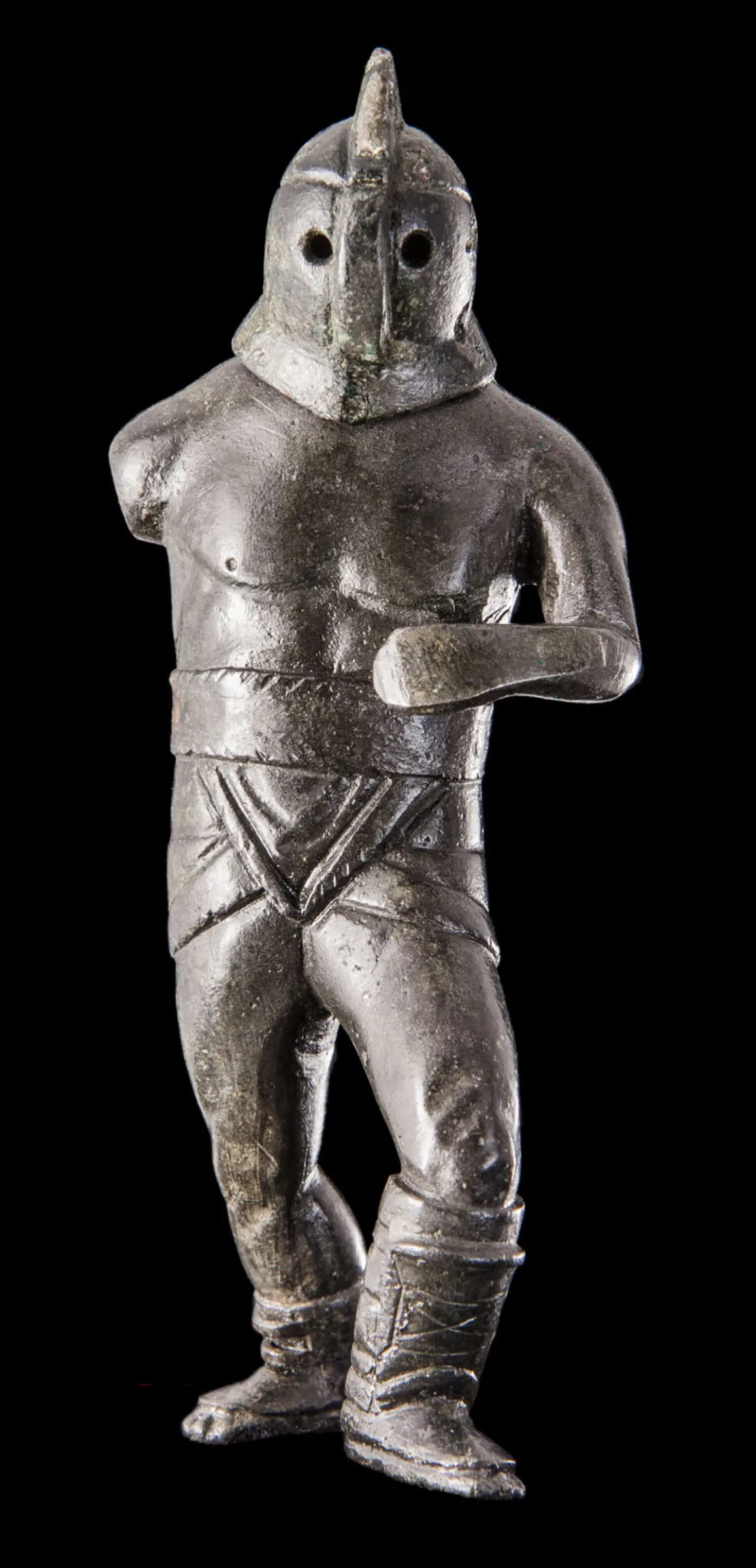
Gladiatorial fights were also very popular in Roman Switzerland. While there are no written sources documenting the lives (or deaths) of gladiators in the territory that is now Switzerland, archaeological discoveries attest to their great importance. Particularly impressive is the famous gladiator mosaic from Insula 30 in Augusta Raurica with its detailed combat scenes. Gladiators were also a ubiquitous motif on everyday objects. Clay oil lamps, knife handles, small bronze statuettes and glass jars with depictions of gladiators show the extent to which these figures shaped the popular imagination. There are also surviving graffiti scratched into the walls of Augusta Raurica and Avenches that can be interpreted as gladiators.
Bronze statues of gladiators were sought after.
Bronze statues of gladiators were sought after. © Site et Musée romains d'Avenches, photo NVP3D
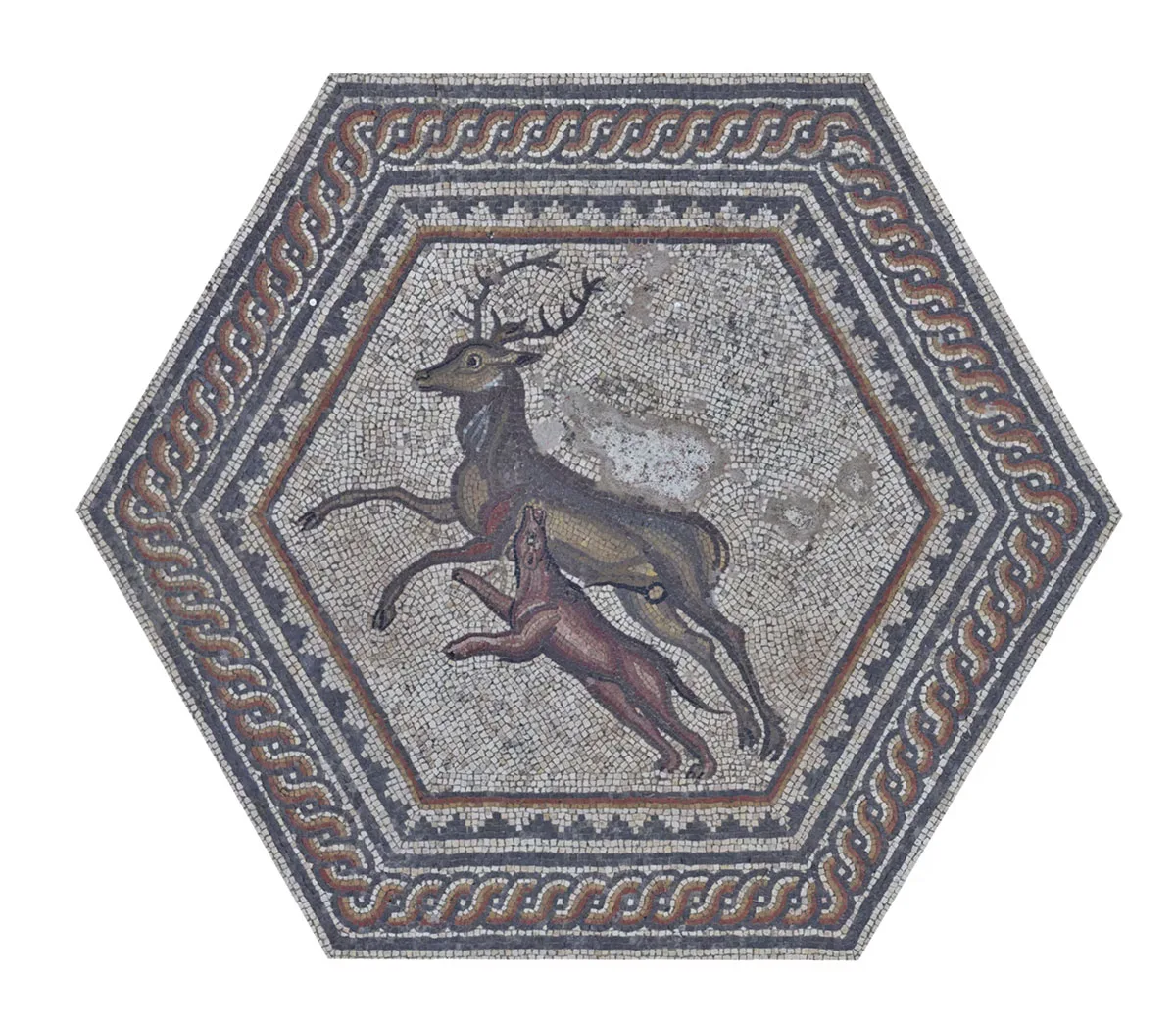
Besides duels between gladiators, ‘venationes’ (a form of animal baiting) were also among the most popular arena games. They involved specially trained hunters battling against wild animals, or animals fighting each other. There is evidence to suggest that such performances also took place in Switzerland. A bear’s skull was found in a well in Kaiseraugst, for example, and its fangs had been filed down while it was still alive. This would have caused the animal a great deal of pain and it died several months later, but this procedure suggests that the bear may have been destined for performances in the arena. The famous mosaic in the Roman villa in Vallon in the canton of Fribourg in French-speaking Switzerland also vividly illustrates this type of hunting scene.
Detail of the Venatio Mosaic from the villa in Vallon: a hunting hound attacking a deer.
Detail of the Venatio Mosaic from the villa in Vallon: a hunting hound attacking a deer. Musée Vallon
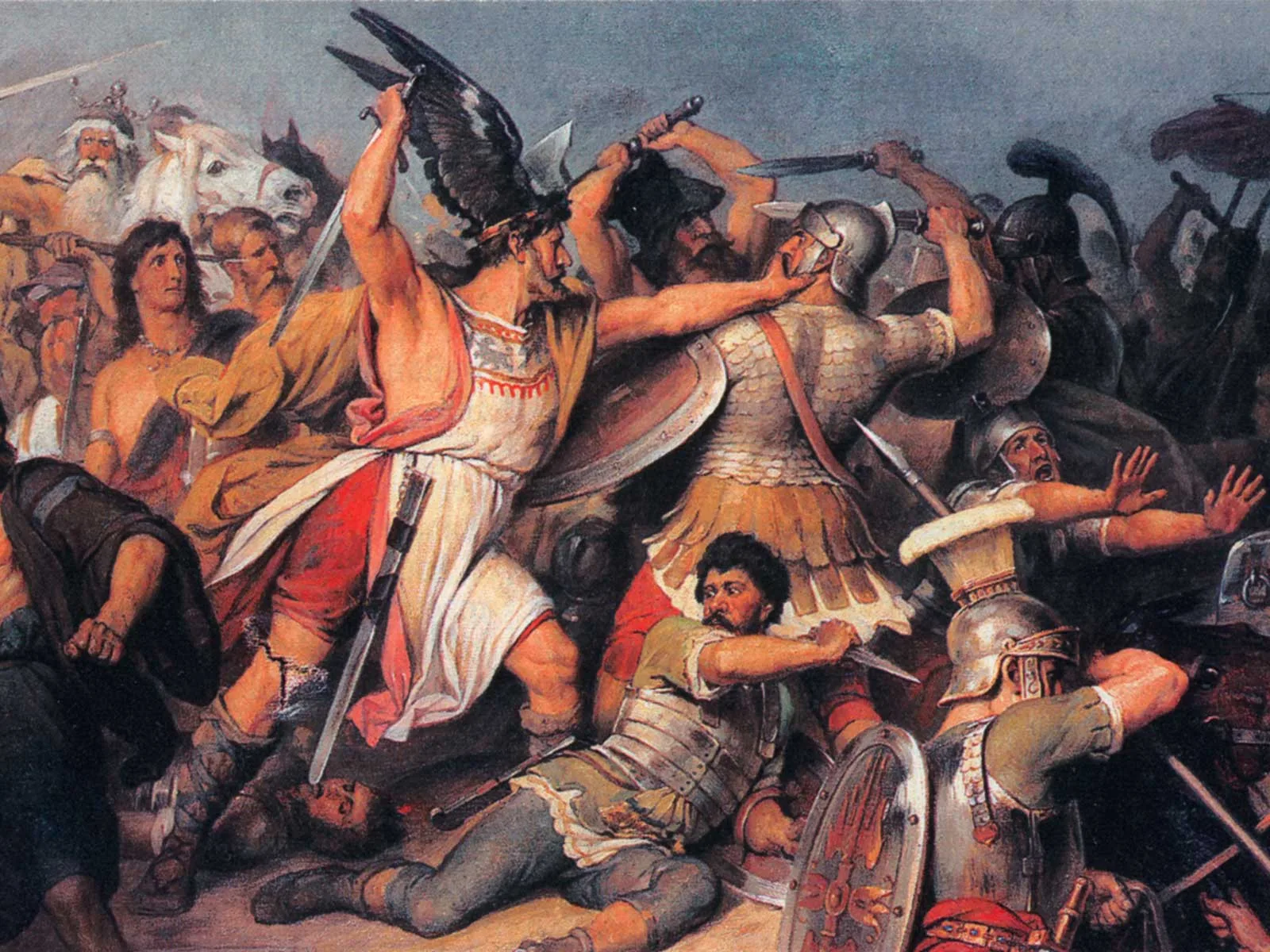
Thanks to the discoveries from Pompeii, we know a lot about the gladiators’ ceremonial weapons. Tombstones and ancient sources even reveal the names of individual gladiators. Despite their lowly social status, they sometimes became real crowd favourites. The most famous gladiator in history is Spartacus, who led a major slave revolt against Rome in the 1st century BCE. Less well known – but of particular interest from a Swiss perspective – is the Gallic gladiator Crixus. He was one of Spartacus’ fellow combatants and was a member of the Allobroges tribe whose settlement area stretched as far as modern-day Geneva.
Over the course of the 4th century, attitudes to the arena games increasingly changed. As Christianity spread, gladiatorial fights in particular came under fire, with church fathers branding them immoral and incompatible with the new religion. Animal hunts continued to be performed for a while longer. But with the political and economic changes in the late Roman empire, and the decline of the major urban financing systems, this era of bloody arena games eventually came to an end, too.

Further posts