When industry meets arts and crafts…
It's amazing what a finger ring can tell you. For example, the life story of Josiah Wedgwood, who elevated pottery to an art form in the 18th century and did not shy away from industrialisation.

Beatriz Chadour-Sampson
Based in England Beatriz Chadour-Sampson is an international jewellery historian. Her publications range from Antiquity to the present day, such as 2000 Finger Rings from the Alice and Louis Koch Collection, Switzerland (1994) of which she continues to be a consultant for the Swiss National Museum.
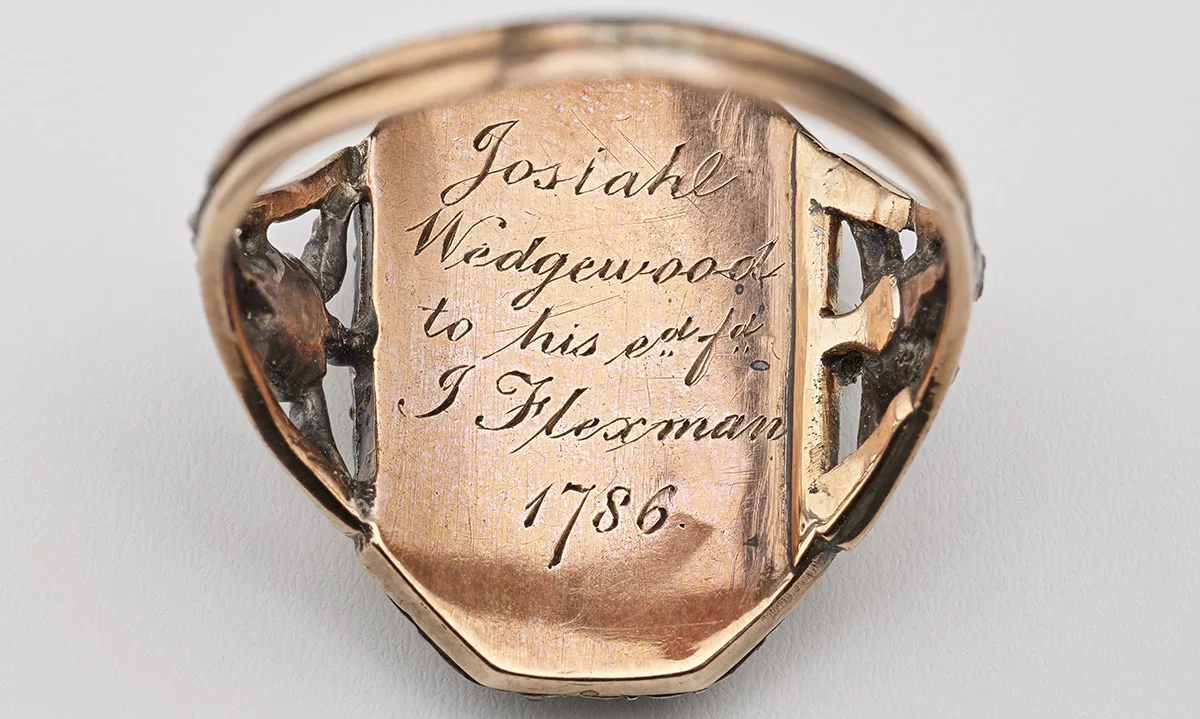
The inscription records a close friendship between an influential entrepreneur and an acclaimed sculptor, artist and designer.

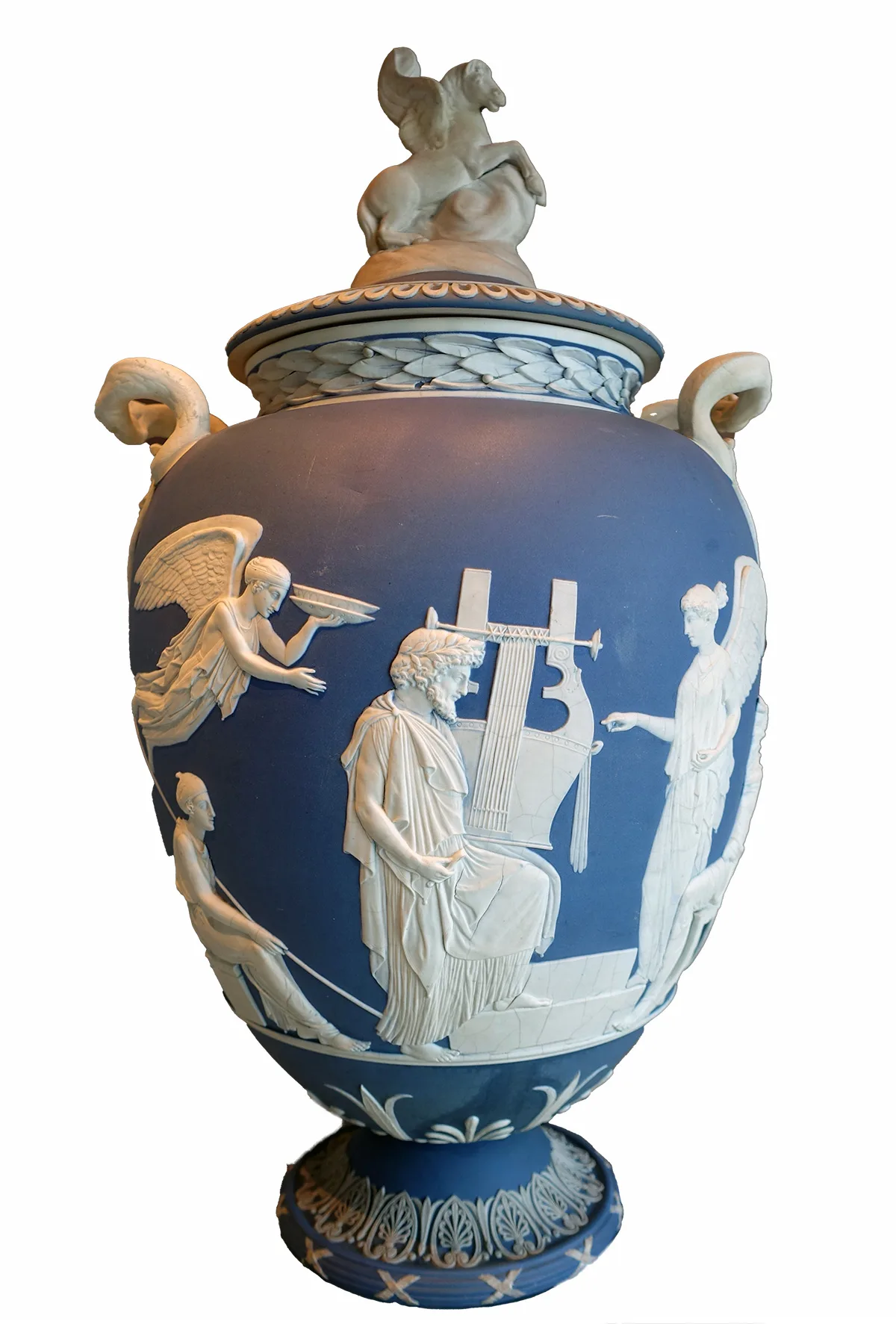
Flaxman remodelled the figures and scenes decorating Hamilton’s ancient vases to suit the Neoclassical taste of his day, the most notable of which was his Apotheosis of Homer relief of c. 1778. His design drawings, models and reliefs were translated onto wares of ‘black basalt’, a new fine-grained black stoneware developed by Wedgwood and occasionally decorated with red and white encaustic painting imitating the red-figure vases of Ancient Greece. Later, they were produced on jasperware, a hugely successful creation of Wedgwood’s made in varying shades of blue, green, lilac, yellow or black with scenes in white relief. Wedgwood experimented well over 5000 times between 1771 and 1774 in the process of perfecting this new ceramic, which he named after the gemstone jasper.
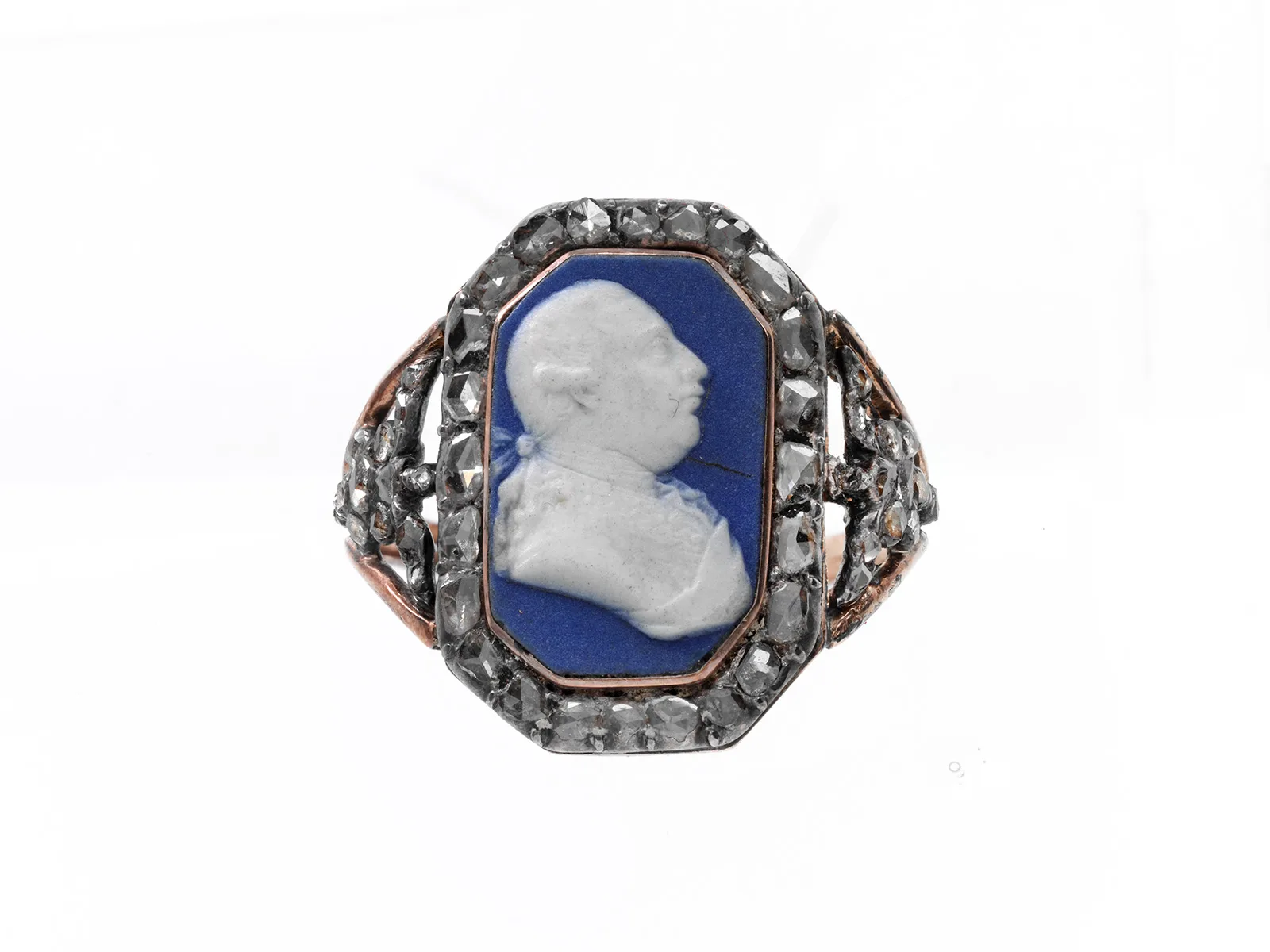
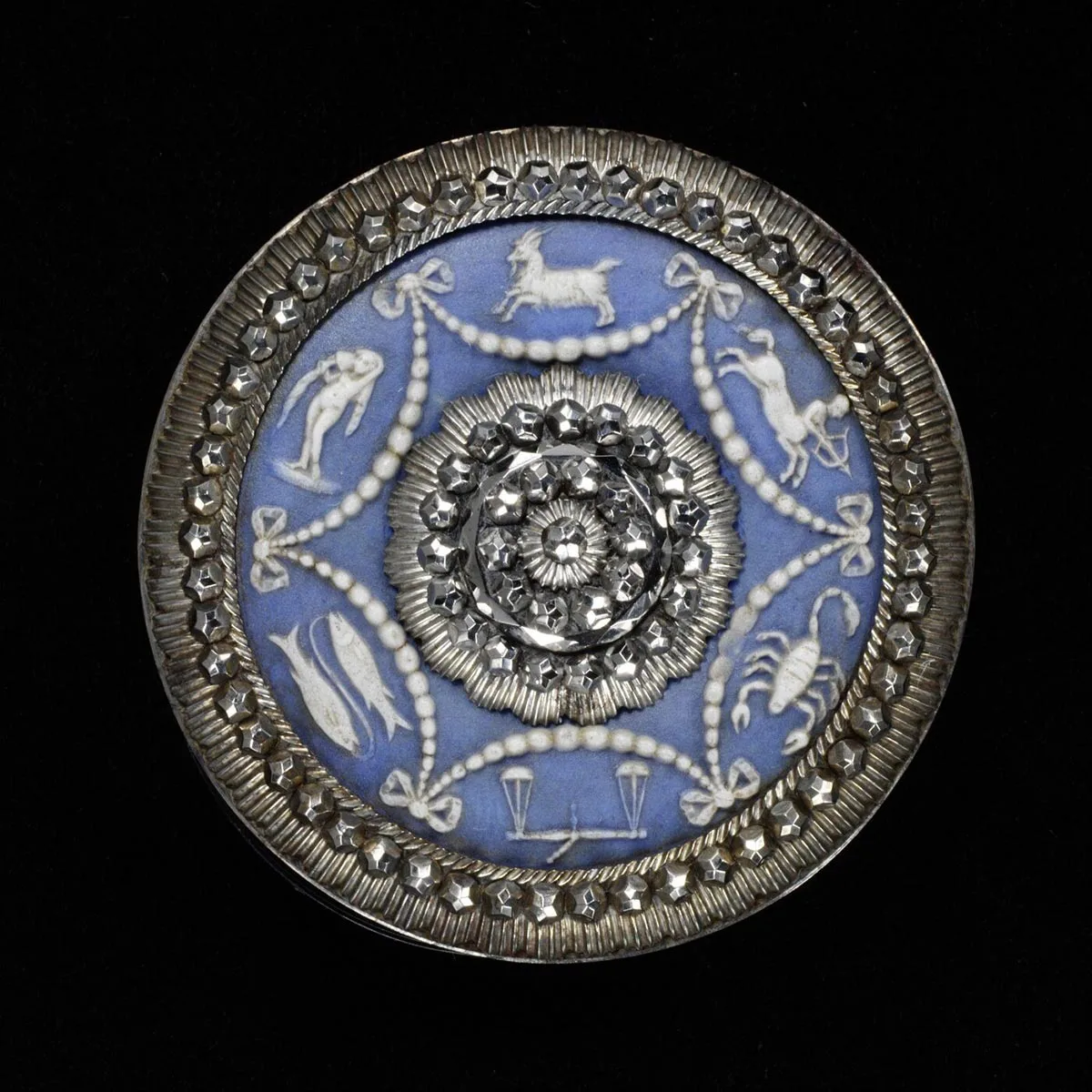
The most well recognised of his jasperwares is undoubtedly Wedgwood Blue, seen here in the portrait cameo ring. By 1787 Flaxman had raised enough funds to visit Italy to study the arts, a trip that lasted seven years but during which he continued to send designs back to Wedgwood who had supported him throughout his career. The ring is likely to have been a farewell gift to Flaxman in 1786 before the sculptor embarked on his Italian adventure.

The collection
The exhibition showcases more than 7,000 exhibits from the Museum’s own collection, highlighting Swiss artistry and craftsmanship over a period of about 1,000 years. The exhibition spaces themselves are important witnesses to contemporary history, and tie in with the objects displayed to create a historically dense atmosphere that allows visitors to immerse themselves deeply in the past.