One of the first package holidays: adventure and education included
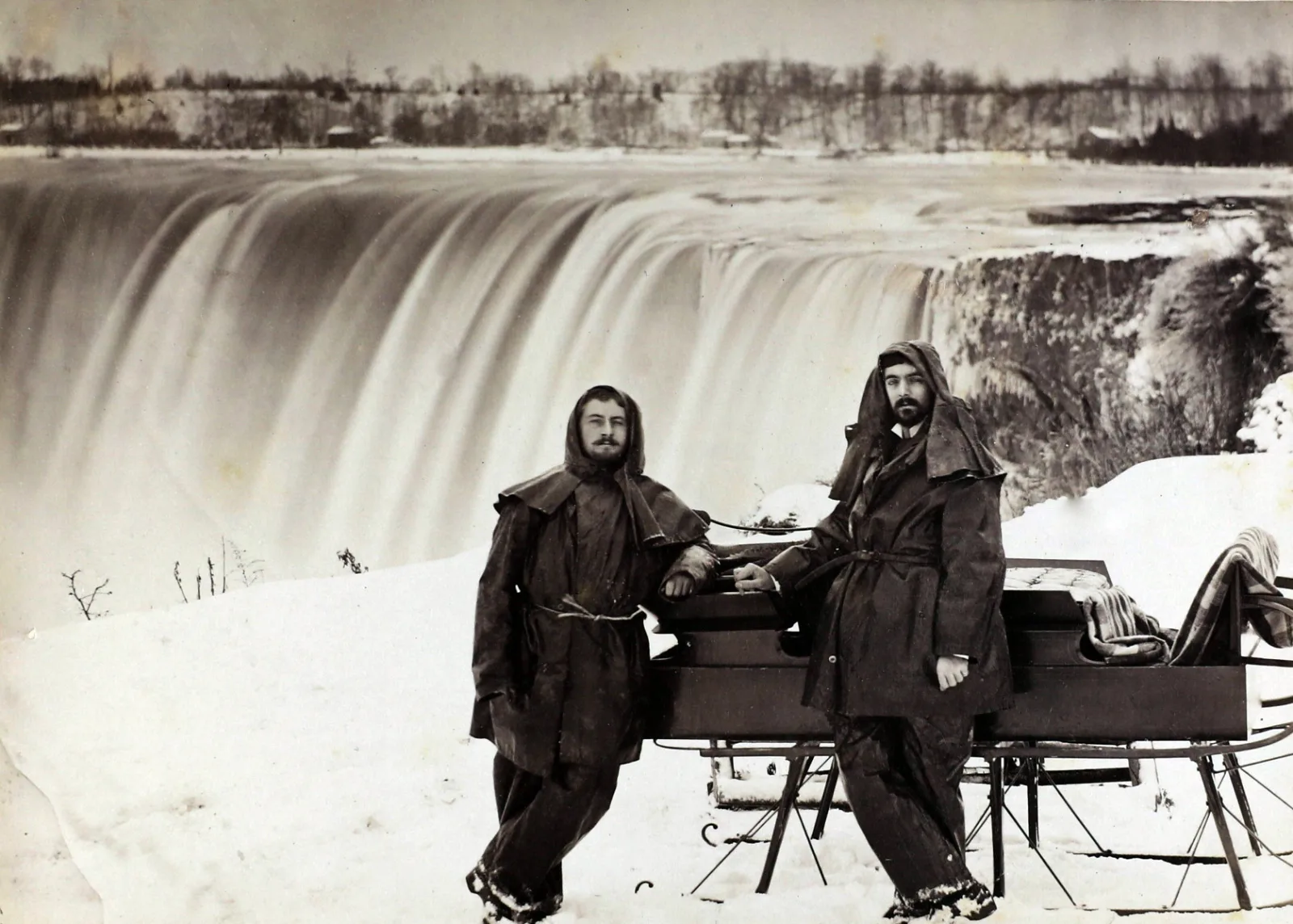
Alfred Bertrand (1856-1924) and Emilio Balli (1855-1934) embarked on their round-the-world trip on 1 August 1878 in Marseille. They were among the first five Swiss tourists to circumnavigate the globe.

Lionel Gauthier
Lionel Gauthier is curator of the Lake Geneva Museum in Nyon.
That changed in 1869 with the opening of the Suez Canal and the railway connection going across the United States. French geographer Vivien de Saint-Martin wrote at the time: “A direct and uninterrupted line navigated by the rapid steam-powered engine now encompasses the entire globe”. That’s how it became possible for a private individual to travel round the world for fun. This inspired Jules Verne to write his novel ‘Around the World in Eighty Days’, which was published in 1872 and enhanced the appeal of travelling round the world still further.
The first tourists started travelling round the world in 1869. Three years later, eight tourists embarked on a package world tour offered by Thomas Cook. In fact, he organised these package tours annually from 1873 until his death in 1892.
Thomas Cook, inventor of the package holiday
Englishman Thomas Cook organised a train trip for about 500 people from Leicester to the neighbouring town of Loughborough on 5 July 1841 for a temperance meeting. As a committed teetotaller, he wanted to offer the working class the trip as a worthwhile leisure activity. The price included transport and the organisation plus a ham sandwich and a cup of tea - the idea of the package tour was born.
An innovative combination
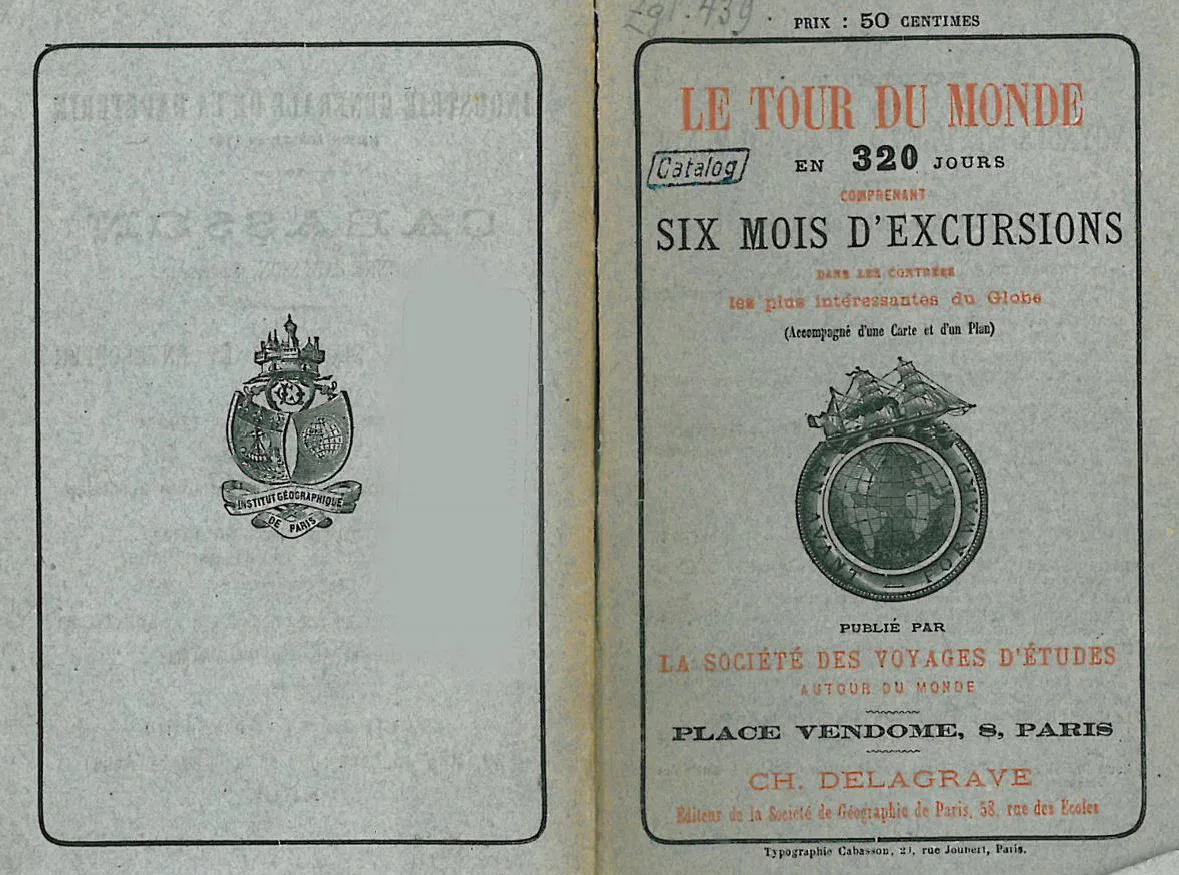
The combination of a package world trip with a study tour, similar to the Grand Tour of Europe enjoyed by young, affluent people from at least the 16th century, was an innovation. Originally scheduled for 1877, the trip was delayed by a year – probably because there weren’t enough people. It was an expensive journey: 15,000 French francs to travel in a three-person cabin and 25,000 French francs for a single cabin. To put that in perspective: in 1878 a person working in a small industry in Paris without including meals earned 5.18 French francs per day on average.
Alfred Bertrand, born in Geneva in 1856, was the youngest member of the expedition. He quickly became friends with Emilio Balli from Ticino who was one year older. Another Genevan, Alfred Audéoud, only joined the first part of the trip.
The SVEAM great package tour
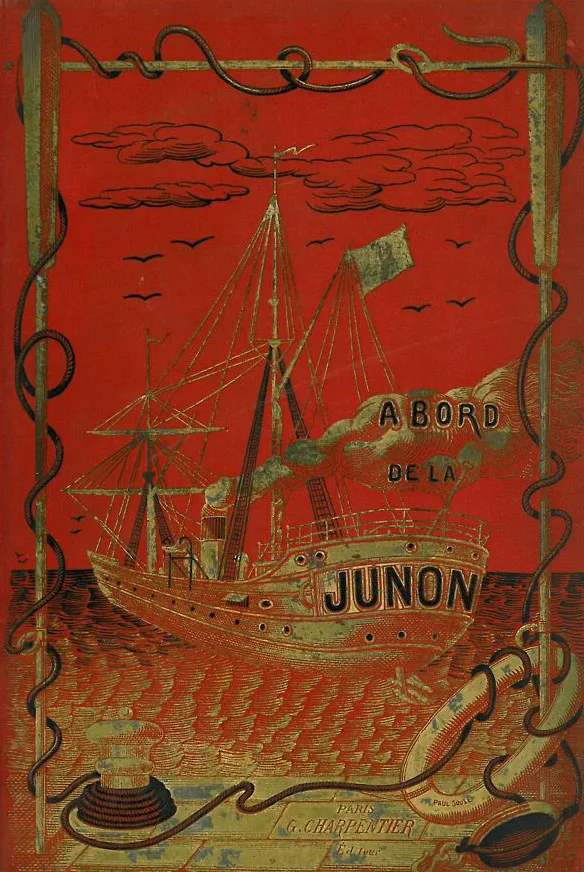
Following stops in Gibraltar and Madeira, the group reached São Vicente instead of (as originally planned) Dakar, where a yellow fever epidemic had just broken out. Following a 15-day crossing, the ship docked in the bay at Rio de Janeiro on 3 September. La Junon then went on to Montevideo and Buenos Aires. It crossed the Strait of Magellan and reached Valparaiso on 13 October, Callao on 30 October and Panama on 14 November.
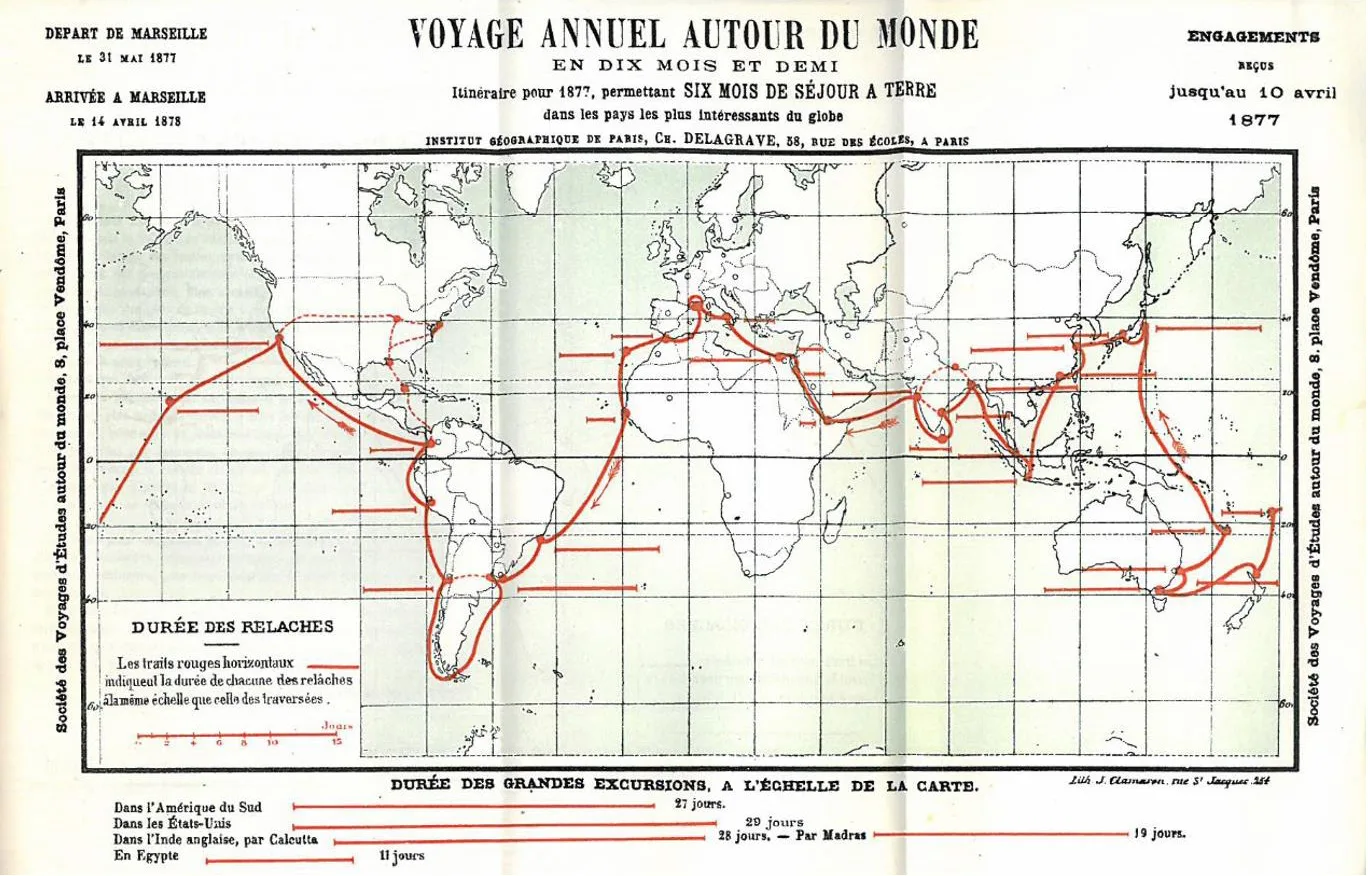
The SVEAM tour ended abruptly in Panama due to a financial irregularity between the company and the shipowner. The crew took the ship back to Marseille. The return journey took a disastrous turn when a yellow fever epidemic broke out on board. Seven crew members died during the journey from Rio de Janeiro to Marseille. SVEAM did not survive its failed journey and was dissolved shortly thereafter. Most of the tour members returned to Europe via New York with the Thomas Cook agency. A handful of travellers decided to continue their world tour.
The second half of the journey round the world
It turned out to be a proper voyage of initiation for both young men. Alfred Bertrand’s widow confirmed that in 1925: “Not only did the expedition awaken a passion within him for faraway cruises, his power of observation, love of independence and endless tenacity in surmounting obstacles, it also really firmed up his moral fibre. As he said himself, he returned a man.”