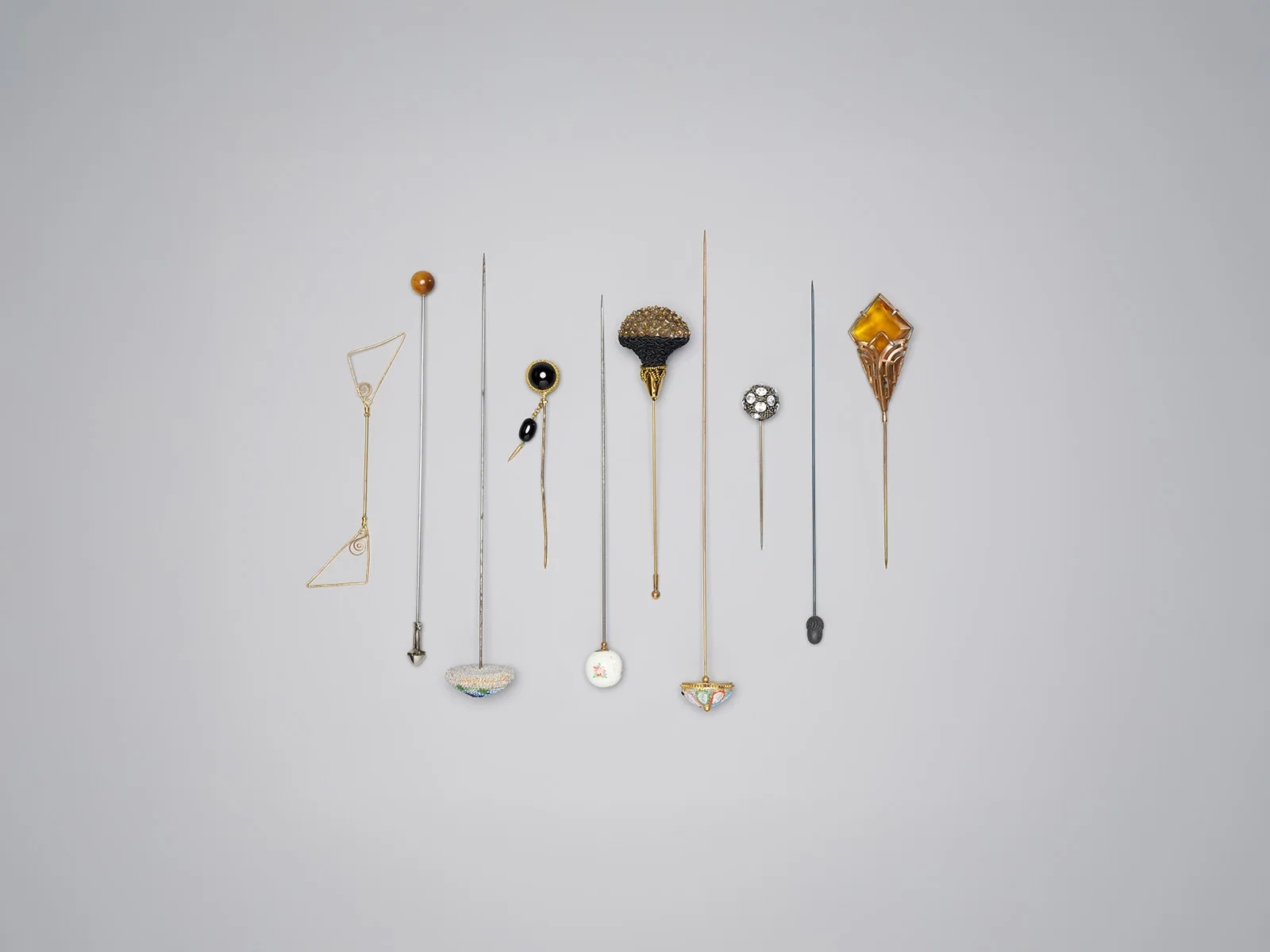
Hatpins in a wide variety of designs and materials, showing the dizzying choice available to women wishing to add an individual touch to their hat.
Hatpins in a wide variety of designs and materials, showing the dizzying choice available to women wishing to add an individual touch to their hat. Swiss National Museum

An accessory with a dangerous twist

Hatpins were all the rage from 1890 to 1920, essential for holding broad-brimmed 'cartwheels' in place. While the choice of design could be used to make an individual fashion statement, their points tended to protrude dangerously from the hat they secured.

Jasmin Mollet

Jasmin Mollet

Jasmin Mollet is an art historian currently working as an assistant curator at Basel Historical Museum
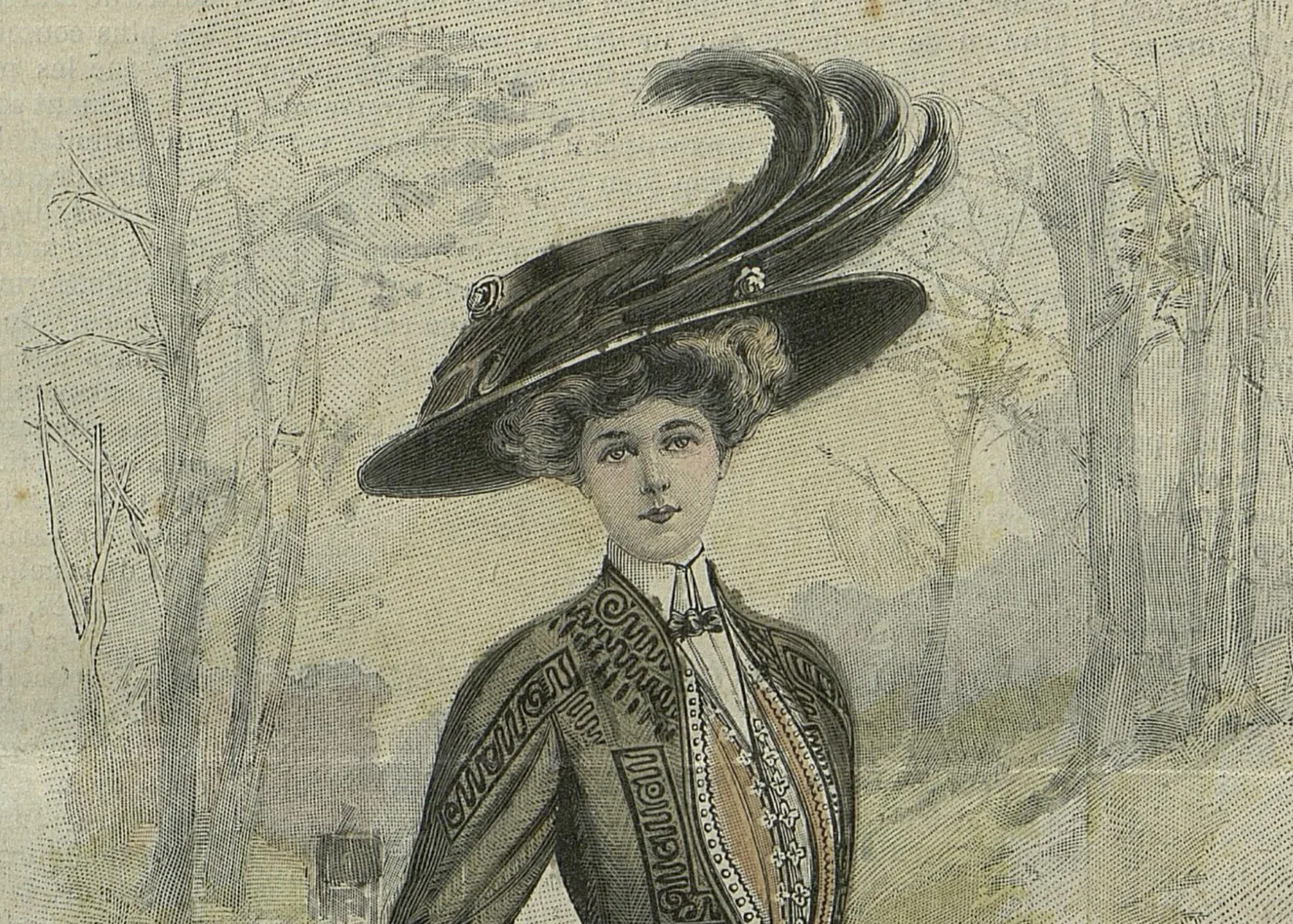
Although largely overlooked as an accessory today, there was a time when no self-respecting woman in Western society would have been seen without a hatpin. In the decades spanning 1890 to 1920, ladies' fashion was dominated by slim silhouettes contrasted with increasingly voluminous headwear. Brims grew to extravagant proportions, measuring anything from 60 centimetres to a metre in diameter, subsequently earning these hats the nickname 'cartwheels'. They were adorned with artificial flowers, feathers and, in some instances, even an entire stuffed bird. All of which meant that these sizeable creations had to be fastened securely to the wearer's head – with a hatpin. Although already in use since the 1840s, hatpins were initially shorter and purely decorative. From 1870, they began to 'grow' in length to match the increasing size of the hats. A hat was held in place on the wearer's head by passing the pin through the crown and weaving it into the piled-up hair beneath. But from its beginnings as a functional item, the hatpin quickly metamorphosed from practical necessity to stylish must-have, desired by women everywhere and soon becoming all the rage.
Woman sporting a large, ornate hat in the 15 November 1908 issue of 'La Mode illustrée' fashion magazine
Woman sporting a large, ornate hat in the 15 November 1908 issue of La Mode illustrée fashion magazine Ville de Paris / Bibl. Forney

The ultimate charm, circa 1900

It was not only its utility that made the hatpin such a highly coveted fashion accessory, but also the wide array of forms it could take. There were no limits to the design of the endpiece, or head, and the great variety of hatpins still to be found in museum collections and antique shops today shows the broad spectrum of materials, forms and colours used. Pinheads ranged from the simple and round, made of imitation pearl, to mushrooms fashioned from fabric and studded with sequins or even small pieces of ceramic featuring detailed miniature portraits. Hatpins could be made from highly affordable metal alloys and rhinestones, but they could also be expensive luxury items crafted from gold and gems. In other words, hatpins became so popular because they afforded all women the opportunity to add an individual touch to their outfits, whatever their budget. Wearers chose hatpins that reflected their interests or matched their mood or the season. For example, a pin with a head in the form of a tennis racket might have signalled that its owner was a keen player. Or it could have been worn in reference to a sporting competition, thus demonstrating that the lady in question was fully au fait with current events. A hatpin featuring mosaic work known as pietra dura had probably been bought as a souvenir during a trip to Italy. Emotions and dress codes also found expression in the headgear worn: when in mourning, women would reach for hatpins with a black decorative endpiece. To ensure the wearer had a suitable hatpin for every occasion and outfit, they became popular collector's items. Like the charms used today to turn bags or shoes into individual statement pieces, the wide array of forms and colours available made hatpins the accessory of choice around 1900 when it came to adding a touch of personal flair.
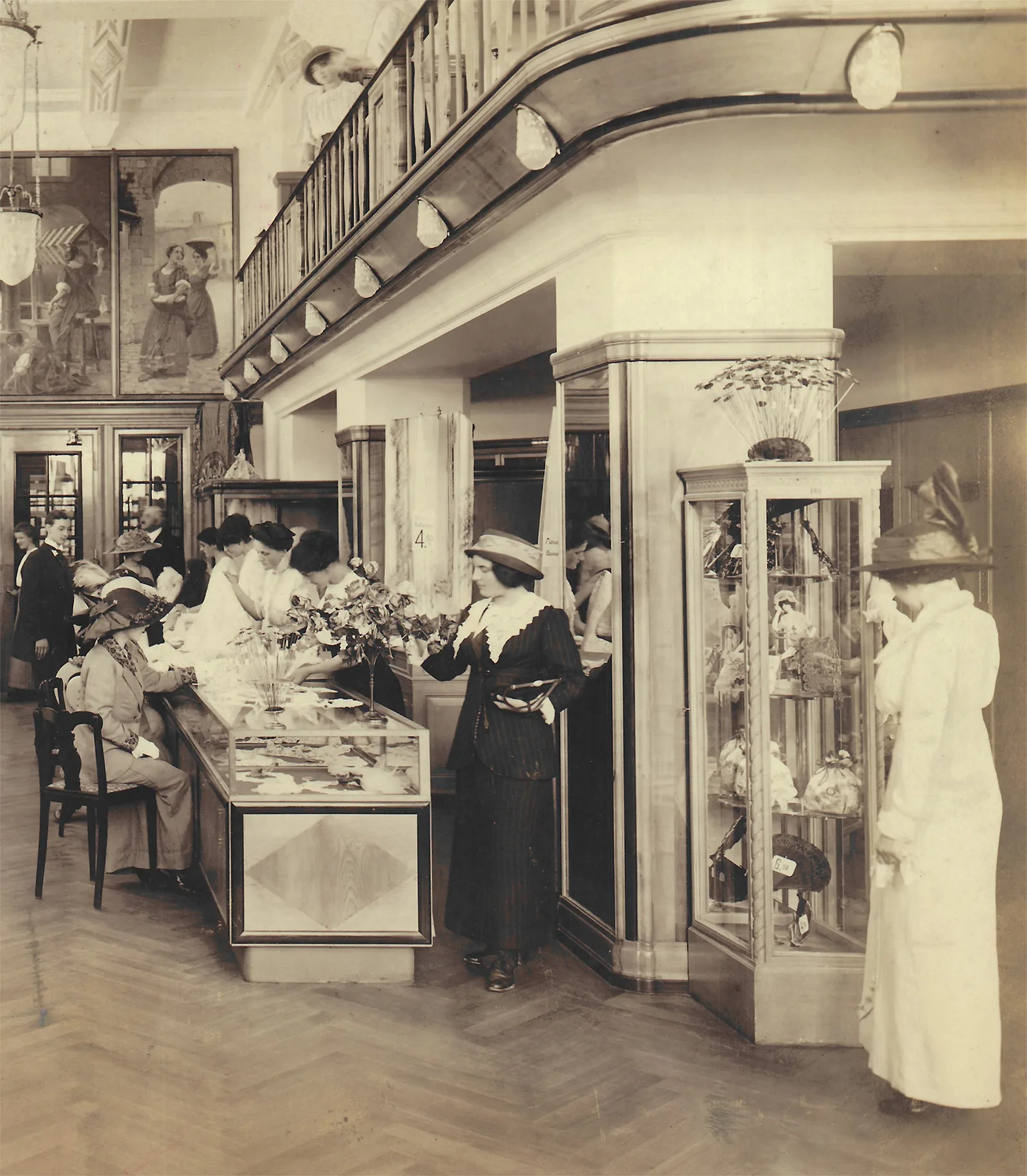
The Grieder fashion emporium stocked an assortment of hatpins and artificial flowers for embellishing hats, 1913.
The Grieder fashion emporium stocked an assortment of hatpins and artificial flowers for embellishing hats, 1913. Stadtarchiv Zürich

Striking a blow for emancipation

But the hatpin craze also ran into a backlash. The trend towards ever bigger hats came at a time when trams were becoming more widespread in the towns and cities. In a crowded tramcar, a long, sharp hatpin poking out from the wearer's hat could pose the threat of injury. In 1890, for example, the Schweizer Frauen-Zeitung, a women's weekly magazine, wrote about an incident in Berlin in which a young woman lost her balance as the tram rounded a sharp bend, accidently gouging out a gentleman's eye with her hatpin. Reports of similar hatpin-related accidents became more and more commonplace, stoking resentment towards this everyday accessory. Although derided as a "bad female habit", now that it had inadvertently been transformed into a weapon the hatpin gave women a new feeling of safety in public spaces. Thus, writing in response to a reader's question, the Schweizer Frauen-Zeitung advised women in 1898 to take a "sturdy, sharp hatpin" with them when travelling by overnight train so that they could fend off any would-be attackers. Hatpins meant that women were not only fashionably dressed, they were also armed and ready to defend themselves if need be. A flurry of newspaper articles published around 1910 reported on hatpins ‒ their involvement in accidents and their use in self-defence and even in attacks on supposedly innocent men in European and American towns and cities. The "hatpin peril" caused a moral panic and divided public opinion. The hatpin's role in women's liberation and the uproar it caused at a time when the issue of women's suffrage was being hotly debated, proved disadvantageous. While the hullaballoo over hatpins was certainly not the sole reason for the failure of the first initiatives in favour of women's political participation, it nevertheless shored up prejudices regarding the allegedly reckless and irrational nature of women – a narrative the opponents of universal suffrage were only too happy to peddle.
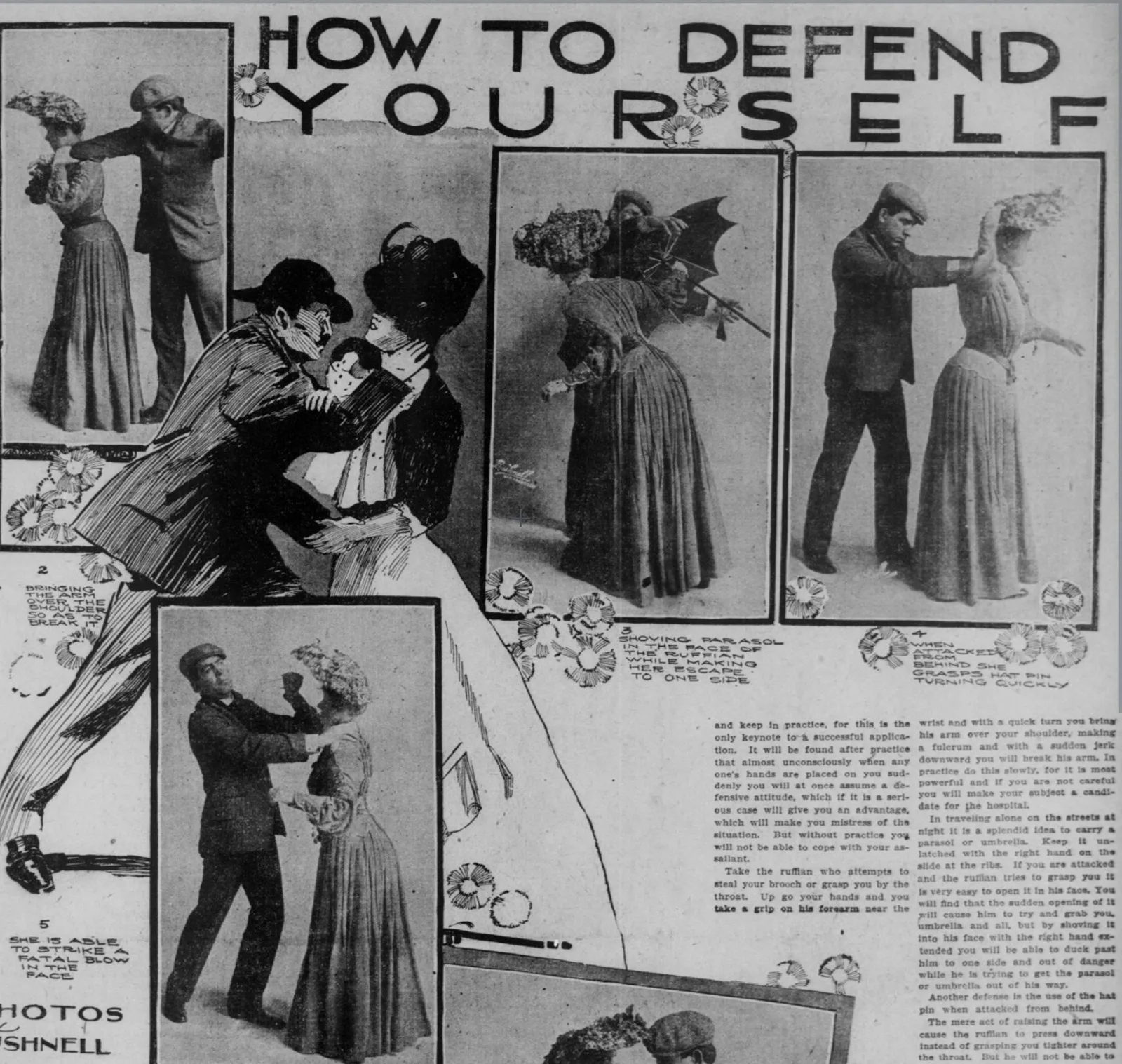
An article from the San Francisco Sunday Call of 21 August 1904 advising women on self-defence. In addition to umbrellas, it recommends hatpins as a means of fending off surprise attacks.
An article from the San Francisco Sunday Call of 21 August 1904 advising women on self-defence. In addition to umbrellas, it recommends hatpins as a means of fending off surprise attacks. California Digital Newspaper Collection
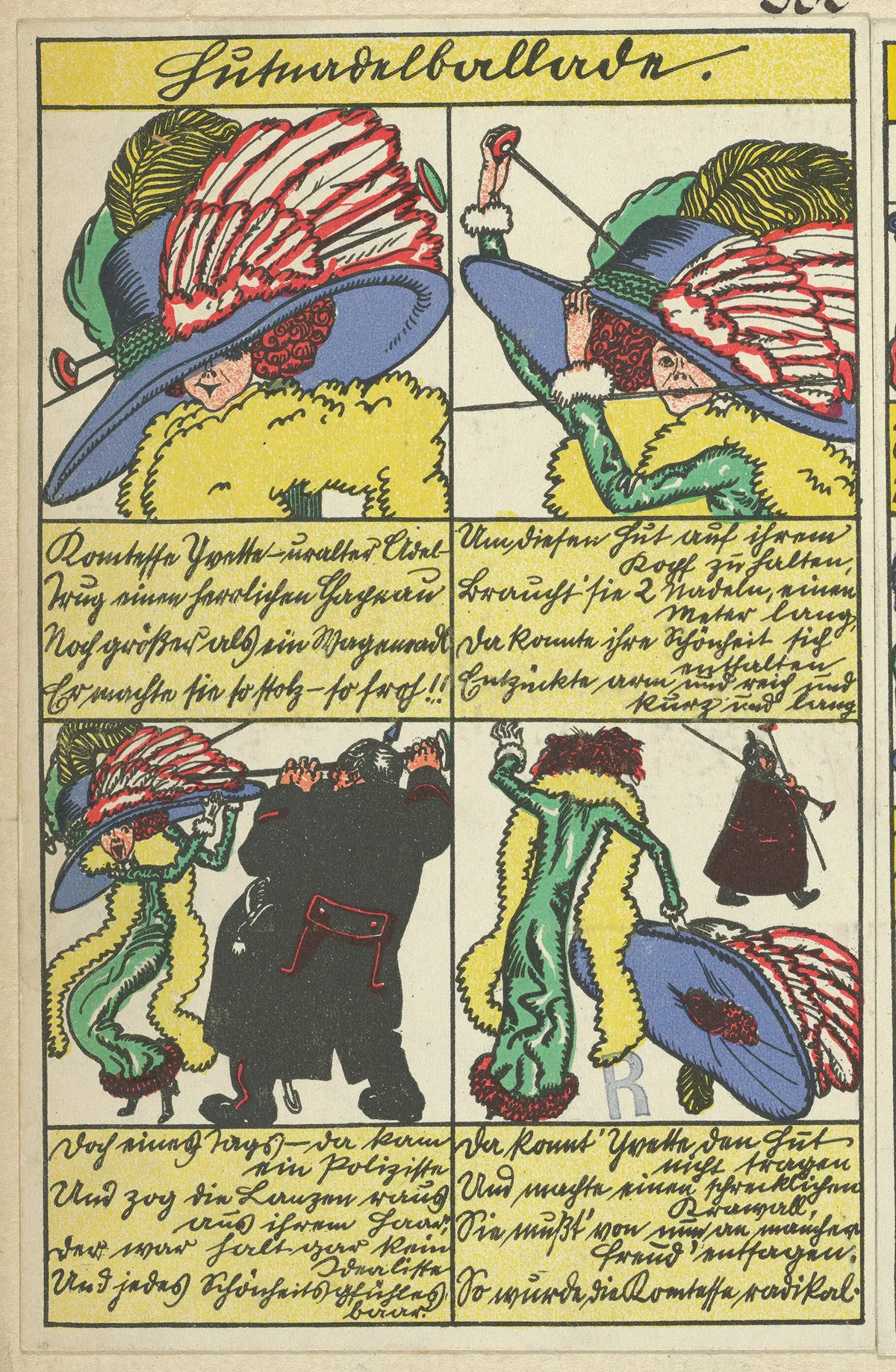
Moritz Jung's 1911 caricature 'Hatpin Ballad' depicts an awkward situation in which a well-to-do lady's pointed hatpin is confiscated by a policeman. Being seen in public without a hat was an absolute 'no-go'.
Moritz Jung's 1911 caricature 'Hatpin Ballad' depicts an awkward situation in which a well-to-do lady's pointed hatpin is confiscated by a policeman. Being seen in public without a hat was an absolute 'no-go'. The Metropolitan Museum of Art

Coming to a pointed end?

In reaction to the increasing headlines about accidents involving hatpins, larger cities like Vienna and Berlin ultimately began introducing bans from 1910. Pins protruding more than a few centimetres beyond the crown of the hat were no longer allowed unless their points were at least covered. These restrictions applied in trams and in public spaces where crowding was likely, such as theatres. An editor of the satiricalmagazine Nebelspalter wrote a humorous poem fantasising about similar legal measures for Switzerland in 1911, a year before the city of Zurich eventually introduced its own ban. Enamel signs were subsequently put up in Zurich trams warning that unprotected hatpins were forbidden. Nevertheless, some women apparently refused to submit to these rules, and tram drivers were advised to have pieces of raw potato at the ready to offer as an emergency solution during the ride. Women still refusing to cover the pointed tip were thrown off the tram and required to pay a fine of up to CHF 10 – a considerable sum at the time. These prohibitions did nothing to lessen the hatpin's popularity and it remained an indispensable accessory for anyone eager to keep up with the fashion for large hats. So it's hardly surprising that numerous patents for protective hatpin caps were filed during that same period.
Enamel signs drew attention to various prohibitions in Zurich trams. Wearing an unprotected hatpin could result in a fine of up CHF 10. Interior of a tram on the Zürich – Oerlikon – Seebach (ZOS) line, circa 1913–1930.
Enamel signs drew attention to various prohibitions in Zurich trams. Wearing an unprotected hatpin could result in a fine of up CHF 10. Interior of a tram on the Zürich – Oerlikon – Seebach (ZOS) line, circa 1913–1930. Tram-Museum Zürich, photo: Irene Wehrli
However, despite this solution, hatpins slowly began to fade from fashionable women's attire. This was not due to the moral panic they caused, but to changes in fashion itself. In the 1920s, brims became smaller again and hats were worn tighter to the head – bell-shaped cloches had come into vogue. Hatpins shrank in length and acquired a decorative protective cap before disappearing from the pages of fashion magazines completely. The warning signs were finally removed from Zurich trams around 1930. Many people today are not aware of this accessory that was all the rage for three decades, during which it served as an enabler of individual expression and self-determination and held fast in the face of regulations banning it. In other words: out of fashion, out of sight, out of mind.

Accessories. Objects of desire

18.07.2025 12.04.2026 / National Museum Zurich
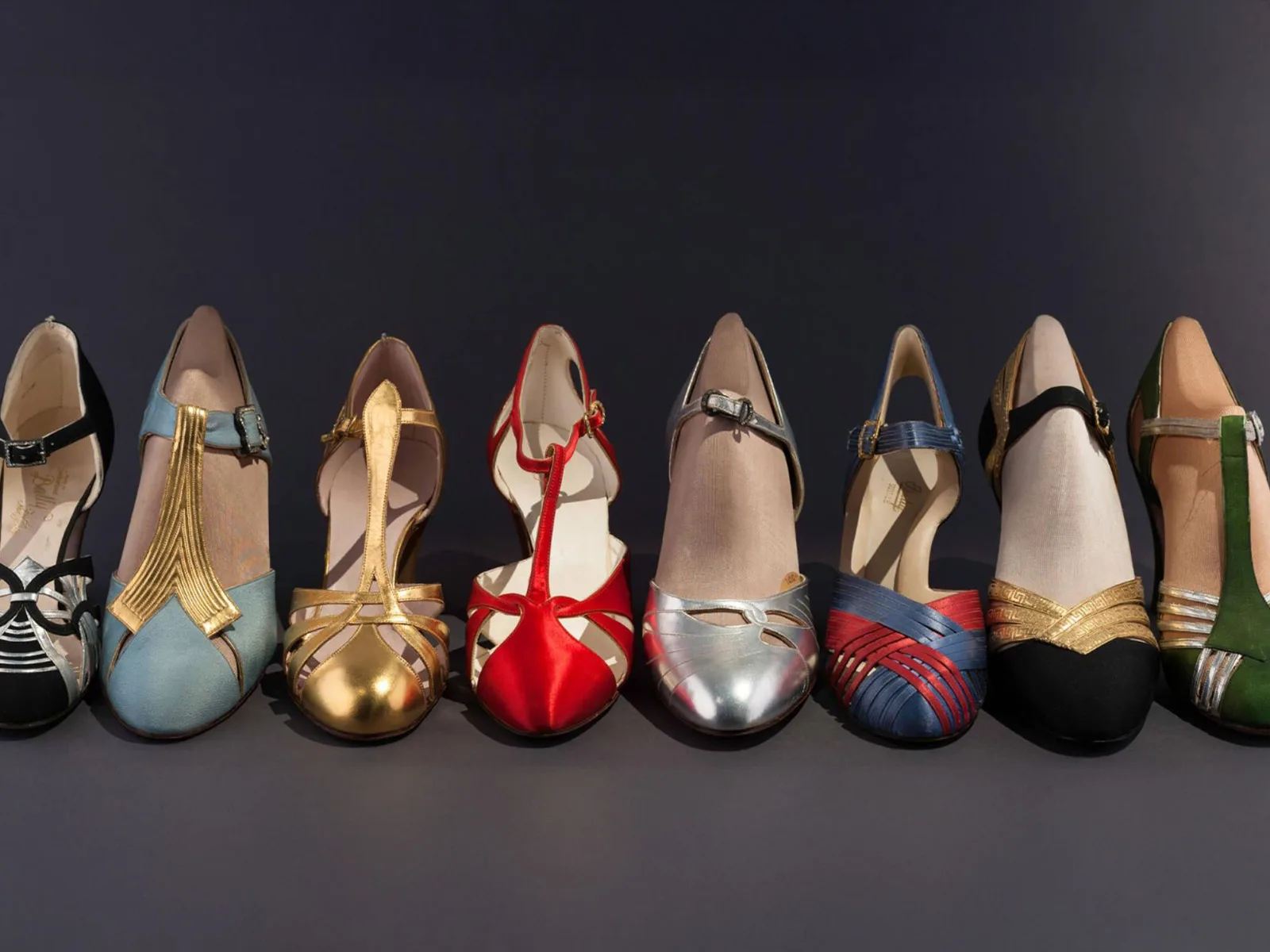
Accessories have always been more than mere decoration: hats, scarves, gloves, bags and shoes reflect social, political and religious affiliation, denote power and status, protect and give form to the body, or represent the latest fashions. The exhibition features items from the Swiss National Museum collection to show how accessories are shaped by social change. From the strict dress codes of the early modern period to current-day trends that play with gender norms, the exhibition takes a look at fashion history from head to toe.

Further posts