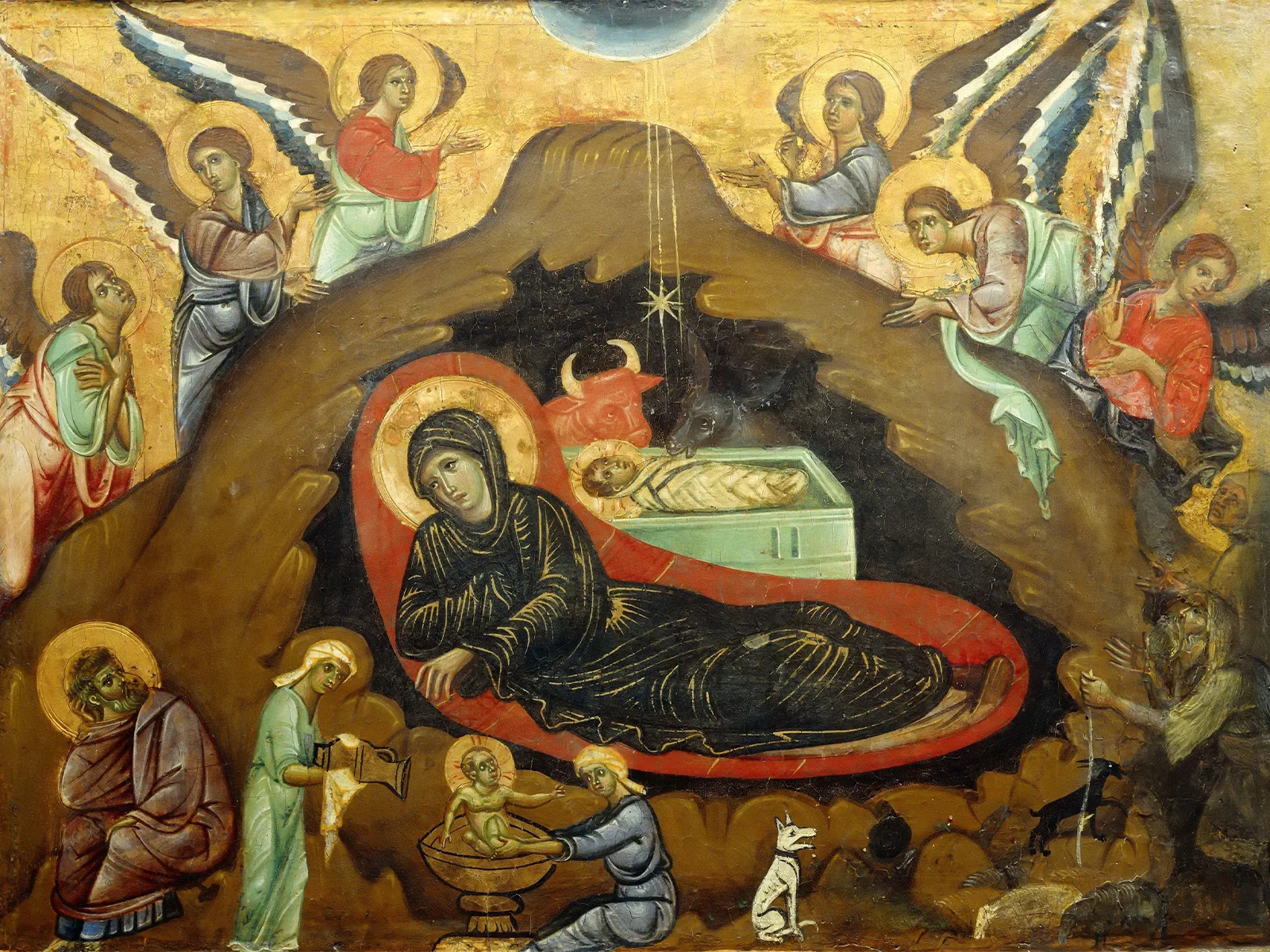
Detail from the Badia Ardenga altarpiece, painted by Guido da Siena, circa 1270.
In this medieval depiction from Italy, the holy family are in a cave, surrounded by angels and shepherds. Detail from the Badia Ardenga altarpiece, painted by Guido da Siena, circa 1270. Wikimedia

Where was Jesus born?

The setting in which Jesus actually came into the world remains a mystery – but the way it has been imagined has shaped Christian Christmas culture for centuries. In art and crib building, the nativity scene has been depicted in various locations, including a stable, a cave, a ruin, and a house, in each case reflecting the values and ways of life of the respective periods.

Alexander Rechsteiner

Alexander Rechsteiner

Alexander Rechsteiner holds an M A in modern English literature and political science and is Head of Marketing & Communication at the National Museum Zurich.

The central motif in the story of Christmas is the birth of Jesus. It is one of the most important events in the church year and is celebrated by most Christians on 25 December. How Jesus’s birth historically came about remains a mystery. The images that shape our ideas about it are mainly from the last 500 years. Depictions from art history show Mary and her child in the open air, in a stable, a cave, or a ruin, surrounded by shepherds and angels. The humble setting is symbolically important as it presents Jesus not as a deity but as a human being, surrounded by ordinary people.
The Bible itself is sketchy on detail regarding the location and the order of events surrounding Christ’s birth. Only Luke specifically recounts the birth in his Gospel, mentioning the fact that Mary and Joseph had travelled to Bethlehem for a census, and describing the shepherds, angels and manger. The standard translation of Luke’s Gospel details the circumstances of the birth:

And she gave birth to her first-born son and wrapped him in swaddling cloth, and laid him in a manger, because there was no room for them at the inn.

Luke 2,7
The idea that Jesus was not born in a palace, but surrounded by ordinary folk, has given rise to many different depictions of Christ’s birth. The moments after the birth are the leitmotif of the nativity scenes that are extremely popular to this day. Over the centuries, artists and crib builders have interpreted this message in various ways and imagined many different locations for Christ’s birth.

The stable

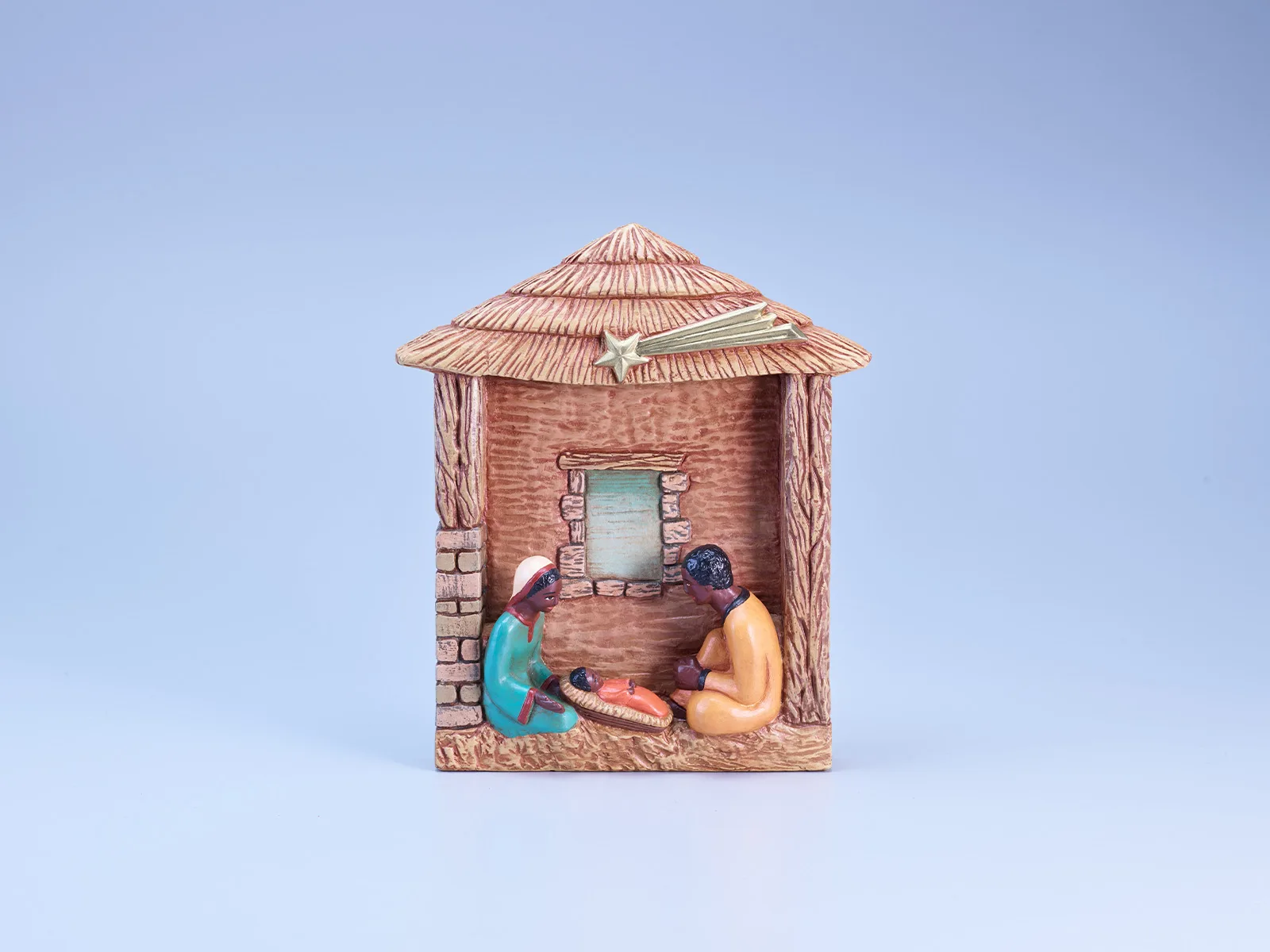
As according to the Gospel of Luke, Mary had to lay her child in a manger, it is natural to assume that they had found shelter in a stable alongside farm animals. The stable is one of the most popular locations for nativity scenes. The configuration of the stable always corresponds to the culture of the place in which the crib was made. Depicting Christ’s birthplace in the local building style expresses a desire to connect this divine event to people’s own lives.
This clay crib from Senegal presents the nativity in a simple shelter with a thatched roof. In keeping with the country of origin, the holy family are black and wear traditional clothing.
This clay crib from Senegal presents the nativity in a simple shelter with a thatched roof. In keeping with the country of origin, the holy family are black and wear traditional clothing. Swiss National Museum

The cave

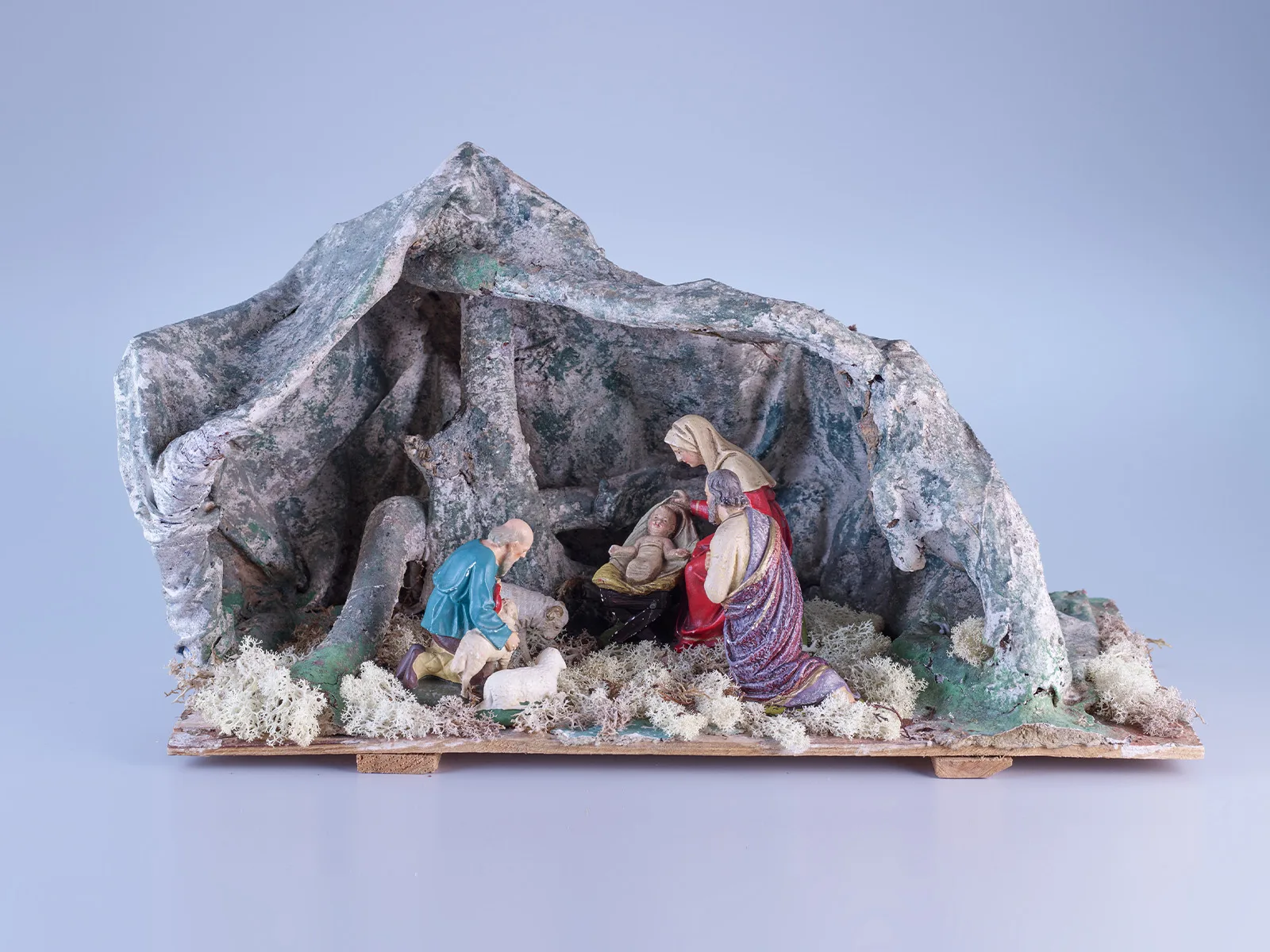
In the middle of the 3rd century, a cave near Bethlehem became a Christian place of pilgrimage. The Church of the Nativity now stands on the site. The motif of the cave also has symbolic significance as the ‘womb of life’ and as a place of safety and protection. In the Old Testament and in mythology, gods and kings are often born in caves. Also, the cave as Jesus’s place of birth pre-empts the location of his burial after the crucifixion.
This nativity scene shows the birth of Jesus in a modest cave. It is made of twigs draped with painted fabric. It was made by nuns at Heiligkreuz Convent in Cham, circa 1930.
This nativity scene shows the birth of Jesus in a modest cave. It is made of twigs draped with painted fabric. It was made by nuns at Heiligkreuz Convent in Cham, circa 1930. Swiss National Museum

The ruin

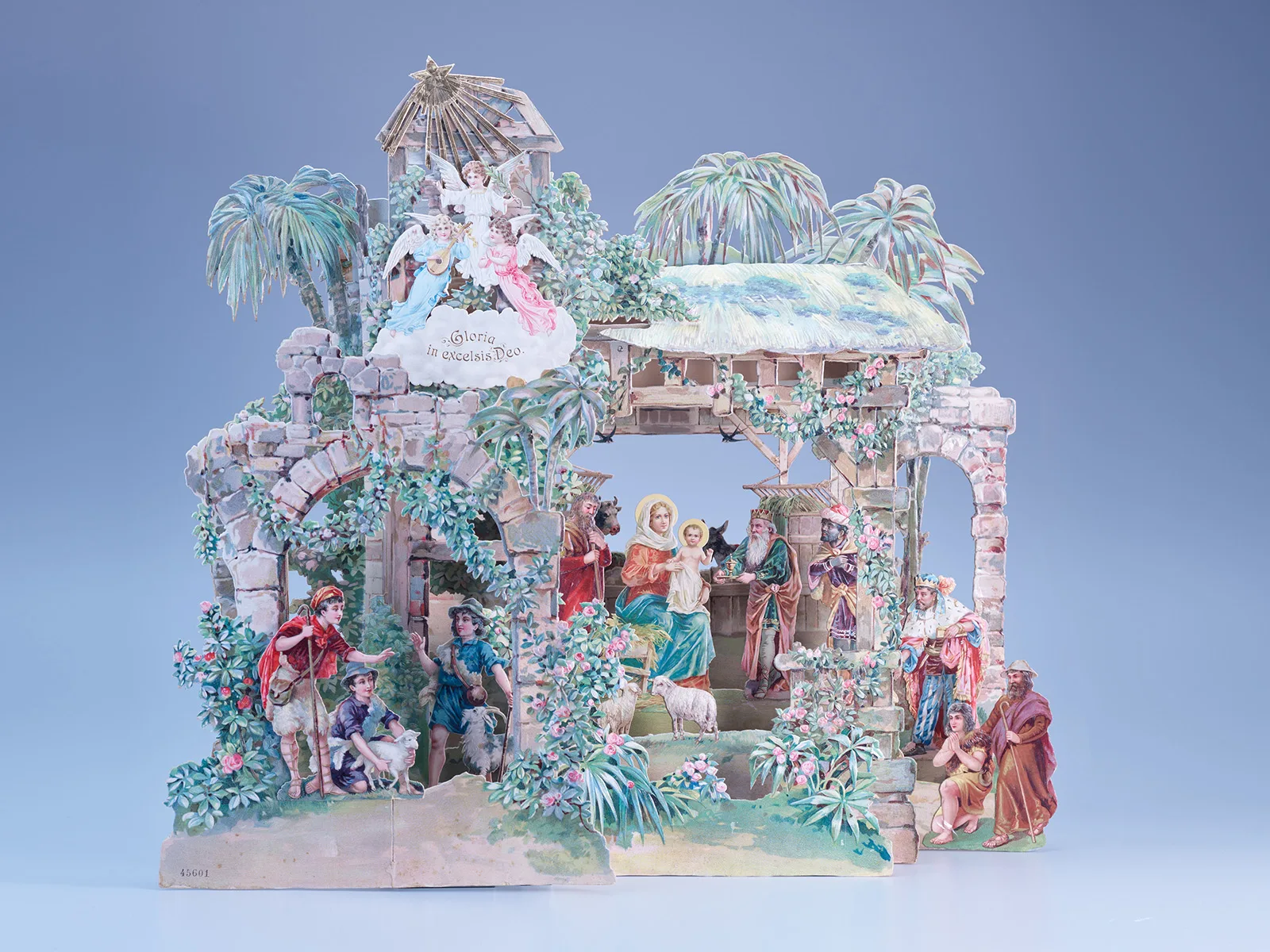
In Romantic painting, the ruin is a popular symbol of change: as the old decays and dies, new life grows and thrives. The ruin is also used as a motif in nativity scenes as the birth of Jesus quite literally marked the beginning of a new era. At the same time, the ruin is a symbol of death and anticipates Jesus’s entombment.
In this folding nativity scene, the holy family is surrounded by semi-derelict stone architecture, overrun with palm trees and flowering creepers. Made from cardboard and paper around 1900, it comes from the Christmas collection of Doris Albrecht-Mäder, Männedorf.
In this folding nativity scene, the holy family is surrounded by semi-derelict stone architecture, overrun with palm trees and flowering creepers. Made from cardboard and paper around 1900, it comes from the Christmas collection of Doris Albrecht-Mäder, Männedorf. Swiss National Museum

The house

The description of the newborn Jesus being laid in a manger seems to suggest that Mary and Joseph must have stayed in a stable. However, between the English translation from the 16th century and the one from the time when the Gospel of Luke was written, there is not only a linguistic divide but even more significant cultural differences.
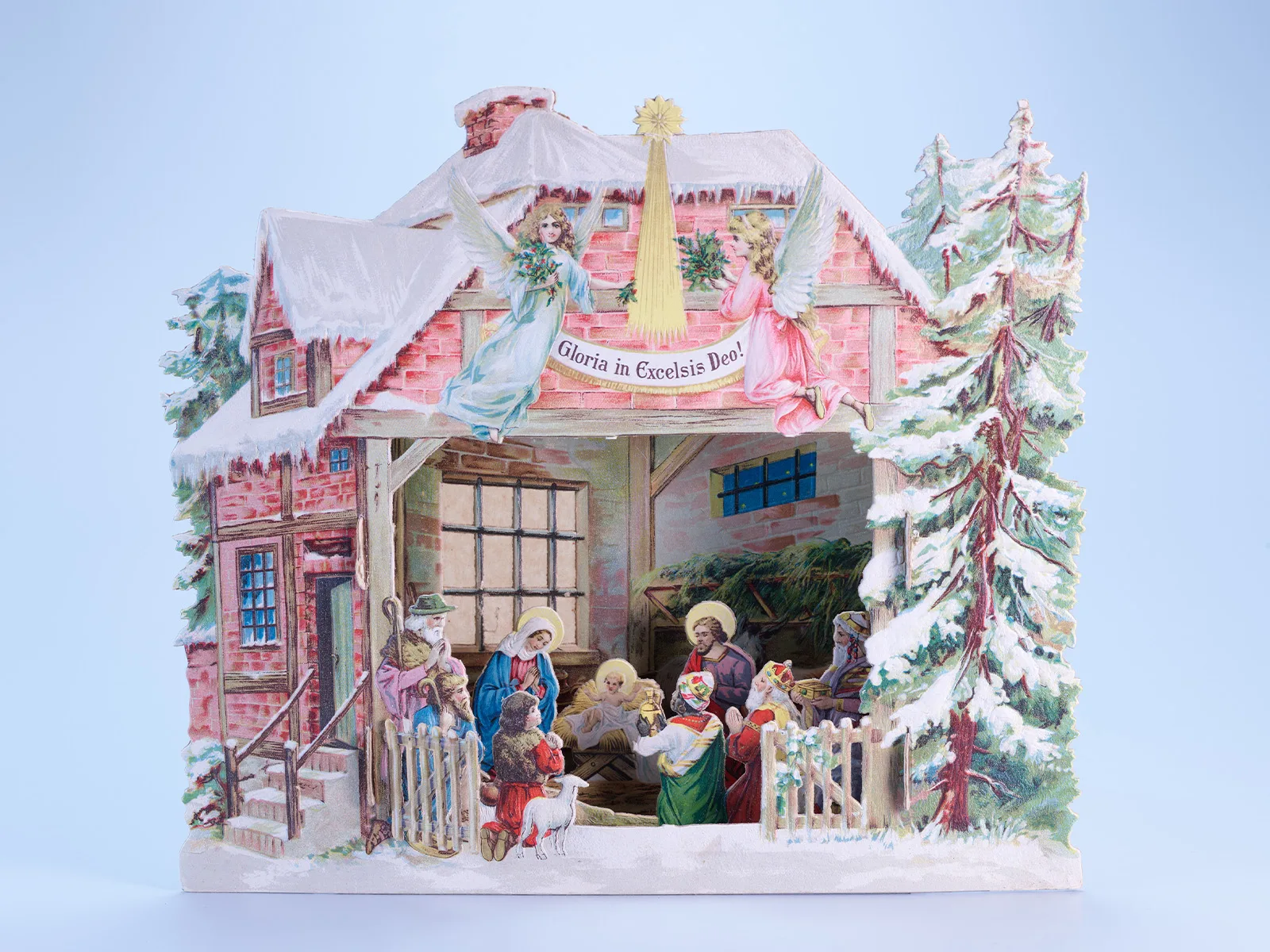
Historians agree that Jesus’s birth as described in the Gospel of Luke would not have taken place in a stable, but probably in a large room in a farmhouse, possibly where the parents’ relatives lived. Jewish farmers lived in single-room houses. When the nights were cold, the animals slept in the house. The living space was on a slightly raised level, while the animals were housed on the lower level fitted with a manger. The baby Jesus may have been laid in a manger like this as the rest of the house was already occupied.
If the nativity scene is depicted in a house, the building usually reflects the local character, like in this example from Germany dating back to 1920. This folding nativity scene from the Spielzeug Welten Museum (Toy World Museum) Basel features a half-timbered, red-brick house.
If the nativity scene is depicted in a house, the building usually reflects the local character, like in this example from Germany dating back to 1920. This folding nativity scene from the Spielzeug Welten Museum (Toy World Museum) Basel features a half-timbered, red-brick house. Swiss National Museum

Further posts