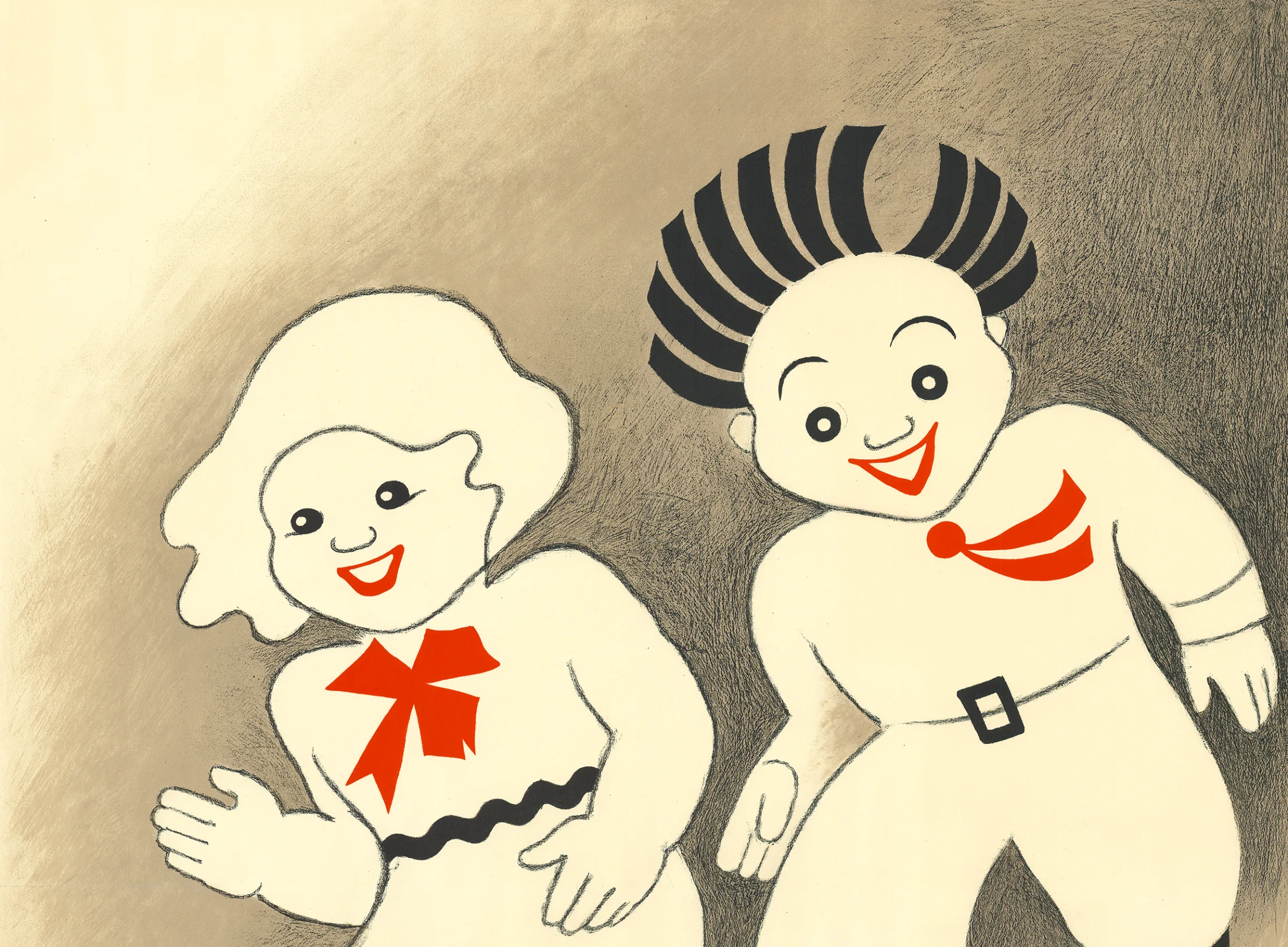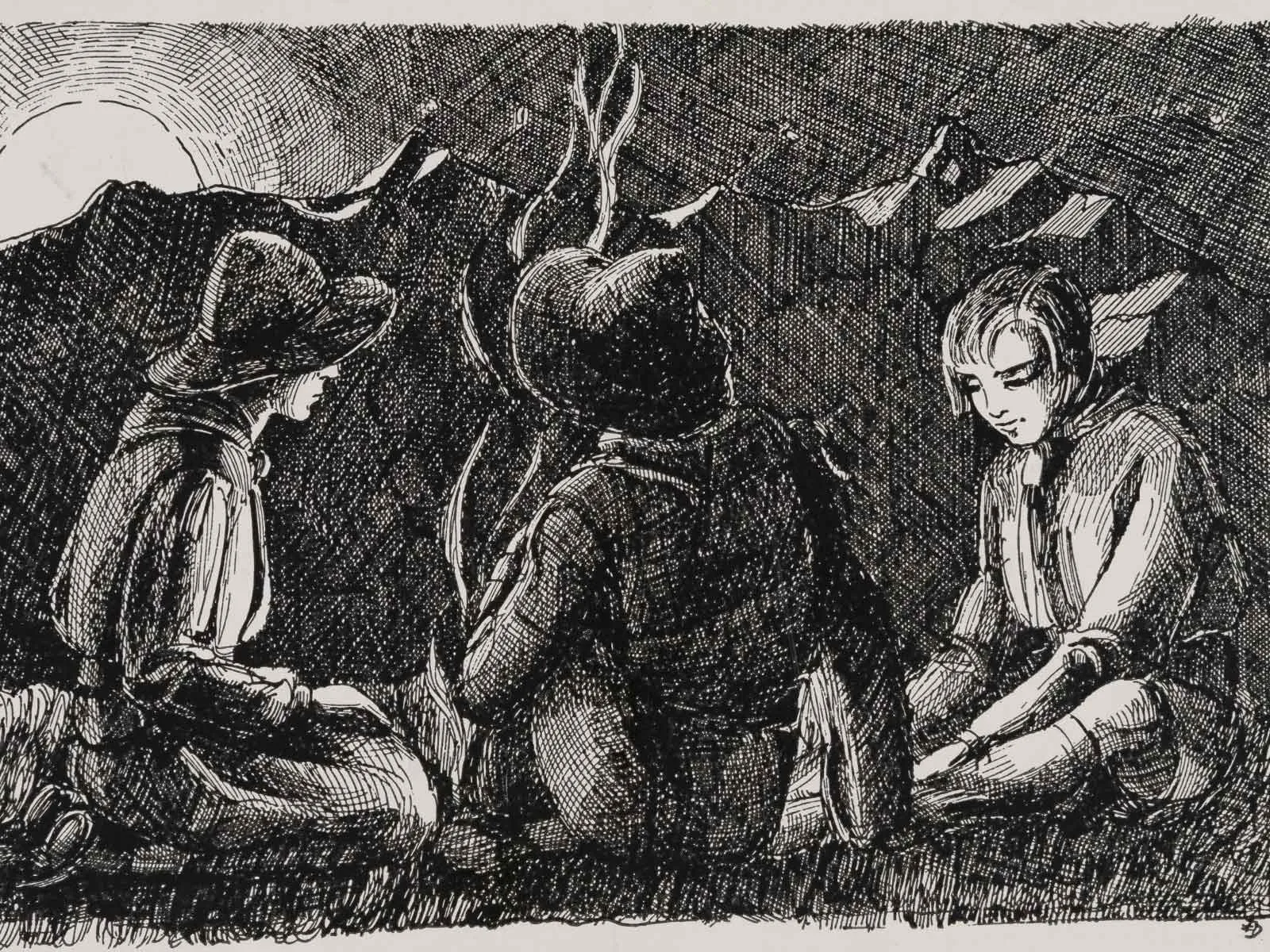
Postcard ‘Am Lagerfeuer’ (by the campfire), drawn by Girl Guide Elsa Denner, 1940.
Postcard ‘Am Lagerfeuer’ (by the campfire), drawn by Girl Guide Elsa Denner, 1940. Swiss National Museum

The long road to gender desegregation for Switzerland’s Boy Scouts and Girl Guides

The Scout and Guide Movement is one of Switzerland’s biggest youth associations. It is open to both boys and girls who mix freely as members of one organisation, but it wasn’t always like that.

Noemi Steuerwald

Noemi Steuerwald

Noemi Steuerwald is a historian specialising in gender and sports history.
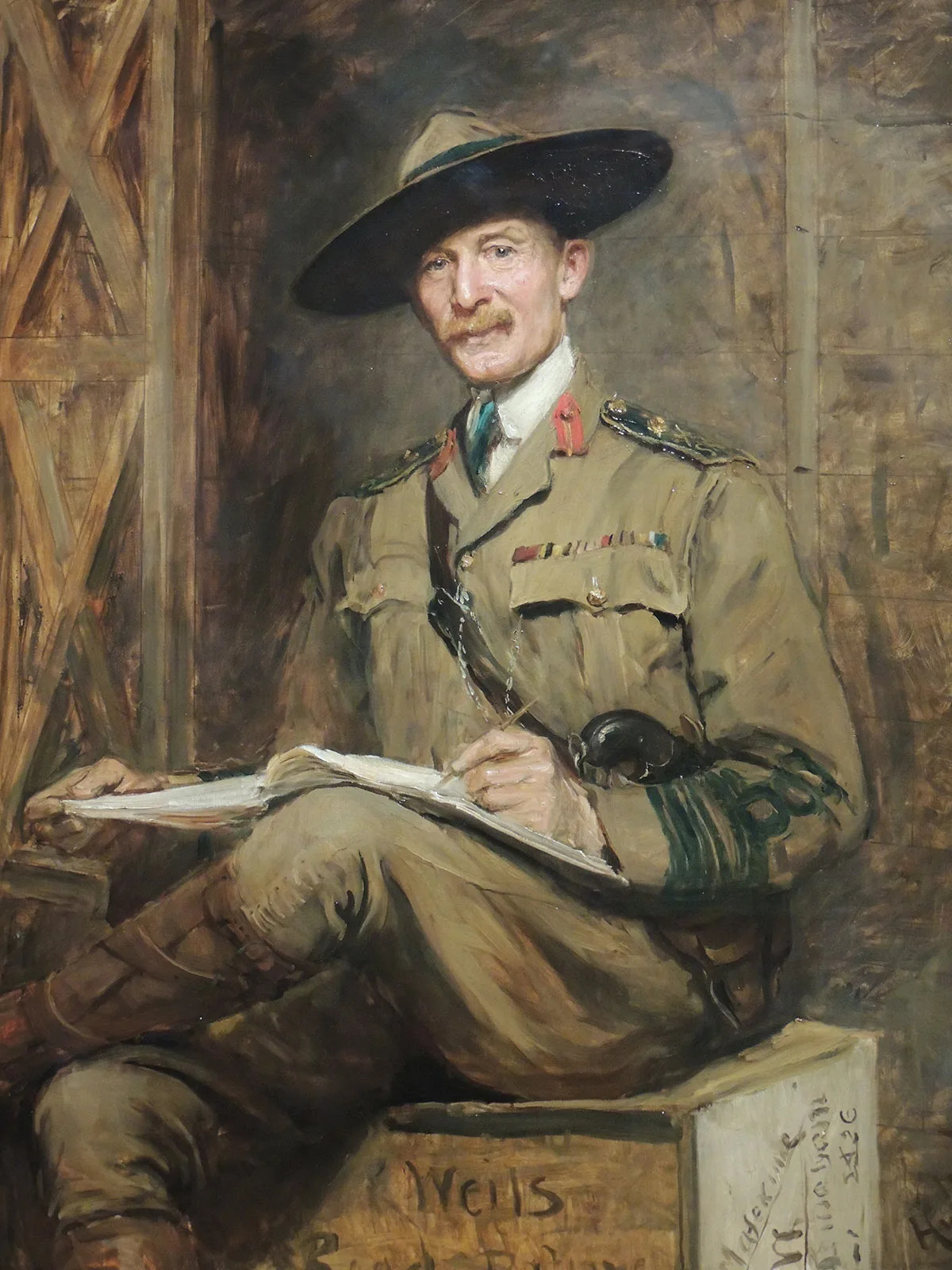
When the Swiss Scout and Guide movement started, it was strictly segregated along gender lines. The Swiss Scout association (SPB) was founded in 1913 for men and boys; it was followed one year later by the Swiss Guides (BSP), an association for women and girls. Both organisations sought to promote their members’ development along gender-specific lines. The SPB adopted the ideas espoused by the founder of the Boy Scouts, Robert Baden-Powell who emphasised such qualities in his writings as chivalry, discipline and competitiveness as the guiding scouting principles underlying manliness.
Robert Baden-Powell founded the Scout movement to turn boys into men. Painting by Hubert von Herkomer.
Robert Baden-Powell founded the Scout movement to turn boys into men. Painting by Hubert von Herkomer. Wikimedia / National Portrait Gallery
The BSP had a more ambivalent approach: on the one hand the girls were encouraged to follow traditional gender role models; on the other, the Guides also offered new opportunities and freedoms to members. Being a Girl Guide also meant learning skills more commonly associated with manliness. This can be seen in the manual for German-speaking Swiss Girl Guides ‘Für dich Pfadfinderin!’ from 1966. It covers such subjects as tying knots, map reading and natural history as well as housekeeping, childcare and looking after babies.

Gender segregation until the end of the 1960s
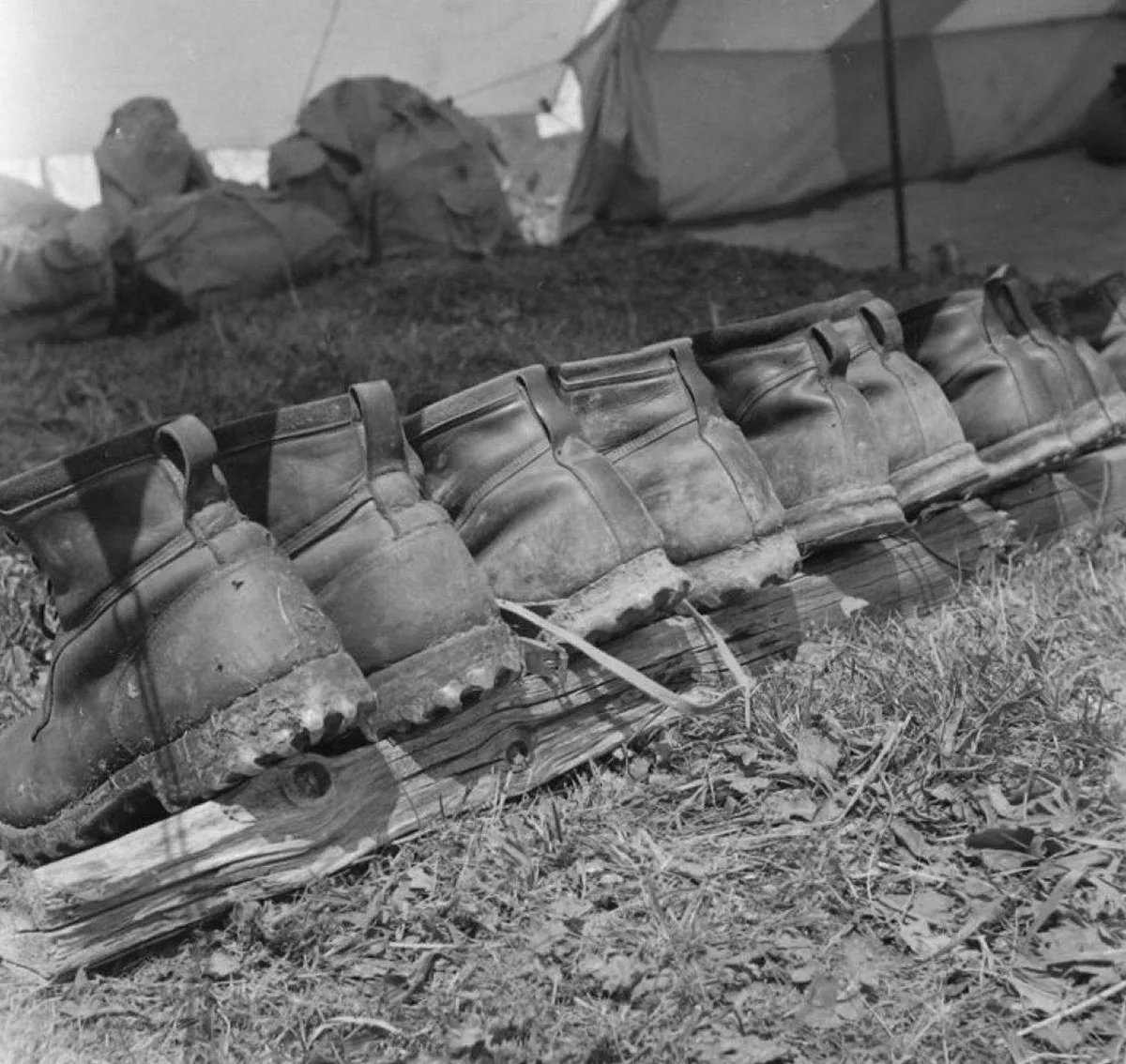
People started questioning the movement’s strict gender segregation in the late 1960s. The Scouts and Guides stood out as something of an anomaly at that time in Switzerland as coeducation had by then become the norm in schools, daycare centres and other educational establishments. At the same time the zeitgeist of the movement of '68 made people challenge the organisation’s traditional outlook. Anti-authoritarian criticism of parents, school, state and the armed forces obliged the Scouts and Guides to redefine their role as a youth organisation. Critics mainly argued that it fostered an authoritarian, reactionary and military ethos.
The Scout and Guide Movement attracted growing criticism in the 1960s due to its authoritarian approach.
The Scout and Guide Movement attracted growing criticism in the 1960s due to its authoritarian approach. Swiss National Museum / ASL
However, it was primarily pressure from within that forced the two associations into a fundamental rethink of their gender segregation policy. Local SPB and BSP groups were increasingly organising joint camps and activities, some of them even merged to form mixed-sex units. The movement was thus faced with the task of aligning itself structurally, organisationally and ideologically at a national level with a societal evolution that had already taken root within its clubs.
A coordinating committee made up of members of the SPB and BSP was set up in 1975 to determine how a mixed-gender organisation could work in practice. This body was responsible for coordinating collaboration and defining a structural framework for clubs open to boys and girls. The founding of the coordinating committee marked the start of cooperation at a federal level. The subjects discussed in this forum quickly showed that there was much more to deal with than superficial formalities. The negotiations about merging the two associations involved discussions on such issues as gender equality, uniformity, and participation in the Swiss Scout and Guide system.

Inter-gender tensions come to the fore
While the grass roots level was increasingly calling for greater integration, actors at national level believed that allowing boys and girls to mix would undermine the ability of single-sex groups to promote equality. They argued that these groups’ rejection of traditional male/female role models was a valuable way of helping to break down discriminatory, gender-based stereotypes: “The merger entails the risk of boys and girls reverting to the old, role-based behaviour. The role of the girls is not to just hold the nails for the boys but to hammer the nails in themselves”, as was written in a Scout/Guide magazine. However, there were also misgivings at the local level, especially the SPB. Scouts from French-speaking Switzerland especially, where there was more of a military tradition resembling neighbouring clubs in France, complained that having boys and girls in the same group could dilute the manly elements of Baden-Powell’s ideas on how to make boys into men.
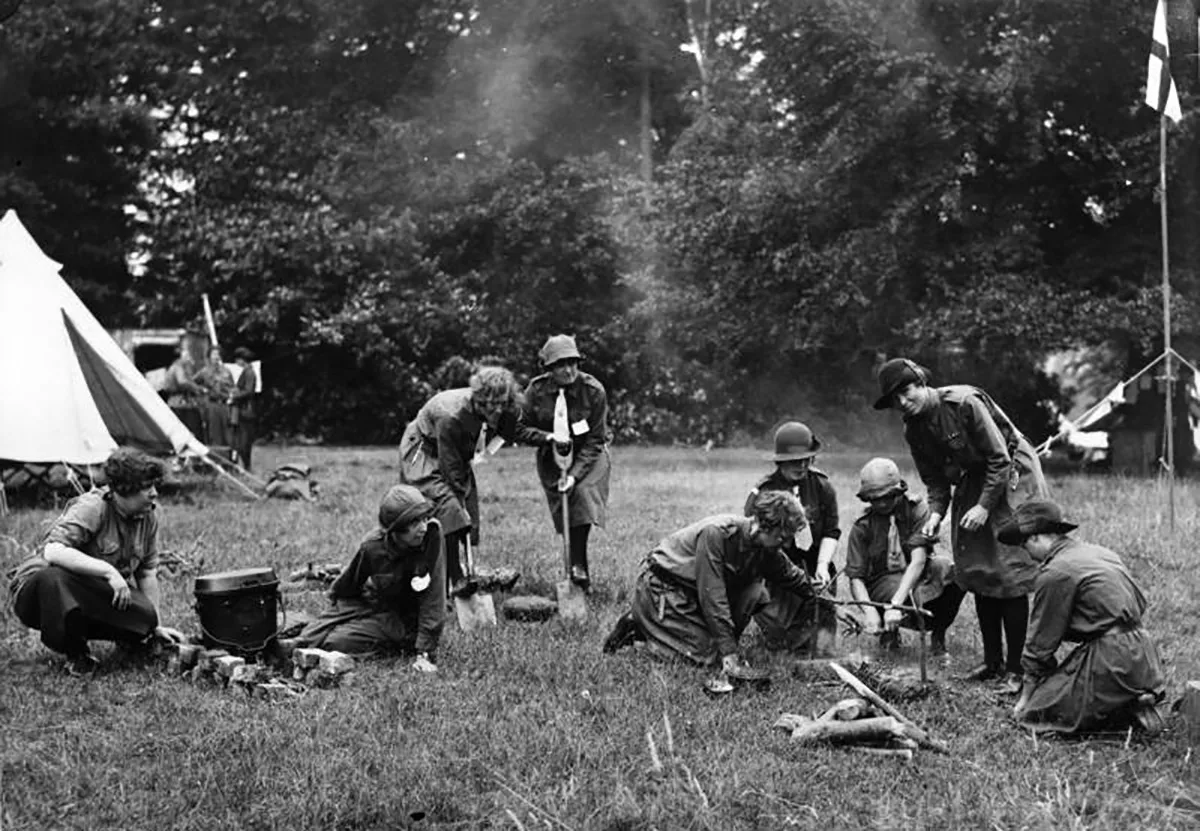
Girl Guides camping in England. The picture was taken in 1930.
Girl Guides camping in England. The picture was taken in 1930. Wikimedia / German Federal Archives
While some groups within the Scout movement wanted to defend the authoritarian, nationalist and manly aspects of traditional scouting à la Baden-Powell, some sections of the Guide movement feared losing influence and freedom of action. These positions shaped the progress of the ensuing merger negotiations and formed the sociopolitical sounding board that the responsible parties found themselves having to address.

Moving closer to integration

One notable feature of the negotiations was that they were held in close consultation with the local members and clubs. They were also very practical in nature. So, the outcome was not a project created in splendid isolation; it was more a case of bringing association politics and the Scout/Guide clubs together into a coherent entity. Many of the mixed-gender pursuits were therefore dry runs, as an article in the BSP magazine ‘Trèfle’ perceptively observed. Many cantonal associations in the 1970s had started holding training courses for Scout and Guide leaders together. A standard training model for both groups was developed in 1979. These courses were a type of experiment in intergender collaboration. At the same time, they created important personal contacts and networks among leaders from both associations.
Until then the coordinating committee had mainly been busy developing concepts for mixed clubs, groups and activities. The first mixed-gender federal camp in 1980 signalled the start of a new phase on the road to integration. It was at this camp that a broad consensus emerged at the grass roots level that coeducation had to be more broadly implemented than previously planned. The prospect of a full merger of both associations leading to a nationwide, mixed-gender Scout and Guide organisation came to the fore for the first time. In November 1982, the national committees of the BSP and SPB separately approved formal negotiations with a view to completing a merger. This led to the forming of the merger commission comprising ten members of each association.
The first nationwide camp for Scouts and Guides was held in 1980 (in German). SRF
The BSP representatives were aware that the dissolution of their association would also mean the loss of a forum in which women could come together and do their own thing free of any male-controlled power structures. As written in the minutes of the merger negotiations: “As an independent women’s association, the BSP is able to assume real managerial responsibility, to define and implement its visions and goals in practice. That has always mattered to us. It was, and still is, fundamental to the BSP’s self-image. The merger means the surrender of some of this independence and the abandonment of this women-only creative space.” On top of that, the SPB was at least twice as large as the BSP. This led to concerns that the smaller women’s association would be taken over by the SPB and marginalised. The policy of the ten BSP members of the merger commission was therefore based on a demand for structural safeguards ensuring the women’s right to involvement and co-determination irrespective of the strength of the male contingent. These safeguards included having a man and woman in all key positions at federal level, a quota system for central decision-making committees at national level as well as the principle of double majority for important negotiations.
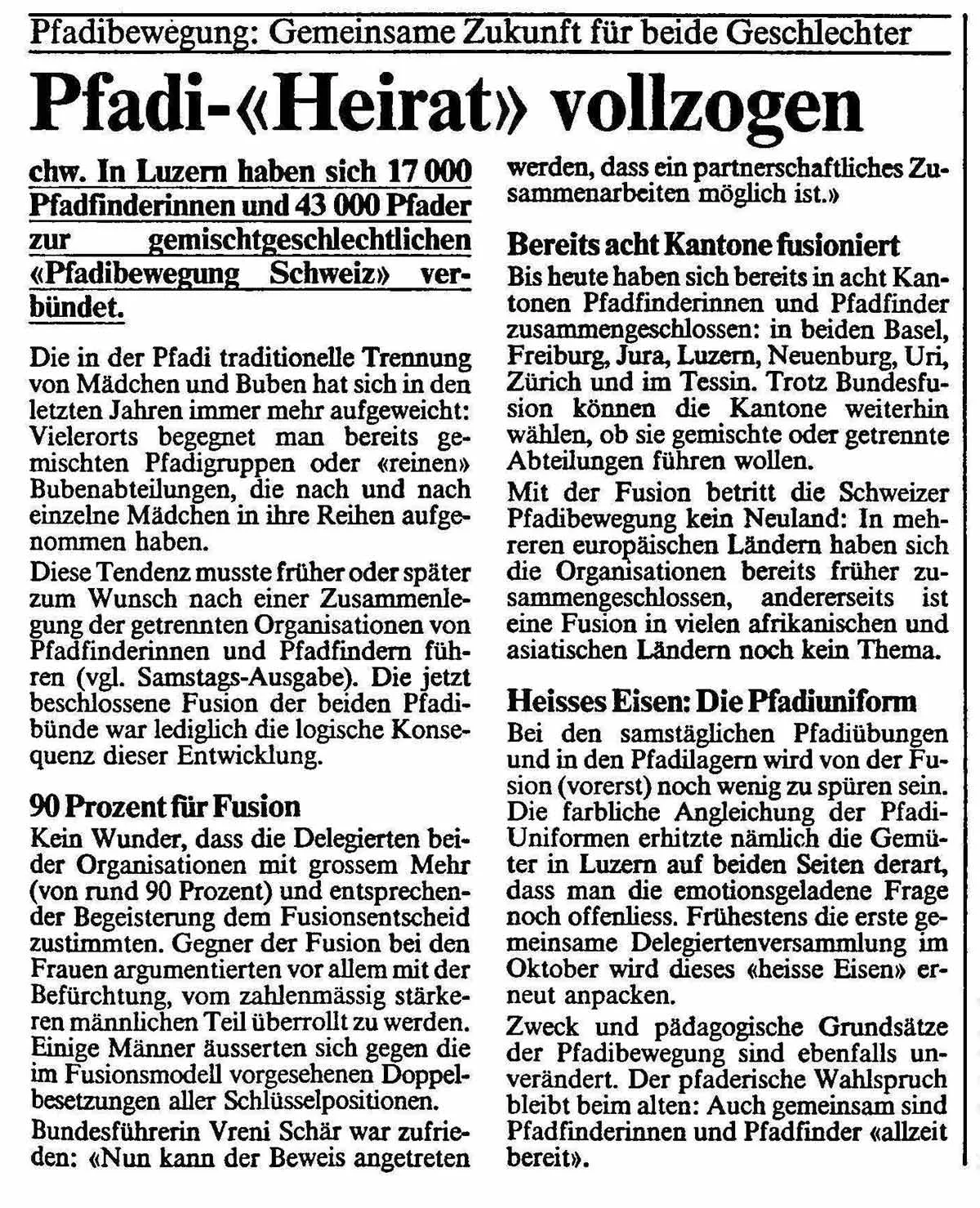
The Scouts and the Guides: a successful marriage. Article in Der Bund newspaper from May 1987.
The Scouts and the Guides: a successful marriage. Article in Der Bund newspaper from May 1987. e-newspaperarchives
The merger negotiations stretched out over five years. The BSP and SPB submitted their first merger proposal to their member clubs for approval in 1985. The package, abbreviated to ‘FuPak’, was rejected by the SPB members. The committee duly took the criticism on board and came up with a second ‘FuPak’, which also failed to gain universal backing. Back they went to the drawing board to create another package, which was presented to the BSP and SPB delegates separately for consultation. The vote on the merger was held on 24 and 25 May 1987 in Lucerne and passed with a majority of over 75 per cent.
The outcome was a common umbrella association for 17,000 women and girls plus 43,000 men and boys. The two separate associations remained until September 1987 when the new Swiss Scout and Guide Movement (PBS) became operational. The two old associations (the BSP and SPB) were dissolved at the first PBS delegates’ meeting. The ‘marriage’ as it was described by the new association magazine Trèfle/Kim, which was formed from the merger of the two former magazines, was a success.
Switzerland’s Scouts and Guides merged into one association in 1987.
Switzerland’s Scouts and Guides merged into one association in 1987. Swiss National Museum
The debates surrounding the merger of the two associations were an exercise in direct democracy. Actors at the national level stayed in close contact with the rank and file: the representatives were from the grass roots and had first-hand knowledge of the discussions, concerns and misgivings on the ground. The merger was not a top-down exercise. It was much more a project by the members for the members conducted via dialogue between the different levels of the organisation.
The discussions about bringing the genders together also touched on issues reaching far beyond the scope of the Scout and Guide Movement. The BSP representatives defended their clubs as places where women took on roles, learnt skills and had experiences often denied to them in everyday life. The structural measures established during the merger negotiations were thus more than internal reform. They showed how equality could be implemented in practice at a time when female quotas were still relatively unknown and gender equality had only been enshrined in the Constitution a few years previously. Following some initial reservations, the Scout and Guide Movement thus set a good example for society, very much in keeping with its mission.

Further posts