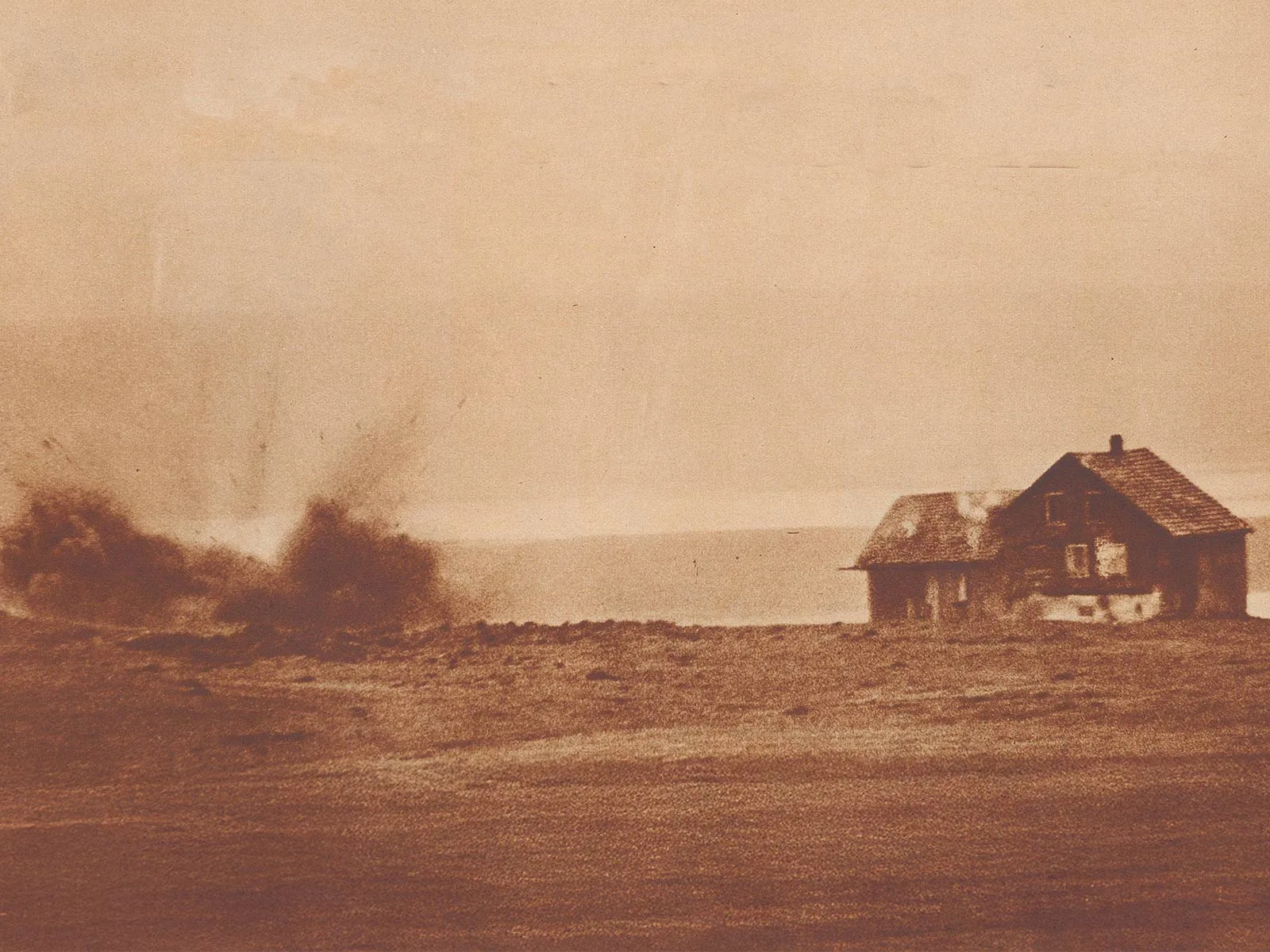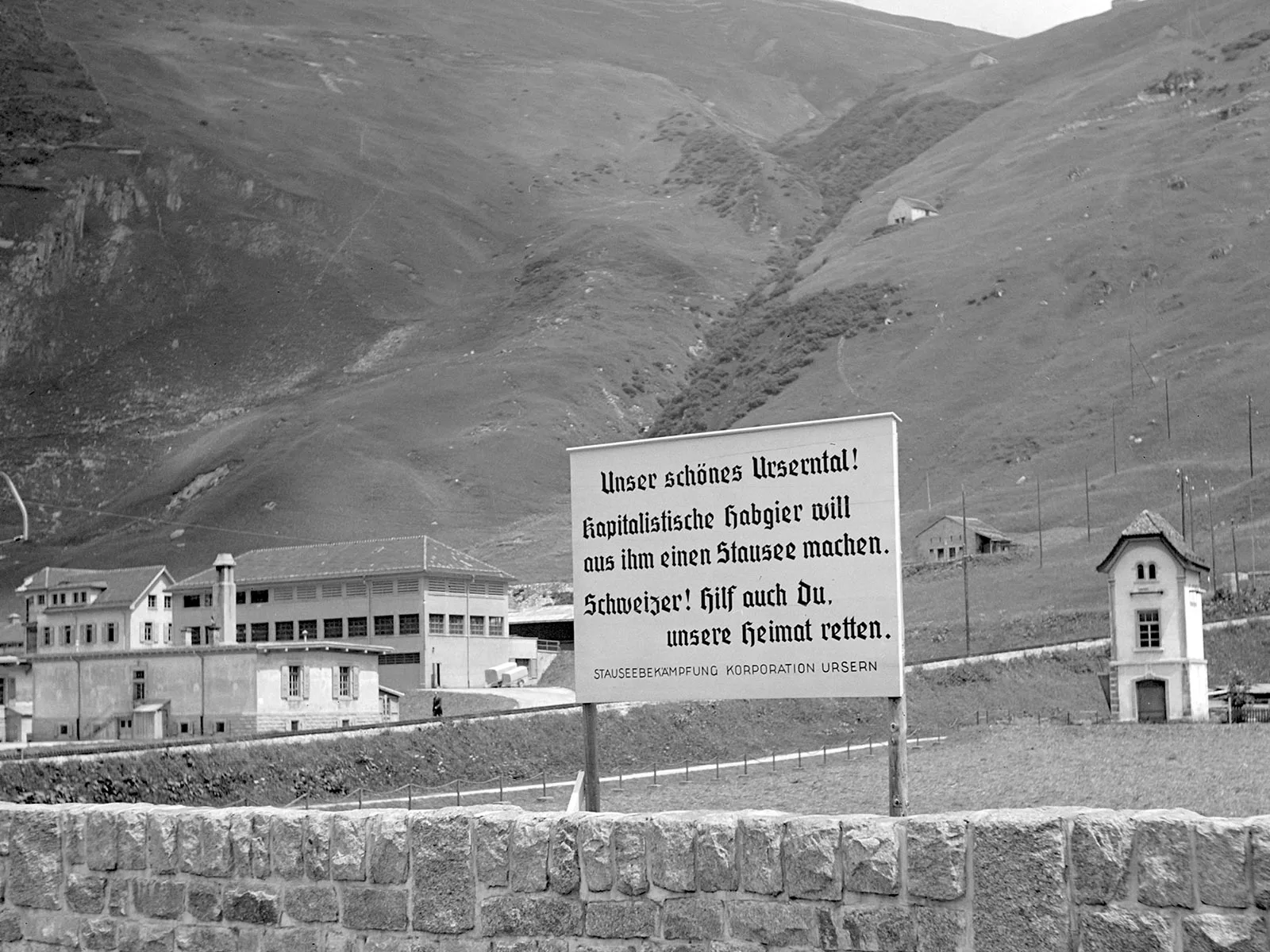
The protest against the planned reservoir in the Urseren valley went beyond displaying placards...
The protest against the planned reservoir in the Urseren valley went beyond displaying placards... Dukas / RDB

Dammed: the major reservoir projects that never were

Eighty years ago, the residents of two Swiss mountain valleys managed to avert two huge reservoir projects. In Rheinwald, an early citizen movement took hold, while in the Urseren valley, it took a full-blown riot. It was the first time the people really stood up and reined in technology.

Helmut Stalder

Helmut Stalder

Helmut Stalder is a historian, publicist and book author specialising in economic, transport and technical history.
Enough is enough! On the evening of 19 February 1946, a gang of incensed youths and men stormed into the Sonne hotel bar in Andermatt and grabbed Karl J. Fetz. The engineer was working as commissioner for land matters on behalf of the energy company ‘Centralschweizerische Kraftwerke’ (CKW) and was planning the relocation of the people of the Urseren valley in the canton of Uri. With brute force, they dragged him outside, where around 250 locals were lining the street, jeering and chanting. With punches and kicks, they cast Fetz out of the village. When no one came to his aid from the barracks in Andermatt, “the crowd seemed emboldened and went completely wild,” wrote the NZZ newspaper later in an article on how the locals from the Urseren valley ‘had the last word’. People threatened to beat him to death or strangle him, or to throw the “envoy from the large power station” off the Teufelsbrücke bridge into the Reuss.
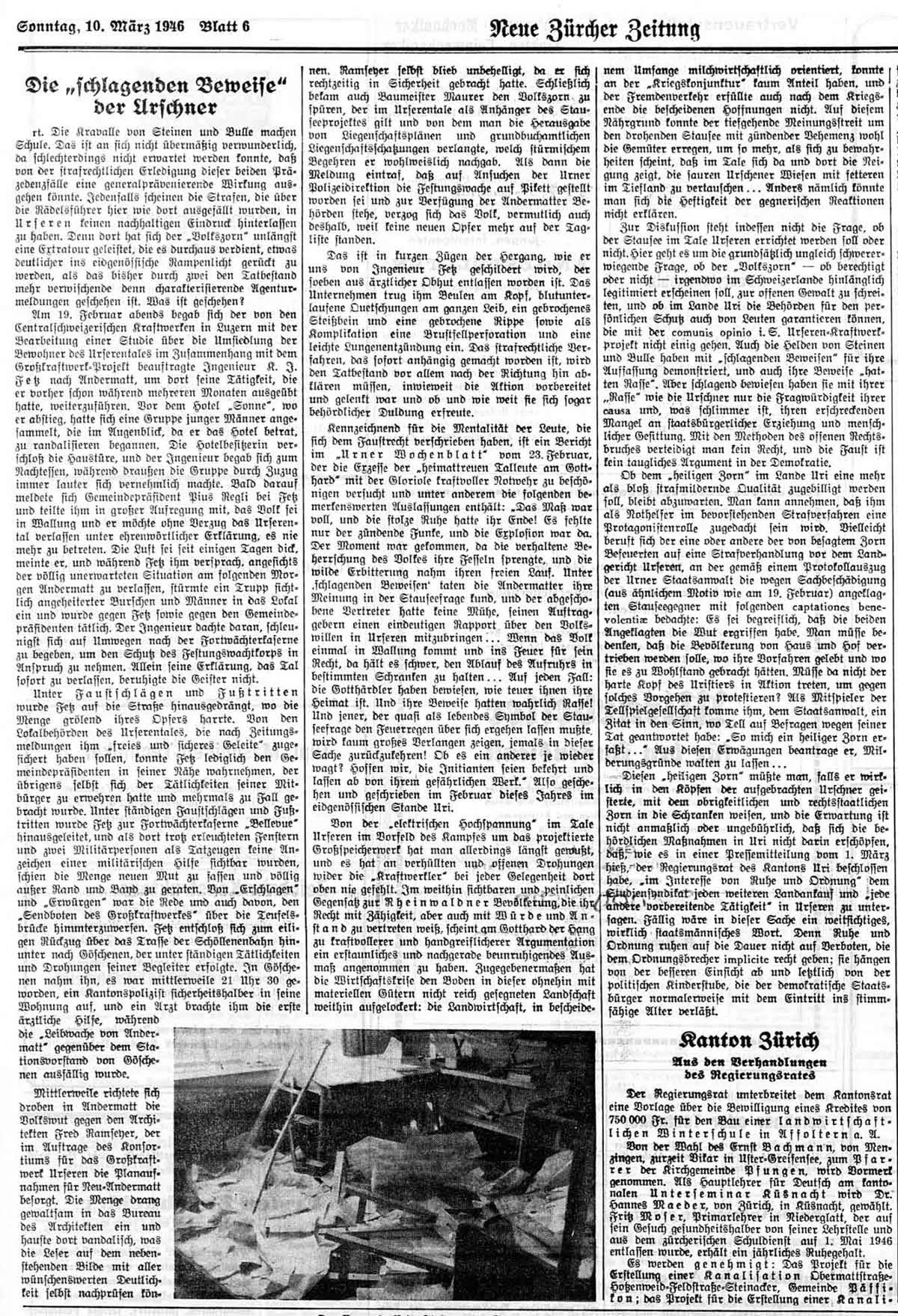
Chased by the angry mob, Fetz rushed down along the Schöllenen railway line to Göschenen, where he was picked up by a cantonal police officer and seen by a doctor. He was later diagnosed with “subjective symptoms and pain in the thighs and buttocks, head pain, bleeding in the left lung”. Meanwhile, the mob had turned its anger to the architect Fred Ramseyer who was drawing up the plans for New Andermatt on behalf of the consortium for the Urseren major power plant. The crowd trashed his office. A master builder was also threatened into handing over the property plans and estimates. The uproar didn’t end until soldiers from the barracks in Andermatt were placed on standby.
On 14 March 1946, the newspaper NZZ reported on the public in the Urseren valley ‘having the last word’ and showed a photo of the trashed office of architect Fred Ramseyer.
On 14 March 1946, the newspaper NZZ reported on the public in the Urseren valley ‘having the last word’ and showed a photo of the trashed office of architect Fred Ramseyer. e-newspaperarchives

A reservoir in the heart of Switzerland
The ‘Andermatt riot’ saw an eruption of the public anger that had been building up for some time. Since the 1920s, there had been plans to flood the Urseren valley on the Gotthard to generate power. The driving force behind this was Fritz Ringwald, CKW director and engineer, who wanted to press ahead with technical progress at any cost. At that point, electrification was all the rage. The adoption of the Federal Act on the Use of Hydraulic Power in 1916 pushed the plans for full expansion back up the political agenda. Up until the mid-1940s, around 20 storage power plants were built, including Europe’s first arch dam at Montsalvens, the world’s highest gravity dam at 110 metres tall in Wägital, and Lake Sihl, Switzerland’s largest reservoir by area. The technical possibilities seemed limitless.
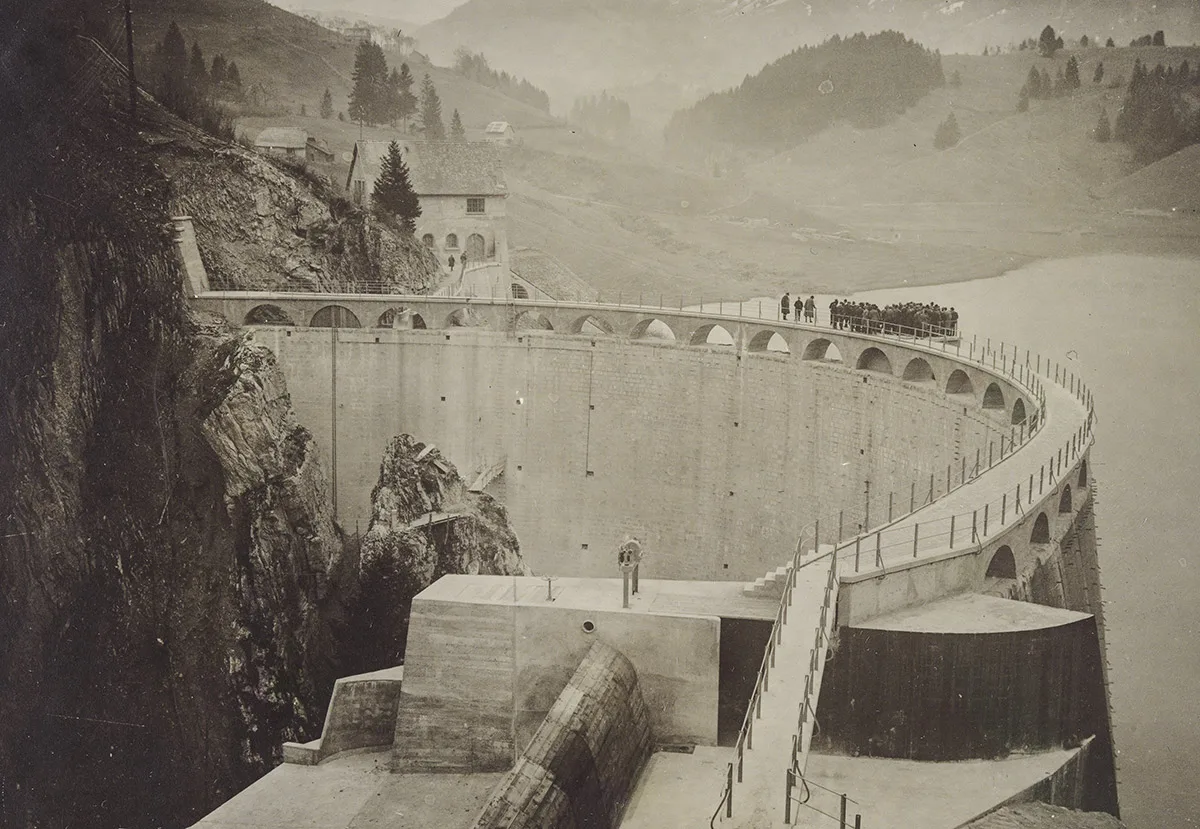
The reservoir in Montsalvens (canton of Fribourg) was filled between 1919 and 1920. The arch dam was built by Heinrich Eduard Gruner and was the first of its kind in Europe.
The reservoir in Montsalvens (canton of Fribourg) was filled between 1919 and 1920. The arch dam was built by Heinrich Eduard Gruner and was the first of its kind in Europe. e-pics
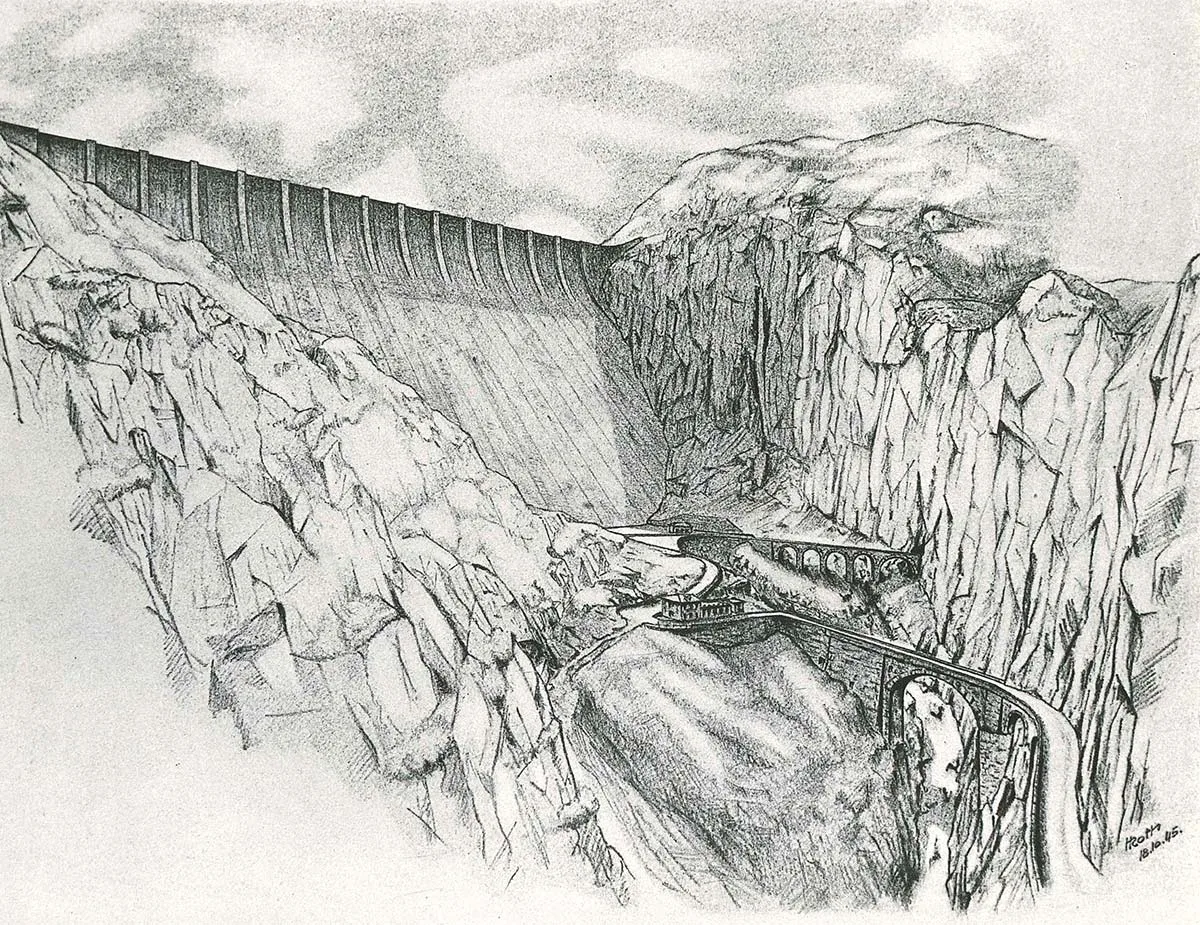
The start of the Second World War made the expansion more urgent. In the eyes of the electricity companies, the Urseren valley in the watershed of Switzerland at the Gotthard was the ideal spot for a giant power plant. There were preliminary projects for a dam at the Urner Loch, initially 117 metres high and then 180 metres high. In 1943, the CKW joined forces with the SBB (the Swiss federal railways), the bank Schweizerische Kreditanstalt, and what later became Elektrowatt to plan the power plant in Urseren – Switzerland’s biggest ever reservoir project. The plan envisaged a 208-metre-high and 550-metre-long dam on the Schöllenentor, which would impound a reservoir over eleven kilometres long with around 421 million cubic metres of water, more than the current Grande Dixence. To make space, around 2,000 local residents would have to be relocated, as well as thousands of cows, sheep and goats. 254 farms, commercial enterprises and hotels, as well as 6.63 square kilometres of arable land would also be submerged. The main roads over the Gotthard and Furka passes and the railway connection over the Oberalp Pass would have to be diverted. Even the northern section of the Gotthard railway tunnel would have to be rebuilt in a loop line in order to make way for the pressure zone beneath the lake.
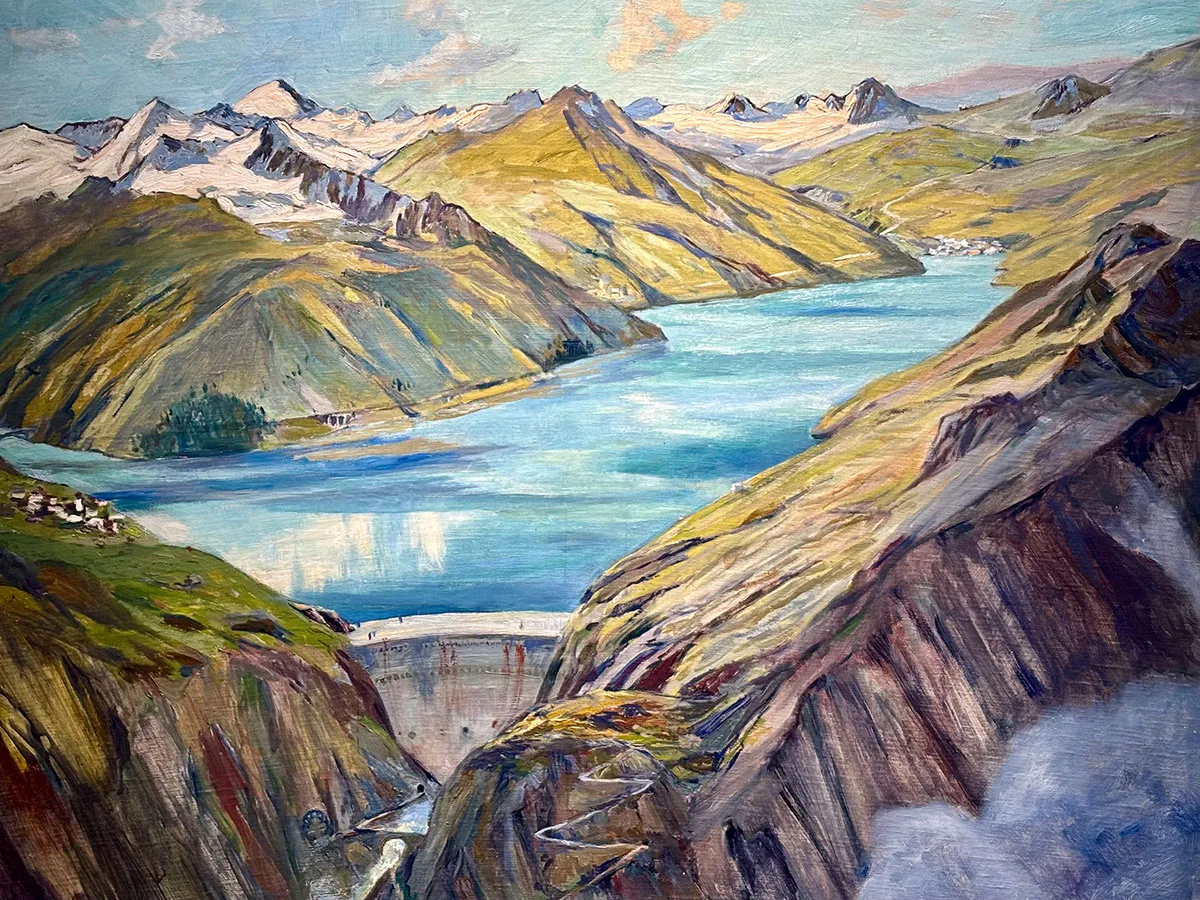
This visualisation shows the dam in the Urseren valley.
This visualisation shows the dam in the Urseren valley. CKW archive

Defending their home against the capitalists
The power plant consortium led by CKW Director Ringwald spoke of work of “national importance” and of the “patriotic duty” of citizens to make sacrifices for the greater good. The developers made overblown promises to the public. New Andermatt and new Hospental would be built higher up and the reservoir would be a magnet for tourists, they said. At the same time, they sent out agents to buy up land in secret from farmers and hoteliers with the aim of dividing up the municipality. And they pushed for the power to grant concessions to be transferred from the local authority to the canton and federal government.
But the people of the Urseren valley were unanimous in their resistance – from farmers and tradespeople, to authorities, politicians, and even the pastor. At an extraordinary valley community assembly in 1941, they issued their rallying call: “We’re not negotiating, we’re not selling, and we’re not leaving!” The Urseren commons corporation called “to save our home” from the capitalist greed of the “lords of the electricity cartel”. There was talk of “dirty work” being carried out by the electricity bosses. Traitors were warned that the Blessed Virgin Mary had been prayed to for help. The people of the Urseren valley fought in unity to defend their home.
2,000 people would have had to move to make way for the reservoir in the Urseren valley. Painting by Hans Beat Wieland, c. 1940.
2,000 people would have had to move to make way for the reservoir in the Urseren valley. Painting by Hans Beat Wieland, c. 1940. CKW archive
The brutal eviction of engineer Fetz in February 1946 marked a turning point. The consortium clung to its plan a while longer and actually applied for a concession. But the Uri cantonal government was resolute: “As Swiss and natives of Uri, we reject any violation of another people. (...) We therefore cannot ever under any circumstances say yes to this concession application, as long as the people of Urseren say no.” In 1951, the consortium withdrew the application and pivoted to the much smaller Göscheneralp project in a high valley with far fewer settlements and people, and less land use.

Rheinwald ended up in the Federal Council
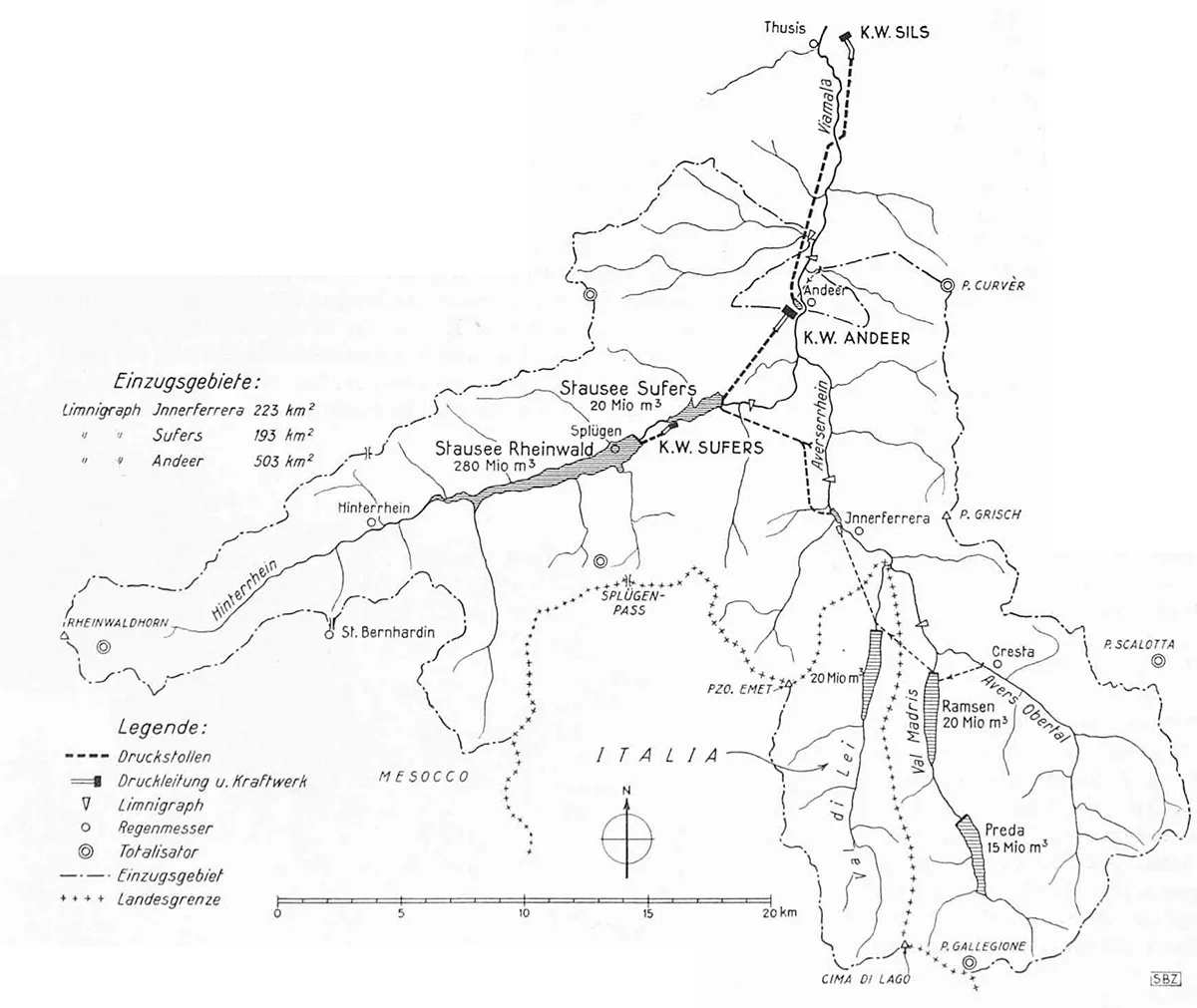
At almost the same time as the ‘Andermatt riot’ a second mega project was brought down, this time in Rheinwald, Graubünden. The ‘Kraftwerke Hinterrhein’ consortium was planning a 700-metre-long and 115-metre-high dam near Splügen, which would impound a nine-kilometre-long reservoir with a volume of 280 million cubic metres of water. The village of Splügen, parts of Medels and Nufenen, and five square kilometres of arable land were to be sacrificed. Up to 400 residents would have to leave. The pass roads to Splügen and to San Bernardino would have to be partly relocated.
The planned Rheinwald reservoir would have submerged the village of Splügen, as shown by the plan, 1942.
The planned Rheinwald reservoir would have submerged the village of Splügen, as shown by the plan, 1942. Wikimedia / Schweizerische Bauzeitung
The consortium submitted the concession application in 1930. All three local authorities rejected it immediately, marking the start of legal wrangling lasting over 15 years. Among other things, in 1939 the consortium asked the Federal Council to exercise its extraordinary war powers for the protection of the national interest to override the local authorities and allow the construction to go ahead. However, the Federal Council referred to the proper channels, as a construction during the war would have been impossible anyway due to a lack of material. Unlike in other cantons, local authorities in Graubünden retained full sovereignty on matters relating to water. Following another unanimous rejection by the local authorities, the consortium went to the canton. It felt that the local authorities were placing individual interests above the public interest and called on the canton as supervisory authority to compel the local authorities to grant the concession. When the canton rejected this, the consortium appealed to the Federal Council, again putting forward the argument that the communities could reasonably be expected to make the sacrifice as otherwise there would be “a real emergency for Swiss industry, commerce and for individual households.” The people of Rheinwald again unanimously rejected the plans in 1945. On 29 November 1946, the Federal Council ultimately rejected the consortium’s appeal on the basis of the clear legal situation regarding water sovereignty at local level. That was the death knell.
The Rheinwald reservoir was a major topic in the Swiss national newsreel of 31 March 1944 (in German). Swiss Federal Archives
The two failed major projects in the Urseren valley and in Rheinwald 80 years ago went down in history as cautionary tales. Within a few months, the advocates of technology had been cut down to size. In a direct democracy, such mammoth projects can’t be pushed through against unanimous resistance from the public, local authorities and cantonal governments. Admittedly, both valleys were intensively farmed, important tourist destinations and key regions in transport terms, so widespread resistance emerged immediately. Unlike the Wägitalersee, the Lago di Vogorno, the Lai da Marmorea, the Göscheneralpsee, the Zervreilasee and the Lac d’Emosson, which had fewer buildings and people, and less productive land. When it came to Lake Sihl, Switzerland’s biggest reservoir in terms of surface area, there was majority public support for the project.

Further posts