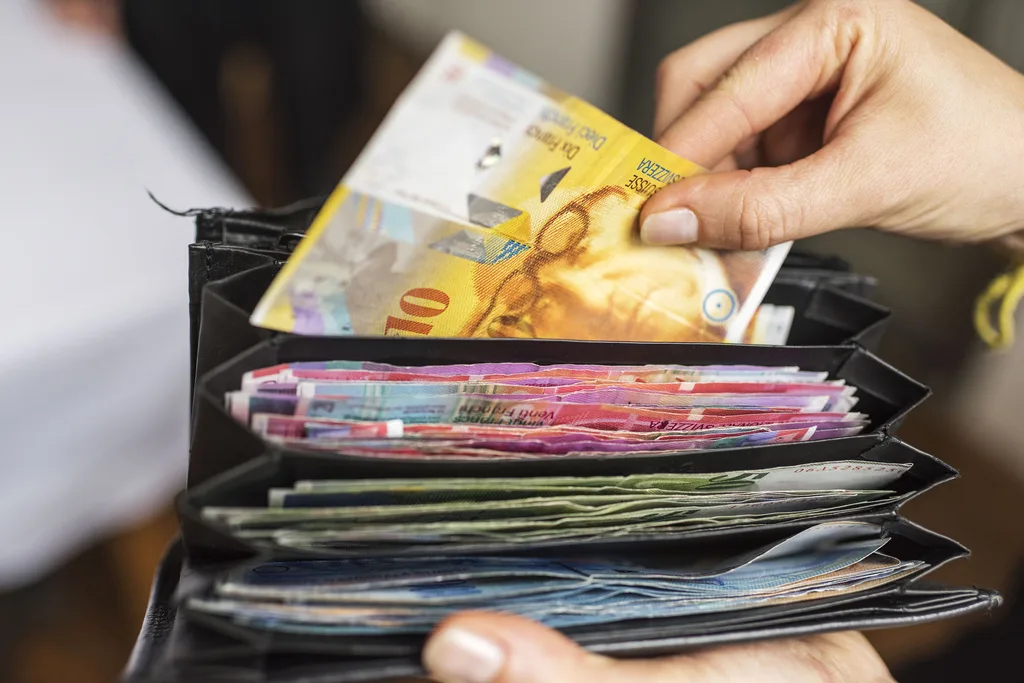
We hold banknotes in our hands every day without ever really looking at them: years of work went into developing the eighth series.
We hold banknotes in our hands every day without ever really looking at them: years of work went into developing the eighth series. Keystone, photo: Christian Beutler

A little piece of Switzerland in your wallet

Switzerland’s banknotes were given a makeover in the 1990s. The eighth series (1995–2016) not only met strict security requirements, it was also innovative in its design. A voyage of discovery through the archives and a look behind the scenes reveal how these banknotes were planned, designed and introduced to the public.

Eric Häusler und Jürgen Häusler

Eric Häusler und Jürgen Häusler

Eric Häusler is a historian at ETH Zurich. Jürgen Häusler is Professor Emeritus of Communication at the University of Leipzig and was a long-standing member of the executive board of Zintzmeyer & Lux AG.
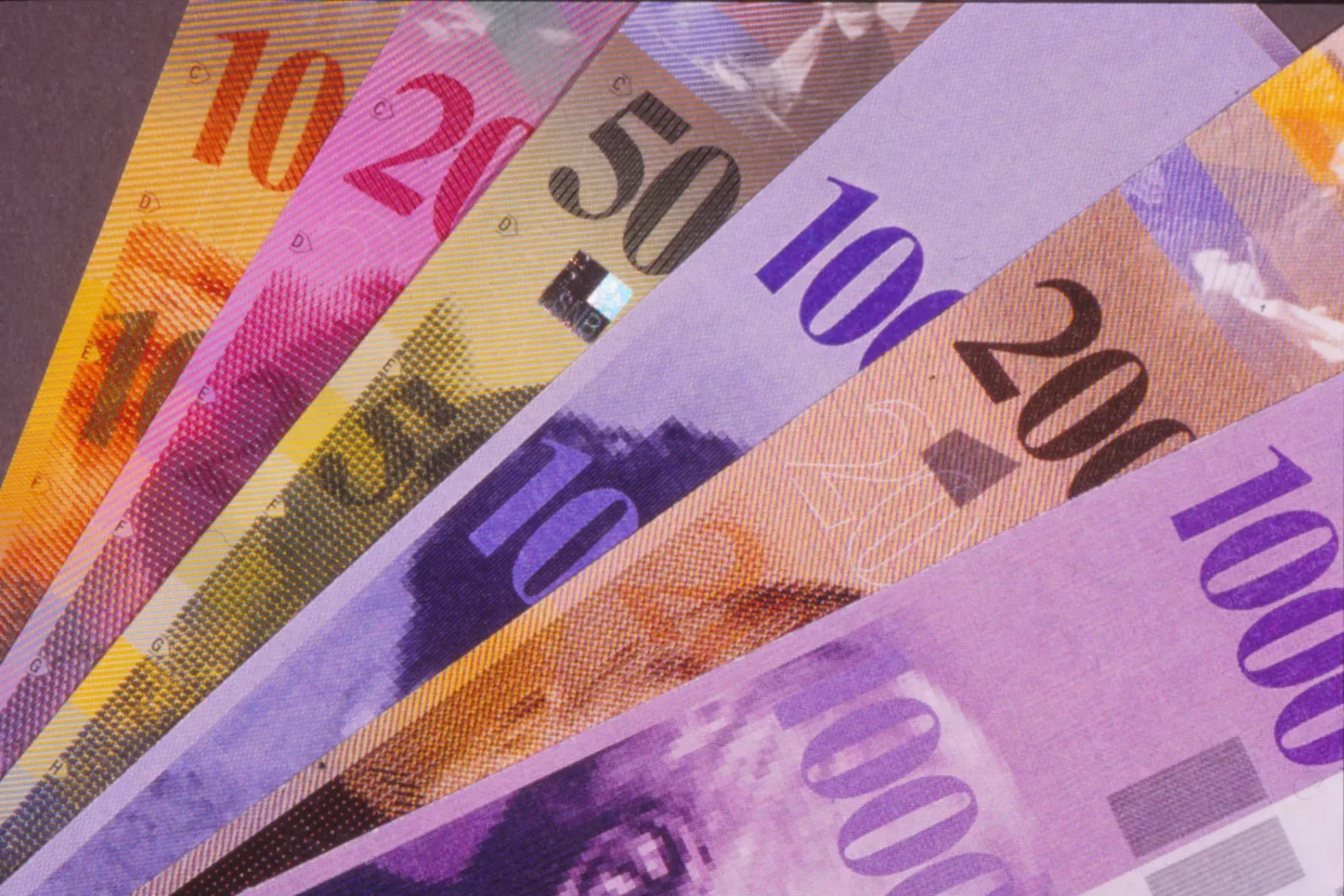
The letters ‘Z&L’ featured on the eighth series of Swiss banknotes, appearing inconspicuously after the name of designer Jörg Zintzmeyer. Printed at the very bottom of the notes, they remained unobtrusive and unexplained. Millions of people carried these notes around with them in their purses and wallets for years, using them every day, without ever knowing what these initials stood for. And yet this miniscule lettering takes us straight to the heart of the creation process, in which design, security and confidence were inextricably intertwined.
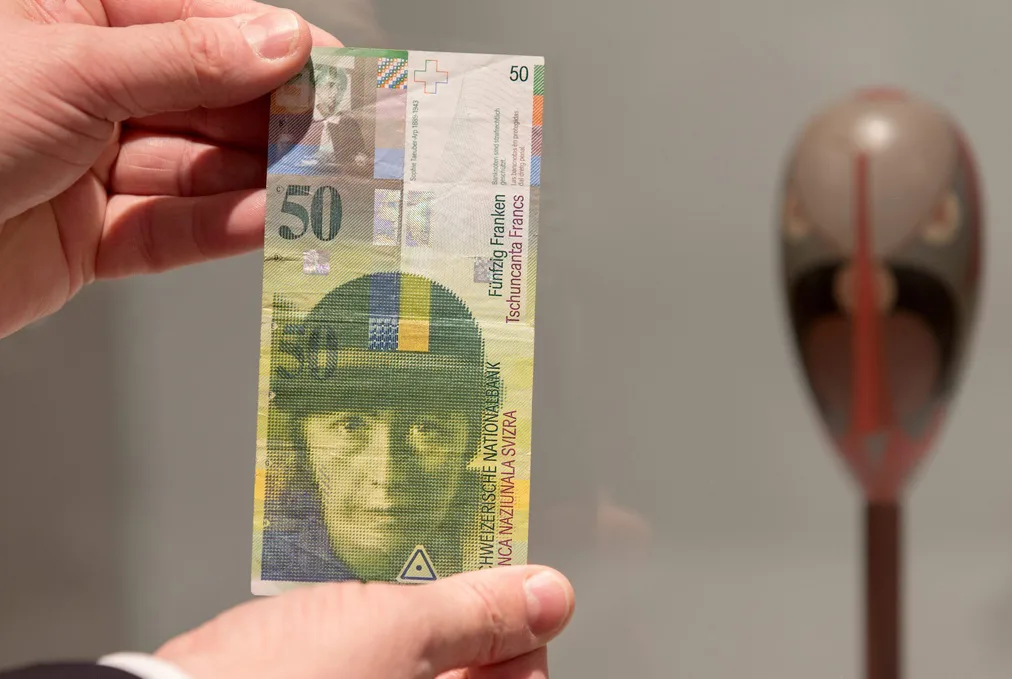
The banknotes in the eighth series were released in phases from October 1995, starting with the ‘Green Sophie’. This was the first banknote issued in Switzerland to feature a woman.
The banknotes in the eighth series were released in phases from October 1995, starting with the ‘Green Sophie’. This was the first banknote issued in Switzerland to feature a woman. Swiss National Bank Archives, BN359.602 / Keystone, photo: Friso Gentsch

Colour copiers

The second half of the 1980s saw a fundamental shift in the boundaries of security technology. The rapid spread of highly sophisticated colour copiers indicated that existing banknotes could soon become vulnerable to replication. Although the scale of counterfeiting in Switzerland remained modest, international data for the period from 1975 to 1985 showed a clear trend: technological advances were facilitating the production of fake banknotes. Rather than waiting until the situation became serious, the Swiss National Bank (SNB) saw the writing on the wall and responded accordingly. The Bank Committee, the body which at that time oversaw the conduct of operations by the SNB, placed the topic high up on its agenda. At a meeting of 16 October 1987, it discussed at great length how public confidence in cash could be ensured in the long term given the new threats posed by technology. The answer: not by making small improvements but by developing a new series of banknotes that put security front and centre right from the start.

The personalities

The SNB had already decided back in 1984 that the new banknote series should feature individuals who had made a significant contribution to cultural life and whose influence extended far beyond Switzerland’s borders. It consulted experts in literature, painting, music and architecture before settling on Le Corbusier, Arthur Honegger, Sophie Taeuber-Arp, Alberto Giacometti, Charles Ferdinand Ramuz and Jacob Burckhardt. They were intended to conjure up an image of Switzerland that defined itself by means of intellectual production, artistic innovation and international networking. Easily recognisable national symbols were deliberately cast aside in favour of emphasising education, curiosity and openness.

As was only to be expected, this decision met with detractors. Critical voices saw it as a belated and to some extent unjustified attempt to ‘appropriate’ or reclaim exiled artists who had gained international recognition while living outside Switzerland. But the very fact that several of these figures had spent many years living and working abroad or gained recognition there was part of the concept. The banknotes were never meant to uphold the country’s established self-image. They were supposed to get people thinking about history, culture and the question of how to convey national identity.

The designer
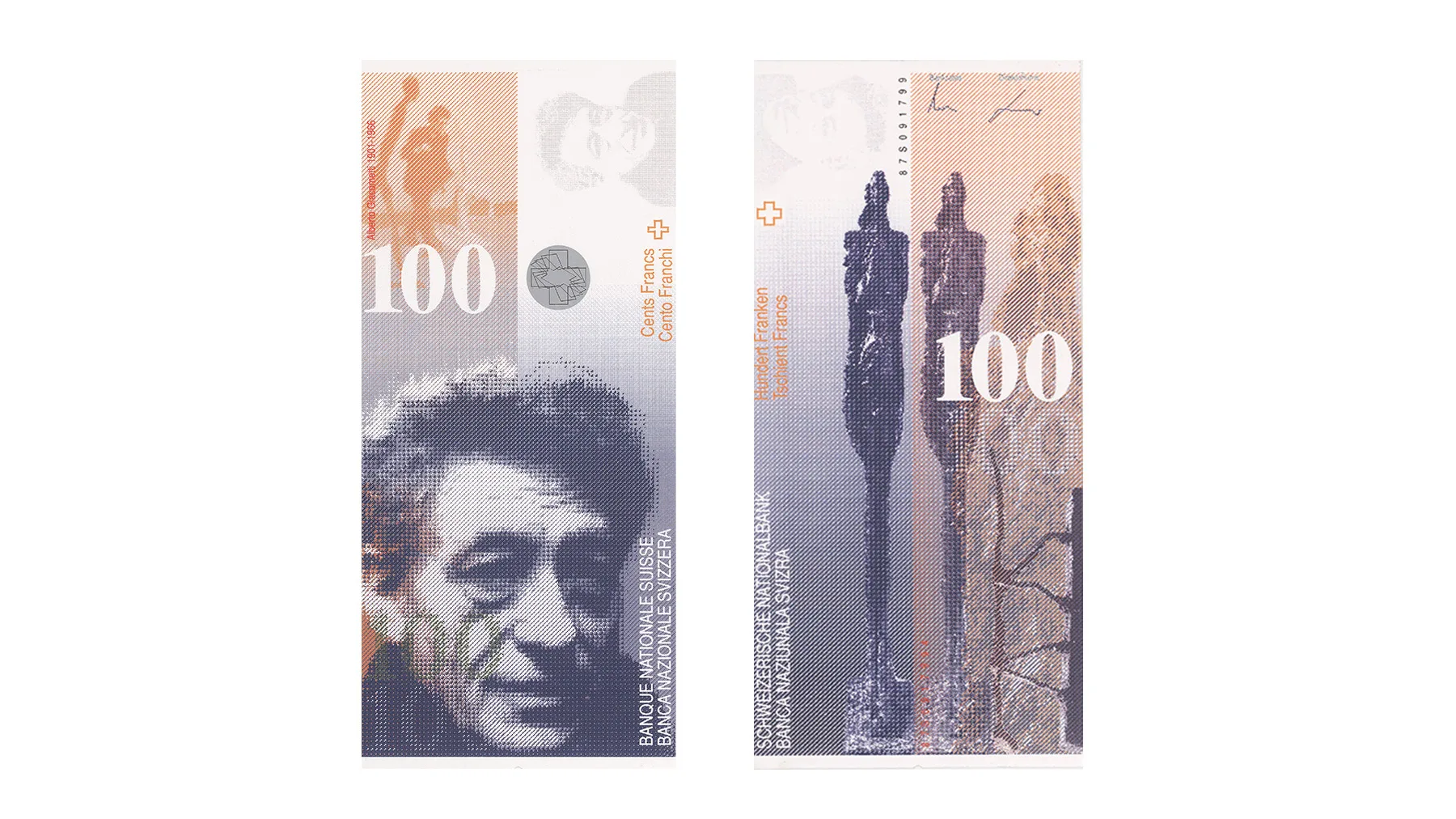
A competition for design proposals was held in several stages from 1988 to 1991. Three entries were shortlisted for further development from the thirteen submitted. Ultimately, the Bank Committee opted for Jörg Zintzmeyer by four votes to three and as recommended by the Governing Board. The Swiss National Bank then concluded a contract with him that went far beyond the provision of traditional design services.
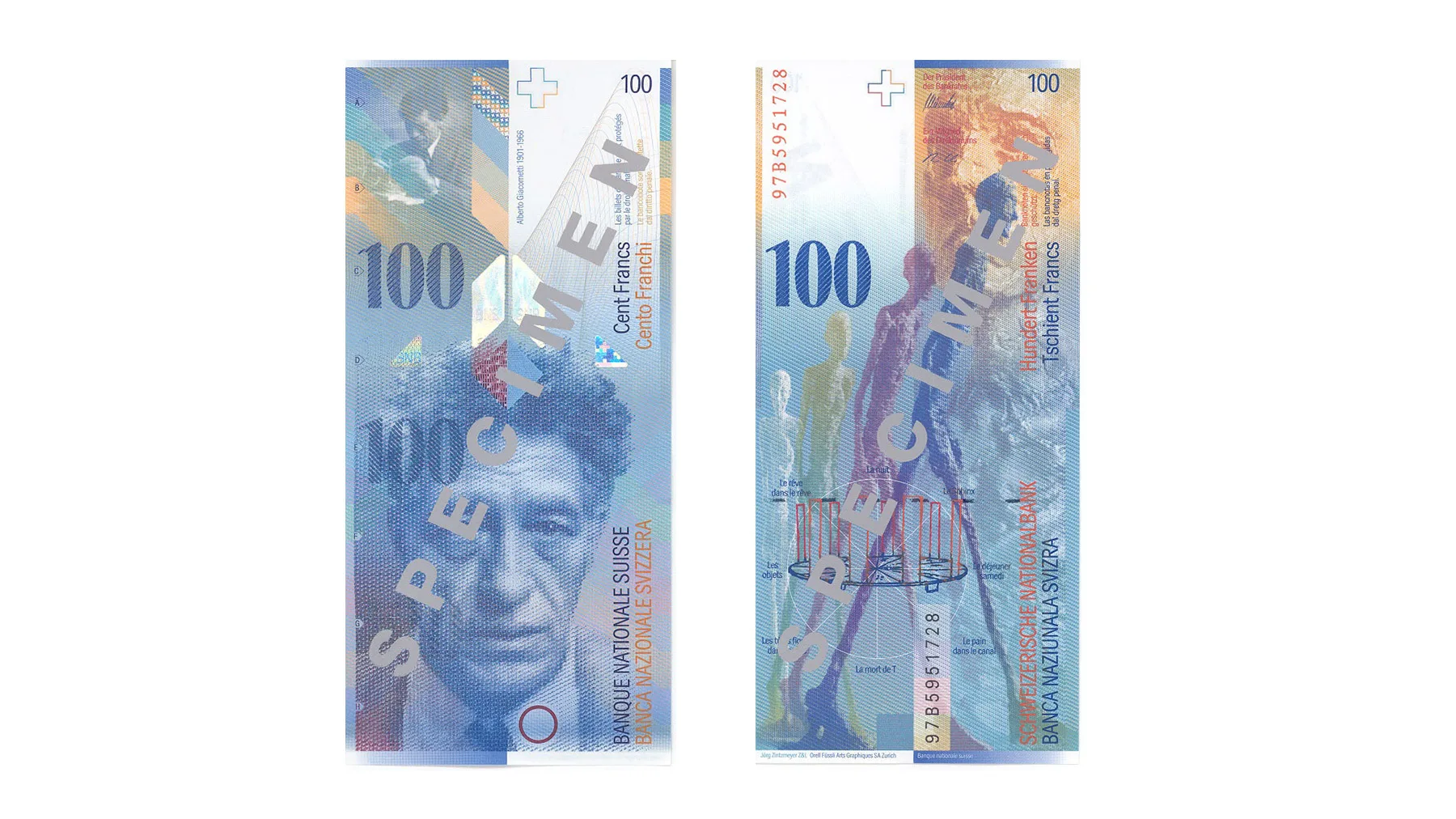
From original competition submission (left) to final design (right): the 100-franc note was devoted to Alberto Giacometti and his oeuvre.
From original competition submission (left) to final design (right): the 100-franc note was devoted to Alberto Giacometti and his oeuvre. Swiss National Bank Archives, BN341.203 (G + H) / BN354.303
Zintzmeyer was not a freelance artist who created works independently. He was a member of Zurich-based design and consultancy firm Zintzmeyer & Lux. This was a departure from the norm: up to that point, banknotes had mostly been designed by individuals. All that was to change with the eighth series. It was created by a range of professionals working closely together, their work delineated by clear rules and contracts. The design process had become a common enterprise.

Part of the new approach involved setting up a specially secured working environment. This screened off space with strictly controlled access was referred to in-house as the ‘bunker’. Creative work was performed under the strictest official secrecy at two successive addresses in Zurich. The Swiss National Bank shelled out a good half a million francs for the structural measures, office furniture, safe, computers, software and technical infrastructure needed to set up this facility.
 
In this high-security area, the banknotes were designed for the first time ever using a purely digital process. From the initial sketches and colours right through to the fine lines and security features, everything was created, checked, refined and documented using computers. The eighth banknote series thus marked a watershed in terms of design and use of media: the point at which banknote origination crossed over into a fully digital, institutionalised era.
A TV news report provides an insight into the digital design of the new banknotes. SRF

Teamwork

In addition to Zintzmeyer’s team, industry professionals and members of the competent institutions were involved in the project. Companies included banknote printer Orell Füssli; SICPA, a specialist in security inks; Landis & Gyr, a producer of high-precision measuring and control technology; and Sihl, a manufacturer of special papers. A six-member working group comprising representatives of the Swiss National Bank, the designer and relevant suppliers met almost every month from 1989 to 1995. Requirements relating to security technology, function and monetary policy were bundled together, coordinated and decided on.
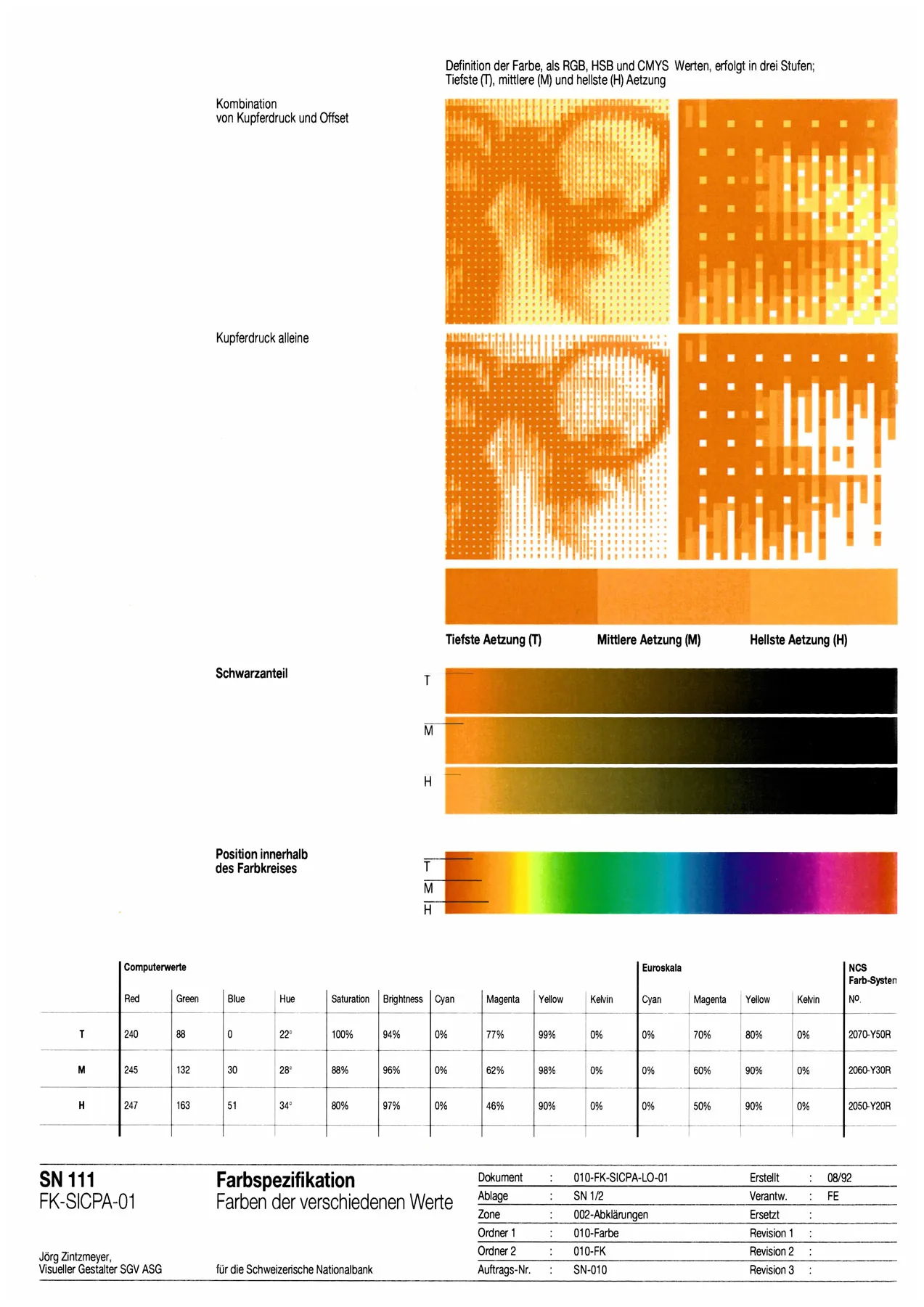
Images, colours, typography: every detail had to be just right. Numerous boxes of archive material testify to the lengthy design process.
Images, colours, typography: every detail had to be just right. Numerous boxes of archive material testify to the lengthy design process. Swiss National Bank Archives, BN353.111.008
This was not a purely incremental process. Creative design, technical implementation and security testing were closely linked from the outset. Suggestions were tested, rejected, adapted and tested again. Prototypes circulated between the designer, printer and National Bank, with each change made impacting other levels of the process. Design wasn’t the first step and technology wasn’t the last – both were developed in parallel. Routine meetings alternated with crisis meetings. And every now and then those involved would get together outside of work to enjoy a glass of wine.

Security above all

The security of the new banknotes was intended to operate as a cohesive system, with features that were mutually reinforcing and easy to verify. Colour, line use, microscript, paper structure, the printing process and tactile elements were therefore aligned in such a way as to create a coherent whole. New colours had a direct influence on how well the security lines could be seen. At the same time, the use of a different paper surface meant that the printer settings had to be readjusted. Design and technology were not distinct from one another ‒ both were part of a shared development task.
One of many security features: miniscule perforations were made in the banknotes by laser. SRF
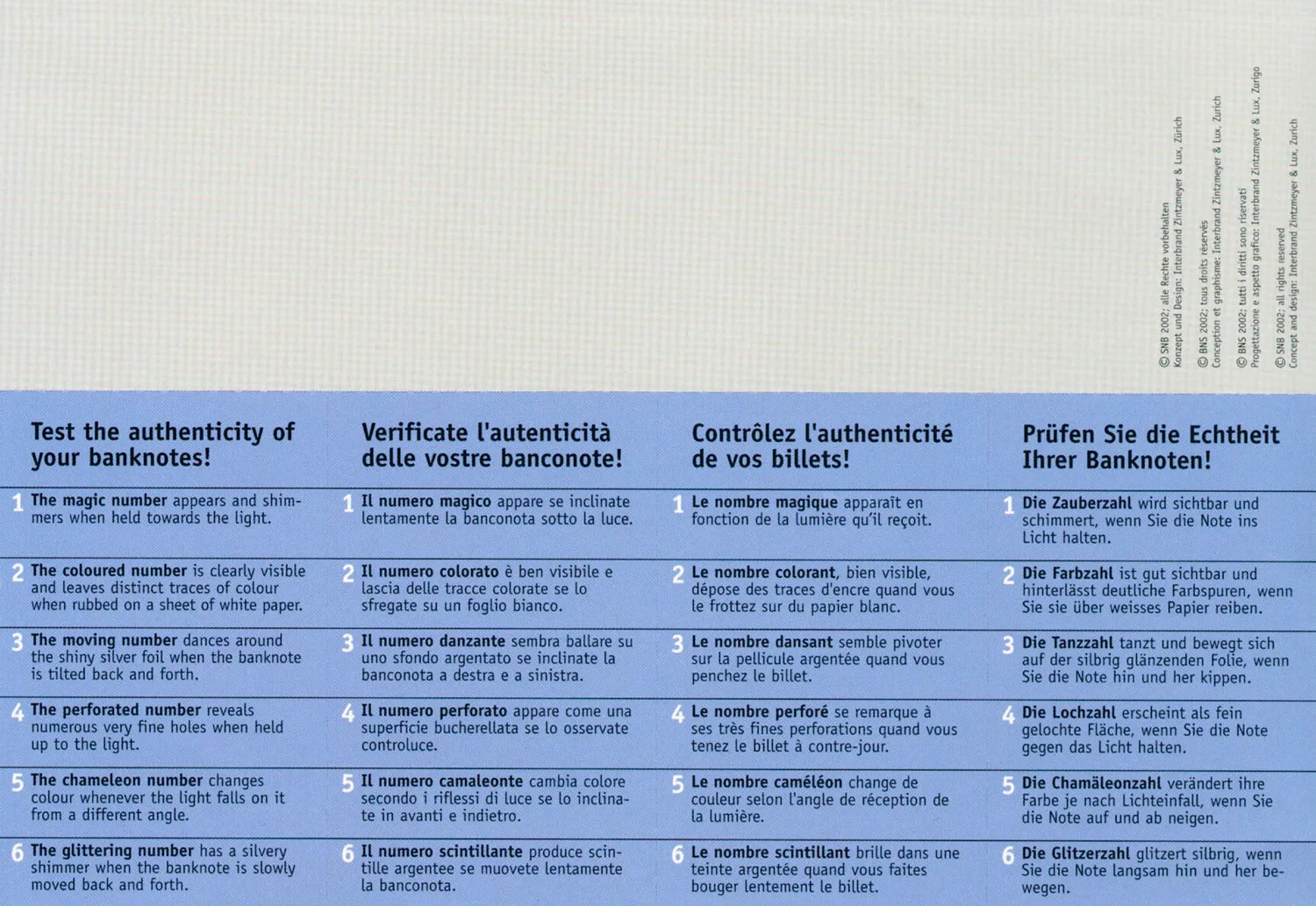
Unlike in previous series, it was never intended that special expertise or equipment should be required to even find the security features. Instead, security was to be made visible and tangible. Everyday users of the banknotes could check their authenticity by tilting them, holding them up to the light or running their fingers over them. Confidence in the notes was to be created through reliability and ease of recognition, without the need for instructions.
 
The novel security features and unusual design concept of the new series called for a targeted communication strategy. Therefore, the Swiss National Bank decided to go on the front foot with its information campaign. Brochures with titles such as ‘The new banknotes. Easy to check’ were produced along with pamphlets, flyers and information material for banks and the general public. The aim was not to impart painstaking technical details about the new banknotes, but to help people understand how easily these items of everyday use could be verified.
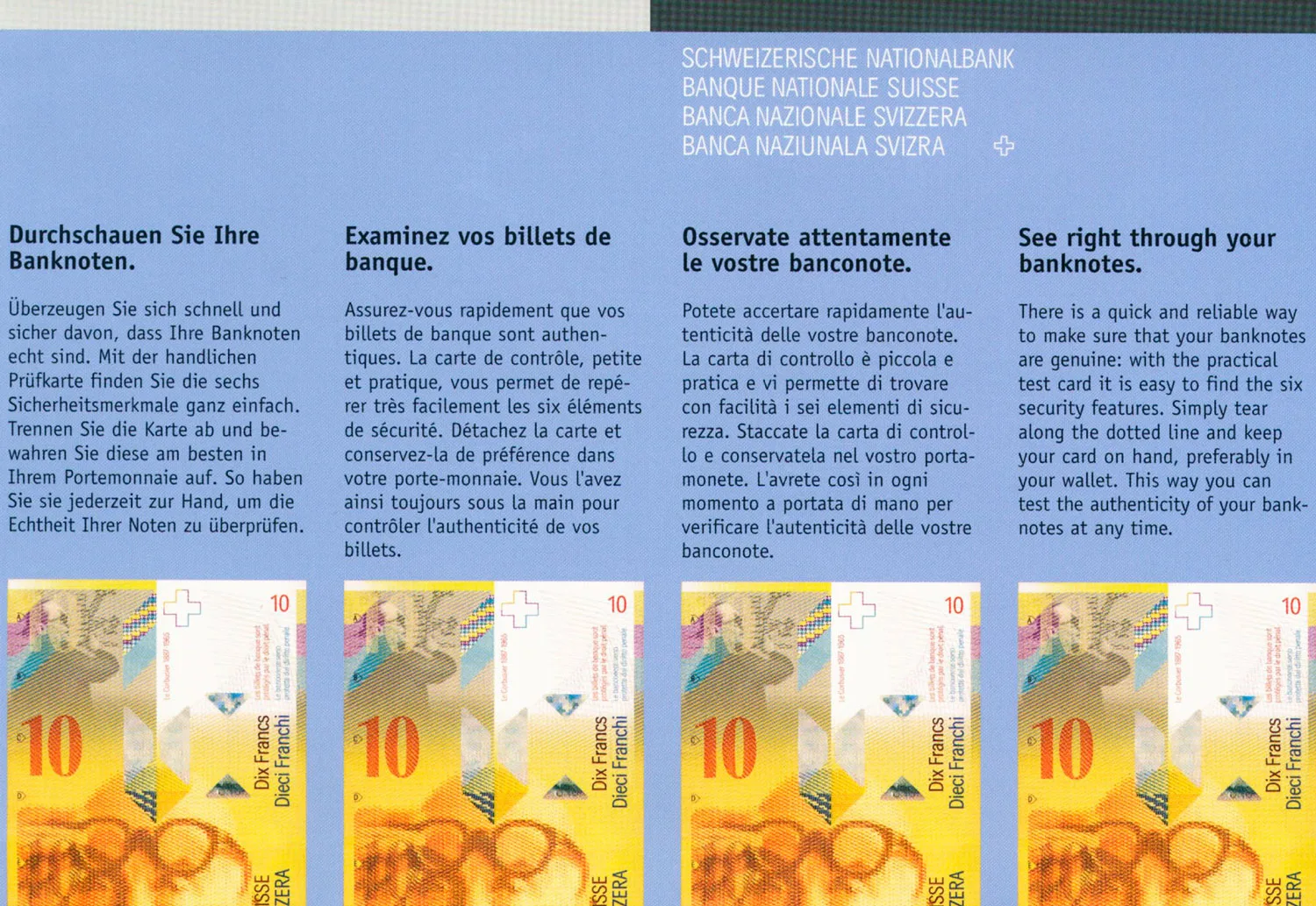
The flyer ‘See right through your banknotes’ explains some of the security features that users could check for themselves.
The flyer ‘See right through your banknotes’ explains some of the security features that users could check for themselves. Swiss National Bank Archives, BN359.17
Image 01 of 04
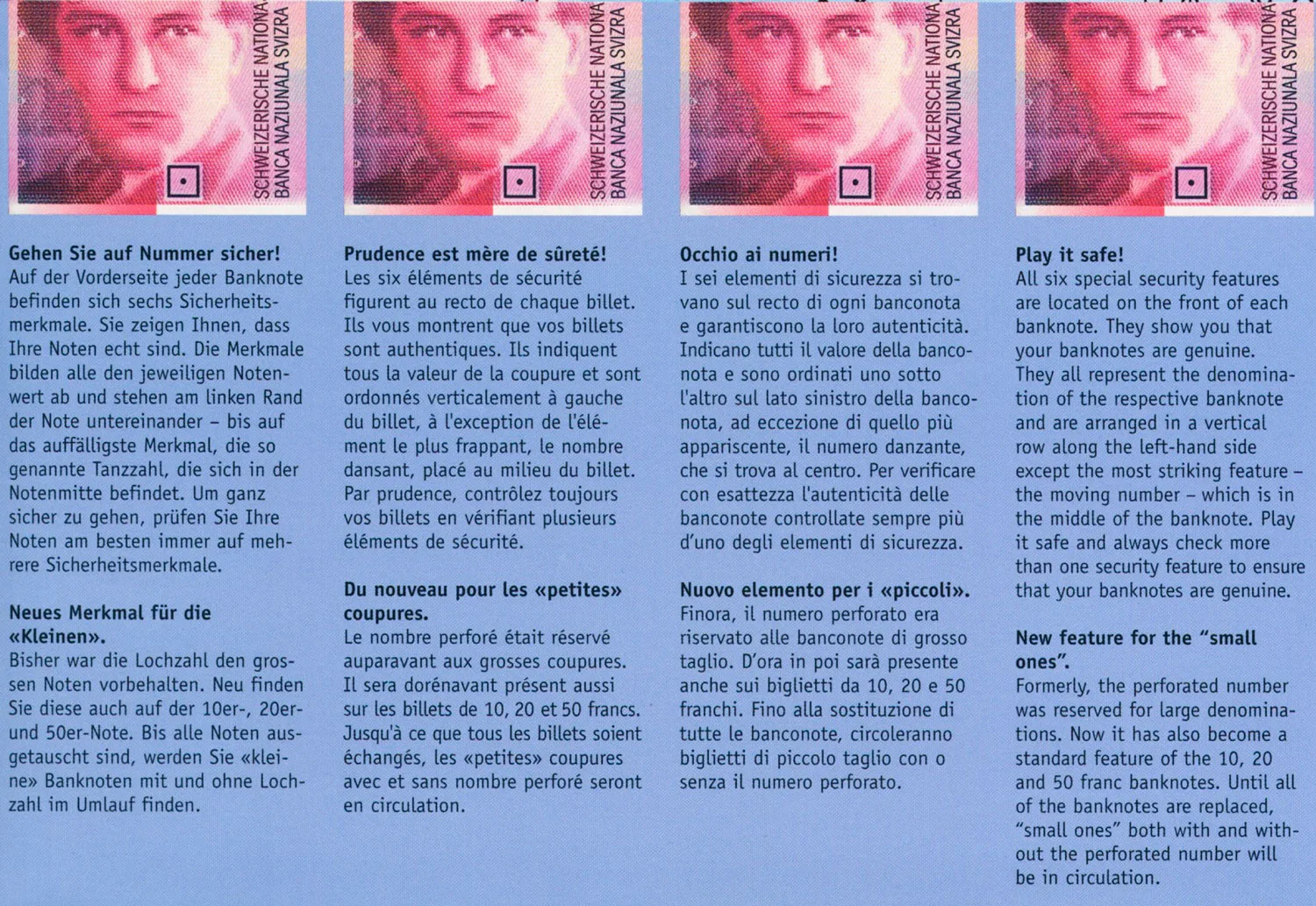
There was even a handy tear-off checklist that could be kept in people’s wallets ...
There was even a handy tear-off checklist that could be kept in people’s wallets ... Swiss National Bank Archives, BN359.17
Image 01 of 04
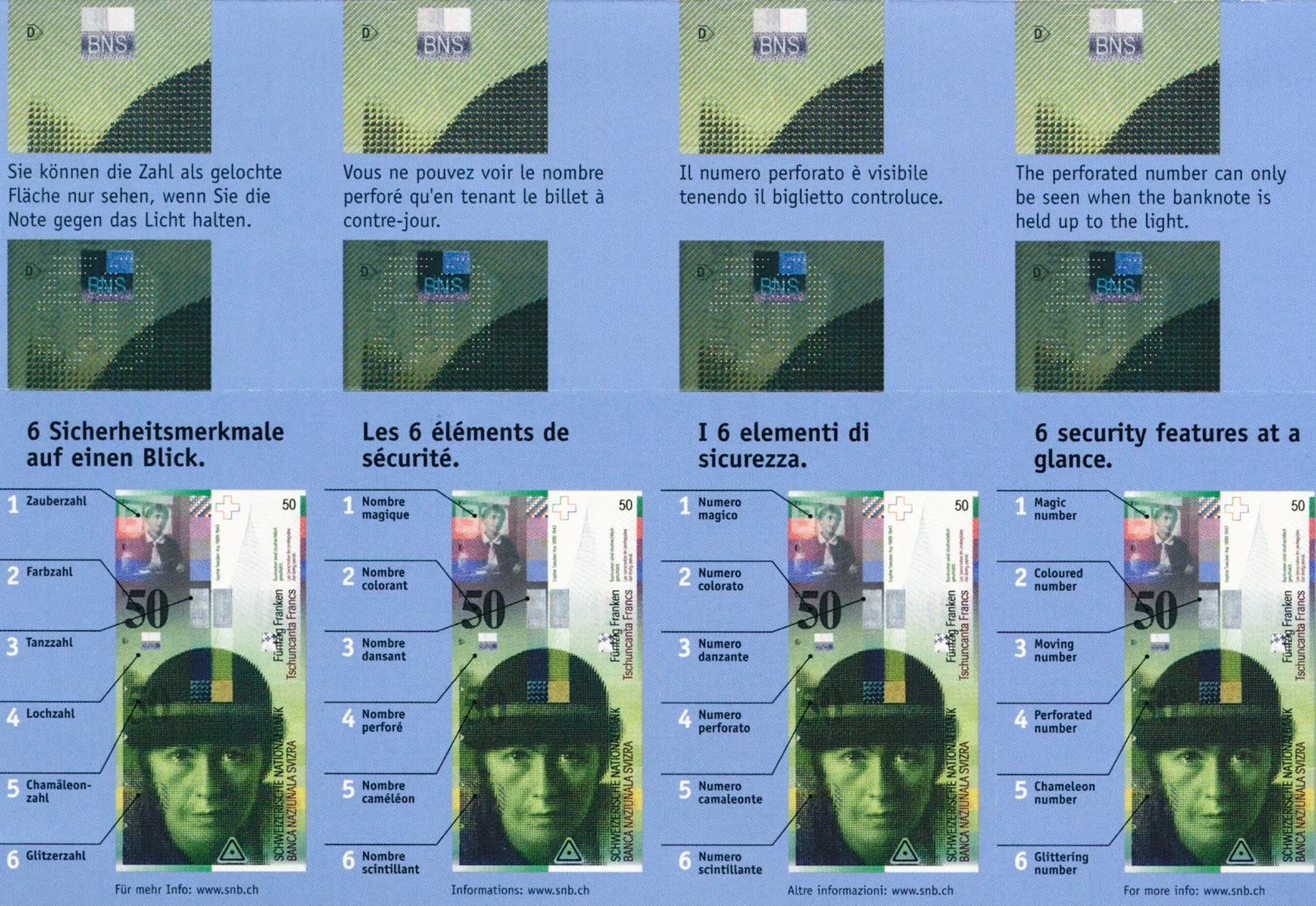
... enabling them to check the authenticity of the new notes at any time.
... enabling them to check the authenticity of the new notes at any time. Swiss National Bank Archives, BN359.17
Image 01 of 04
Image 01 of 04

A little piece of Switzerland

The eighth banknote series is a little piece of Switzerland, created through a mix of attractive design featuring the highest security standards, new creative ideas, precision craftsmanship and well thought-out communication. In many respects it is considered groundbreaking, a world first. In particular, the dovetailing of design, security architecture and industrial production set new standards in modern banknote origination, making it a benchmark for numerous other banknote issuers. A representative of the Bank of England wrote a personal letter to the President of the Bank Council in 1997 saying “may I congratulate you on the production of another attractive and innovative design”. The Austrian National Bank also sent its congratulations on the series, which set new standards and had a lasting impact on the production of banknotes in Europe.
At home, the series proved controversial. Numerous readers’ letters and comments in the press criticised it for being too modern, too rational and insufficiently Swiss. Many people were not familiar with the personalities chosen to appear on the notes, the design was felt to be somewhat inaccessible and the security concept overly intellectual. The Weltwoche weekly magazine even complained in 1995 that this was “high treason on a small scale” and criticised the “general-purpose design” and “high-tech gimmickry”.
 
It was only when people started using them that the notes gained acceptance. So, all in all, this was a series that polarised – an almost avantgarde piece of Switzerland in people’s wallets.

Switzerland, the land of banks

12.06.2026 08.11.2026 / National Museum Zurich
Switzerland is one of the world’s leading financial centres – but how did its close association with banking evolve? The exhibition shows how deeply banking is entrenched in Switzerland’s DNA and traces the development of the banking system by displaying an impressive range of items. Jewish moneylenders, Lombardy merchants and, later, urban exchange offices laid the foundation for the modern financial centre. The exhibition goes beyond merely retracing historical developments; it also invites visitors to engage with the land of banks as it is today.

Further posts