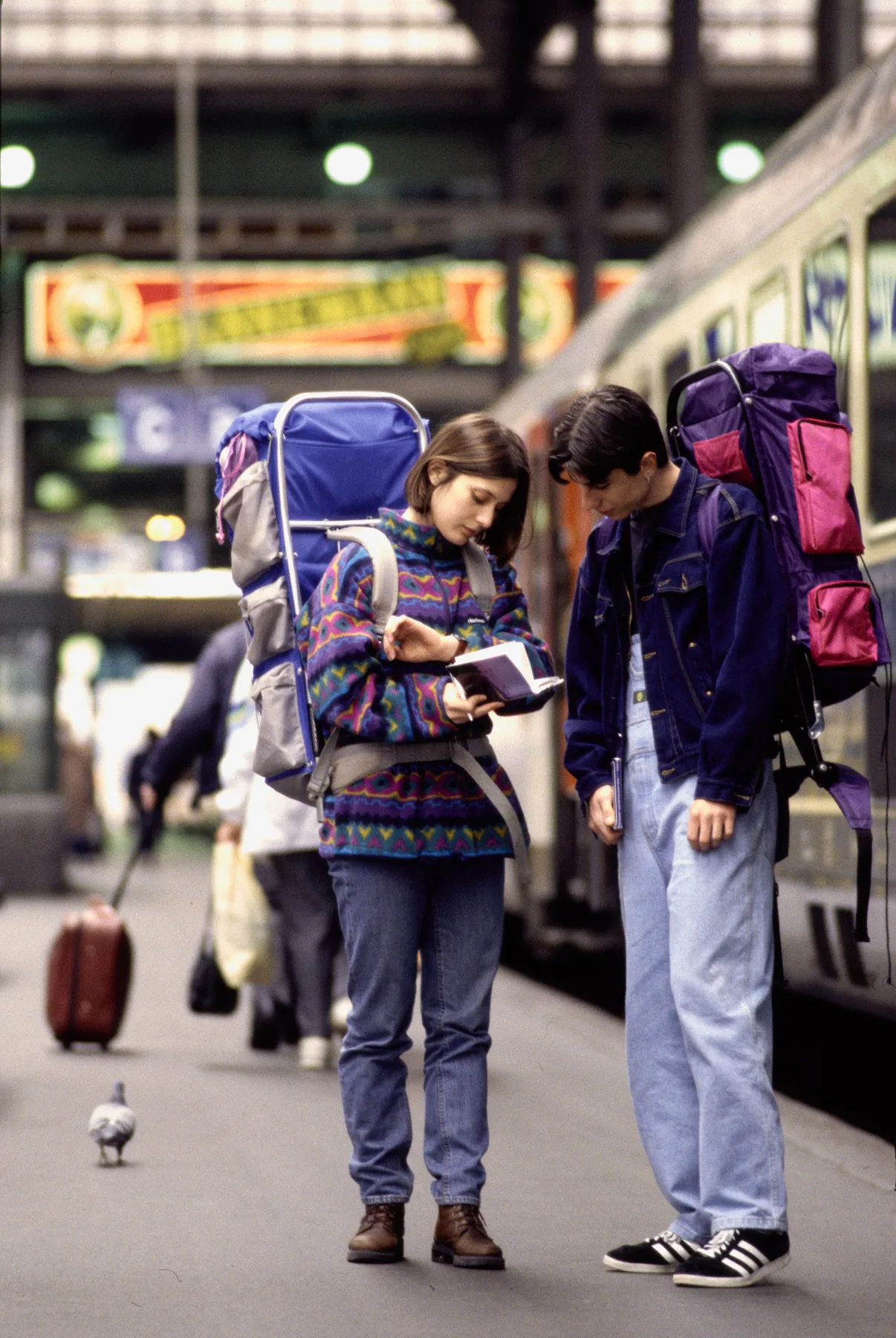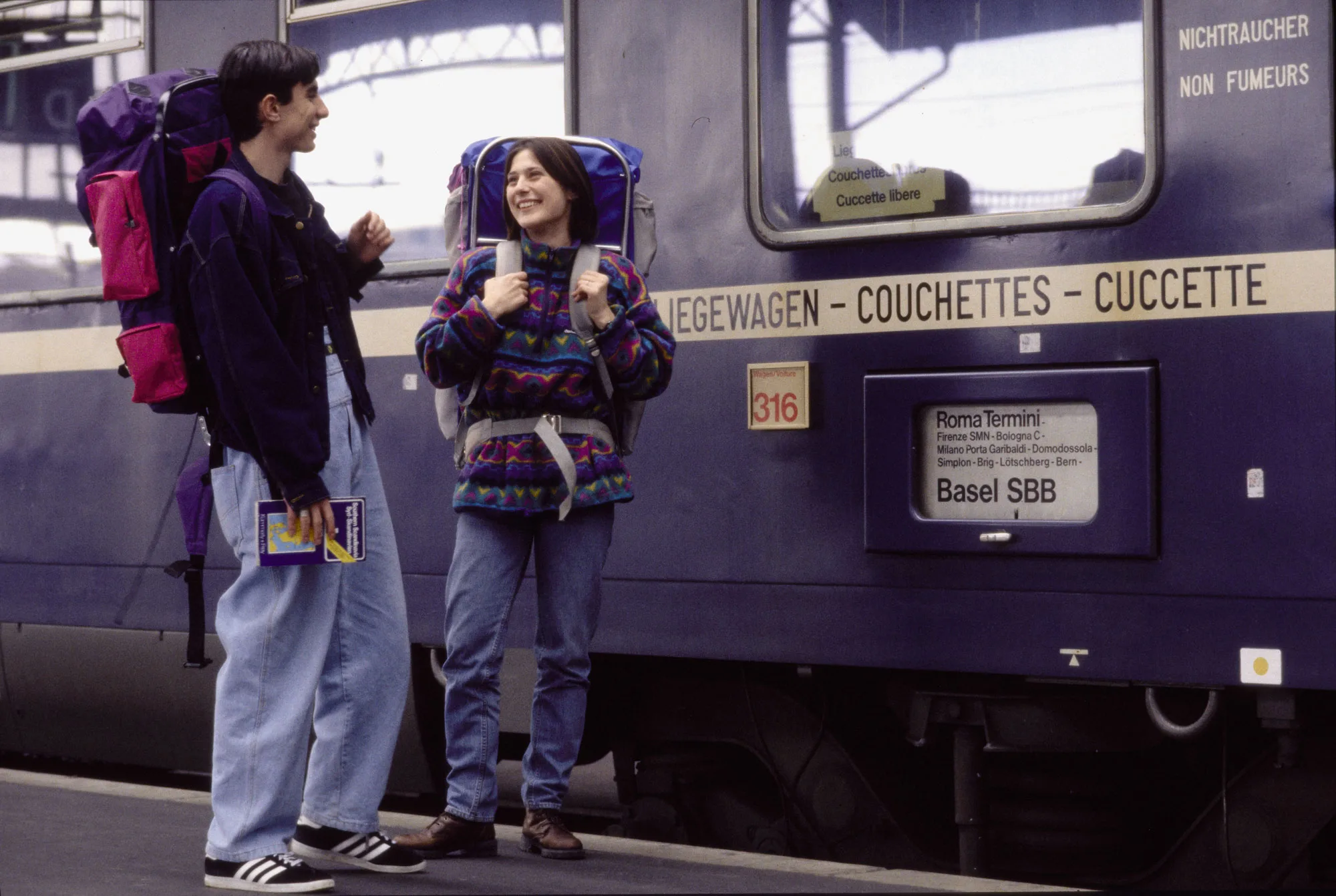
Interrailers in front of the Rome-Basel night train at Basel SBB station, 1994.
Interrailers in front of the Rome-Basel night train at Basel SBB station, 1994. SBB Historic

Interrail – opening up a world of possibility for young people

The Interrail pass, which was launched in 1972, allowed young people to travel by train around Europe for one whole month for the price of CHF 275. Summer after summer, it inspired tens of thousands of Swiss youngsters to travel across the continent. For many, this was also their first ever independent trip abroad.

Marc Ribeli

Marc Ribeli

Marc Ribeli is a historian and is responsible for the photo, film and video archives at SBB Historic.
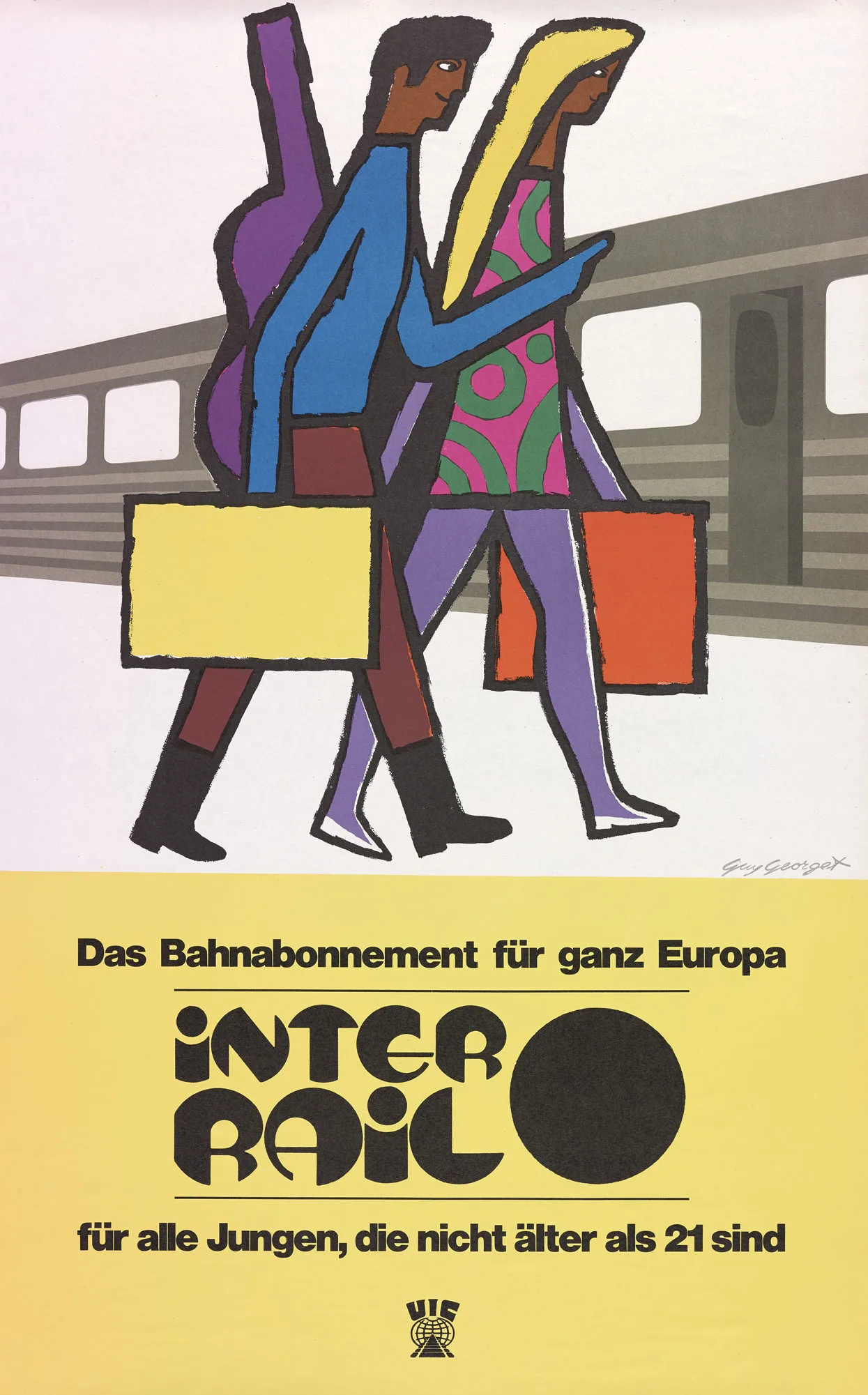
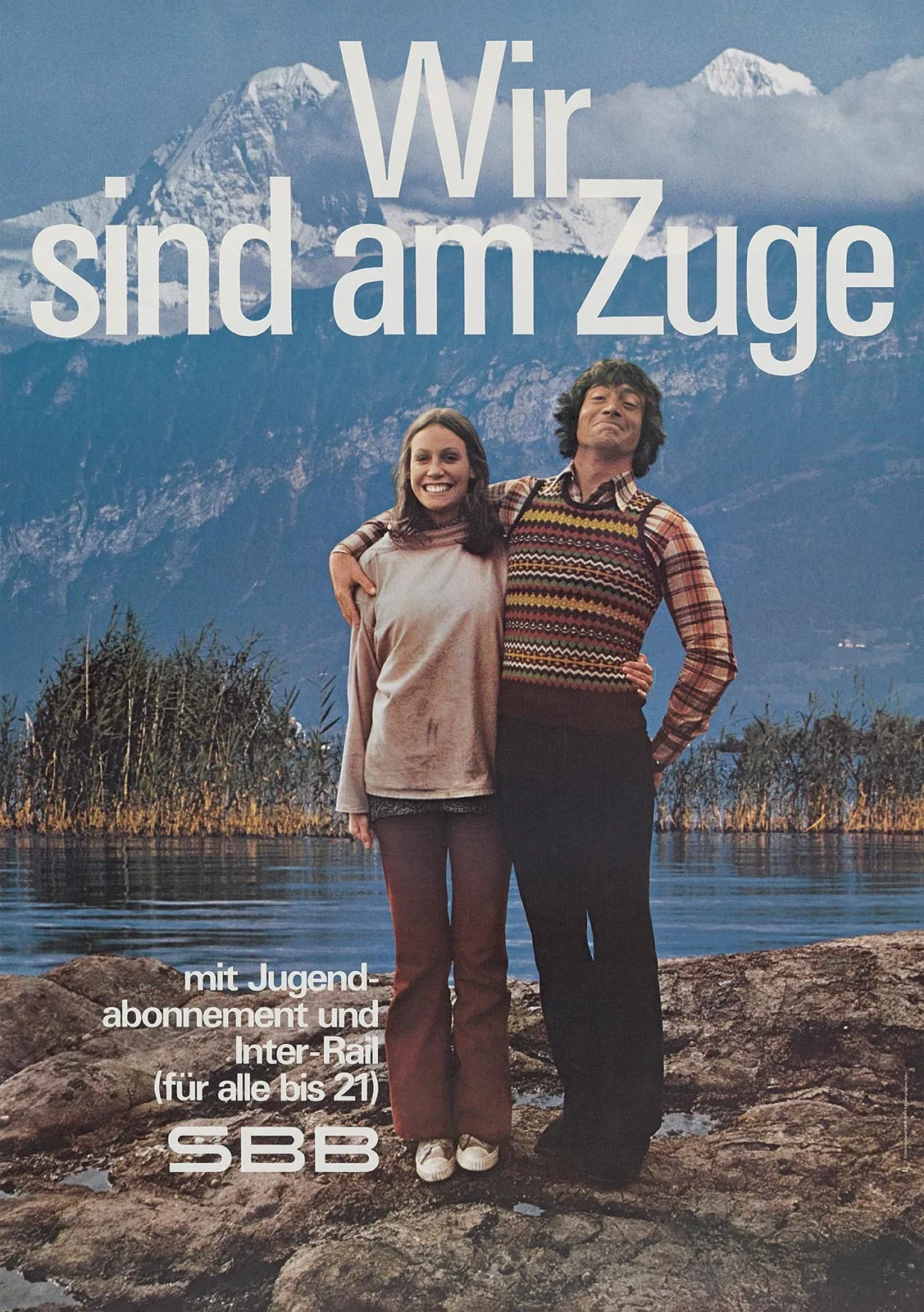
‘Interrail, the rail pass for the whole of Europe for under-21s.’ The advertising poster clearly sums up the scheme. While the two travellers are not instantly recognisable as young people, their colourful clothing and the guitar are symbols that were later used repeatedly in promotional material for Interrail journeys. Young people were depicted even more frequently with backpacks – though the first poster still shows traditional suitcases.
The iconic first Interrail poster from 1973, designed by Frenchman Guy Georget (1911–1992).
The iconic first Interrail poster from 1973, designed by Frenchman Guy Georget (1911–1992). SBB Historic

Unlimited travel pass launched to mark anniversary

The Interrail ticket was created in 1972 to mark the 50th anniversary of the International Union of Railways (UIC). As part of the varied anniversary programme, 21 European railway companies decided to introduce an Interrail pass for young people. Under-21s could travel across Europe by train in 2nd class for one month between 1 March and 30 November. In the country of issue, train journeys were available at half price; in the other countries, the pass was valid for travel on almost any train across the entire national rail network . In Switzerland, an Interrail pass cost CHF 275.

This scheme provided school pupils, apprentices and students in particular with an affordable way to travel. And it proved very popular with these groups. The promotional offer, originally intended to run for just a few months in 1972, became a huge success: while 8,726 passes were sold in Switzerland in 1972 (87,625 in Europe), a year later the figures had risen to 13,059 passes in Switzerland and 119,011 in Europe. No wonder, then, that Interrail subsequently turned into a permanent scheme. By 1974, the pass could already be used throughout the entire year, not just during the peak travel season. Two years later, the age limit was raised to 23, and in 1979 to 26.
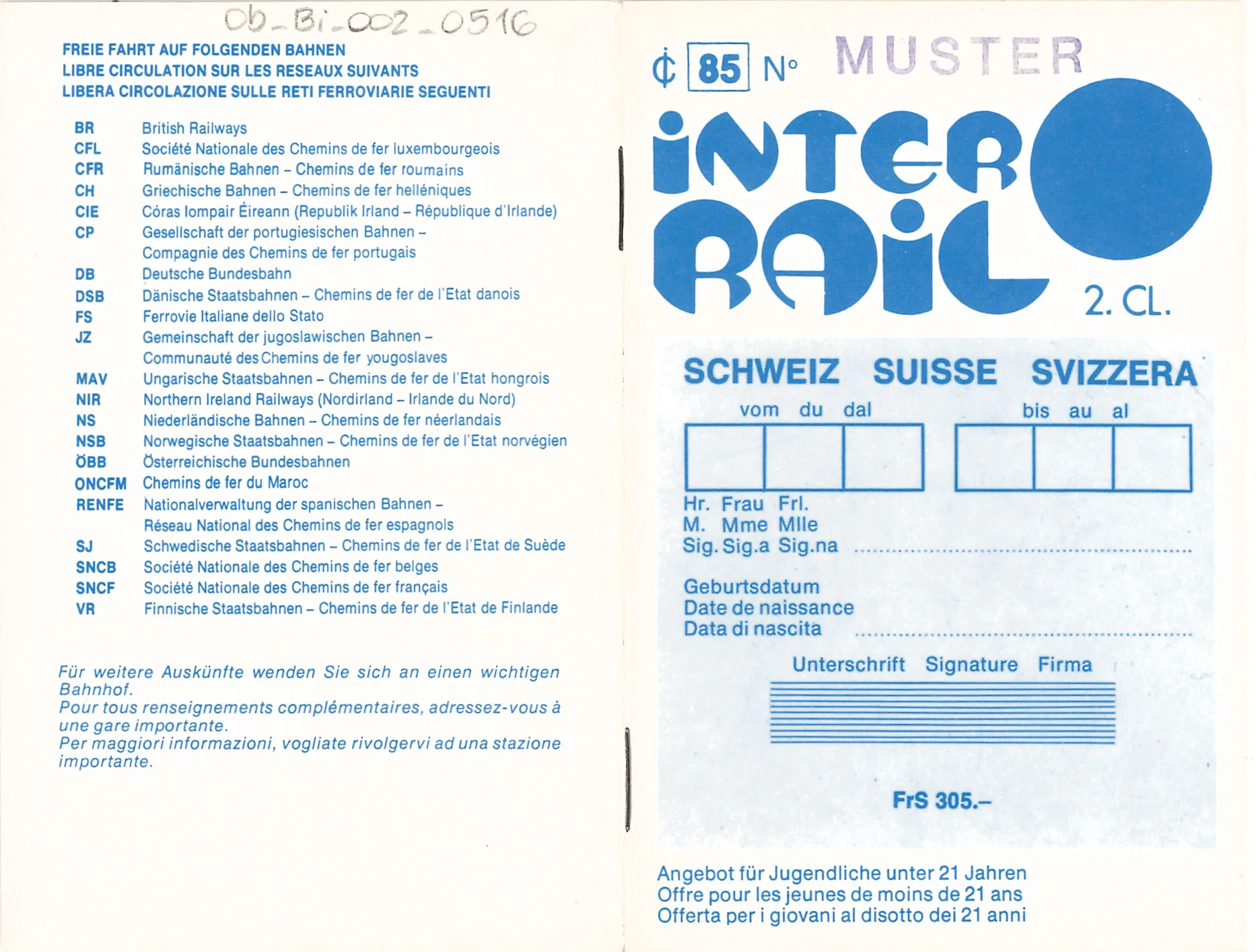
Sample Interrail ticket featuring Swiss transport companies, 1973.
Sample Interrail ticket featuring Swiss transport companies, 1973.   SBB Historic

Hitch-hiking by train

For many young people, Interrail was the first time they had planned and taken a trip abroad without their parents. Even for those with limited travel experience, the scheme offered the chance to organise their own itinerary, broaden their horizons and travel freely through various European countries. The simplicity of the concept suited the modest expectations of many young travellers. They mostly travelled light, usually with a backpack, which led to the emergence of the term ‘backpacking’. They travelled on a tight budget, getting by on very little money, and spending the night on trains, in stations, in cheap hostels or on campsites. An analysis by Deutsche Bahn described typical Interrailers as “[…] rather modest in their expectations of comfort, relaxation and practical luggage transport. What matters to them is the opportunity to develop and grow through the new experiences offered by rail travel. Travelling independently is where their sense of individuality really emerges, and there is a liberating dimension to it.”
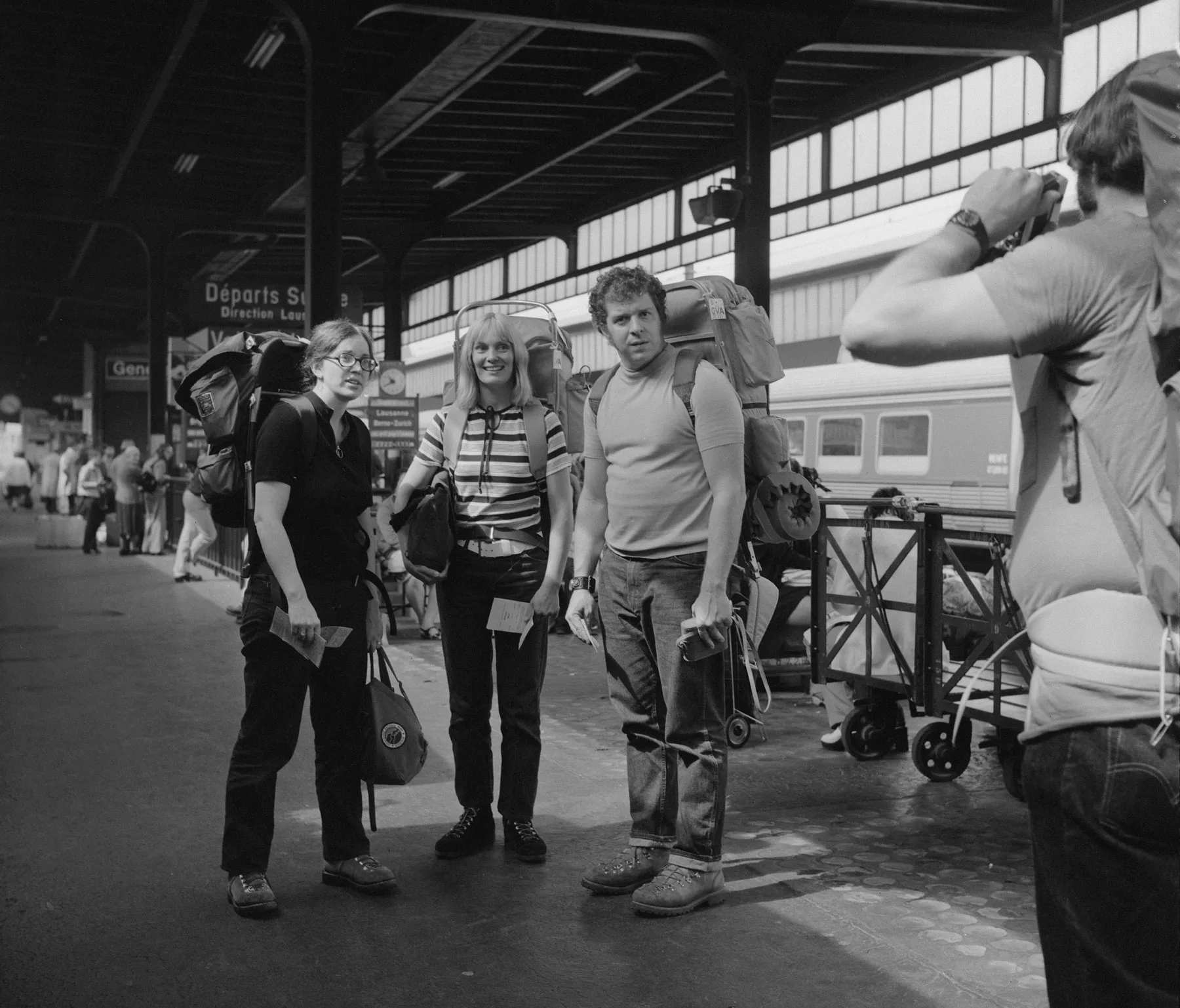
A souvenir photo before departure: backpackers at Genève-Cornavin station, 1973.
A souvenir photo before departure: backpackers at Genève-Cornavin station, 1973. SBB Historic
On the other hand, the opportunity to meet like-minded young people from other countries also fuelled the popularity of Interrailing. Interrailers were easily recognisable by their age and distinctive accessories, and this often led people to strike up new friendships. It was not uncommon for them to travel part of the journey together until their itineraries took them separate ways. People also sought travel companions via newspaper advertisements. Interrail captured the spirit of the times and became part of youth culture.  
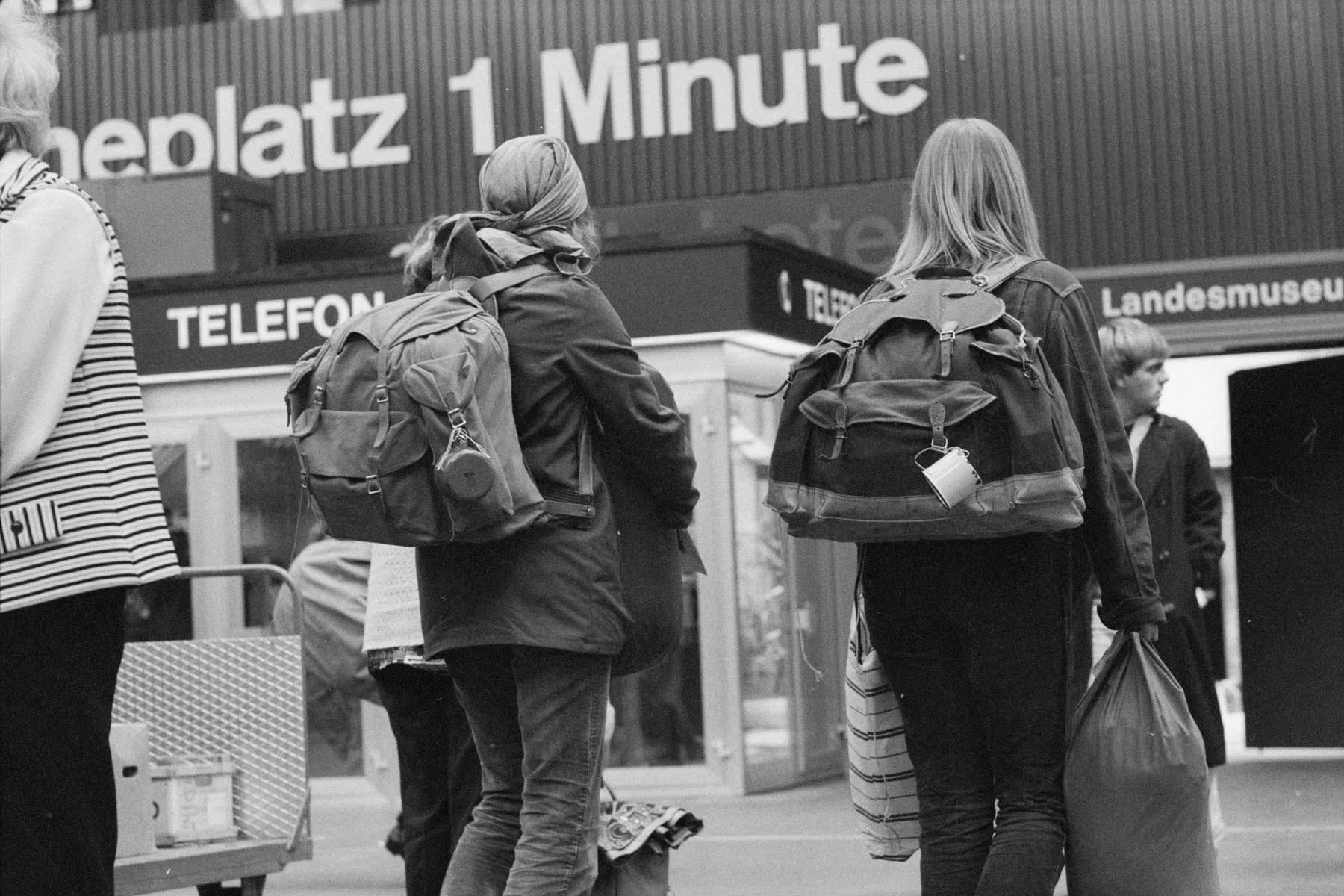
Two backpackers at Zurich’s main station in July 1972.
Two backpackers at Zurich’s main station in July 1972.   e-pics
This was also due to the fact that Interrail had been launched against a backdrop of shifting cultural values – just a few years after the protests of the 1968 movement. Alongside hitch-hiking on the road, the free and spontaneous nature of Interrailing offered a kind of ‘hitch-hiking by train’. It enabled young people to break away from the adult world, offered them new freedoms and fitted well with the idea of a self-determined and independent youth. Their aim was not just to go travelling, but also to find themselves. Packing a rucksack and discovering the continent by train gave them a sense of freedom.
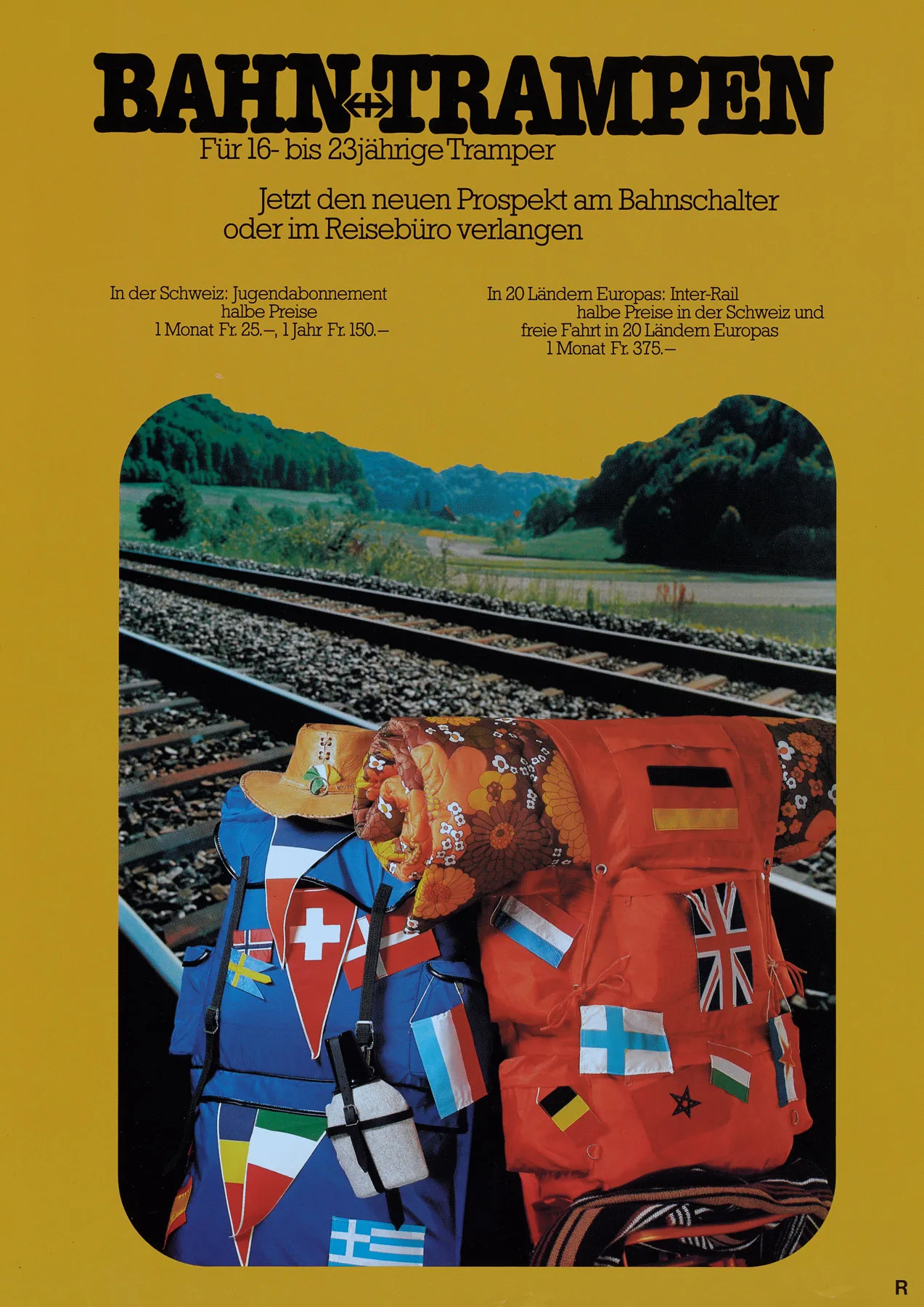
Hitch-hiking by train: poster from 1978.
Hitch-hiking by train: poster from 1978. SBB Historic

Racking up the kilometres

Every journey was entered in the Interrail pass, which therefore served as a sort of logbook. This allowed travellers to show friends or those back home their well-planned itineraries and intensive use of trains during the validity period, often supported by photos taken along the way. Another type of journey was what we might today call ‘travel maxxing’: racking up as many kilometres as possible. In 1972, one student reached a total of 19,000 kilometres; the record was broken year after year, and in 1987 a new record of 36,030 km was set and made it into the Guinness Book of Records.Commenting on this desire to rack up as many kilometres as possible, SBB wrote: “Given the feeling of almost limitless possibility, beginners often strive to tick off as many cities as possible within the available 30 days, without seeing much else apart from stations, campsites and youth hostels. However, this kind of legal excess is precisely part of the appeal of a first Interrail trip.” In 1975, the first Interrail handbook, containing tips and tricks designed to help ensure a successful trip, was published.

Destination Europe

As well as the reasonable price, the ability to put together a customised itinerary was a key factor in Interrail’s success. Travel plans were often changed at short notice, with decisions on which train to board sometimes only made once at the station. That was the great advantage of Interrail. Cities were easily accessible by train, making the major European cities very popular destinations.

“You only need to spend a few hours in summer watching young backpackers setting off from Zurich’s main station. Interrailers rarely stray from the north-south route.” These observations in the NZZ newspaper in the 1980s were also confirmed by an SBB report on the early years of Interrail: a large proportion of young Swiss travelled north. Conversely, travellers from the Scandinavian countries seemed to enjoy visiting Switzerland: “A mutual attraction has emerged between our country and the four Scandinavian nations, with young Swiss people accounting for around a quarter of all passenger-kilometres travelled in the far north, while young Danes, Finns, Norwegians and Swedes totted up almost half of the Interrail kilometres travelled in Switzerland.” The keen interest in Interrail in the Nordic countries was further boosted by the opening of the first Interrail Centre at Copenhagen Central Station in 1984. It offered dining and lounge areas, showers, luggage storage, and vending machines for drinks and sandwiches from 7 am to 1 am.  
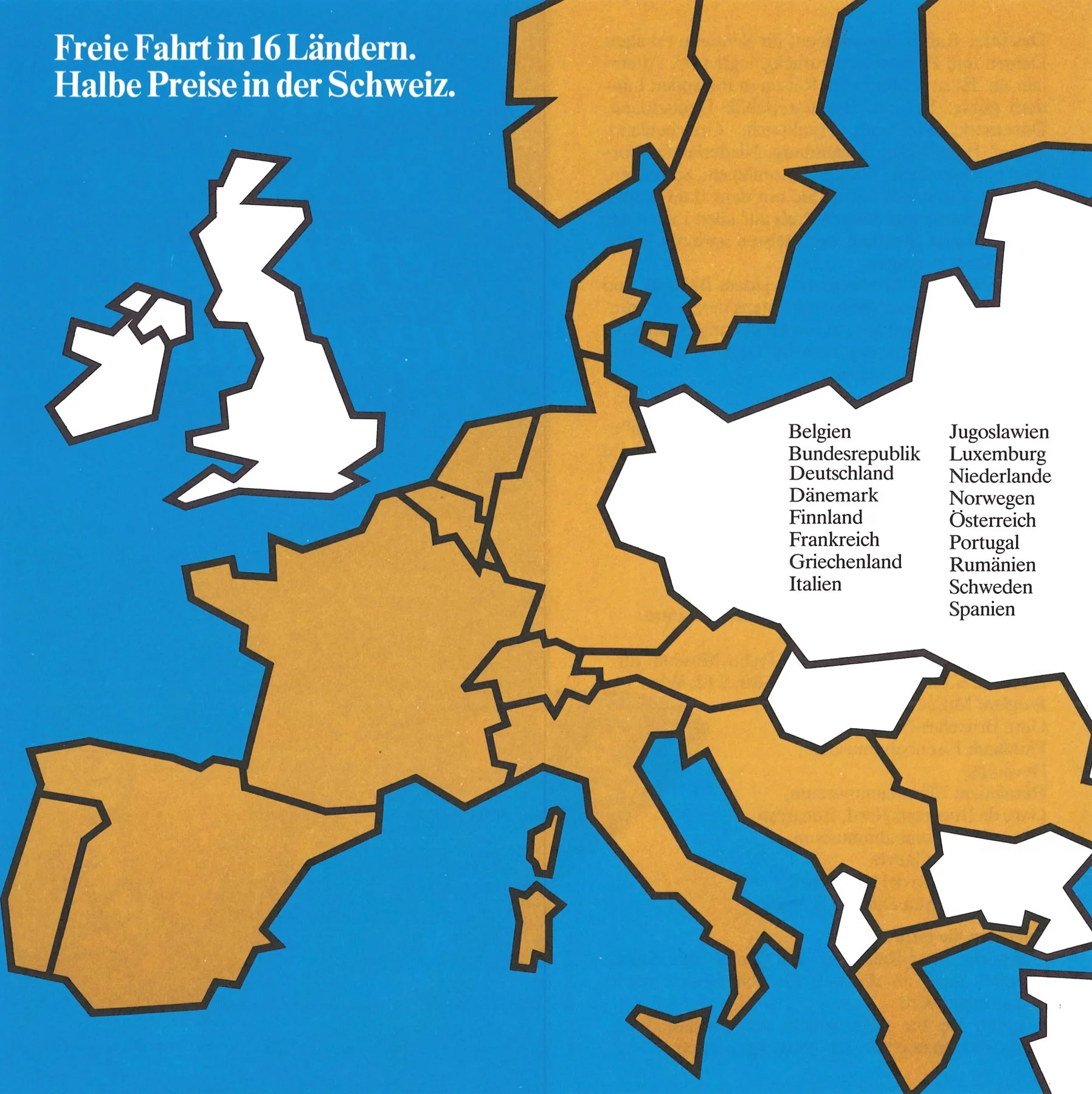
Criss-crossing Europe: brochures promote the diversity of destinations.
Criss-crossing Europe: brochures promote the diversity of destinations. SBB Historic
Viewed as a pan-European project, several railway companies from socialist countries in Europe were also part of the Interrail zone the year the scheme was launched. This made it easier to travel to countries behind the Iron Curtain, including Romania and Hungary, and in the first year also Poland and East Germany. The Eastern Bloc countries were passive participants in the scheme: Interrailers were welcome, but no tickets were sold to their own citizens.

Mediterranean countries such as Italy, Spain and Greece were also very popular. This sometimes led to bottlenecks on the railways of southern Europe during the summer months. Morocco stood out as an exception on the Interrail map as the only non-European country to join.  

The railways discover the youth market
The railway companies saw marketing potential in the new scheme: for example, if the Interrail pass was returned to the ticket office after use, the holder was refunded CHF 15. On the one hand, this was intended to help distribute revenue fairly among the national railway companies, but it was also an attempt to research the market and understand young people’s needs. Statistical data on travel behaviour was needed to tap into this new customer segment with offers such as Interrail and to get young people excited about rail travel. During the 1960s, the railways had lost market share as car ownership become a symbol of freedom which they were forced to counter with their own offerings. Further competition emerged with the rise of charter airlines. To reach the younger generation, the railways extended the few existing youth railcards, such as discounted Half-Fare travel cards or Rail Europe Junior (a 25% discount on international tickets), and developed new offers specifically aimed at young people. The 1970s was the decade in which European railways discovered the youth market.
In the 1970s, the railways began to focus increasingly on young people.
In the 1970s, the railways began to focus increasingly on young people. SBB Historic

Ups and downs

Interrail was a success from the outset – though not a consistent one. On the whole, the 1990s was a decade of declining sales. The introduction of a zone system and price increases, brought in following pressure from southern European rail companies, had complicated the Interrail system and placed limits on the freedom it offered. The liberalisation of the aviation industry and the rise in low-cost flights made European cities and more distant destinations quicker and often cheaper to reach. The environmental footprint was ignored at the time, but the rise of the climate movement has made rail travel a popular choice again.  
Interrailers at Basel SBB station in the 1990s.
Interrailers at Basel SBB station in the 1990s.   SBB Historic
The scheme has changed repeatedly over the decades, for example through the removal of the age limit or the inclusion of first class. The ticket has adapted to the way people travel: whereas in the early years, you could still travel freely, windows open, without planning ahead, today seat reservations are often required well in advance and a precise itinerary needed. In return, travel information can now be accessed live via the ‘Rail Planner’ app, whilst air-conditioned and faster trains make for a more comfortable travel experience. Created to mark the 50th anniversary of the UIC, Interrail celebrated its own 50th anniversary in 2022. At its core, however, Interrail is still a flexible and comparatively affordable way to travel – just as it was in 1972.

Further posts