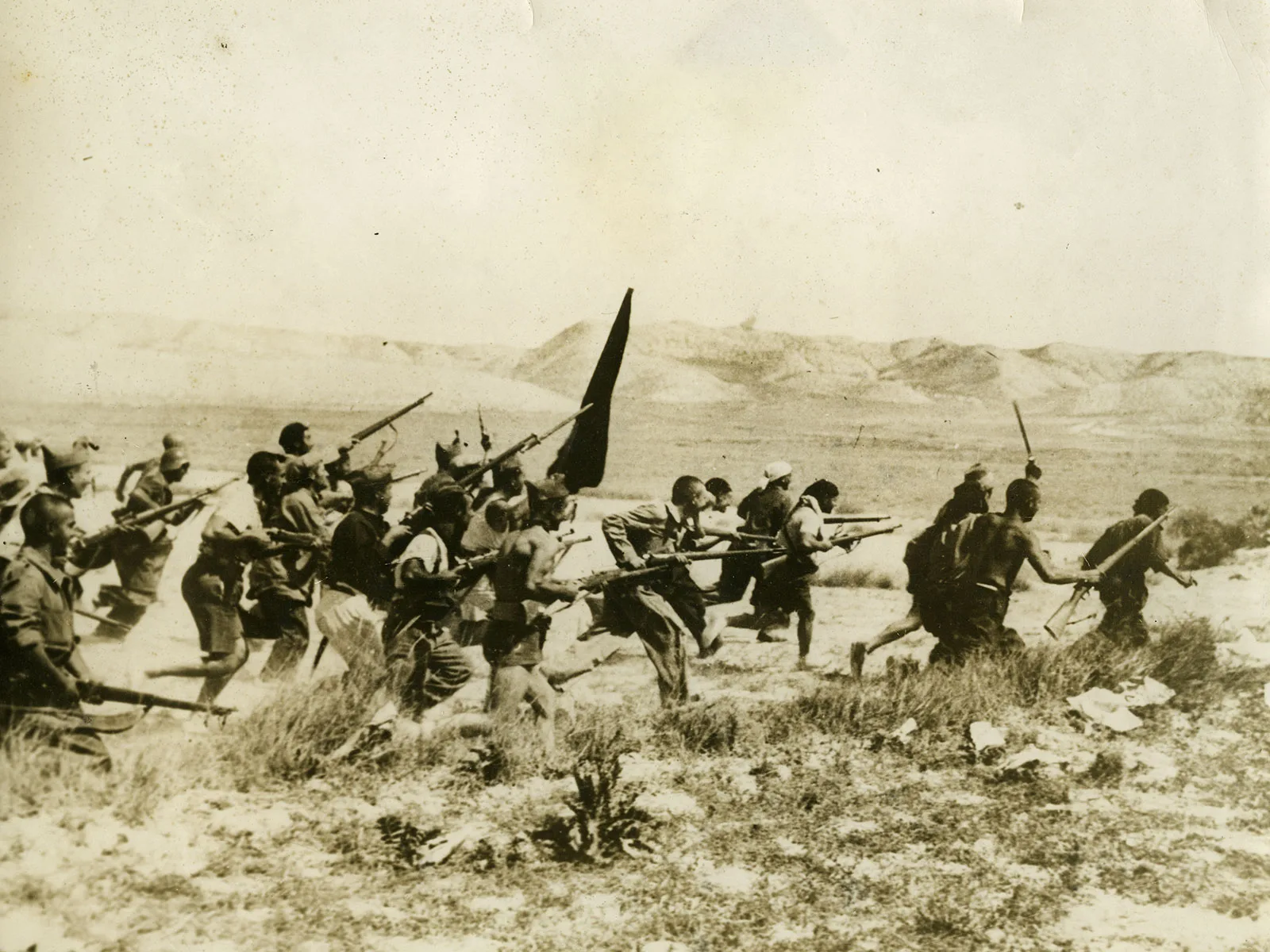
In September 1936, government troops stormed a rebel position near Aragon.
In September 1936, government troops stormed a rebel position near Aragon. Schweizerisches Sozialarchiv

Switzerland – a neutral player in the Spanish civil war?

When the Spanish civil war broke out in July 1936, it provoked a reaction from Switzerland. Apart from the political aspect, about 800 Swiss volunteers also travelled to the Iberian Peninsula to fight against the forces of General Franco.

Franziska Zaugg

Franziska Zaugg

Franziska Zaugg is a lecturer at the University of Fribourg and researches the history of violence and conflict.
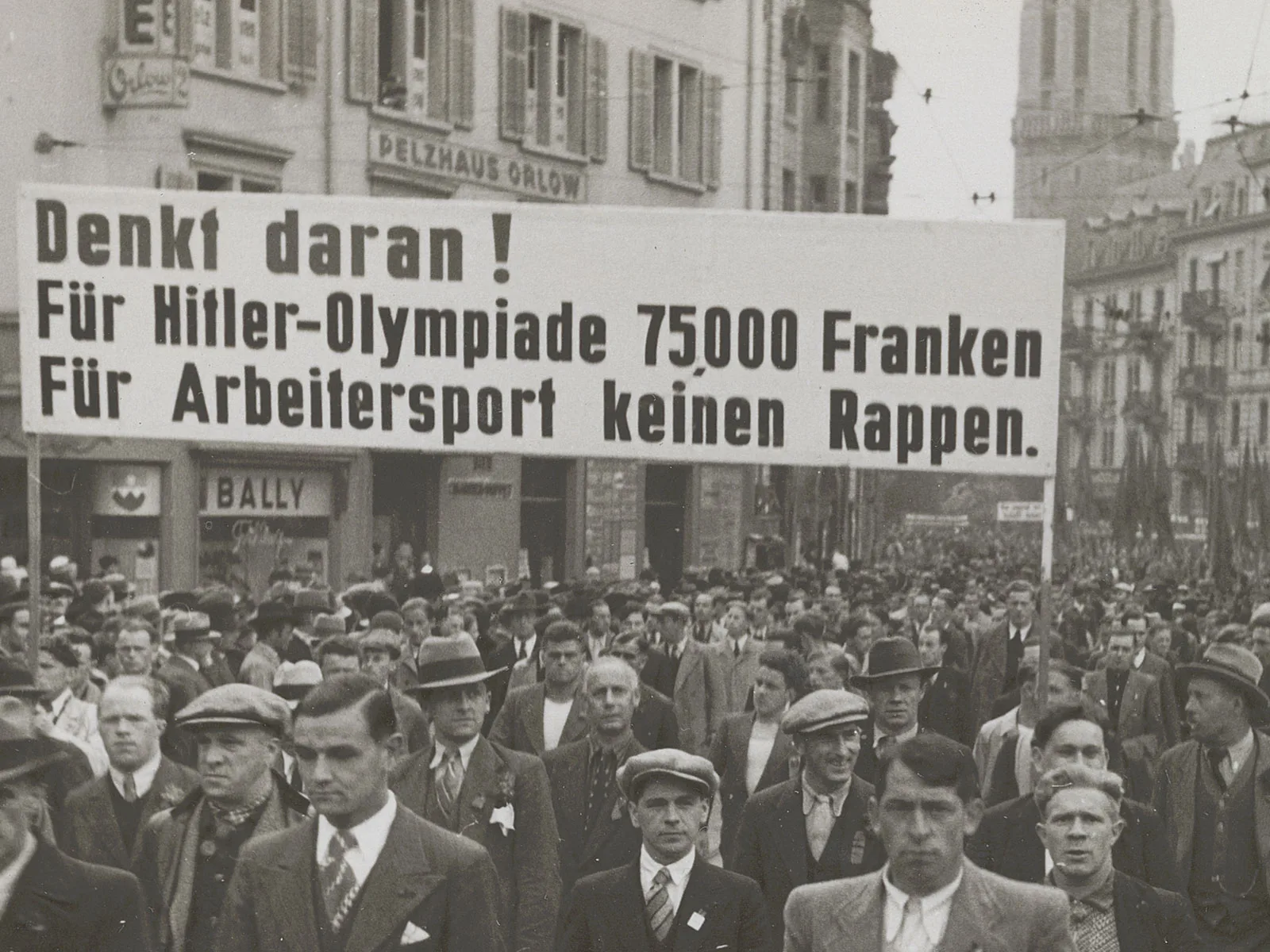
In July 1936, nationalist generals headed by Francisco Franco staged a putsch against the democratically elected Second Spanish Republic. In no time at all it had escalated into civil war, which lasted until 1939 and served as a precursor to the Second World War. The events on the Iberian Peninsula triggered a strong and immediate reaction in Switzerland. People thronged the streets displaying placards and banners in protest against the putsch.
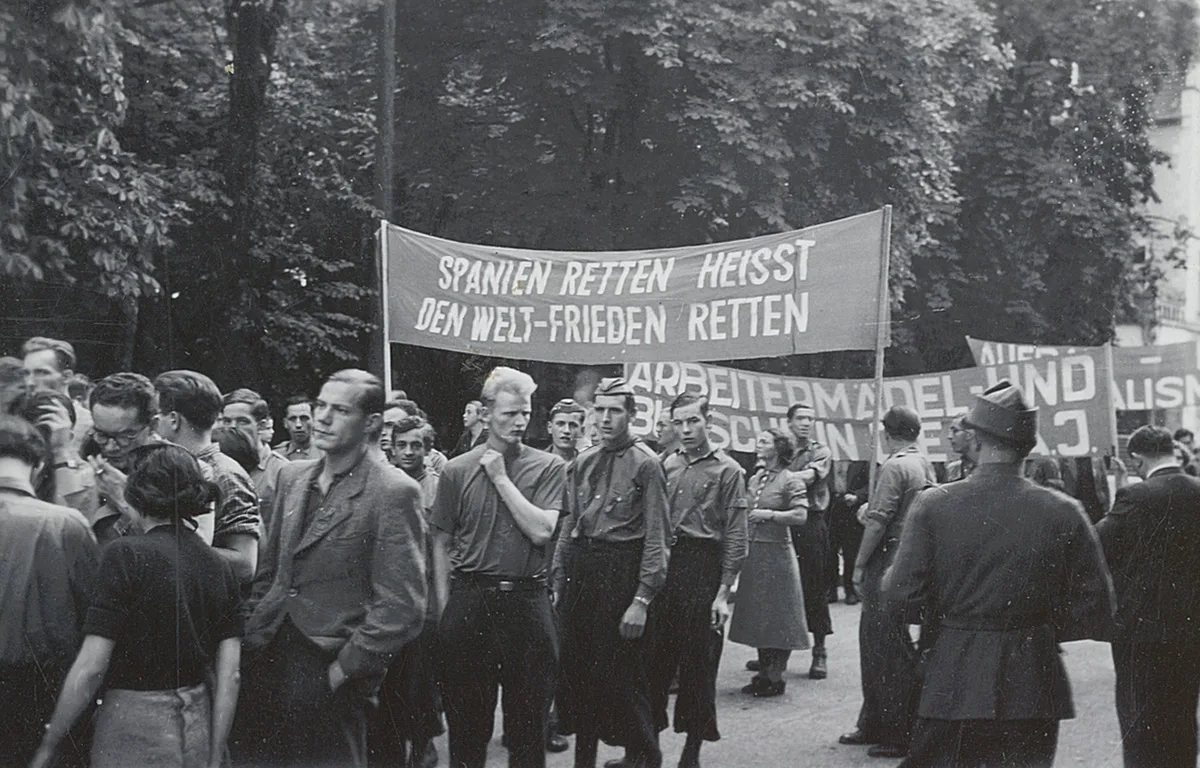
One of many demonstrations against the Spanish Civil War: on 1 May 1938, large numbers of people took to the streets in Baden (Canton of Aargau) to protest against the conflict.
One of many demonstrations against the Spanish Civil War: on 1 May 1938, large numbers of people took to the streets in Baden (Canton of Aargau) to protest against the conflict. Schweizerisches Sozialarchiv
The Federal Council’s response was more subdued. The Swiss government did not condemn the putsch, instead it passed two bans initiated by Federal Councillor Giuseppe Motta prohibiting with immediate effect any participation in the war and any military, financial or logistical support for either side. In other words, the Federal Council placed the coup plotters on a par with Spain’s elected government.
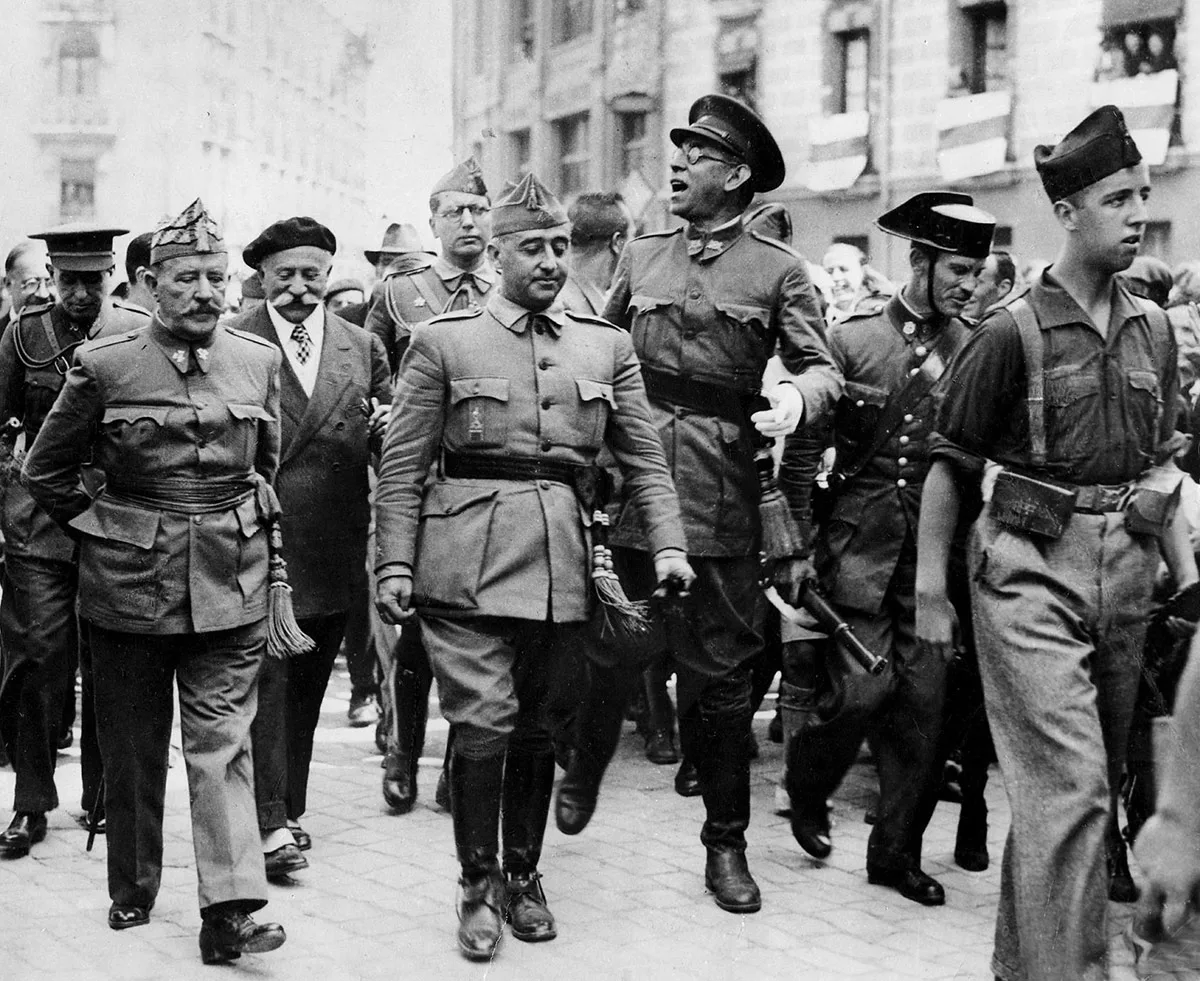
Francisco Franco (centre) in August 1936 in Burgos.
Francisco Franco (centre) in August 1936 in Burgos. Wikimedia
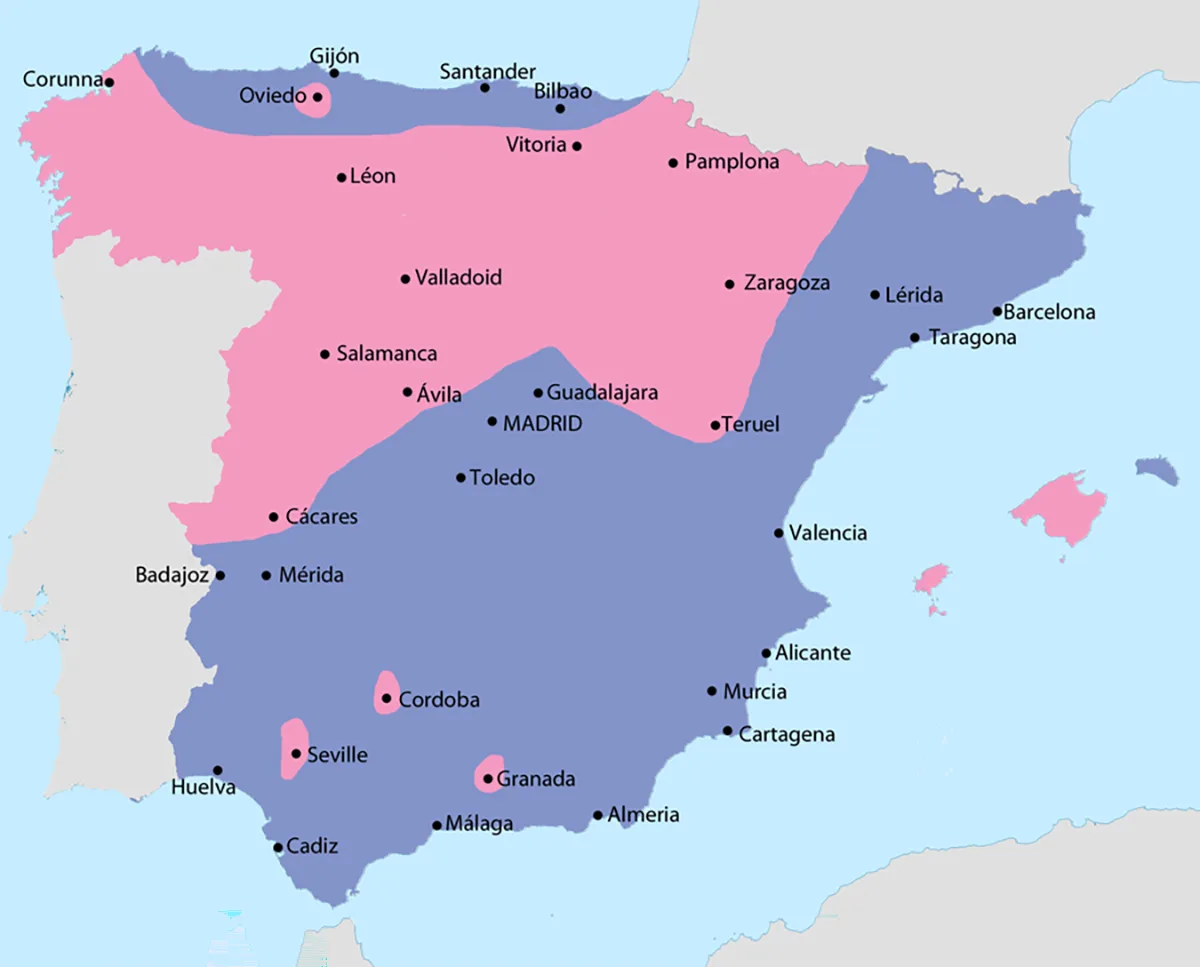
General Franco’s troops stationed in Spanish-occupied Morocco moved to southern Spain with support from Italy via the Straits of Gibraltar in July 1936. They quickly took over a number of Spanish towns and cities and Franco established his primary headquarters in Salamanca. He soon transferred his base to Burgos, a traditional nationalist stronghold that became the political centre of the military uprising during the summer of 1936. Key strongholds including Toledo and León also soon fell to the insurgents. By December, Franco’s troops were closing in on Madrid. However, the inhabitants of the capital city stubbornly resisted. Staying true to their slogan “no pasarán!” (they shall not pass), they held out until March 1939 when Franco’s troops finally took over the Spanish capital.
Map of Spain in July 1936. The areas controlled by Franco are shaded pink.
Map of Spain in July 1936. The areas controlled by Franco are shaded pink. Wikimedia / NordNordWest
Although Franco was supported by fascist Italy and Hitler’s Germany, the Spanish civil war still lasted until 1939. Only when the two key cities of Barcelona and Madrid had fallen to the putschists was Spain’s fate finally sealed. The protracted nature of the war was partly due to the 35,000 volunteers who had come to Spain from near and far to join the republicans in the fight against the fascists. There were about 800 Swiss among their number.

Standing against fascism

Most of the young Swiss volunteers who travelled to Spain were motivated by their commitment to fighting fascism, others went because they were unemployed. Whatever their motivation, they all shared one overriding conviction: to defend democracy in Spain and stem the tide of fascism sweeping across Europe. As Hans Hutter, one of the Swiss volunteers, was to say later: “We were not extreme, nor were we especially political. But we saw that fascism was not a good thing.”
TV programme about former volunteer in the Spanish civil war Hans Hutter (in German). SRF
As for Switzerland’s official position, it did not join the "Non-Intervention Agreement" initiated by France in August 1936, although it did, at least on the surface, present itself as neutral. At the same time, Federal Councillor Motta, who was in charge of foreign policy, made no secret of his enthusiasm for Mussolini and Franco. So, despite the bans issued by the Swiss government, it still approved loans to the value of a million pounds for the putschists, sent Swiss officers to visit Franco’s front-line troops and had a permanent envoy in Burgos where Franco was based. Franco also sent an envoy, Bernabé Toca, to Bern in spring 1938.
Shortly after his arrival, Toca received permission to hold a memorial service for those who had fallen in battle fighting for Franco in Bern’s Dreifaltigkeitskirche church. He invited prominent representatives of Hitler and Mussolini to the service. A number of influential Swiss also joined this “illustrious” group. 800 people in total gathered at the church in remembrance of the fallen putschists. The following banquet was attended by 370 invited guests under the protection of the Bern police.

Punishing the volunteers

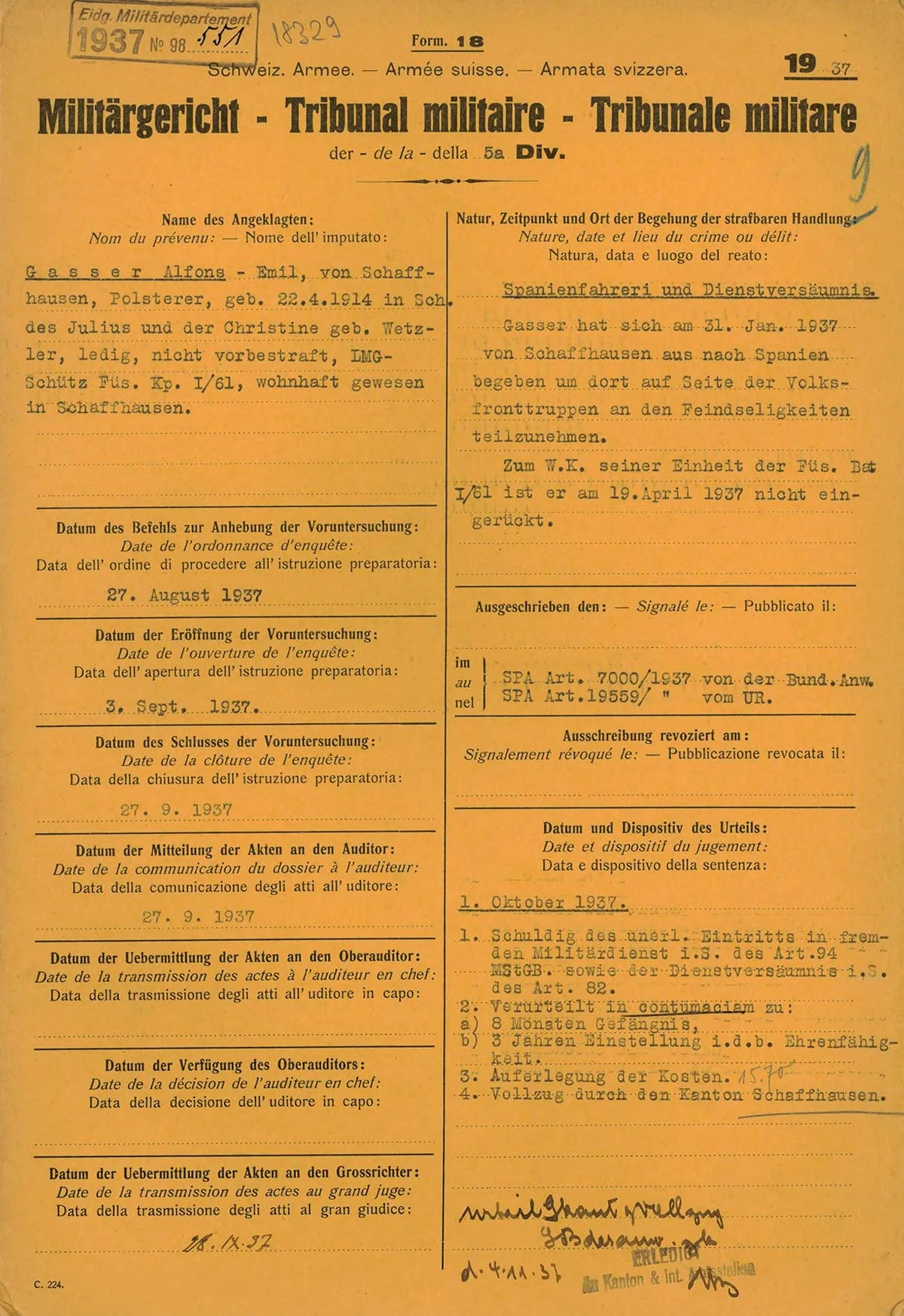
At the same time, the Swiss military courts were sentencing the returning volunteers to several months in custody and withdrawing their civil rights for several years. The punishments meted out in Switzerland were much harsher than in other democracies and even resulted in some fatal outcomes. One example was Alfons Gasser from Schaffhausen who had to close his upholstery business as it was boycotted after his sentencing. Gasser ended up working in an asbestos factory and died of cancer in 1973.
Alfons Gasser was sentenced to eight months’ imprisonment and had his civil rights suspended for three years. During this period, he was not allowed to vote or stand for election.
Alfons Gasser was sentenced to eight months’ imprisonment and had his civil rights suspended for three years. During this period, he was not allowed to vote or stand for election. Swiss Federal Archives
While the Swiss volunteers had to deal with social exclusion and financial problems following their convictions, the Swiss government maintained close economic ties with Franco’s Spain during the Second World War from 1942. These ties grew closer still after the war. During the Cold War, Switzerland helped Franco establish his dictatorship on the international stage. In 1954, both states ratified their first bilateral economic treaty; five years later the Federal Council supported the admission of Spain into the Organisation for Economic Co-operation and Development (OECD). The Franco regime was also the number two importer of Swiss military equipment.
Over time, the putschist Franco became a Spanish statesman, respected by the major powers such as the US. Switzerland contributed to that. YouTube / British Movietone
Shortly after their return, some of the Swiss volunteers founded the communist-leaning “Interessengemeinschaft Schweizer Spanienkämpfer” (interest group for Swiss who fought in Spain), which campaigned, among other things, for rehabilitation following their involvement. The group maintained its opposition to the Franco regime. One of the volunteers, Ernst Linggi, also suggested to Ticino doctor and social democrat Sandro Pedroli in the early 1960s that he found the “Schweizer Komitee für politische Amnestie in Spanien” (Swiss committee for political amnesty in Spain) to represent the rights of political prisoners in Franco’s jails.
Public interest in the participation of Swiss fighters in the Spanish civil war grew in the early 1970s. At the same time, parliamentarians including Léon Nicole from Geneva, campaigned tirelessly for an amnesty for those volunteers who had been convicted for their actions. Numerous motions to overturn the convictions had been brought to parliament since the Second World War. However, the Cold War and its attendant anti-communist sentiment on the part of the Swiss government prevented rehabilitation. It seems paradigmatic to the Swiss volunteers’ case that Federal Councillor Ruth Dreifuss, a woman with Jewish roots, was the first person to publicly apologise to the volunteers in the 1990s for the injustice inflicted on them and to symbolically rehabilitate them.
Tribute by Ruth Dreifuss to the Swiss who fought in Spain delivered in Zurich in 1994 (in German). SRF
It was following the discussions about dormant Jewish assets in Swiss banks that calls grew to grant an amnesty to the people who had fought in Spain. However, it was not until 2009 that rehabilitation was granted in accordance with federal law in response to an initiative by Paul Rechsteiner from St. Gallen. Of course, most of the volunteers had died long before then.

International conference on the Spanish civil war

17 July 2026 marks the 90th anniversary of the putsch by high-ranking generals against the second Spanish Republic. To mark the occasion, the Swiss Social Archives, St. Gallen University of Teacher Education and the universities of Bern, Fribourg, Geneva and Zurich plus Humboldt University of Berlin are organising an international conference “Ninety Years Since the Spanish Civil War. Experiences, Memories, Concepts (1936–2026)” at the Social Archives in Zurich on 19 and 20 November 2026. Both the conference and the evening lecture are open to the public. Further information is accessible here: Ninety Years Since the Spanish Civil War
Further posts