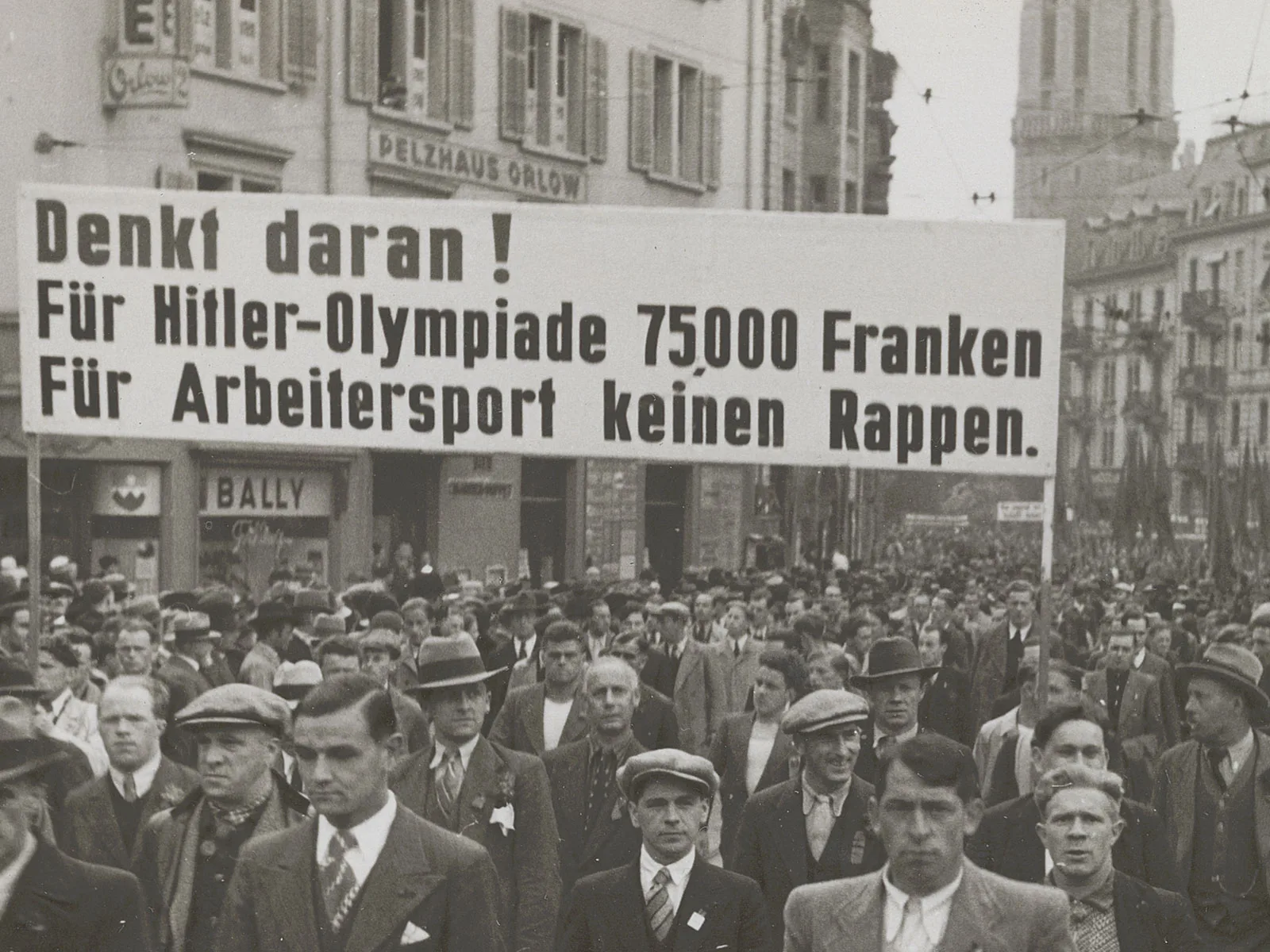
‘Hitler’s Olympics’ was one of the topics of protest at the 1936 May Day demonstration in Zurich.
‘Hitler’s Olympics’ was one of the topics of protest at the 1936 May Day demonstration in Zurich. Swiss Social Archives

From People’s Olympiad to civil war

The Olimpiada Popular, or People’s Olympiad, was scheduled to take place in Barcelona in July 1936 as a form of protest against the Olympic Games in Berlin. But on the day of the opening ceremony, the Catalan metropolis became the scene of fierce fighting as the Spanish Civil War broke out. Numerous athletes joined the ranks of those battling to defend the Republic.

Christian Koller

Christian Koller

Christian Koller is Director of the Swiss Social Archives, a titular professor of history at the University of Zurich and co-director of the ‘Fascism in Switzerland’ research project at the University of Fribourg.

“I’m woken by two muffled, rolling detonations. ‘The opening signal for the People’s Olympiad’, I think, turn over and go back to sleep. A few pistol shots close by our boarding house rouse me again with a start. There are intermittent short bursts of machine gun fire.” This dramatic report published in the Bund newspaper on 30 July 1936 narrates first-hand the experiences of a high school student from Bern who had stopped off in Barcelona as he cycled his way through France and Spain during the summer holidays. As coincidence would have it, the first skirmishes of the Civil War in Catalonia’s largest city broke out on the very day that an international sporting festival was due to open there. A large delegation from Switzerland had been hoping to take part.

Politicised sport

Despite the age-old assertion that “sport is apolitical”, a (self-)delusion still perpetuated by sports federations to this day, the world of sport had already become highly politicised in the period between the two World Wars. Following the First World War, the victorious powers hosted a celebratory sporting festival known as the Inter-Allied Games in Paris in 1919 and banned Germany from taking part in all international competitive sport until the mid-1920s. The defeated nation responded by staging its own multi-sport tournament, the ‘Deutsche Kampfspiele’, in 1922, 1926 and 1930 as a nationalist counter-event to the Olympics. The Sozialistische Arbeitersport-Internationale (SASI), an international socialist workers' sport organisation founded in Lucerne in 1920, arranged the first Workers’ Olympiad in 1925. When staged for a second time in ‘Red Vienna’ in 1931, it attracted 25,000 athletes from 17 countries, making it the largest international sporting event the world had ever seen. In addition to the sporting contests there was a side programme of cultural events, and as many as 100,000 people took part in a mass demonstration for peace and reconciliation.
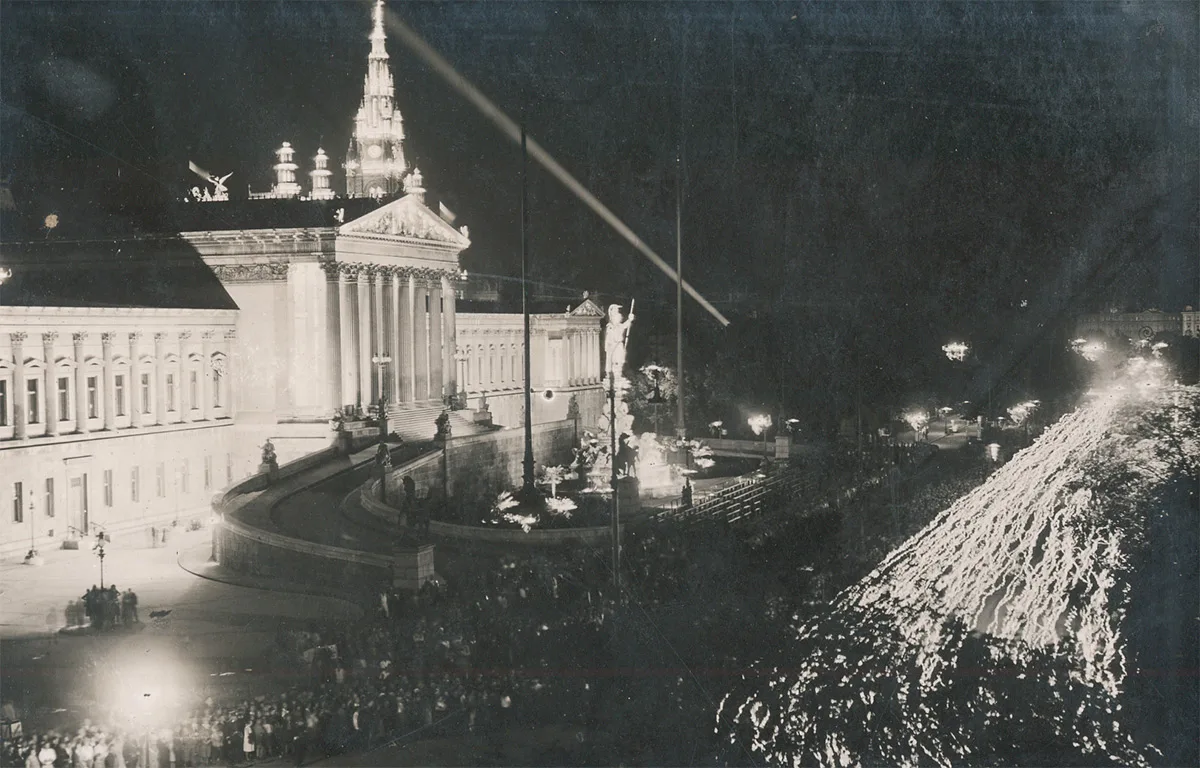
Torchlight procession in front of the parliament building in Vienna during the Workers’ Olympiad of 1931.
Torchlight procession in front of the parliament building in Vienna during the Workers’ Olympiad of 1931. Swiss Social Archives
The newly established dictatorships were also quick to co-opt sport for their own purposes. Founded in Moscow in 1921, Red Sport International (RSI) sought to create a Communist-inflected international sporting movement that would act as a counterweight to both ‘bourgeois’ and social-democratic workers’ sports organisations. An International Spartakiad was held in Moscow in 1928, but a similar event planned for the early 1930s, for which the largest sports facility on the planet was to be built in the Soviet capital, never came to fruition. Mussolini turned the 1934 football World Cup, hosted by Italy, into a propaganda show for his fascist regime. This prompted athletes to rally to an international anti-fascist sports meeting in Paris that same year. Germany was set to hold the 1936 Winter and Summer Olympics, having been chosen as host nation before the Nazi regime came to power in 1933.

Controversial Olympics in Nazi Germany
Although the Nazis were generally scornful of the whole idea of the Olympic movement, they skilfully made use of the 1936 Games as a showcase for propaganda. In the run up to the Winter Games in Garmisch-Partenkirchen, which were opened by the Führer himself, a British reporter published a photo of a sign on the town’s ski clubhouse reading “No Jews allowed”, sparking an international scandal. The United States considered a boycott and St. Moritz offered to act as an alternative venue. To avoid any further outrage, the Nazi leadership had all antisemitic signage temporarily removed from Garmisch-Partenkirchen and the surrounding area.
A TV documentary about the 1936 Winter Olympics in Garmisch-Partenkirchen. YouTube
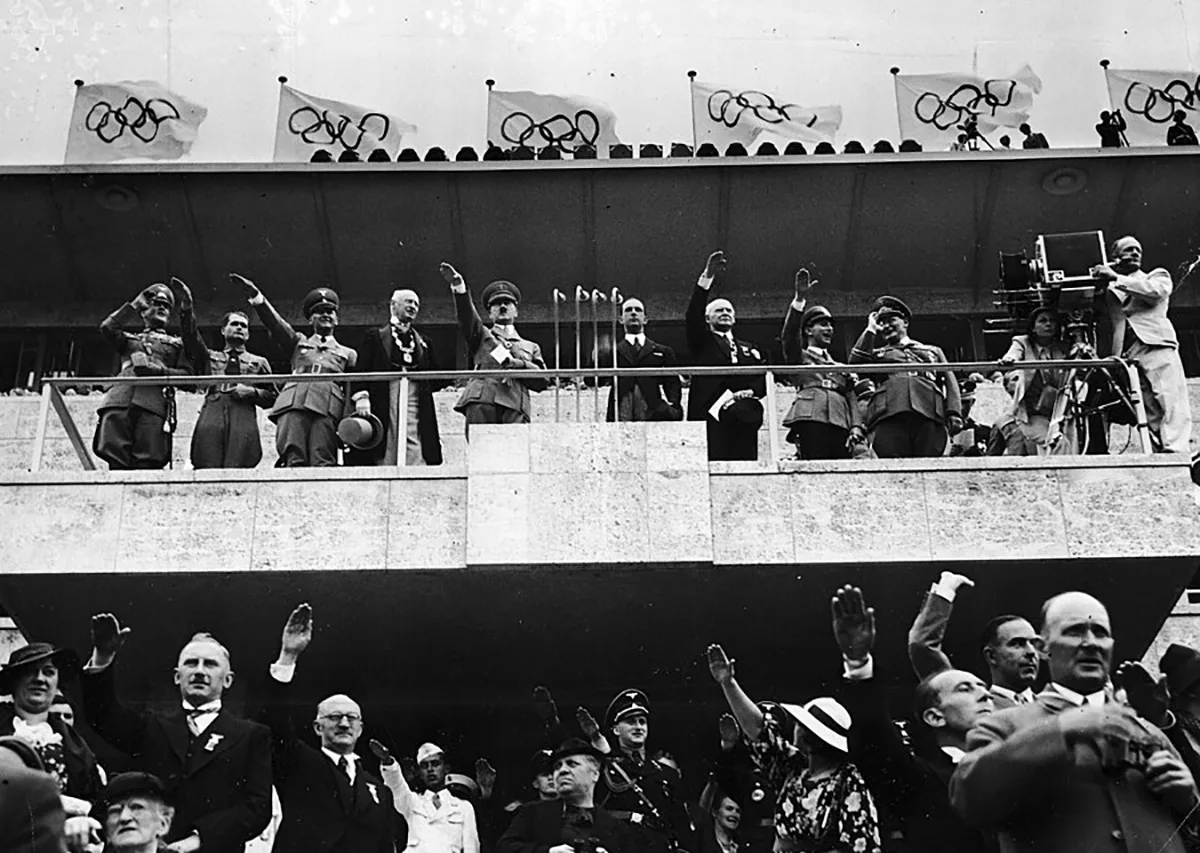
The Summer Games, held in Berlin in the first half of August 1936, were instrumentalised for propaganda purposes on an even greater scale. The gigantic Reichssportfeld complex provided a custom-built Olympic Park, media coverage was ensured through continuous international radio broadcasting, a grandiose documentary film was shot, and public television viewing rooms were set up all over Berlin and its environs. The Olympic torch relay was devised by the Nazis as a further element in their propaganda toolbox, although this sparked massive protests as the torch made its way through Czechoslovakia.
Adolf Hitler in the Berlin Olympic stadium during the Summer Games of 1936.
Adolf Hitler in the Berlin Olympic stadium during the Summer Games of 1936. Wikimedia
The first international protests against Olympic Games being held in the capital of the ‘Third Reich’ were voiced in the summer of 1933 following the collapse of the Weimar Republic and its democracy. Then, in December 1935, the Comité international pour le respect de l’esprit olympique (International Committee for the Respect of the Olympic Spirit) was created by a coalition of exiled German intellectuals in an attempt to coordinate boycott campaigns in the United Kingdom, France, the Netherlands, Scandinavia, Czechoslovakia and Switzerland. Exiled author Heinrich Mann spoke out in favour of a total boycott at the organisation’s conference on defending the Olympic idea in Paris in June 1936. His speech was reproduced verbatim in the Zurich social-democratic newspaper Volksrecht and elsewhere. An art exhibition exploring the Olympics “under the [Nazi] dictatorship” went on show in Amsterdam. SASI and RSI, two organisations that had previously been bitterly opposed to one another, joined forces in calling for a boycott.
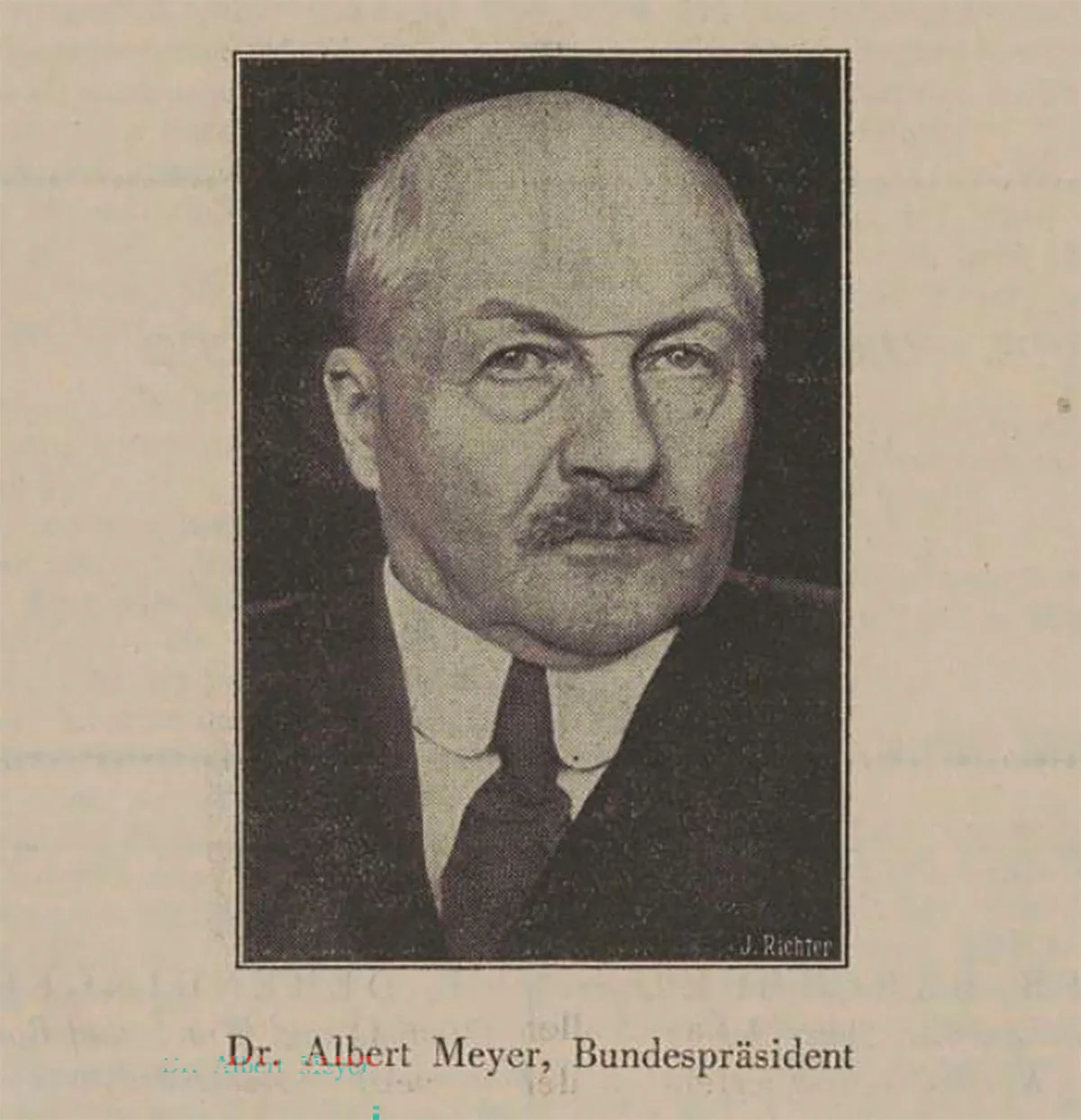
There were protests in Switzerland too, but the federal government ultimately approved funding for the Swiss delegation to travel to Berlin. At the 1936 Swiss Gymnastics Festival, which took place in Winterthur just a few days before the start of the Summer Games, President of the Confederation Albert Meyer, a member of the Free Democratic Party, gave a speech in which he emphasised that the “solidarity of the world” in evidence “in microcosm” at the festival was an expression of hope “in the ability to further the idea of peace among nations, especially in today’s tumultuous times”. He bemoaned the fact that “our political ideals, democracy […], freedom […] [had] lost their legitimacy in some places” and feared that “the cult of violence” would “march triumphantly across Europe”. The opposition voiced by workers’ sports federations was much more to the point. Members of the Swiss Workers' Gymnastics and Sports Association (SATUS), for example, put on theatrical performances mocking ‘Hitler’s Olympics’.
Free Democrat Albert Meyer was the president of Switzerland in 1936.
Free Democrat Albert Meyer was the president of Switzerland in 1936. e-newspaperarchives
However, none of the major sporting nations summoned up the courage to actually stay away from the Berlin Games. France’s left-wing government was keen to avoid any form of confrontation prior to the 1937 Paris World Fair. Politicians in favour of ‘appeasement’ held sway in the conservative British government, and they were willing to make substantial concessions to Hitler. There was strong support for a boycott in the United States, where the movement was backed by major sports associations and the national federation of labour unions. However, Avery Brundage, the president of the American Olympic Committee, was a firm opponent of the idea of not participating in the Games and manoeuvred the vote on the issue to ensure it was defeated by a slim majority. There was never any question of the Soviet Union turning up, as it had already quit the Olympic movement following the Russian Revolution. Only Spain, where the left-wing Frente Popular (Popular Front) had won the general election in February 1936, declined to take part.

‘People’s Olympiad’ versus ‘Hitler’s Olympics’
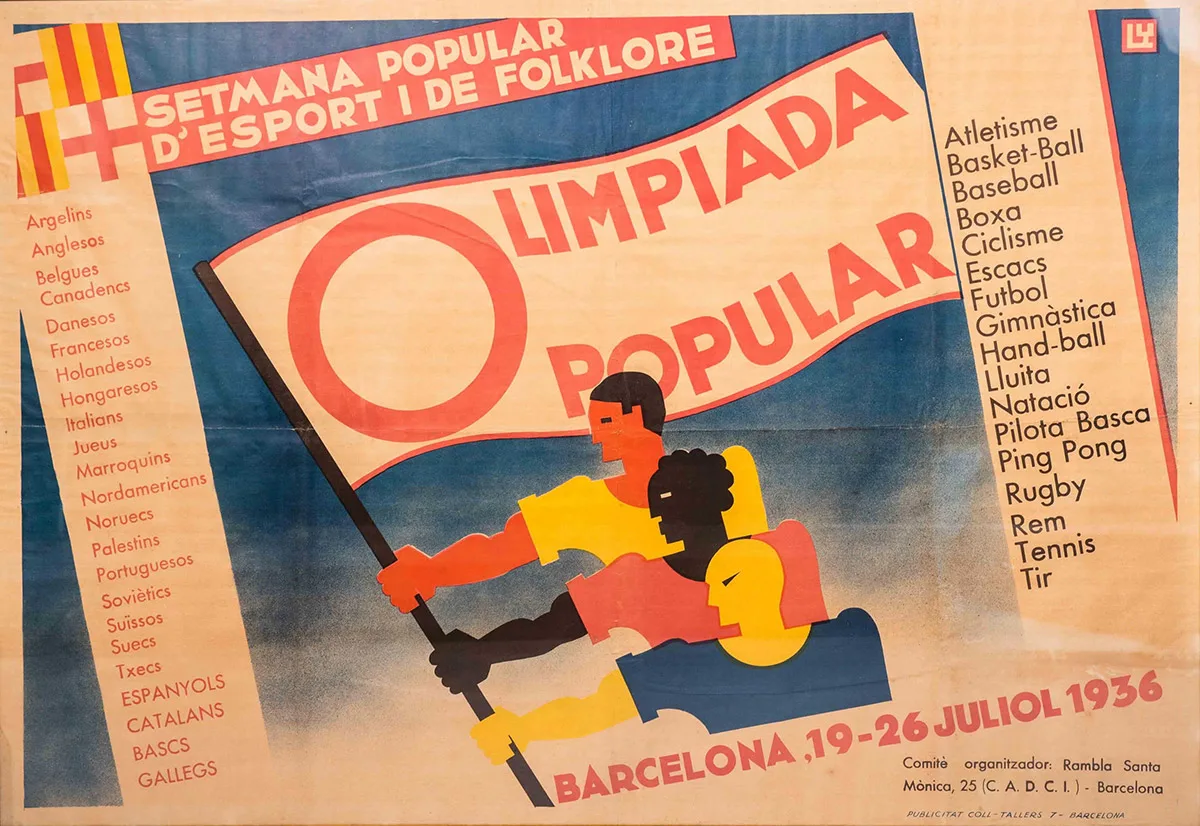
The most blatant counterpoint to the Berlin Games was the planned Olimpiada Popular in Barcelona. Conceived by leftist circles in Catalonia, three months of planning went into producing a programme that included folk dance, music and theatre in addition to 17 sporting disciplines. The venue was to be the Montjuïc stadium, built for the 1929 Barcelona International Exposition, with 8,000 Spanish athletes competing and 3,000 visitors from 22 countries, colonies and mandated territories expected to attend. Most belonged to workers’ sports clubs and the Red Sport movement, but members of more mainstream sports organisations from some countries also registered. Germany and Italy even planned to send teams made up of political exiles. The event received financial support from the Catalan regional government and the Popular Front-led governments of Spain and France.
Poster by Fritz Lewy for the Olimpiada Popular, which was scheduled to take place in July 1936 in Barcelona.
Poster by Fritz Lewy for the Olimpiada Popular, which was scheduled to take place in July 1936 in Barcelona. Wikimedia
In Switzerland, SATUS was the main force advocating for the People’s Olympiad. On 9 July, its governing body called on the “working people of all countries” to “take part in all events and sporting festivals in readiness for the People’s Olympiad”. The Swiss delegation intended to compete in football, tennis, basketball, swimming, light and heavy athletics, gymnastics, boxing, shooting, chess and boules as well as giving yodelling performances. In addition to the national football team, Basel and Geneva were each to send a regional team to Barcelona. Overall, the Swiss delegation totalled 200 athletes and 400 others.

From the stadium to the front lines

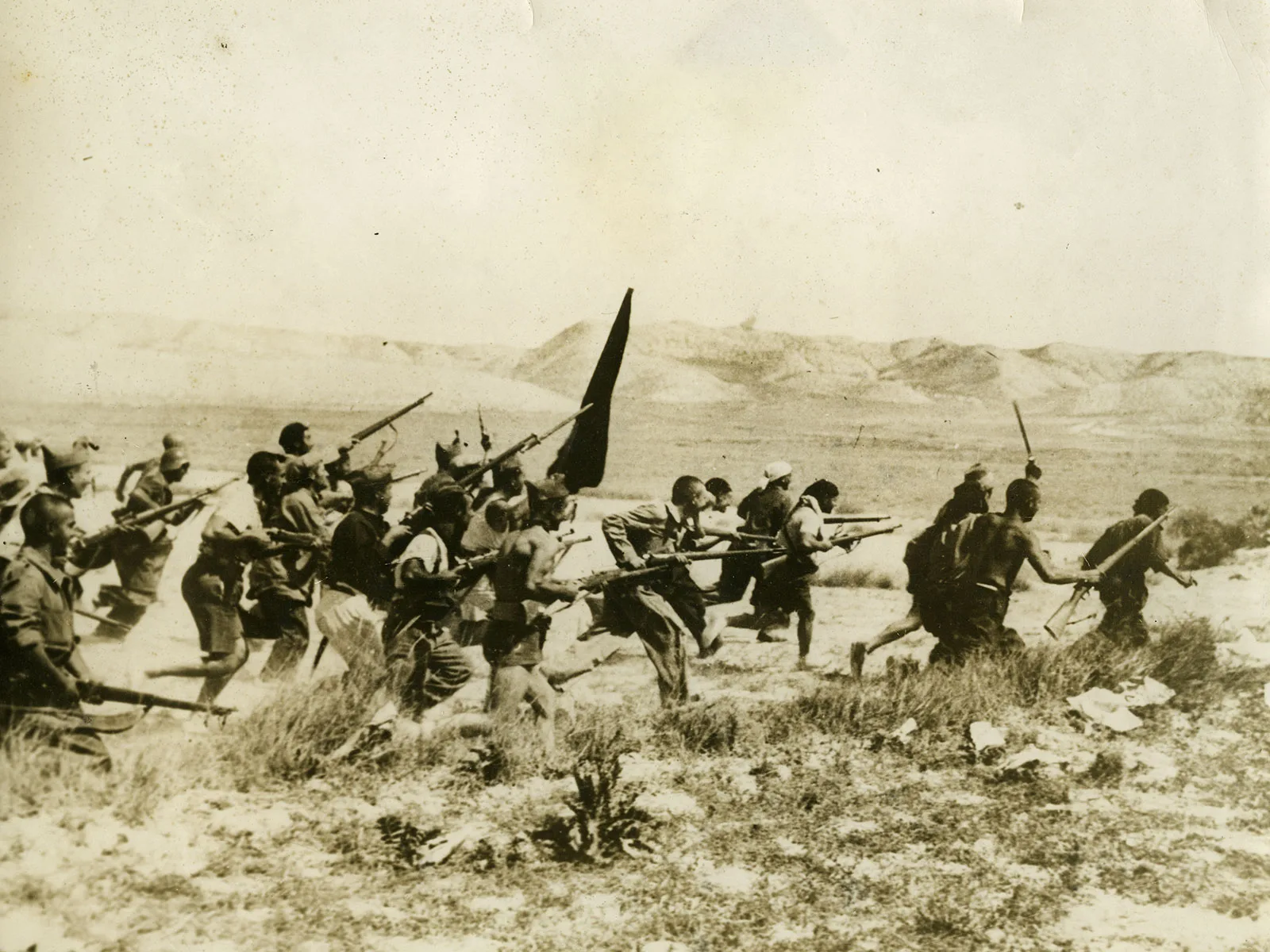
The People’s Olympiad was scheduled to take place from 19 to 26 July 1936, thus ending just a few days before the start of the Berlin Games. Two days before the opening ceremony was due to take place, a military coup in Spanish Morocco by troops stationed there under the command of General Franco marked the beginning of the Spanish Civil War. On the day itself, Barcelona was the scene of bloody street battles between army units that supported the coup on the one side and civil defence and protection forces fighting alongside hastily assembled workers’ militias on the other. Although the attempted coup in the Catalan capital was defeated, there could be no question of the People’s Olympiad going ahead. Instead, the popular sports festival planned for early August in Prague was upgraded to the status of an “International Freedom Olympiad” in direct opposition to the Berlin Games.
Video about the People’s Olympiad in Barcelona. YouTube / NewsReel History
Some members of the Swiss delegation had already arrived in Spain by the time fighting broke out. A group of 18 working-class yodellers from Basel, who were there to appear at the opening ceremony, initially found themselves stranded outside Barcelona before ultimately making their way home by sea via Marseille. On 20 July, several dozen members of the SATUS delegation received word from on high that their trip was cancelled just as they prepared to board the train at Zurich Main Station.
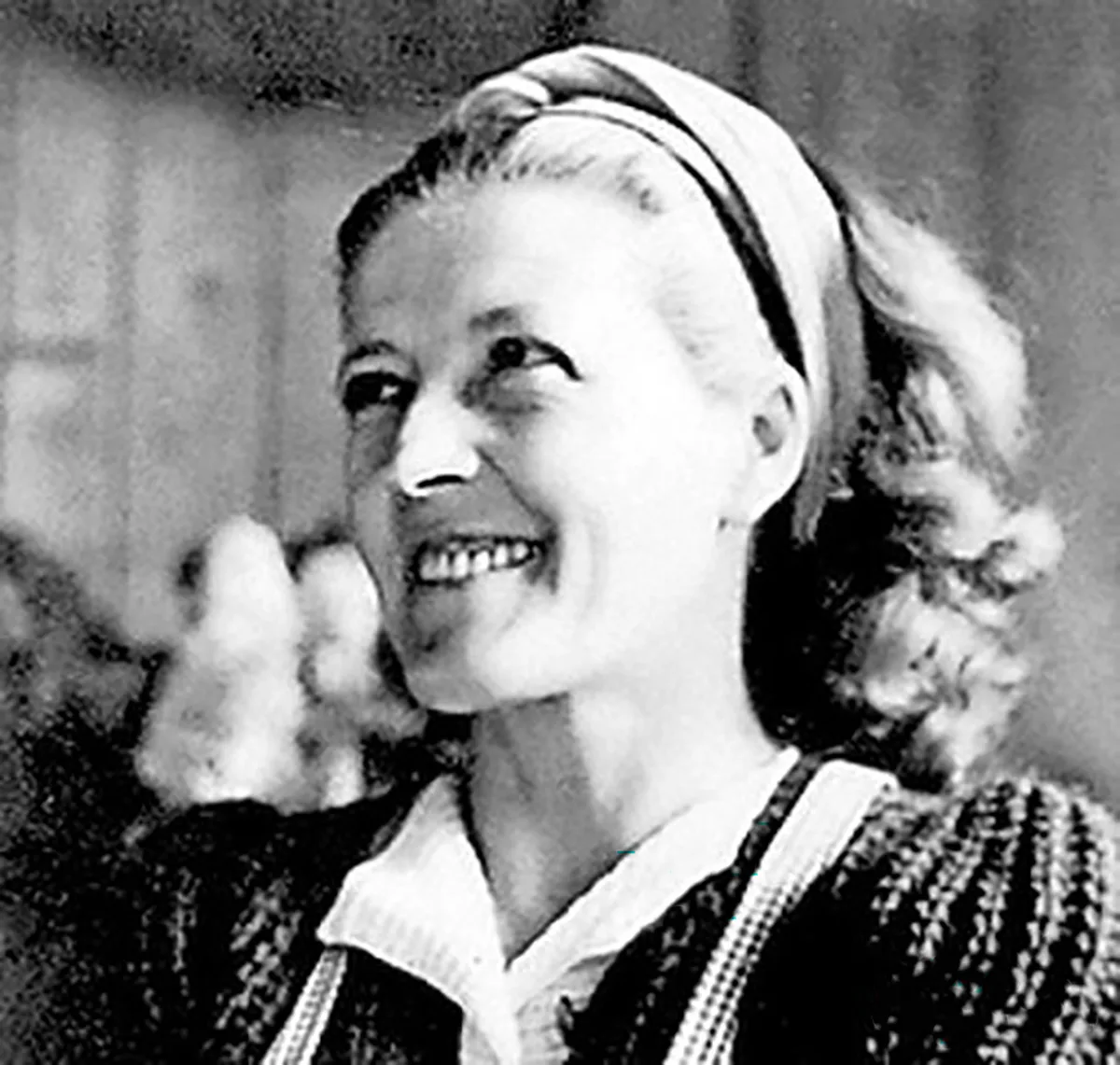
While the majority of those who had come for the games left the country again when the uprising broke out, hundreds remained in Barcelona and joined those fighting to defend the Republic. German and Italian exiles in particular were keen to take up arms. But at least eight members of the Swiss delegation, including Clara Thalmann, a metalworker, anarchist and swimmer from Basel, also joined the militias and headed for the front. Thalmann was arrested by Stalinist agents together with her husband Paul in 1937 following internal political struggles on the Republican side and spent several months in prison before finally leaving for France.
Portrait of Clara Thalmann, taken in 1936.
Portrait of Clara Thalmann, taken in 1936. Wikimedia

International conference on the Spanish Civil War

17 July 2026 marks the 90th anniversary of the putsch by high-ranking generals against the second Spanish Republic. To mark the occasion, the Swiss Social Archives, St. Gallen University of Teacher Education and the universities of Bern, Fribourg, Geneva and Zurich plus Humboldt University of Berlin are organising an international conference “Ninety Years Since the Spanish Civil War. Experiences, Memories, Concepts (1936–2026)” at the Social Archives in Zurich on 19 and 20 November 2026. Both the conference and the evening lecture are open to the public. Further information is available here: Ninety Years Since the Spanish Civil War
Further posts