Whose freedom?
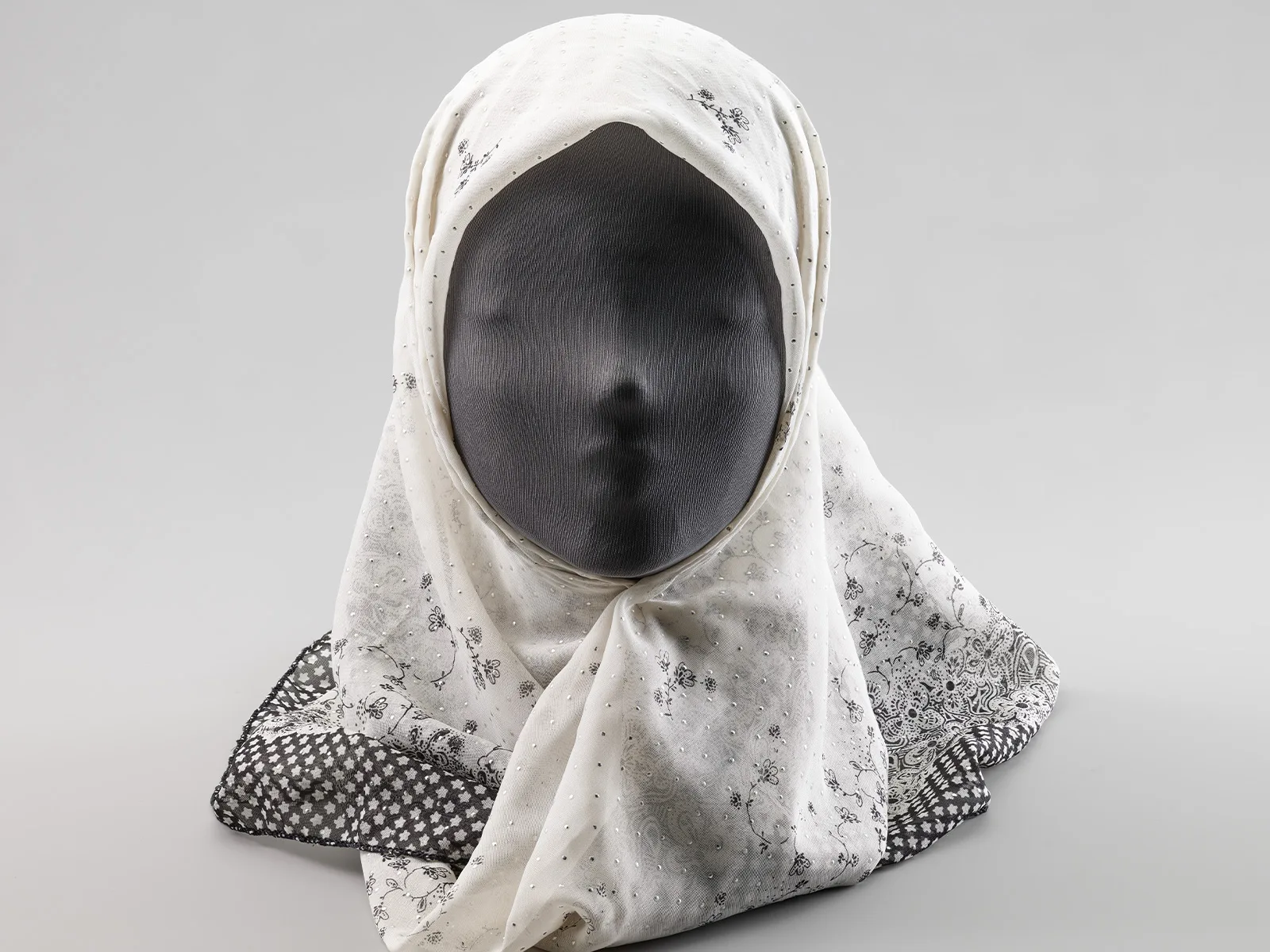
At one time the Muslim headscarf was a frequent source of heated debate. It can be seen as a barometer to gauge changing views of religious freedom.

Jacqueline Grigo
Dr Jacqueline Grigo is an expert in religious studies, a social and cultural anthropologist and an adjunct researcher at the University of Zurich.
From a legal point of view, religion is: "the expression of an individual attitude towards the Divine or the transcendent", thus making it a purely private affair. However, given the closely intertwined nature of the public and private spheres, it is difficult to make a clear distinction between the two. Whenever a religious belief or membership of a religious community manifests itself, religion is made visible to others and thus becomes a matter of public concern, opening up scope for interpretation in legal disputes, which are influenced by historical and socio-political developments and discourses.
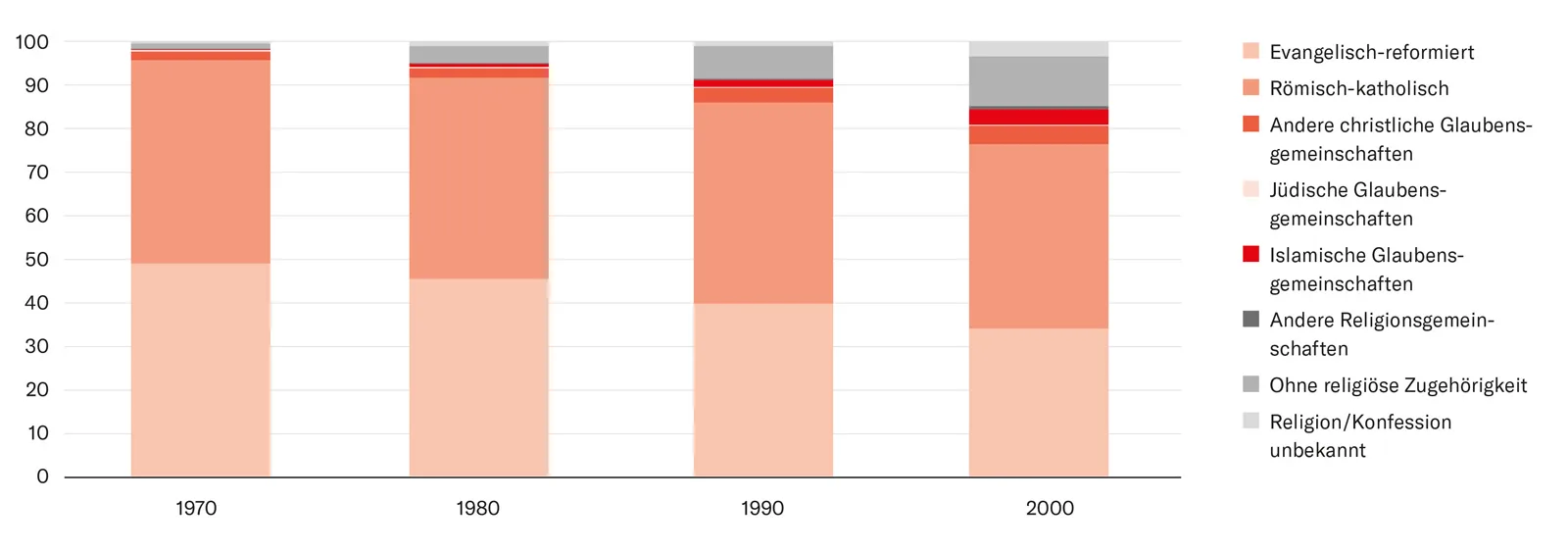
Since the 1970s, Switzerland has changed from a predominantly Christian country to one marked by religious plurality. While membership of the established churches has fallen, the number of people describing themselves as 'non-religious' has continued to rise along with the number of members of free churches and non-Christian faiths. Muslim communities have experienced the most significant growth, from around 0.3% in 1970 to 5.4% in 2020. After the fall of the Berlin Wall a new, bipolar world order gradually began to impose itself on public debate. In place of the 'communist' Eastern Bloc, 'Islamism' and sometimes even 'Islam' in general were now declared an international threat. This perception became heightened following the attacks on the World Trade Center in New York on 11 September 2001.
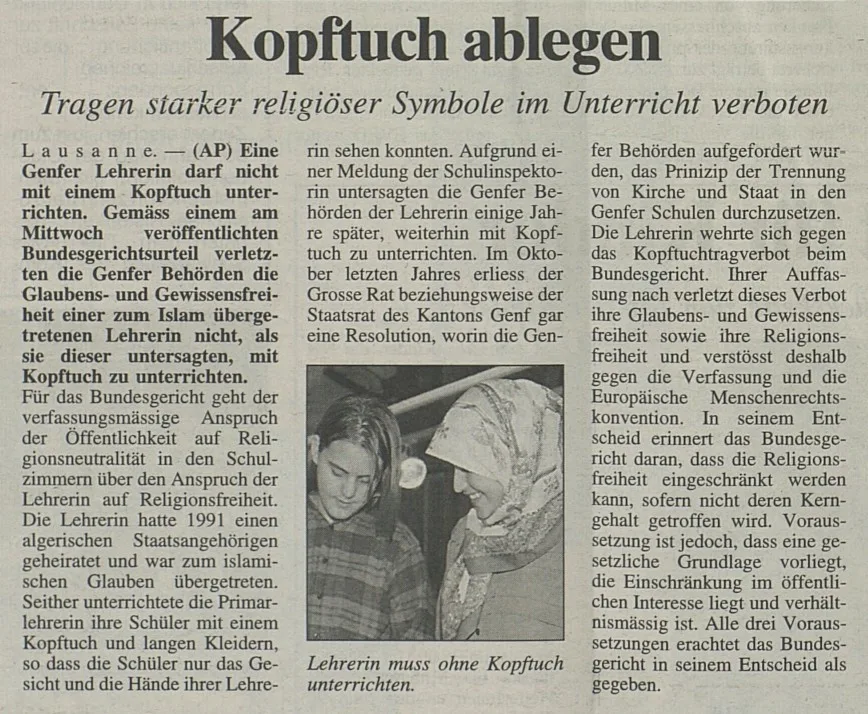
The teacher then took her case to the European Court of Human Rights (ECtHR), which upheld the Federal Supreme Court's decision. It found that the denominational neutrality of the state education system must be ensured at all times. Nevertheless, the arguments on which the various court rulings presented here rest are themselves based on suppositions and unspoken norms. This gives rise to the following questions, for instance: To what extent does the wearing of a headscarf threaten the 'rights and freedoms of others' or 'public order and security'? Why does banning rather than tolerating headscarves contribute more to fostering tolerance and respect for others? And to what extent can the headscarf generally be seen as a sign of female subordination?
Every person has the right to choose freely their religion or their philosophical convictions, and to profess them alone or in community with others.