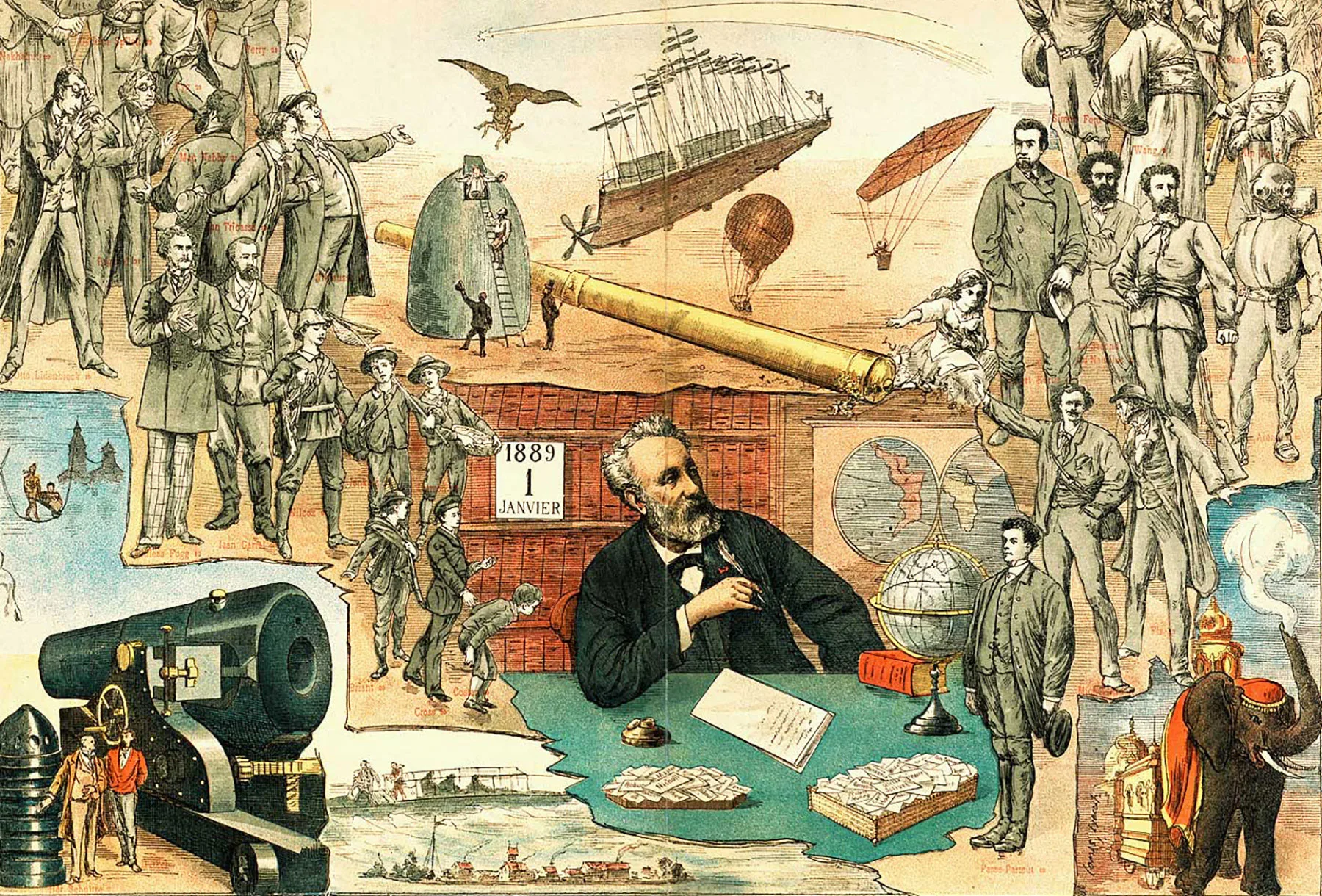
Illustration for Jule Verne’s adventure novels, which helped feed globe-trotting mania. Maybe they also inspired Heinrich Schiffmann?
Illustration for Jule Verne’s adventure novels, which helped feed globe-trotting mania. Maybe they also inspired Heinrich Schiffmann? Bibliothèque nationale de France

Around the world on doctor’s orders

Heinrich Schiffmann (1872-1904) was an avid traveller who voyaged around the world twice. Believe it or not, these lengthy voyages were supposedly prescribed by his doctors. The Swiss globe-trotter’s visits to far-flung places reflect a fascination of the era, bordering on mania, for round-the-world trips.

Matthieu Péry

Matthieu Péry

Matthieu Péry is a research assistant at the Château de Prangins.
“It is extremely tedious here onboard ship [...]. The cabins are tiny and the beds hard, the food is both rather meagre and bad; we haven’t taken fresh meat or water on board since leaving San Francisco, which was on 28 January.” Poor food, stagnant water and an uncomfortable berth: the letter, sent in February 1898 from El Salvador, gives no indication that it was written by a 26-year-old, well-to-do Swiss. It is even more surprising to realise that its author, Heinrich Schiffmann, was not forced by work or any other form of necessity to endure the spartan conditions of many months at sea aboard an ocean liner.
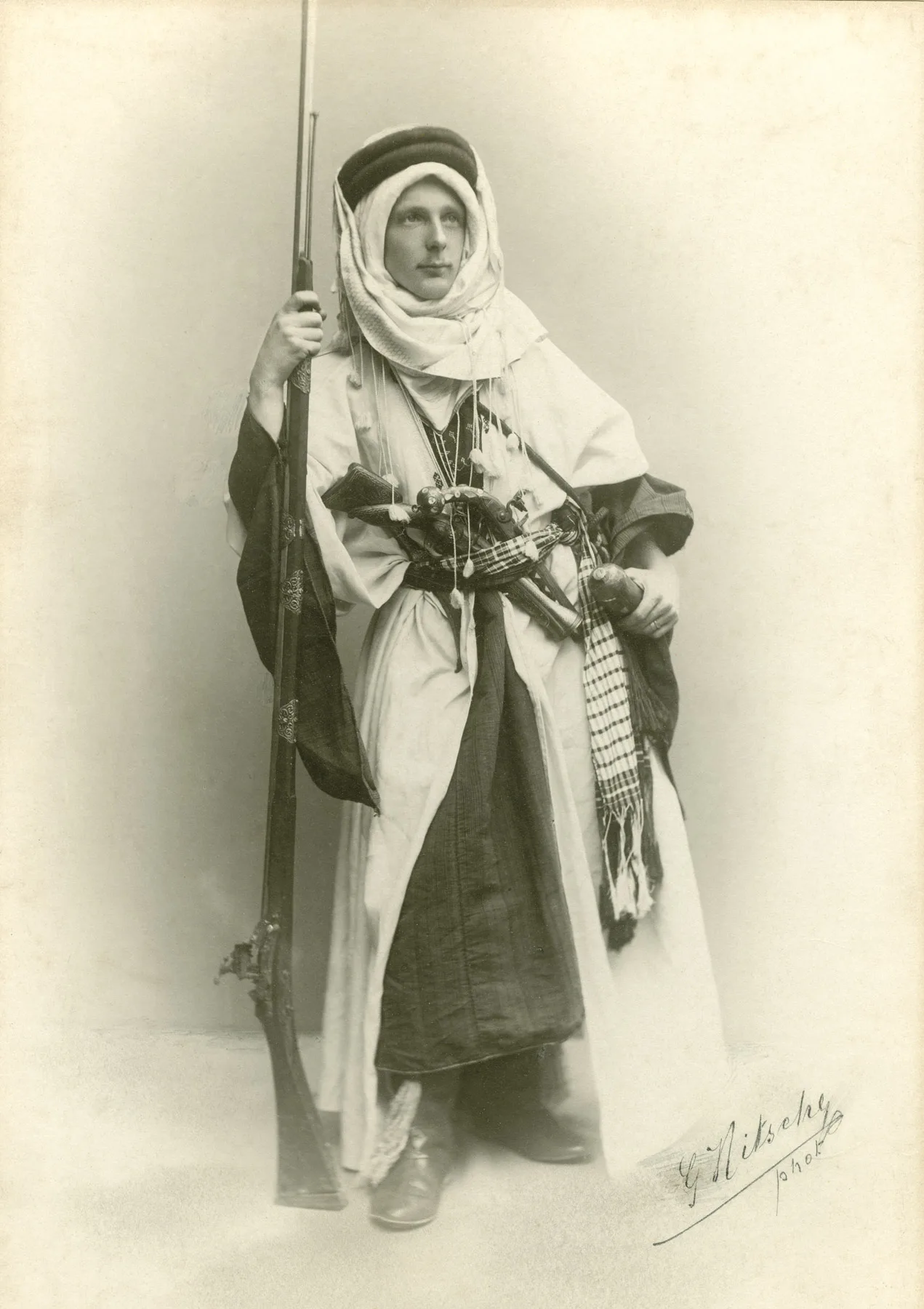
Portrait of Heinrich Schiffmann in Bedouin clothing, 1898.
Portrait of Heinrich Schiffmann in Bedouin clothing, 1898. ROTH-Stiftung Burgdorf
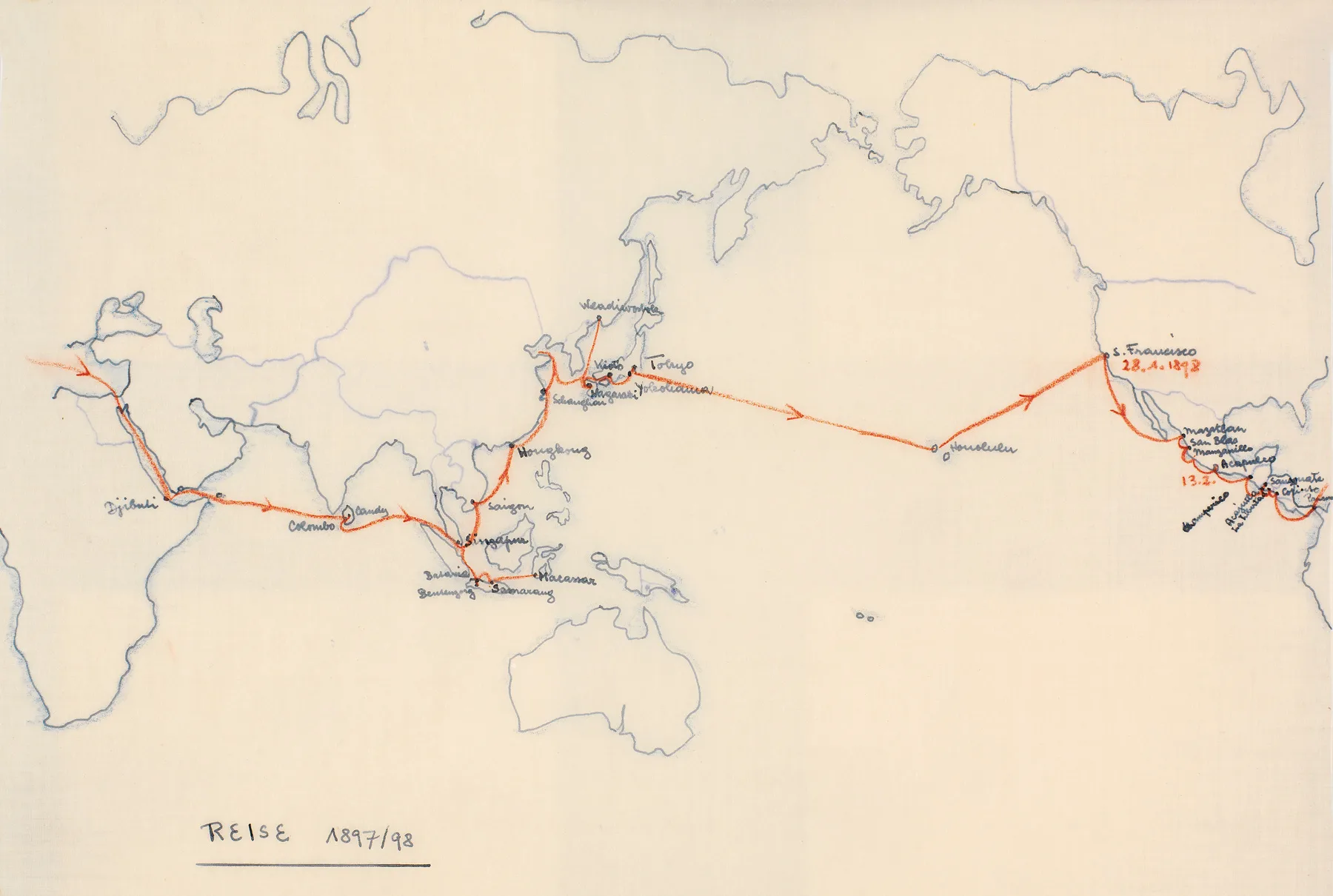
The young man from Burgdorf was travelling for pleasure, and it was costing him a lot of money. Like thousands of others at the time, he had embarked on what was seen as the holy grail of tourism at the end of the 19th century: a round-the-world trip. Schiffmann’s voyage had begun a few months earlier, in October 1897. Setting off by steamship from Marseille, he had sailed down the famous Suez Canal, stopped off in Ceylon and visited several ports in Southeast Asia (Singapore, Saigon, Hong Kong, Shanghai) and Japan, before travelling on to San Francisco by way of Hawaii. Schiffmann began his return journey to Marseille a few weeks later, via Central America. There, he had to cross the Isthmus of Panama by train as the canal was still under construction.
The route of Heinrich Schiffmann’s first round-the-world trip.
The route of Heinrich Schiffmann’s first round-the-world trip. Museum Schloss Burgdorf, Ethnologische Sammlung, ES-F-14305
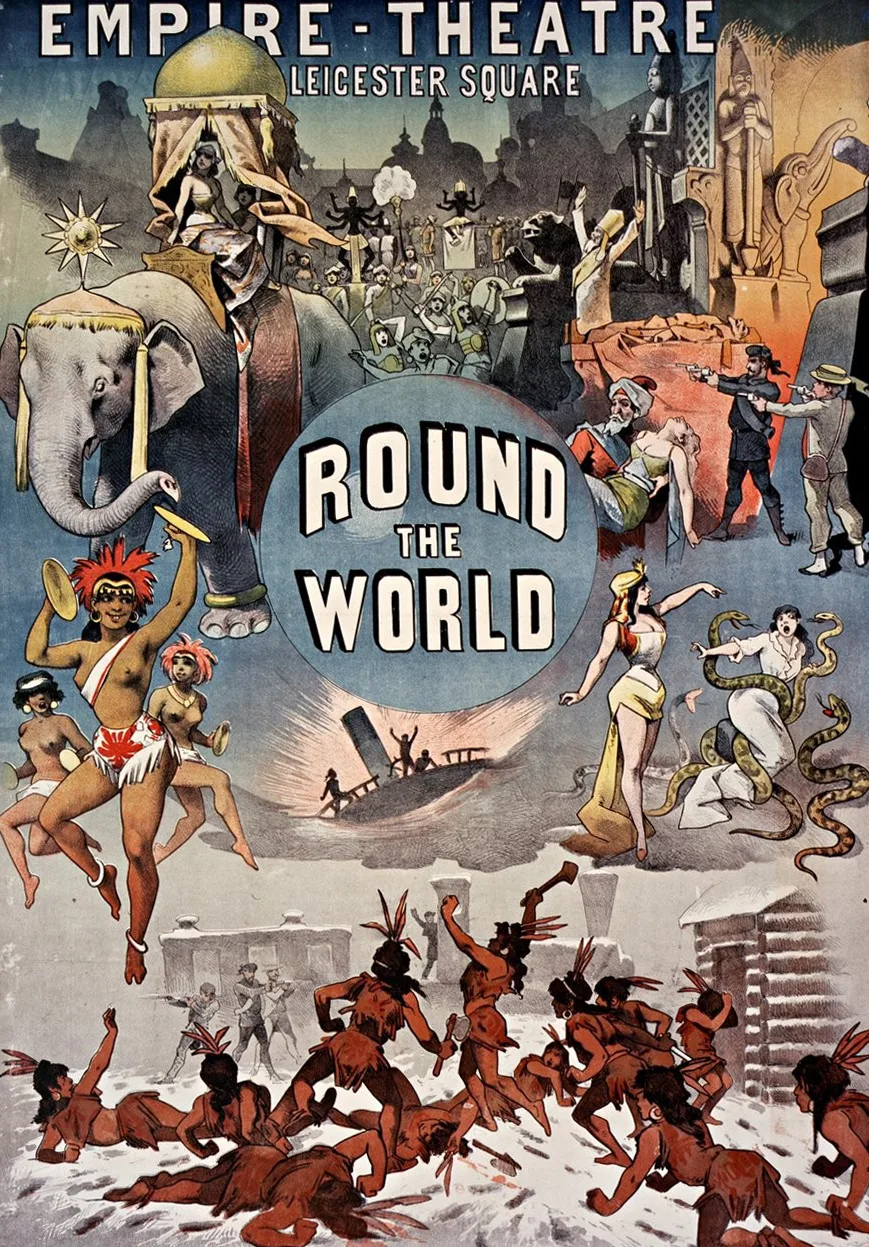
The last quarter of the 19th century marked a turning point, the moment when circumnavigating the globe ceased to be a perilous undertaking. The planet had been measured and mapped, and an increasingly dense network of railway lines, maritime routes and telegraph lines criss-crossed its surface. The world had become a playground for a new kind of traveller seeking to follow in the footsteps of Phileas Fogg, the hero of Jules Verne’s famous adventure story «Around the World in 80 Days». First published in 1872, the tale reflects the technological advancements of the era, made possible by the triumph of steam and a geopolitical situation that largely favoured the West, at a time when imperialism and colonialism held sway. Embarking on a round-the-world trip became a veritable fin de siècle mania. Novels, photographs, posters, exhibitions and board games established the idea of worldwide travel as a ubiquitous motif in popular culture. The dream may have been shared by all, but it was only the wealthy who could afford to make it come true.
Poster for the ‘Round the World’ play at the Empire Theatre in London, 1885.
Poster for the ‘Round the World’ play at the Empire Theatre in London, 1885. gallica / Bibliothèque nationale de France
It should come as no surprise that a number of Swiss figured among those early globe-trotters. Schiffmann was a typical example. Having come into a fortune at the tender age of 20 when his parents and grandfather passed away, he had both the time and money necessary to undertake journeys of this kind. His inherited wealth of almost CHF 560,000, amassed by the family business Fehr & Grieb in the cheese export trade, made him the equivalent of a multimillionaire in today’s terms. This financial security enabled the young man to devote himself wholeheartedly to travelling. His trips followed one after the other at a frenetic pace. As well as voyaging around the world twice, in 1897-1898 and 1901-1902, he travelled extensively for months at a time around the Mediterranean, the Ottoman Empire, the Caribbean and South America, before making one final trip around the Indian Ocean in 1903. Schiffmann remained single until the end of his life in 1904, when he finally succumbed to a long-lasting illness at the age of just 34.


Unlike many other globe-trotters, Schiffmann did not keep a notebook or travel journal. But the few letters he wrote that do survive provide an insight into the financial means required for his voyages. Regular requests for sizeable sums of money from his inheritance were addressed in the main to his stepfather Ferdinand Roth, a director of the family business. A letter penned in September 1901, shortly before Schiffmann was due to depart on his second circumnavigation of the globe made the situation clear: “My health is improving, but unfortunately Drs Campart and Kraft are telling me to go on a five-month voyage by sea. [...]. It will be a very costly trip, especially as I have to look after myself this time. I would estimate about CHF 15,000. By when can I have this sum? I need to request my letter of credit some time in advance.”

Alongside money, the medical reasons for Schiffmann’s globe-trotting are another topic that invariably crops up in his correspondence. He suffered from tuberculosis, and his condition is well documented. However, the potential healing effect of long, exhausting ship-board journeys through tropical seas remains questionable. Was it above all a way to justify the young man of leisure’s expensive lifestyle of non-stop adventure?

Rather than a notebook, Heinrich Schiffmann preferred to take photographic equipment with him. As an enthusiastic amateur, he was not content with a lightweight, easy-to-use model like the first Kodak roll-film hand cameras, which were already widely available. Instead, he lugged expensive, cumbersome equipment, including light-sensitive glass plates, with him on board. The photos taken on his two round-the-world voyages appear highly spontaneous: street scenes in Hong Kong, Saigon and Shanghai, and portraits of Chinese peasant families, a market in Mexico, houses and plantations in Ceylon.

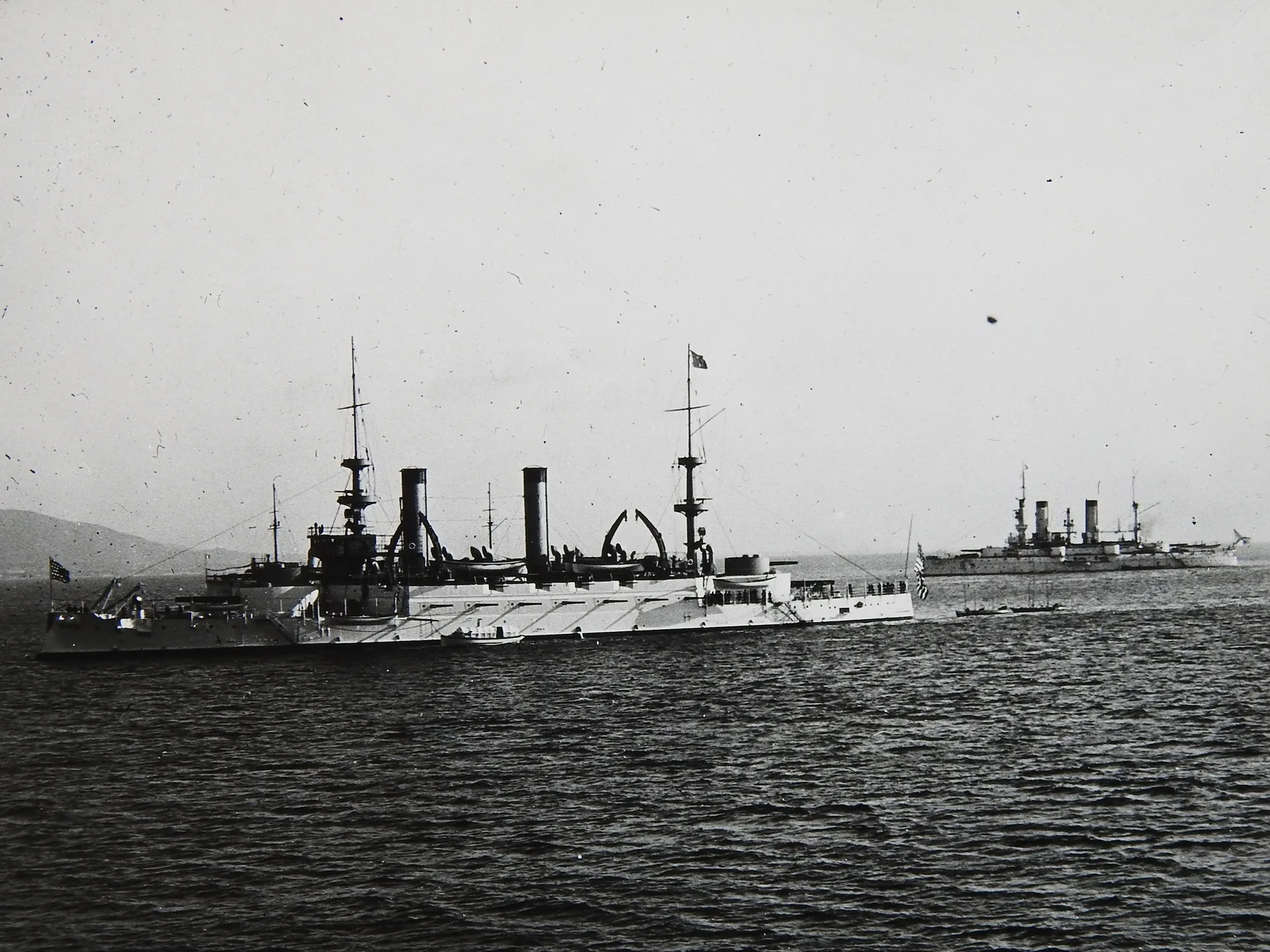
This young Swiss man captured the world as it unfolded before his eyes in all its diversity and richness. Other pictures show British barracks in Hong Kong, German navy manoeuvres in China and, above all, American, Russian and French warships in Asian ports and in the Pacific, thus illustrating one of the factors that made worldwide travel possible: the Western empires’ far-reaching sphere of influence.
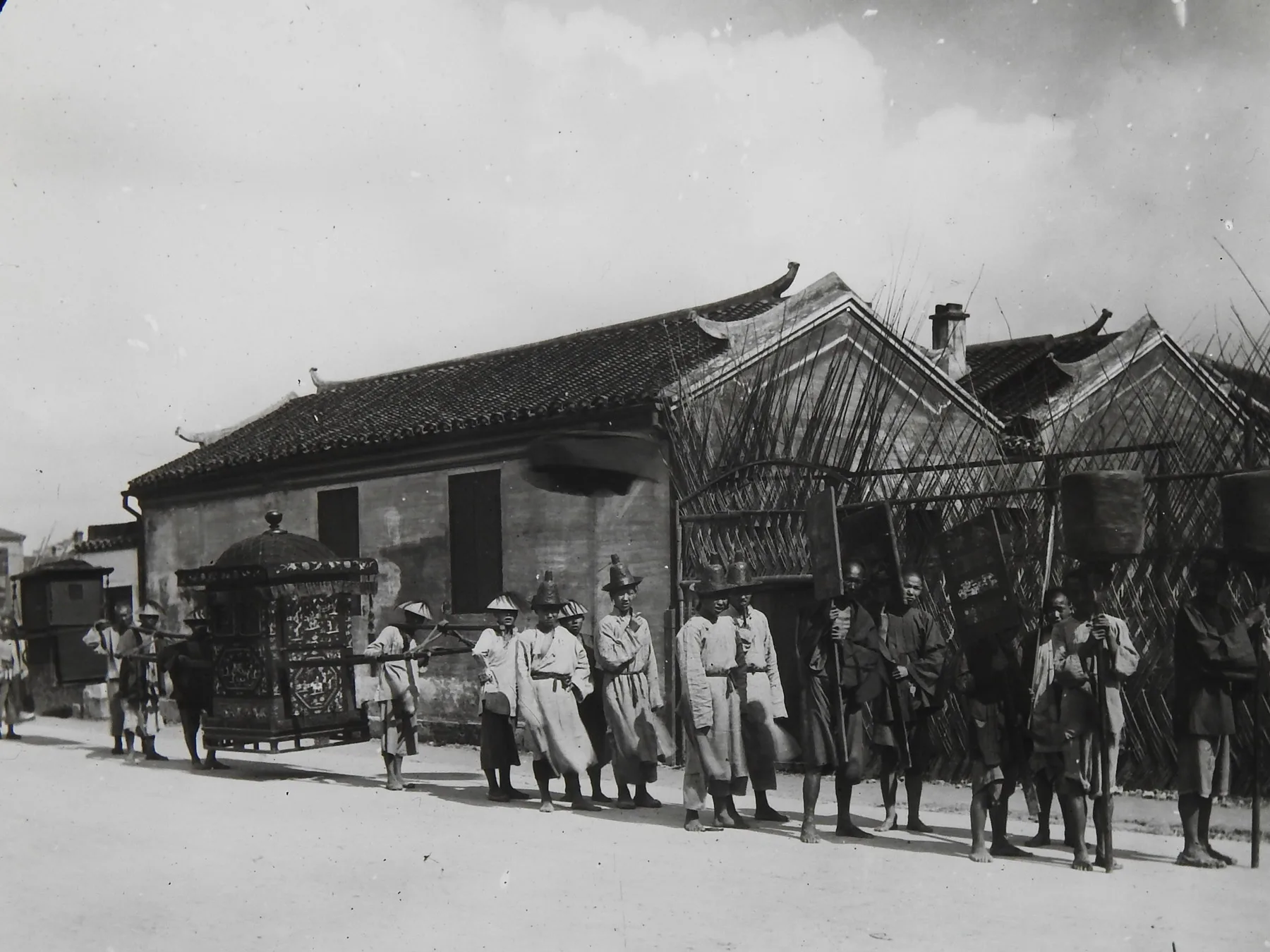
Many of the images captured by Heinrich Schiffmann have been preserved on glass slides. This one is entitled ‘Awaiting the arrival of a mandarin (high office-bearer)’, 1902.
Many of the images captured by Heinrich Schiffmann have been preserved on glass slides. This one is entitled ‘Awaiting the arrival of a mandarin (high office-bearer)’, 1902. Museum Schloss Burgdorf, Ethnologische Sammlung, ES-F-20217
Image 01 of 03
This picture shows the US warship Kentucky and the Russian battleship Poltaura, 1902.
This picture shows the US warship Kentucky and the Russian battleship u003cemu003ePoltaurau003c/emu003e, 1902. Museum Schloss Burgdorf, Ethnologische Sammlung, ES-F-20210
Image 01 of 03
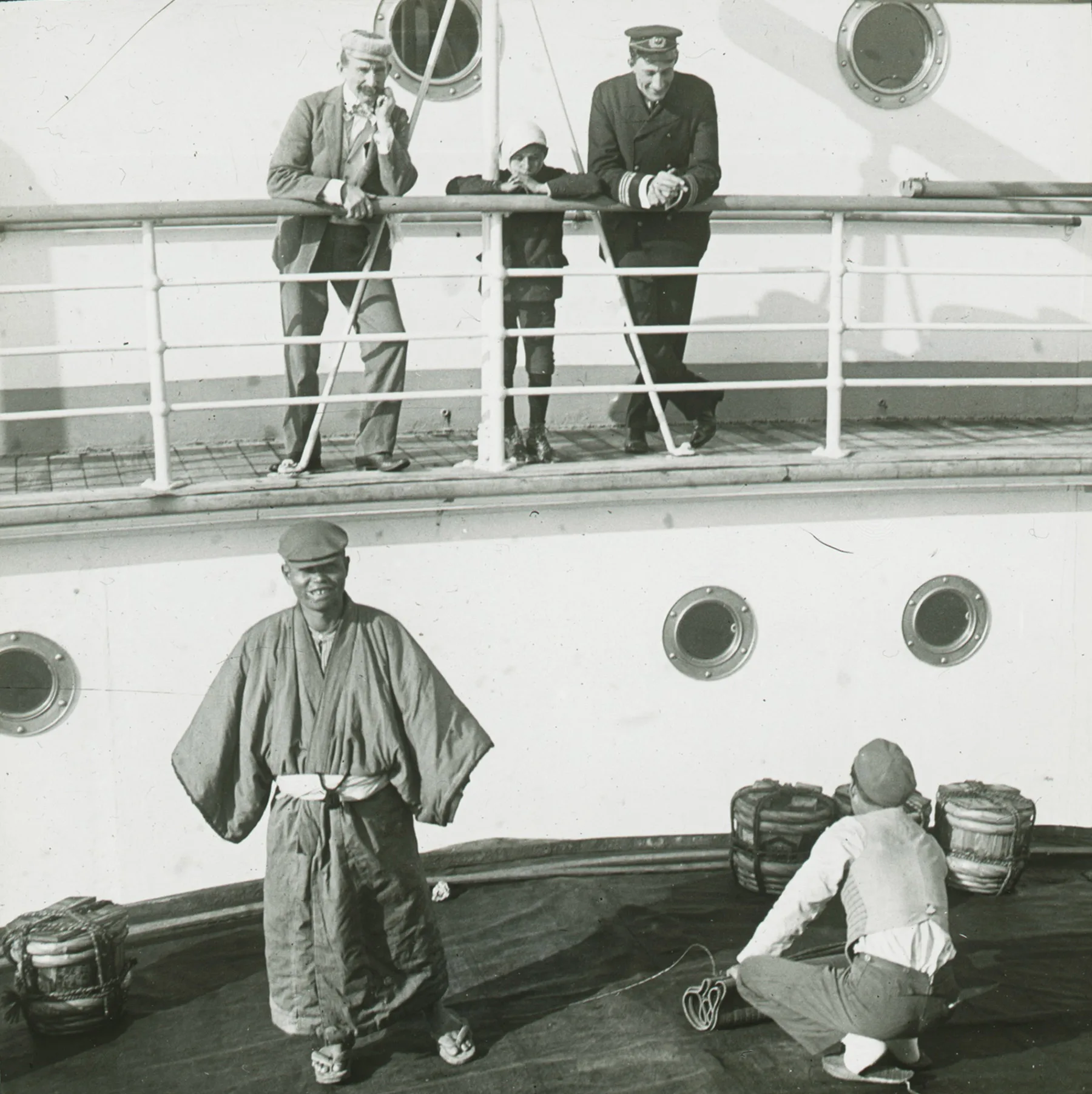
Schiffmann snapped these Chinese ‘boys’ on the crossing from Japan to San Francisco aboard the steamer America Maru, 1902.
Schiffmann snapped these Chinese ‘boys’ on the crossing from Japan to San Francisco aboard the steamer u003cemu003eAmerica Maruu003c/emu003e, 1902. Museum Schloss Burgdorf, Ethnologische Sammlung, ES-F-20205
Image 01 of 03
On board the steamer carrying him from Japan to the United States, Schiffmann shot portraits of Chinese ‘boys’, overlooked yet indispensable members of the crew who performed all manner of tasks for the passengers’ benefit. One of the photos shows them sitting in a circle on the deck, almost certainly taking advantage of a break from work to enjoy playing games. However, most of the more than 1,000 images captured by Schiffmann take the form of slides. They were no doubt shown at informal get-togethers with friends, as a way of telling them about his journeys.

Heinrich Schiffmann’s two round-the-world trips also gave him the opportunity to acquire a great many objects. Travellers were generally keen to bring home objects considered authentic, but which they sometimes picked up in souvenir shops catering specifically to tourists. This was the case especially in Japan, a popular stop on the globe-trotters’ itinerary. On his second trip around the world, Heinrich Schiffmann chose to purchase items from Arthur & Bond, a curio shop in Yokohama that was anything other than a small business run by locals. The invoice from the English company even included shipping to Switzerland and insurance, obviating the need for travellers like Schiffmann to encumber themselves with the pieces they had acquired, such as inlaid wooden screens, embroidered curtains, ivory figurines and bronze and silver vases, as they continued on their way.
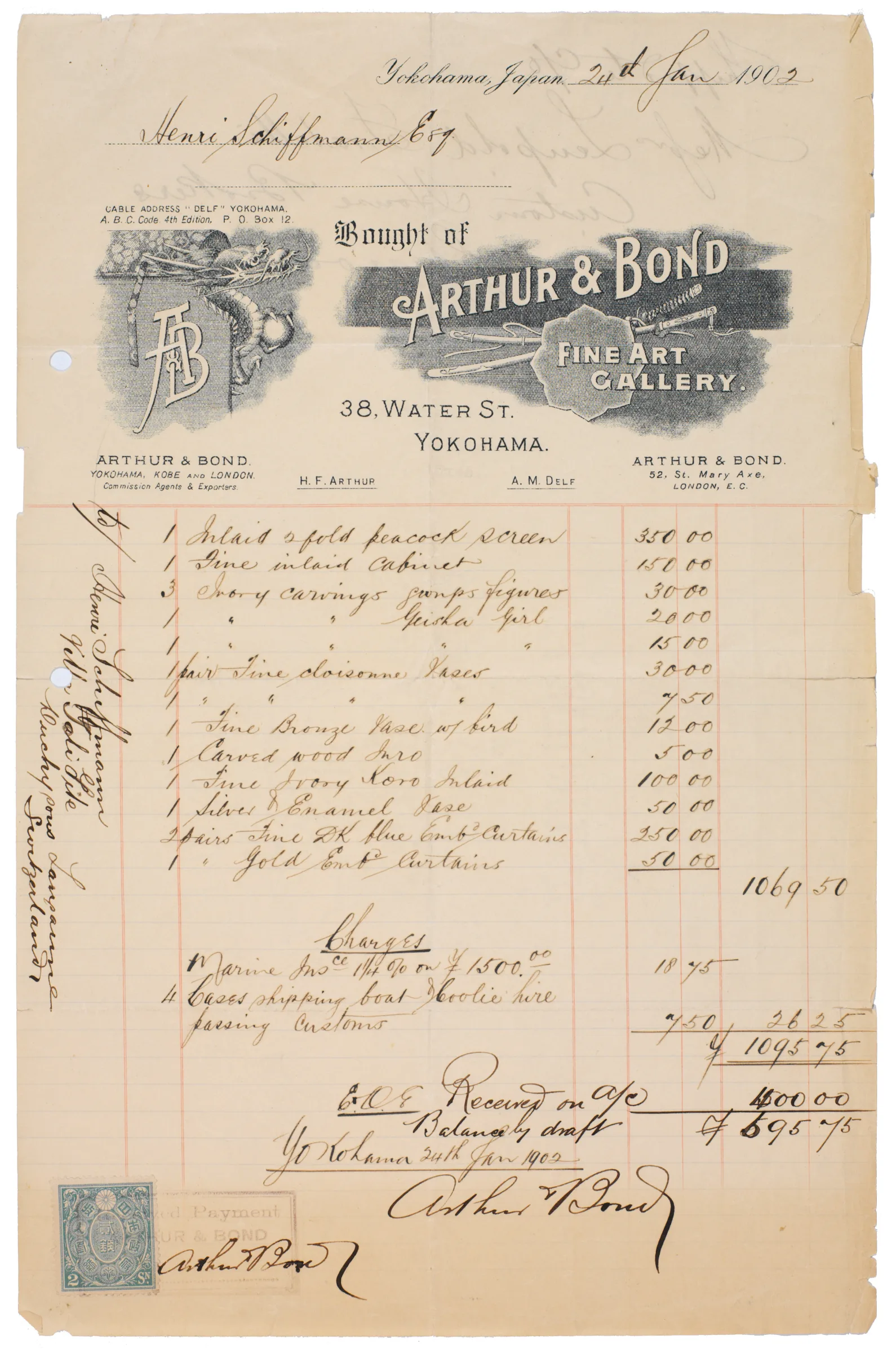
Invoice from Arthur & Bond in Yokohama, 1902.
Invoice from Arthur u0026amp; Bond in Yokohama, 1902. ROTH-Stiftung Burgdorf
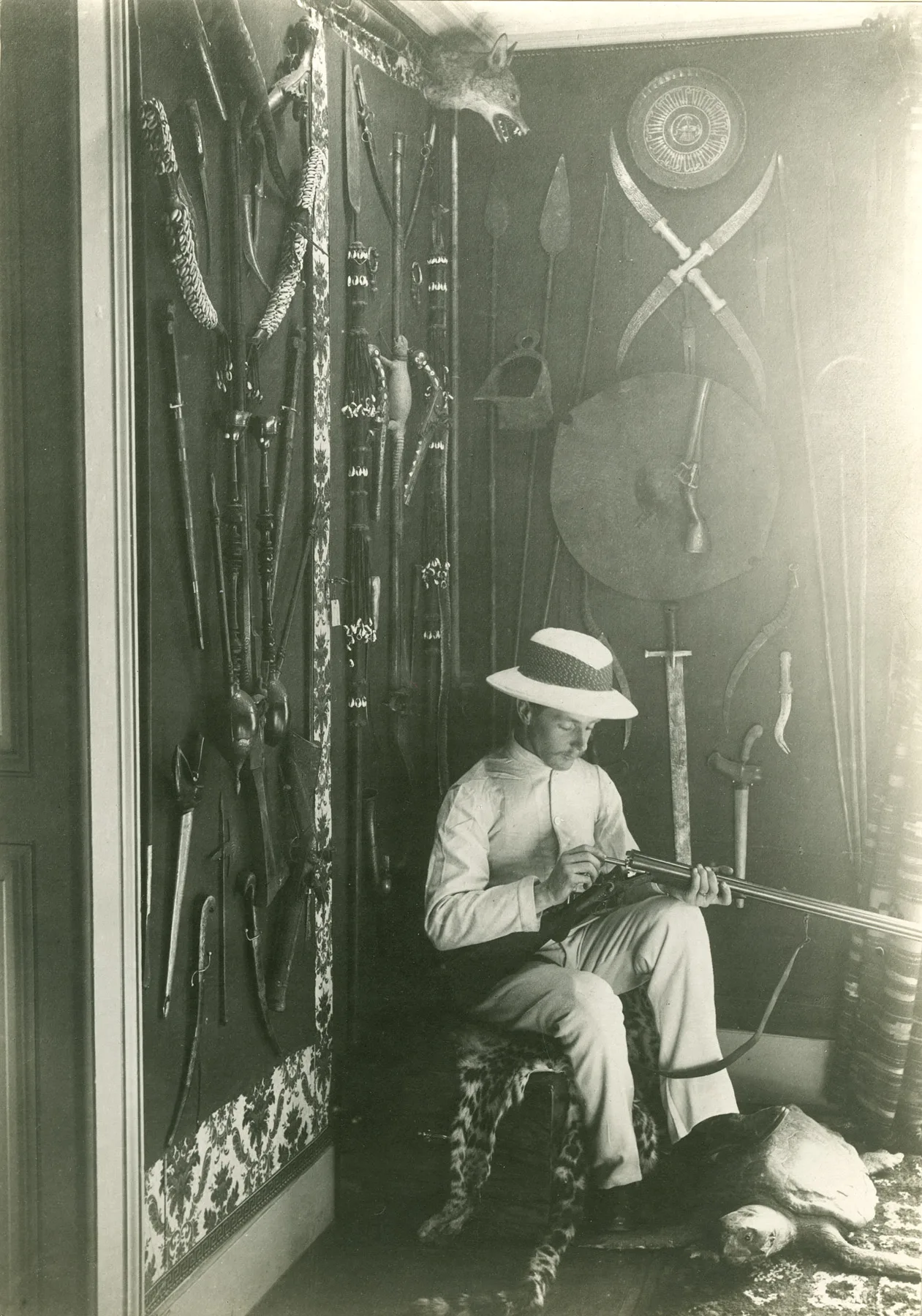
Heinrich Schiffmann and his collection in his villa in Ouchy, circa 1901.
Heinrich Schiffmann and his collection in his villa in Ouchy, circa 1901. ROTH-Stiftung Burgdorf
On returning to Switzerland, Schiffmann put the objects on display in his villa in Lausanne. Other Swiss also acquired items for their personal collections or bequeathed them to the newly founded ethnological museums. Heinrich Schiffmann left almost 500 pieces to the Ethnological Museum in Burgdorf. They are now held, together with more than 2,000 photographs, at the museum in Burgdorf Castle.

The voyages made by the young Swiss globe-trotter were part of a wider momentum that gathered at the turn of the century. The establishment and improvement of transport routes made it possible for people from the West to travel the world unhindered, especially along the imperial networks. Whether in reality or in virtual form, globe-trotting mania spread like a virus. Heinrich Schiffmann was one of those who caught the travel bug, even though he was travelling on health grounds.
Further posts