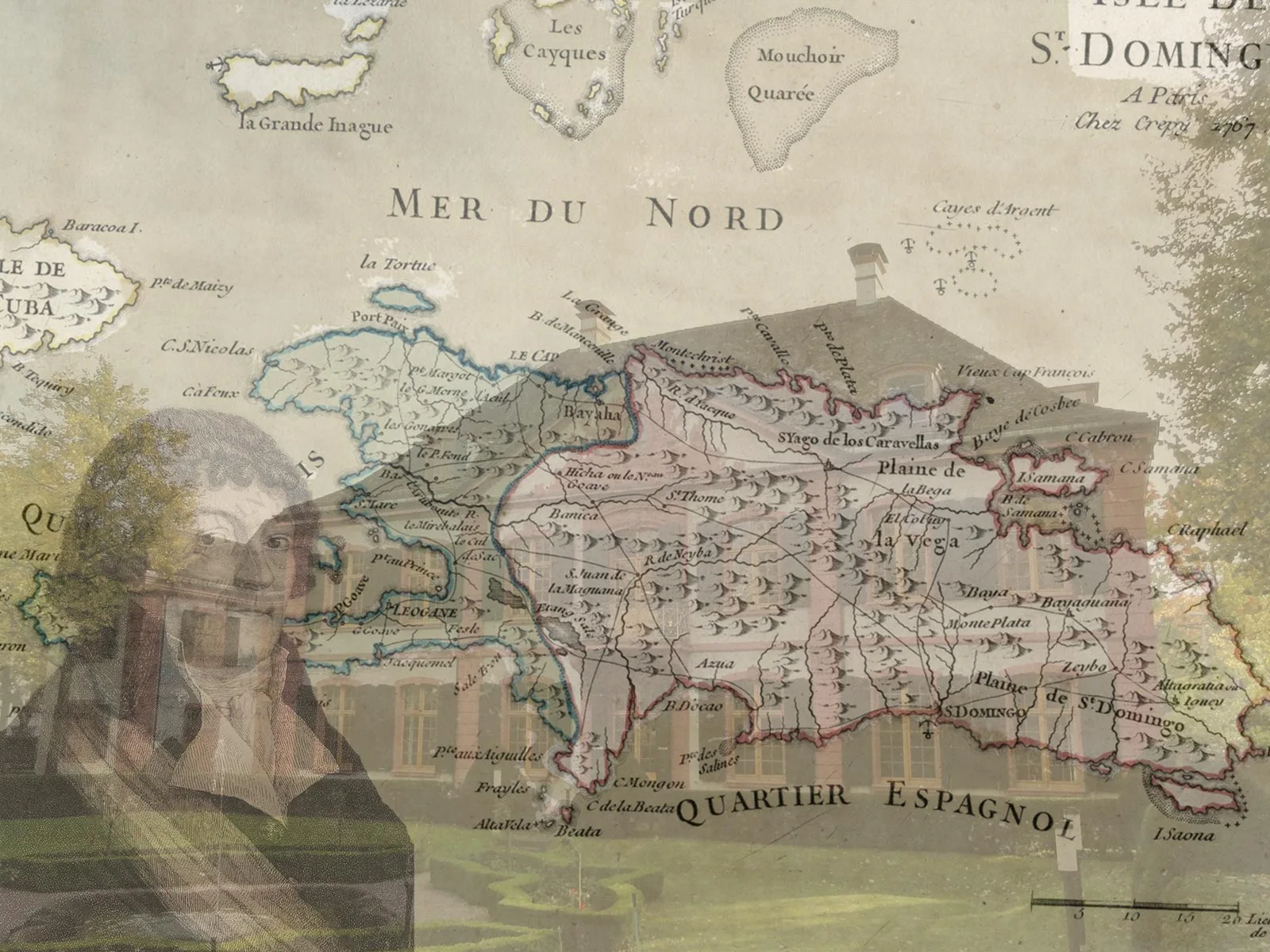
Momentous decisions with consequences that went far beyond the borders of Europe were made at Holsteinerhof in Basel in 1795. Peter Ochs, the City Chancellor, was also involved.
Momentous decisions with consequences that went far beyond the borders of Europe were made at the u003cemu003eHolsteinerhofu003c/emu003e in Basel in 1795. Peter Ochs, the City Chancellor, was also involved. Photos: Wikimedia / e-rara / Library of Congress

Basel and the freedom fighters of Saint-Domingue

The Peace of Basel, which was signed in 1795, had far-reaching consequences: for Basel’s City Chancellor Peter Ochs, for revolutionary France, and for events in America’s biggest slave revolution in the Caribbean.

Esperanza Anido Calvo und Roberto Zaugg

Esperanza Anido Calvo und Roberto Zaugg

Esperanza Anido Calvo and Roberto Zaugg are historians of the early modern period at the University of Vechta and the University of Zurich, respectively.
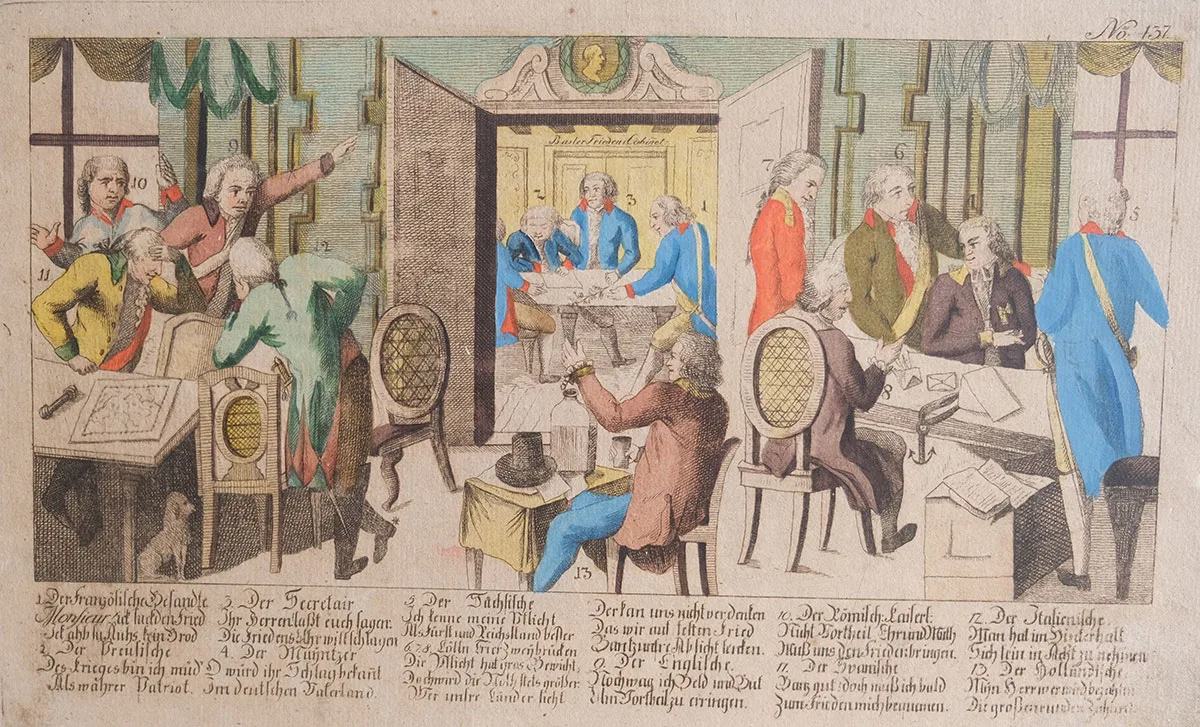
On the night of 22–23 July 1795, Spanish envoy Don Domingo d’Yriarte slipped through a hole in a pergola into the garden of the Holsteinerhof,  where he signed a peace treaty with the French diplomat François Barthélemy following secret negotiations. For the owner of the Holsteinerhof – Basel’s City Chancellor, Peter Ochs – this was the second political success in the space of a few months. In April of that year, Ochs had been involved in negotiating a treaty between Prussia and France. This was followed in August by a third agreement, this time between Paris and Hessen-Kassel. These treaties are collectively known as the Peace of Basel.
Contemporary caricature: Basel’s Holsteinerhof as a diplomatic meeting place.
Contemporary caricature: Basel’s u003cemu003eHolsteinerhofu003c/emu003e as a diplomatic meeting place. Staatsarchiv Basel-Stadt, image 13.143
In Basel, the French successfully managed to break up the front of European powers that had opposed the revolutionary Republic since 1793. The fact that the negotiations took place at Ochs’s suburban residence was partly to do with Switzerland’s neutral position, and partly with Peter Ochs’s networks. The urbane and sophisticated Ochs, who was an advocate of Enlightenment ideals, had travelled to Paris on several diplomatic missions since 1791 and had contacts with the highest revolutionary decision-makers. When in 1794 the commander of the Prussian army was looking for channels through which to gauge France’s willingness to negotiate, Ochs was the perfect man for the job.

The Peace of Basel is well known for its consequences within Europe – and as a moment when the spotlight was on Peter Ochs as France’s most important interlocutor. What is often forgotten, however, is the fact these negotiations also had far-reaching consequences stretching as far as the Caribbean.
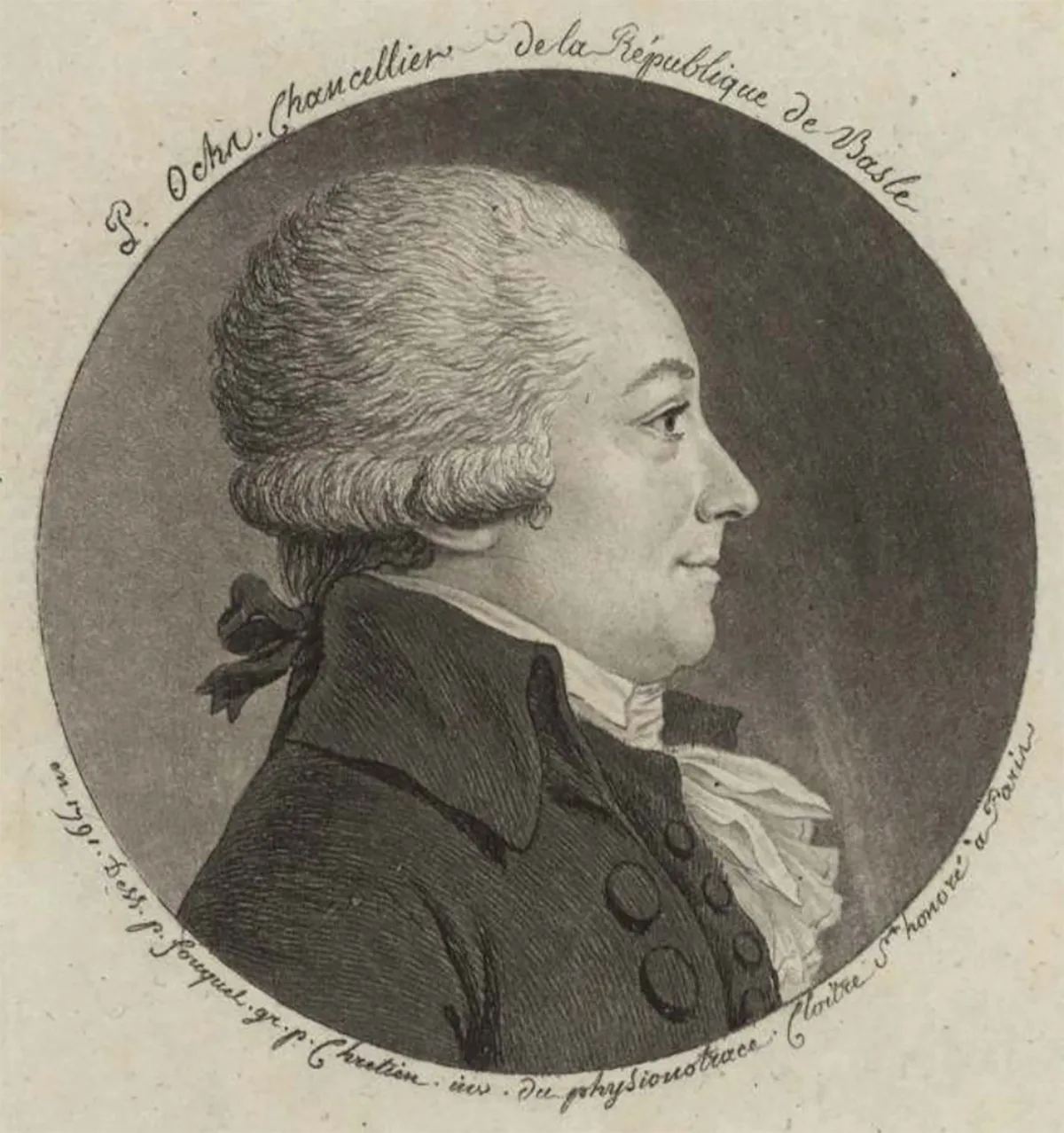
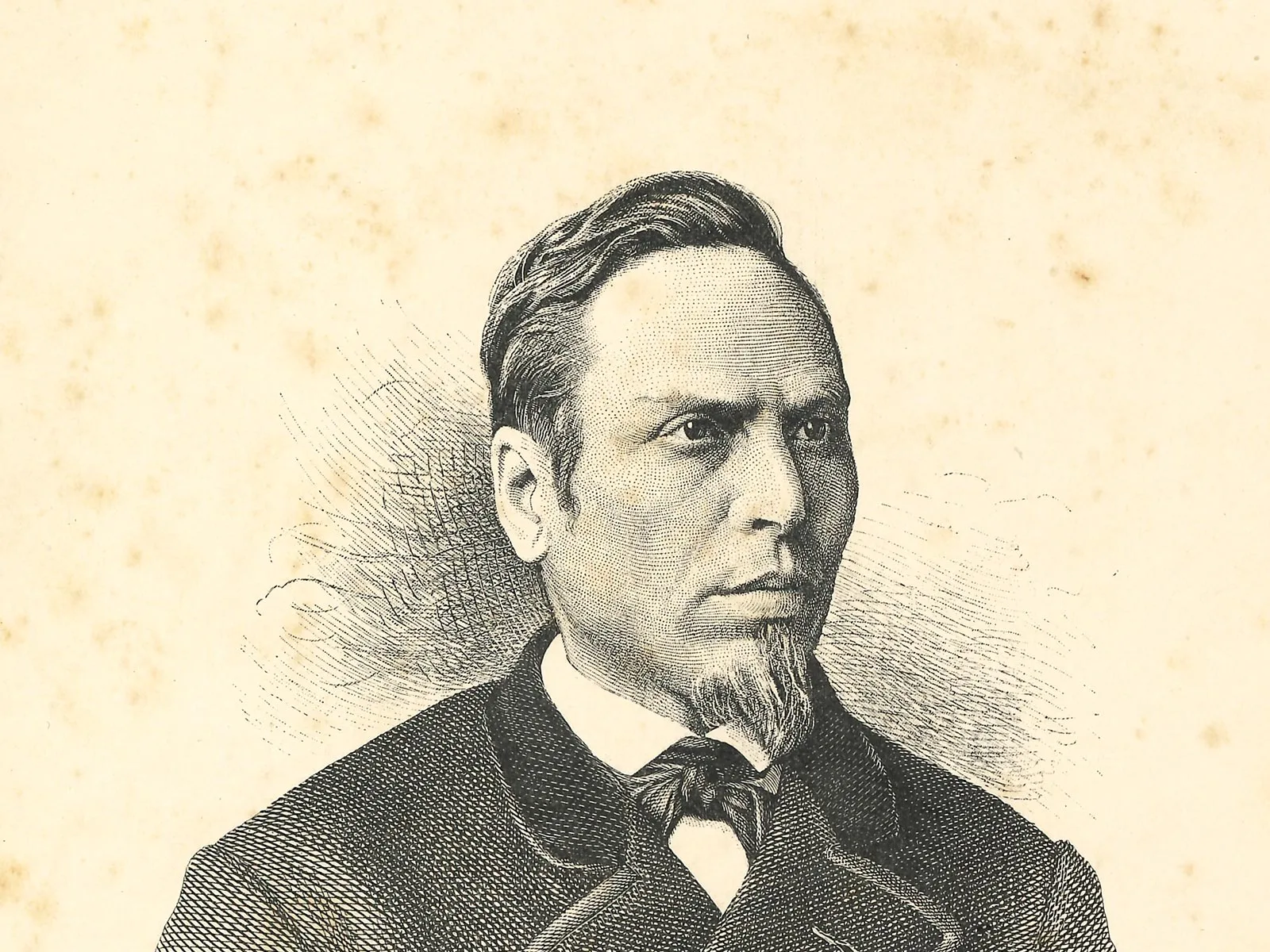
Portrait of Peter Ochs, 1791.
Portrait of Peter Ochs, 1791. Basel University Library
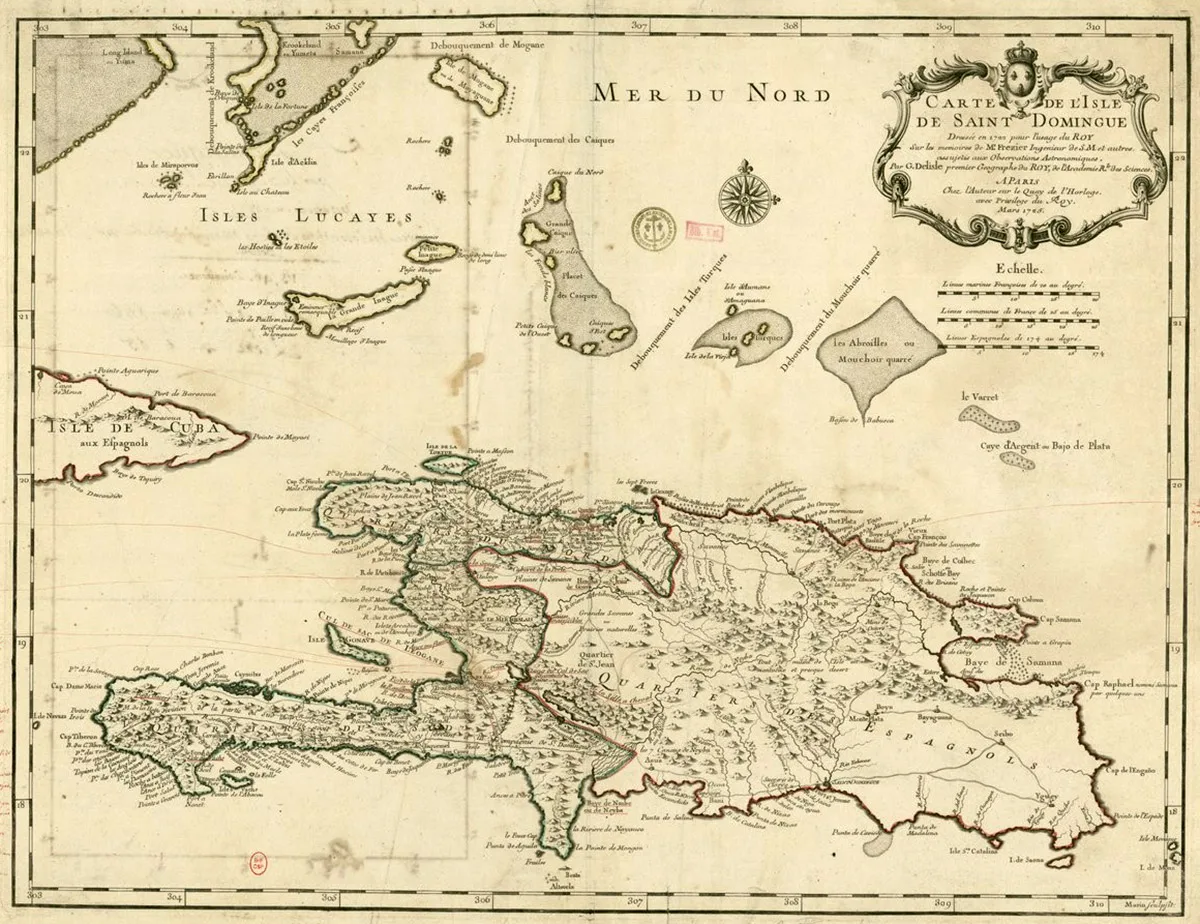
In 1789, the French revolutionaries proclaimed that all human beings are born free and equal – but they failed to abolish slavery in France’s colonies. On the island of Hispaniola, which had been split between the Spanish Santo Domingo in the east and the French Saint-Domingue in the west since the 17th century, these contradictions proved explosive. In 1791, the enslaved, who represented 465,000 of a total population of 524,000 in Saint-Domingue, unleashed a coordinated revolt, which soon spread to large sections of the colony. From 1793, the rebellion became interwoven with the war that Britain and Spain were waging against France.
From the 17th century, the island of Hispaniola was divided between Saint-Domingue in the west (now Haiti) and Santo Domingo in the east (now the Dominican Republic).
From the 17th century, the island of Hispaniola was divided between Saint-Domingue in the west (now Haiti) and Santo Domingo in the east (now the Dominican Republic). gallica / Bibliothèque nationale de France
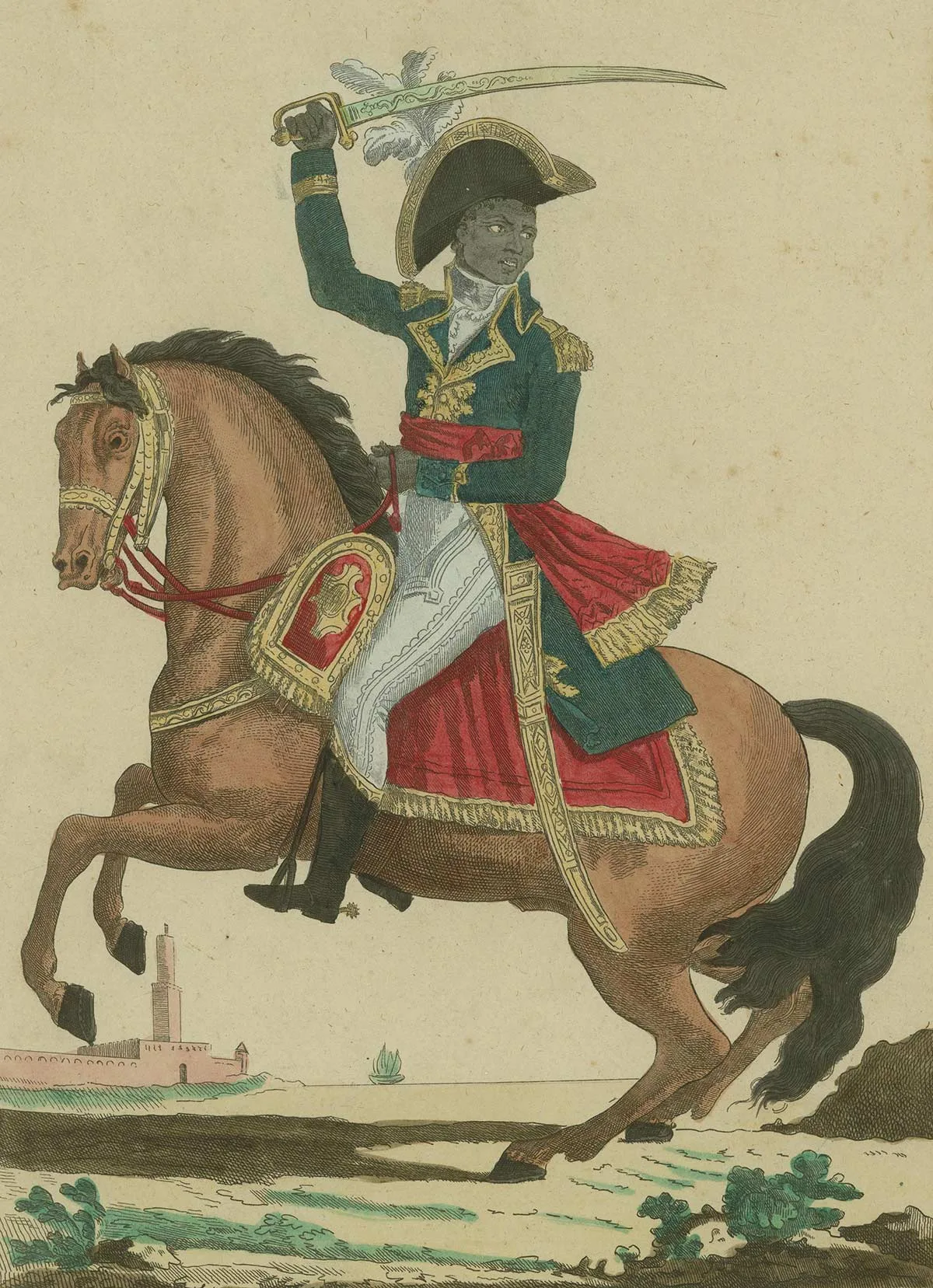
The governor of Santo Domingo sought alliance with the insurgents and offered freedom and financial security to anyone who fought against France under the Spanish flag. At least 12,000 rebels took up this offer. They were officially integrated into the Spanish army as ‘auxiliary troops’ and from then on were supplied with weapons and food. They included Jean-François Papillon and Georges Biassou, two slaves born in the Caribbean who had been among the first rebel leaders, and Toussaint Bréda, a former slave who had already gained freedom before the Revolution and at that time was still fighting under Biassou. At the same time, the British were occupying parts of Saint-Domingue, where they were greeted with open arms by the white settlers. France was at risk of losing its most valuable colony. In this state of emergency, representatives sent by Paris decided to announce the abolition of slavery in Saint-Domingue. The National Convention validated this decision in 1794, extending it to the whole of France’s colonial empire. The French Republic therefore embarked on an open conflict with the white settlers, but was able to recruit the majority of the black insurgents. Toussaint, who by then was going by the self-chosen surname ‘Louverture’, switched sides and, together with thousands of freedom fighters, joined the French republican camp. Biassou, Jean-François and their troops still distrusted the French, however, and remained loyal to their pact with Spain.
Toussaint Louverture joined the French in 1794. Portrait, circa 1800.
Toussaint Louverture joined the French in 1794. Portrait, circa 1800. Wikimedia / John Carter Brown Library
The peace treaty signed at the Holsteinerhof in 1795 further thickened the plot. France gave back to Madrid control of the areas it had conquered during the war in northern Spain. In return, Spain was to relinquish Santo Domingo to France. When the news reached the Caribbean, the French governor of Saint-Domingue sent a small delegation to Santo Domingo to define the terms of the handover. On the way to the seat of the Spanish governor, the delegates handed out pamphlets promising that slavery would soon be abolished. This led to a sudden exodus of slaves from the villages, which in turn made the Spanish authorities expel the delegation from the colony. The governor at first refused to hand Santo Domingo over to the French – and the French initially let the matter rest. They were pleased that Spain had withdrawn from the war, and from then on focused their attention on fighting the British, who still occupied a part of Saint-Domingue.
At the end of the war, the former rebels, who had become Spanish auxiliary troops in 1793, were discharged from service. However, the presence of thousands of battle-hardened black people who had fought for their freedom presented a threat. The French feared that the British could recruit them – which they did in some cases. Louverture wanted to get rid of his former comrades Biassou and Jean-François. The Spaniards were worried that the spark of rebellion could be passed on from these ex-insurgents to their own slaves, which is what ended up happening, when in 1796 around 100 slaves on the Boca Nigua plantation staged armed protests, seeking assistance from a number of former members of the auxiliary troops – albeit unsuccessfully.
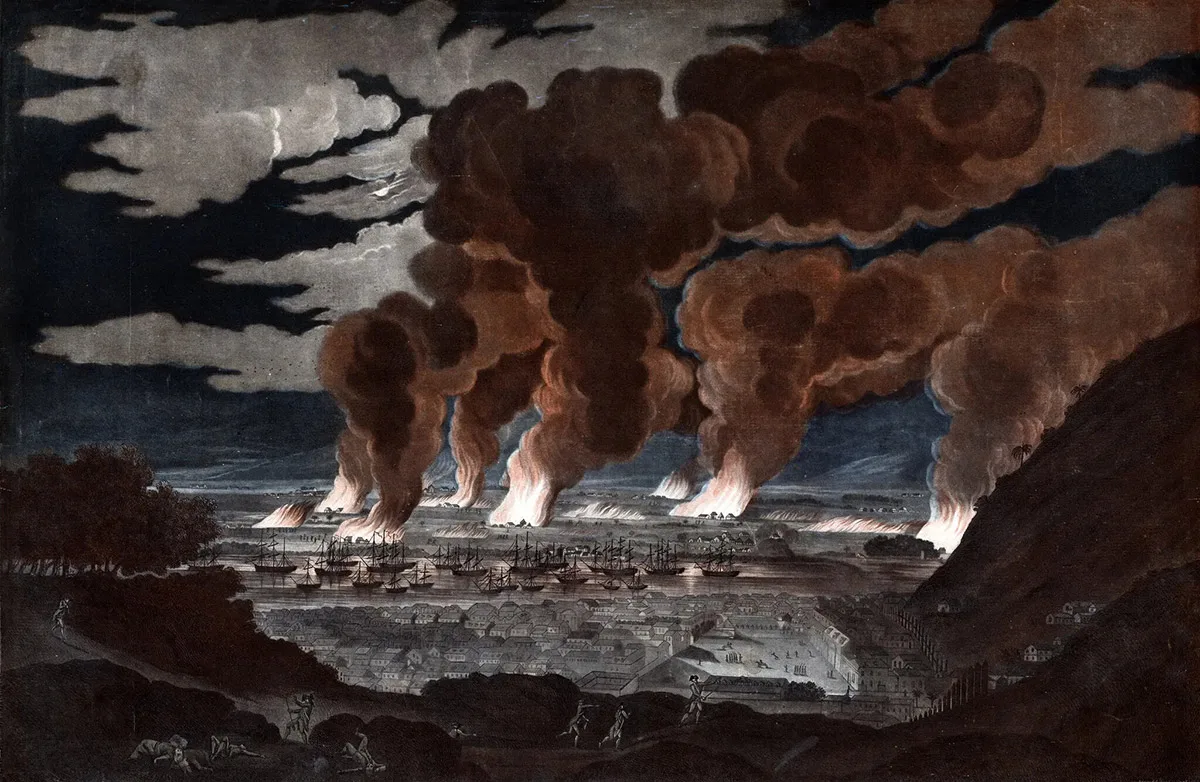
In August 1791, the insurgents destroyed hundreds of plantations in northern Saint-Domingue. Illustration from 1795.
In August 1791, the insurgents destroyed hundreds of plantations in northern Saint-Domingue. Illustration from 1795. Wikimedia
Most of the freedom fighters who had joined the Spanish troops in 1793 ultimately stayed in Santo Domingo as free farmworkers. But the leaders, many auxiliary troop officers and their families had to leave the island. Some 800 people were shipped towards Cuba. But the Spanish governor there refused to let them ashore. Accepting hundreds of black people who were experienced in combat presented a risk for the island colony and its slave society. The exiles were therefore broken up into smaller groups and sent to Honduras, Mexico, Panama, Spain and North America. For these freedom fighters, the peace treaty signed in faraway Basel signified a major watershed.
In March 1796, a group of 142 men, women and children under Jean-François arrived in the Andalusian port of Cadiz. Among them were also a number of slaves belonging to auxiliary troop officers, who had formerly been enslaved themselves.  The latter had fought for their own freedom, but not for the abolition of slavery per se. The black people from Saint-Domingue initially remained unified in Cadiz. The former members of the auxiliary troops received a pension from the Spanish crown, but struggled to make ends meet, as evidenced by many petitions.

A smaller group under Biassou ended up in San Agustín, in what at the time was Spanish Florida. Some earned a living as tradespeople and artisans. Others – including Biassou, who also received handsome pay – were granted arable land. In 1800 he and his men served Spain one last time –against the indigenous Seminoles who had risen up against Spanish rule.
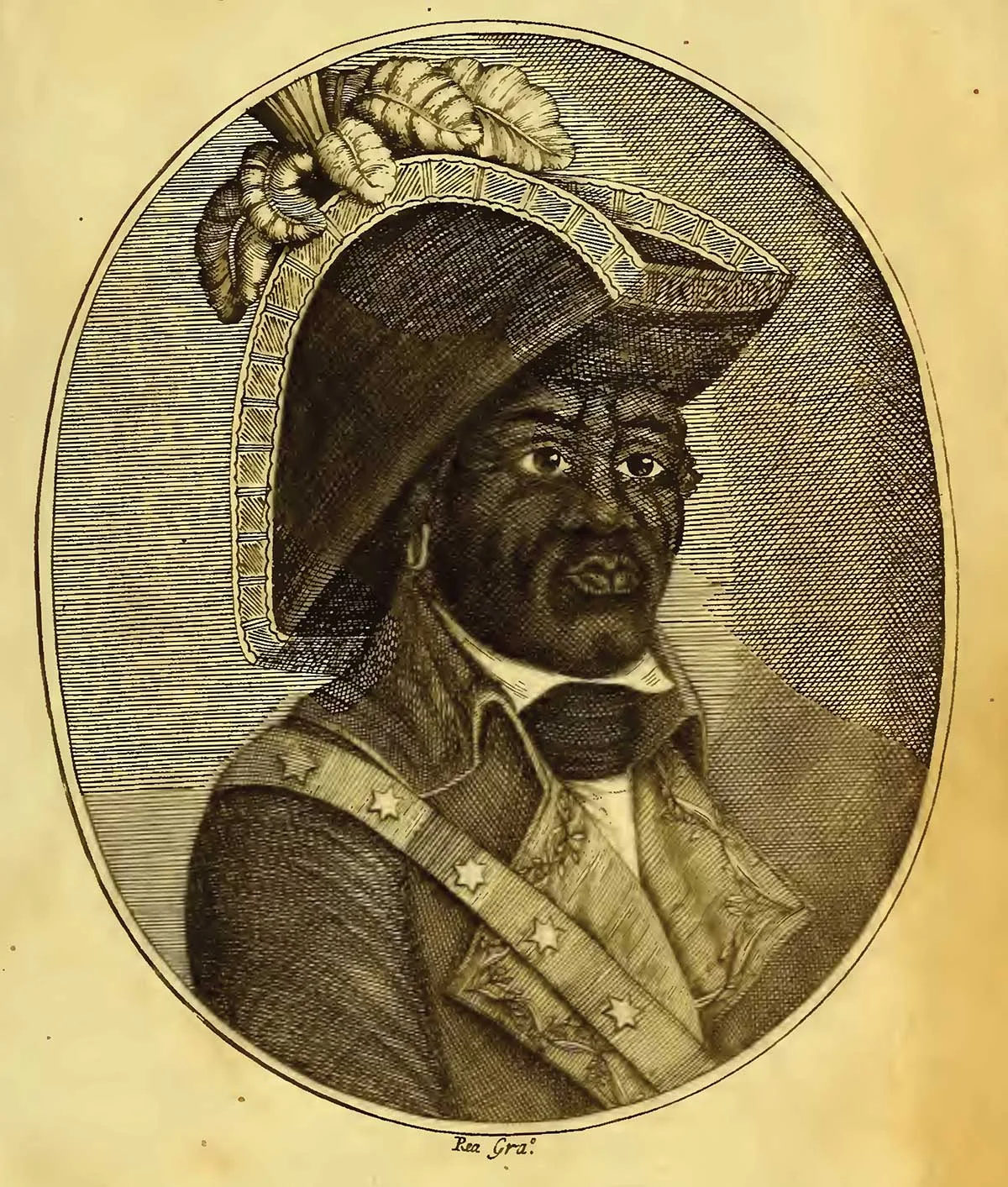
Portrait of Georges Biassou, early 19th century.
Portrait of Georges Biassou, early 19th century. Internet archive
Biassou was laid to rest with full honours in San Agustín in 1801, while Jean-François died in poverty in Cadiz in 1805. Their former comrade-in-arms and subsequent adversary, Toussaint Louverture, who had risen to become a leading figure on Hispaniola, was arrested and deported by a French expeditionary corps in 1802. Napoleon Bonaparte had him imprisoned in Fort de Joux close to the Swiss border in the French Jura, where he died in 1803. One year later, however, the rebels scored a clear victory over the French, when Saint-Domingue –newly proclaimed as the Republic of Haiti – gained independence.

Through the Peace of Basel, Peter Ochs had become an internationally-recognised diplomat, maintaining excellent relations with the French government. He was instrumental in the founding of the Helvetic Republic in 1798 and became a member of the Directory following pressure from the French. A year later, Ochs was driven out of this executive body – but that is another story.
Further posts