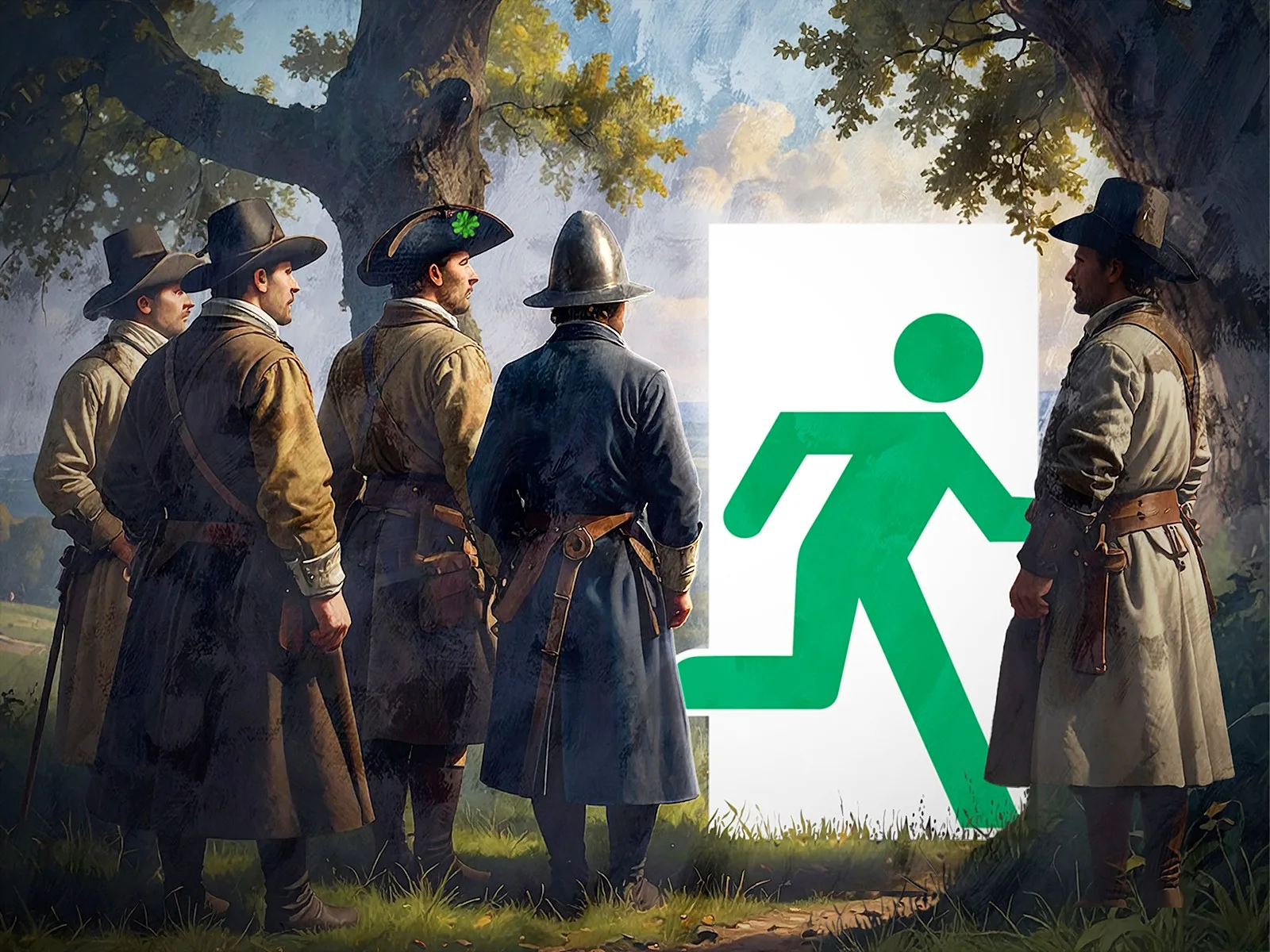
The escape of the counts had significant consequences for Ireland. Illustration by Marco Heer.

Flight of the Earls through Switzerland

On September 14, 1607, a group of prominent Irish nobles left Ulster and sailed out into European exile. Among them were Hugh O’Neill, Earl of Tyrone, Rory O'Donnell, Earl of Tyrconnell, and a scholar and writer named Tadhg Óg Ó Cianáin. Ó Cianáin’s travel diary reveals fascinating glimpses and positive impressions of early modern Switzerland as the exiles traveled through the country.
James Blake Wiener

James Blake Wiener

James Blake Wiener is a world historian, Co-Founder of World History Encyclopedia, writer, and PR specialist, who has taught as a professor in Europe and North America.

During the bloody Nine Years’ War (1593-1603), a confederation of Irish nobles, led by Hugh O’Neill, Earl of Tyrone, rose in rebellion against English rule. Though they secured early victories and won tactical support from Spain, the insurgents were ultimately overcome by the superior military strength of England. The conflict ended with the Treaty of Mellifont in 1603, which formalized the Irish lords' submission but failed to establish lasting political stability. Despite the generous terms granted by James I of England, deep mutual distrust remained between the Irish and the English crown. In 1607, facing mounting pressure and rumors of renewed rebellion, O’Neill, Rory O'Donnell, Earl of Tyrconnell, and their close allies fled Ireland in what came to be known as the "Flight of the Earls." Among the exiles was Tadhg Óg Ó Cianáin, a chronicler in O’Neill’s service, who recorded their journey in a diary written in Irish.
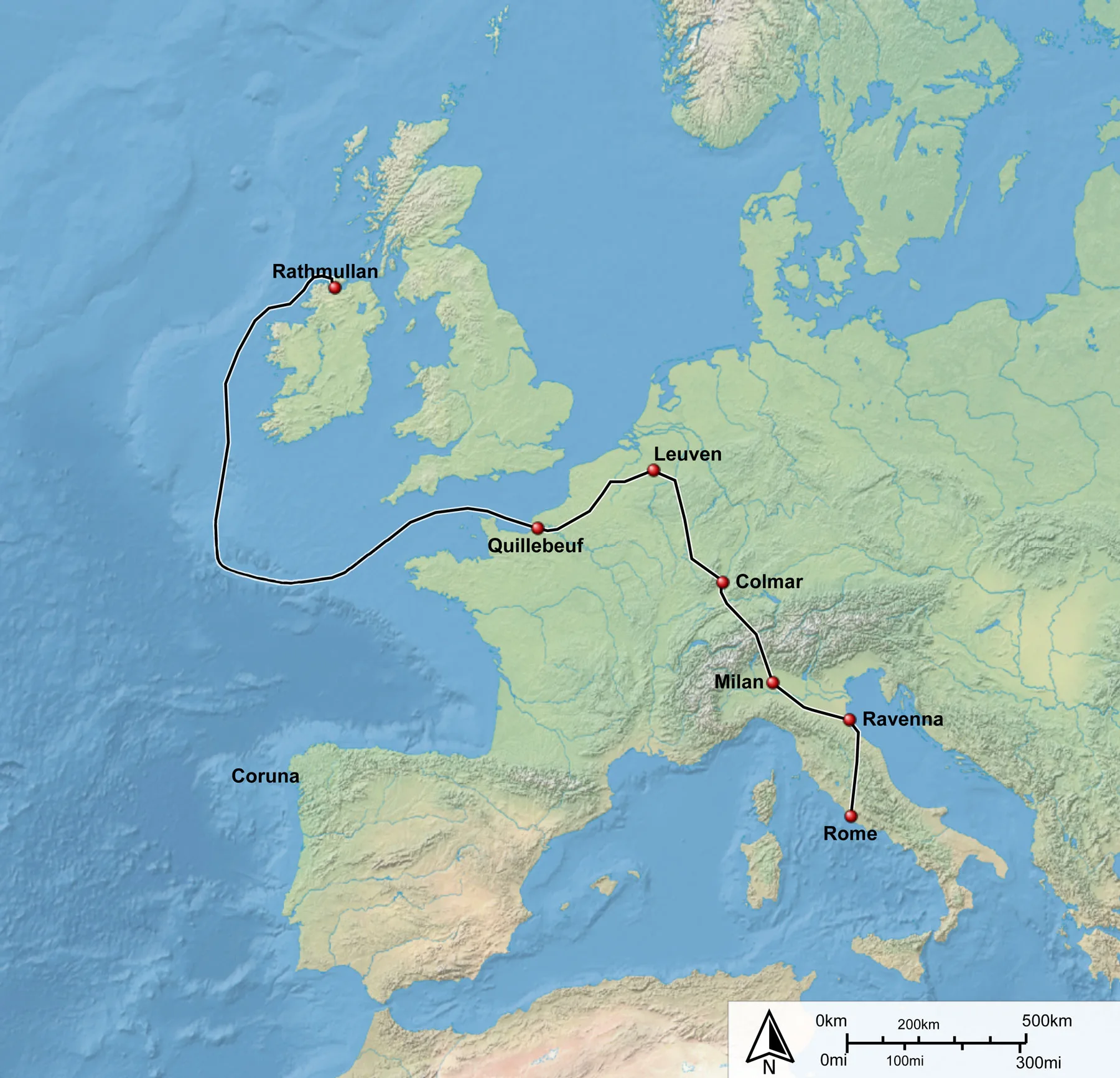
The map shows the route taken by the Irish.
The map shows the route taken by the Irish. Wikipedia (edited)
Image 01 of 03
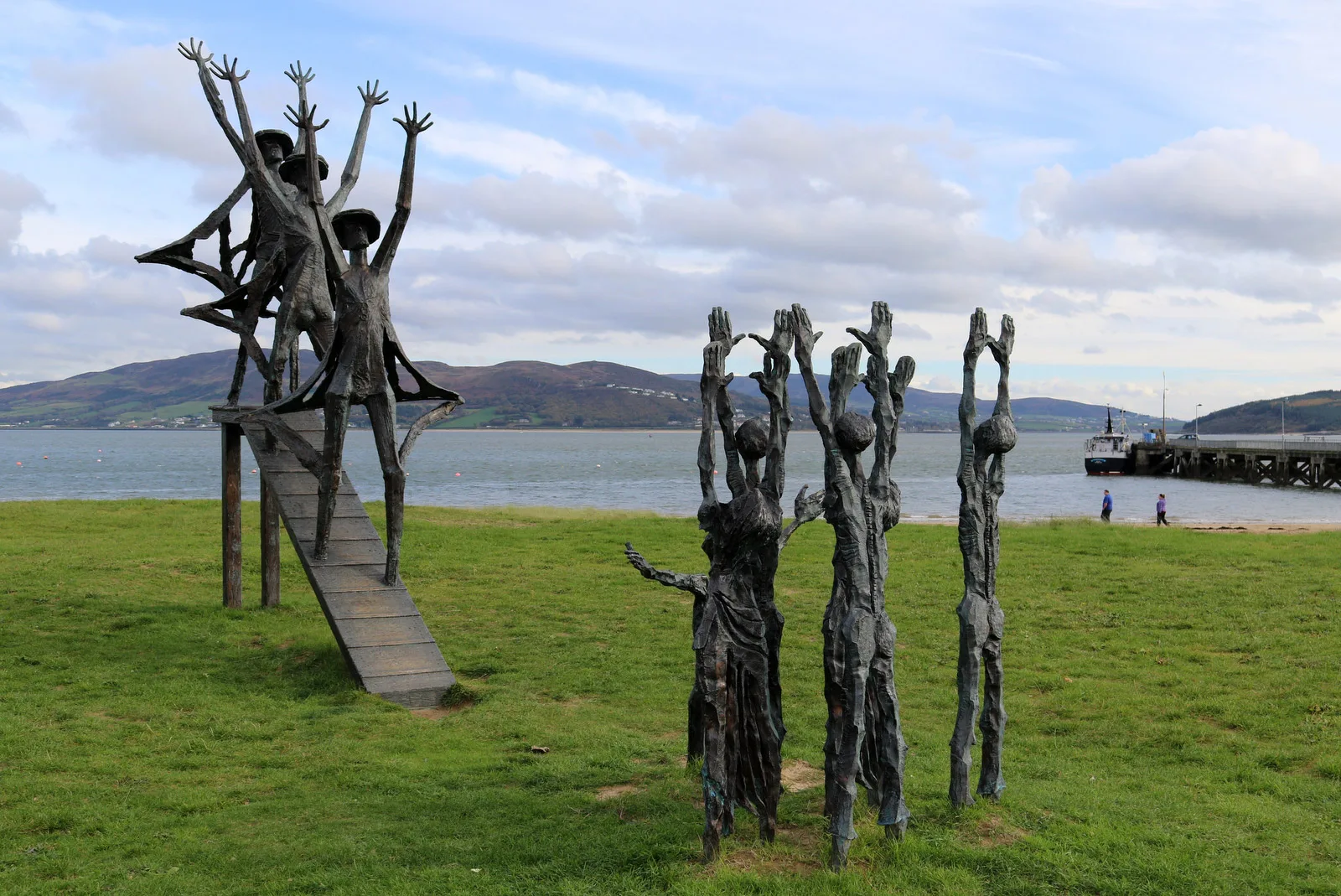
A bronze sculpture at a beach in Rathmullan (Ireland) commemorates the “Flight of the Earls.” They were never to return and lived for the rest of their lives in exile.
A bronze sculpture at a beach in Rathmullan (Ireland) commemorates the “Flight of the Earls.” They were never to return and lived for the rest of their lives in exile. Wikimedia
Image 01 of 03
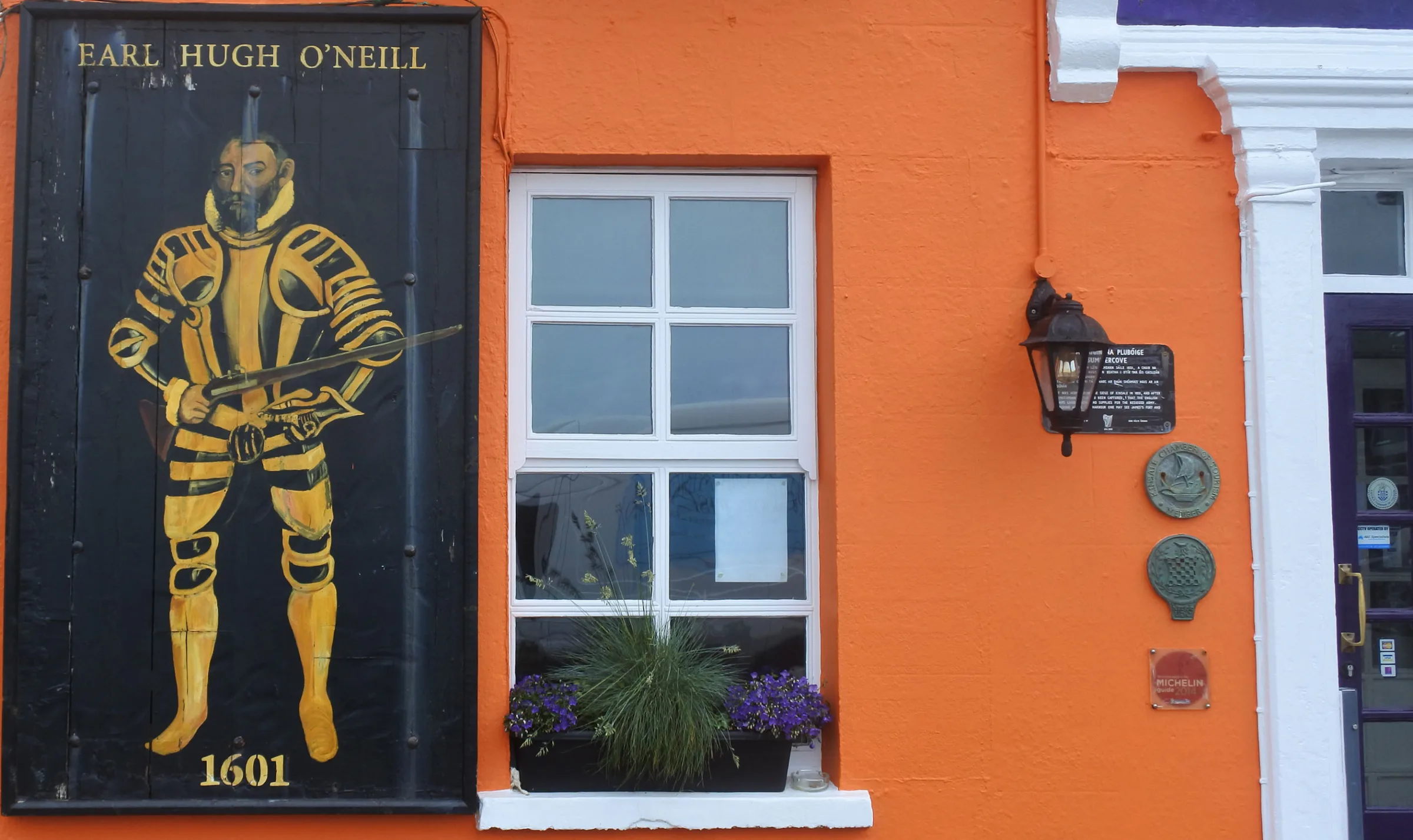
Wall painting of Hugh O'Neill next to a pub in Kinsale (Ireland), relating to his role in the failed Battle of Kinsale in 1601 during the Nine Years’ War. The "Flight of the Earls" is an event that elicits strong emotions. The Irish are still living in the aftermath of the flight some 400 years later.
Wall painting of Hugh O'Neill next to a pub in Kinsale (Ireland), relating to his role in the failed Battle of Kinsale in 1601 during the Nine Years’ War. The u0022Flight of the Earlsu0022 is an event that elicits strong emotions. The Irish are still living in the aftermath of the flight some 400 years later. Wikipedia
Image 01 of 03
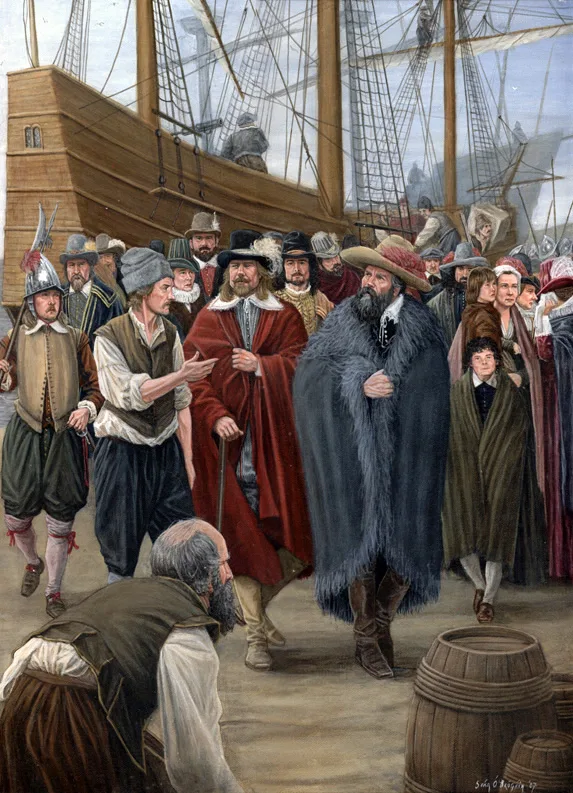
Although the 99 political exiles had intended to sail to A Coruña in Spain, they disembarked instead at Quillebeuf-sur-Seine in France on October 4, 1607. After a brief detention by Norman authorities, the exiles received permission to travel from Henry IV of France. The Irish pressed on to Leuven, where they expected to make a brief stop before proceeding onwards to Madrid.  The exiles’ chief aim was to persuade the Spanish to give military support for a renewed campaign against the English in Ireland. Philip III of Spain worried, however, that hosting the Irish would antagonize the English; he feared too it would jeopardize ongoing peace negotiations between his brother-in-law, Archduke Albert, and Dutch rebels.
The arrival of the Irish at Quillebeuf-sur-Seine, as illustrated in John McCavitt’s "The Flight of the Earls: An Illustrated History".
The arrival of the Irish at Quillebeuf-sur-Seine, as illustrated in John McCavitt’s u0022The Flight of the Earls: An Illustrated Historyu0022. Seán Ó Brógáín
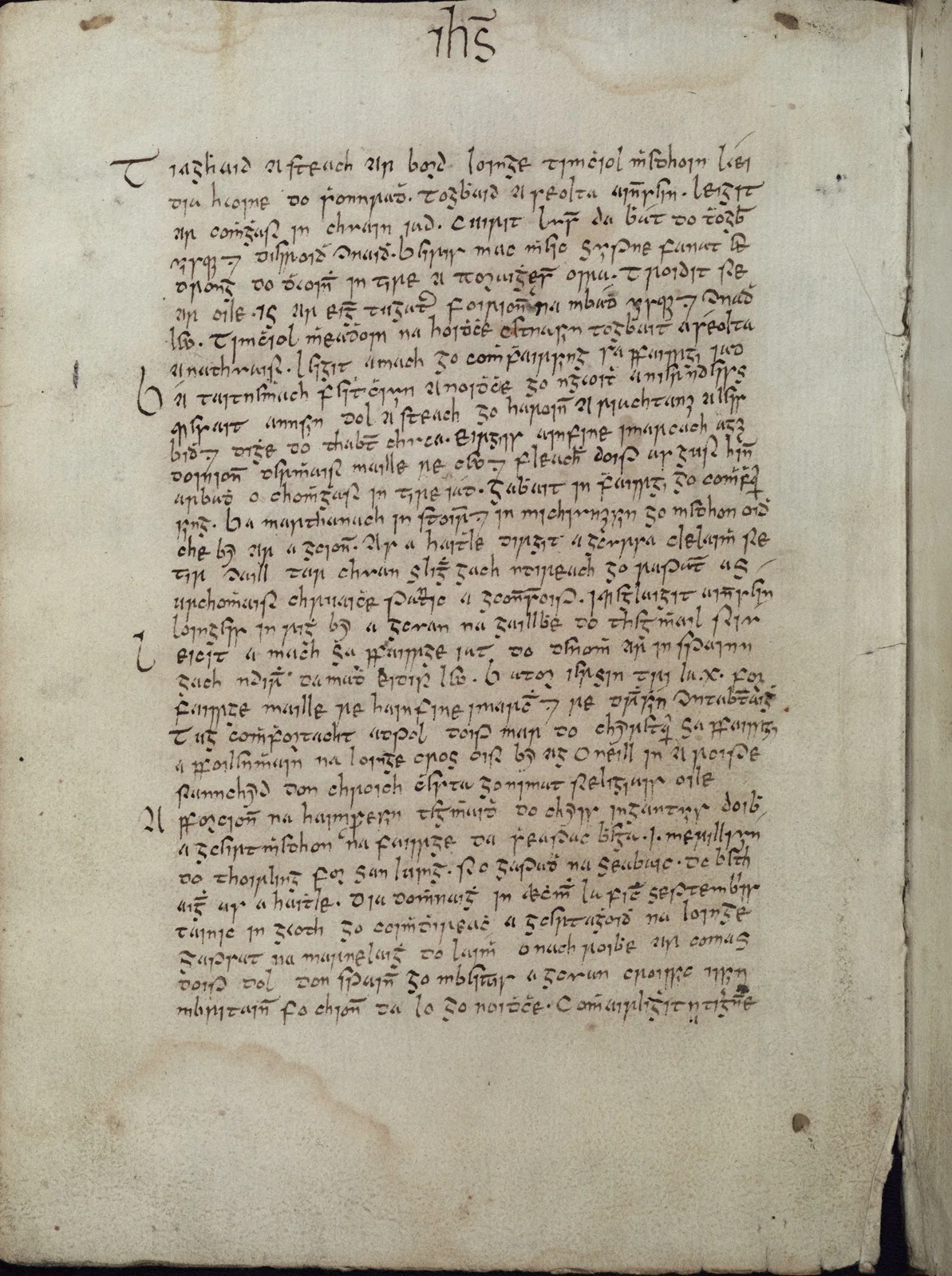
Tadhg Óg Ó Cianáin (d. 1610) belonged to a prestigious Ulster Gaelic family, and served as a historian and writer in the employment of Hugh O'Neill, Earl of Tyrone. The only existing copy of his unique travel diary, which contains about 140 pages and 38,000 words, is held at University College Dublin. Reproduced by kind permission of UCD-OFM Partnership.
Tadhg Óg Ó Cianáin (d. 1610) belonged to a prestigious Ulster Gaelic family, and served as a historian and writer in the employment of Hugh O'Neill, Earl of Tyrone. The only existing copy of his unique travel diary, which contains about 140 pages and 38,000 words, is held at University College Dublin. Reproduced by kind permission of UCD-OFM Partnership. University College Dublin Archives
After nearly 13 weeks in Flanders, 35 of the exiles – including Ó Cianáin and the two earls – departed in frustration for Milan on February 28, 1608. They now hoped to obtain letters of assurance in Lombardy from Philip III for safe passage to Spain. 32 men traveled on horseback, while three noble ladies followed in a coach. Ó Cianáin’s diary records that the Irish maintained a rapid pace of 35 to 45 km a day through Wallonia, Lorraine, and Alsace. Just two weeks after leaving Leuven, they crossed the Rhine and entered Basel on March 15, 1608. While surprised by the size and grandeur of the city, Ó Cianáin and his fellow exiles felt uneasy as devout Catholics in Protestant environs:

"…Bâle [Basel], a fine, strong, old, remarkable city…There is a very good bridge [Mittelbrücke] in the centre of the city over the river…Those who occupy and inhabit it are heretics. There is a very large church [Basler Münster] in the middle of the city in which there were images, and pictures of Luther and Calvin and many other wicked evil writers…It alone is the main entrance to the land of the Swiss called Helvetia."
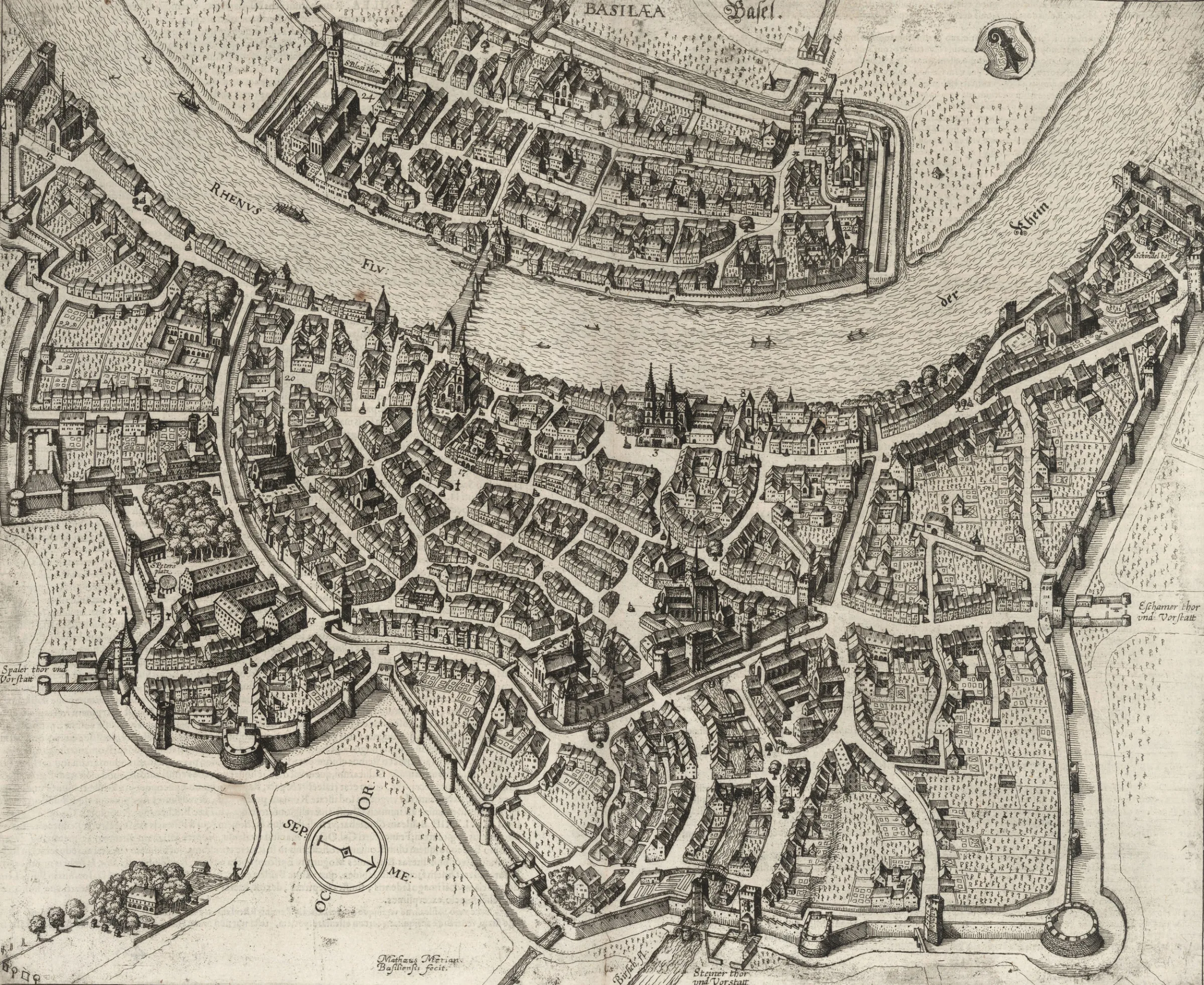
View of Basel, around 1640.
View of Basel, around 1640. Wikipedia
It is a remarkable quirk of history that Ó Cianáin and the earls did not attempt to bypass Basel altogether by crossing the Rhine at Ottmarsheim and head directly  towards Baden by following one of the Swiss arteries of the Camino Español. This was the same route taken by the Spanish Army in 1604 during their march from Milan to Brussels. Ó Cianáin and his fellow exiles felt calmer as they proceeded through cobbled Liestal and pastoral Basel-Landschaft. The paved road led through a fertile valley flanked by vine-covered slopes. Ó Cianáin observed too in his diary that a customs fee was levied on every horse.

Ó Cianáin found the Swiss countryside between Liestal and Sursee equally enchanting and worthy of commentary, especially as it contrasted with an Ireland largely denuded of its forests. Continuing their brisk march, the exiles covered five leagues to Sursee. Along the way, they passed the walled town of Olten on the Aare River—Ó Cianáin mistook it for the Rhine in error—and continued via Zofingen.

On March 16, 1608, the travelers reached Lucerne after transiting through Sempach. Ó Cianáin and the Irish met a warm welcome, as coreligionists, when they crossed the Kapellbrücke. The beauty of Lucerne’s houses  delighted the Irish, but Ó Cianáin, again, struggled to find his geographical bearings, mistaking the Reuss for the Rhine River.
In Lucerne, the exiles crossed the Kapellbrücke. Ó Cianáin noted: "[We] crossed the river Rhine by a very long bridge, which had a good roof over the whole length of it… "
In Lucerne, the exiles crossed the Kapellbrücke. Ó Cianáin noted: u0022[We] crossed the river Rhine by a very long bridge, which had a good roof over the whole length of it… u0022 Wikimedia
As there was no road around Lake Lucerne in the 1600s, the only way for the Irish to traverse the lake was by boat. Ferry boats had crisscrossed Lake Lucerne since the 1100s, and the Irish were in luck that day as Ó Cianáin makes no mention of poor weather hindering their passage. According to Ó Cianáin’s diary, they reached Flüelen around midnight. The Irish had maintained a grueling pace, traveling over 160 km since arriving in Switzerland three days earlier.

On March 17, 1608, the Irish began their approach toward the Gotthard Pass. The date coincided with St. Patrick’s Day – a holiday traditionally celebrated with much fanfare and feasting – but they had no luck as they crossed the Teufelsbrücke. Wintery conditions caused one of O'Neill’s horses to slip and fall into the Schöllenen Gorge with considerable financial losses:

"One of Ó Néill's horses, which was carrying some of his money, about £125, fell down the face of the high, frozen, snowy cliff which was in front of the bridge. Great labour was experienced in bringing up the horse alone…The next day the Earl [O'Donnell] proceeded over the Alps. O’Neill remained…He sent some of his people to search again for the money. Though they endured much labour, their efforts were in vain…"
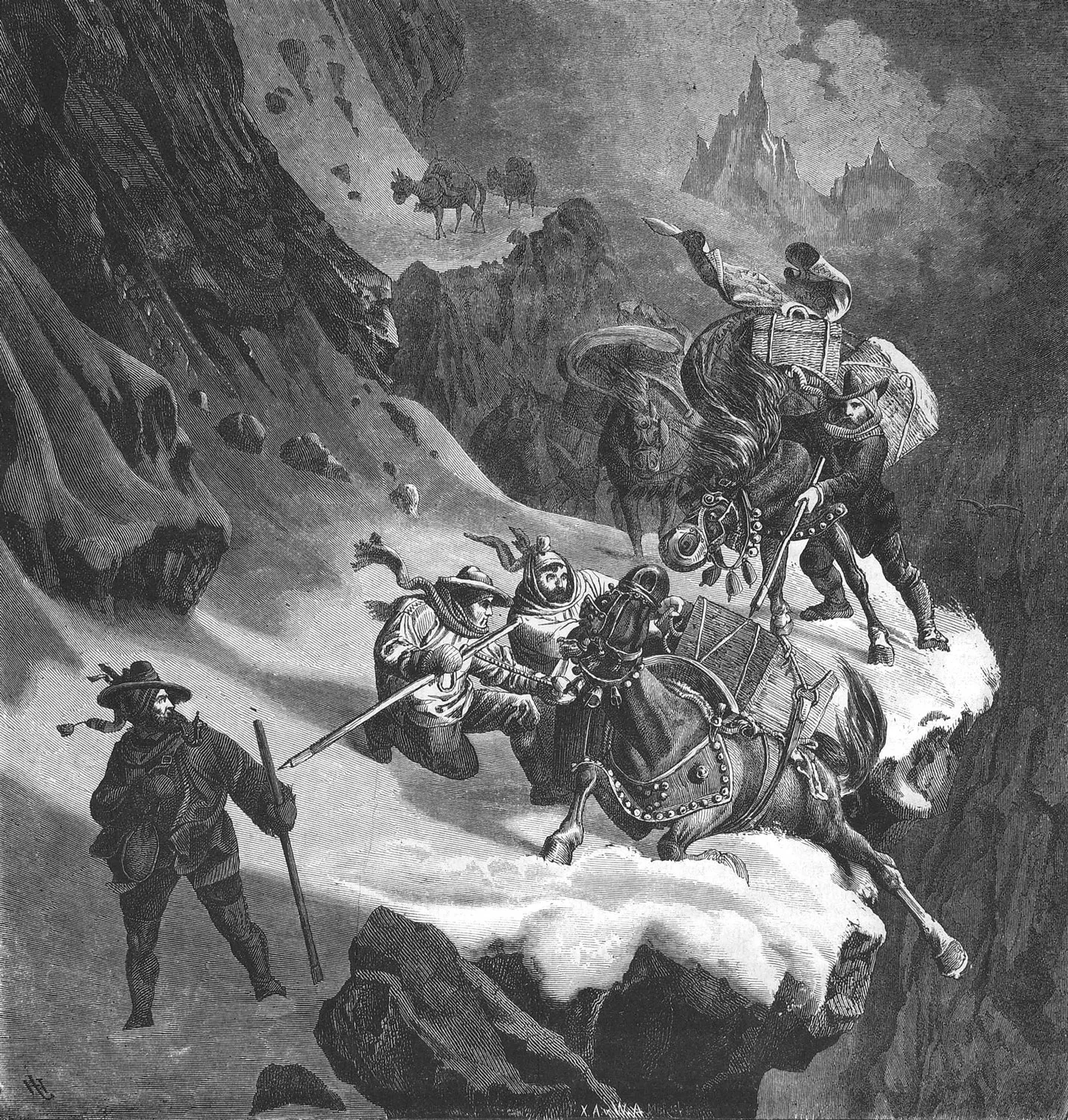
The scene at the Schöllenen Gorge might have looked something like this. Adjusted for today’s values, the Irish exiles lost the equivalent of over £32,000.
The scene at the Schöllenen Gorge might have looked something like this. Adjusted for today’s values, the Irish exiles lost the equivalent of over £32,000. Wikimedia
Disheartened but undeterred by the events of the previous day, the Irish regrouped and crossed the Gotthard Pass on March 18, 1608, making use of strong oxen and large sleighs in the transportation of their supplies. After traversing Airolo and spending the night in Faido, they continued through Ticino over the next two days. The road ran through a lush valley of vines, wheat, and orchards all of which garnered much admiration. Bellinzona’s three castles dazzled the exiles too but they pressed on with haste, following the rough, stony tracks of the Monte Ceneri to Lugano and finally crossing Lake Lugano by boat to reach Capolago.

Although the Irish had crossed the breadth of Switzerland in only a week’s time, Ó Cianáin is clear in his diary that the particularities of the Old Confederation, aside from the bad roads, greatly impressed the exiles:

[We] had traversed forty-six leagues of the country of the Swiss…it was strong, well-fortified, uneven, mountainous, extensive, [but] having bad roads… 

Compared to a rural Ireland torn asunder by internecine warfare and foreign invasions, Switzerland struck the Irish as an agricultural country of plenty, adorned by handsome cities and populated by people who shared an atypical, but effective system of governance. The fact that Catholics and Protestants not only collaborated in good faith but were united in seeking political accommodation left an indelible impression on Ó Cianáin:

"…In themselves they form a strange, remarkable, peculiar state. They make their selection of a system for the government of the country each year…Half of them are Catholics and the other half are heretics, and by agreement and great oaths they are bound to one another for their defence and protection against any neighbour in the world who should endeavour to injure them or oppose them in upholding the public good with moderation and appropriateness…"
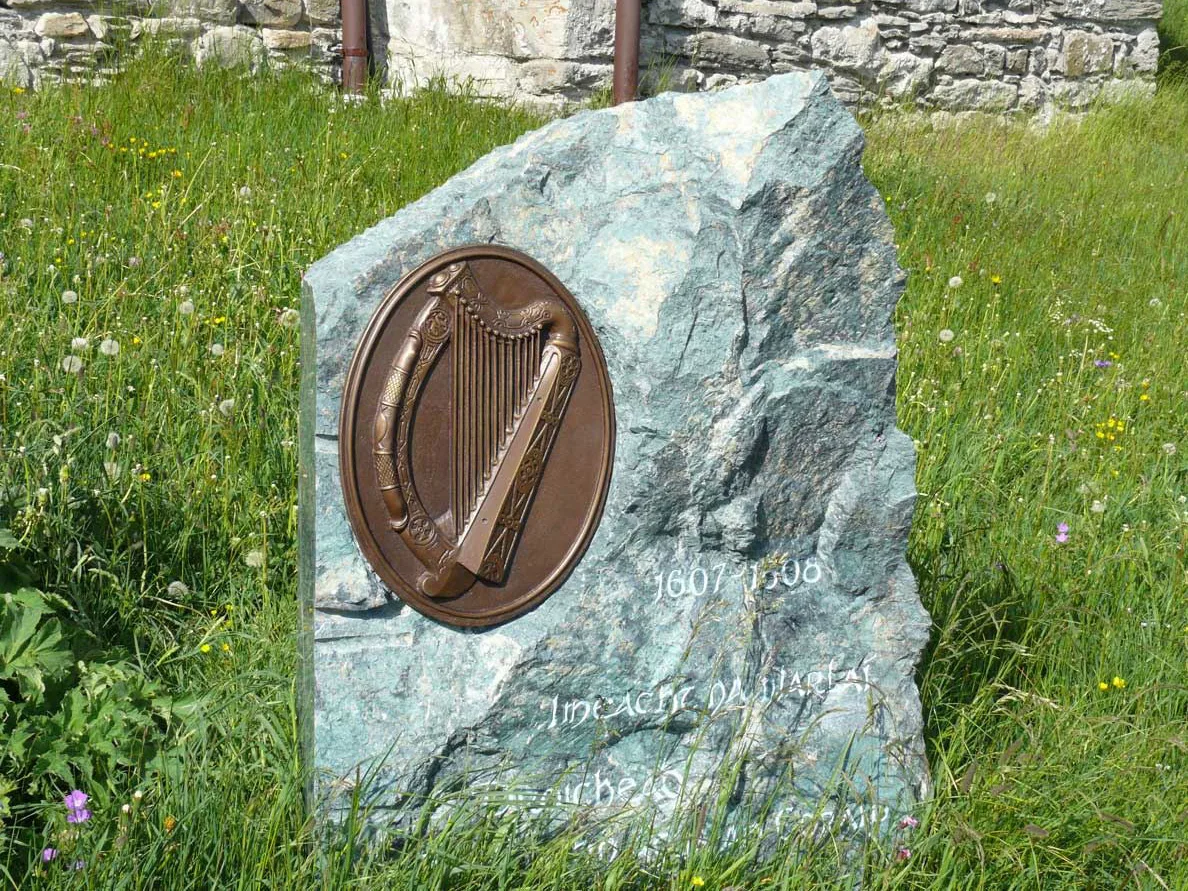
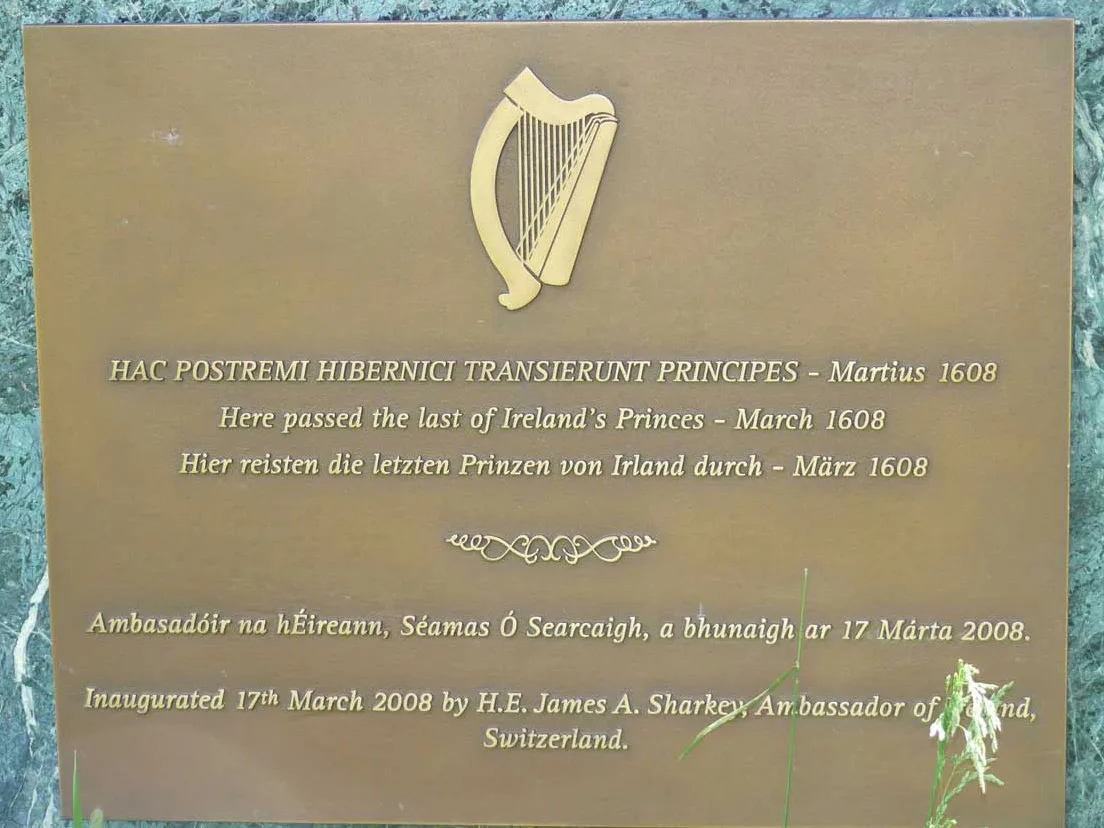
Near the Kolumbankirche in Andermatt, there is a memorial stone in remembrance of the Irish who passed through Switzerland.
Near the Kolumbankirche in Andermatt, there is a memorial stone in remembrance of the Irish who passed through Switzerland. kirchen-online.org
Ó Cianáin concludes his diary entries on Switzerland with a laudatory note, praising the honesty, faithfulness, and martial valor of the Swiss:

"It is said of the people of this country that they are the most-just, honest, and untreacherous in the world, and the most-faithful to their promises. They allow no robbery or murder to be done in their country without punishing it at once. Because of their perfect honour they alone are guards to the Catholic kings and princes of Christendom."

Upon their arrival in Milan, Ó Cianáin and his liege lords learned that they still had not acquired letters of safe conduct from Spain. After several weeks in Lombardy, they moved to Rome, arriving on April 29, 1608. The warm climate brought ill health to the Irish and many perished from malaria: O'Donnell died of a fever three months after his arrival; Ó Cianáin, himself, would die in 1610 of poor health. O’Neill made repeated plans to return to Ireland and retake his lands, but he died before doing so in 1616. The Borghese Pope Paul V begrudgingly granted the surviving Irish nobles meager pensions as they suffered from illnesses and struggled to find adequate lodgings. The Irish exiles continued to petition for Spanish political and material assistance, but it never came.
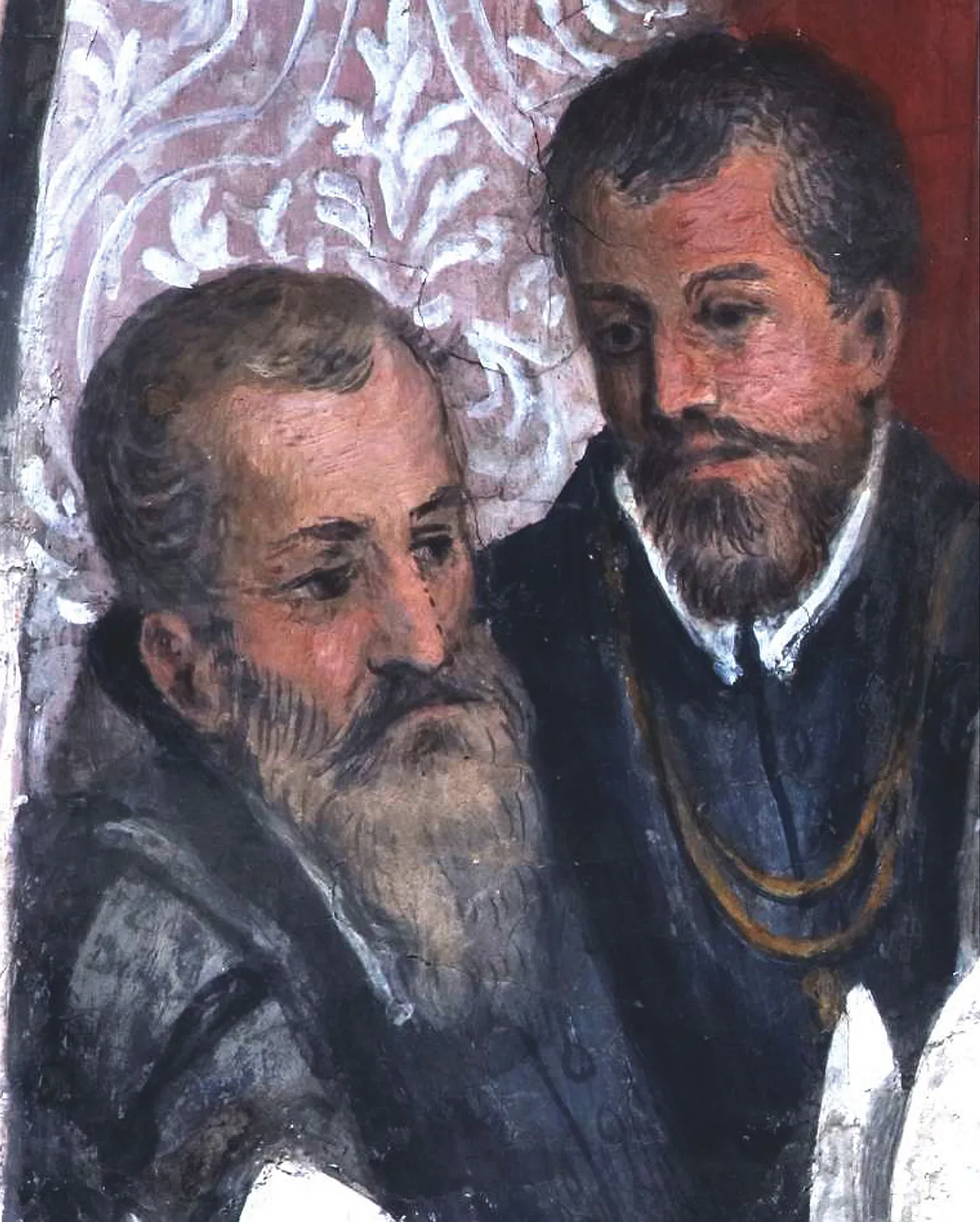
 
Fragment from a Vatican fresco portraying Hugh O'Neill, Earl of Tyrone (left), and Rory O'Donnell, Earl of Tyrconnell (right), painted around 1610 by Giovanni Battista Ricci.
Fragment from a Vatican fresco portraying Hugh O'Neill, Earl of Tyrone (left), and Rory O'Donnell, Earl of Tyrconnell (right), painted around 1610 by Giovanni Battista Ricci. Wikimedia
The exile of the Ulster elites was a pivotal moment in Irish history, marking the end of the old Gaelic order. Their departure reshaped Ireland's social, political, and cultural landscape, the reverberations of which are still felt today. The English confiscated the lands of the absent earls in 1608, and by 1609, Protestant settlers from England and Scotland had begun to occupy them as part of the Plantation of Ulster. This colonial project would sow the seeds of ethnic and sectarian divisions that have persisted in Northern Ireland for centuries.

Ó Cianáin’s diary provides a compelling glimpse into the longstanding relationship between Switzerland and Ireland, highlighting their early modern connections and inviting renewed interest in a friendly, shared past. From 1500 to 1800, continental Europe attracted thousands of Irish students, clerics, soldiers, and merchants—many of whom found their way to Switzerland to study, work, and worship. Their experiences represent a rich historical legacy still waiting to be uncovered and recognized.
Further posts