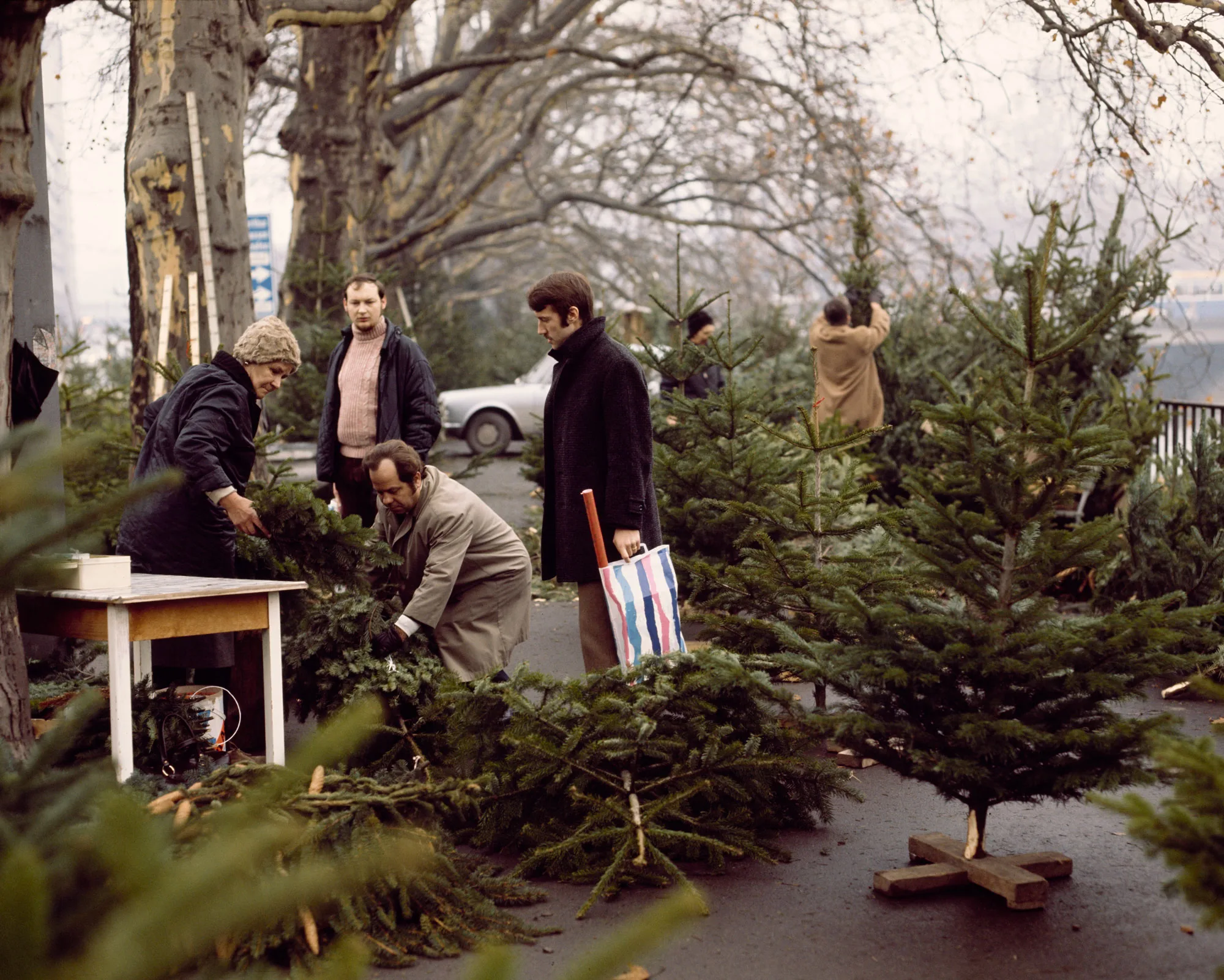
Sale of Christmas trees in Zurich, 1971.
Sale of Christmas trees in Zurich, 1971. ETH-Bibliothek Zürich

O Christmas tree: the history of tree stands

Often unseen, but rich in history: Christmas tree stands show how practical necessity spawned a wealth of innovation – from the wooden cross, to cast iron stands and the clamping technique.

Géraldine Lysser

Géraldine Lysser

Géraldine Lysser studied history and business administration and works in communications at the Swiss National Museum.

Bringing an evergreen tree or branches of it into the home was already a tradition in pre-Christian Europe. However, the tree as a symbol of Christmas dates back to a medieval custom: 24 December is the feast day for Adam and Eve in the liturgical calendar. People marked the occasion in the west of what is now Germany by reenacting their expulsion from Paradise. The tree of paradise – a tree decorated with apples – was put up indoors to represent the Garden of Eden. Near the tree was the Christmas pyramid, a wooden triangular construction with small platforms for Christmas figurines decorated with evergreen branches, candles and a star. In the 16th century, the Christmas pyramid and tree of paradise merged into the Christmas tree.

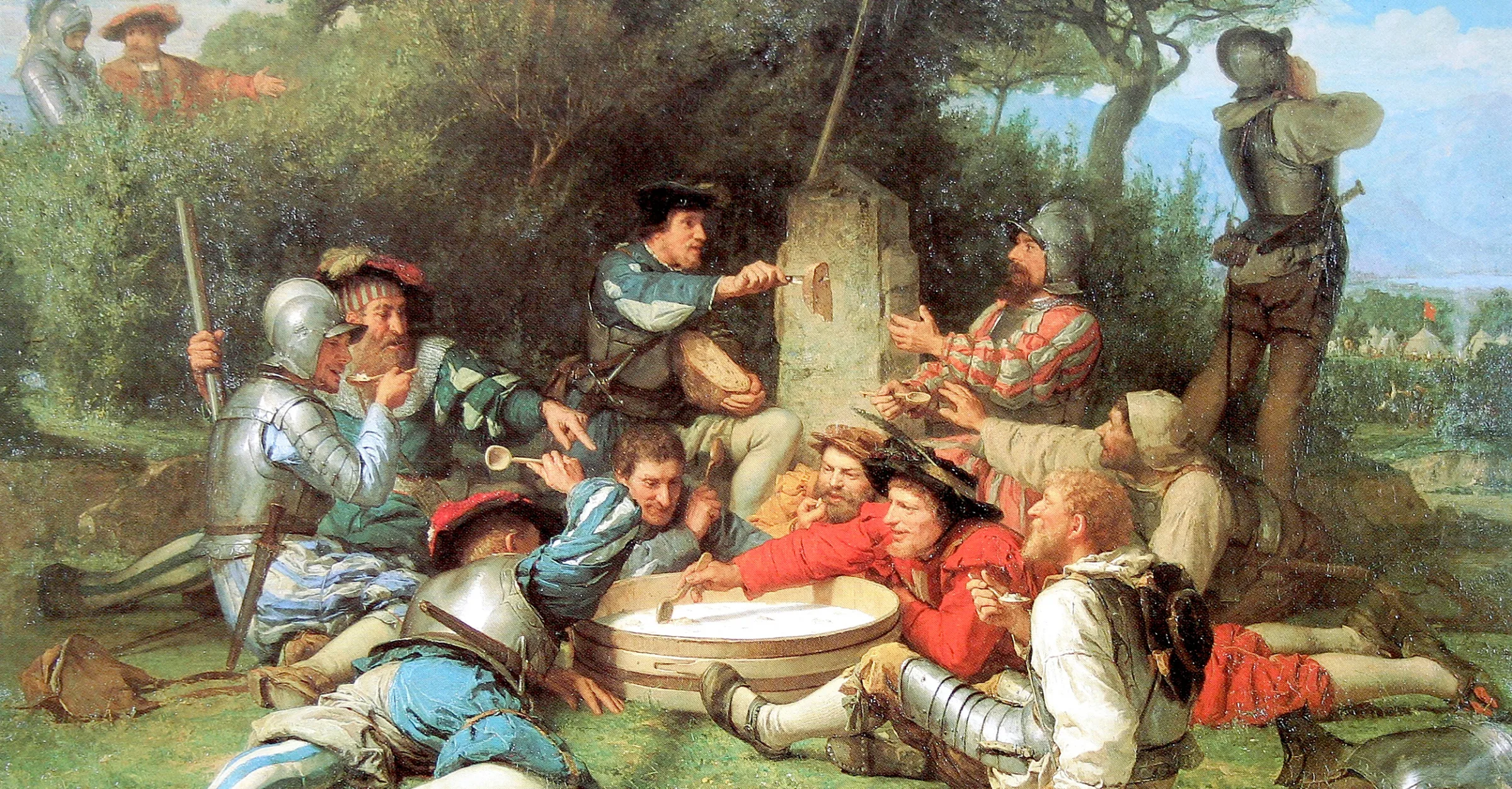
The first written accounts of Christmas trees date from the 15th and 16th centuries in what is now southern Germany, Alsace and the Baltic countries. Around 1600, journeyman tailors in Basel carried green trees through the streets at Christmas time. They decorated the trees at home with apples and cheese. These treats were then taken from the tree and eaten.

The Christmas tree was already widespread in Lutheran Germany by the 18th century. The custom spread throughout German-speaking Switzerland in the 19th century, having again started in the Protestant parts of the country. The decorated tree gained broad acceptance in Catholic areas after the war as an addition to the crib.
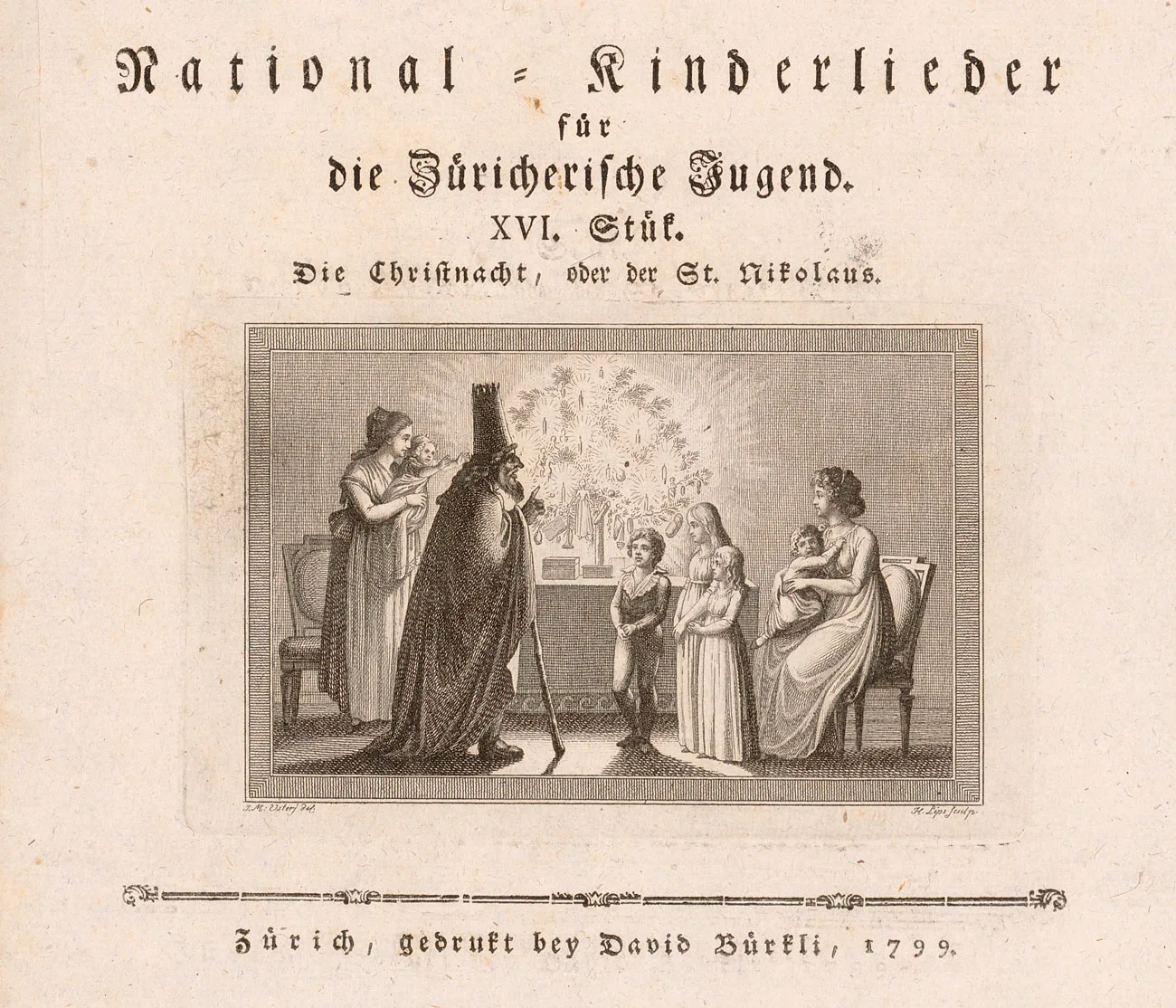
A print from national children’s songs for Zurich’s children with a decorated tree in the background, 1799.
A print from national children’s songs for Zurich’s children with a decorated tree in the background, 1799. Zentralbibliothek Zürich
In the beginning, the Christmas tree was mainly displayed in churches, schools and vicarages. Otherwise, it was usually only the wealthy who had one in the house as not everyone could afford a fir tree, let alone the decorations, candles etc. used for decoration. That changed gradually with the invention of stearin and paraffin candles and the industrial production of glass baubles.

How do you set up a Christmas tree?

As the tradition grew, a new challenge arose: how to put up the Christmas tree in the home? In some places – mainly eastern Europe – the solution was to attach the Christmas tree to the ceiling. It was also probably just propped up against a wall in some places.

The first mention of an actual tree stand was most likely a handwritten message dating from 1604: “We are working on putting a square base together […]”, which was probably a reference to a wooden board with a hole in the middle. Such simple wooden constructions were common in those days: a hole was drilled in the middle of boards or blocks in which to put the trunk of the tree. Large fodder beets with a hole in the middle could also be used as Christmas tree stands.
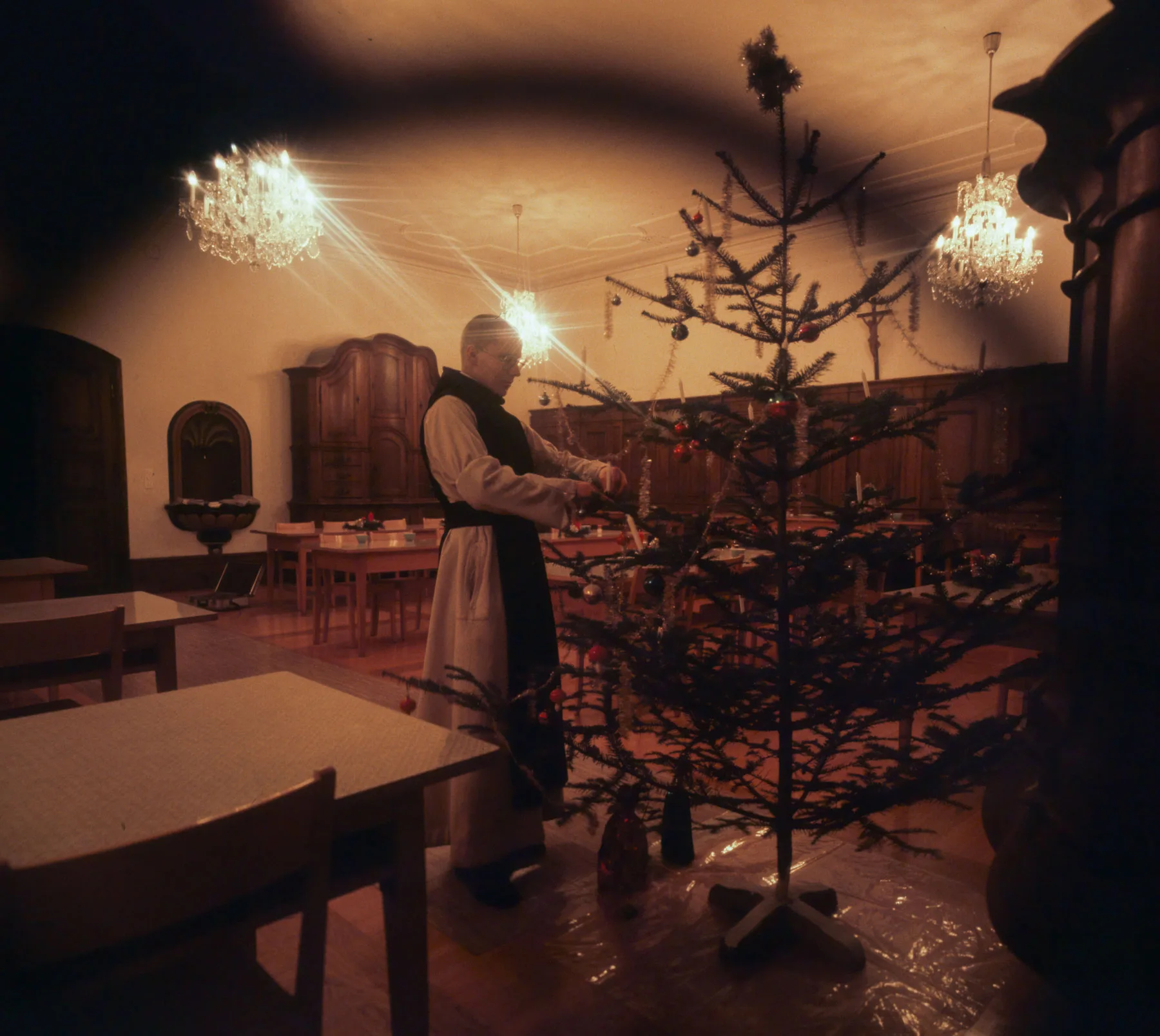
A monk decorating a Christmas tree in Hauterive monastery (FR), 1977.
A monk decorating a Christmas tree in Hauterive monastery (FR), 1977. ETH-Bibliothek Zürich
Some wooden stands were made to resemble a little garden: a square wooden base with a hole in the middle surrounded by a fence and usually some moss or straw for extra effect. Wooden animals and nativity figurines were also sometimes added to it.
 
Metal stands soon became a fixture among more affluent folk. Their weight made them more stable and they could be adapted to different trunk sizes with screws. A patent was filed for a cast iron stand in 1860. It was first produced in 1866 by a German company called Rödinghausen. Many cast iron stands were produced over the ensuing decades, and their design was adapted to suit different tastes.
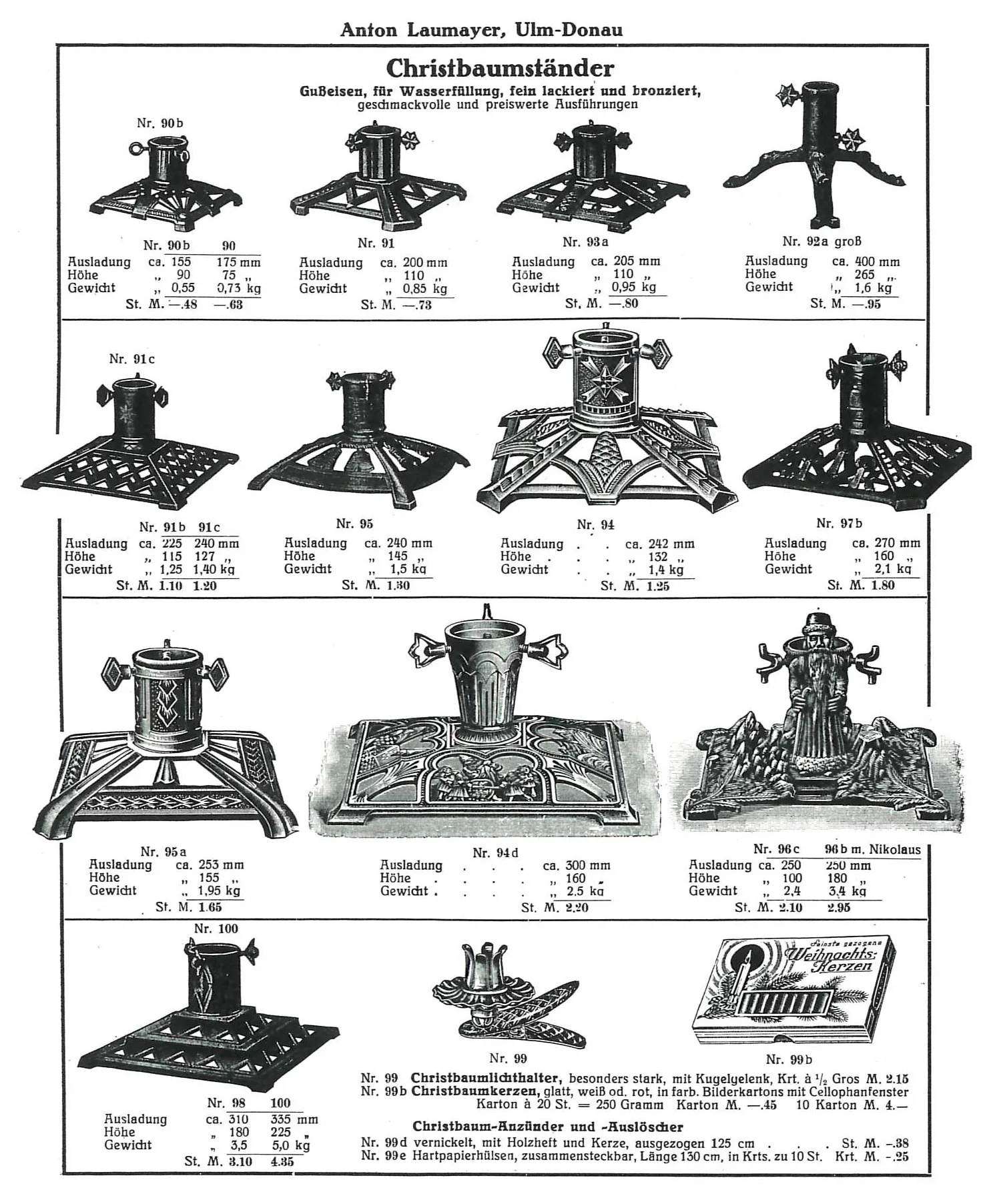
Cast iron tree stands in a catalogue for a German ironmonger in 1937.
Cast iron tree stands in a catalogue for a German ironmonger in 1937. From: Magdalene Hanke-Basfeld: “Christbaumständer. Kleine Kulturgeschichte” (a cultural history of Christmas tree stands)
Some stands incorporated ball bearings as a rotating mechanism. The idea being to make it easier to light the candles. The priciest stands even had a winding mechanism whereby the tree would turn while a music box played.
Christmas tree stands with a mechanical mechanism, which turns the tree while playing music. Youtube / Museum für Musikautomaten
These stands did not come cheap. The standard metal models were also the preserve of the more affluent classes. A cast iron stand cost the equivalent of 12 kilograms of bread in 1890. Wooden crosses, on the other hand, were cheaper, which ensured their lasting popularity into the 20th century.

New solutions for old problems

A host of patent applications testifies to the innovation surge initiated by the Christmas tree. Hinged and demountable stands were designed, which could be stored without occupying much space. Other inventors thought about alternative uses for the stands throughout the year, for example as a spittoon, piano stool or table for children.

Some stands also came with a water container to keep the tree looking fresh and avoid it shedding needles. They caught on after the Second World War and were usually made of glass, ceramic or plastic, which made them cheaper and easier to handle than cast iron models.

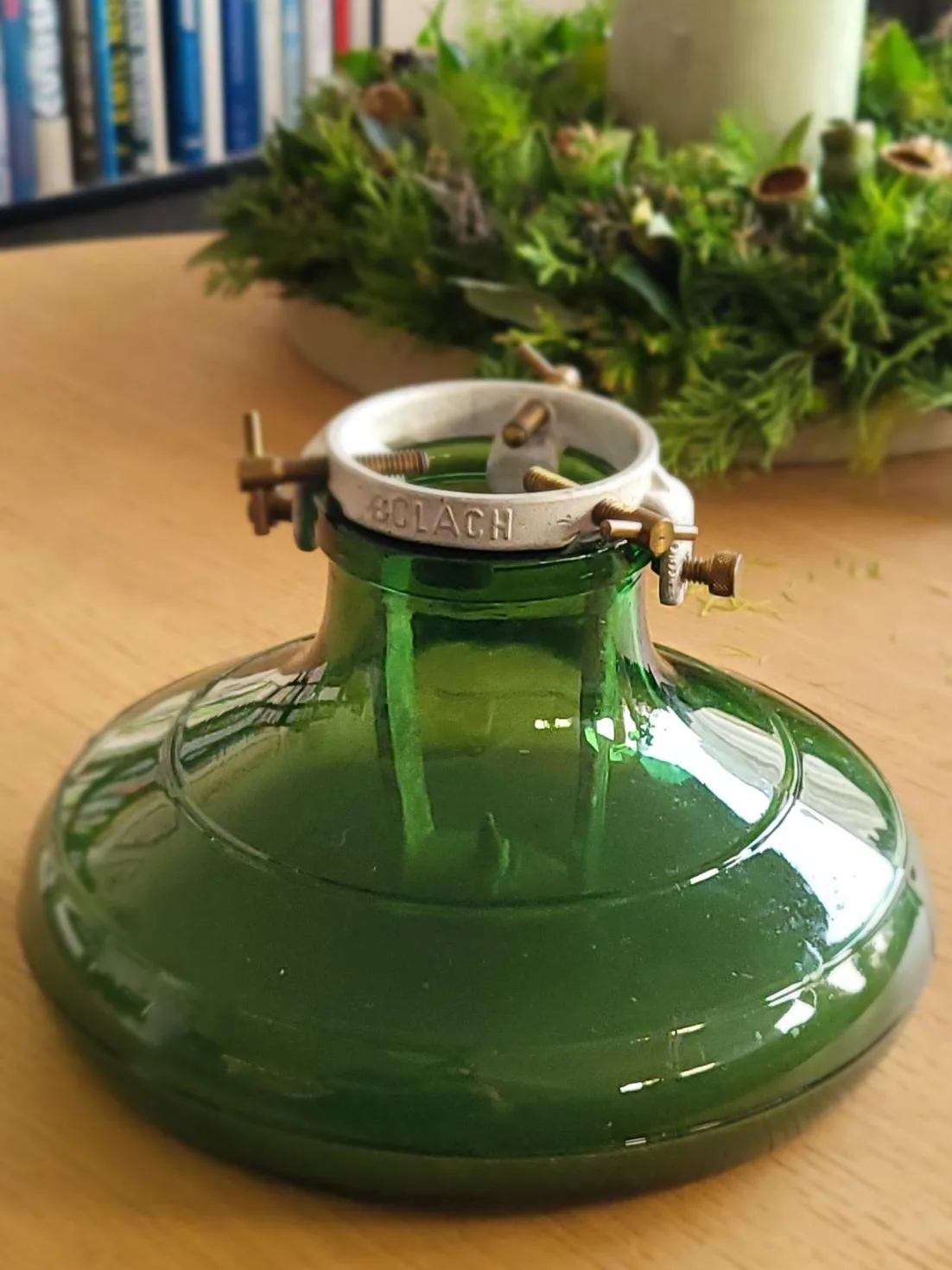
The Glashütte Bülach model proved particularly popular in Switzerland. The glass was made with quartz sand with a high iron content, giving the glass its characteristic green hue. The stand was patented in 1939 and advertised in many magazines.
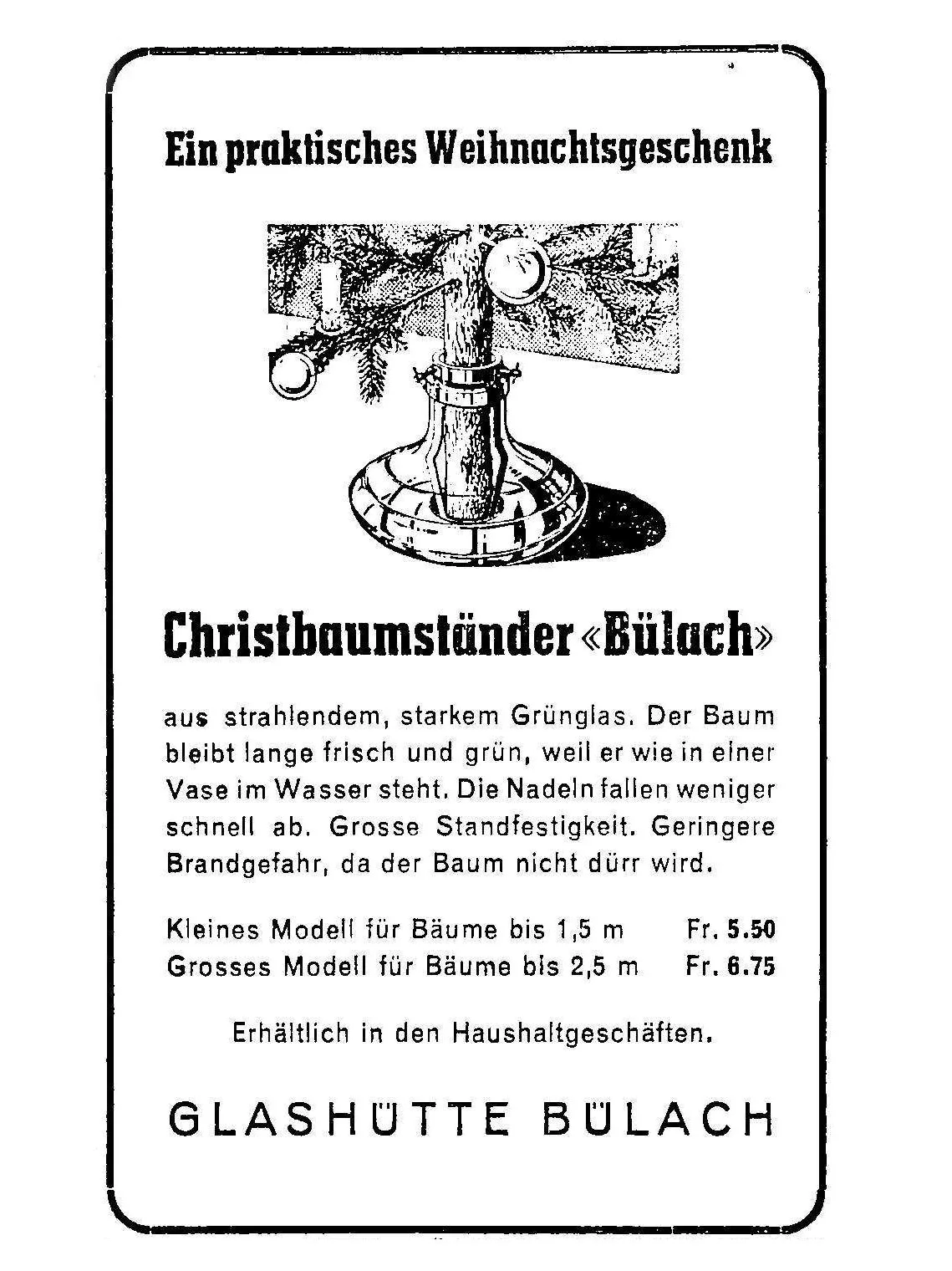
Advert for the green Christmas tree stands from 1950.
The green Christmas stand "Bülach".
Advert for the green Christmas tree stands from 1950. e-newspaperarchives / Photo: Alexander Rechsteiner
One thing the different stands had in common was that they used one or more screws to secure the tree. This made it rather laborious to fix the trunk, which often needed to be sawed, although sawing was rarely enough to fully straighten the tree. If one screw was applied to the left, the tree would incline to the right and vice versa.

A company called Krinner decided to do something about it. The company’s founder Klaus Krinner developed a stand with a clamping mechanism in 1989. This was the first time a stand could be adapted to fit the trunk regardless of its incline. Now over 90 per cent of all stands in the market use the clamping mechanism.
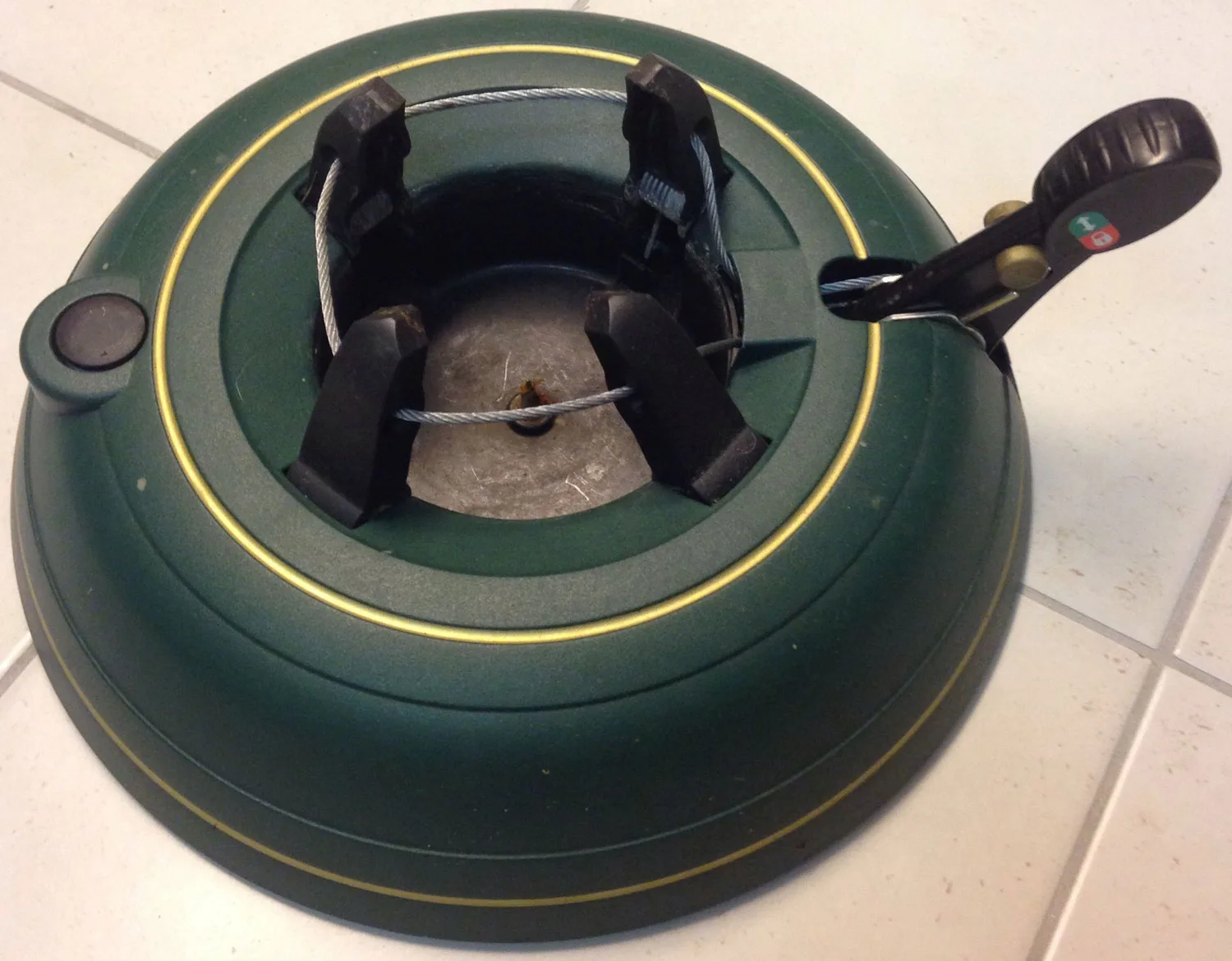
Models employing the clamping mechanism are now the most popular.
Models employing the clamping mechanism are now the most popular. Wikimedia
Although the Christmas tree stand is at most a peripheral feature of Christmas, it still prompted a wave of innovation. The clamping technique seems to have halted this development, at least for now. Maybe it will leave more time for what Christmas is really about: light, good company and contemplation.

Further posts