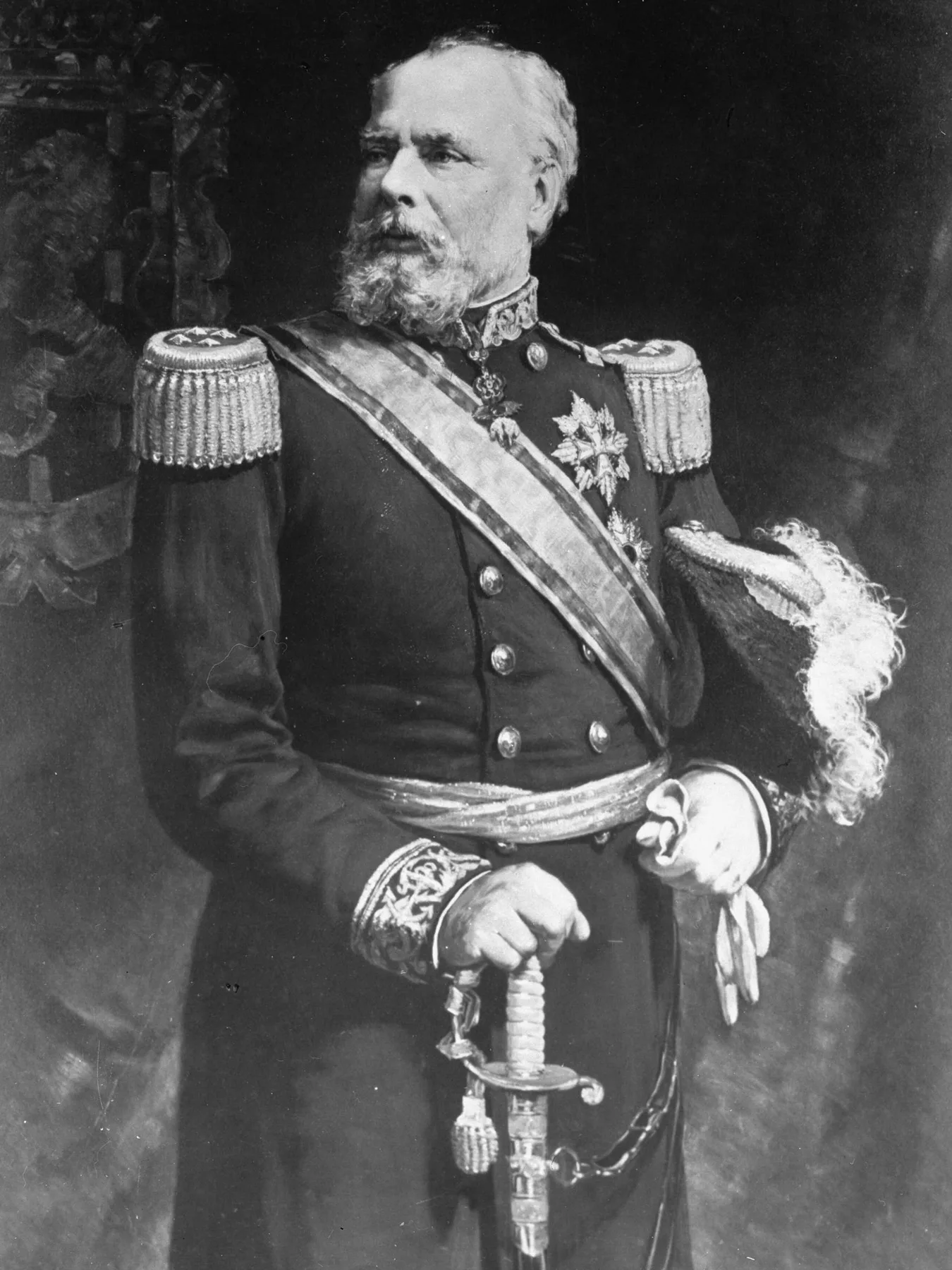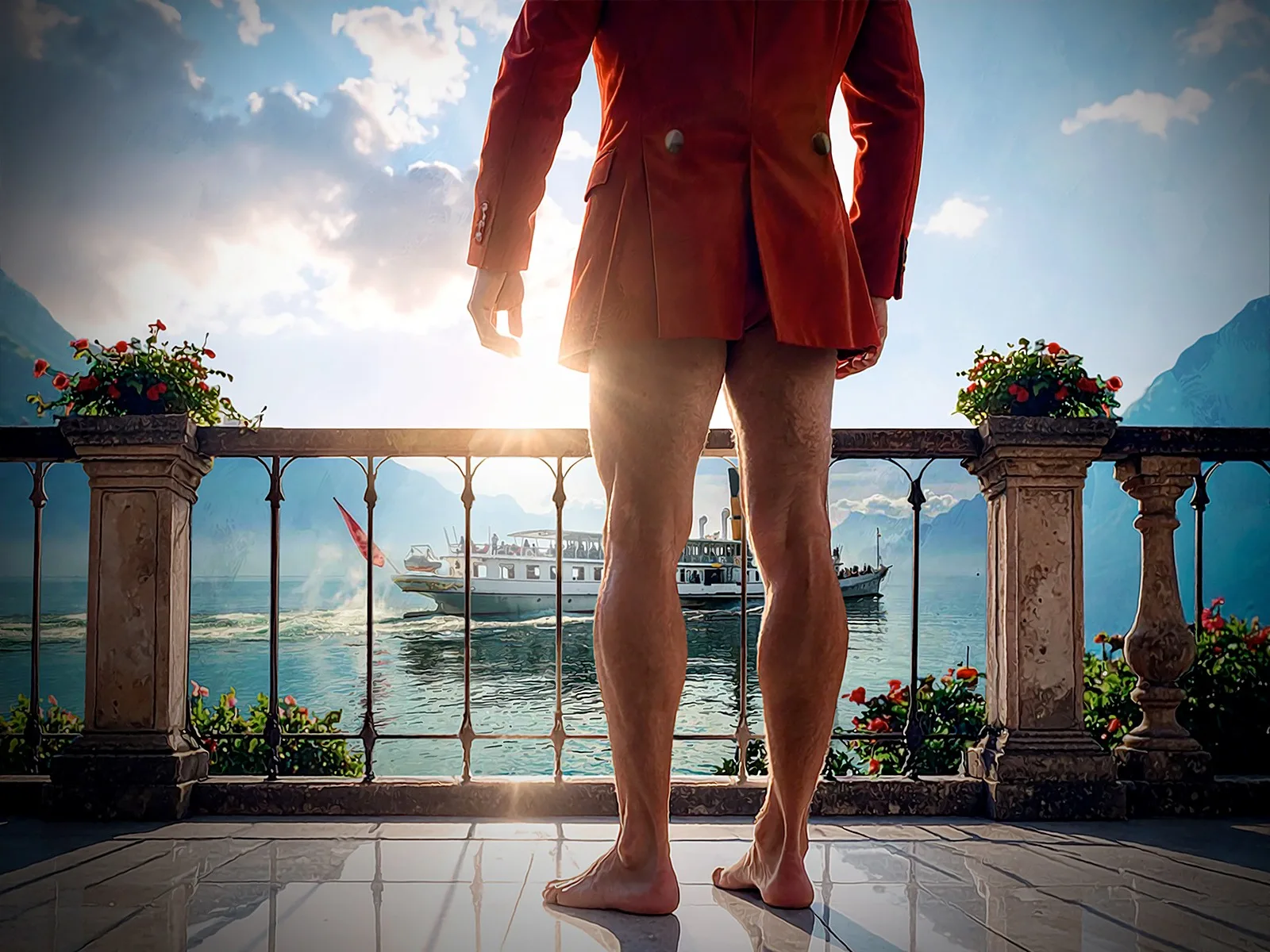
Did King Willem III really appear on the balcony like this? Illustration by Marco Heer.

A royal exhibitionist

Dutch king Willem III came to Switzerland on several occasions. But one particular sojourn by Lake Geneva in 1875 led to uproar when the king repeatedly exposed himself in public.

Géraldine Lysser

Géraldine Lysser

Géraldine Lysser studied history and business administration and works in communications at the Swiss National Museum.
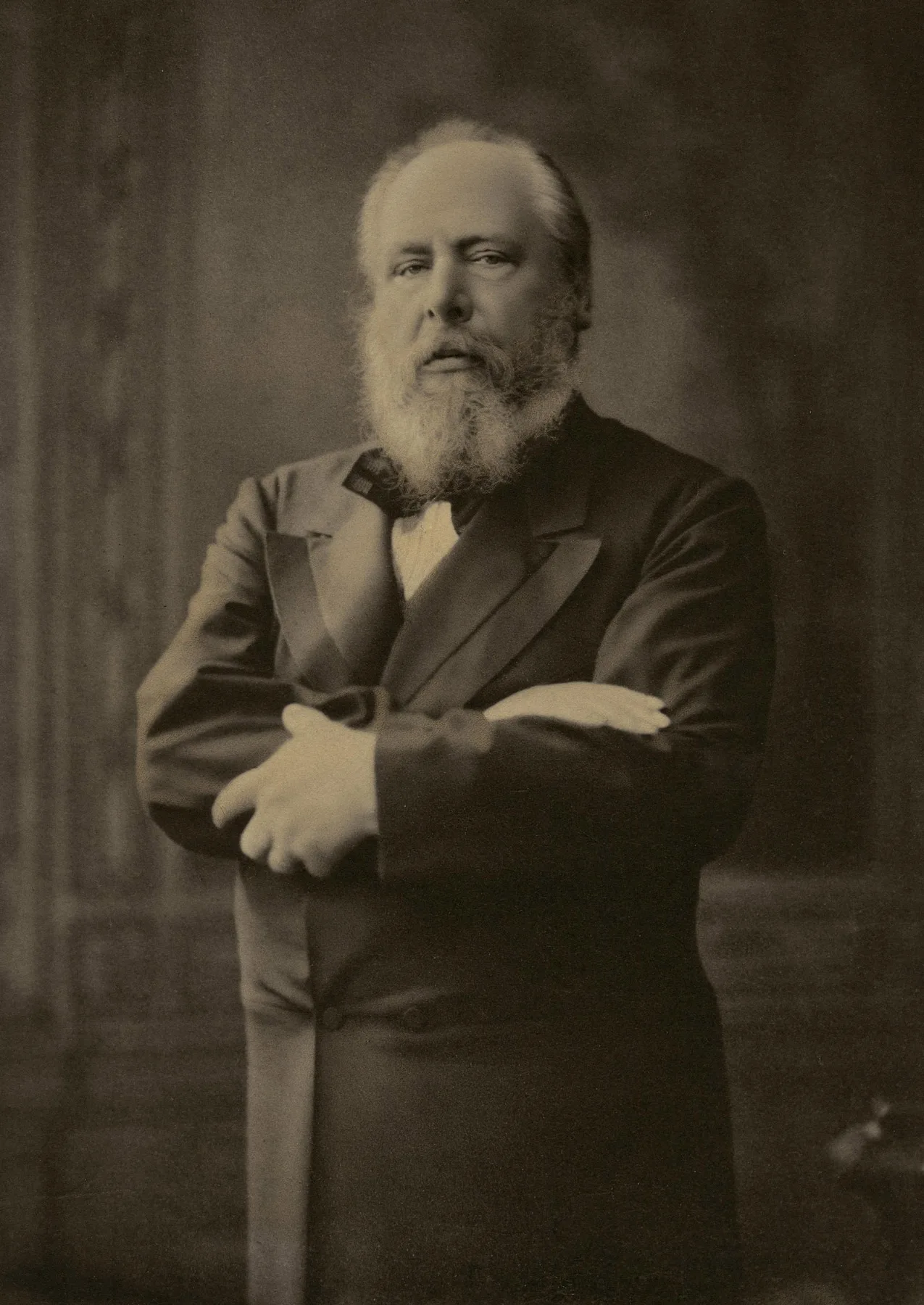
From 1868, King Willem III made regular visits to Switzerland, travelling incognito under the name of Graf von Büren. But the healthy mountain air, pristine water and stunning views were not the only attractions that enticed him: he also came to Switzerland to spend time with his mistress.
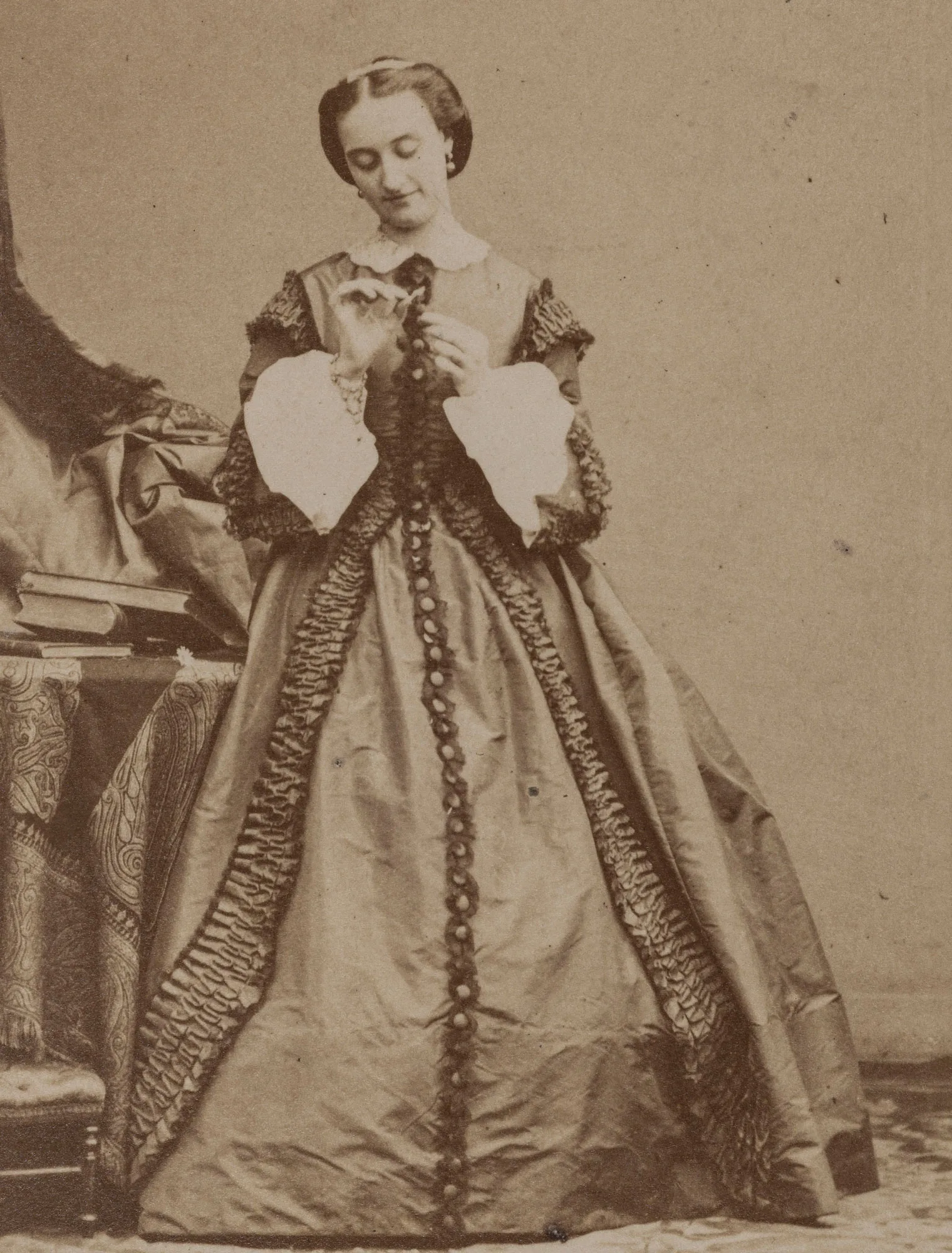
American viola player Eliza Parker, also known as Madame Musard, was Willem’s favourite for many years. They travelled together to Thun in 1868.
American viola player Eliza Parker, also known as Madame Musard, was Willem’s favourite for many years. They travelled together to Thun in 1868. Royal Collections of the Netherlands / Paris Musées
He intended to spend the summer of 1875 at Lake Geneva, where he had taken out a five-year lease on the Villa Richelieu, situated between Clarens and Vernex. In addition to the main villa with its 15 fully furnished rooms, the property boasted a smaller second building and a garden. But, as if that were not enough, the lease stipulated that the owner, Henri Mayor, was also to install a facility for storing wine for the royal tenant. We can only speculate as to whether this had any influence on the events that subsequently unfolded.

Scenes on the balcony and swimming in the nude

The first rumours about the king’s behaviour began circulating just a few weeks after his arrival that June. He was spotted more than once standing on the villa’s balcony, opening his dressing gown to flaunt his private parts in front of the passengers on passing boats and ships.

A Parisian press agency soon got wind of the story, and its report was syndicated in various newspapers at home and abroad. It claimed that the king had got into trouble with the law over a matter “of common decency and dress”. The king, however, apparently felt that he was not obliged to take passing paddle steamers or trains into consideration when in the privacy of his own residence. Dutch newspaper Asmodée put it even more bluntly: “Graf von Büren appears to have made a habit of bathing daily in Lake Geneva [...] in his birthday suit. Indeed, it is said that he then spends some time on the terrace of his villa in that same state of undress, much to the annoyance of passers-by […].”
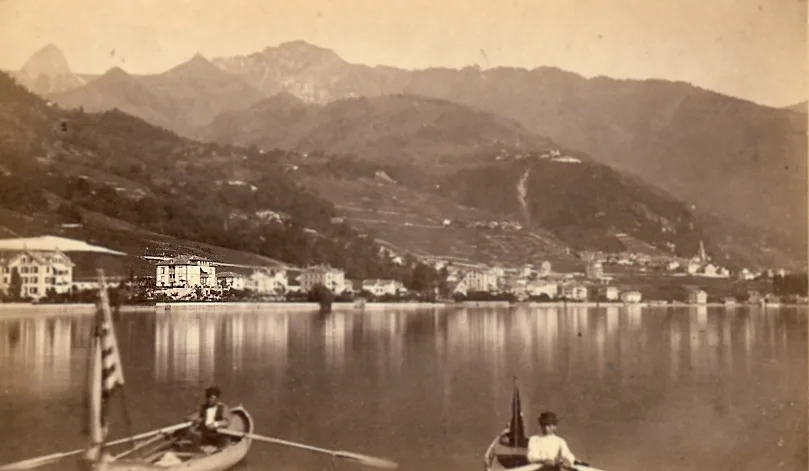
The king had rented Villa Richelieu (second building from left) for five years.
The king had rented Villa Richelieu (second building from left) for five years. Mayor family
Confirmation that these were more than mere rumours came when the diaries of the erstwhile minister of war, August Willem Philip Weitzel, were published at a later date: “The room occupied by the king looked out onto Lake Geneva; paddle steamers sailed by each day […]. As they passed, it was said that someone on said balcony repeatedly showed themselves, wearing nothing more about their body than a frock coat that was nowhere near sufficiently buttoned.” The minutes kept by the local town council also noted that several complaints had been lodged and that the authorities had written to Graf von Büren to remind him of the police regulations and rules of decency.

Willem III attempted to persuade the authorities that as a monarch he stood above the law – but the fact that he was travelling incognito proved to be his undoing. The authorities insisted on viewing him as a Graf, or count, and so the matter was referred to the Cantonal Council of Vaud. Records from the Archives cantonales vaudoises and the Swiss Federal Archives indicate that the Federal Council and Dutch government also became involved. At first, the king wanted to ditch his assumed name to ensure he would be treated with the honour and respect befitting his station as a royal. The Dutch ambassador pointed out that doing so would raise some delicate questions. One day later, the Federal Council received official word from the Netherlands that the king would be retaining his alias after all.

The affair ultimately fizzled out. At the end of the day, there was nothing to be gained by either side. Moreover, none of the parties involved wished to jeopardise the trade agreement between the Netherlands and Switzerland that was signed in August that year.
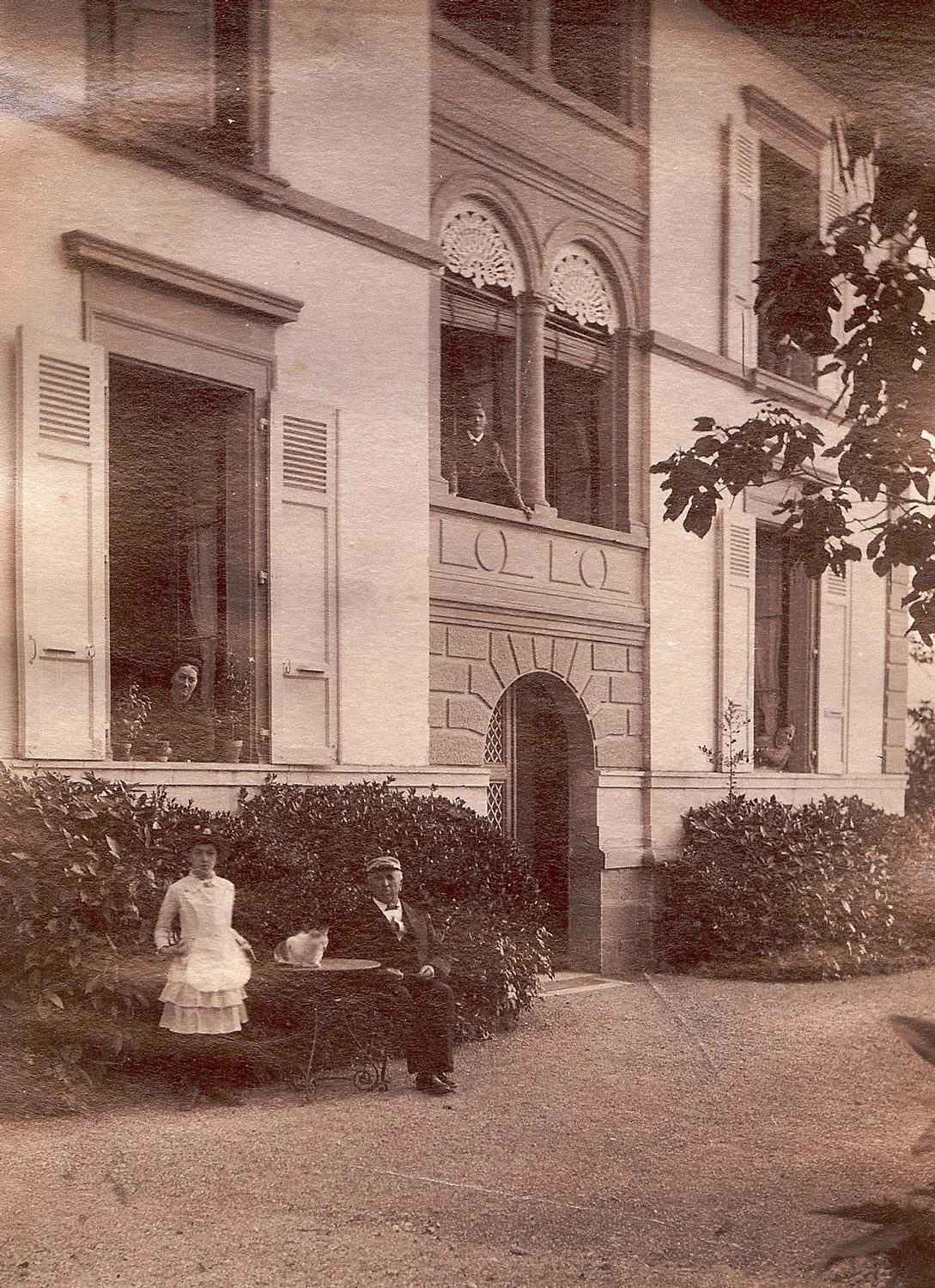
Photo of the Villa Richelieu taken in 1885. The Hotel Royal Plaza now stands on the same spot.
Photo of the Villa Richelieu taken in 1885. The Hotel Royal Plaza now stands on the same spot. Mayor family

King Gorilla

The Lake Geneva affair was not uncharacteristic of Willem III. The monarch, who had a sadistic streak, led a miserable marriage with his first wife and was impulsive. The chairman of the Council of Ministers, the de facto prime minister of the Netherlands, always had two pens to hand whenever the king was required to sign any documents: the monarch would throw the first one irately across the room and use the second one for signing after regaining his composure. In anti-monarchist circles, his volatile nature earned him the nickname ‘King Gorilla’.

The Swiss authorities had also raised the king’s hackles, as became apparent on his return to the Netherlands. During a meeting with the minister of the navy, who had just returned from a war in the colonies, he announced his intention to march into Switzerland the following spring with several hundred marines and artillery. He had been treated “un peu trop familièrement” ‒ a little too familiarly ‒ there, and he meant to change that during his next trip. The minister, recognising that this would be tantamount to a declaration of war, recommended returning to the topic at a later date. The king never mentioned the idea again.
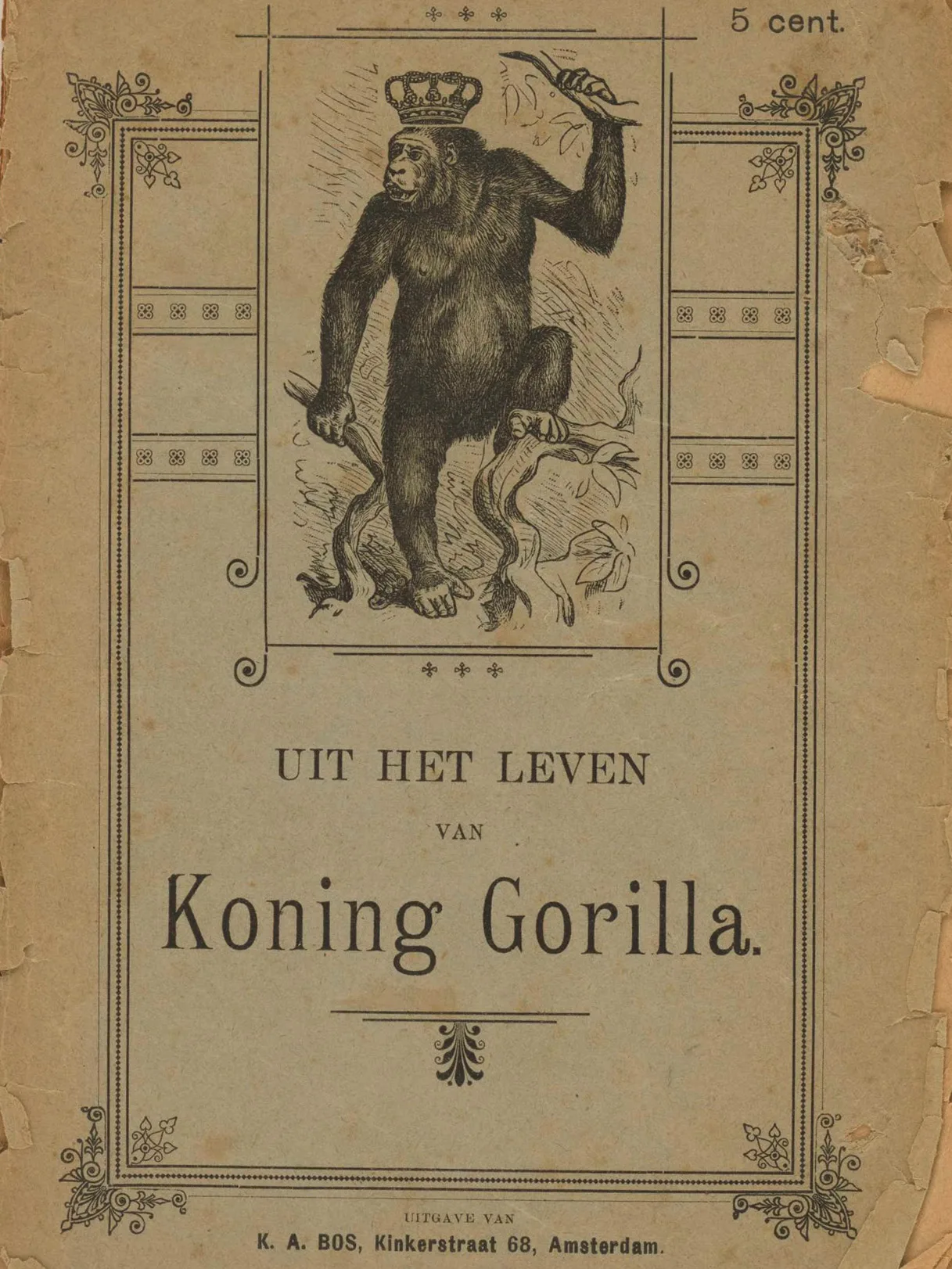
‘From the Life of King Gorilla’ made a wider public aware of the king’s exhibitionist tendencies.
‘From the Life of King Gorilla’ made a wider public aware of the king’s exhibitionist tendencies. Wikimedia / Dutch National Archives
Willem’s popularity reached a nadir in 1887 with the publication of a pamphlet entitled From the Life of King Gorilla, which coincided with his 70th birthday. Penned and published in socialist circles, the pamphlet reminded readers, among other things, of his exhibitionist exploits. One of the co-authors, Sicco Roorda van Eysinga, lived in the Lake Geneva area and is likely to have learned about the king’s escapades at first hand.

In C[larens], at the Hotel R[ichelieu], he paraded in the garden as naked as the day he was born while ladies passed by. An American who was also staying there with his wife and daughters threatened to give him a beating if he didn’t dress properly and reported his conduct to the police as ‘an offence to common decency’.

Extract from 'From the Life of King Gorilla'

Piles of shattered porcelain

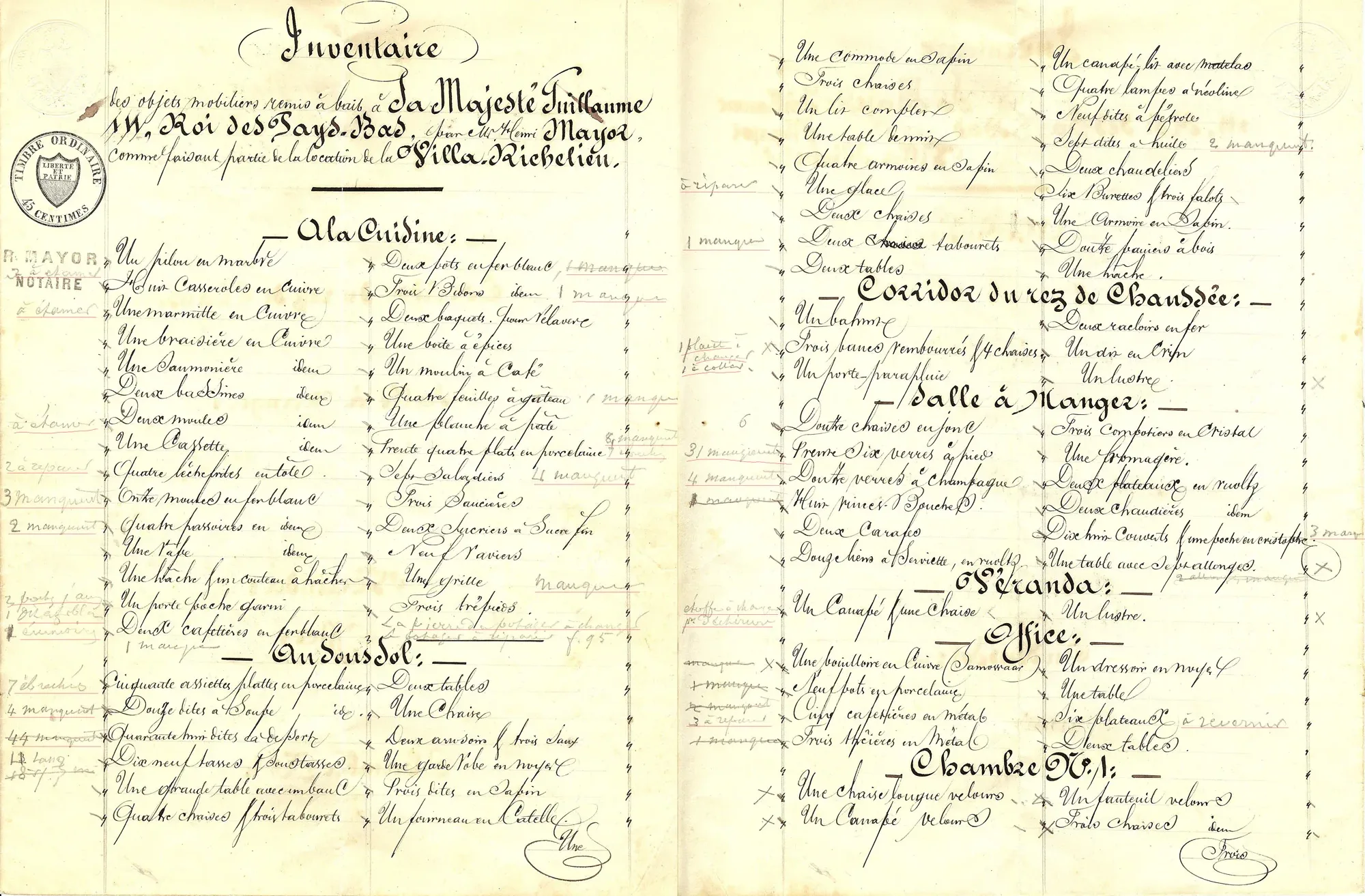
Although Willem III had rented the Villa Richelieu for five years, the lease was terminated prematurely. The villa’s owner had received numerous complaints about the noise, including the sound of breaking glass and tables being knocked over. A subsequent inventory of the property revealed the extent of the damage: large parts of the furniture had either been damaged or destroyed or had gone completely missing. Three of the six iron garden tables, for example, had disappeared – and were probably resting at the bottom of Lake Geneva – and only five of the original thirty-six wine glasses remained.
Extract from the inventory, giving some idea of the extent of the damage. The red underlining indicates damaged or missing items.
Extract from the inventory, giving some idea of the extent of the damage. The red underlining indicates damaged or missing items. Mayor family
When his lease was cancelled, King Willem III reluctantly made way for the next notable personage to reside at the Villa Richelieu. Pyotr Ilyich Tchaikovsky stayed there on three occasions, the first in 1877. This was where he composed his violin concerto and parts of his opera Eugene Onegin. Instead of breaking glass, the sound of music now reverberated around the villa.

Further posts