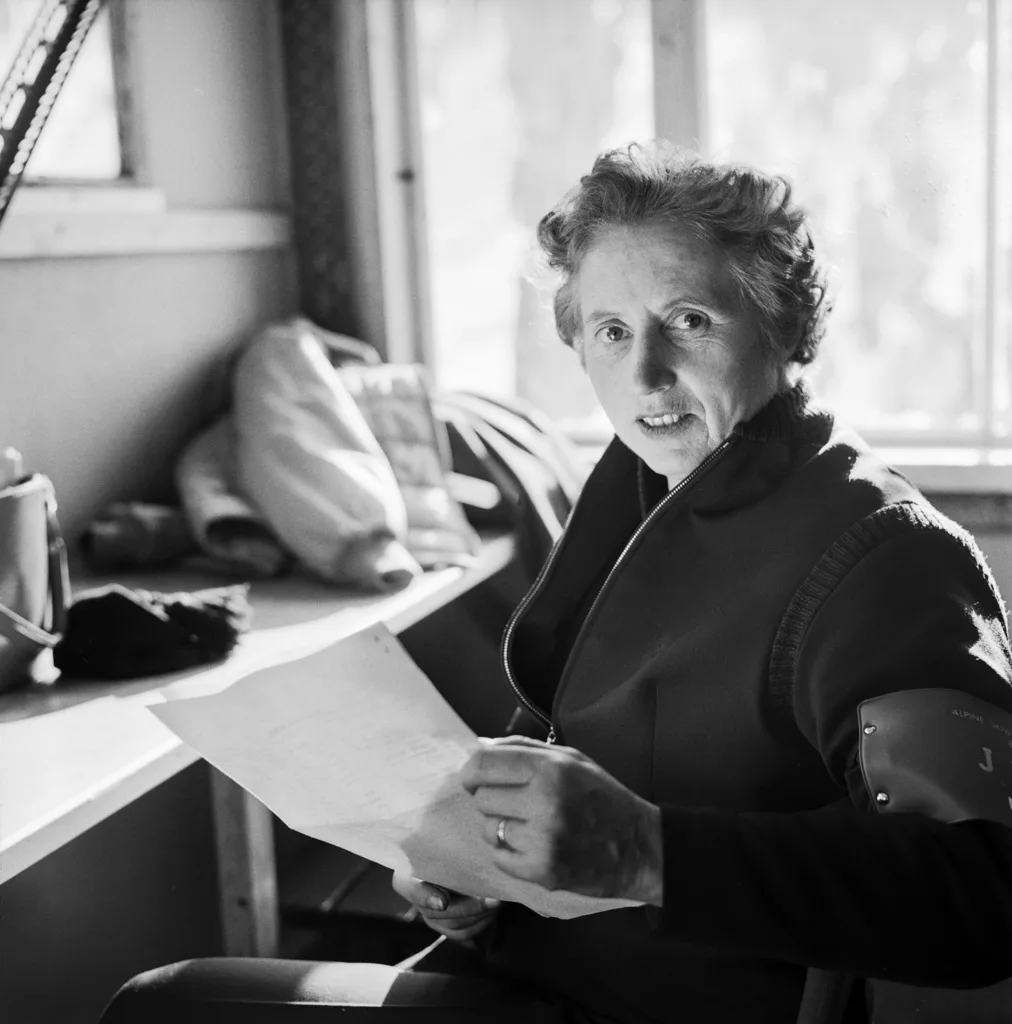
Elsa Roth in her role as secretary general of the Swiss Ski Association in Bern, 19 June 1965.
Elsa Roth in her role as secretary general of the Swiss Ski Association in Bern, 19 June 1965. Keystone/Photopress, photo: Joe Widmer

A woman at the very top of Swiss skiing

Elsa Roth from Bern was a ski racer, ski instructor and winter sports official. She co-founded the Swiss women’s ski club and helped run the Swiss national skiing association for almost 35 years from 1939. Today, very few people have heard of Roth.

Nils Widmer

Nils Widmer

Nils Widmer is a historian and a research associate at Swiss Sports History, and is doing his doctorate at the University of Lucerne.
Elsa Roth was born into a middle class family in Bern on 15 February 1906, the youngest of five siblings. Her father ran a restaurant and her mother is described in documents as a ‘privatière’ (a woman of independent means). After her father’s early death, Elsa Roth grew up in Bern with her mother and stepfather Hans Dinkelmann, who was a member of the National Council representing the ‘Radicals’ (now FDP) and later a member of the executive board of the Swiss Federal Railways. Roth attended secondary school in Bern, completing a course at the city’s school for girls in child rearing and household management. Aged 17, she travelled to England for a year to improve her language skills.
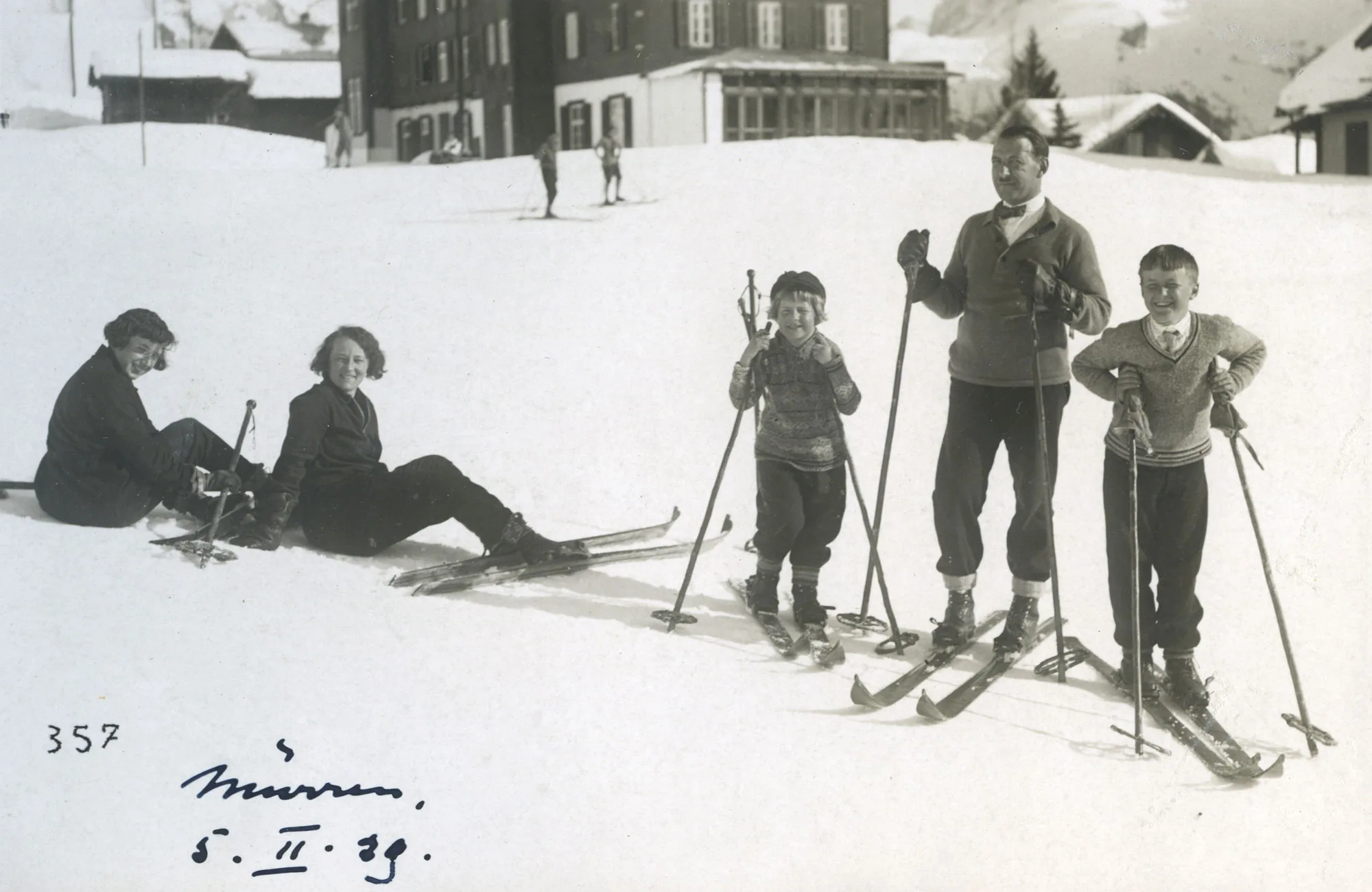
Elsa Roth (on the left) skiing with her family in Mürren in 1929. Also pictured: her nephew and long-standing FIS President Marc Hodler (on the right).
Elsa Roth (on the left) skiing with her family in Mürren in 1929. Also pictured: her nephew and long-standing FIS President Marc Hodler (on the right). FOSPO
Elsa Roth first came into contact with skiing through her sister Gertrud, 15 years her senior, with whom she had a close relationship. Gertrud and her husband Armin Hodler, a well-known lawyer and industry representative from Bern, owned a chalet in Mürren in the Bernese Oberland. From around the mid-1920s, the couple regularly took Elsa along with them to what was one of the major winter sports resorts at the time. On Mürren’s slopes and in the local hotels and tea rooms, Elsa Roth forged connections with an international network in the developing field of alpine skiing, and one which was evidently open to female skiers.

A Swiss women’s ski club

Within this male-dominated milieu, Roth also got to know female ski enthusiasts. In the mid-1920s, she was approached on Mürren’s local mountain, the Allmendhubel, by female skiers from the British Ladies’ Ski Club (LSC), asking her to put together a Swiss team for a duel between the two countries. The LSC had been founded in 1923 in Mürren, where wealthy spa guests from Britain regularly spent their winter holidays skiing. While Roth’s initial search for sufficiently skilled female skiers was unsuccessful, the following season she teamed up with the ski club in Mürren and managed to find enough motivated Swiss female skiers. But the Brits were clearly superior. After the Swiss team were defeated a second time, in January 1929, around a dozen female skiers joined Roth and her sister in setting up the Swiss Women’s Ski Club (SDS).
 
The founding members were from the urban middle and upper classes and from hotelier families in mountain regions. Their aim was to organise and promote women’s participation in Swiss skiing. Despite a few critical male voices, the SDS was soon integrated into the Swiss Ski Association (SSV, now Swiss Ski). The SDS board, principally President Gertrud Hodler and Secretary Elsa Roth, organised lessons, touring weeks and races, in which Roth herself frequently participated in the early days. The SDS also campaigned for the training of female ski instructors. Roth acquired her official cantonal ski instructor’s licence in
Bern in 1931.
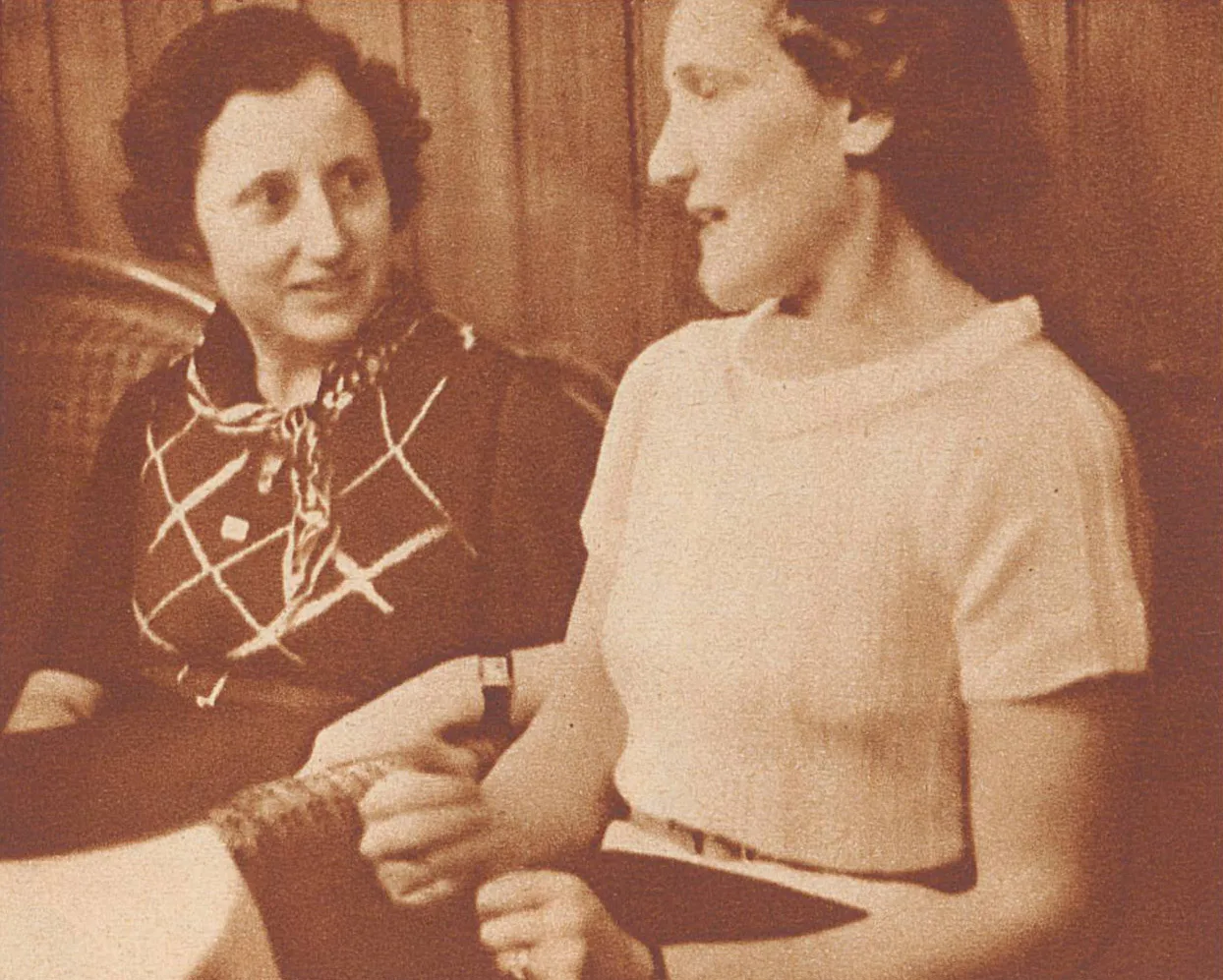
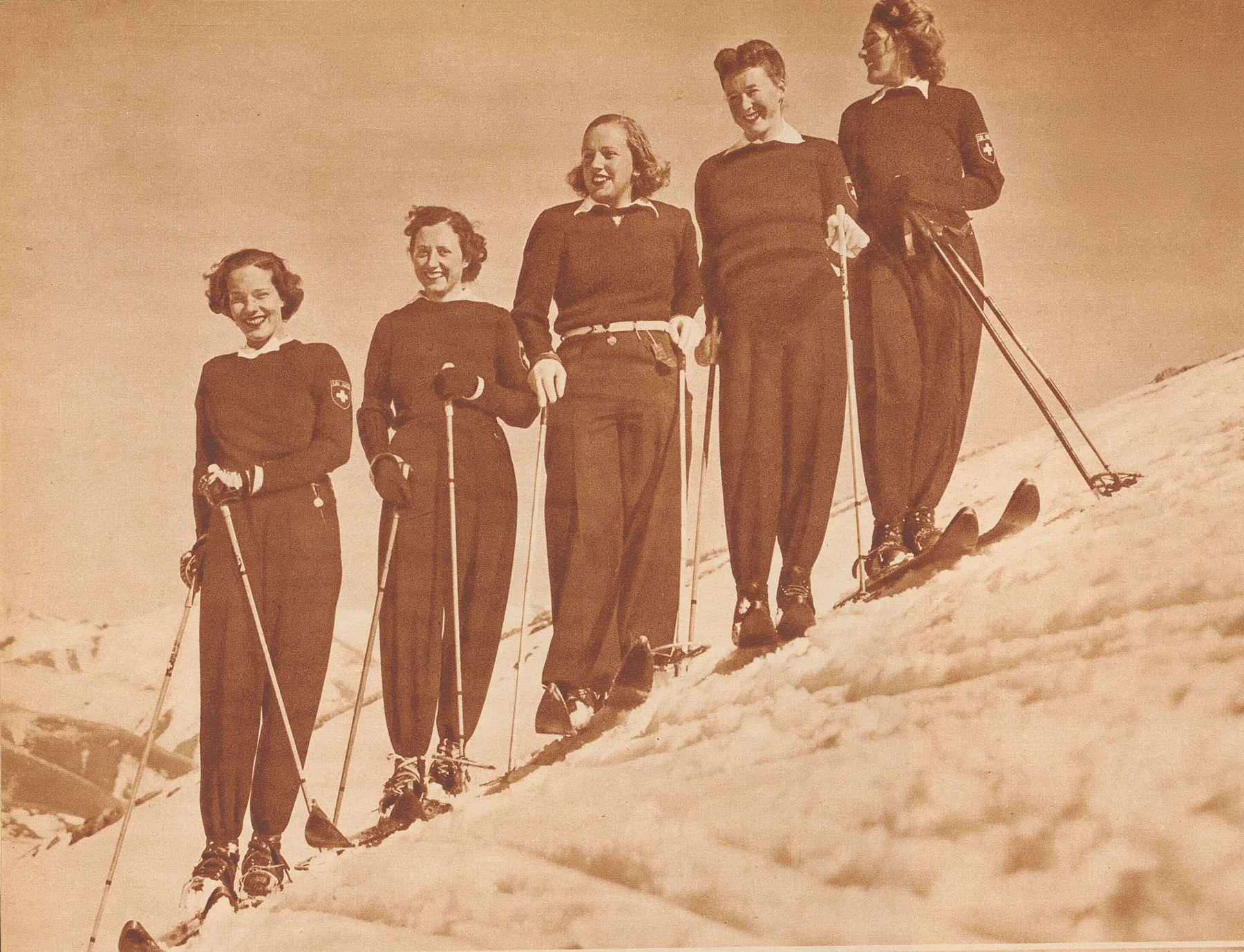
From 1932 onwards, the SDS organised international races in Grindelwald that were exclusively for women. Elsa Roth was one of the organisers featured in a report in the Zürcher Illustrierte magazine in 1937.
From 1932 onwards, the SDS organised international races in Grindelwald that were exclusively for women. Elsa Roth was one of the organisers featured in a report in the Zürcher Illustrierte magazine in 1937. e-newspaperarchives
Within a few years, the SDS became a sort of sub-association for women in Swiss skiing. Roth and her colleagues, such as Ella Maillart, collected money and donations in kind for female ski racers, and developed guidelines on how the umbrella association was to select and train the women’s national team. These were not only adopted by the association, but also in some cases applied to the men’s teams. At the same time, in the early days, the SDS consistently emphasised the differences between the sexes and campaigned for ‘healthy and safe women’s ski racing’ and for women’s competitions to be made less dangerous. They also outwardly distanced themselves early on from the women’s rights movement.

Swiss skiing under Elsa Roth’s leadership

As opposed to certain sports, such as football and boxing, the biological, medical and aesthetic concerns of some male critics did not lead to women being excluded from skiing. This was partly because women had been involved in skiing as a leisure pursuit in the Alps from the outset. In addition, the SDS successfully confronted the sceptics through its professional commitment and by emphasising certain gender differences in skiing. In 1934, SSV members elected Roth to the board of the Swiss Ski Association. She also acted as a timekeeper, referee and judge, and a delegation leader on foreign trips. In 1939 she was appointed to the permanent role of secretary general and from then on oversaw the association’s
operations.
The SDS delegation to the US, led by Elsa Roth (second left) in the magazine Zürcher Illustrierte, late May 1939.
The SDS delegation to the US, led by Elsa Roth (second left) in the magazine Zürcher Illustrierte, late May 1939. e-newspaperarchives (adapted)
When she was secretary and later president of the SDS, Roth not only championed women in competitive skiing, but also at grassroots level and in youth talent development. And she demonstrated this same commitment in her work at the Swiss Ski Association (SSV). In the early 1940s, for example, she co-initiated the youth ski camps (Juskila) and later tried to establish the idea at European level albeit without success. After Roth had been – in the words of the SSV president – the “only man left standing” on the board during the Second World War, she became responsible for more and more of the association’s activities. After the war she also represented Switzerland as a delegate at the international skiing federation, the Fédération Internationale de Ski (FIS).
While the first children’s ski camp in 1941 was only for boys, girls also got a chance to take part the following year. Swiss Federal Archives
At the suggestion of Roth and the SDS, Switzerland proposed setting up a ‘women’s committee’ within the FIS in 1946. The conference agreed to this call and appointed Roth as the committee’s first president. In this role, she engaged intensively with female colleagues from other countries. In the late 1940s, she wrote a letter to Swedish cross-country skier and official Inga Löwdin advising her on how to deal with a critical Swiss male official. Löwdin was campaigning internationally for greater acceptance of women in cross-country ski races – a more controversial debate than in the alpine disciplines. As with her involvement at national level, Roth didn’t focus solely on women’s skiing in her work. In the 1960s she chaired a sub-committee to oversee the FIS points system she had developed to group starting lists by ability – for both men and women.

A ski official working quietly in the background
It was also under Roth’s watch that Switzerland failed to win a single medal at the 1964 Winter Olympics in Innsbruck, leading to a reorganisation of the Swiss sport system in general, but also of the ski association. In the mid-1960s, Elsa Roth acquired an assistant in the shape of the subsequent Federal Councillor and ‘sports minister’, Adolf Ogi. In 1969 he was promoted to the role of technical (in other words sporting) director, sharing the running of the association with Roth, who from then on was the administrative director. Roth’s influential time within the fast-changing world of sport in Switzerland, a nation of skiers, was slowly drawing to a close. She finally ended her official activities in 1973, but continued to work for the association in an honorary capacity.
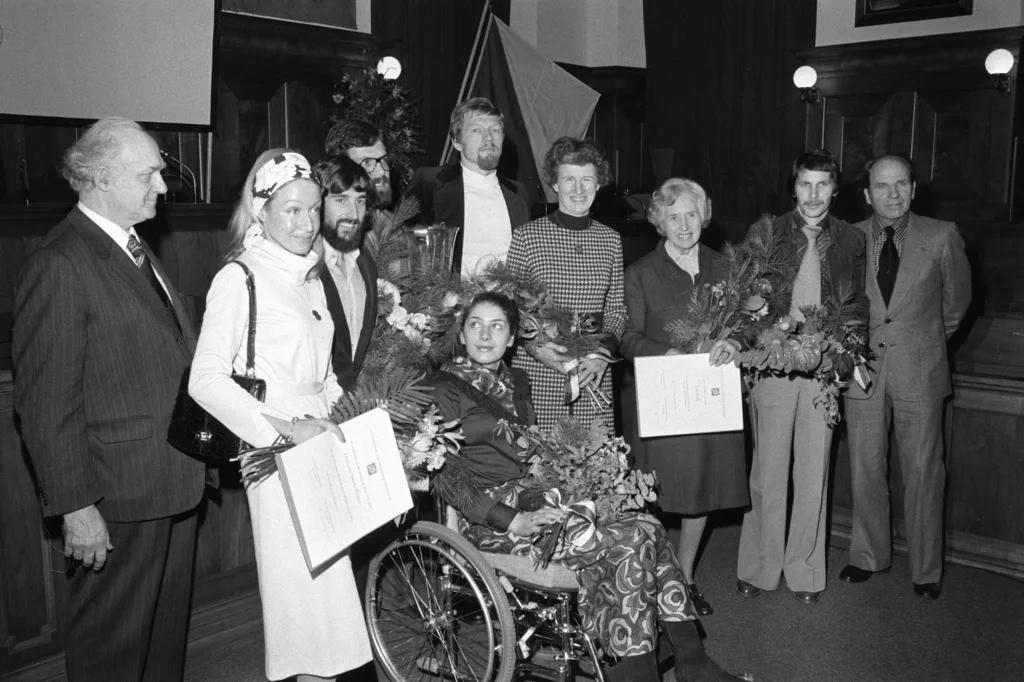
In late November 1976, Elsa Roth (third right) was presented with the sports talent development award as part of the Swiss Sports Personality of the Year. She is the only female prizewinner in the award’s almost 50-year history.
In late November 1976, Elsa Roth (third right) was presented with the sports talent development award as part of the Swiss Sports Personality of the Year. She is the only female prizewinner in the award’s almost 50-year history. Keystone / STR
While Roth’s career is an exception and somewhat atypical, it does show that even in the first half of the 20th century women were able to hold leading positions in sporting organisations. Roth made her mark as an expert in her field, utilised her network and took advantage of her social background. As a single and childless woman, Elsa Roth didn’t disappear from the world of work in the post-war years like working mothers did when the traditional family model became more widespread again. But she did come up against limitations, taking on the less high-profile, more administrative work when the responsibilities of the management team were divided up.
 
At the end of her career Elsa Roth received a number of commendations and was appointed an honorary member of the Swiss and international skiing federations. But her name is not etched into the Swiss skiing nation’s collective memory in the same way as those of her male colleagues are – something that can also be seen in other areas of remembrance culture. On top of that, Roth was primarily an official, and didn’t have any medals or successes to her name. Unlike her SDS colleague Rösli Streiff, for example, who was rediscovered by the media in the 1970s as the first Swiss female world champion. And yet, traces of Roth’s influence can still be seen on Switzerland’s ski slopes today, for example when hundreds of young people meet in the Bernese Oberland for the Juskila winter sports camp at the start of January every year. And we can recall her career in the debate around the gender quota required by the federal government for the leadership of national sports governing bodies.

Swiss Sports History

This text was produced in collaboration with Swiss Sports History, the portal for the history of sports in Switzerland. The portal focuses on education in schools and information for the media, researchers and the general public. Find out more at sportshistory.ch
Further posts