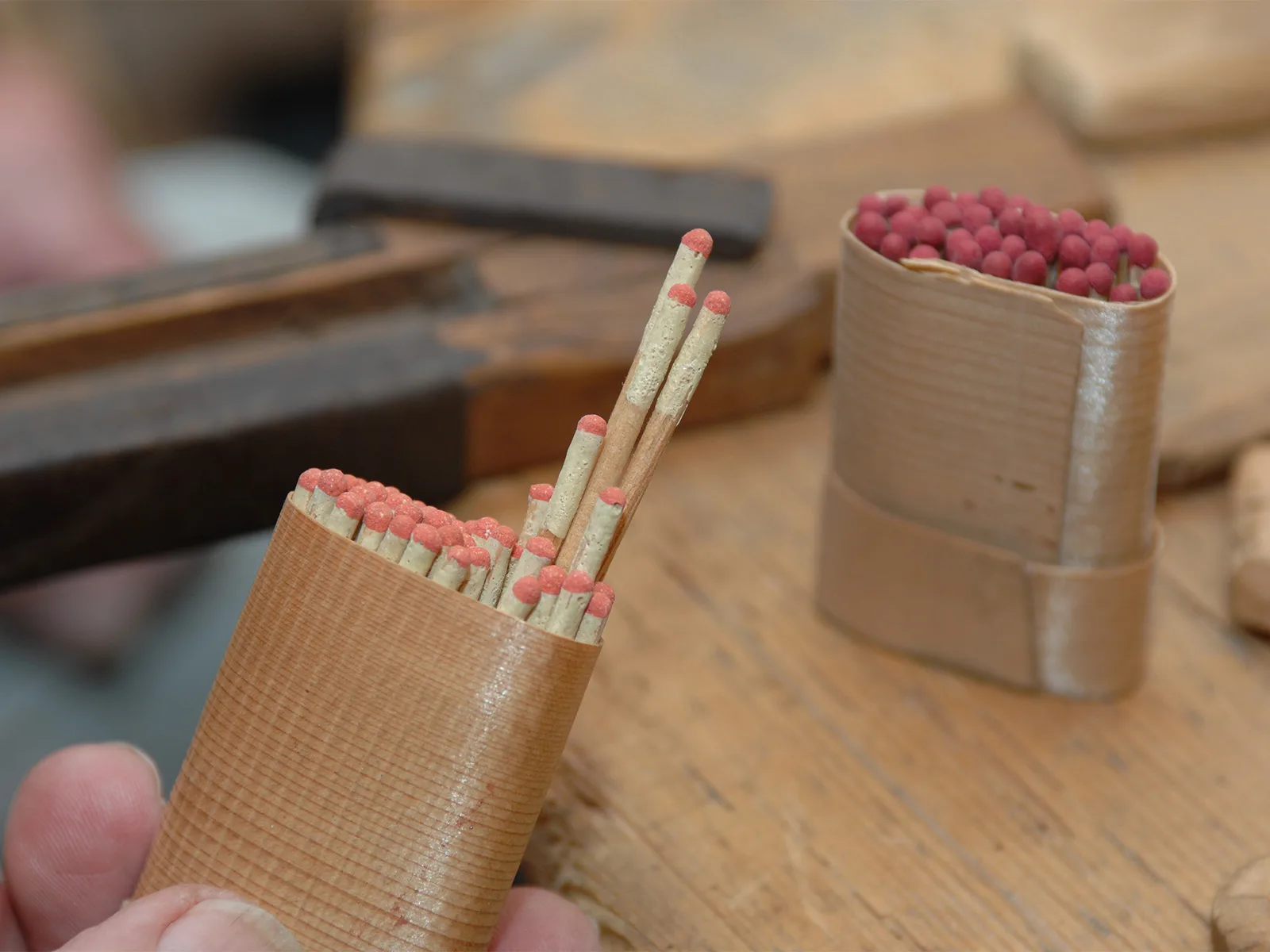
Phosphorus matches from the 19th century.
Phosphorus matches from the 19th century. Kulturgutstiftung Frutigen

The dark history of Frutigen’s match factories

The production of matches using white phosphorus brought work to the impoverished area around Frutigen in the second half of the 19th century. The region subsequently evolved to become the centre of a match manufacturing industry characterised by child labour and hazardous working conditions. The worst effect was phosphorus necrosis of the jaw, a horrible disease that eroded the jaw bones.

Hans Egli

Hans Egli

Hans Egli grew up in Frutigen. He studied chemistry at the Swiss Federal Institute of Technology ETH and worked as a chemist in Basel. After retiring, he moved back to Frutigen. He has since published various books about local history.
The launch of ‘chemical’ matches in the 1830s made everyday life much easier as people no longer had to go through the tedious process of making fire with flint and tinder. One of the pioneers was Jakob Friedrich Kammerer, a German refugee, who set up Switzerland’s first phosphorus match factory in Zurich-Riesbach in 1839.
The matches met with a ready market and their manufacture quickly became widespread. It was an industry that required little in the way of skilled craftsmanship; however, handling poisonous substances was tricky and posed a health hazard. Matchmaking factories therefore mainly cropped up in poor rural areas, where there were very few other job opportunities and where ‘the undeserving poor’ were prepared to do any work, even if it was dangerous. The area around Frutigen in the canton of Bern – where poverty was rife – evolved to become the focal point of Switzerland’s match industry.
The first matchmaking factory in the village of Frutigen. It was built in 1850 and operated until 1880. Photo taken c. 1920.
The first matchmaking factory in the village of Frutigen. It was built in 1850 and operated until 1880. Photo taken c. 1920. Private collection
In late 1850, three wealthy men had the first factory built in Frutigen with the aim of providing employment to poor local people. Accordingly, the factory owners received the backing of the local authority in charge of administering assistance to the poor. The factory flourished. After just a year of business, the prefect in Frutigen reported: “The factory employs 80 to 100 workers: adults and children from the poorest social classes. Between 8,000 and 12,000 boxes of matches are produced every day.” So from the outset, many children worked at the factory.
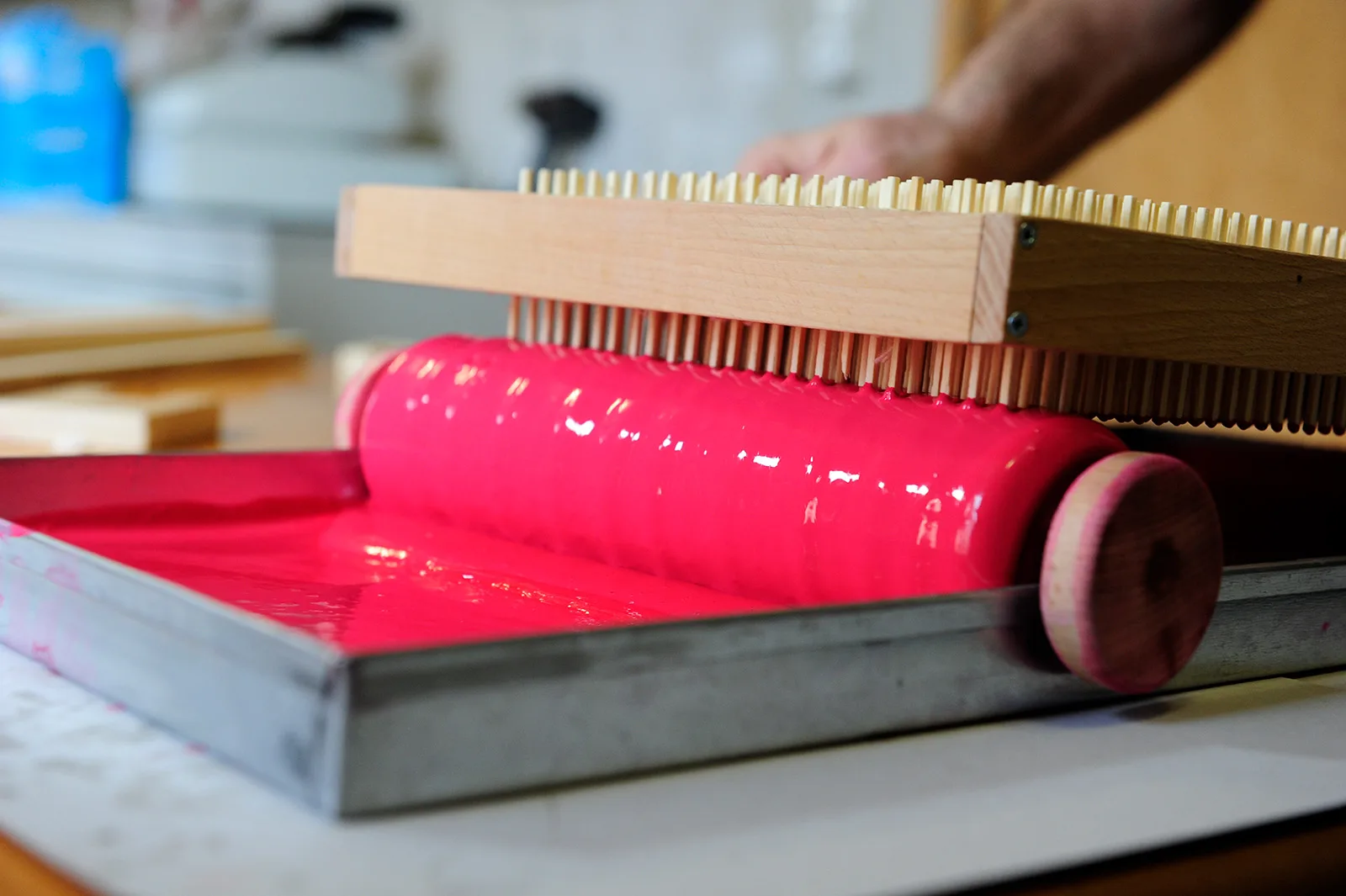
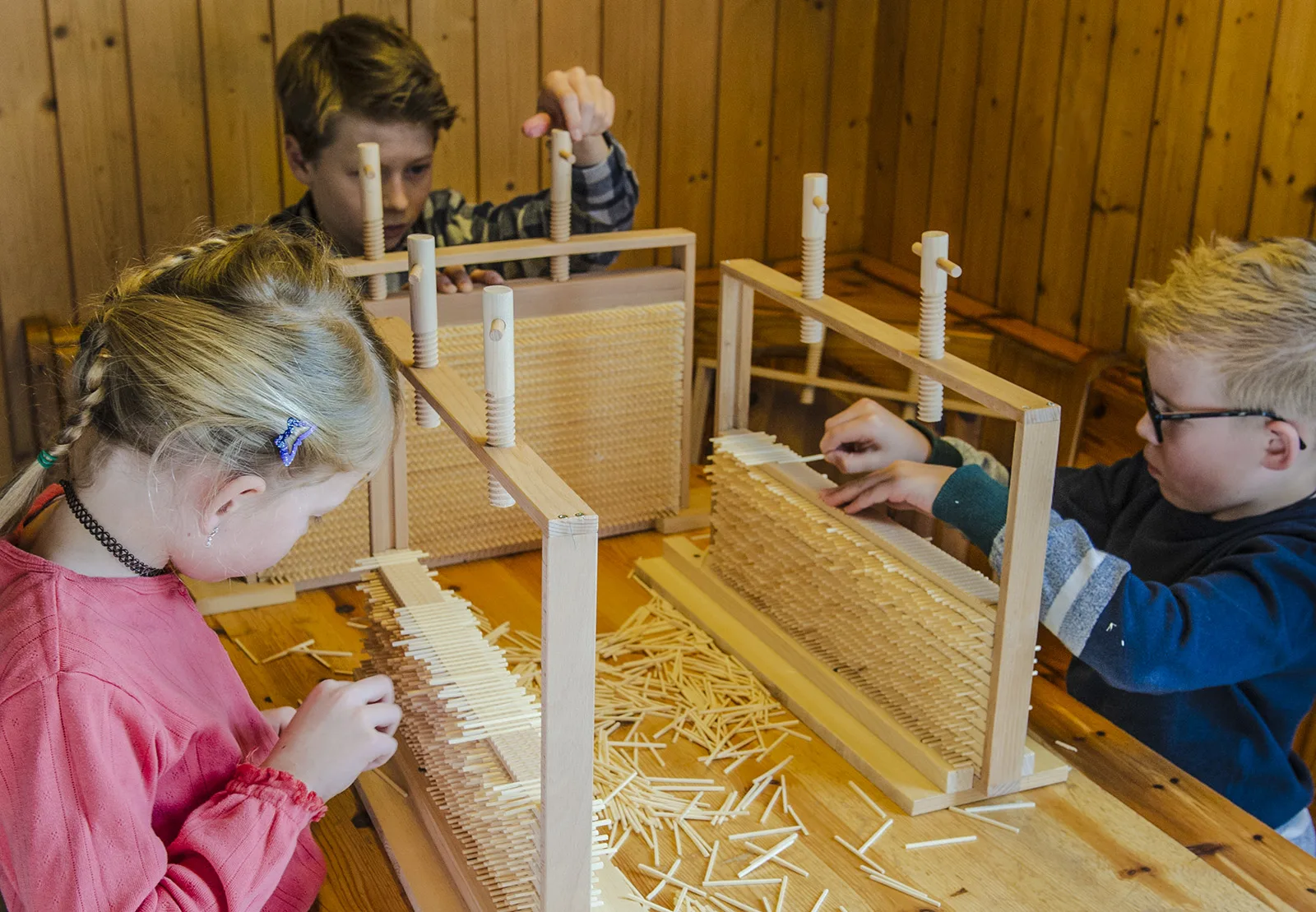
Making matches involved only a few simple steps. The first consisted of placing the splints (untreated matches) in wooden frames. This allowed around 3,000 matches to be processed together. The tips were then dipped in an ignition mixture, consisting of white phosphorus, potassium nitrate, chalk, glue, colouring and water. This step was reserved for a specialist ‘dipper’. After drying, the matches were removed from the frames and packed in small boxes.
Splints or untreated matches being laid out in (recreated) frames. After children were banned from performing factory work, this step became a cottage industry.
Splints or untreated matches being laid out in (recreated) frames. After children were banned from performing factory work, this step became a cottage industry. Ruedi Egli
At the dipping stage, the matches, which were fixed in the frame, were painted using a roller dipped in the ignition mixture.
At the dipping stage, the matches, which were fixed in the frame, were painted using a roller dipped in the ignition mixture. Ruedi Egli
The preparatory work involved cutting the matches and manufacturing the small wooden boxes. Both the matches and boxes were made using wood from local fir trees. Initially this work was done in the factories, and then increasingly as a cottage industry.
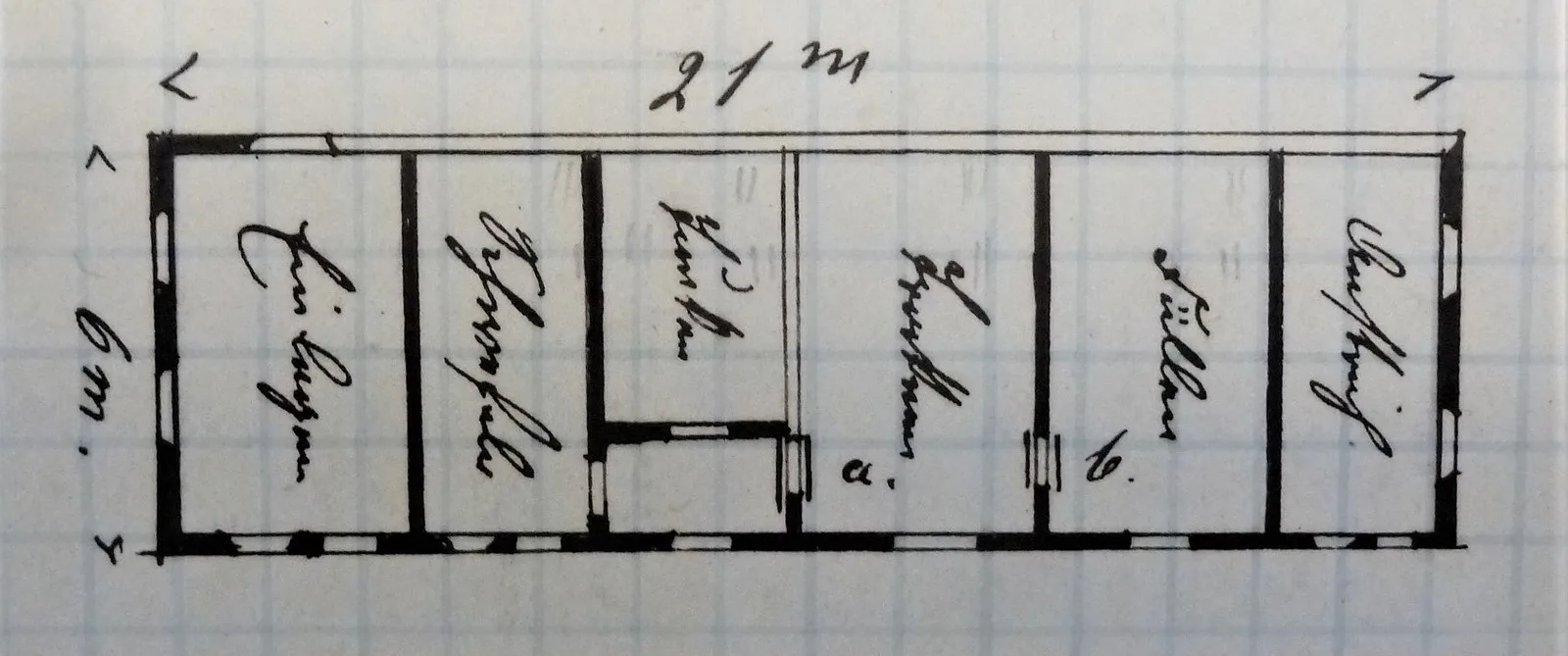
Floor plan of the Christian Hari match factory in Frutigen, 1881. From left: Laying out splints, sulphur dipping, applying the phosphorus match composition, drying, packing, painting (of the striking surface). Sketch by factory inspector Edmund Nüsperli.
Floor plan of the Christian Hari match factory in Frutigen, 1881. From left: Laying out splints, sulphur dipping, applying the phosphorus match composition, drying, packing, painting (of the striking surface). Sketch by factory inspector Edmund Nüsperli. Swiss Federal Archives
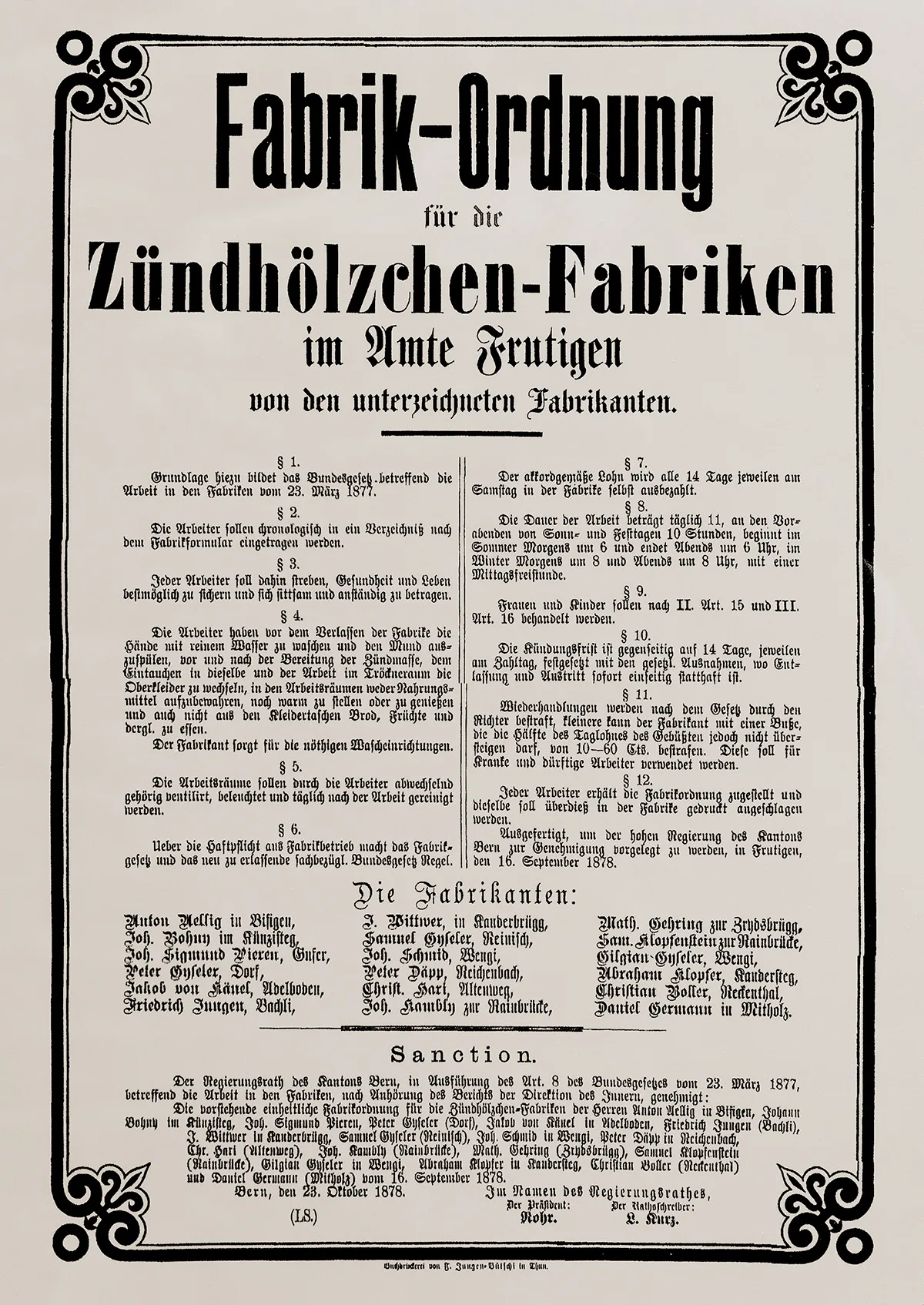
Children’s nimble hands were well suited to most of the tasks, and child workers were therefore welcome. Many poor families sent children as young as four, five or six years old to work in the factory. In 1865, the Bern cantonal authorities banned children under seven from working in matchmaking factories. And in 1878, the new Swiss Factory Act set out a minimum age of 14 for factory work.
The factory regulations of 1878, adopted by most manufacturers.
The factory regulations of 1878, adopted by most manufacturers. Staatsarchiv des Kantons Bern
The success of the first match factory in Frutigen attracted other investors to the area, and by 1881 there were no fewer than 22 new factories in the valley. Within a few years, the factories in and around Frutigen covered around half of Switzerland’s total demand.
The way the industry evolved in the region was unfortunate, as instead of a small number of large factories, many smaller ones sprang up with five, ten or at most 20 employees. Most of these new factories were underfunded, resulting in bankruptcies, temporary closures and a ruinous price war. Even more serious was the fact that the small factories were poorly equipped and barely ventilated. The women, men and children worked upwards of 10 or 12 hours a day in sooty, smelly, gloomy and dirty surroundings. They even ate their meals in the factories, and washing facilities were virtually non-existent. Wages were low and the poor remained in poverty. According to surviving reports, the workers in the match factories were generally sickly and undernourished, and personal hygiene and cleanliness were poor. The authorities probably tried to introduce improvements over time. But building regulations were difficult to enforce because most factories had no financial resources, and rules of conduct were barely followed due to a lack of understanding and awareness.
Letterhead of the Ferdinand Gehring match factory in Reinisch near Frutigen, 1883.
Letterhead of the Ferdinand Gehring match factory in Reinisch near Frutigen, 1883. Kulturgutstiftung Frutigen

Necrosis as an occupational disease
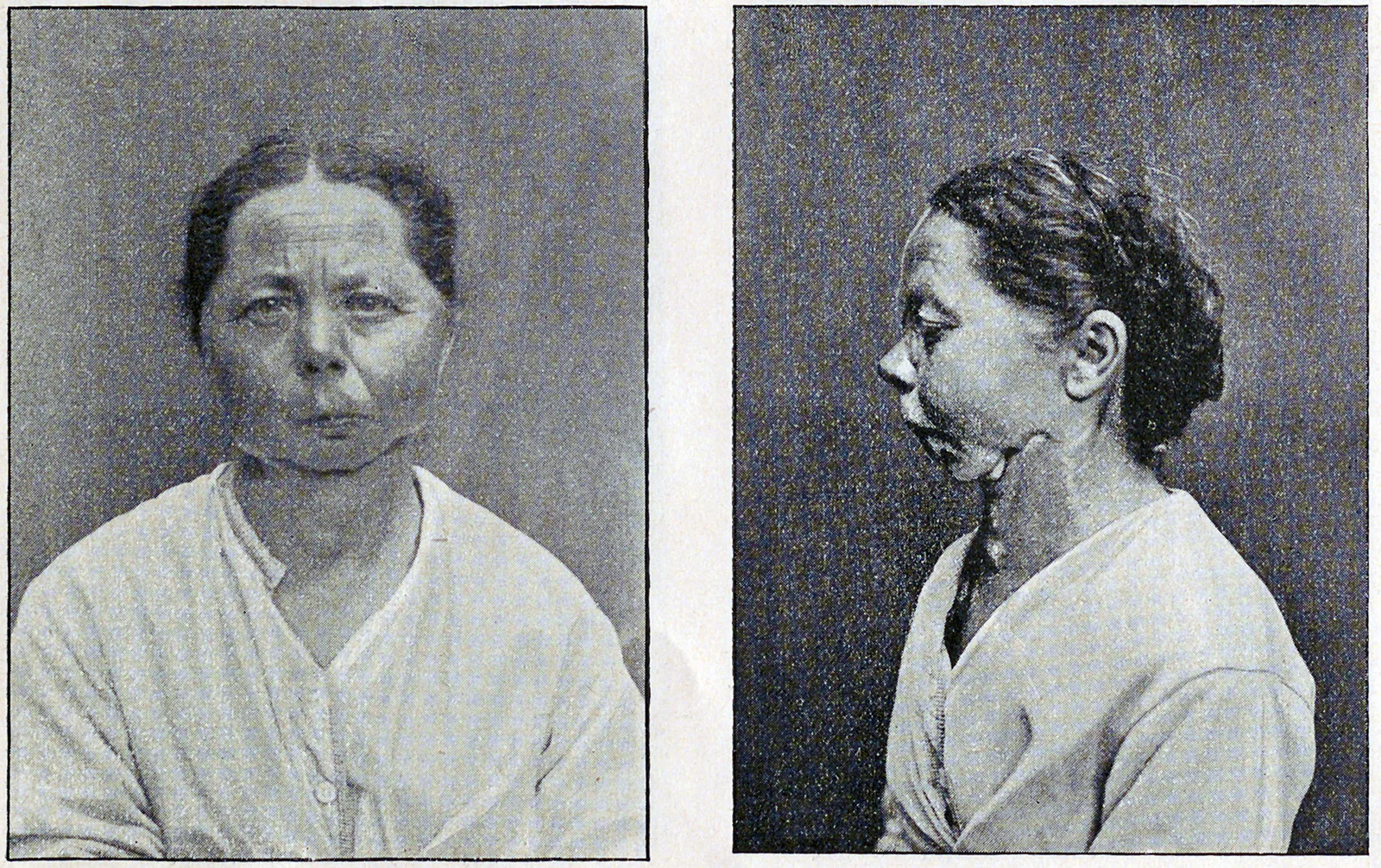
A particularly grave consequence of working in the early match factories was ‘phosphorus necrosis’, otherwise known as ‘phossy jaw’. The disease caused sufferers’ jaw bones to fester and rot. There are reports of sick people removing their own dead bits of bone. Usually they went to hospital, however. Without surgery, in other words removal of the destroyed bones, the necrosis would progress, spread to the skull and result in death. If people were cured, the disease often left them disfigured or unable to chew.
The cause of the necrosis was identified early on: the disease was caused by phosphorus vapours penetrating the upper or lower jaw through damaged teeth. The match factories therefore made it a requirement for workers to have good teeth. But this proved impractical as hardly anyone had decent teeth at the time, at least not the poor – and they were the only ones doing the work anyway.
On behalf of the Federal Council, professor Theodor Kocher from Bern studied necrosis on the basis of many cases in the area around Frutigen. Between 1850 and 1900, Kocher and local doctors documented more than 100 cases. This equated to more than two cases a year on average. Of the 200 or so people who worked in the match factories in Frutigen, the likelihood of developing necrosis was therefore over one per cent – per year. In other words, in ten years of factory work, the likelihood of getting sick was over ten per cent. Sometimes necrosis would occur after just a few months, and sometimes only after many years.
Margretha Trachsel, born in Frutigen in 1850, had to have her entire lower jaw removed due to necrosis. There is no record of when the surgery took place. But afterwards, she was only ever able to eat puréed food. Illustration from Theodor Kocher’s study on phosphorus necrosis ‘Zur Kenntnis der Phosphornekrose’, 1893.
Margretha Trachsel, born in Frutigen in 1850, had to have her entire lower jaw removed due to necrosis. There is no record of when the surgery took place. But afterwards, she was only ever able to eat puréed food. Illustration from Theodor Kocher’s study on phosphorus necrosis ‘Zur Kenntnis der Phosphornekrose’, 1893. Bern University Library
In the case of Rudolf Schmid from Frutigen, necrosis took 15 years to appear. He had worked in a match factory from the age of nine. In 1876, at the age of 24, he underwent surgery at the Inselspital in Bern. Around half-a-year beforehand, he had felt unwell, his left lower jaw had swollen up, he had experienced pain, and he had an abscess that ruptured. Due to necrosis, he had to have the left half of his lower jaw removed. He made a good recovery and was only slightly disfigured, but he was only ever able to eat soft food thereafter.
The fight against necrosis was a long one. Attempts to improve hygiene conditions came to nothing. Factory inspectors and other experts gradually came to the realisation that the only way to solve the problem was to ban phosphorus matches. The ‘match issue’ was therefore delegated to the Swiss parliament. From around 1875 to 1900, the situation in Frutigen – the centre of this industry – was a recurring theme in council debates. An initial decree in 1879 banned phosphorus matches with effect from 1 January 1881. But the ban was repealed two years later – mainly following pressure from Frutigen. And so the misery continued. The idea of setting up a state-run matchstick monopoly was rejected in a popular vote in 1895.
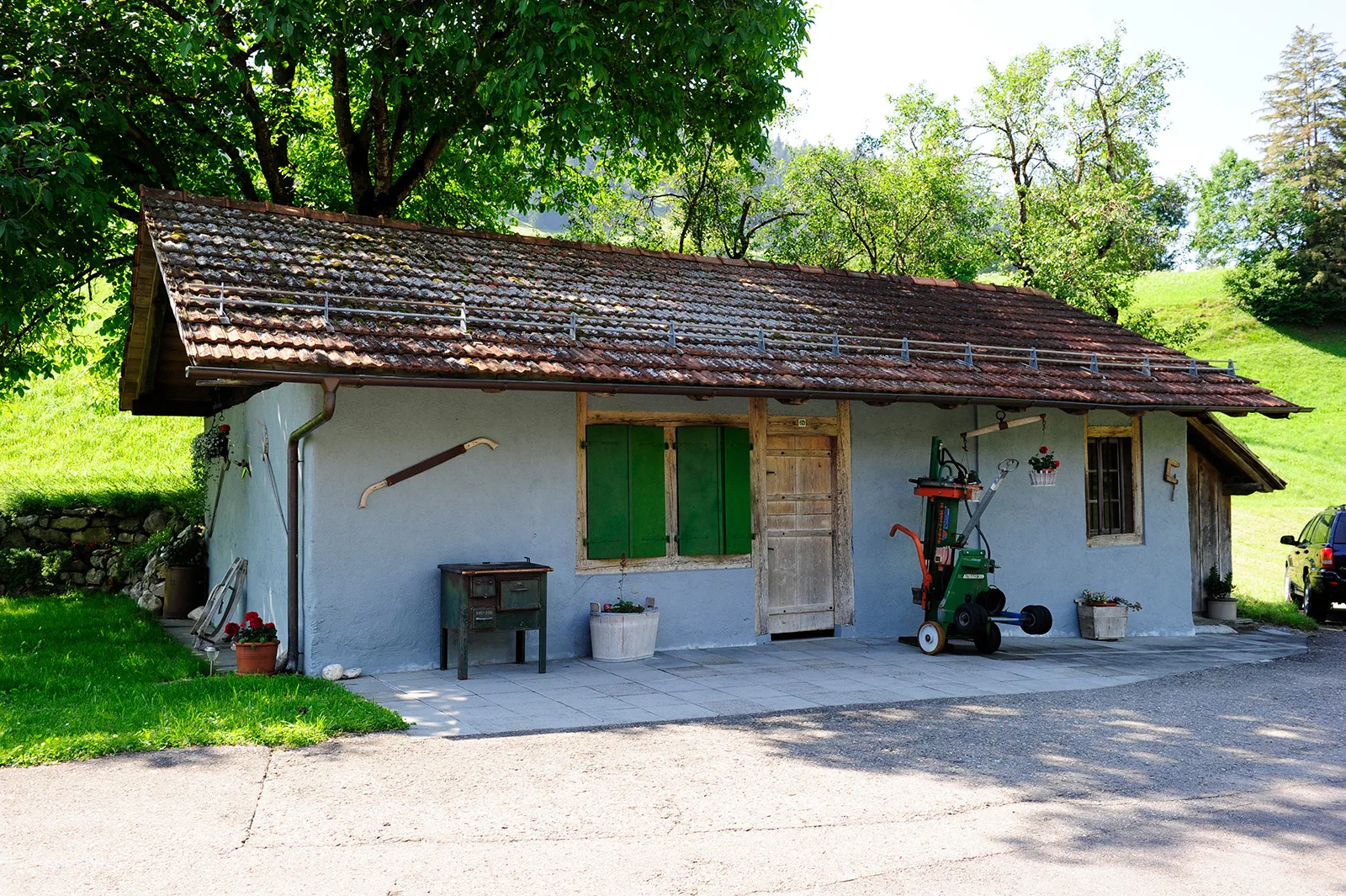
A former match factory near Frutigen, which operated between 1858 and 1896. For a time, 20 people worked at this factory.
A former match factory near Frutigen, which operated between 1858 and 1896. For a time, 20 people worked at this factory. Ruedi Egli
National Councillor Arnold Bühler from Frutigen addressed the conditions in the local match industry when he cast his vote in April 1894:

I would go so far as to say that it would have been a good thing for our local area if this industry had never come here. We would have done things differently and I believe that we would be in a better position today.
The time was right for a ban. A federal act was finally introduced and white phosphorus was banned from 1 July 1900. From that point on, there was not a single new case of phosphorus necrosis.
The number of factories in Frutigen declined. In an initial wave, a number of factory owners threw in the towel, claiming that the manufacture of the new ‘safe matches’ was more complicated and more expensive. In the 1920s, Swedish matchmaking giant Svenska Tändsticks AB acquired most of the surviving firms and decommissioned them. From the mid-1930s, there were only two large match manufacturers in Frutigen. And by around 1970 these closed too, as demand for matches had plummeted.

Born into poverty. Child labourers

19.12.2025 20.04.2026 / National Museum Zurich
Even in the pre-industrial era, children had to make a contribution to the family economy, whether in the home, on the land, or in cottage industries. After industrialisation, they were exploited as cheap labour in factories and often could not attend school. The exhibition shows how children’s rights evolved and looks at the fate of children in forced foster care and institutions.

Further posts