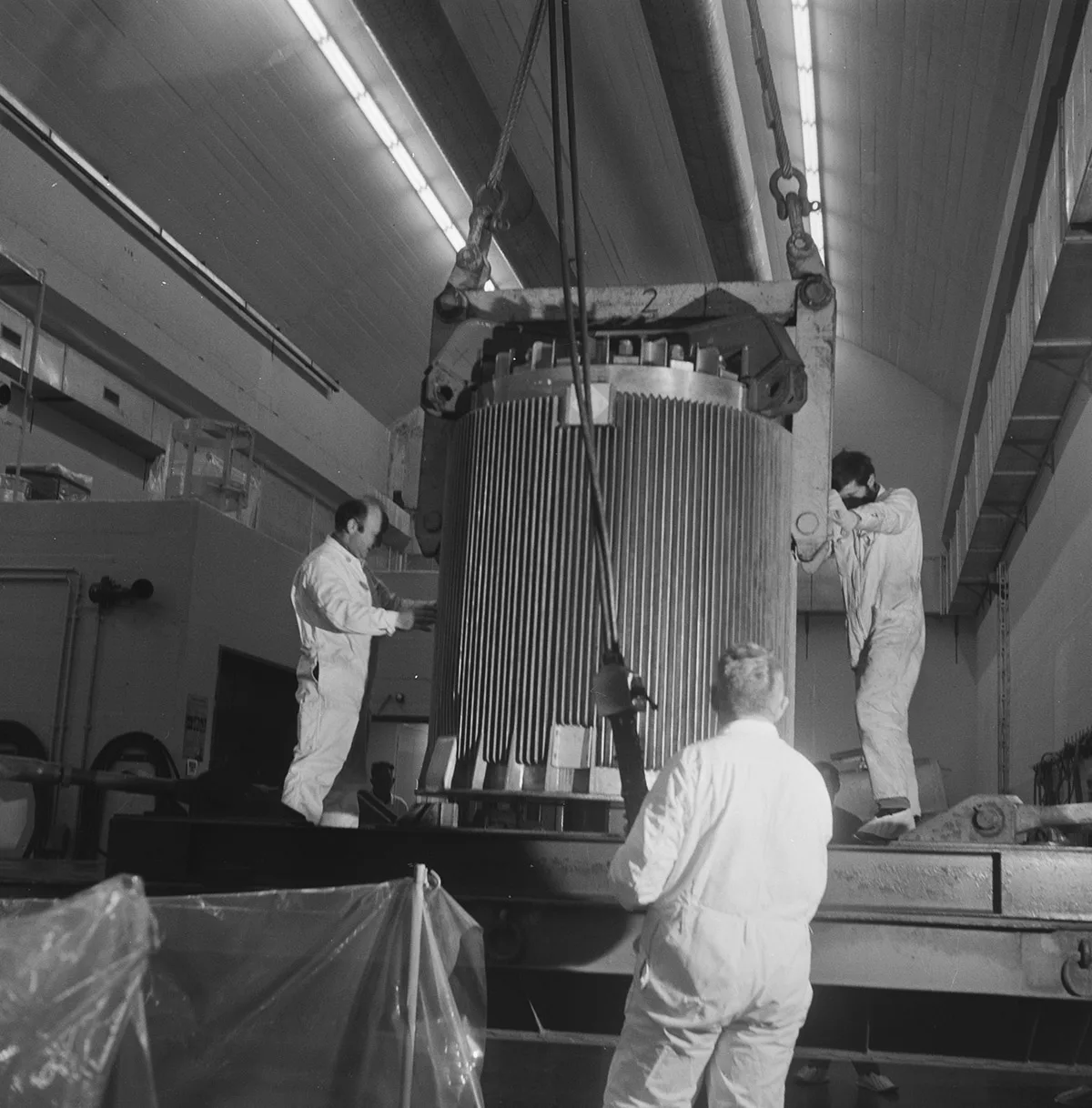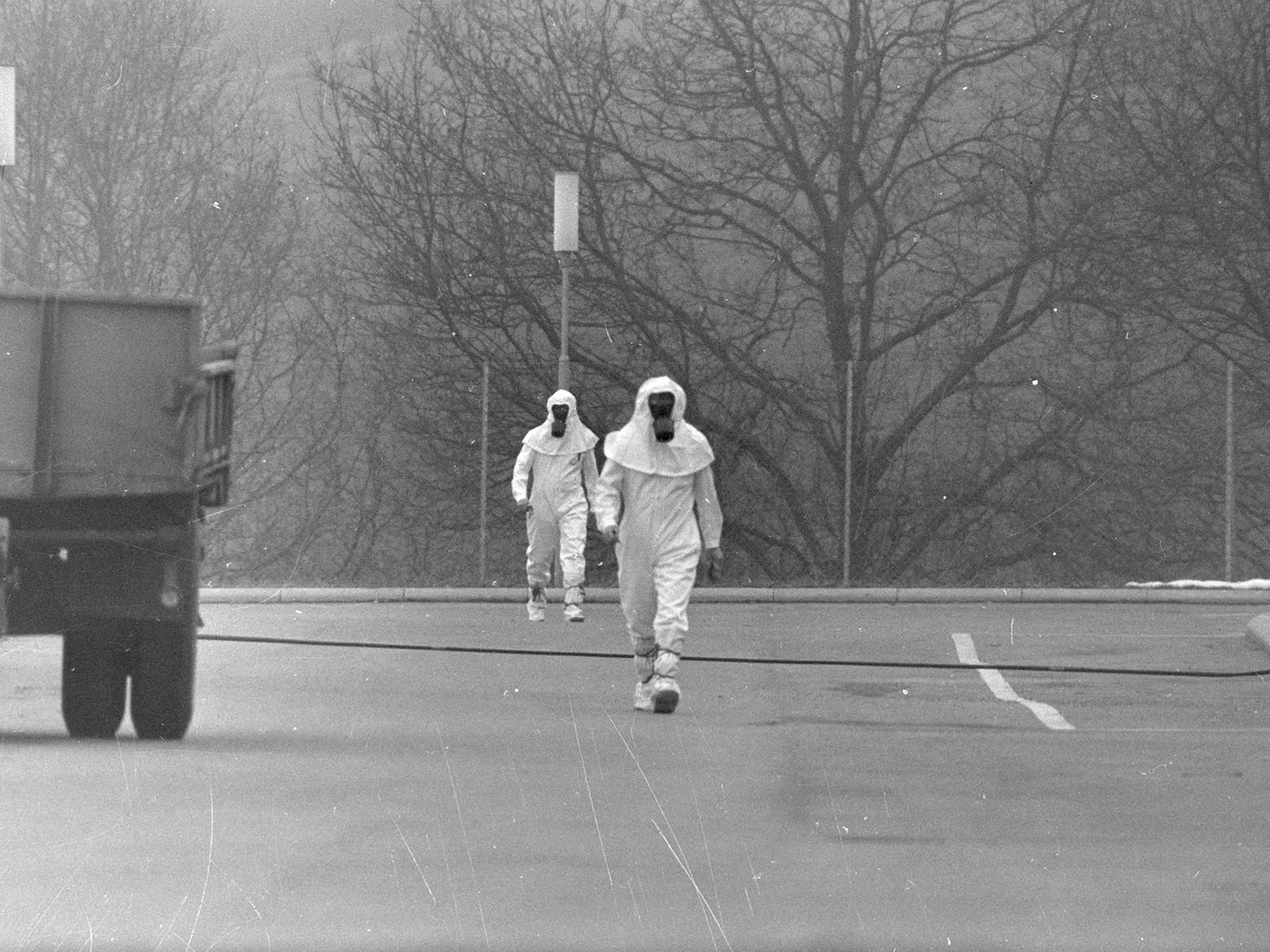
Shortly after the accident, experts in protective clothing were able to assess the damage for a brief spell.
Shortly after the accident, experts in protective clothing were able to assess the damage for a brief spell. Swiss National Museum / ASL

Switzerland’s brush with nuclear disaster

In the 1950s, the Swiss dreamed of having their own nuclear power plant and built a test facility in Lucens in the canton of Vaud. It proved an ill-fated project: just after becoming operational in January 1969 a fuel rod melted and exploded, bringing Switzerland to within a hair’s breadth of a disastrous outcome.

Thomas Weibel

Thomas Weibel

Thomas Weibel is a journalist and professor emeritus of media engineering.
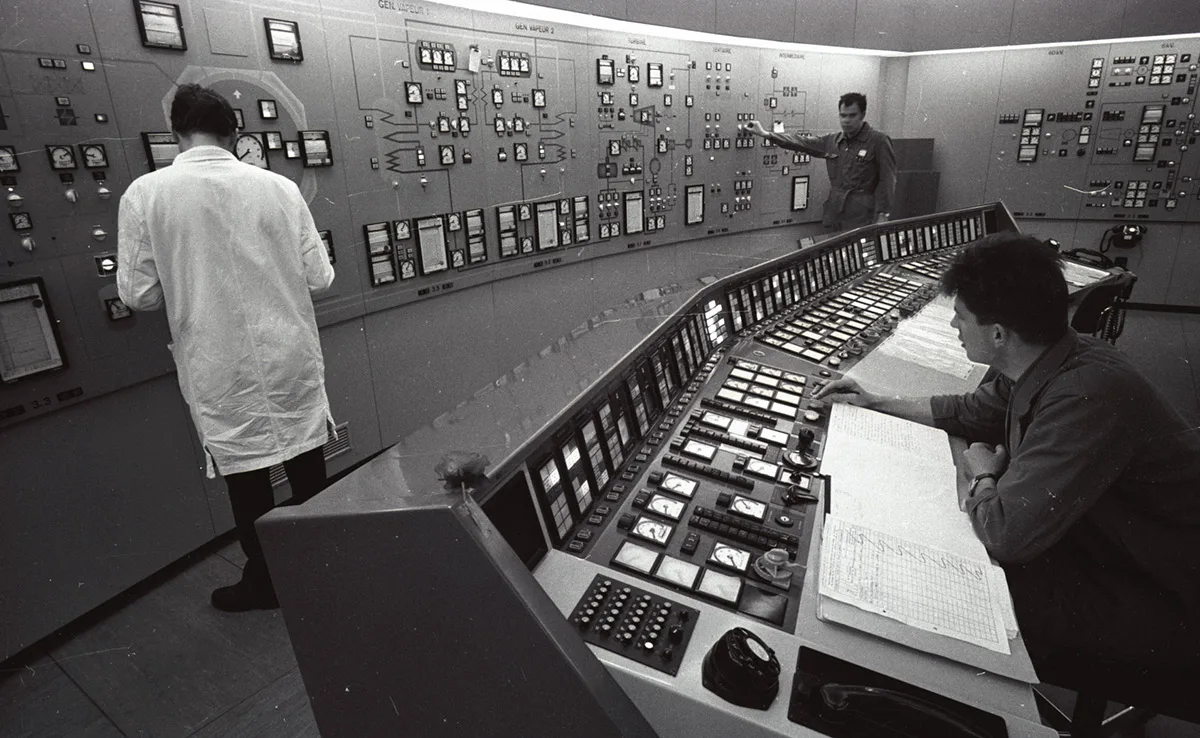
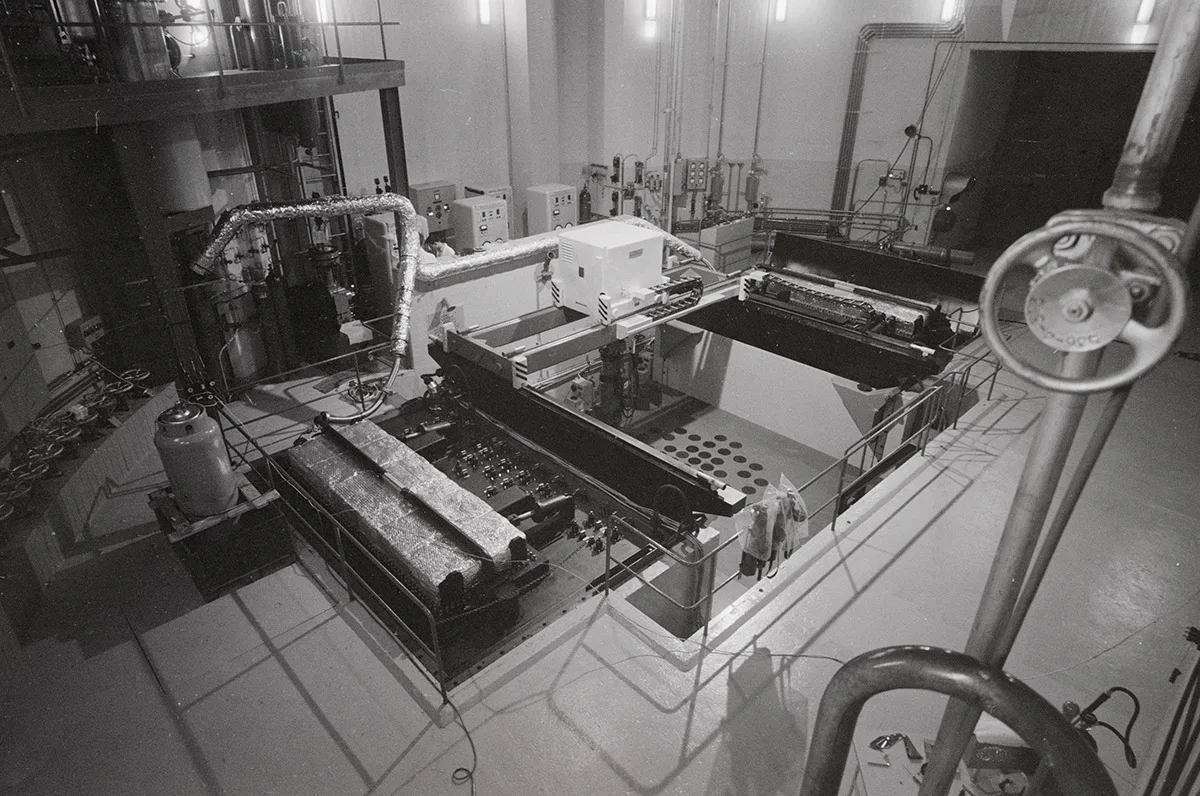
The team in the control room had detailed knowledge of their reactor. Most of them had been involved in assembling it and the mini nuclear power station had been consistently operational for three months. The staff were also aware of some teething problems on the technical front – the fans for cooling gases had not initially worked properly, and in late 1966 a fuel element had overheated during a test at Würenlingen (canton of Aargau) and melted. This had prompted extensive improvements, and the plant had also been built into a sandstone cavern as a safety measure. By late December 1968, the Confederation had issued the definitive operating licence and the plant was finally ready to start producing electricity.
The control room in the pilot plant at Lucens, 1968.
The control room in the pilot plant at Lucens, 1968. e-pics
When the technicians began powering up the reactor at 4am on 21 January 1969, no irregularities were noted. Everything started as per the operating regulations and all the indicators were in order. The reactor became “critical” at 4.23am when nuclear fission heated up the uranium fuel elements. At that point the plant started generating electricity. The operating team gradually increased the capacity not realising that water had seeped into the cooling circuit during the prior months and corroded the rods. The sediment from the corrosion narrowed the space for the cooling gas to pass through the rods. When the reactor’s capacity was increased again after 5pm, the first fuel elements began to overheat as there was not enough cooling CO2 gas flowing through them. Some of the fuel rods had not been fitted with temperature sensors due to cost considerations, thus concealing the pending disaster from the control room.
The reactor in Lucens nuclear power plant, 1968.
The reactor in Lucens nuclear power plant, 1968. e-pics
The operating team, safe and sound in an adjoining room protected by rock and concrete, remained blissfully unaware of the acute danger. At 5.14pm the plant reached an output of 12 megawatts, approximately 40% of its nominal capacity. At 600 degrees the magnesium component in fuel rod number 59, the most corroded part, melted and entirely cut off the cooling circuit. This in turn caused the uranium to melt and the entire element began to burn “like a candle”, as it said in the subsequent investigation report. The encasing pipe could not take the pressure and exploded; over a tonne of melted radioactive material and heavy water came through the reactor cavern. A second explosion a second later released contaminated cooling gas; small quantities of the gas escaped into the control room and immediate environment through the porous stone.
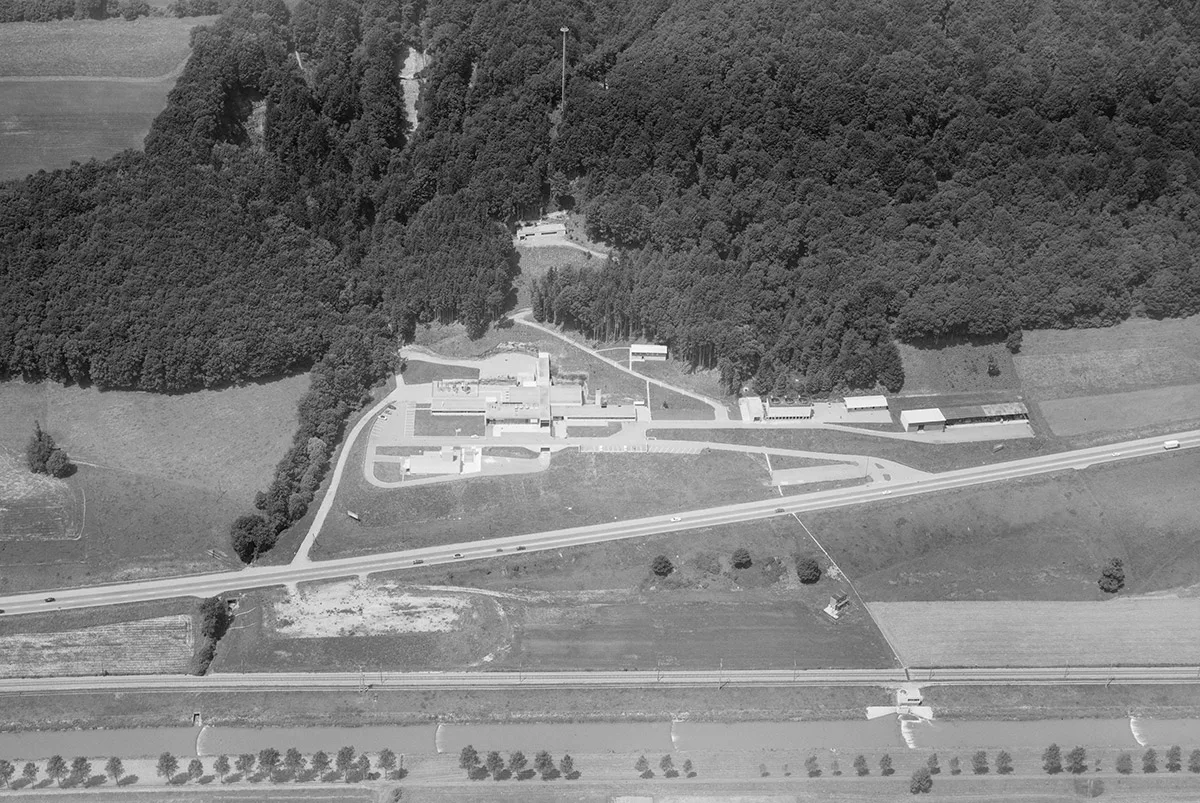
Aerial shot of the nuclear power plant in Lucens (Vaud) from July 1969.
Aerial shot of the nuclear power plant in Lucens (Vaud) from July 1969. e-pics
The reactor began an automatic rapid shutdown at 5.20pm and all the alarm signals went off simultaneously in the control room. The readings were so far out that the operators could no longer interpret them. That meant they couldn’t be sure that all the control rods had been retracted correctly and that the reactor had really been deactivated. There was only one certainty: there had been a core meltdown deep within the cavern. The pilot plant was destroyed.

A narrowly averted nuclear disaster
Fortunately the half-lives of the radioactive substances lasted from a matter of minutes to a few hours so the radiation receded quickly. After a few days experts with special suits and gas masks were able to enter the heavily radiated reactor cavern for up to 15-20 minutes. That’s when they realised how close Switzerland had come to nuclear disaster. The Lucens nuclear incident ranks as an accident with local or wider consequences (level 4-5) on the International Nuclear Event Scale ranging from 0–7, placing it on a par with the event at the Three Mile Island plant near Harrisburg Pennsylvania, United States in 1979. The dismantling of the destroyed reactor took years to complete; material with a low level of radiation was enclosed in the cavern.
TV report on the Harrisburg incident in 1979. YouTube
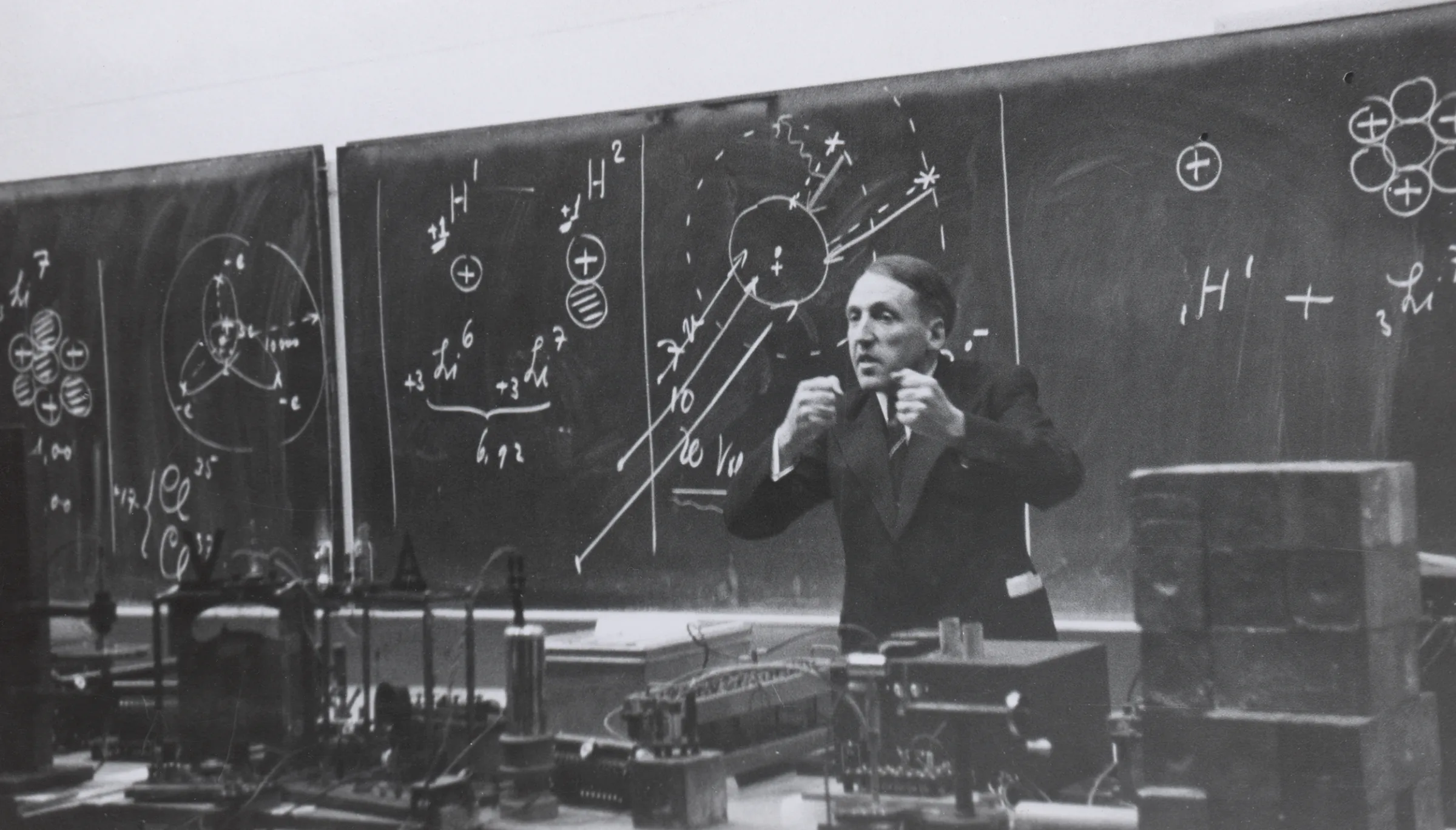
The Lucens nuclear incident put an end to Switzerland’s ambitious nuclear objectives. Nuclear power was the energy of the future. Intensive research in nuclear physics had been conducted since the 1930s, especially at the department of physics of ETH Zurich and at the University of Basel. The work covered both civilian and military applications. The Department of Defence commissioned the Military Technical Department to procure 10 tonnes of natural uranium from the United Kingdom in a trilateral transaction with the Belgian Congo. Five tonnes went to Reaktor AG, an organisation founded by 125 companies in 1955 in Würenlingen, the rest was stockpiled in an alpine tunnel for the event of war. This metallic uranium was used, in conjunction with fuel elements from Canada, for a Swiss research reactor called ‘Diorit’, which became operational in 1960.
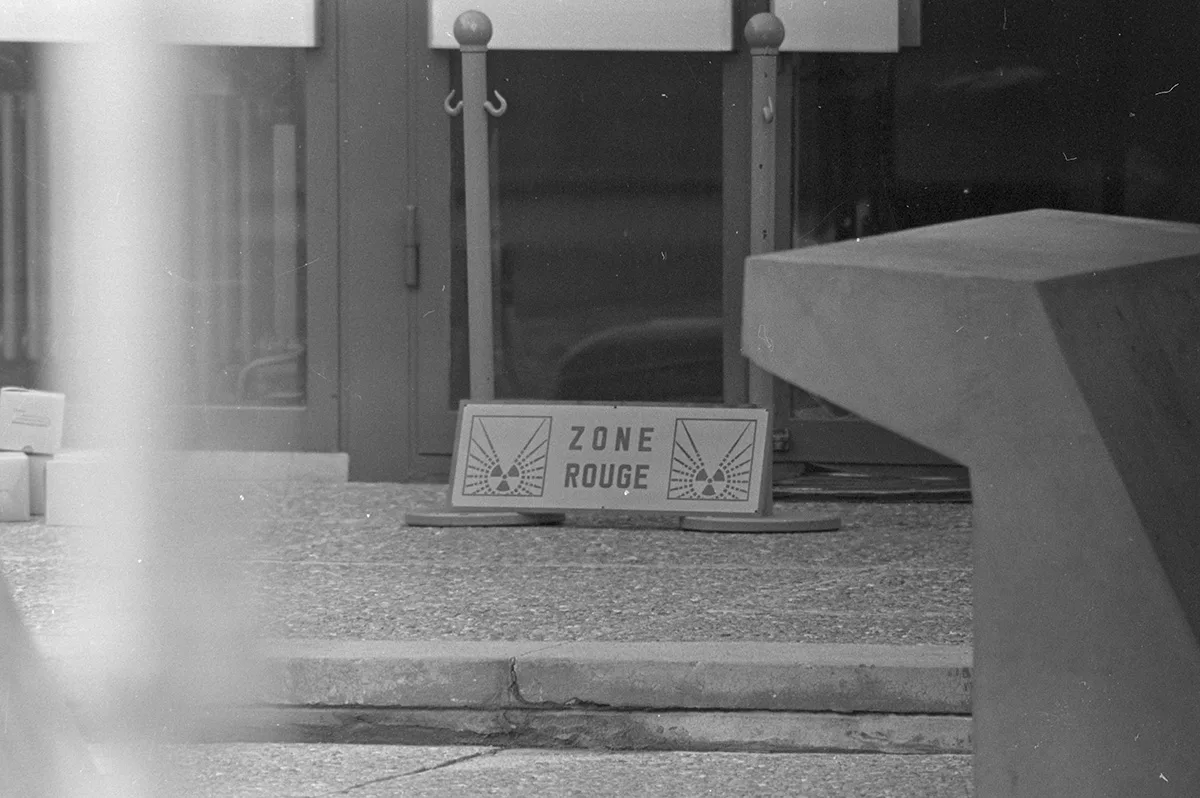
The site of Lucens nuclear power plant was made an exclusion zone after the accident on 21 January 1969.
The site of Lucens nuclear power plant was made an exclusion zone after the accident on 21 January 1969. Swiss National Museum / ASL
‘Diorit’ was part of an attempt to achieve economic independence. It was believed that nuclear energy would enable Switzerland to avoid having to depend on other countries in the event of war. The first nuclear submarines had already been launched in the US and machine manufacturers were predicting the advent of nuclear powered cargo ships and locomotives. If Switzerland were able to make its own reactor, it would allow industry to make technological strides by tapping into this valuable energy source. Even more appealing was the prospect of lucrative power plant orders and the export of construction components all over the world.
It proved a costly exercise, with the Confederation spending CHF 59 million on the project up to 1959; industry added another CHF 18.2 million, the equivalent of CHF 0.6 billion today. Poor cost management and a degree of reluctance to invest from the private sector led to the Würenlingen site being transferred to the Confederation as the “Federal Institute for Reactor Research” (now the Paul Scherrer Institute). The “Nationale Gesellschaft zur Förderung der industriellen Atomtechnik” (national body for the promotion of nuclear technology), which was founded in 1961 and mainly financed by the federal government, subsequently constructed the pilot plant in Lucens – the ill-fated reactor that went up in smoke on 21 January 1969.
A report on the planned nuclear power plant in a TV programme from 1963 (in German). SRF
The explosion put an end to the dream of an entirely Swiss-made nuclear reactor. All the plans were shelved and the country’s new nuclear power plants imported reactors from the US and Germany. In Lucens there remains little sign of the ill-fated experiment: the site was decontaminated and covered with concrete long ago. The canton of Vaud organised storage space for cultural goods in the remaining tunnels. Nonetheless, a slightly elevated radiation level has persisted: the Federal Office of Public Health is still finding traces of tritium, radioactive hydrogen from the reactor’s cooling water, in the water seeping out of the cavern.
The uranium was extracted and removed from Lucens in 1970.
The uranium was extracted and removed from Lucens in 1970. Swiss National Museum / ASL

Further posts