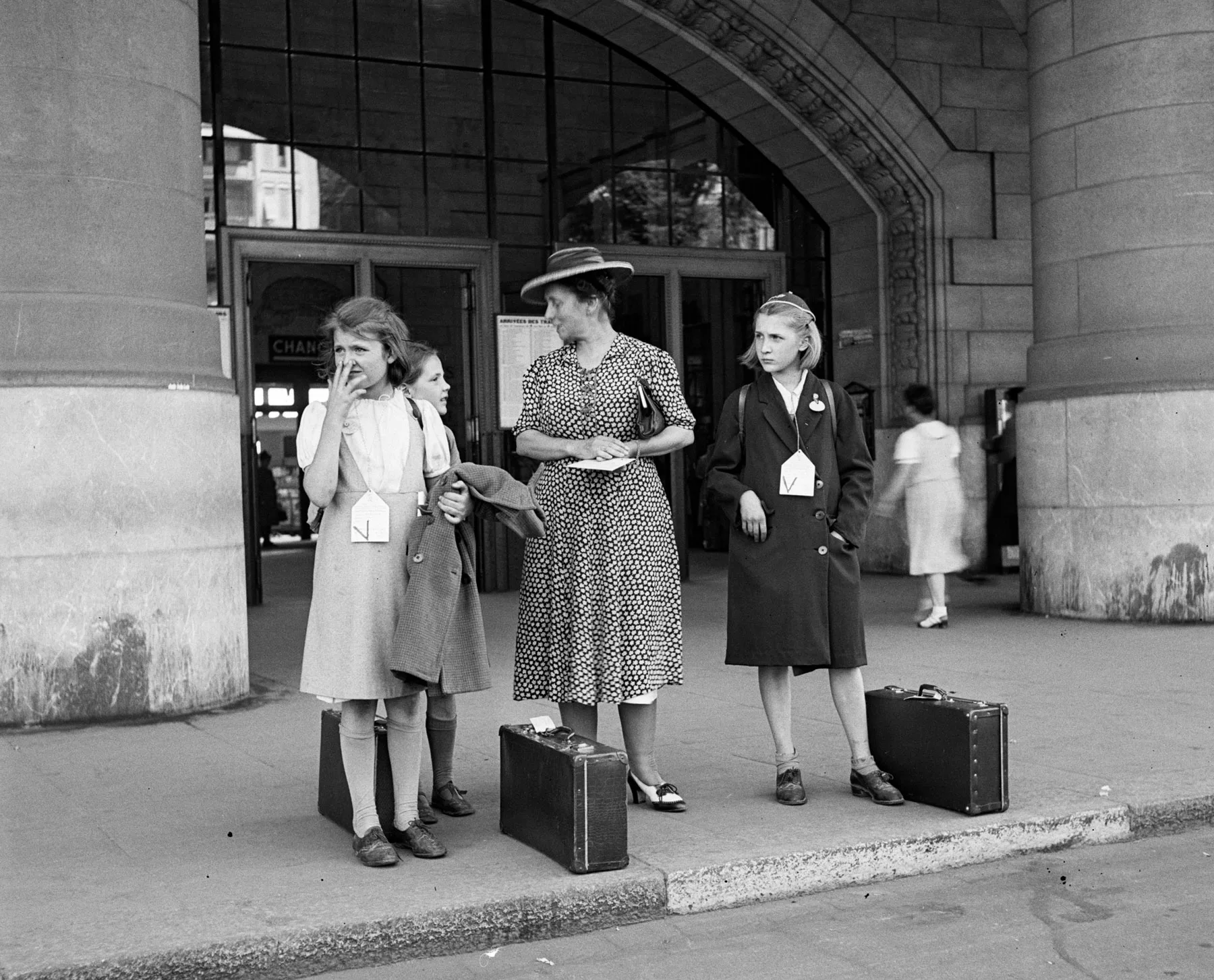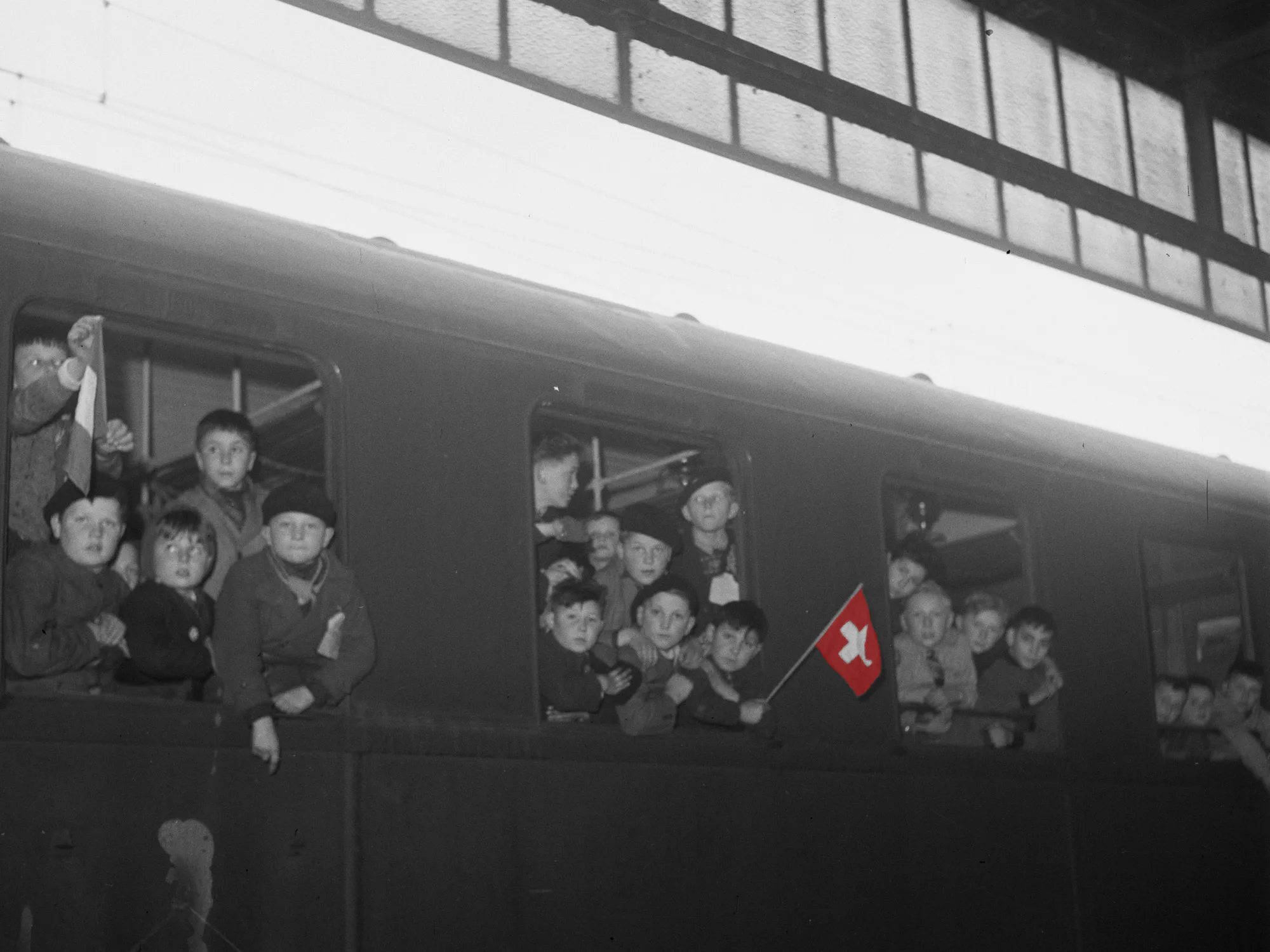
French and Monegasque children arriving in Geneva on board an evacuee train, 16 June 1942.
French and Monegasque children arriving in Geneva on board an evacuee train, 16 June 1942. Swiss National Museum / ASL (edited)

Children’s trains in the service of neutrality

During the Second World War, the Swiss Red Cross brought thousands of war-stricken children to Switzerland from France. Intended to provide humanitarian assistance, this initiative also served political purposes – and not all children were welcome.

Carmen Bortolin

Carmen Bortolin

Carmen Bortolin studies contemporary history and cultural analysis at the University of Zurich, works at Hier und Jetzt Verlag, and is a student assistant on the ETH Decol project.
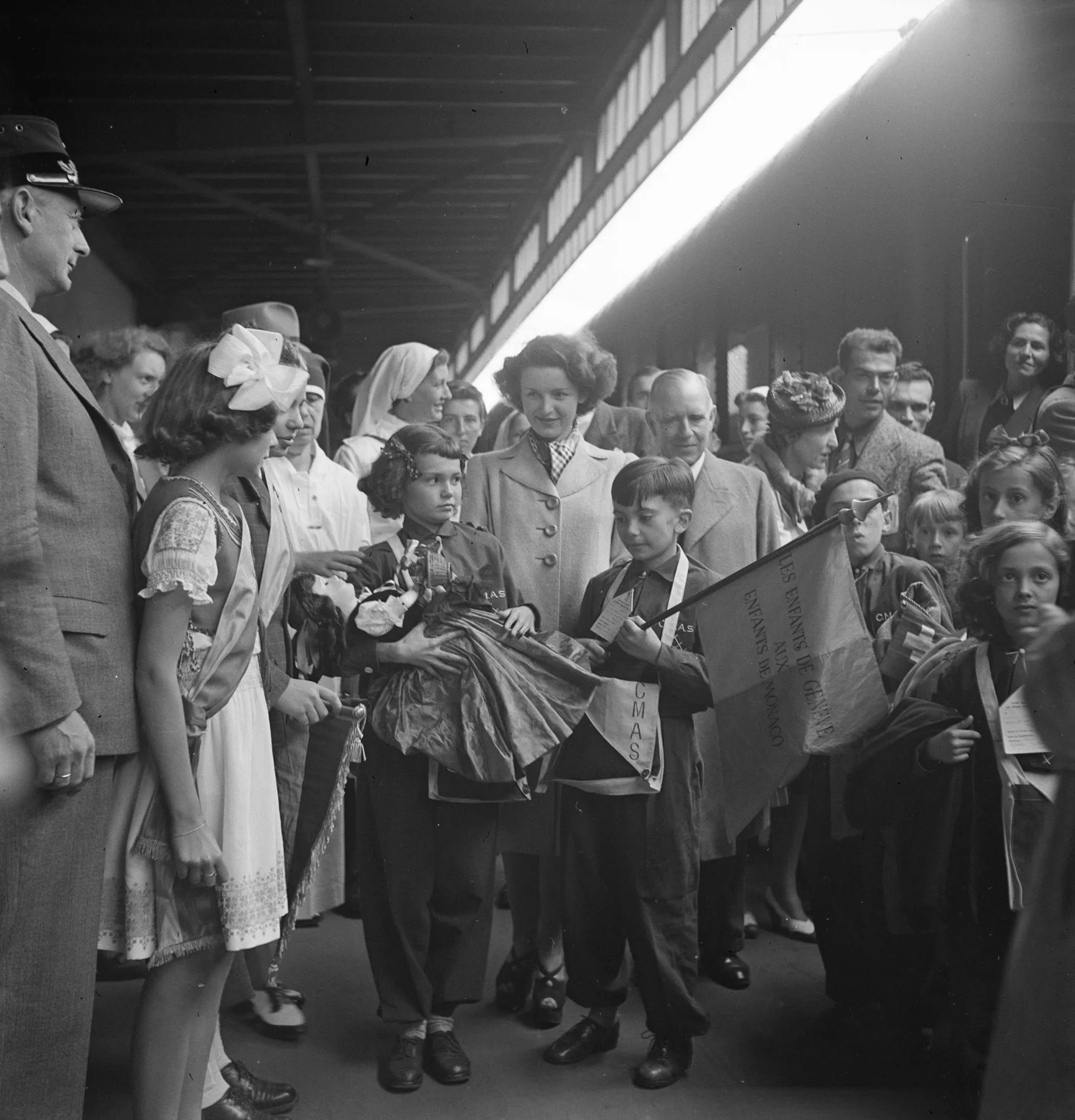
On 16 June 1942, a train full of children from Monaco and France ‒ one of the many convoys commonly referred to as ‘children’s trains’ ‒ pulled into Geneva’s main railway station as the Swiss national anthem played in the background. Swiss Red Cross aid workers, all kitted out in white, waited on the platform to greet the young evacuees from the French unoccupied zone. Amidst the Swiss flags and curious onlookers, there were also press photographers in attendance. After all, the reception given to these war-afflicted children could not go undocumented.
Children posing with Princess Antoinette of Monaco at Geneva railway station, 16 June 1942. The young boy is carrying a flag with the inscription “From the children of Geneva to the children of Monaco”.
Children posing with Princess Antoinette of Monaco at Geneva railway station, 16 June 1942. The young boy is carrying a flag with the inscription “From the children of Geneva to the children of Monaco”. Swiss National Museum / ASL

A Swiss tradition of helping children in need
Swiss relief organisations had previously organised special trains to bring children from war-torn countries to Switzerland for a holiday during the First World War. Therefore, it did not take long after the outbreak of the Second World War for a number of privately run children’s aid organisations to come together to form the Schweizerische Arbeitsgemeinschaft für kriegsgeschädigte Kinder (Swiss Coalition for Relief to Child War Victims) with the aim of bringing children from France and Belgium to Switzerland for a period of three months. Swiss families welcomed the children into their homes, hoping to send them back at the end of their stay well-nourished and rested before taking in the next lot of evacuees.
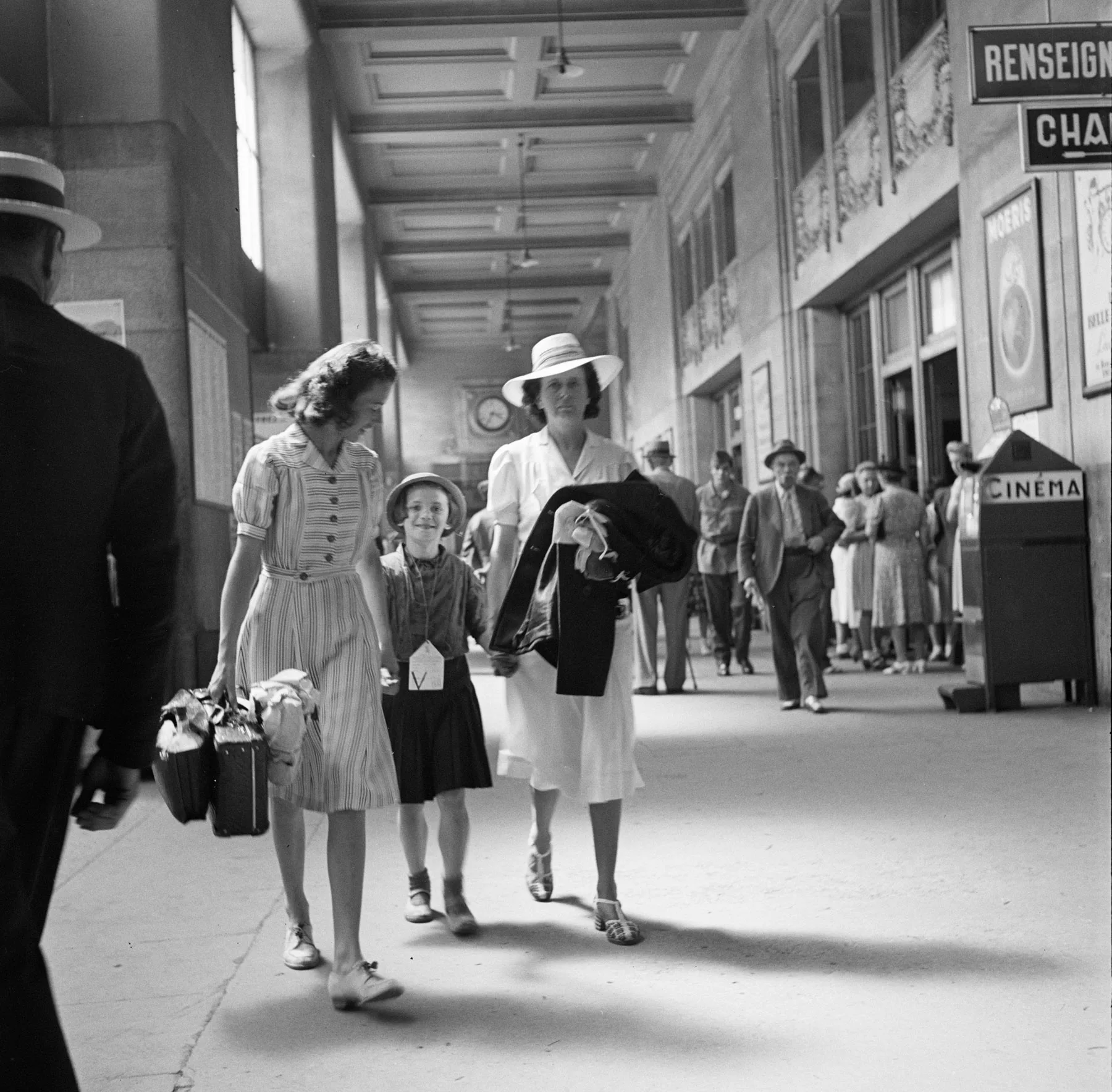
10 July 1941: Belgian children being picked up at the train station. The relief operation was still being run by a coalition of Swiss charities.
10 July 1941: Belgian children being picked up at the train station. The relief operation was still being run by a coalition of Swiss charities. Swiss National Museum / ASL / Swiss National Museum / ASL
In January 1942, the Federal Council decided to transfer responsibility for these relief operations from the coalition of charities to the Swiss Red Cross (SRC), an organisation which acted under the auspices of the military authorities. Given its subordination to the military and close ties with the government, the SRC needed to be, and be seen to be, neutral during the war years. Consequently, from 1942, it tightened up the rules determining which children could be admitted to the country. Local authorities, social welfare offices and the SRC selected children aged between 5 and 14, who required 9 accompanying documents, including a medical certificate from a local doctor and a passport issued in their own name, to permit them to travel to Switzerland. On boarding the train, each child had a tag strung around their neck bearing their name, their parents’ address and the host canton for which they were bound.
 
Children from France and Monaco were transported first to Lyon. From there they travelled on to Geneva, subject to rigorous controls by German soldiers. Following their official reception in Switzerland, the young evacuees were taken to hospitals and military canteens for medical screening before boarding special trains to the host cantons to which they had been assigned. They returned home again after three months.
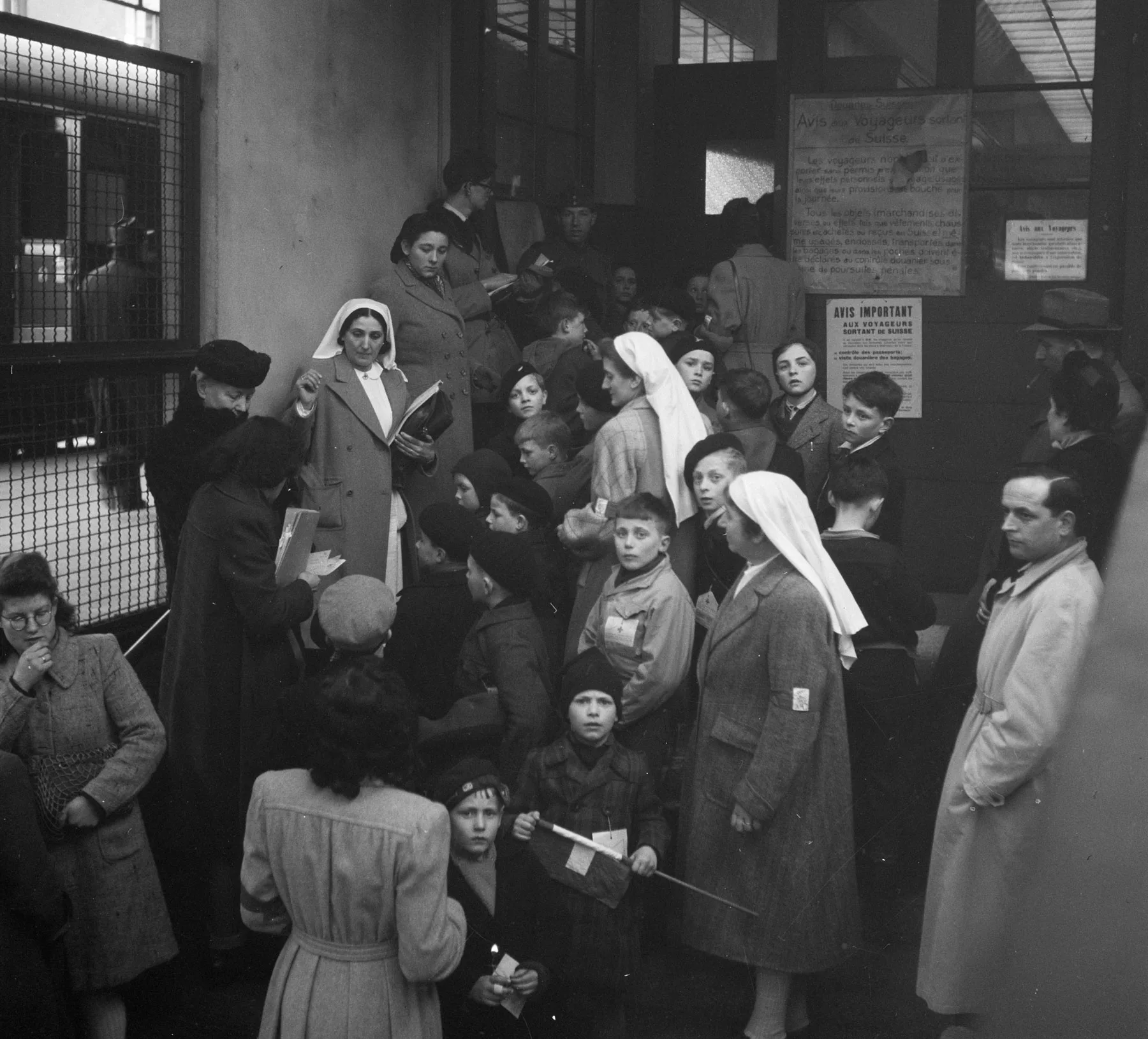
Children waiting to depart, 16 June 1942. The young evacuees returned home after three months in Switzerland.
Children waiting to depart, 16 June 1942. The young evacuees returned home after three months in Switzerland. Swiss National Museum / ASL

Humanitarian assistance or political calculation?

It was hardly surprising that this children’s relief mission should become the focus of national political interest at the end of 1941. As a neutral country surrounded on all sides by warring nations, Switzerland was viewed with suspicion by both the Allies and the Axis powers. Swiss neutrality was coming under increasing pressure, especially due to the country’s economic dealings with both the opposing parties. The Swiss authorities needed to find a way to continue justifying their neutrality. As Switzerland’s efforts to come to the aid of children met with sympathy in foreign policy circles, the Federal Council spotted an opportunity to make its mark. Children were innocent victims of the war and Swiss neutrality was put forward as a means of offering war-scarred children some respite. The SRC’s close ties with the government combined with its symbolic power as the guardian of Swiss humanitarianism enabled it to uphold the children’s relief measures as a humanitarian commitment while at the same time exercising greater control over the rules governing entry to the country and the frequency of entry. When set up in 1942, the SRC was able to capitalise on an existing well-functioning network and so significantly increase the number of children’s convoys: in 1942, 40 trains brought a total of 17,691 children from France and Monaco to Switzerland.

Switzerland was not open to all

Among the ranks of well-dressed French children who posed for the cameras in June 1942 with ribbons in their hair and Swiss flags in their hands, there is a striking omission: there is not one single Jewish child to be seen. Federal Council decisions had already imposed restrictions on the children’s aid mission even before the SRC took over. Whereas it had still been possible to evacuate 300 Jewish children to Switzerland before the outbreak of war in 1939, this was unthinkable just one year later given the nation’s strict refugee policy. If evacuee trains were to continue arriving from France, Jewish children would have to be excluded. This came at a time when the situation of Jewish people in France was becoming increasingly precarious. In the autumn of 1941, the National Socialists had started implementing their three-phase policy through which the Jews of Western Europe were subjected first to expropriation, then to persecution and finally to forced confinement in ghettos. The first train carrying deportees to Auschwitz left Paris in March 1942. The first deportations from the French ‘free’ zone began shortly thereafter in the summer of that year.
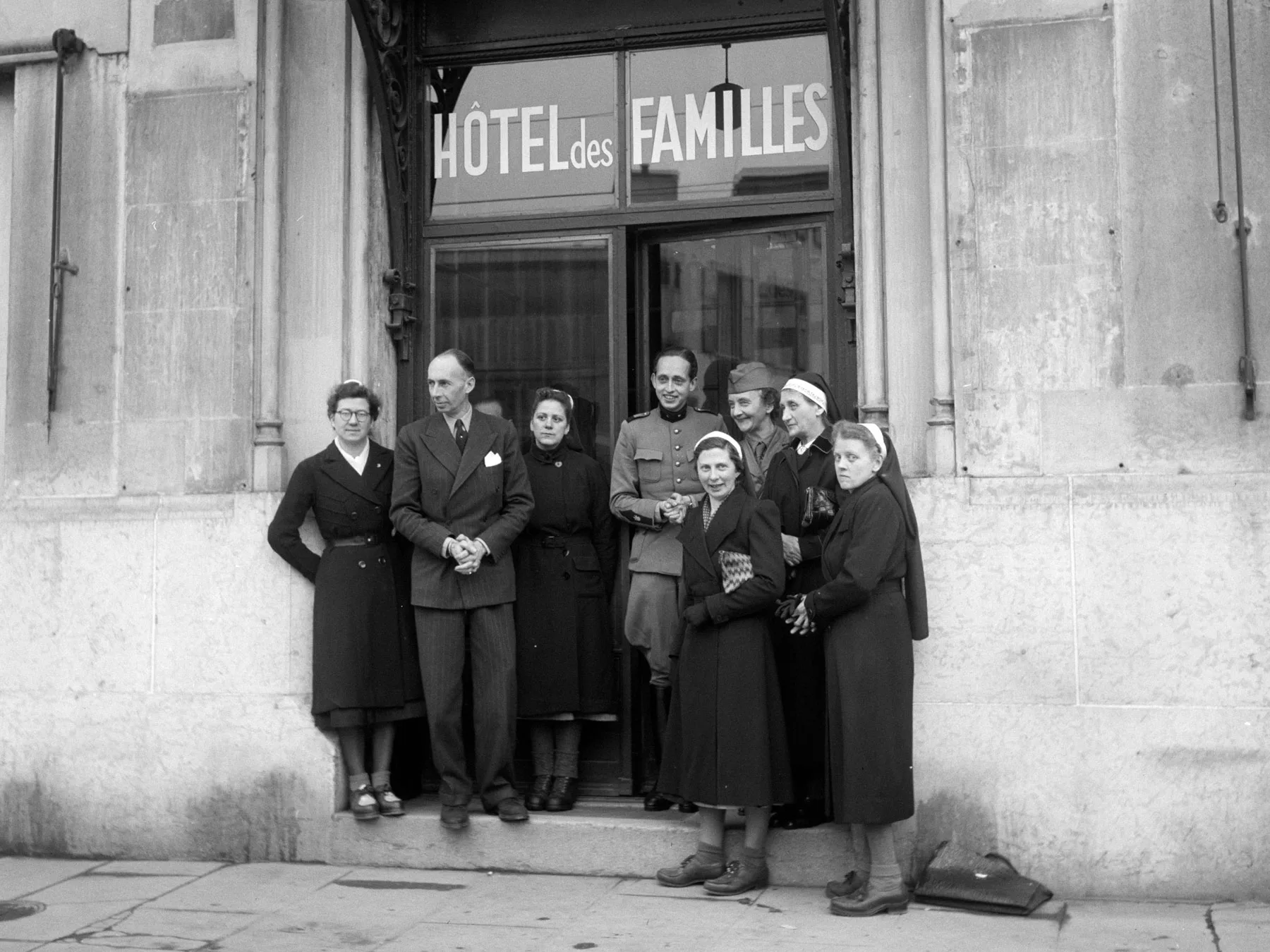
A group of men and women at the entrance to the Hôtel des Familles in Geneva, where the children were lodged before continuing on their way.
A group of men and women at the entrance to the Hôtel des Familles in Geneva, where the children were lodged before continuing on their way. Swiss National Museum / ASL
Modern historiography is in no doubt that the Federal Council and the SRC were aware of the consequences: excluding Jewish children from the children’s trains meant they would be arrested and deported to a concentration camp. Several newspapers criticised both the Federal Council and the relief organisations, accusing them of betraying the principles on which the Red Cross was founded by making racial and religious distinctions between the children. This public backlash did nothing to change the Federal Council’s position. By 11 November 1942, the Third Reich occupied the whole of France and the children’s trains had to stop until the end of the war.

Further posts