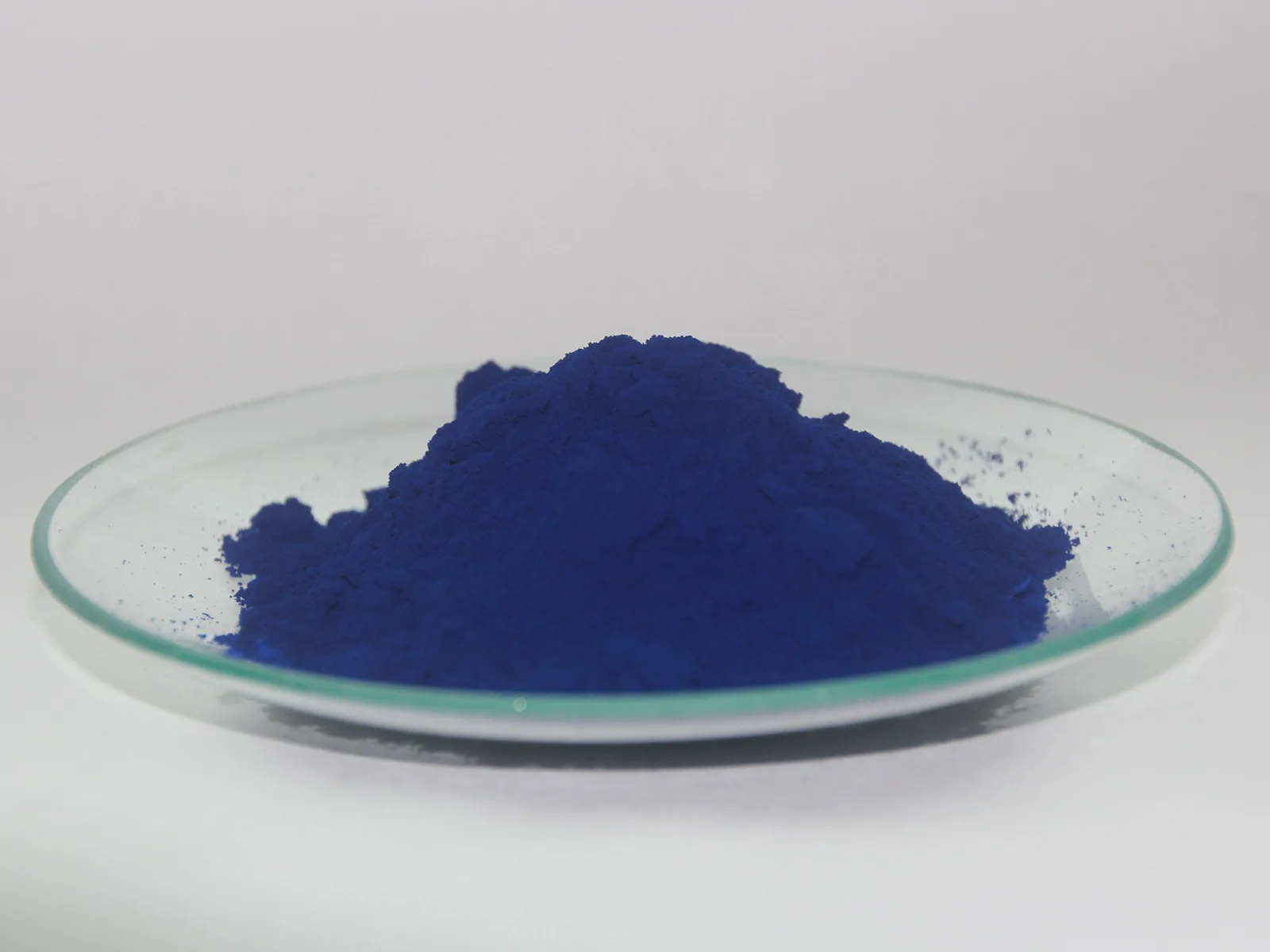
Berlin blue, also known as Prussian blue, revolutionised the world of colours in the early 18th century.
Berlin blue, also known as Prussian blue, revolutionised the world of colours in the early 18th century. Wikimedia

The Swiss alchemist who invented a new shade of blue

Johann Jacob Diesbach was trying to develop a red lacquer. However, to his surprise, he came up with a vibrant blue. This is the story of a Berlin-based Swiss inventor.

Barbara Basting

Barbara Basting

Barbara Basting worked as a cultural editor and currently heads the visual arts division in the City of Zurich’s Culture Department.
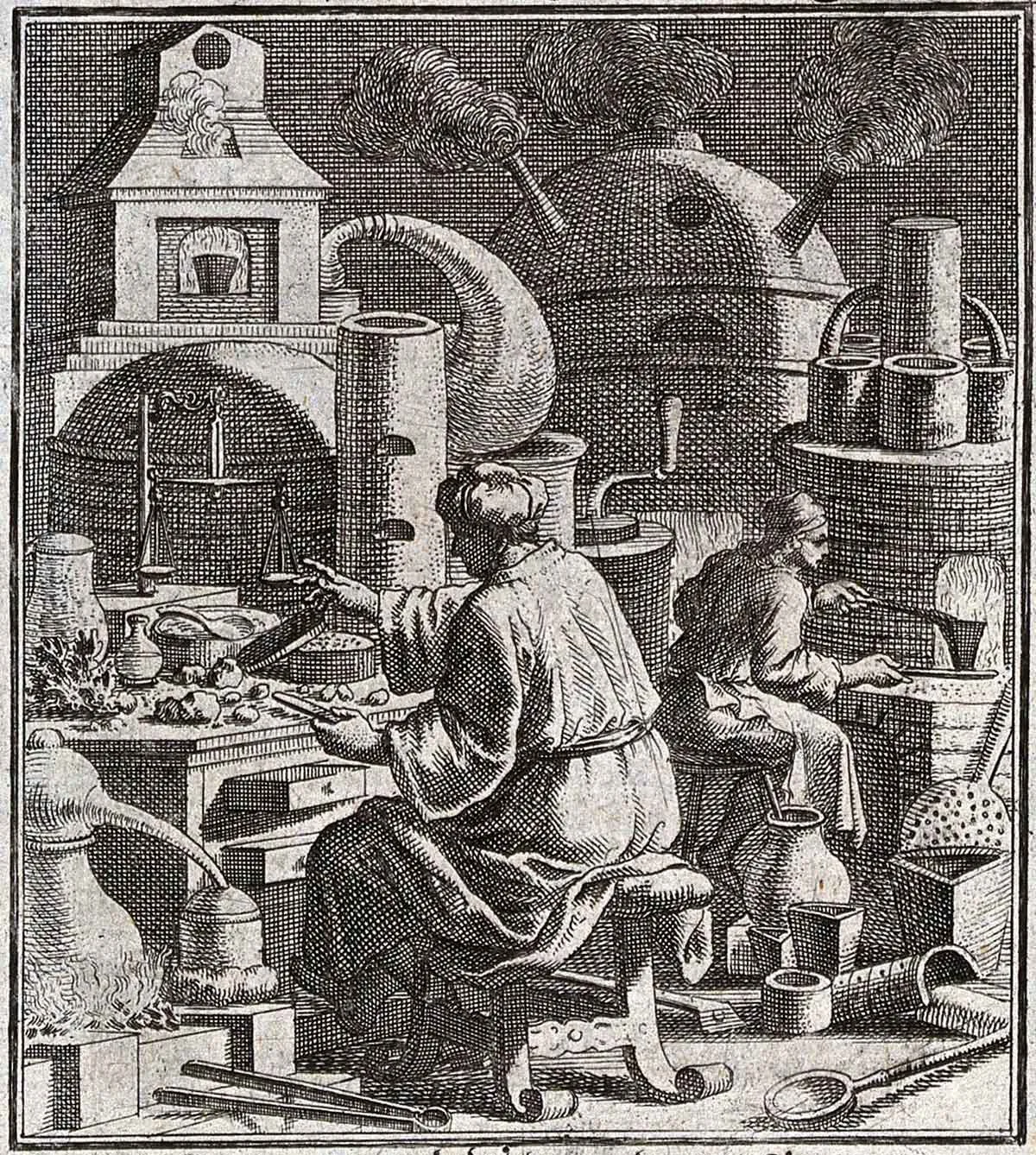
The word “chemistry” stems from “alchemy”. There was no clear distinction between the two disciplines until Antoine Lavoisier’s 1789 work on systemisation. The conversion of dirt or other readily available raw materials into gold or at least silver, in other words, achieving a large profit through minimal work, was something of a priority for scientists all over the world until well into the 18th century. It was also something that alchemists enthusiastically tinkered with. They were the people who would be generally known as freaks today; some of them were quacks or crackpots, while others were inventors who enjoyed experimenting and were the forerunners of modern chemistry.
Two alchemists trying to produce gold. Print by Christoph Weigel, 1698.
Two alchemists trying to produce gold. Print by Christoph Weigel, 1698. Wellcome collection
Royal courts having fallen on hard times were particularly receptive to charlatan alchemists. Hence the interest of, for example, Prussian Prince-Elector Friedrich III, subsequently King Friedrich I of Prussia, who had got himself into debt with some prestige building projects, in hosting some bizarre alchemical pursuits at his Berlin court around 1700.

Alchemy: the ubiquitous science
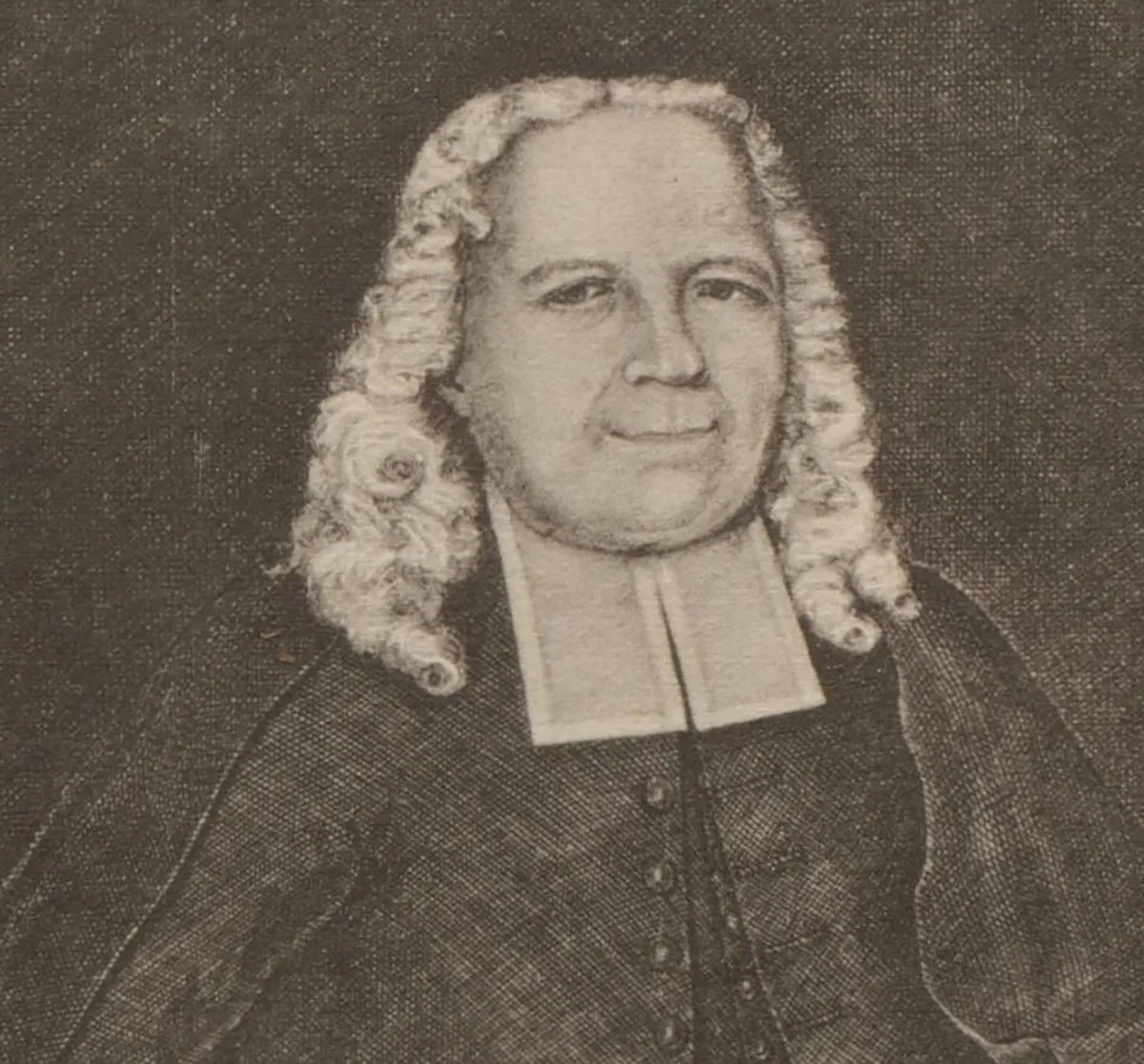
The alchemy scene in Berlin was initially less successful than the one at the court of Augustus the Strong in Dresden, where a man called Böttger managed to uncover the secret to producing ‘white gold’ (porcelain), thereby earning his release from prison. People posing as alchemists whose experiments were expensive but useless, lived dangerously and were ostracised or even executed on occasion.
However, serendipitous outcomes to alchemical experiments were not confined to Dresden; Berlin’s alchemists also made history with some of their findings. Take Berlin blue, as an example, better known today as Prussian blue. It was the first synthetically produced, inorganic blue pigment. The invention of this vivid shade of blue had a direct influence on the art scene as well as the manufacture of materials.
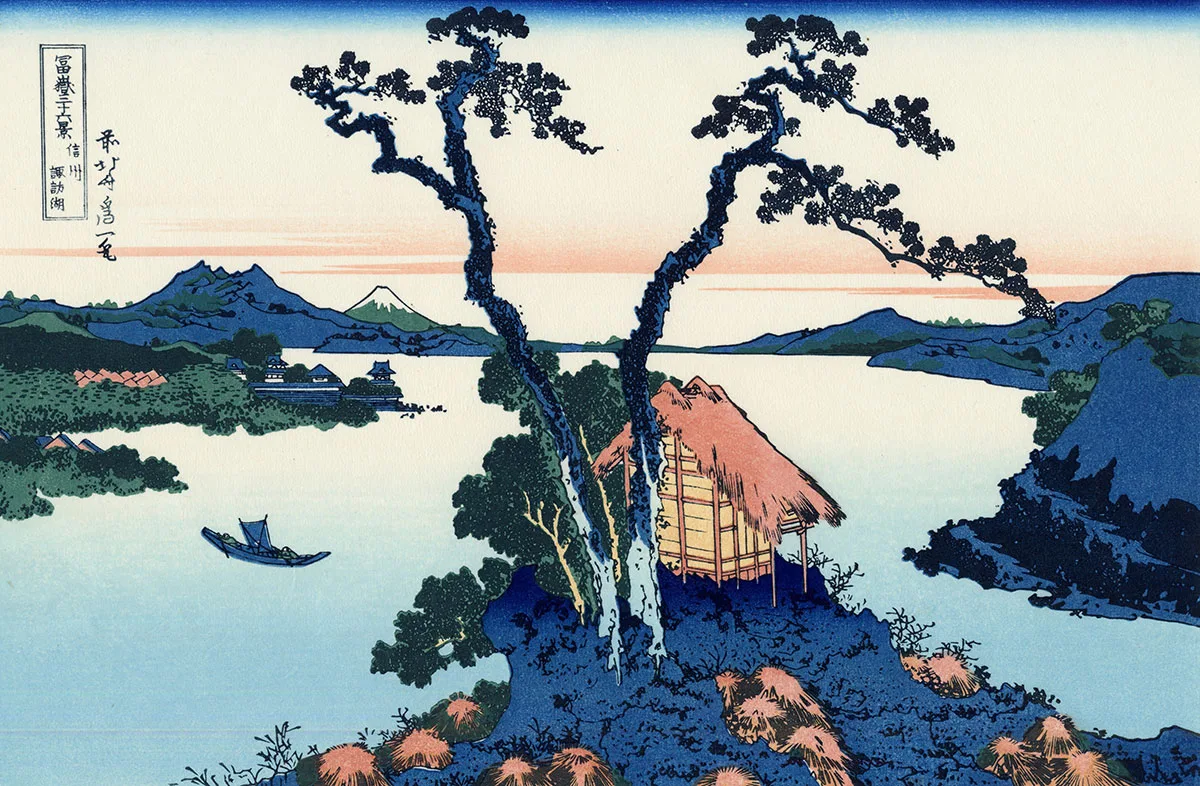
In fact, Berlin blue triggered something of a revolution in the art world. Many painters including Watteau, the Impressionists, the Japanese Hokusai and Picasso during his Blue Period used the pigment. It was vivid, intense, lightproof and, most importantly, cheap.
The vivid blue makes a striking impression on this woodblock by Katsushika Hokusai. The picture was first displayed to the public in 1830.
The vivid blue makes a striking impression on this woodblock by Katsushika Hokusai. The picture was first displayed to the public in 1830. Wikimedia
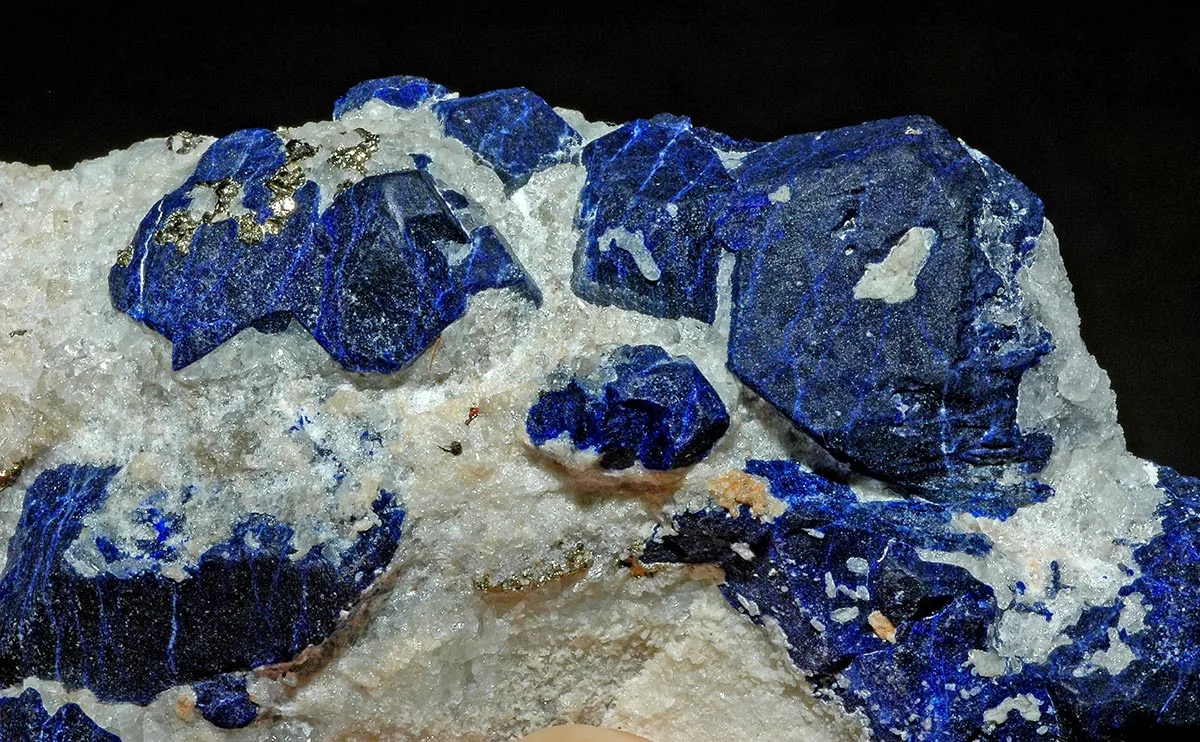
Prior to Diesbach’s discovery, blue pigment for oil paintings had been notoriously expensive. That was because the only bright blue that did not fade was ultramarine made from lapis lazuli. In those days, the only known source of the semi-precious stone, which had to be laboriously ground to produce the pigment, was a remote location in Afghanistan. The protracted import of lapis lazuli via Venice, which was the main trading centre for colours in the late Middle Ages and Renaissance, made it an expensive status symbol.
The coveted semi-precious stone lapis lazuli – an ounce cost as much as an ounce of gold.
The coveted semi-precious stone lapis lazuli – an ounce cost as much as an ounce of gold. Wikimedia
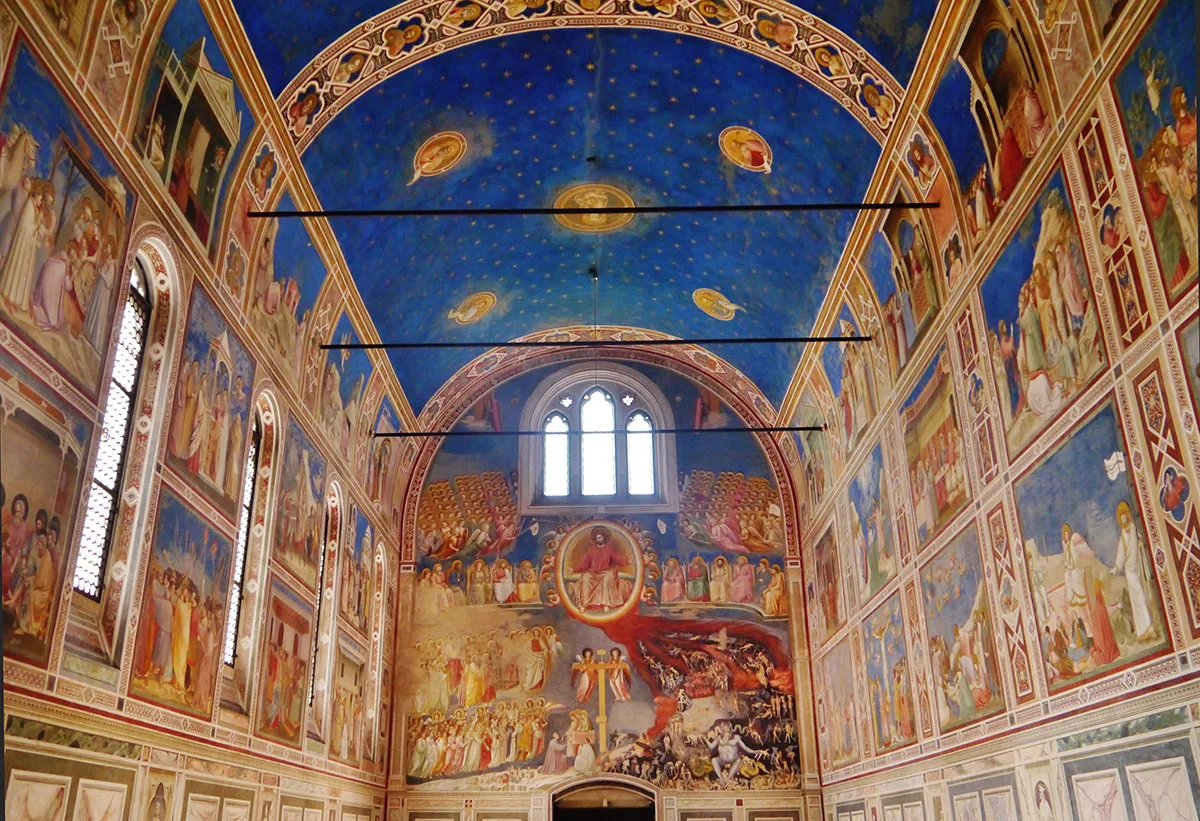
As artists billed their clients separately for paint, a particularly wealthy patron could make a statement by using lapis lazuli blue, for example on a donated altar piece. Blue was mainly used for the garments of Mary the Mother of God. Although it was also notably used by Giotto di Bondone in his starry sky painted in bright Giotto-blue, which arches over his frescoes in the Scrovegni chapel in Padua. The work commissioned by banker Enrico Scrovegni redefined the dimensions of fresco art, due in no small measure to his extensive use of lapis lazuli.
Centuries later and the blue still shines from the ceiling of the Scrovegni chapel. Giotto applied the colour made from lapis lazuli stone between 1303 and 1305.
Centuries later and the blue still shines from the ceiling of the Scrovegni chapel. Giotto applied the colour made from lapis lazuli stone between 1303 and 1305. Wikimedia
It took a laboratory accident to uncover a cheaper shade of blue, i.e. Berlin blue. In 1700, Berlin theologian, doctor and alchemist Johann Konrad Dippel was working on a universal remedy. He called it Dippel’s animal oil and claimed it was a life elixir that could cure almost all illnesses and injuries. The oil was sold by chemists up to the 19th century, and its creator is seen as the inspiration for Mary Shelley’s Frankenstein. Dippel’s experiments landed him in significant debt and he cut back on expenses wherever he could – with unexpected consequences. Swiss colour expert Johann Jacob  Diesbach worked in Dippel’s laboratory in 1704. He was from a Bernese family and was part of a Swiss contingent living in Berlin at the time, whether to escape the religious persecution of pietists, benefit from settlement projects or serve as mercenaries in the Swiss Guard of Elector and Duke Friedrich III of Brandenburg.
Alchemist and inventor Johann Konrad Dippel wanted to achieve a medical coup with his animal fat.
Alchemist and inventor Johann Konrad Dippel wanted to achieve a medical coup with his animal fat. Wikimedia / Staats- und Universitätsbibliothek Hamburg
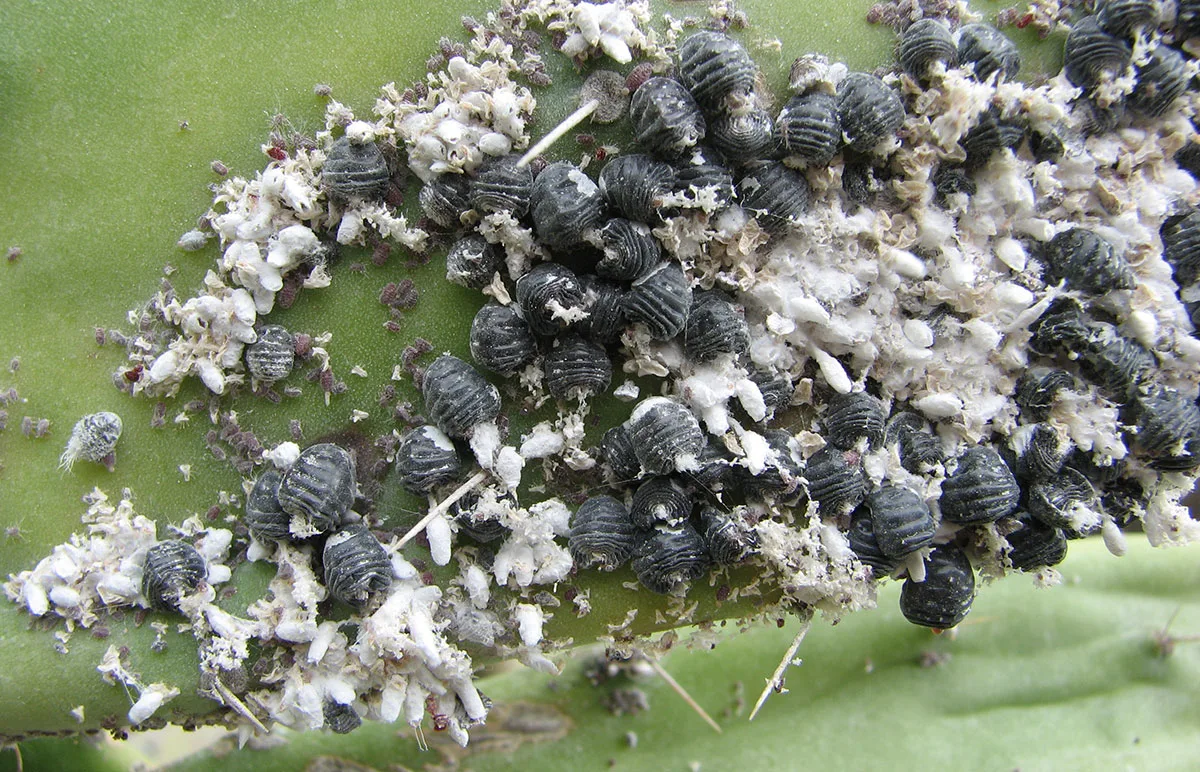
Diesbach, of whom there are no images in circulation, was particularly interested in developing red lacquer known as Florentine lacquer extracted from dried cochineal lice. One day Diesbach asked Dippel for potash as he had none left – the lice were boiled and the colour pigment was extracted using (among other things) potash (potassium carbonate).
However, the result of the precipitation using Dippel’s potash was a deep blue instead of the expected red. Diesbach could not understand what had happened, although the parsimonious Dippel had an idea: his potash had been impure. He had previously used it to produce his animal oil by distilling animal blood with potash. Dippel quickly realised that the impurities had changed the red colour during the distilling process. The chemical process had been triggered by the iron in the blood. Johann Konrad Dippel experimented on the basis of his suppositions and refined the formula.
Cochineal lice are still used as the raw material for the colour red.
Cochineal lice are still used as the raw material for the colour red. Wikimedia / Leyo
However, he evidently made no attempt to steal Diesbach’s thunder. A chronicle from that period, which uses the term Berlin Blue for the first time, cites Diesbach as the inventor and names 1706 as the year of “enlightenment”. Berlin theologian and natural scientist Johann Leonhard Frisch was less sensitive about cashing in on another person’s invention and conducted a brisk trade in Berlin blue shortly afterwards.
At the same time, Frisch was ideally positioned to do that, whereas Dippel was not. Following a brief spell in prison due to his debts and other disputes, Dippel had fled to the Netherlands in 1707. Frisch, on the other hand, was broadly educated and had also made a name for himself with his natural history illustrations. First and foremost, however, he was a close associate of philosopher Gottfried Wilhelm Leibniz who was President of the Society of Sciences at the time. As a member of the society, he kept Leibniz informed of developments and discoveries by Berlin’s alchemists. He also told him about Berlin blue, which he occasionally referred to as Prussian blue.
Theologian and natural scientist Johann Leonhard Frisch brought fresh impetus to the story of the invention of Berlin blue.
Theologian and natural scientist Johann Leonhard Frisch brought fresh impetus to the story of the invention of Berlin blue. Wikimedia / Deutsche Akademie der Wissenschaften
Frisch initially named Diesbach as the inventor and even employed him as an associate until 1716. But Frisch took the credit for refining the formula. He subsequently dismissed Diesbach’s contribution entirely. Using the terminology of today, Frisch was a type of ‘product manager’ for Berlin blue. Frisch’s connection to Leibniz brought the colour to the attention of Basel mathematician Johann Bernoulli, a member of the Prussian Academy. He even received a sample of the bright colour.
The departed Dippel meanwhile had not forgotten about Berlin blue at his base in the Netherlands. He also produced and sold it. That’s how the painter Pieter van der Werff was able to use the colour as early as 1709 for his work ‘Entombment of Christ’ painted in the Netherlands. Frenchman Antoine Watteu was another of the many artists to use the pigment when it was still something of a novelty, between 1710 and 1715. Another was the less well-known Swiss painter Joseph Werner, who worked at the Academy of Arts in Berlin.
The invention sparked a flurry of activity. In 1724, English doctor John Woodward published the formula given to him by Berlin Royal Court Apothecary Caspar Neumann. Neumann had reconstructed the formula. Other chemists also came up with their own formulations after that. A patent law, something which would have benefited the original inventors, was not passed until 1877 in Germany.
Berlin Blue was also exported in bulk to China and Japan during the 19th century, which explains how Hokusai had been able to use it. From 1843, it formed the basis for cyanotypes, blueprints (the forerunner to photocopies) and it is still used in medicine as an antidote to some types of radioactive poisoning.

Further posts