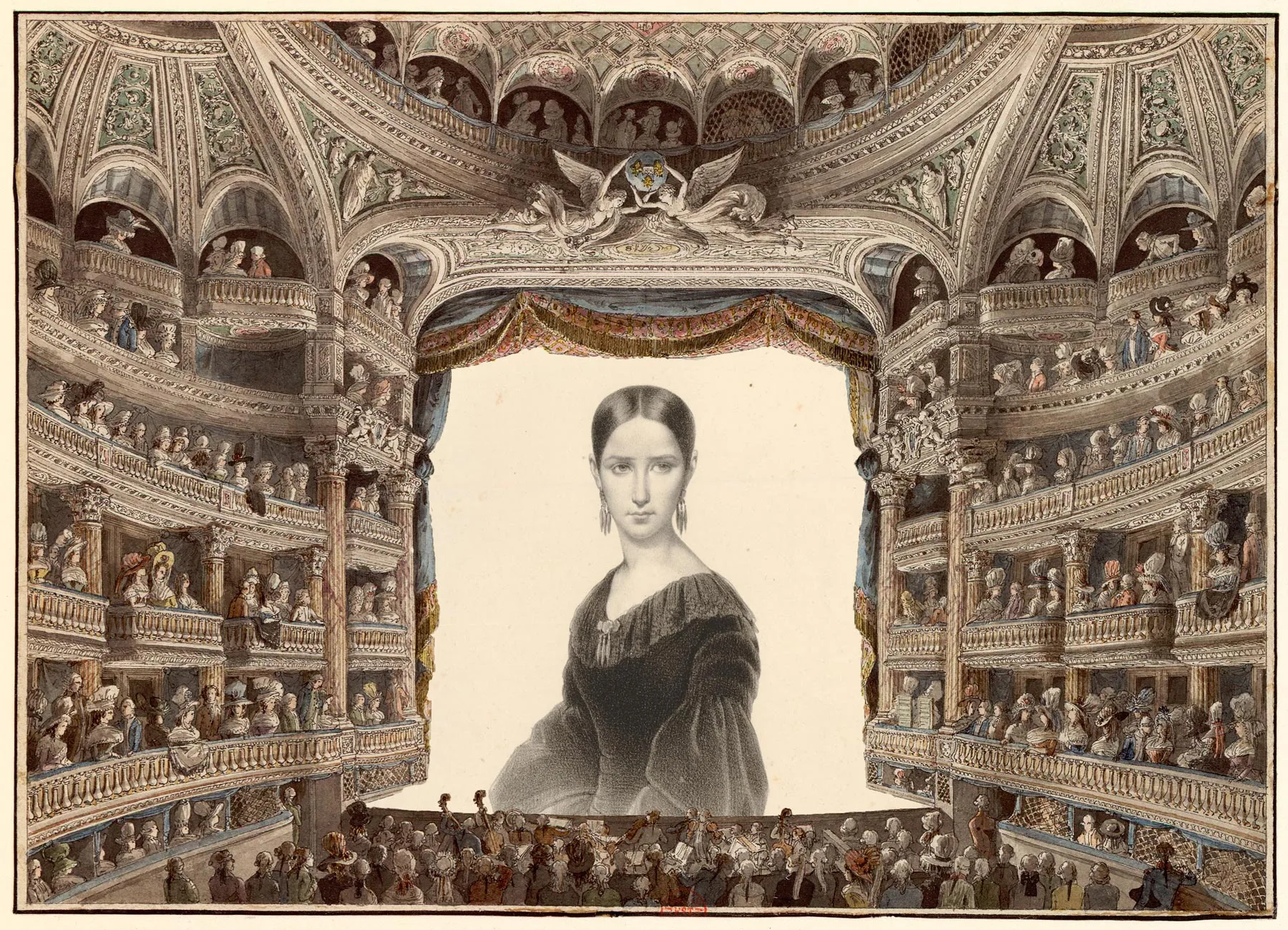
The life of Rachel Félix was one of contrasting fortunes and artistic passions.
She made it to the big stages of her time: Rachel Félix, born in Mumpf in the canton of Aargau. Images: Wikimedia

Switzerland’s Jewish Queen of the Stage

The life of Rachel Félix was one of contrasting fortunes and artistic passions. Born into a family of impoverished Jewish peddlers in Mumpf, Rachel captivated theater-going audiences from New York to Moscow with her electric acting and stirring voice. She revived the fortunes of the Comédie-Française in Paris and received universal acclaim as the leading actress of her era before dying tragically of tuberculosis at the age of 36.

James Blake Wiener

James Blake Wiener

James Blake Wiener is a world historian, Co-Founder of World History Encyclopedia, writer, and PR specialist, who has taught as a professor in Europe and North America.

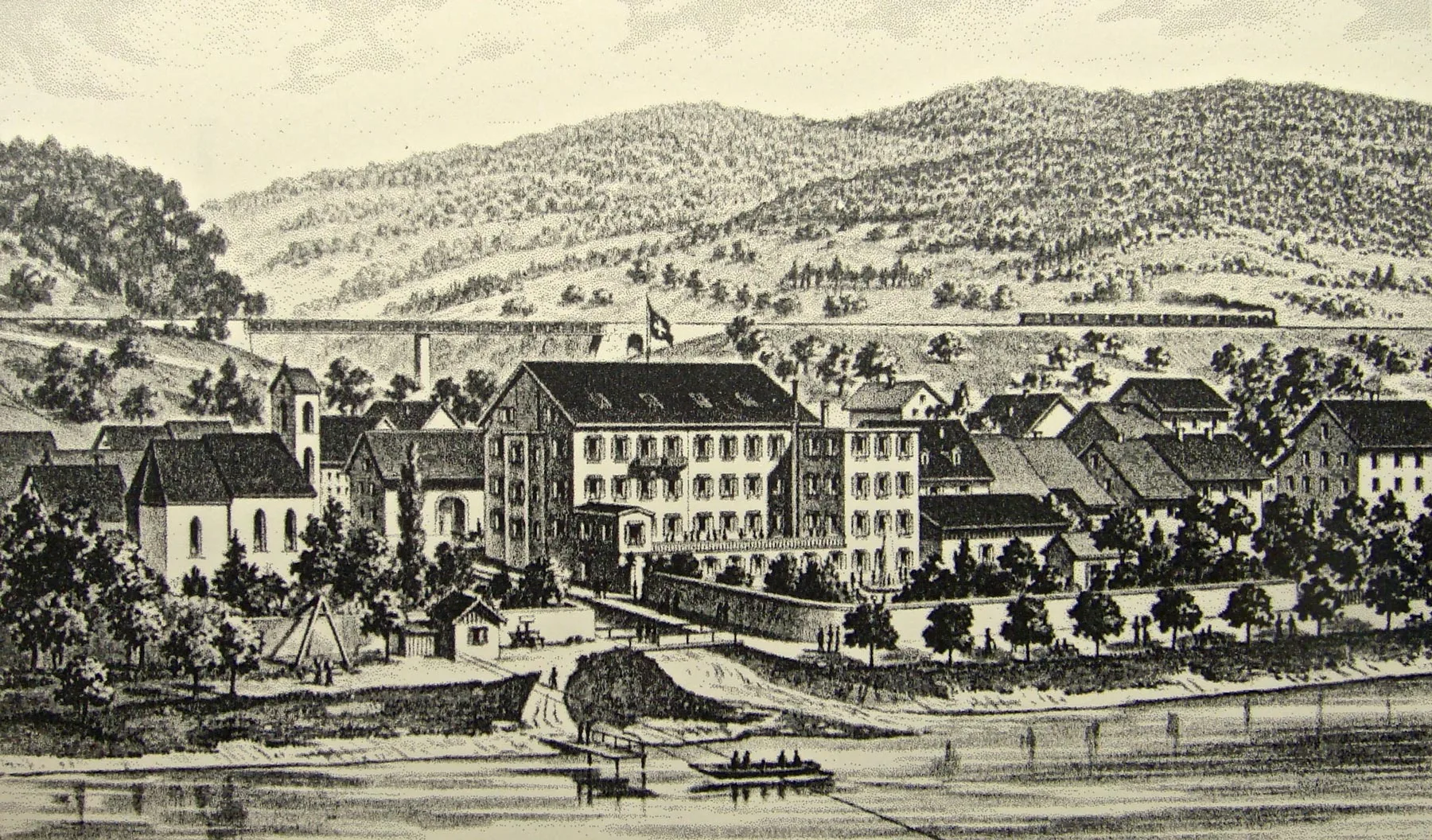
Élisabeth-Rachel Félix (1821-1858), better known by her stage name “Mademoiselle Rachel”, was born at the Soleil d'Or inn in Mumpf, Canton Aargau, Switzerland, where her mother, weary from constant travel and in the latter stages of pregnancy, had been forced to stop. Rachel’s family had been bound for Endingen — the only town in the region aside from Lengnau, which tolerated the presence of Jews. Her father, Jacob Jacques Félix, made his living as a peddler, while her mother, Esther Thérèse Hayer, traded in second-hand apparel and sold trinkets. Rachel’s early years were thus marked by the precariousness of life on the margins of society. The Félix family wandered through Switzerland, Germany, and France, with Rachel and her siblings singing and begging for coins, while hunger and disease were never far behind.
View of Mumpf and the Soleil d'Or inn around 1880.
View of Mumpf and the Soleil d'Or inn around 1880. Wikimedia
In 1831, Rachel's parents moved to Paris to join the growing Jewish community in the Marais district, hoping the city would provide new opportunities. A few months later, Jacob and Esther arranged private tutorials for their children with the scholar and musician Alexandre-Étienne Choron, who had reopened the Paris Conservatory in the aftermath of the Napoleonic Wars. Choron found the precocious Rachel musically talented but a better fit for the theater due to her contralto voice. Choron therefore introduced the young Rachel to the French actor and sociétaire of the Comédie-Française, Saint-Aulaire. At the Théâtre Molière, Saint-Aulaire trained Rachel in a blend of classical, stylized acting and naturalistic emotion, though his instruction also emphasized lyrical diction and melodramatic affectations. In her spare time, Rachel read the great plays of Racine, Corneille, and Molière, and refined her French, although she never forgot her native Yiddish and German.

Don’t think it’s so easy to bury people of my race and merit.
An excerpt from a letter written by Rachel to her mother, Esther
Rachel made her theatrical debut at the drama school of the Passage Molière in 1835. It was not until her acclaimed performance in La Vendéenne at the Théâtre du Gymnase that she caught the attention of the Comédie-Française, which she joined in 1838. The Comédie-Française had teetered on the edge of bankruptcy for several years before Rachel’s arrival — disruptive political brawls between audience members had become routine, and tired performances of the old classics did little to inspire theater-goers or ameliorate dire financial straits. Rachel, still only a teenager, brought vitality and raw emotion back to classical theater through her portrayal of Camille in Corneille’s Horace. Her successive roles – Emilie in Cinna, Pauline in Polyeucte, Hermione in Andromaque, Roxane in Bajazet, and the title role in Phèdre –  restored the Comédie-Française to national prominence.
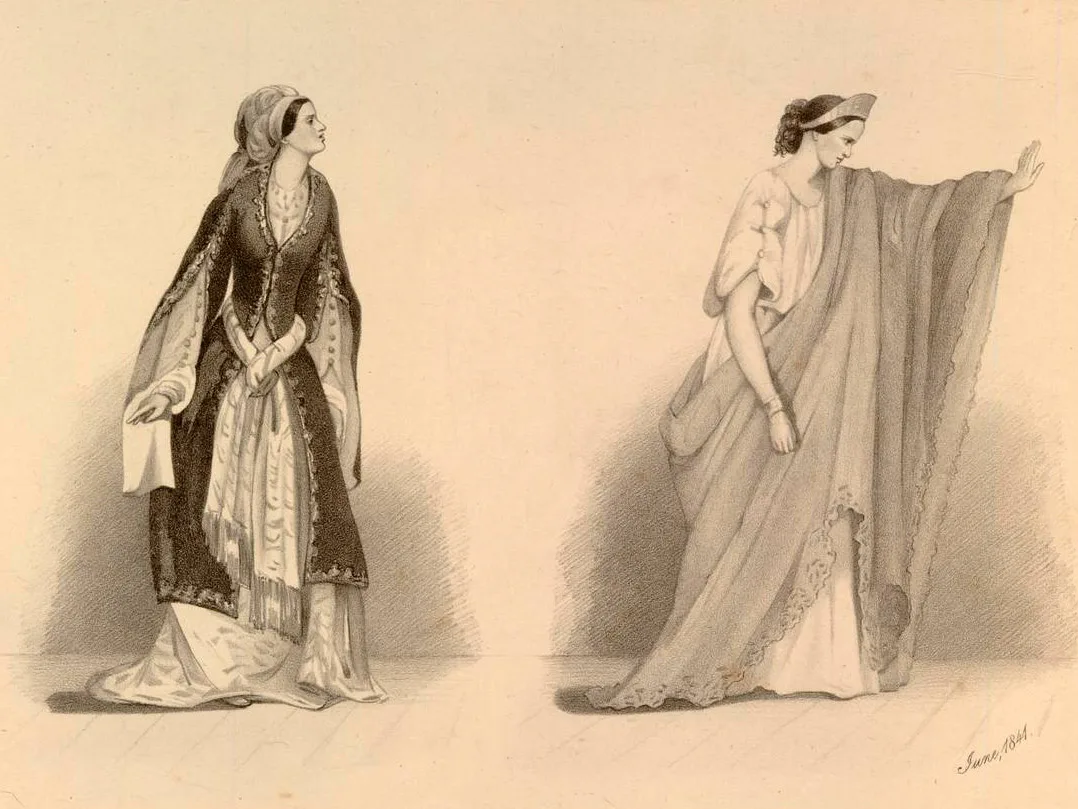
Rachel in the roles of Roxane in Bajazet (left) and Hermione in Andromaque (right), lithographs from 1841.
Rachel in the roles of Roxane in Bajazet (left) and Hermione in Andromaque (right), litographs from 1841. Wikimedia
Image 01 of 03
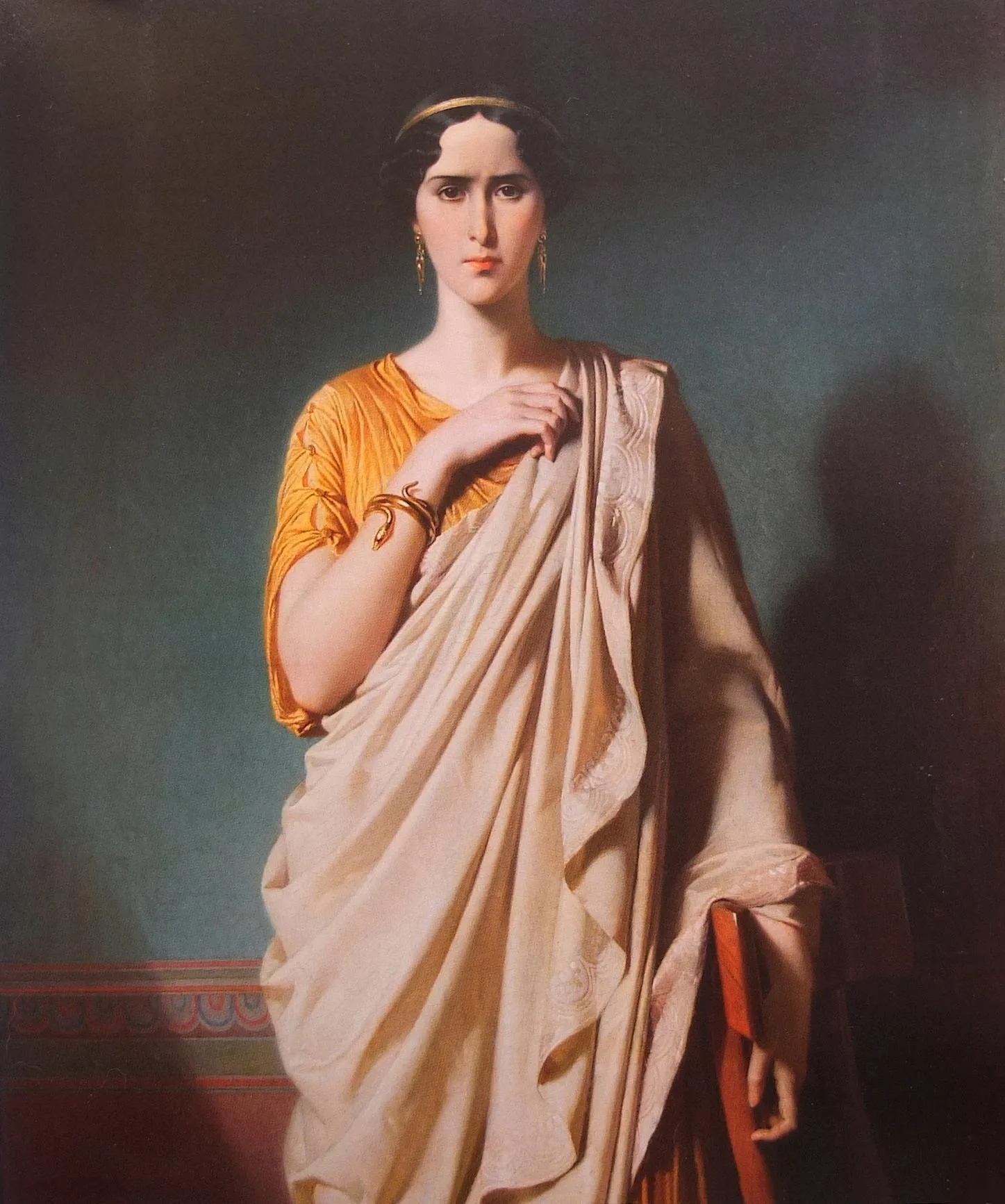
A painting of Rachel in the role of Camille in Horace.
A painting of Rachel in the role of Camille in Horace. Wikimedia
Image 01 of 03
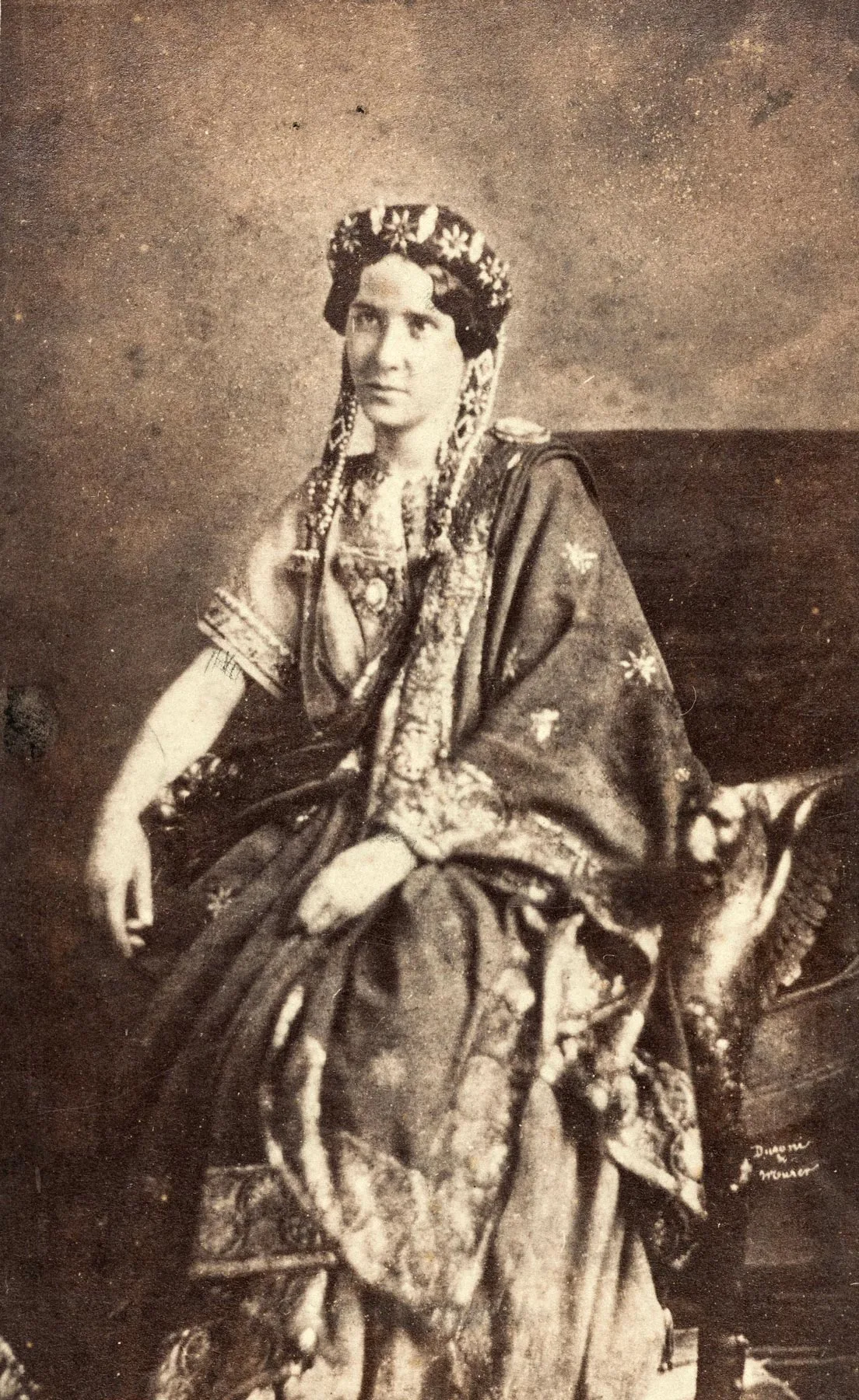
A photograph of Rachel, printed on a carte de visite. In the early days of photography, most actors and actresses had studio photographs taken in everyday dress or theatrical costume for such cards.
Photograph of Rachel, printed on a carte de visite. In the early days of photography, most actors and actresses had studio photographs taken in everyday dress or theatrical costume for such cards. Paris Musées
Image 01 of 03
The years between 1840 and 1855 marked the apex of Rachel’s career. The depth and range of her performances, in addition to her commanding physical presence and distinctive voice, garnered her an avid and international following. She capitalized on her celebrity with extensive tours throughout France, Great Britain, the Low Countries, Italy, Switzerland, Prussia, Austria, and Imperial Russia. Rachel performed privately to an enthralled Queen Victoria and Prince Albert at Windsor Castle in 1841, and she charmed Friedrich Wilhelm IV of Prussia in Berlin in 1850. Her artistic talent also attracted the admiration of nineteenth-century French society's leading figures: Chateaubriand, Stendhal, Lamartine, Flaubert, Delacroix, Hugo, and Dumas (elder and junior), along with Madame Récamier, George Sand, and Mathilde Bonaparte, all sang her praises. Rachel’s sharpness on stage was matched by her sense of humor, which was equally evident offstage. Once, on a day off from a series of performances in Rome, she toured the Vatican Gardens with her good friend the Marquis de Custine. With a mischievous twinkle in her eye, she stole two oranges, which she quickly rinsed in holy water and placed in her purse — “Jewess that I am” — believing they would bring her good luck.
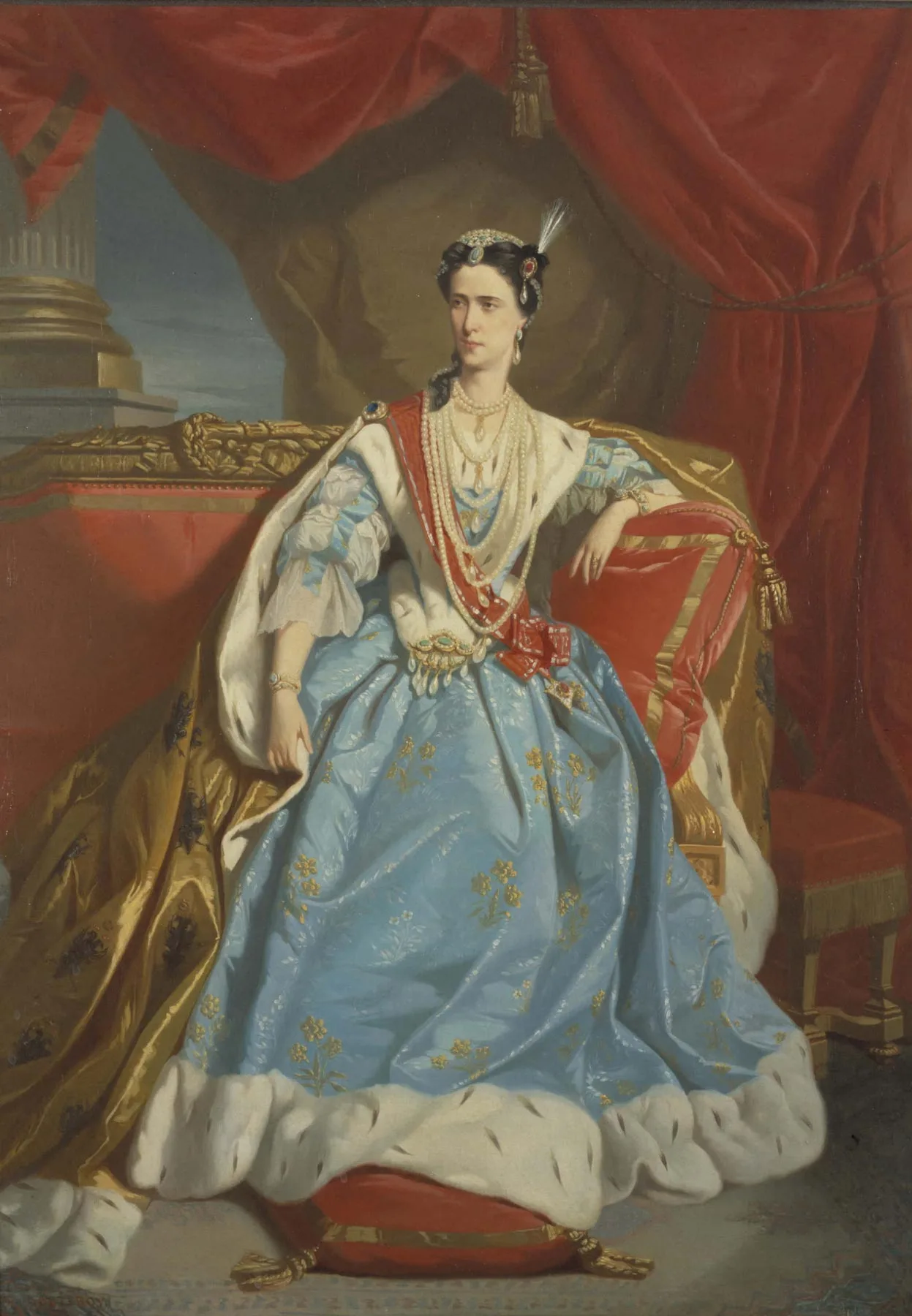
“Moscow will soon be taken; the Muscovites are paying back with interest all they took from us in 1812.” — Rachel, on her rapturous welcome to Moscow in 1853. Upon her return to France, Rachel played Catherine I of Russia in La Czarine.
“Moscow will soon be taken; the Muscovites are paying back with interest all they took from us in 1812.” — Rachel, on her rapturous welcome to Moscow in 1853. Upon her return to France, Rachel played Catherine I of Russia in La Czarine. Wikimedia
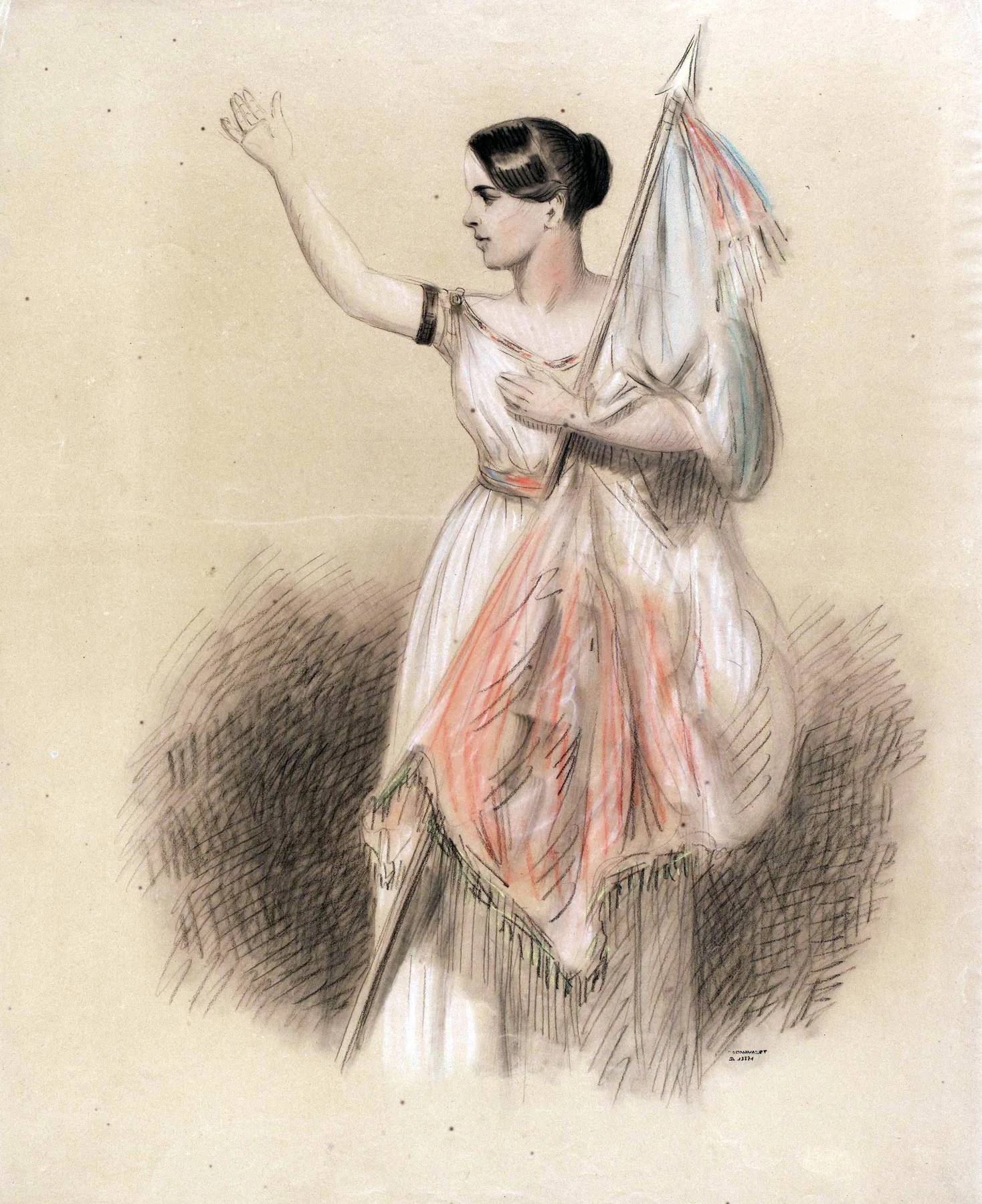
Fame and artistic brilliance, however, offered Rachel no protection from prejudice. French Revolutionary reforms had already granted Jews equality before the law and property rights, and Napoleon I confirmed this status, but many in France still questioned Jewish loyalty to the state. The remarkable accomplishments of Halévy and Meyerbeer in the arts, and of the Rothschilds and Foulds in finance, challenged long-standing social hierarchies and unnerved Parisian society. The spectacular rise of a “Jewish queen of tragedy” amplified anti-Semitic attacks against Rachel in the public arena. Rachel’s father, Jacob, further stirred controversy through his sharp financial maneuvers and his insistence that she receive sociétaire status at the Comédie-Française. The more the French press turned against her, the more determined Rachel was to become France’s premier actress and answer to no one but herself. Rachel never converted to Catholicism and deliberately sought roles that explored Jewish identity — Madame Girardin's Judith, and Racine's Athalie and Esther. Yet, she was equally committed to demonstrating loyalty to her adopted France — during the Revolution of 1848, her renditions of La Marseillaise became a national sensation.
Drawing of Rachel singing La Marseillaise at the Comédie-Française.
Drawing of Rachel singing La Marseillaise at the Comédie-Française. Wikimedia
Rachel’s religion was not the only aspect of her life that invited public scrutiny — her personal life proved just as provocative.. She never married, preferring instead to live alone in a series of beautiful Parisian apartments, and she made no secret of relishing male company and attention. Her very public love affairs soon became the talk of Europe. Her first prominent lover was no less than Louis Philippe I’s third son, François de Bourbon-Orléans, the Prince of Joinville. Rachel’s long-term affair with Napoleon I’s illegitimate son, Count Alexander Colonna Waleski, resulted in the birth of a son, Alexandre Antoine Walewski, in 1844. Her second child, Victor Gabriel Félix, born in 1848, was the product of a passionate liaison with Arthur Bertrand, the son of the celebrated French general, Henri-Gatien Bertrand. Other notable lovers included the poet Alfred de Musset, Napoleon III, and Alexander Dumas (the younger). Despite the sensational gossip circulated about Rachel's private life, two facts stand out:  She remained on good terms with all her former lovers, and her sons received an excellent education and were raised Catholic.

What a sorrow to see such a beautiful thing born, when one is about to die.
The elderly Châteaubriand on Rachel Félix in conversation with Madame Récamier
Energetic and high-spirited by nature, Rachel distinguished herself from her fellow actors by virtue of her strong work ethic. However, by the early 1840s, Rachel’s health was already in a delicate state. Her frequent coughs and fevers led to such prolonged absences that she even submitted letters of resignation to the Comédie-Française in 1846. After completing a successful tour of Imperial Russia in 1853, Rachel made the fateful decision to tour the United States in 1855. She was the first critically acclaimed French actress to do so, and she believed she could replicate the financial success of Swedish soprano Jenny Lind’s American tour. Although she was well-received in New York City and Boston, box office receipts were modest compared to her European engagements. A bout of pneumonia exacerbated by an unheated Philadelphia theater forced Rachel to cancel performances of Horace, and American doctors advised her to rest and move south. Rachel’s final public engagement took place in Charleston, South Carolina. From there, she returned to France via Cuba, but she never regained her health and she retired from the stage. In a belated attempt to heal her lungs, Rachel traveled to Egypt, but the warm, dry climate did little to abate the advance of tuberculosis. Rachel died on January 3, 1858, in Le Cannet, France, at the age of 36. Napoleon III sanctioned a grand public funeral for Rachel, during which tens of thousands of Parisians lined the streets to mourn and pay their respects.
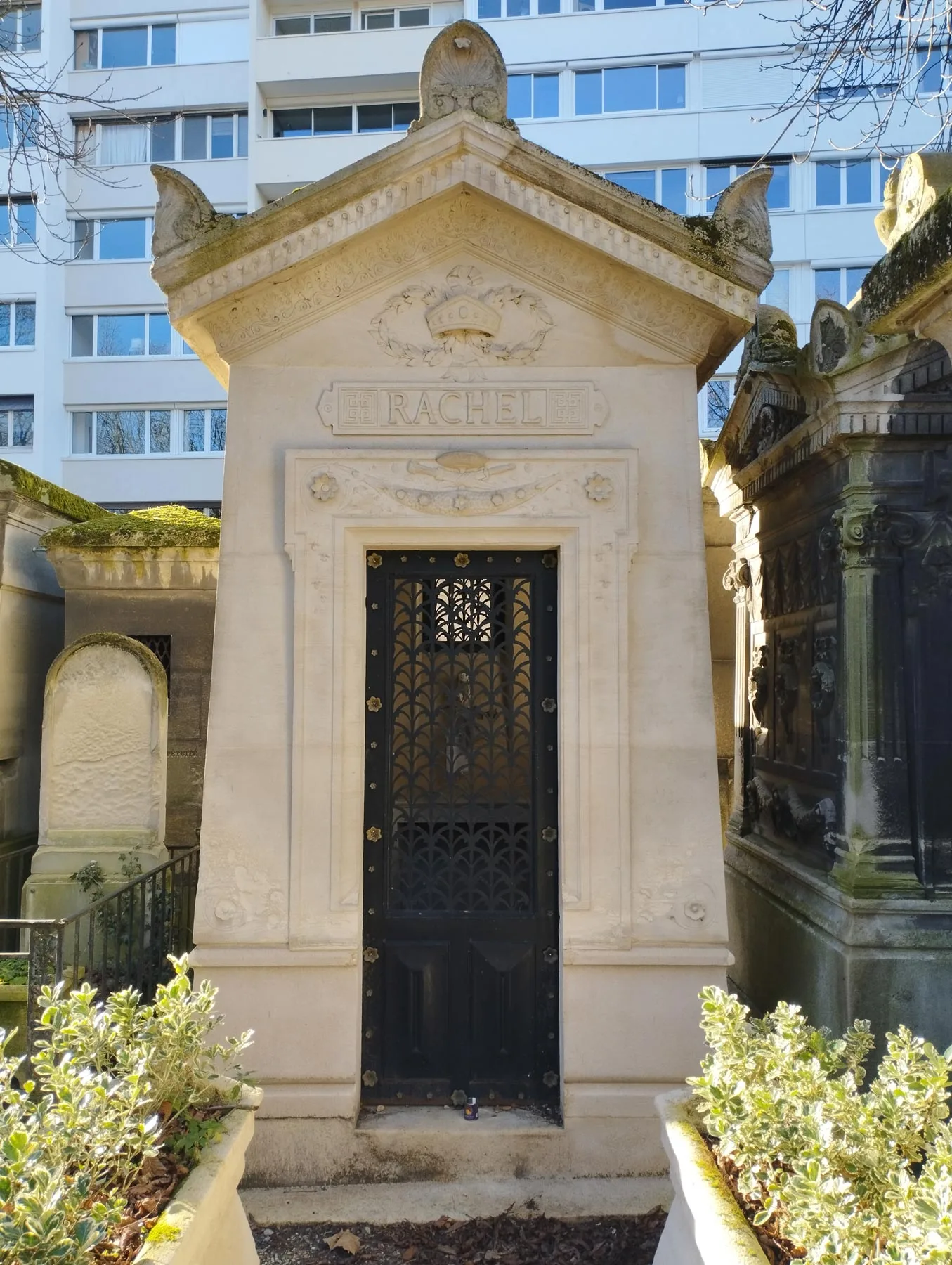
Heute kann man Rachels Grab im jüdischen Bereich des Pariser Friedhofs Père Lachaise besuchen.
Today, one can visit Rachel's tomb at Paris’ Père Lachaise Cemetery within the Jewish enclosure. Wikimedia
Born into poverty in Mumpf and arriving in Paris at nine with nothing — no French, no money, and no name anyone knew— Rachel had every reason to vanish into the Marais and be forgotten. Instead she became the most celebrated actress of her time, navigating antisemitism, scandal, and ill health, while embracing her roots, professional independence, and art with equal ferocity. In an era that questioned whether an actress could command the same reverence as an actor, and whether a Jewish woman could embody French culture, Rachel answered both triumphantly from the stage, night after night.

Further posts