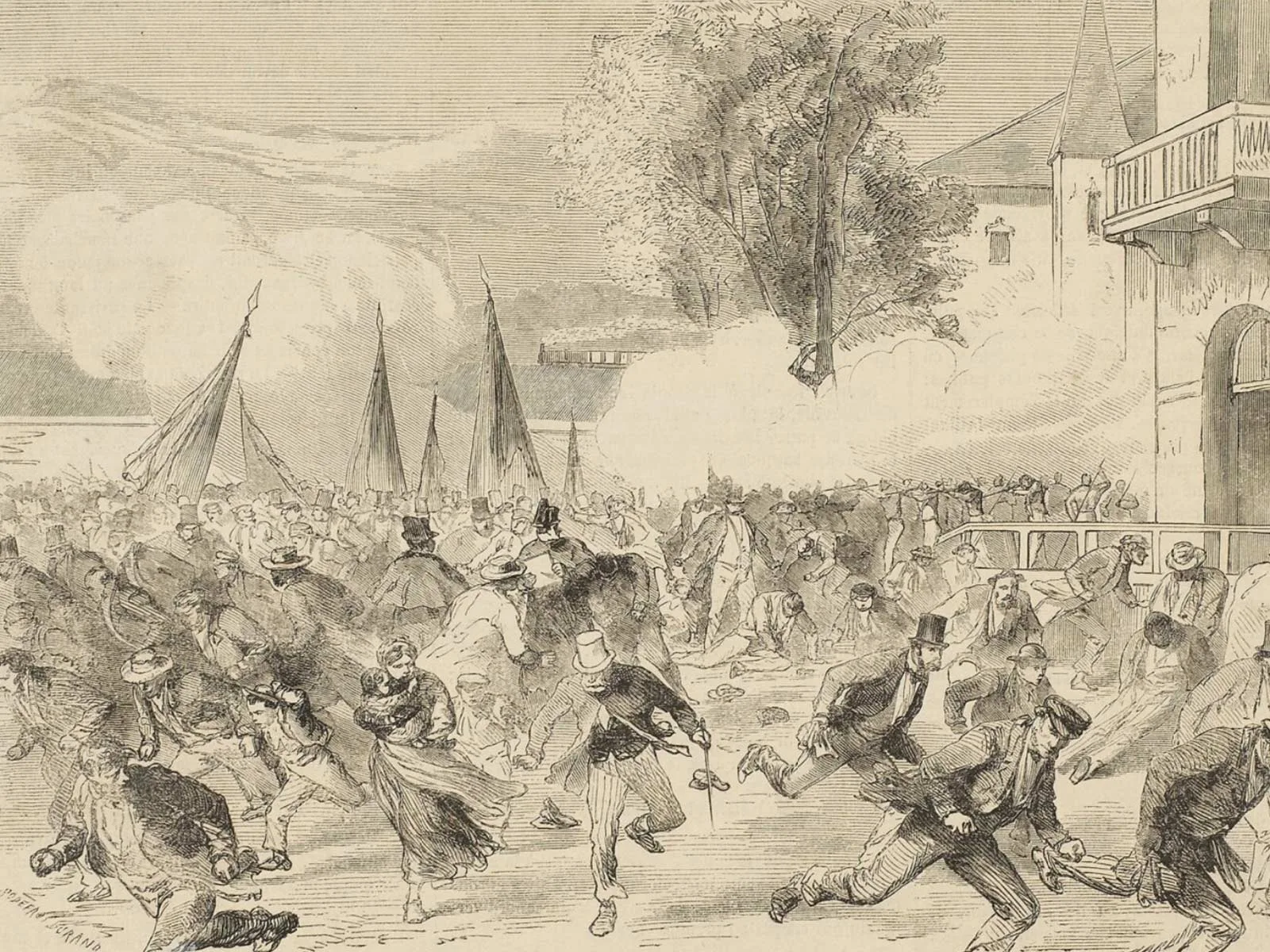
Geneva’s cantonal government elections in 1864 led to violent clashes in the city. Illustration from Le Monde illustré of 3 September 1864.
Geneva’s cantonal government elections in 1864 led to violent clashes in the city. Illustration from Le Monde illustré of 3 September 1864. Bibliothèque de Genève

Geneva under federal tutelage

Following Geneva’s cantonal government elections in 1864, violent clashes took place in the streets of the city. The Confederation ultimately had to intervene and occupy Geneva militarily for several months.

Christophe Vuilleumier

Christophe Vuilleumier

Christophe Vuilleumier is a historian and board member of the Schweizerische Gesellschaft für Geschichte (Swiss Historical Society). He has published a number of articles on 17th and 20th century Swiss history.
After Geneva’s ruling oligarchy refused to support the dissolution of the Sonderbund, it was overthrown by James Fazy in 1846. From that point on, his party – the Liberal radicals – took power permanently. The Fazy regime introduced representative democracy, established a constitution in 1847 and would determine Geneva’s fate until 1861. During these years, radical upheavals changed the face of the city, including growing secularisation and the demolition of the old fortifications to make way for new neighbourhoods.
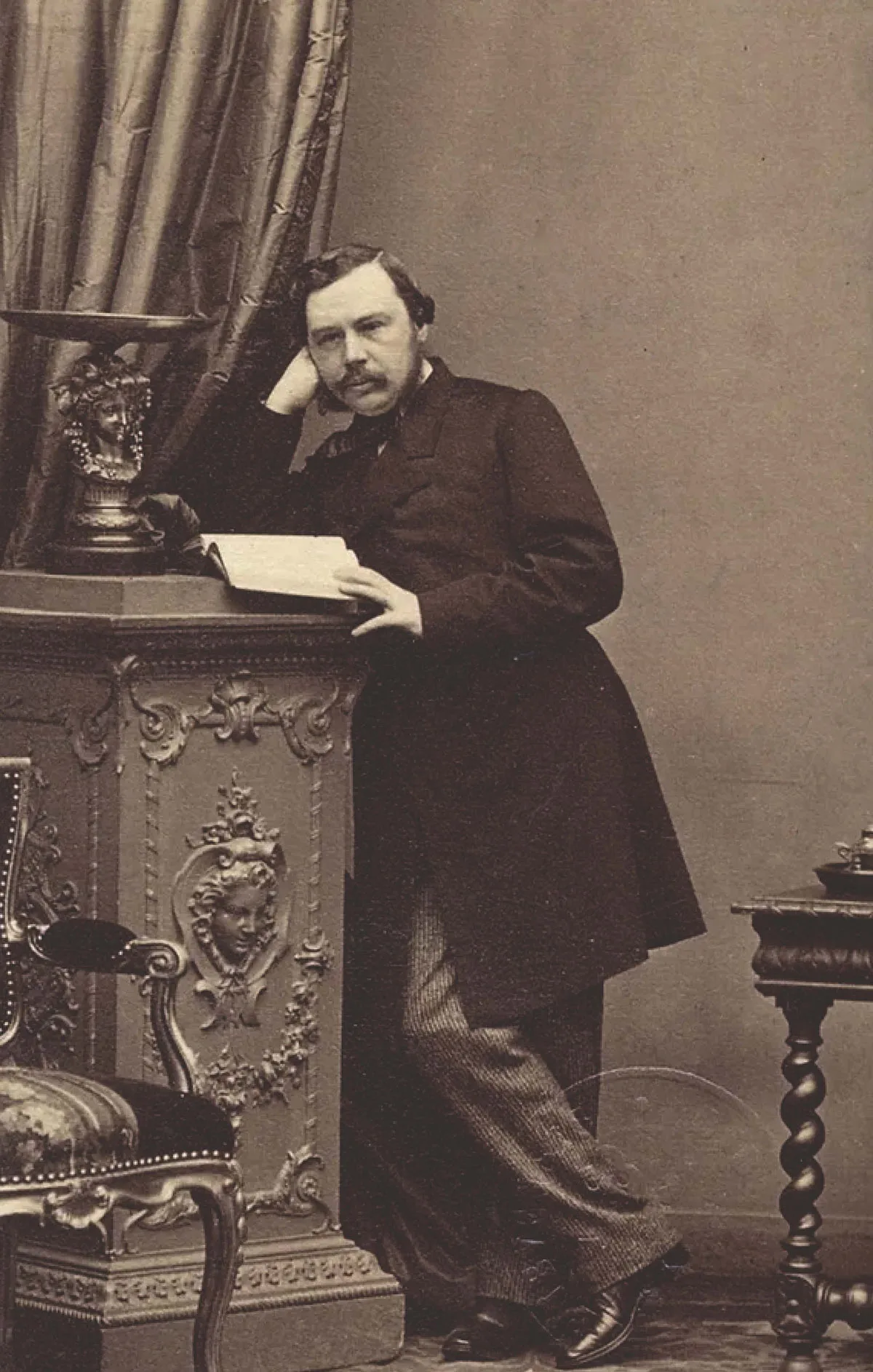
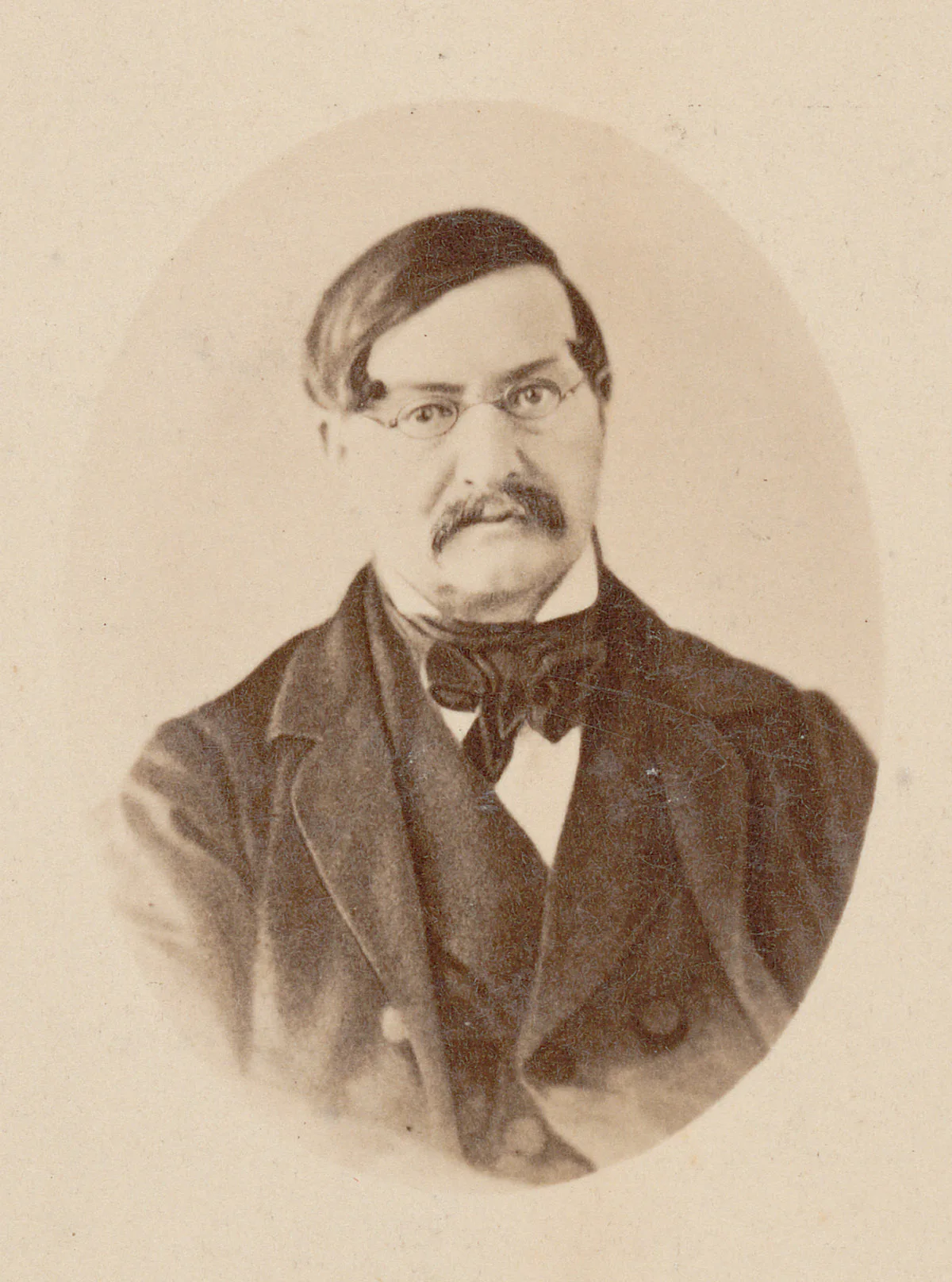
Photo portrait of James Fazy, taken in the 1870s.
Photo portrait of James Fazy, taken in the 1870s. Swiss National Museum
Fazy suffered a defeat in 1861. His authoritarian leadership style did not go down well with a group of independents, conservatives and liberals, who isolated him politically and ultimately made him lose his seat in the cantonal government. As Fazy remained the linchpin and driving force of his movement, however, the revolutionary orator moved to the cantonal parliament from where he was able to maintain his influence over Geneva’s politics. This was also because, after his departure, the cantonal government consisted only of men from his party: Adolphe Fontanel, Moïse Jacques Piguet, Moïse Vautier, Marc Mottet, Jacques Fol-Bry and Jean-Jacques Challet-Venel, who was later to become a federal councillor.
While the electoral defeat was a humiliation for James Fazy, giving up was not in his nature. Fazy was planning to return to Geneva’s seat of power as soon as possible.
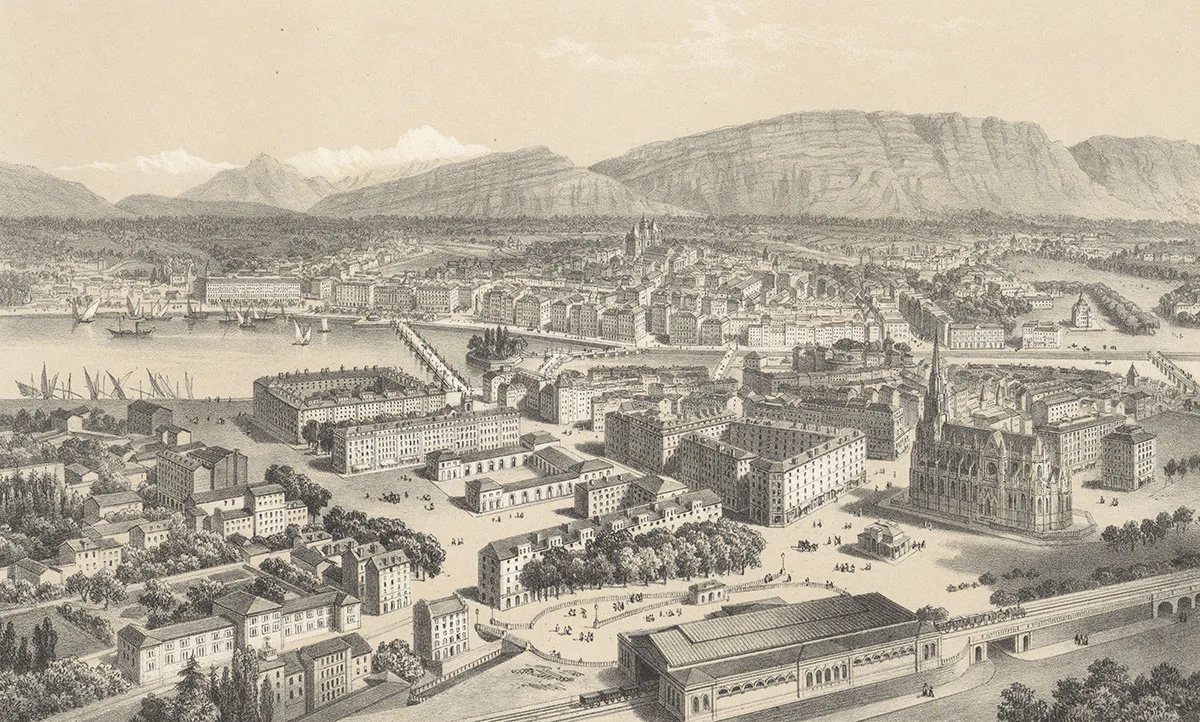
In the 1860s, Geneva was in a state of flux. A view of the city from that time.
In the 1860s, Geneva was in a state of flux. A view of the city from that time. Swiss National Library
Amid violent clashes between radicals and independents, a new constituent assembly was formed in June 1862 to revise the Geneva constitution. The resulting proposal was rejected in a referendum. The 21 August 1864 elections were held against this highly fraught backdrop. Their outcome, at the height of summer, was a bombshell. James Fazy, who was seeking re-election to the cantonal government, had failed again. The conservative Arthur Chenevière, who had been backed by a clear majority of his party, was declared the winner with 337 votes, only a few more than Fazy.
In the summer of 1864, Arthur Chenevière secured Fazy’s seat in the Geneva cantonal government by a slim margin. This photograph of Chenevière was taken circa 1870.
In the summer of 1864, Arthur Chenevière secured Fazy’s seat in the Geneva cantonal government by a slim margin. This photograph of Chenevière was taken circa 1870. Bibliothèque de Genève
The narrow victory riled the most die-hard radicals, and the very next day, their members who controlled the electoral commission declared the election invalid due to electoral fraud. Soon, the city’s walls were emblazoned with posters calling on the radicals to mobilise.

People of Geneva! The ‘Grand Bureau’ – the only adjudicator on the election of the government […] has declared the recent election invalid. Radical citizens and all friends of the Constitution are called on to congregate to defend the constitution and the laws as part of the sovereign decision of the Grand Bureau.
The radicals’ call to declare the election invalid
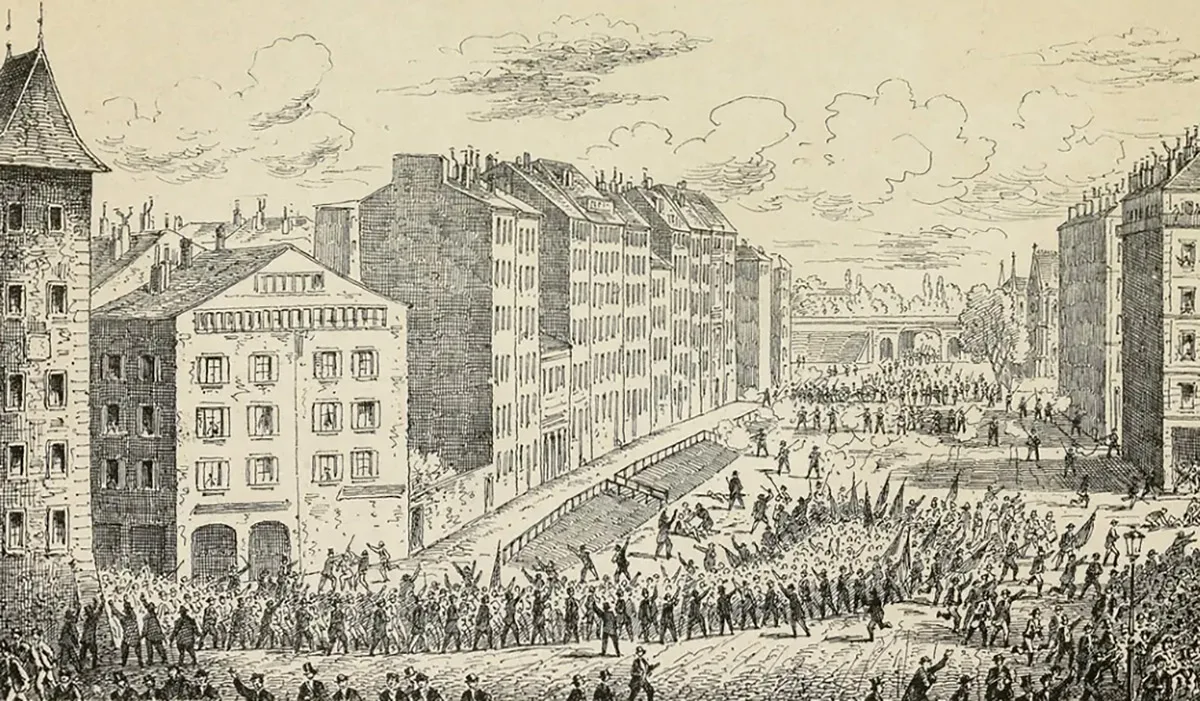
The accusation was too much. This last affront which was seen as improper, even tyrannical, was taken by the independents as a declaration of war, prompting them to revolt. The uprising spread to many streets across the city and was so alarming that Élie Ducommun, the subsequent Nobel Peace Prize laureate and at the time Cantonal Chancellor in Geneva, decided to dispatch an urgent telegram to the Federal Council. But it was already too late. Shortly before 1pm on 22 August 1864, an alarm sounded in Geneva. Both political camps found themselves on the streets at the same time; the independents stormed the arsenal and attacked the members of the cantonal government, which prompted the radicals to seize the weaponry. At 4.30pm shooting broke out on Rue de Chantepoulet, in which several people in a conservative procession were killed.
Geneva, 22 August 1864: a shooting occurred on Rue de Chantepoulet in which several people died.
Geneva, 22 August 1864: a shooting occurred on Rue de Chantepoulet in which several people died. Bibliothèque de Genève
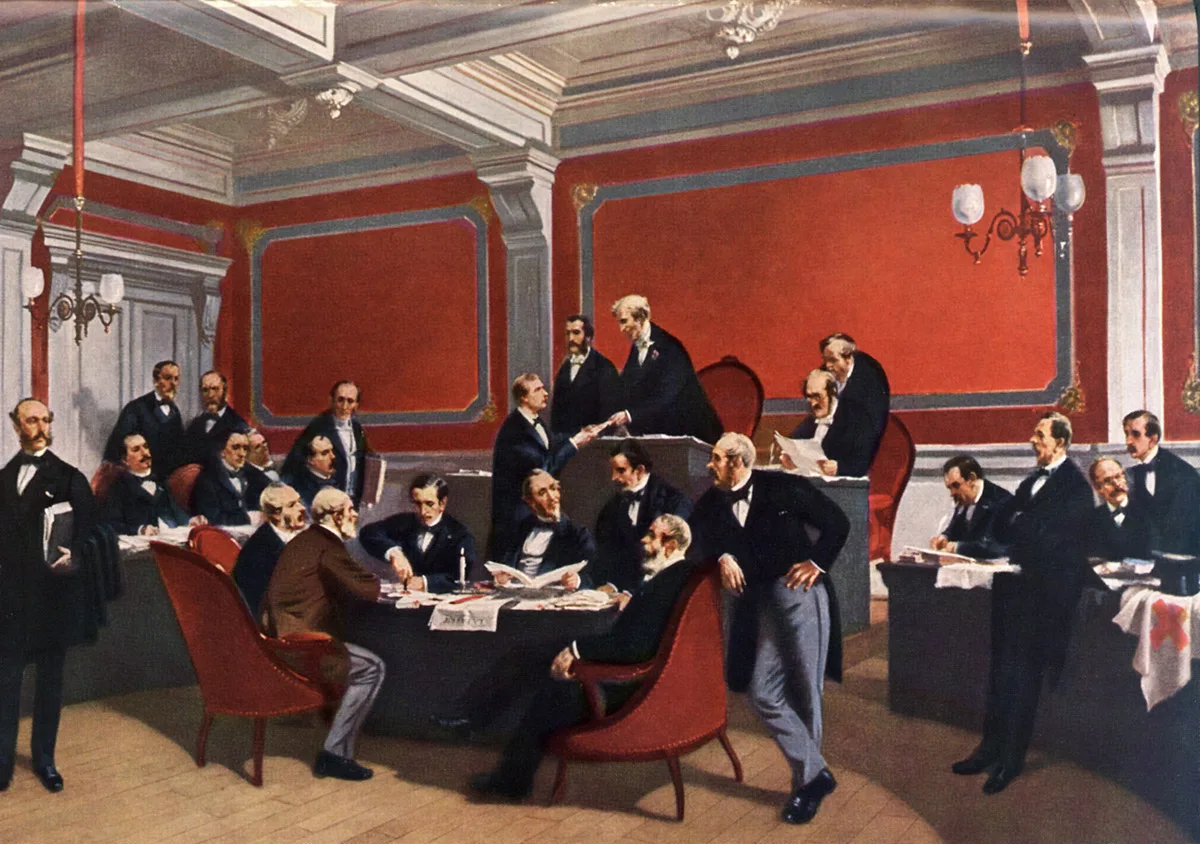
The irony of fate is that on the very same day, the first Geneva Convention governing the treatment of sick and wounded members of armed forces, was signed by 16 countries at Geneva’s City Hall. It is therefore hardly surprising that the federal authorities reacted immediately, appointing Federal Councillor Constant Fornerod from the canton of Vaud, who was responsible for the federal Military Department, as commissioner for Geneva. One day later, on 23 August, federal troops marched into Geneva to restore order. The main players were then quickly found and arrested.
Signing of the first Geneva Convention on 22 August 1864. Painting by Edouard Armond-Dumaresq.
Signing of the first Geneva Convention on 22 August 1864. Painting by Edouard Armond-Dumaresq. Wikimedia
The uprising in Geneva had caused quite a stir in Switzerland and the decision to place the canton under federal tutelage was logical and seemed reasonable. But that was not the end of the intervention. On 2 September 1864, the Confederation confirmed the election of Arthur Chenevière.

A case for the Federal Supreme Court
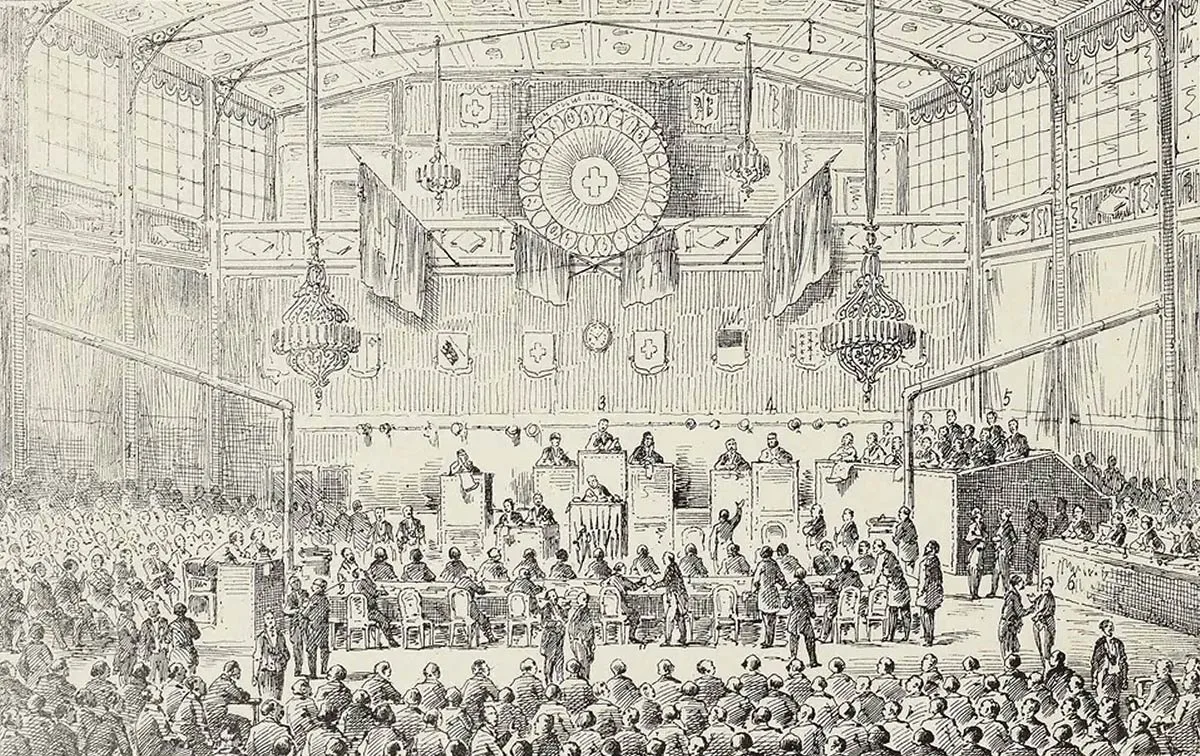
Ultimately, the Federal Supreme Court, which only had a permanent seat in Lausanne from 1875, was drafted in. Under the leadership of Vaud Cantonal Councillor Victor Ruffy, a bench of judges convened: Louis Mercanton, mayor of Cully (VD), Bern watchmaker Victor Chappuis, notary Victor Bernard also from Bern, Henri-Vincent Masson, mayor of Ecublens (VD), as well as the two Vaud natives Jean-Louis Loup and François Vignier. The investigation took three months and after hearing several hundred witnesses, resulted in 54 people being charged. After being whittled down by the Prosecution Chamber, 14 of them eventually went on trial in December. This took place in Geneva’s Palais électoral. The building was large enough to accommodate the sizeable crowds who listened with bated breath as the details of the charges were read out by the conservative Chief Public Prosecutor, William Turrettini.
Given the seriousness of the events and tensions that had shaken the city, in December 1864 – just before the start of the trial – the Confederation again sent a Bern battalion under the command of Major Luginbühl to Geneva to maintain order in case tempers should flare again. But that never happened, and the court was able to hand down its verdict without any major issues, as several men were given custodial sentences.
The trial of those responsible for the Geneva uprising took place in the Palais électoral in December 1864. It attracted a great deal of public interest.
The trial of those responsible for the Geneva uprising took place in the Palais électoral in December 1864. It attracted a great deal of public interest. Bibliothèque de Genève
The federal army withdrew in January 1865 after occupying the city for four months. These events have been almost forgotten in Geneva, where people would much rather recall more glorious episodes, such as the Escalade.
On the one hand, the federal tutelage over Geneva showed that federal authority – which was still in its infancy – could prevail. On the other, a clear internal consolidation was in evidence. Just under 17 years after the Sonderbund War, the Confederation made great efforts to prevent a political conflict escalating into another nationwide civil war. While many citizens in Geneva felt chastened, the intervention of federal troops had undoubtedly helped bring stability to the city and brought home to many people at the time that Geneva needed to be even more integrated into the federal system.

Further posts