Cool beer – all year round
For a long time, beer was a seasonal product of varying quality. The invention of mechanical refrigeration changed all that, freeing breweries from their reliance on natural ice.

Géraldine Lysser
Géraldine Lysser studied history and business administration and works in communications at the Swiss National Museum.
The Bürgerliches Brauhaus, a ‘citizens’ brewery’, was founded one year later. The aim was to make a good, solid beer for the townspeople using state-of-the art methods, and a brewer called Josef Groll from Bavaria was hired for the task. He was to produce bottom-fermented beer, a style that had long been popular in Bavaria and was generally of consistent quality. However, Groll used a very pale malt for his Pilsner, resulting in a golden brew quite unlike the darker Bavarian beers. The new style of beer was an instant sensation and its reputation soon spread like wildfire – far beyond the city itself.
A new style of beer with new challenges
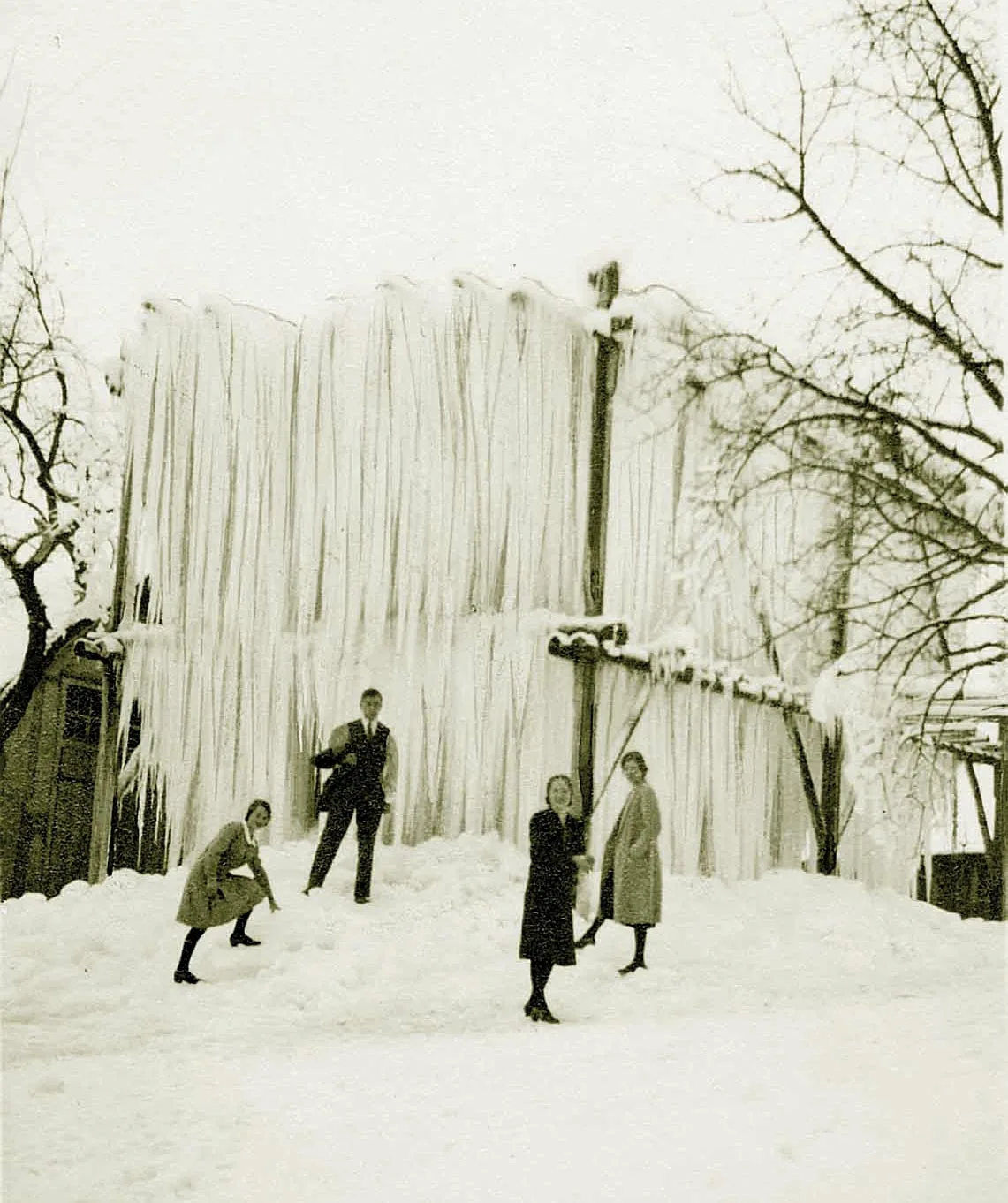
Switzerland’s hillsides were ideal sites for setting up cellars where the beer could be kept cool. Breweries also laid out their own ice ponds from which ice could be hand-cut in winter. Others erected a form of wooden scaffolding known as an ‘ice gallows’. But the supplies produced in this way were not always sizeable enough to last throughout the summer months or even mild winters, and so ice had to be brought in from alpine regions.
Some Swiss natural ice, like that from Grindelwald, Davos, Lake Klöntal and the Joux Valley, also made its way abroad. In the latter region, an ice-making company, the Société des Glacières du Pont, was even instrumental in pushing for the construction of the Vallorbe–Pont-Brassus railway in 1899.
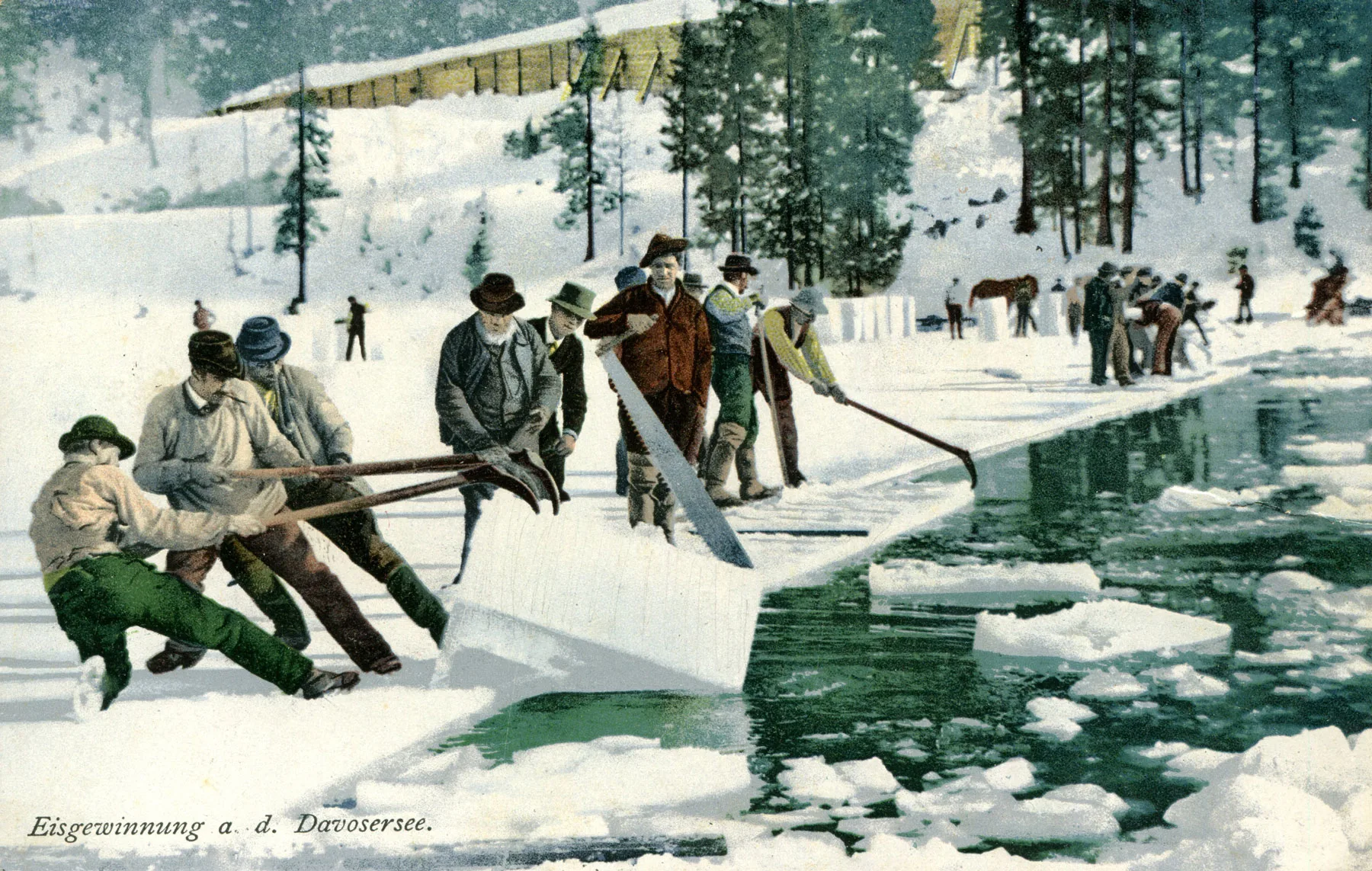
Image 01 of
03
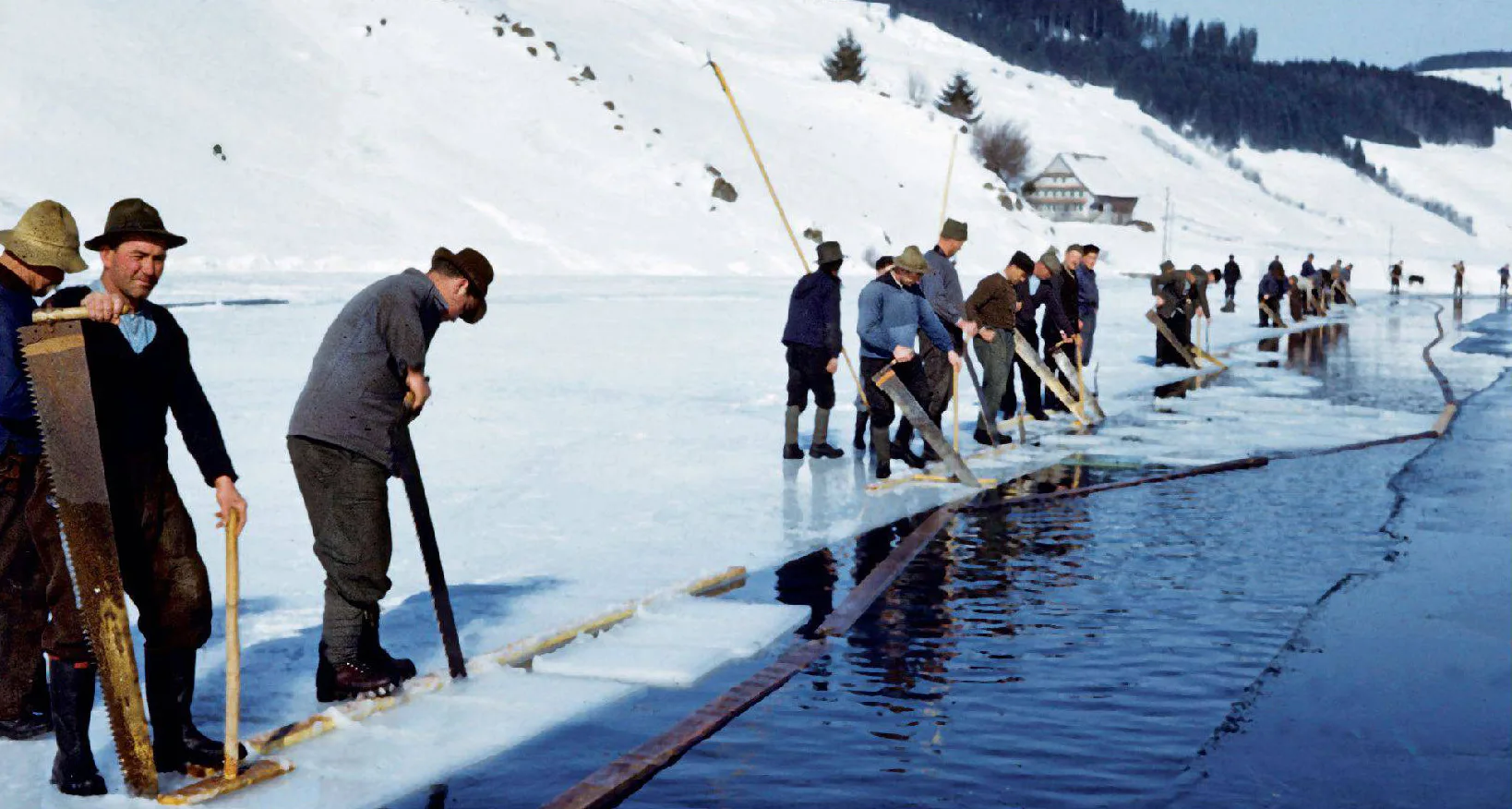
Image 01 of
03
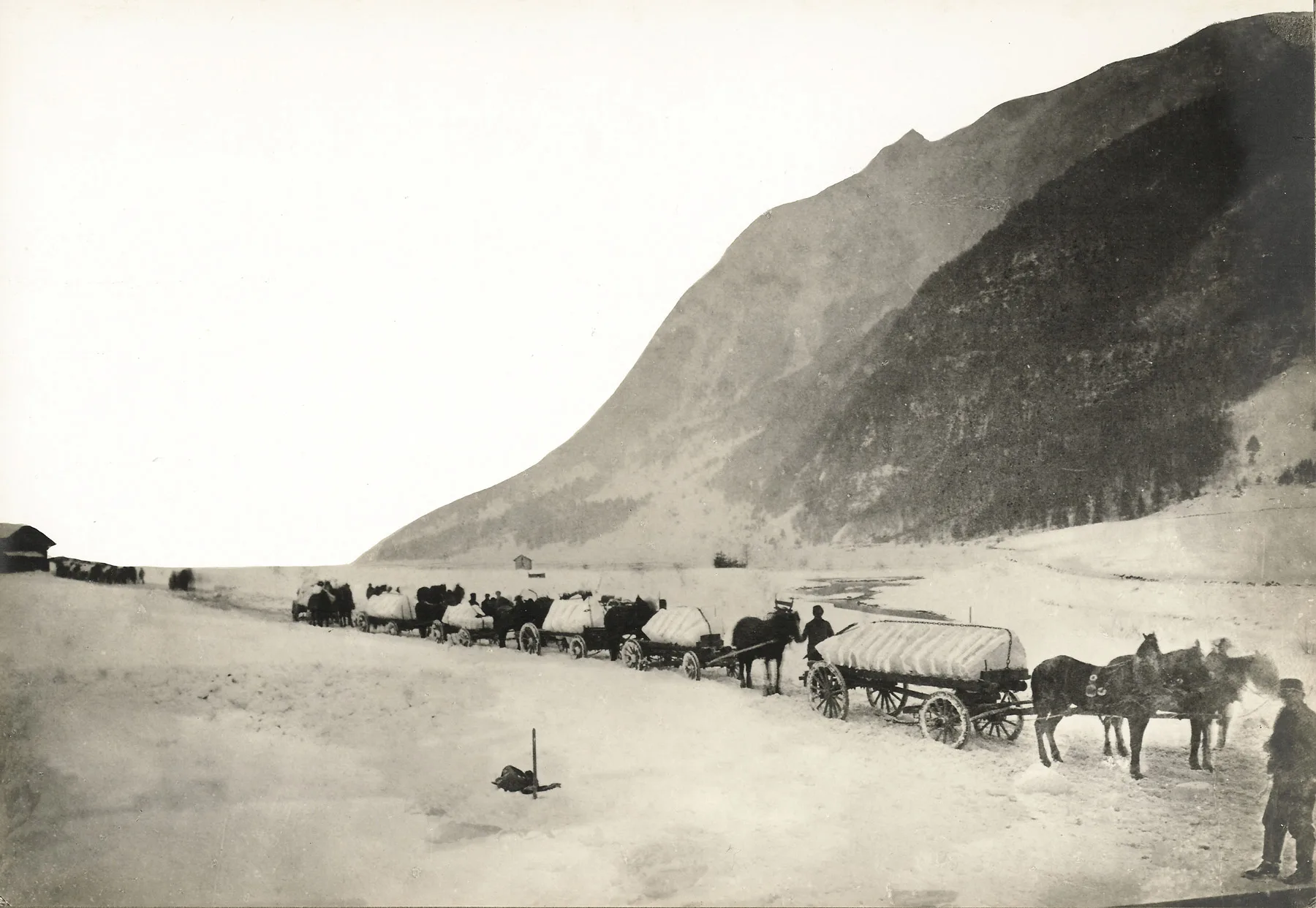
Image 01 of
03
Not just for beer
The 19th century saw a growing demand for ice by laboratories and for medical purposes. It was increasingly sought after by bakers and confectioners, and it was used commercially to preserve fish and dairy products. In addition, the forward march of industrialisation and urbanisation changed the supply situation in many areas of Europe, with a rise in the consumption of fish, meat and vegetables. Many households were no longer self-sufficient, and the population build-up in the ever denser towns and cities meant that agriculture disappeared from the urban landscape. The ability to store and preserve food took on a whole new importance.
Ice on demand?
Ultimately it was Carl von Linde’s refrigeration system that would provide the blueprint for cooling technology for several decades to follow. According to Linde, the ideal cooling device was based on vapour compression. He developed his own machine with the support of August Deiglmayr from the Dreher brewery and Gabriel Sedlmayr from the Spaten brewery. This was the breakthrough that everyone had long been waiting for: beer of a consistent quality could henceforth be produced all year round.
Engineering firms in various countries began manufacturing ice machines based on Linde’s construction diagrams and patents ‒ in Switzerland it was the Sulzer factory in Winterthur. As the manufacture of these machines picked up pace, further uses were found for the new refrigeration technology, including in laboratories and hospitals, on board ships and in the chemical and metal industries, in addition to the general purpose of storing food and drink.
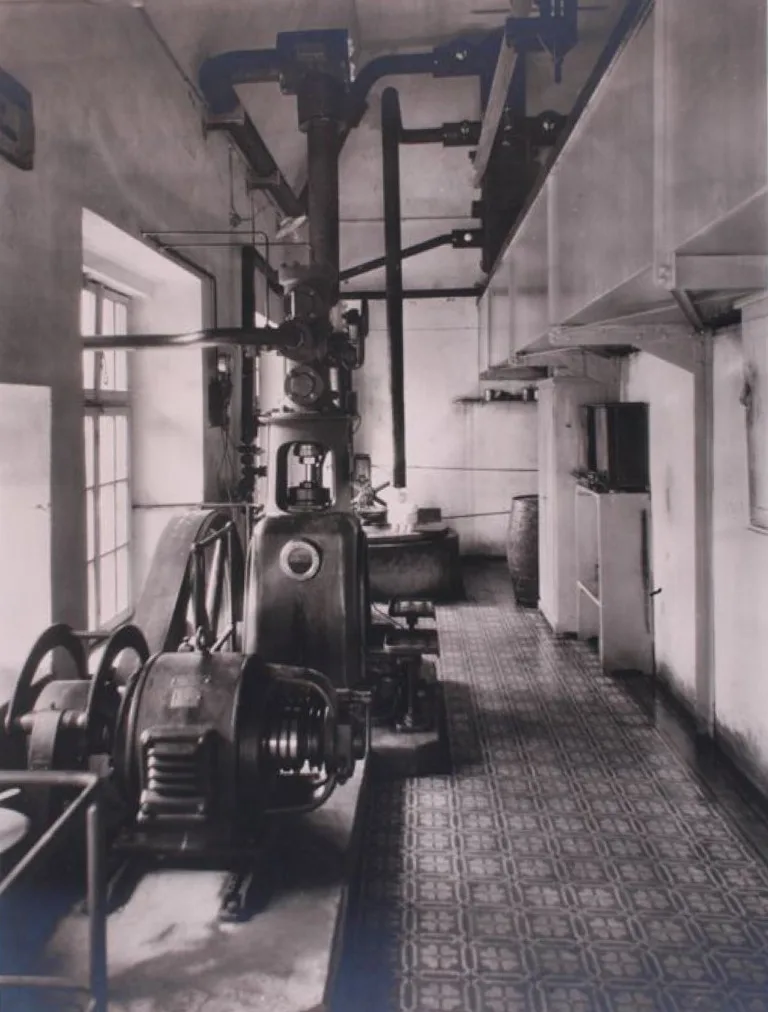
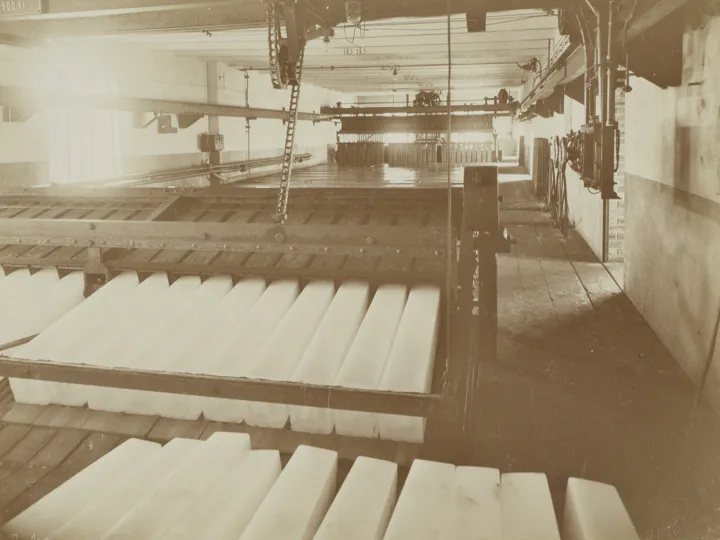
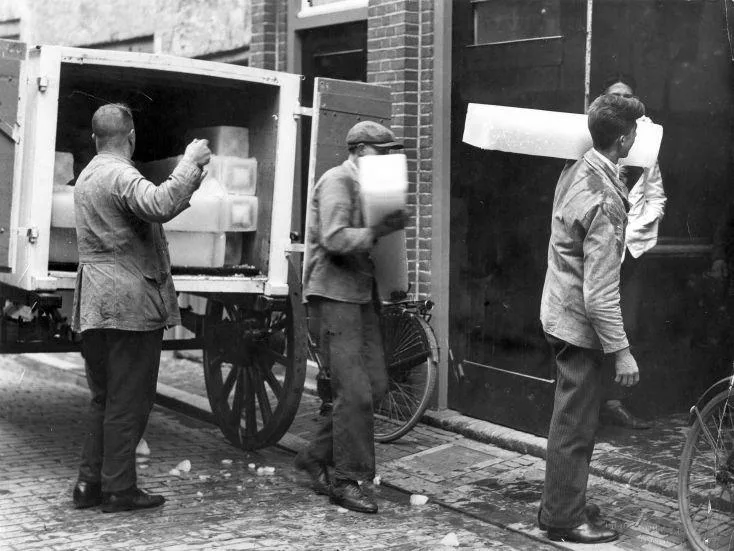
A vapour-compression refrigeration system removes heat until the water in the moulds freezes. The ice blocks produced in this manner generally weighed 12.5 or 25 kilograms. Swiss National Museum / Fotostiftung Schweiz
Refrigeration technology changes the face of brewing
To recoup the costs of these expensive cooling machines and other technical innovations such as bottling plants, breweries had to increase their sales and start producing on a larger scale.
They attempted to bind drinking establishments to them by offering simplified delivery and payment conditions, subsidies and guarantees. At the same time, they began selling bottled beer cheaply to shops, canteens and private individuals in an effort to generate even more sales. The competition was ruinous, with small-scale and financially weaker breweries unable to keep up. And so, many were forced out of business by the rush to produce and sell as many hectolitres as possible. Whereas there were still 423 breweries in 1883, that number had shrunk to 138 by 1911. The overall output of beer tripled over that same period.
Switzerland was not alone in this development. Industrialisation also led to a consolidation of the market for beer in Belgium and the United Kingdom.
The remaining breweries were able to establish a nice sideline with the ice from their refrigeration systems. They supplied businesses and private households with blocks of ice, with which to fill their ice boxes, on a subscription basis.