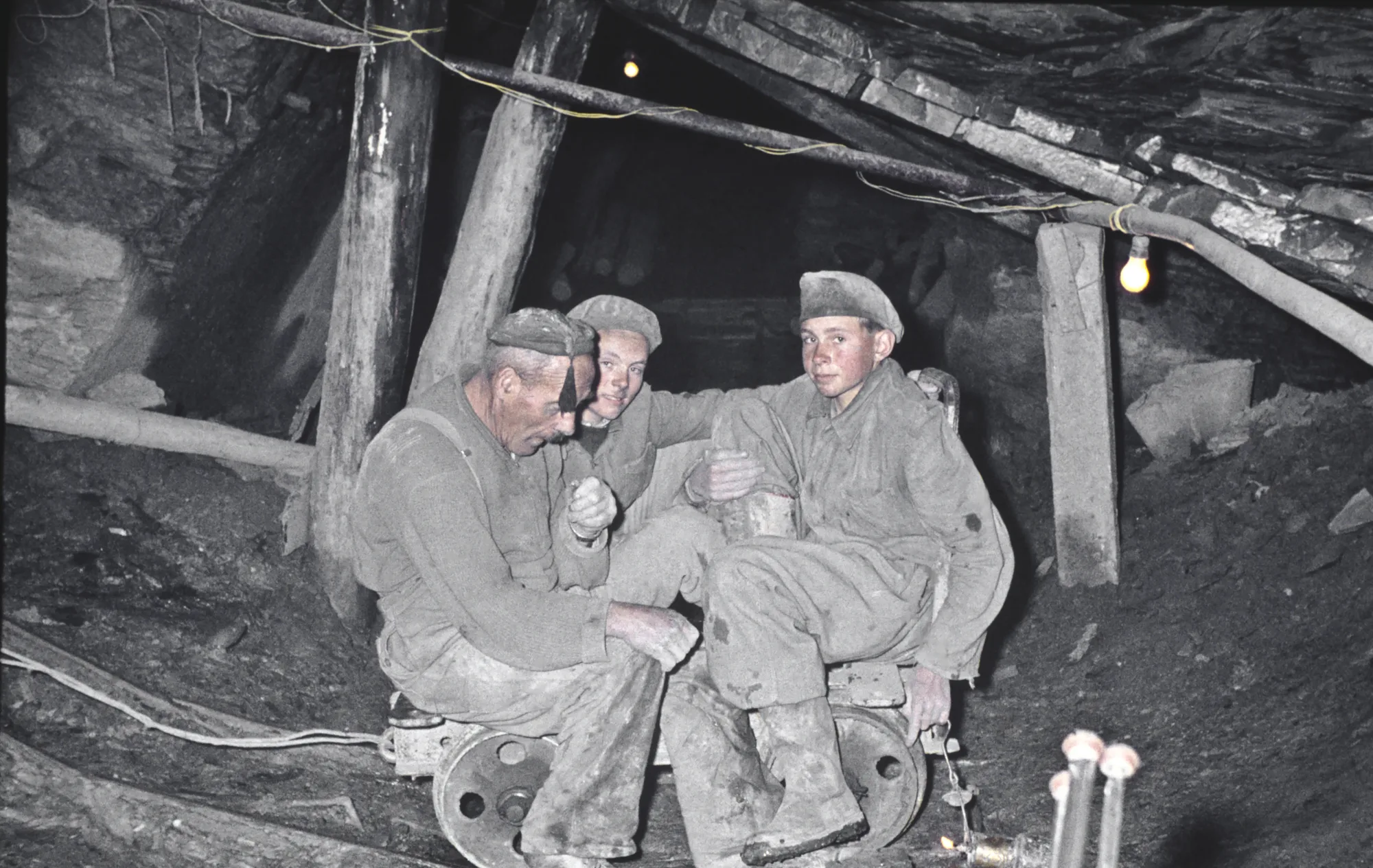
Worker Alois Jeremias and two of his sons sitting on a cart in a slate mine, ca 1960.
Worker Alois Jeremias and two of his sons sitting on a cart in a slate mine, ca 1960. Kulturgutstiftung Frutigland

From the slate mine to the classroom

The slate mines around Frutigen provided the material for millions of slate boards used by schoolchildren. Thanks to the hard work of the miners, the product found its way from the remote mines to classrooms in Europe and further afield.

Reto Bleuer

Reto Bleuer

Reto Bleuer is a volunteer at the Archaeological Service of the Canton of Bern.

In the 19th century the study of geology including rock research became an established discipline in Switzerland. Bernhard Studer, Professor of Geology and Mineralogy at the University of Bern, was a prominent figure in the field. He published some of his research findings in 1834 in his work Geologie der westlichen Schweizer-Alpen – ein Versuch (an attempt to map the geology of the western Swiss Alps). In this study, Studer described the geological makeup of the Niesen chain, a roughly 20-kilometre long mountain range in the Bernese foothills comprising a mixture of sandstone and mineable slate.

However, Professor Studer was not the first person to refer to these slate deposits. There is a record dating back to 1786 of slate extraction in the region when the lord of the castle at Spiez had his boat house roof on Lake Thun made out of slate from a mine near Mülenen, at the foot of the Niesen. Slate mining received a boost following the big fire of 1827 in Frutigen. The use of wood shingles in roofing was subsequently banned and locally sourced slate was the obvious alternative. However, it proved less weather-resistant than roof slates from other regions, causing a sustained decrease in demand and by 1868 mining had ceased in the area as it had become uneconomical.

Mining in Frutigen later made a comeback when three families from Elm, a major rival slate-mining area in the canton of Glarus, moved to Frutigen around the mid-19th century bringing their expertise, capital and customers with them.

The mines had meanwhile moved up the valley to Engstligental where the stone had a different composition, making it suitable for other applications. This slightly softer and jet black slate was particularly suited to slate board production. Bern geologist Eduard Gerber also confirmed this in a report evaluating the quality of the deposits in the Gantenbach area. He estimated that there were about a million cubic metres of raw slate available for mining, stating:

In any case, the slate deposits around Frutigen are among the biggest in Switzerland, and they are especially valuable as the slate has qualities making it the best raw material for school slate boards […].
Eduard Gerber, geologist
More slate deposits were discovered over time at the eastern flank of the Niesen range, in an area known as Spissen. Mining families had previously lived very modestly there on the prominent ridges between the steep slopes and deep ravines. Then the demand for slate brought well over 200 miners in peak periods to work in about 20 mines.
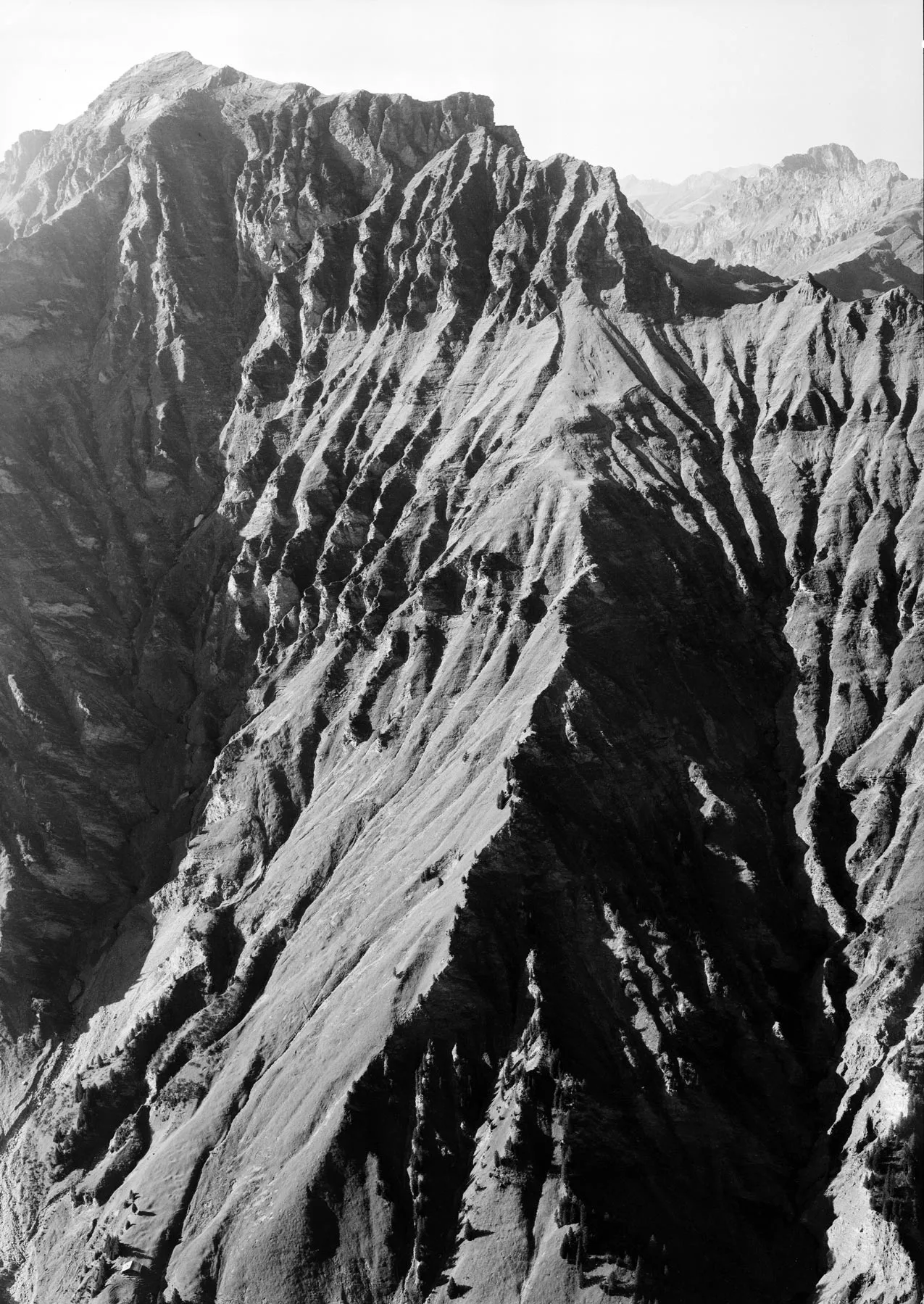
A view of the furrowed Gsür mountain at the southern border of the Niesen range running from Adelboden to Frutigen.
A view of the furrowed Gsür mountain at the southern border of the Niesen range running from Adelboden to Frutigen. e-pics

Hard and dangerous work

Access to the remote mines was via narrow, steep paths, which were icy in winter and prone to avalanches. Before the advent of basic, in some cases rather hair-raising, cable car routes, these paths were also used to transport the slate on horn sleds or in backpacks to the nearby road.

The work in the small mines going as far down as 300 metres below the mountain was also physically draining. The slate blocks first had to be exposed by an explosive charge, then physically hammered, chiselled out and cut. The introduction of pneumatic hammers and milling, drilling and splitting machines did speed up the work and meant less manual labour. However, the machines also exacerbated the poor respiratory conditions in the mines by releasing dust. Many miners contracted silicosis causing severe respiratory problems and later died of lung damage.
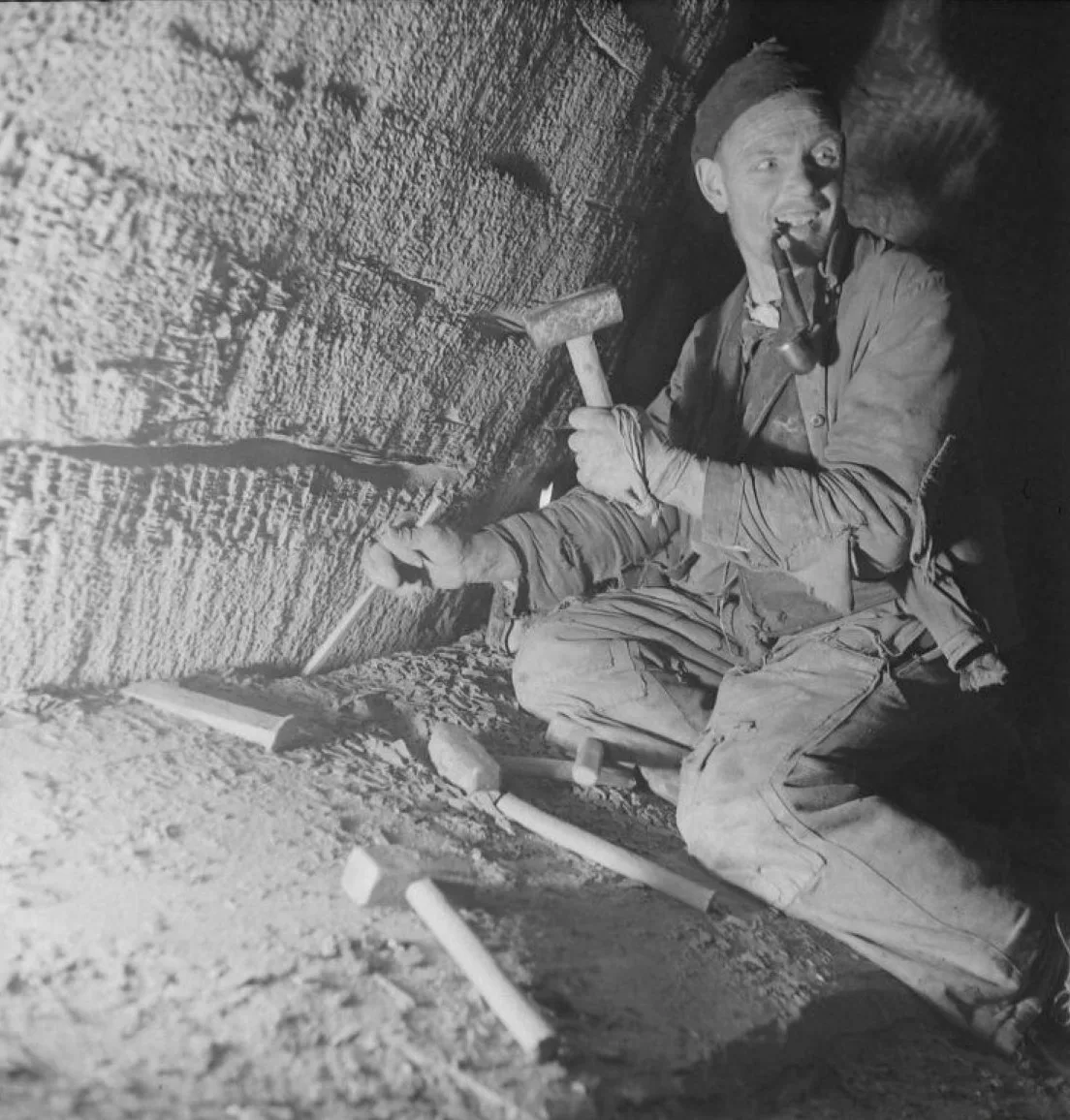
A report from 1941 documented the slate mining at Niesen. The blocks were cut out with a hammer and chisel.
A report from 1941 documented the slate mining at Niesen. The blocks were cut out with a hammer and chisel. Swiss National Museum / Actualités Suisses Lausanne ASL
Image 01 of 03
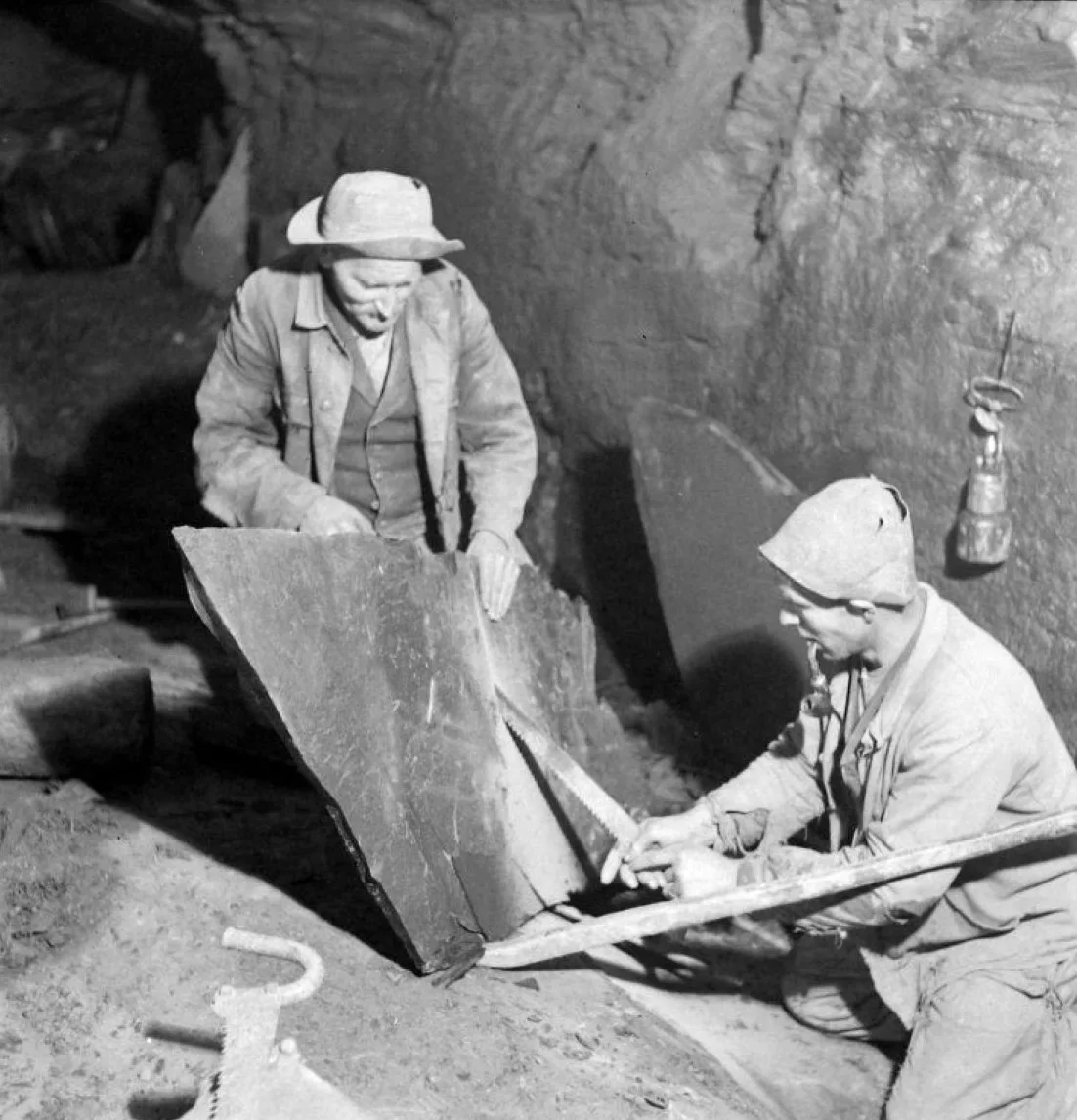
Two workers cutting a slab of slate.
Two workers cutting a slab of slate. Swiss National Museum / Actualités Suisses Lausanne ASL
Image 01 of 03
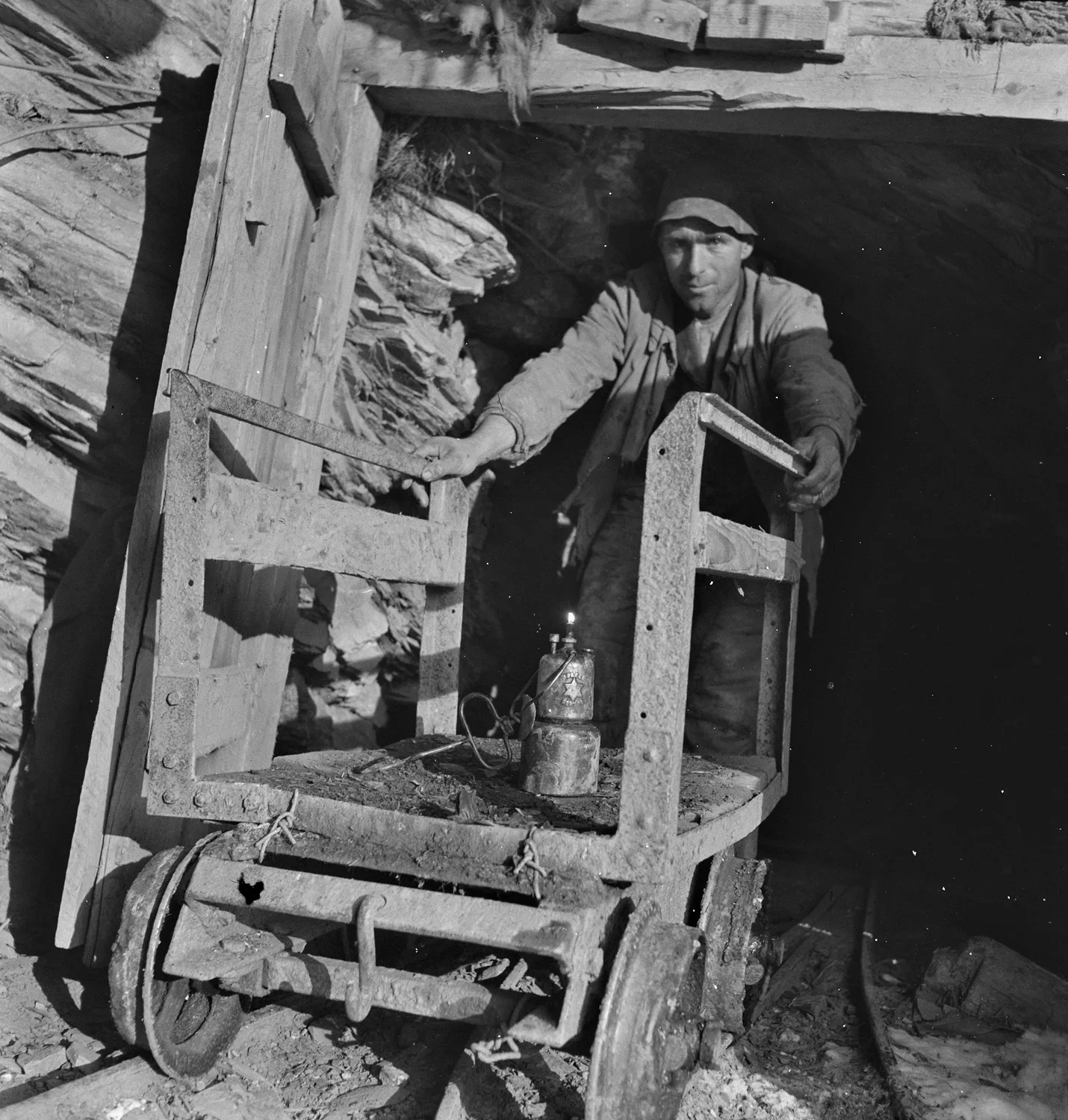
A worker pushes a cart out of the mine.
A worker pushes a cart out of the mine. Swiss National Museum / Actualités Suisses Lausanne ASL
Image 01 of 03
Workers could spend the night in the larger mines, although many returned to the valley or their homes in Spissen to run their smallholdings. After working in the stables in the morning, they would go to the mines and then return home at the end of a long day to tend to the animals again. The women and children looked after the farm during the day.

The wages earned from mining were a great help to the families in paying the bills and bringing up their many children. The situation became precarious if the father suffered an accident making him unfit for work. And accidents were no rarity: between 1875 and 1920, the media reported 24 incidents with 11 fatalities and 18 seriously injured. It is also reasonable to assume that some misadventures went unreported. About a quarter of those accidents that made the headlines resulted from handling explosives. The newspaper reports also show that minors worked in the mines. On 6 July 1915, for example, 13-year-old Johann Trummer was sadly killed when he slipped while transporting slate blocks and fell off a cliff.
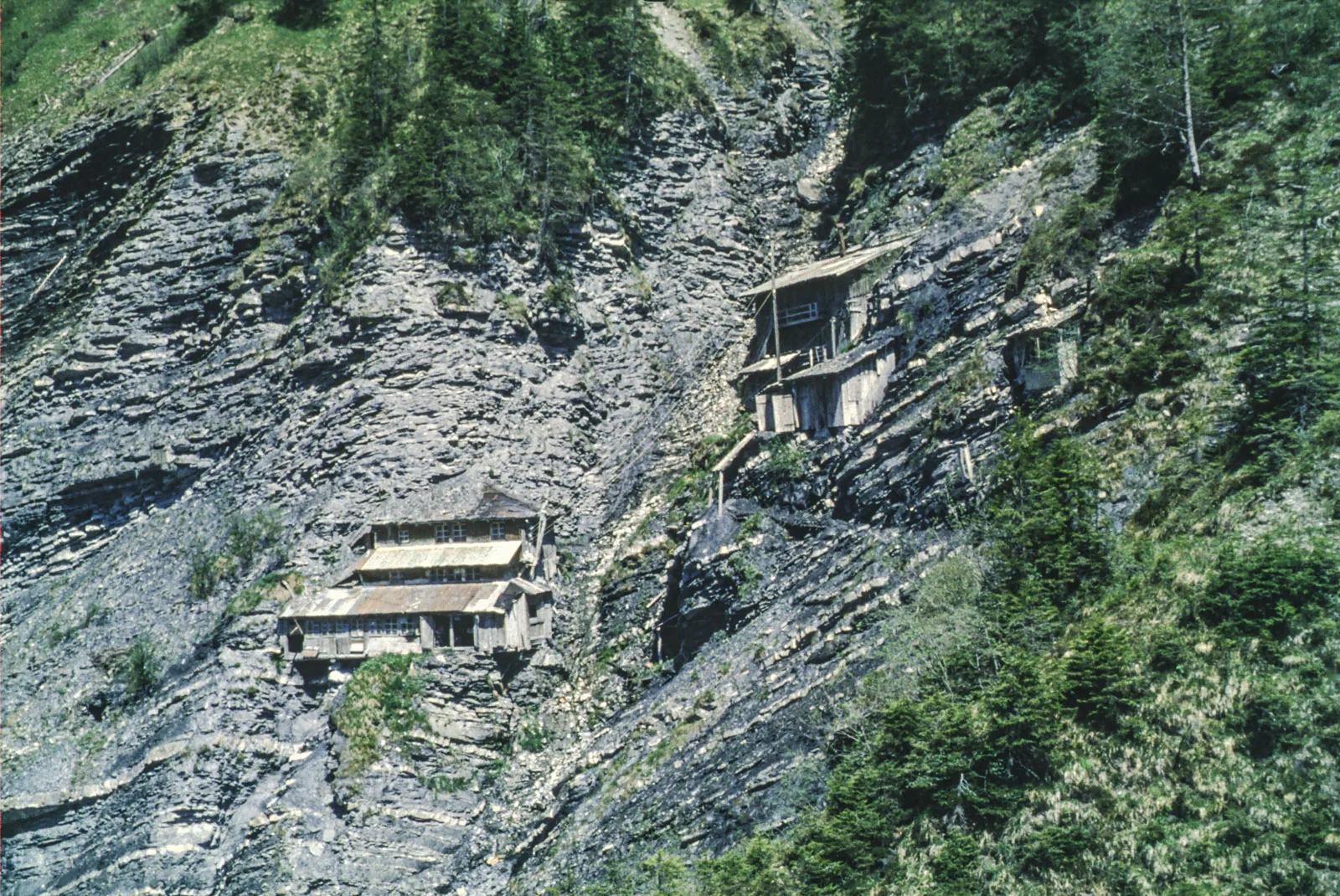
The huts for treating the mined slate were hard to reach and located in areas at risk of avalanche.
The huts for treating the mined slate were hard to reach and located in areas at risk of avalanche. Photo provided
The slate industry was one of the key arguments for connecting Frutigen to the rail network, in addition to the growth of tourism and match production in the region. When an application for authorisation to build a railway line from Frutigen to Spiez was submitted to the Federal Council in 1890, the area was already exporting over 5,000 tonnes of slate boards every year. The opening of the railway line in 1901 made the transport considerably easier.

The product was transported either as untreated slabs or as ready-made boards with or without a wooden frame. The wooden frames were made for a long time as a cottage industry in or near Frutigen. The idea of having red lines on the boards also came from the region: senior teacher Johann Egger was the first to use the lines, leading to the name ‘Egger-Tafeln’ (Egger boards).
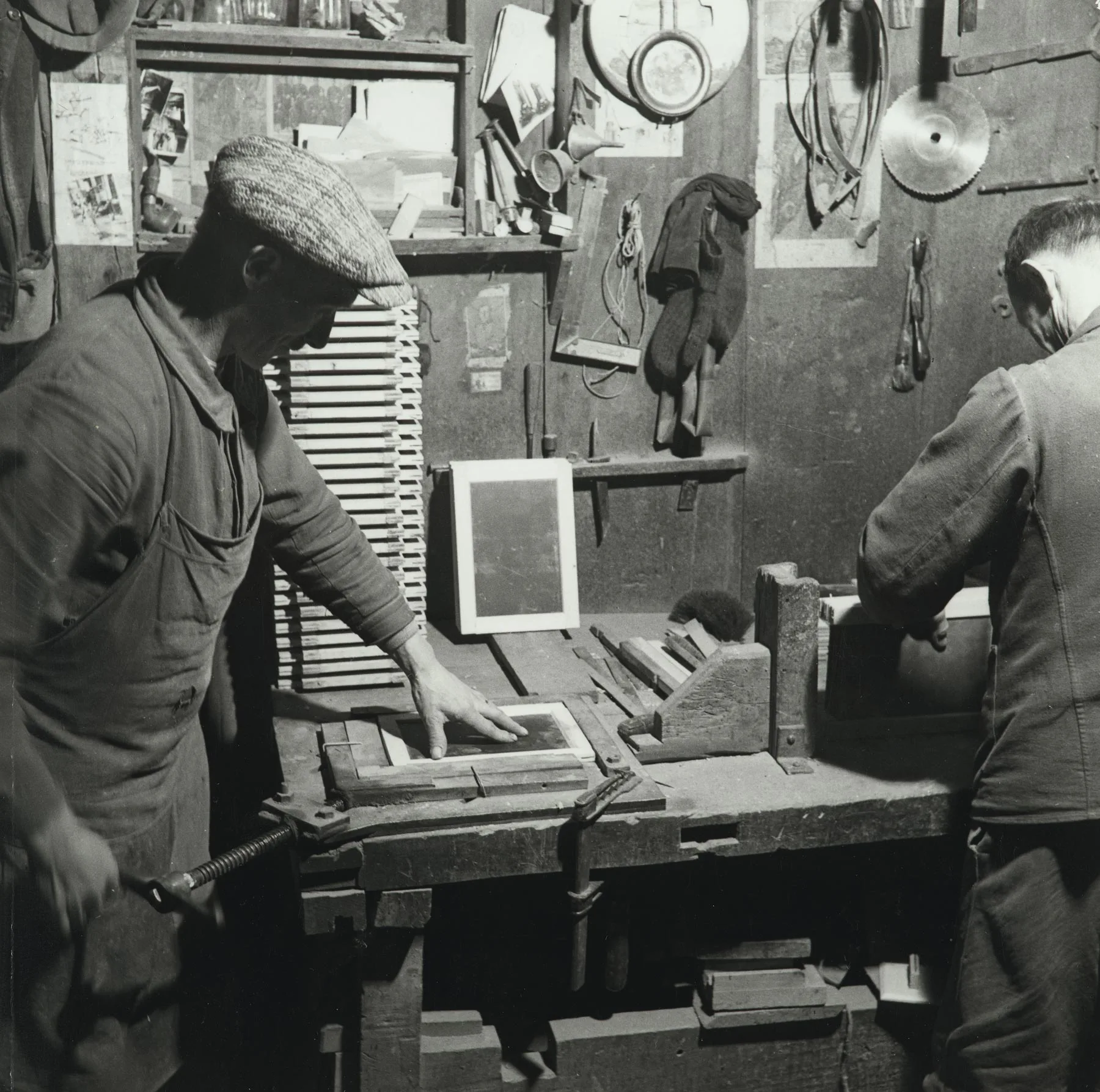
Two men attaching wooden frames to slate boards.
Two men attaching wooden frames to slate boards. Swiss National Museum

Slate instead of paper

The quality of Spissen slate became known well beyond the region. The slate boards of Kambly, Moser & Cie. from Frutigen won the bronze medal at the 1900 World Exhibition in Paris. The Kanderbrück slate board factory won silver in the stone processing category at the 1914 Swiss National Exhibition in Bern.

The boards were mainly exported to France and Germany, although they also travelled further afield to schools in Egypt, Russia, Greece, Turkey and many countries in South America.
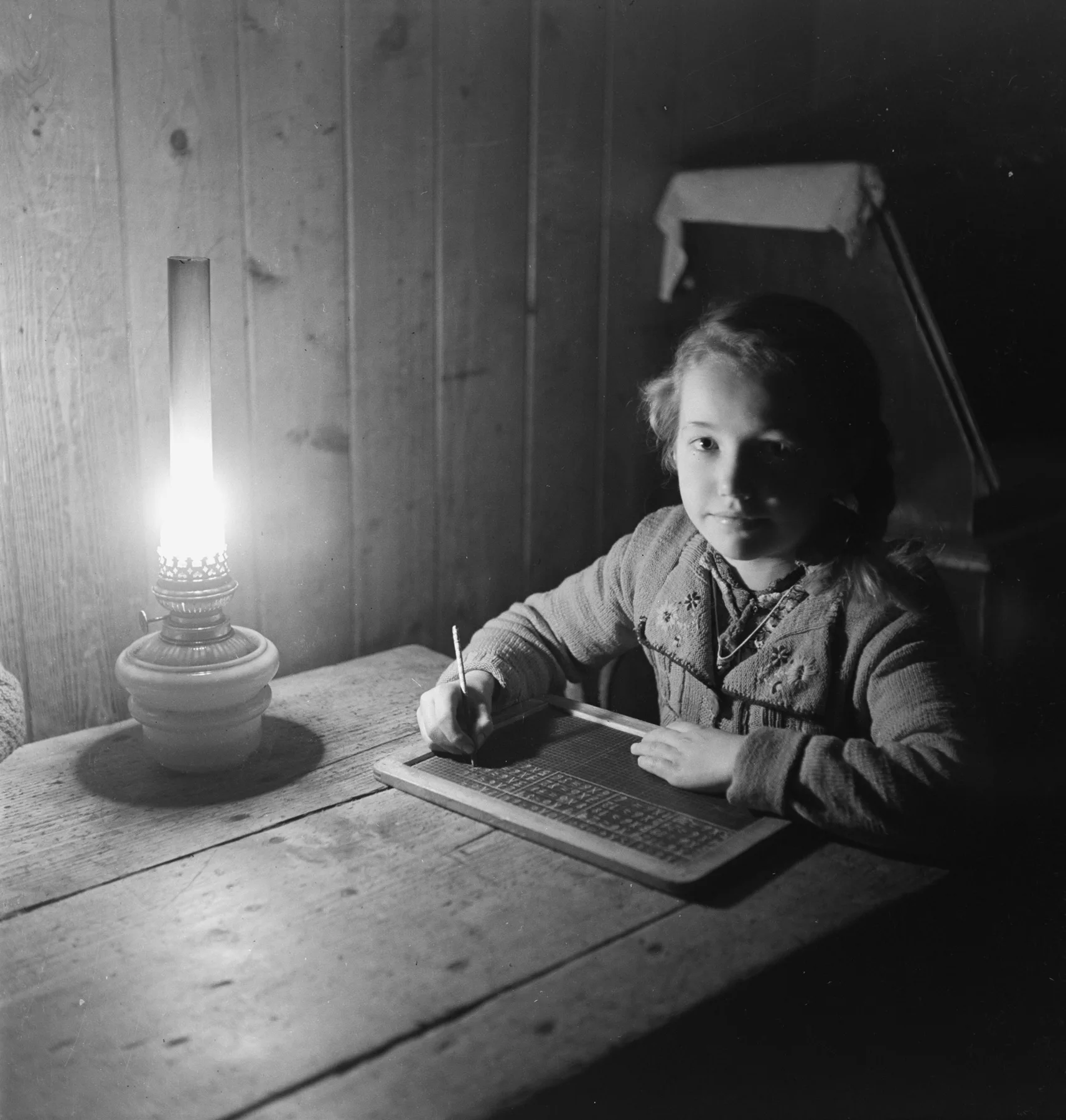
A girl writing on a slate tablet with a slate pencil, 1930-1950.
A girl writing on a slate tablet with a slate pencil, 1930-1950. Staatsarchiv Basel-Stadt
There was a lot of domestic demand as well, although the slate board did come under growing pressure towards the end of the 19th century. Many teachers wanted to replace slate pencils and boards with paper and fountain pens, as the boards were thought to cause myopia and back problems among the pupils. There was an intense and protracted debate between the two sides of the ‘slate tablets in schools’ argument. The outcome was that some cantons and communes banned the use of slate boards entirely or from a certain class level.

However, these discussions were soon overshadowed by a pervasive shortage of raw materials during the two world wars and global economic crisis, which hit the paper industry hard and prompted a rethink. The Department of Economic Affairs recommended the use of slate tablets to the cantons to cut down on paper consumption.

We would also like to take the opportunity to bring to your benevolent attention the possibility of reintroducing slate boards to schools. We believe this to be an appropriate measure for a number of reasons.
Letter from the Department for Industrial Wartime Economy to the Department of Education of the Canton of Schaffhausen, 11 September 1918.
This resulted in a revival in demand for slate boards, which remained an important educational tool for some decades, thereby providing a boost to slate mining in Niesen. After the Second World War, cheap imports, especially from Italy and Portugal, displaced domestically produced slate products. Demand fell markedly and the last slate mine in the Frutigen region closed its doors in 1977.

Further posts