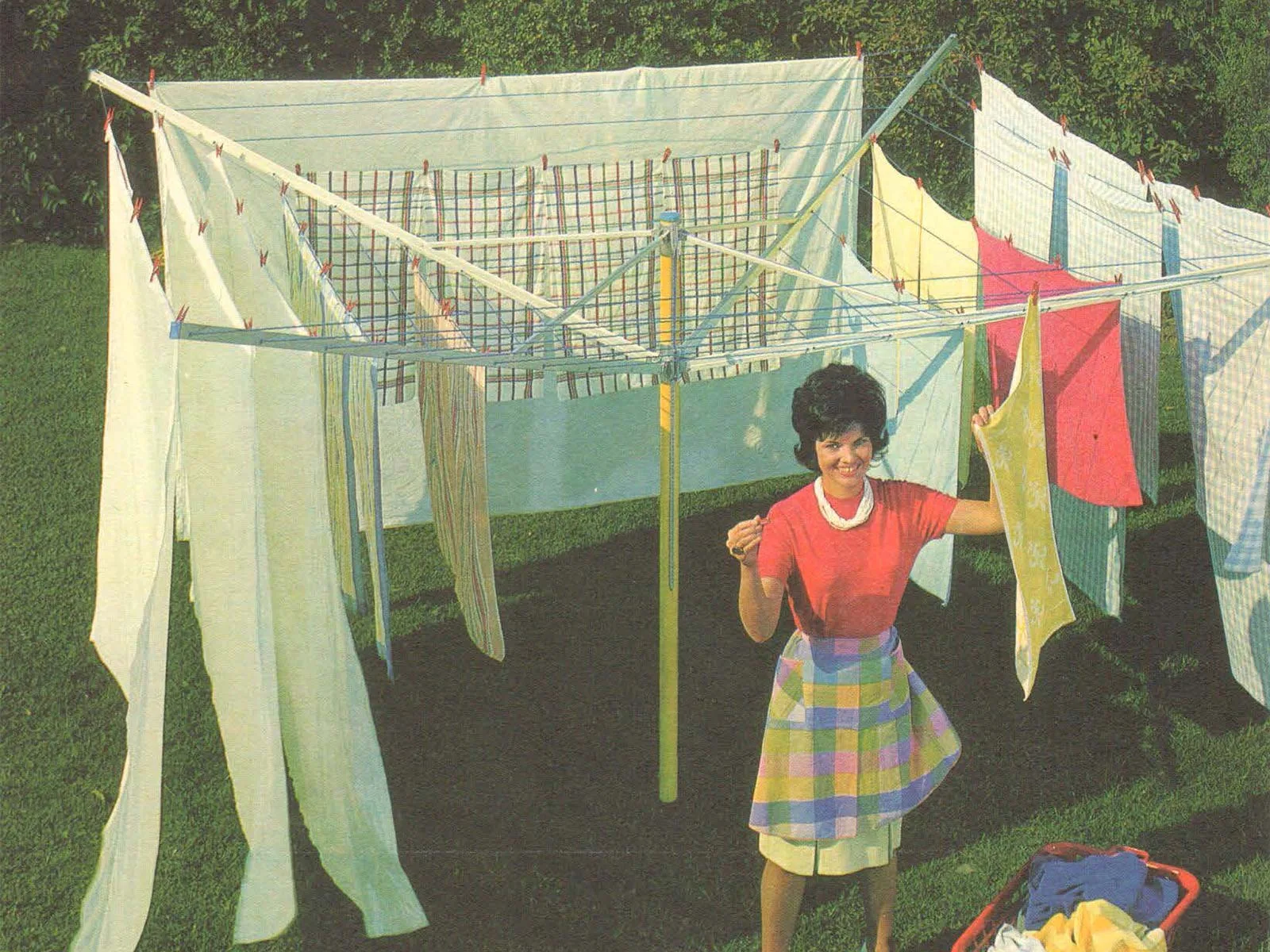
Stewi advert from the 1950s.
Stewi advert from the 1950s. Stewi

Stewi — Hanging up the washing in style

Walter Steiner from Winterthur invented the Stewi in 1947. What started out as a folding rotary clothes line was to become a design classic that graced Swiss gardens for decades.

Thomas Weibel

Thomas Weibel

Thomas Weibel is a journalist and professor emeritus of media engineering.
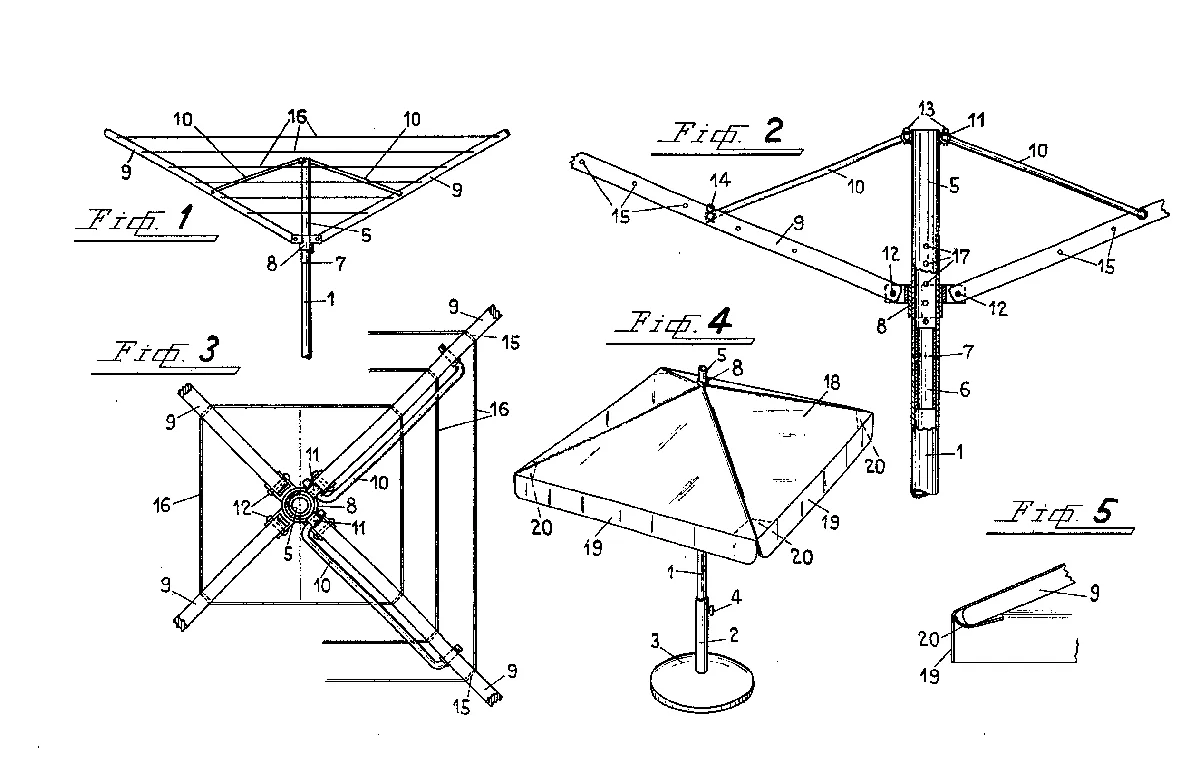
The description in patent application number 255080 filed on 30 July 1947, and which runs to three pages, is highly technical: “The invention relates to an apparatus for the hanging of laundry. According to the invention, this apparatus has supporting rods which are attached to a sleeve that slides on a central rod and are connected by means of struts to a second, non-slidable sleeve on the central rod, the whole in such a way that the supporting rods and struts can be folded out and away from the central rod in a manner similar to an umbrella frame.” The inventor: Walter Steiner, a native of Winterthur. No-one could ever have imagined that Steiner’s “apparatus for the hanging of laundry” would go on to become an icon, made in Switzerland.
1952 patent for Walter Steiner’s Stewi.
1952 patent for Walter Steiner’s Stewi. European Patent Office
Walter Steiner was born in Winterthur in 1921. His parents, Friedrich and Maria Steiner, earned a living from gardening. It was at their home on Einfangstrasse in Winterthur that 26-year-old Walter, by then a trained metalworker, began working on his new, folding, rotary clothes line. The idea itself was not entirely new. Frederick Fairbourn and William Stevenson had already patented a similar device in the United Kingdom in 1923. But that should not detract from Steiner’s success. His earliest designs had wooden arms and thin hemp ropes on which to hang the washing. Steiner went into production in 1947, the same year in which he filed his application for a patent, setting up in business as a sole proprietorship named Stewi (combining the first few letters of ‘Steiner’ and ‘Winterthur’). The company name would become a genericised trademark: in Switzerland, no-one refers to a “rotary clothes line” or “whirligig”, but every child knows what a “Stewi” is.
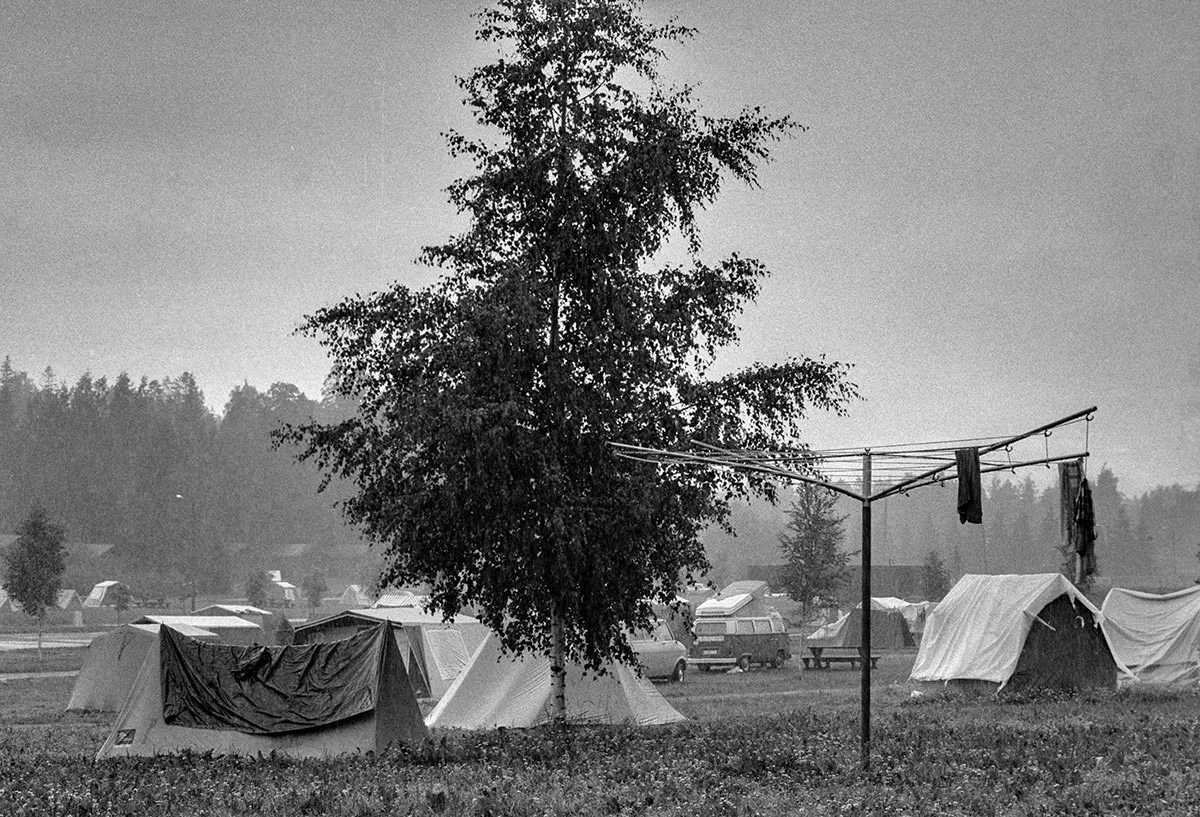
Even at campsites Stewis were commonplace...
Even at campsites Stewis were commonplace... Wikimedia
Steiner kept churning out one invention after another, filing patent applications for a collapsible parasol, a multifunctional bottle and can opener nicknamed ‘PartyJack’ (more than 900,000 units of which were sold in Switzerland), roller blinds, a rubbish bin, school desks – and, of course, every conceivable manner of apparatus for hanging up laundry. But the Stewi would remain his biggest success. Five years after its launch, the company needed to move to a larger workshop in the Seen district of Winterthur. The DeLuxe model picked up awards at the 1954 Mustermesse trade fair in Basel, and Steiner exhibited his Stewi at the Swiss pavilion during the 1958 Brussel’s World Fair. The contraption began racking up more and more international sales. Steiner is once reported to have claimed that he understood women, and that his vision was “to make a housewife’s work as easy as possible”. Before long, the Stewi was a commonplace sight throughout Switzerland. rom 1958 it became lighter and easier to use, constructed from aluminium and plastic rather than wood and with lines made from plastic rather than hemp. The business moved premises again in 1972, this time to a purpose-built production facility on Rudolf-Diesel-Strasse in Winterthur. It was not until 1987 that Steiner’s sole proprietorship became a joint-stock company.
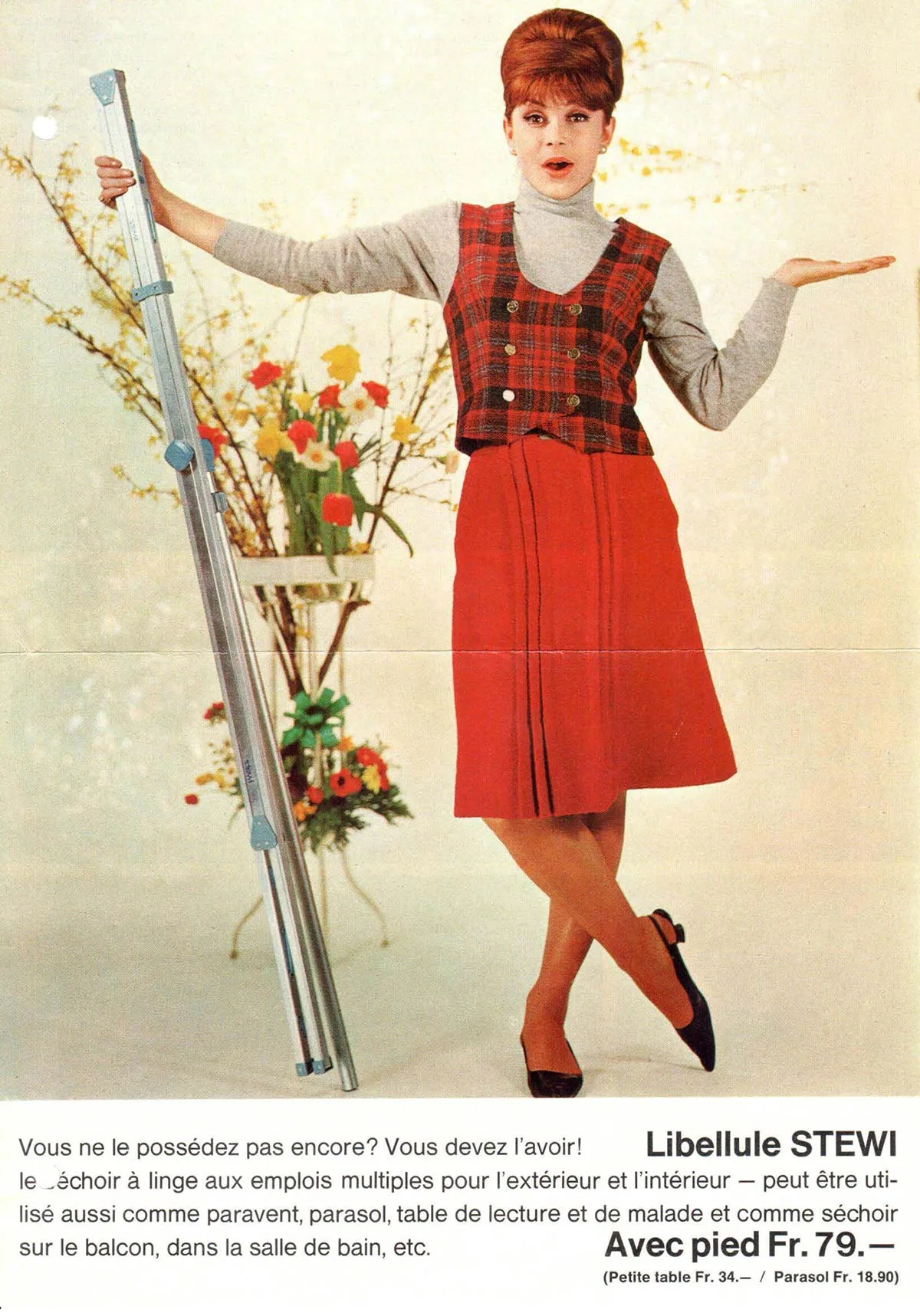
This is how the Stewi was advertised in the 1960s.
This is how the Stewi was advertised in the 1960s. Stewi

Unconventional advertising strategy

Steiner’s success cannot be attributed solely to his quest for perfection: his knack for advertising also played a role. Aware that his invention was eye-catching, Steiner decided to hand out Stewis for free to homes in prominent locations – houses with highly visible gardens, and those situated at busy road junctions or along railway lines. Seeing washing hung out to dry on this futuristic-looking, collapsible structure with boldly outstretched arms made neighbours and passers-by want a whirligig of their own. The Stewi became a huge hit, with the characteristic hole and aluminium socket into which the device was placed and hoisted becoming a feature in the gardens of more and more single-family homes. That’s why its inventor Steiner is often also referred to as the father of guerilla marketing, the term used in the industry to describe unconventional marketing methods that achieve a huge impact at low cost.
The Stewi AG company describes its founder as a managing director of the old school, who knew all 120 members of the workforce by name. Walter Steiner died in Winterthur on 14 April 2009 at the age of 88. A community of heirs initially took over the running of the business, with his son Walter Andreas Steiner serving as CEO. But tumble dryers were becoming permanent fixtures in laundry rooms by that time, business was getting tougher and the company began to falter. Stewi-like whirligigs were being produced in Germany, the Netherlands, the UK, Australia and Asia. The company was no longer making sizeable investments and sales were declining year on year. When industrialist Stephan Ebnöther came to take a look at the firm in 2016, he told the Limmattaler Zeitung newspaper that the entire IT set-up was still running on MS-DOS, a Microsoft operating system dating back to the 1980s and ’90s.
Walter Steiner, inventor of the Stewi, was an old-school boss who knew all his employees by name.
Walter Steiner, inventor of the Stewi, was an old-school boss who knew all his employees by name. obs/Stewi International
Stephan Ebnöther and Lorenz Fäh acquired the company in 2017; Steiner’s youngest son Rolf joined the business and was tasked with bringing the machine park, IT systems and corporate headquarters up to date. Soon, the only reminders of the company’s long history were a cash register from the 1970s and an old punch clock, complete with the cards once used by employees to clock in and out. Ebnöther and Fäh withdrew their interest in the company in 2023, leaving it once more about to fold: unable to find any investors willing to take over the business, it was scheduled to go into liquidation at the end of that year. “Stewi is planning its end”, was the headline in the local press. But then, to everyone’s surprise, the Stewi Group was sold to Reichardt AG from Liechtenstein. It now operates from its new base in Saland in the canton of Zurich.
What remains are the memories of a charismatic founder. And, for nostalgists, the Stewi Oak model – made, as in the old days, of Swiss oak wood. It retails at a price of CHF 1,600.
TV report about the legendary Stewi (in German). SRF

Further posts