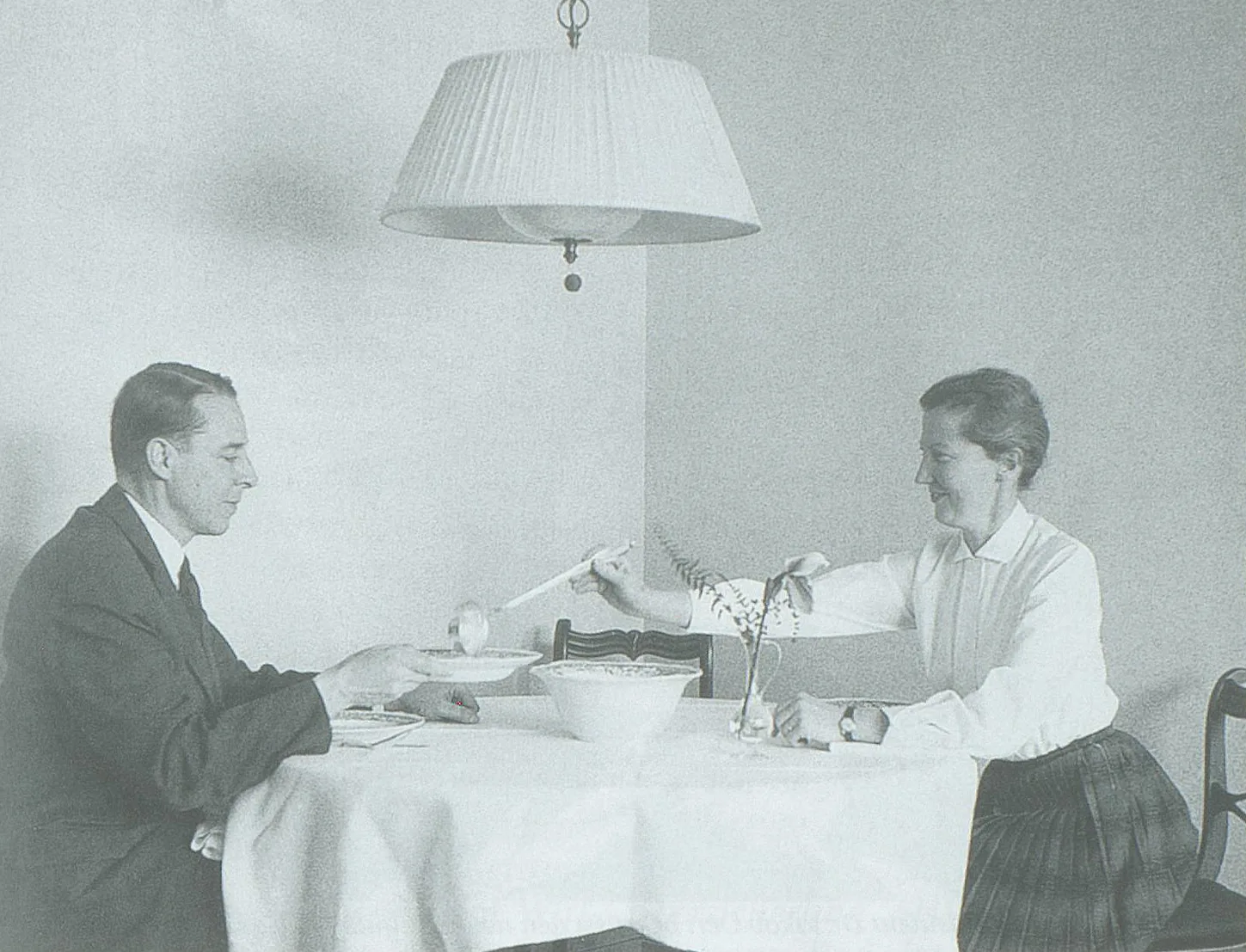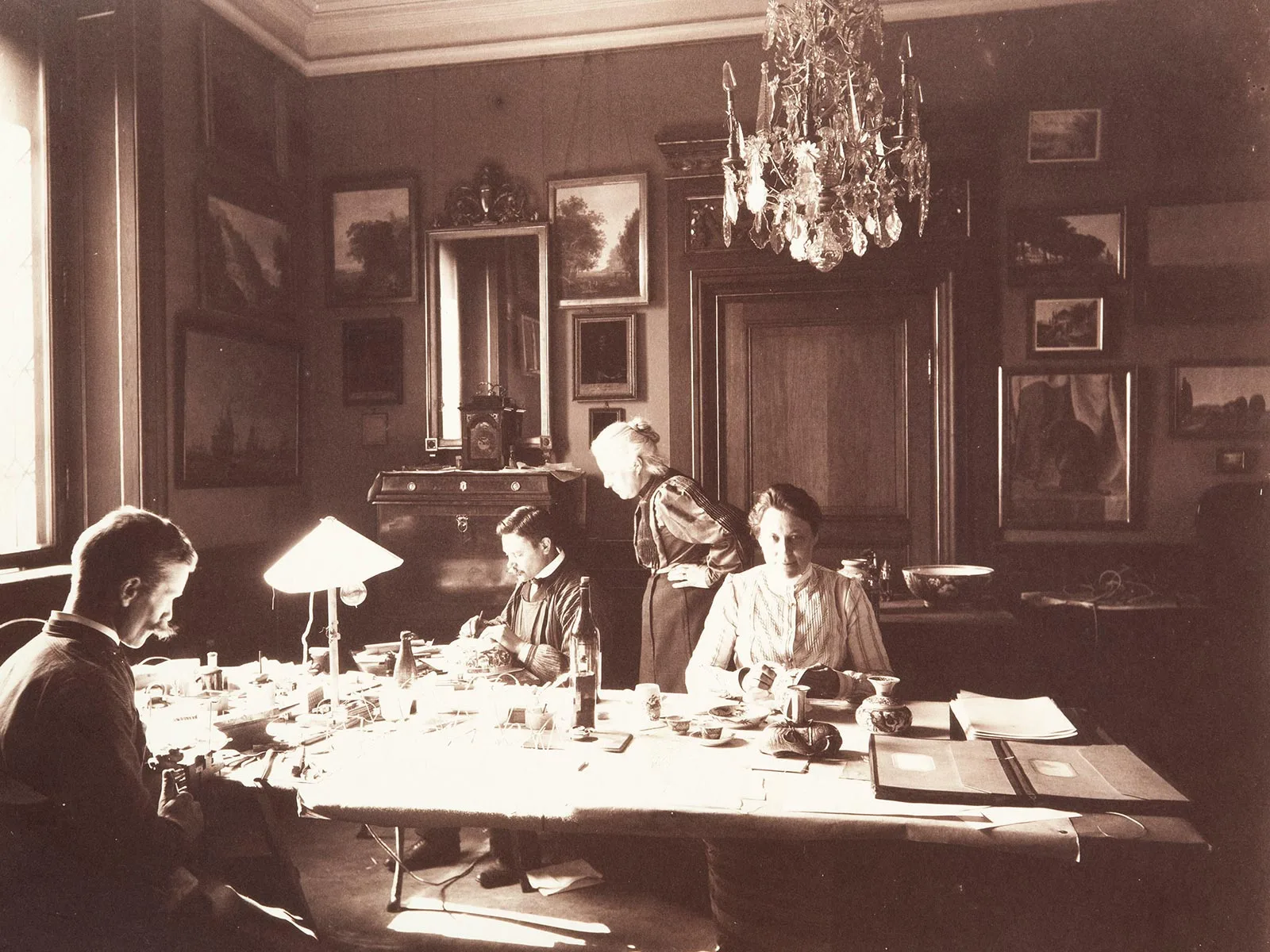
Wilhelmina (standing) in 1907 overseeing the cataloguing of objects from the collection and other artefacts.
Wilhelmina (standing) in 1907 overseeing the cataloguing of objects from the collection and other artefacts. Hallwyl Museum Stockholm

Wilhelmina von Hallwyl’s mission

Around 100 years ago, a Swedish heiress secured the inheritance of the von Hallwyl family, into which she had married in 1865. The National Museum Zurich is part of that story.

Murielle Schlup

Murielle Schlup

Freelance art historian and cultural scientist

The Hallwil Collection first went on display at the National Museum Zurich in 1927, and the way in which it is presented has changed very little since. Exquisite pieces of furniture, objets d’art and everyday items are amassed in an almost seamless row of cabinets and display cases. Portraits and paintings are hung closely together, right up to ceiling level. The opulent collection is reminiscent of a Baroque cabinet of wonder and curiosities. On entering the exhibition, visitors feel like they are stepping into a time capsule that offers a glimpse into the lives and material culture of the upper echelons of Swiss society from the 17th to 19th centuries.

The key to understanding this heterogeneous collection and its outmoded manner of presentation lies in looking at the life and work of the donor, Wilhelmina von Hallwyl (1844-1930).

Old title meets new money
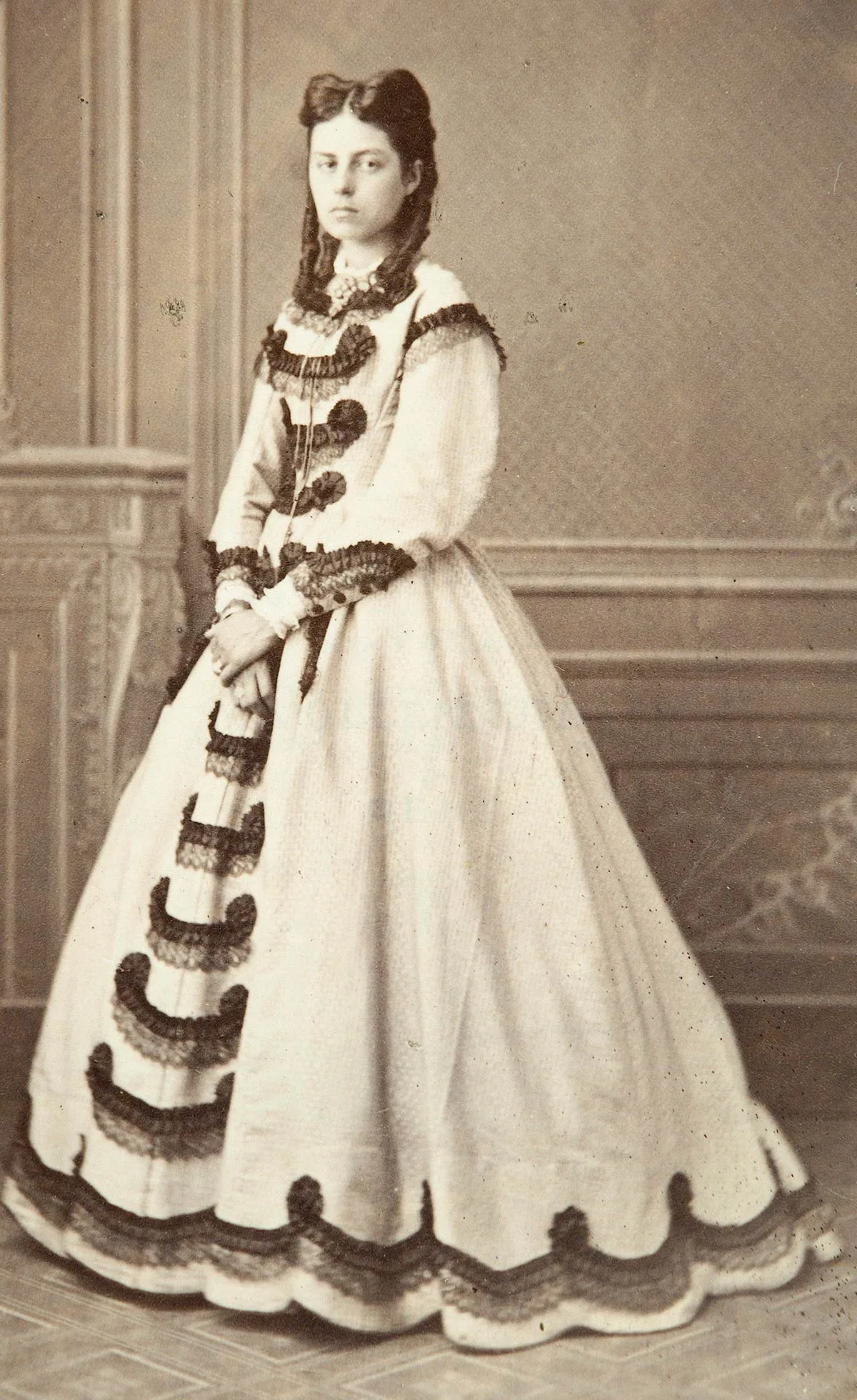
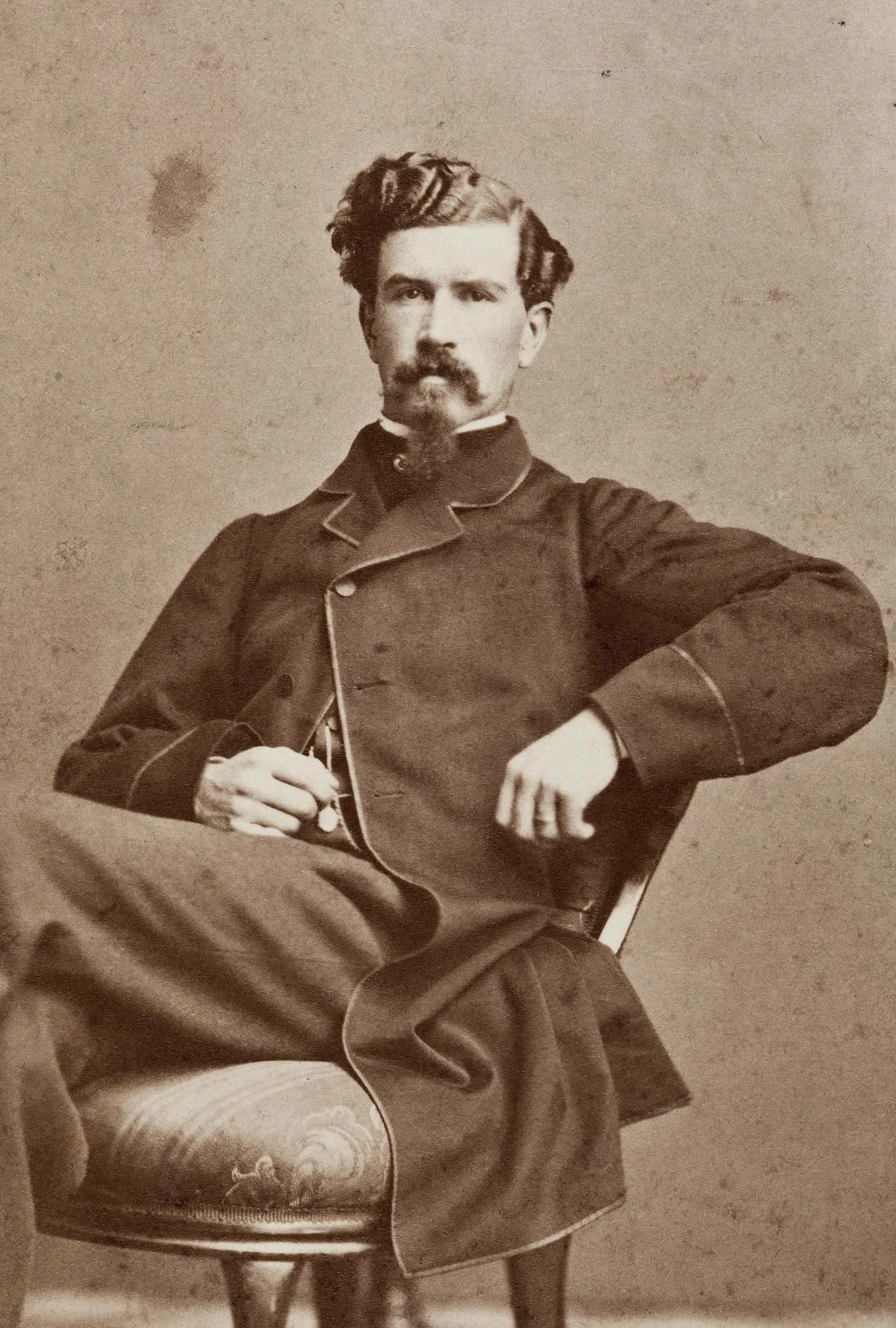
An only child, Wilhelmina Kempe was born in Stockholm in 1844. Her parents, originally from Stralsund on Germany’s Baltic Coast, had made a considerable fortune in the timber trade. The summer of 1864 found Wilhelmina sojourning in Bad Homburg, one of Europe’s foremost spas and a place where ‘old titles’ intermingled with ‘new money’. It was there that she was introduced by mutual acquaintances to Walther von Hallwyl, an impoverished officer in the general staff of the Swiss army. Drawing attention to his noble lineage, he presented himself to the woman who stood to inherit an industrial empire as a count: “One day a young gentleman came to visit us, […] on whose calling card was written le ‘Comte W. de Hallwyl’”, Wilhelmina wrote in her diary. They were married just a few months later in Stockholm. Walther’s aristocratic roots benefited the family business by giving the Kempes access to Swedish high society. In return, Walther himself gained affluence. The couple set up home in Sweden, where they started a family.
The wealthy Wilhelmina Kempe and the impoverished Walther von Hallwyl, pictured circa 1865.
The wealthy Wilhelmina Kempe and the impoverished Walther von Hallwyl, pictured circa 1865. Hallwyl Museum Stockholm / Hallwyl Museum Stockholm

Walther buys Hallwyl Castle
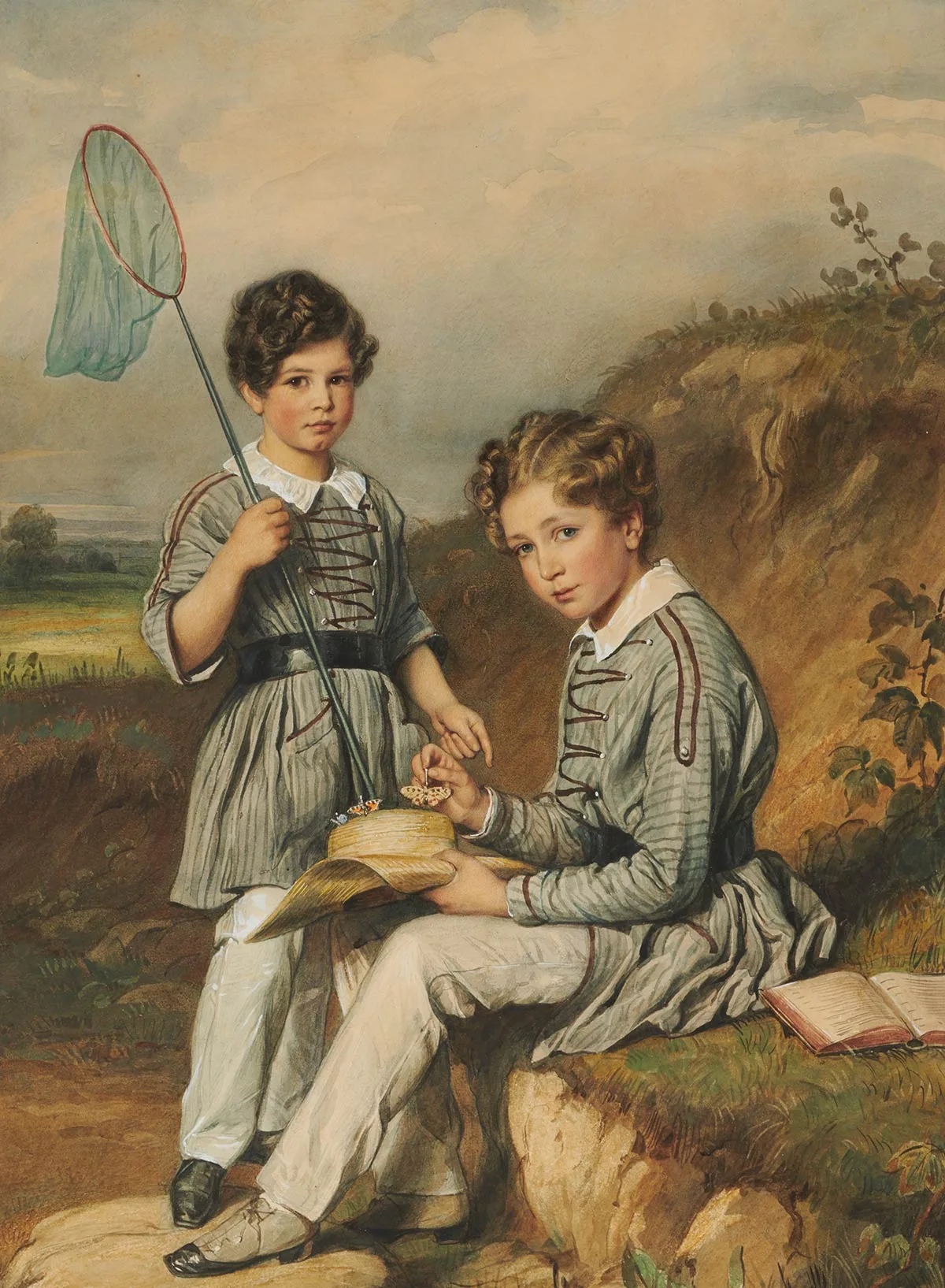
Walther’s elder brother Hans, the son and heir of the family and thus owner of Hallwyl Castle, was less fortunate. Although he had married into money, costly renovation work on the castle, risky financial transactions and the stock market crash and banking panic of 1873 left him destitute. Forced to declare bankruptcy, he had to sell Rued Castle, which his wife Esther von May had brought into the marriage, as well as the furnishings from Hallwyl Castle. To prevent the ancestral home being put up for auction, Hans sold it to Walther in 1874. With her interest in history, it was Wilhelmina who was the driving force behind this rescue mission.
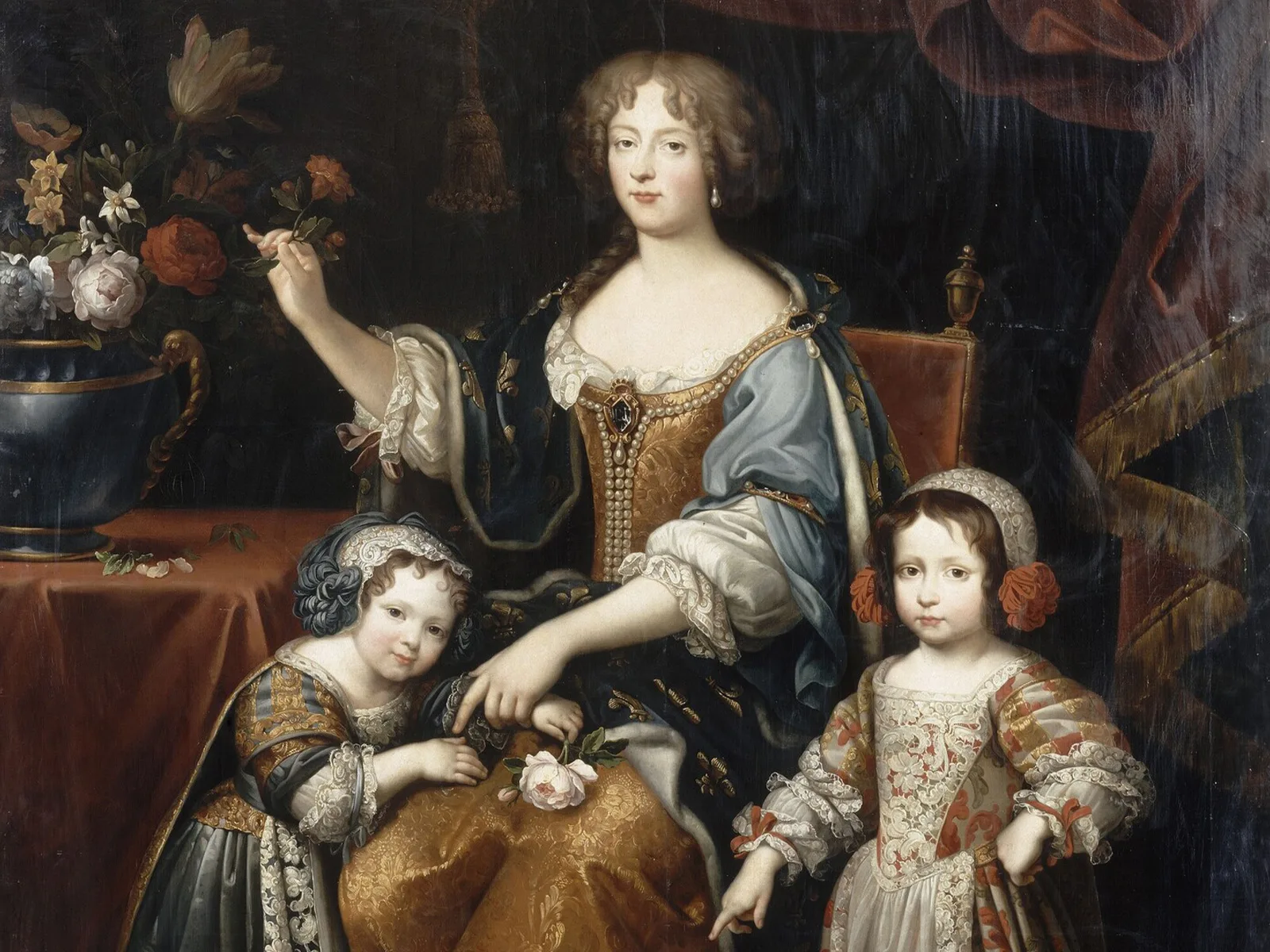
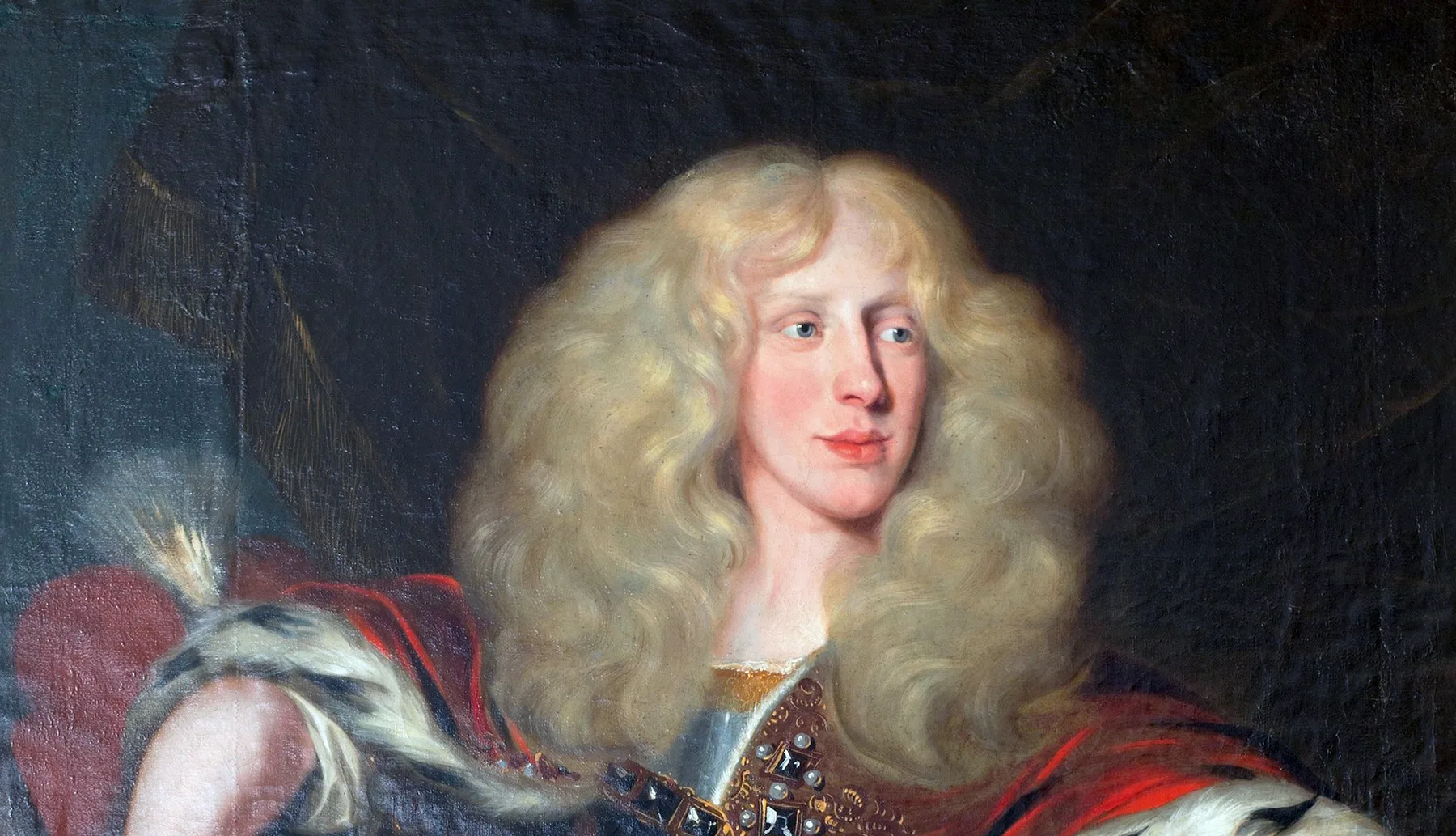
Walther (left) and Hans von Hallwyl, portrayed by Johann Friedrich Dietler, 1848.
Walther (left) and Hans von Hallwyl, portrayed by Johann Friedrich Dietler, 1848. Swiss National Museum
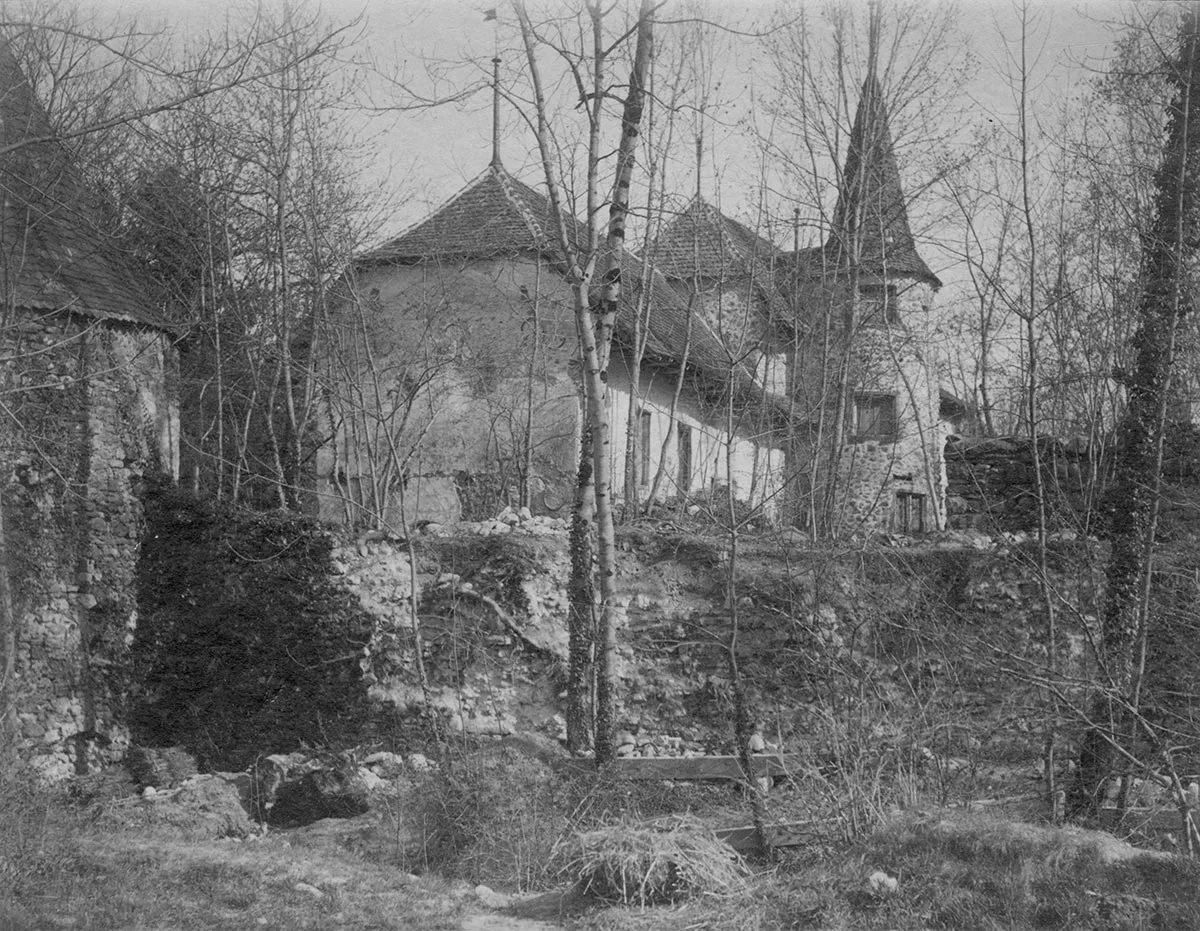
From that point on, the castle stood empty and unoccupied all year round. The refurbishment work initiated by Hans had come to nought. Although a steward was appointed to see to the bare essentials, cracks in the walls, damage to the roof, thick overgrowth and a silted-up moat nevertheless testified to the ongoing decay and demise of the property. When Wilhelmina came to Switzerland in 1903 to take a look through the family archives, she was shocked to find the castle in such a desolate condition. She made it her goal to preserve the centuries-old ancestral home and to “[…] save whatever can be saved of the building”, as she wrote to archivist Franz Otto Schmid in Zurich.

Securing the family inheritance

The run-down tower in which the archives were held was the starting point for preserving the family’s inheritance. Wilhelmina and Schmid set about recording what was left of the castle’s collection of books and “dusty old papers”: deeds, contracts, correspondence, inventories and plans. She asked Wolfgang Friedrich von Mülinen – Hans’s son-in-law who was a professor of history in Bern – for assistance, “[…] so that I know exactly what to do and how to put everything in its proper order! We are merely a flock of sheep wandering astray without a shepherd”. Tasked with elucidating the family history, Schmid arranged for copies to be made of further documents in Switzerland and abroad. In 1926, Wilhelmina handed the family archives over to the State Archives of the Canton of Bern together with CHF 10,000 for their care. Taking up around 70 metres of space, they constitute its largest private holding to date.
There was a lot of work to be done: photo of Hallwyl Castle, circa 1900.
There was a lot of work to be done: photo of Hallwyl Castle, circa 1900. State Archives of the Canton of Bern, FA von Hallwyl B 1317
Next on the agenda was much-needed restoration work on the Archive Tower and the crumbling walls of the castle moat. Draining the latter turned up all manner of everyday objects that had been thrown into it over the centuries. Keen to save these silent witnesses to life in the castle in days gone by, Wilhelmina put Swedish archaeologist Nils Lithberg in charge of excavating the site. The finds unearthed between 1912 and 1914 were transported to Stockholm, where they were systematically evaluated, restored, inventoried and photographed.

Swedish architect Anders Roland carried out renovation work on the castle from 1914 to 1916. This also meant removing the buildings previously added or converted to the neo-Gothic style during the time of Hans von Hallwyl. Wilhelmina wanted to see the castle restored to its “original state”, with a focus on the period prior to Hans’s first structural alterations of 1861.
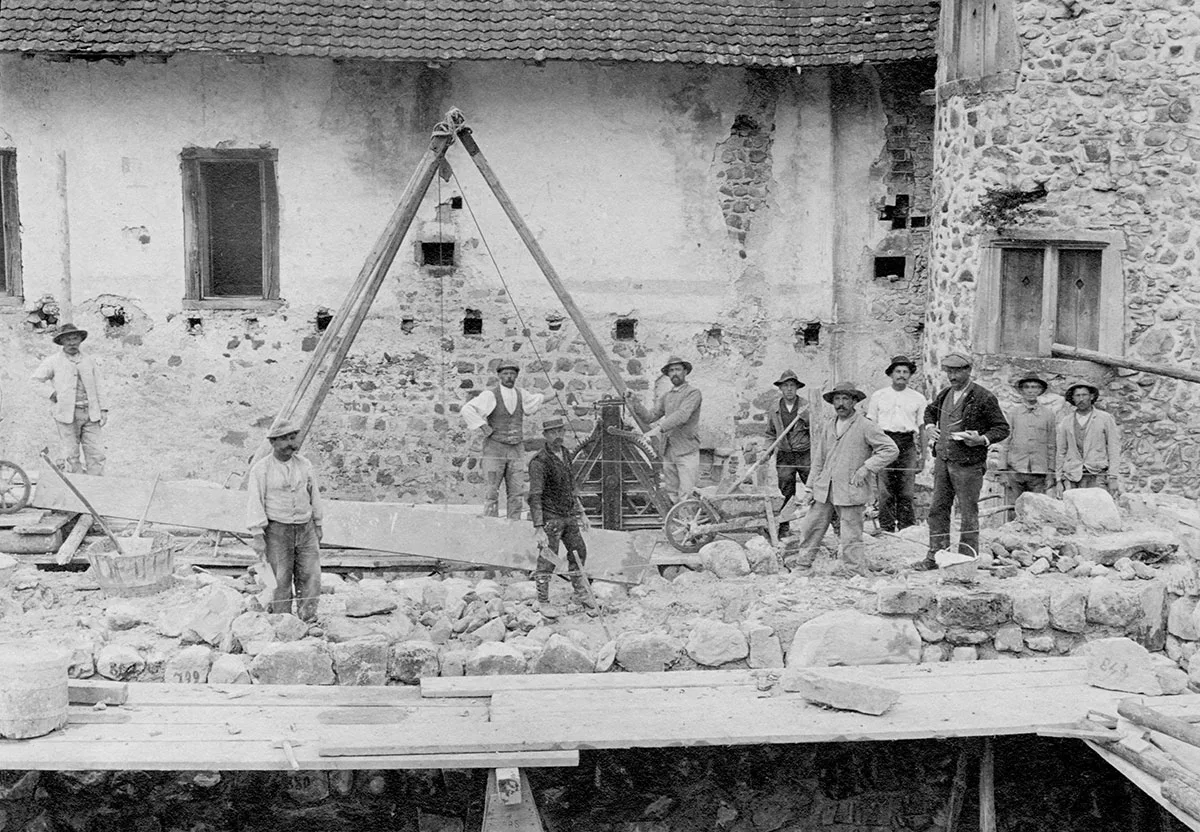
The foundations of the castle keep were also renovated from 1914 to 1916.
The foundations of the castle keep were also renovated from 1914 to 1916. State Archives of Canton Bern, FA von Hallwyl B 1317
The project to preserve the monument was ahead of its time in terms of approach and scientific precision. Hallwyl Castle is considered the first castle complex in Switzerland to have been properly investigated using exemplary methods. The results of the excavation and restoration work were documented in five volumes entitled Hallwyl Castle, published in Stockholm from 1924 to 1932.

No male heir

As Wilhelmina and Walther von Hallwyl had four daughters but no sons, the male line of this noble Swiss family became extinct on Walther’s death in 1921. However, according to the terms of an ancestral inheritance contract dating back to 1369, the castle could only be passed down to male heirs. Consequently, another means of ensuring its future preservation had to be found. In 1925, Wilhelmina therefore transferred the castle to a foundation she had established specifically for this purpose and opened the – still empty – property to the public. In doing so, she paved the way for the current museum.
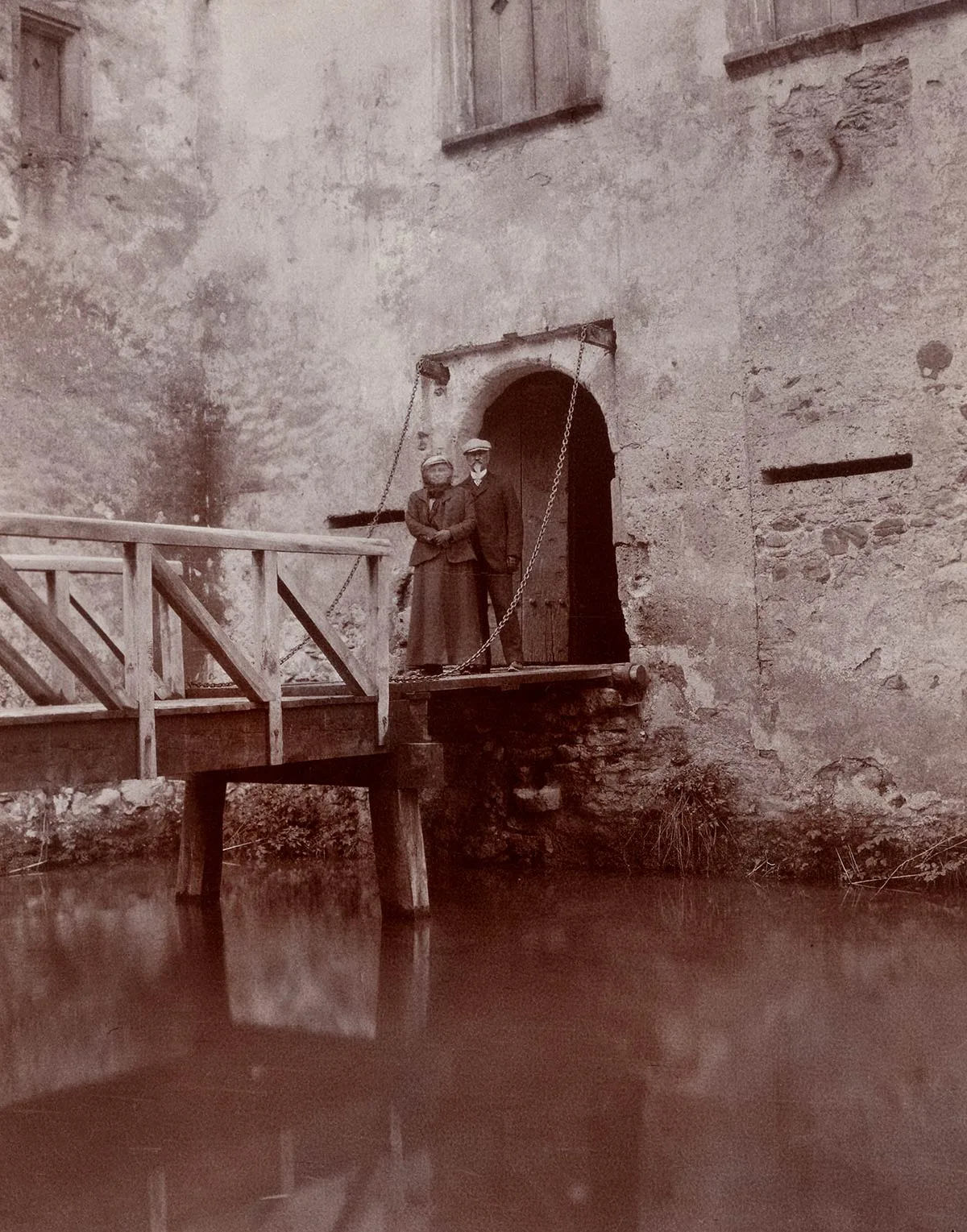
Wilhelmina and Walther von Hallwyl in front of their castle. The picture was taken around 1910.
Wilhelmina and Walther von Hallwyl in front of their castle. The picture was taken around 1910. Hallwyl Museum Stockholm
Almost from the outset, Wilhelmina von Hallwyl had seen the National Museum Zurich as a suitable place for the permanent safekeeping of the artefacts from Hallwyl Castle and other “Hallwil private antiquities”. She wanted them to go on public display there in a “Hallwil Room”. After several years of, sometimes tough, negotiations with the museum’s top management, the donor largely got her way: the agreement signed in 1912 gave her the right to set up the collection according to her wishes in a separate room in the museum and stipulated that the mode of presentation must remain unchanged forevermore.

Wilhelmina spent the time up until the handover planning the layout in minute detail: “I already know precisely how the room should be set out. I’d like to see the look on Director [Hans] Lehmann’s face when he sees everything he has to put on display”, she wrote to Wolfgang Friedrich von Mülinen. The last of the objects from Stockholm arrived at the National Museum Zurich in 1927. Wilhelmina was there for the handover and oversaw the setting up of the exhibition. She presented the National Museum with CHF 100,000 to ensure the collection would be well looked after. She also set up the Wilhelmina von Hallwil Foundation in 1928.
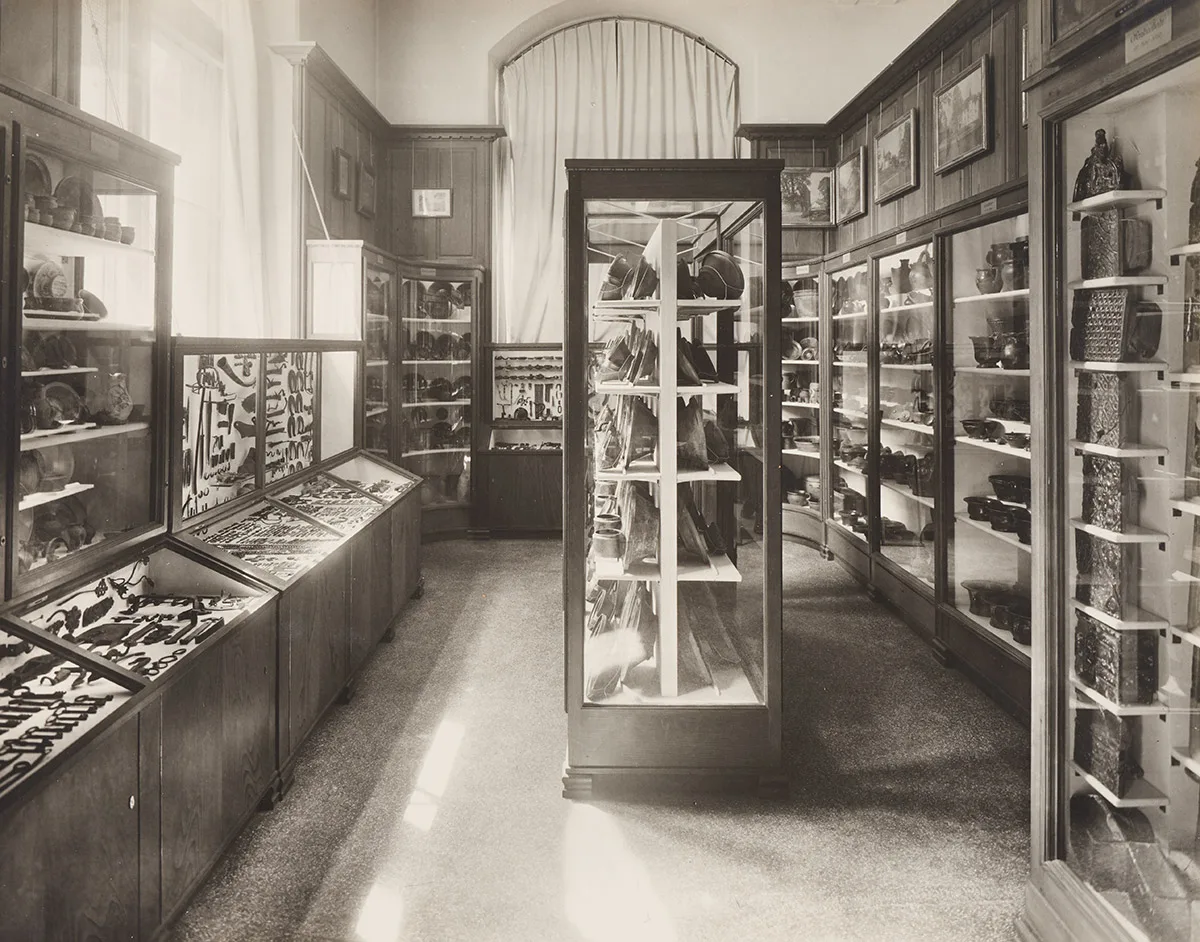
The archaeological cabinet of the Hallwil Collection at the National Museum Zurich. The photo was taken in 1927.
The archaeological cabinet of the Hallwil Collection at the National Museum Zurich. The photo was taken in 1927. Swiss National Museum

Wilhelmina von Hallwyl’s legacy

Up to her death in 1930, Wilhelmina von Hallwyl poured a great deal of time, money and passion into her projects. She also lived long enough to see most of them realised. The manuscript of the family history was published in 2006 as Geschichte der Herren von Hallwyl [History of the Lords of Hallwyl]. But these ‘lords’ have a strong-willed Swedish lady who married into the family to thank for the eclectic monument that lives on in their name in more ways than one. Wilhelmina accomplished her mission of preserving the von Hallwyl family inheritance for posterity – creating her own legacy into the bargain. That legacy can be encountered at three places of remembrance and cultural outreach in Switzerland: the museum at the castle in Aargau, the "museum within a museum" in Zurich and the research archives in Bern. Academic publications round out our knowledge of this noble family, which made its mark on our country’s history since first being mentioned in official records in the 12th century. Or, in the words of Wilhelmina von Hallwyl herself: “The castle is not the only winner. Academia has won too – significantly so”.

Further posts