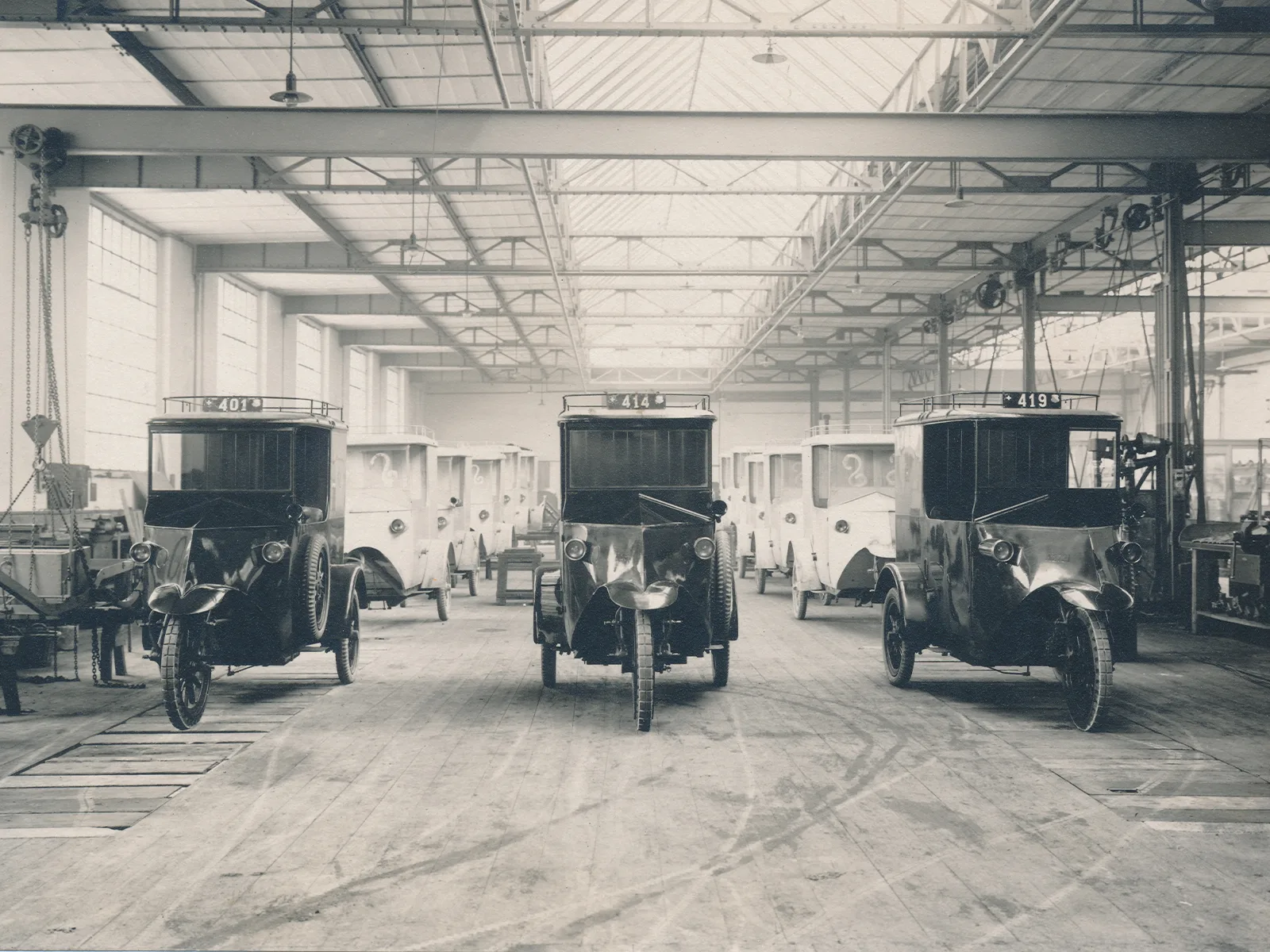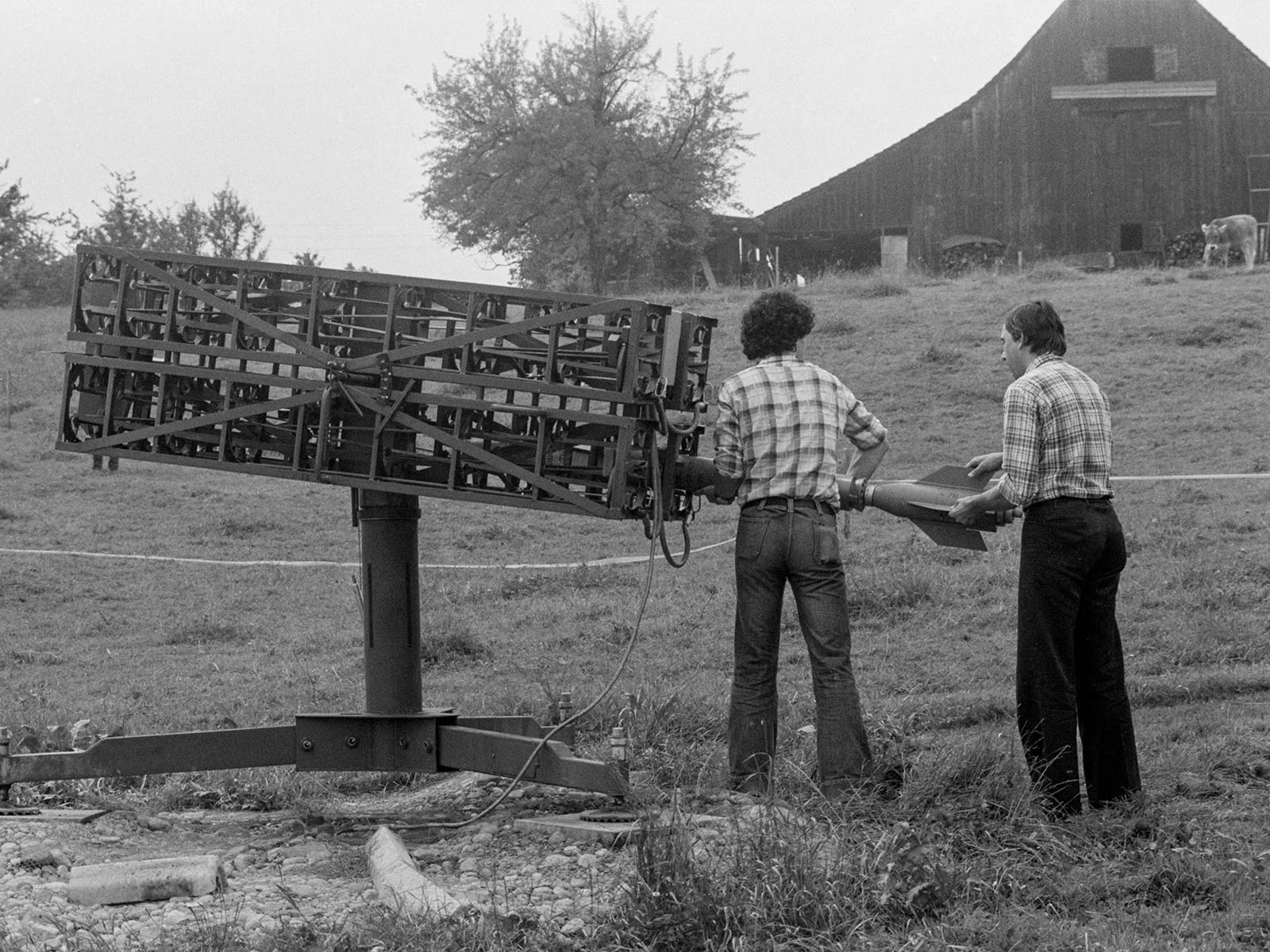
A rocket on a cow pasture: hail rockets were designed to reduce weather damage in the 1970s.
A rocket on a cow pasture: hail rockets were designed to reduce weather damage in the 1970s. e-pics

Rockets to fight hail clouds

Hail poses an existential threat to agriculture. For decades, Swiss farmers tried to prevent damage to their crops using silver iodide rockets. In 1986, a report by ETH Zurich shattered the bold dreams of hail prevention.

Thomas Weibel

Thomas Weibel

Thomas Weibel is a journalist and professor emeritus of media engineering.
It is 6 August 1978 and the weather is hot and sultry. Around 6pm, heavy storm clouds start to gather above the Napfgebiet, a hilly region between Bern and Lucerne. Researchers have long been preparing for this moment: they have arranged ‘hailpads’ in a clearly defined grid pattern on an area of 1,290 square kilometres – almost the size of the canton of Aargau. Hailpads are plastic panels covered by aluminium foil, which are laid out on the ground and on which hailstones would leave dents of varying sizes. But the most important piece of equipment is still lacking, and so, work begins in Eschenbach, Neuenkirch, Wolhusen, Romoos and Trubschachen to make the two-metre-long, 34-kilo, 125mm, Oblako (‘cloud’) Soviet anti-hail rockets ready for launch. The rocket heads have each been filled with around five kilos of silver iodide. The first rocket is launched around 6.40pm, and then another 16 are fired at five-minute intervals, their explosive heads detonating as planned inside the storm cloud gathering to the east.
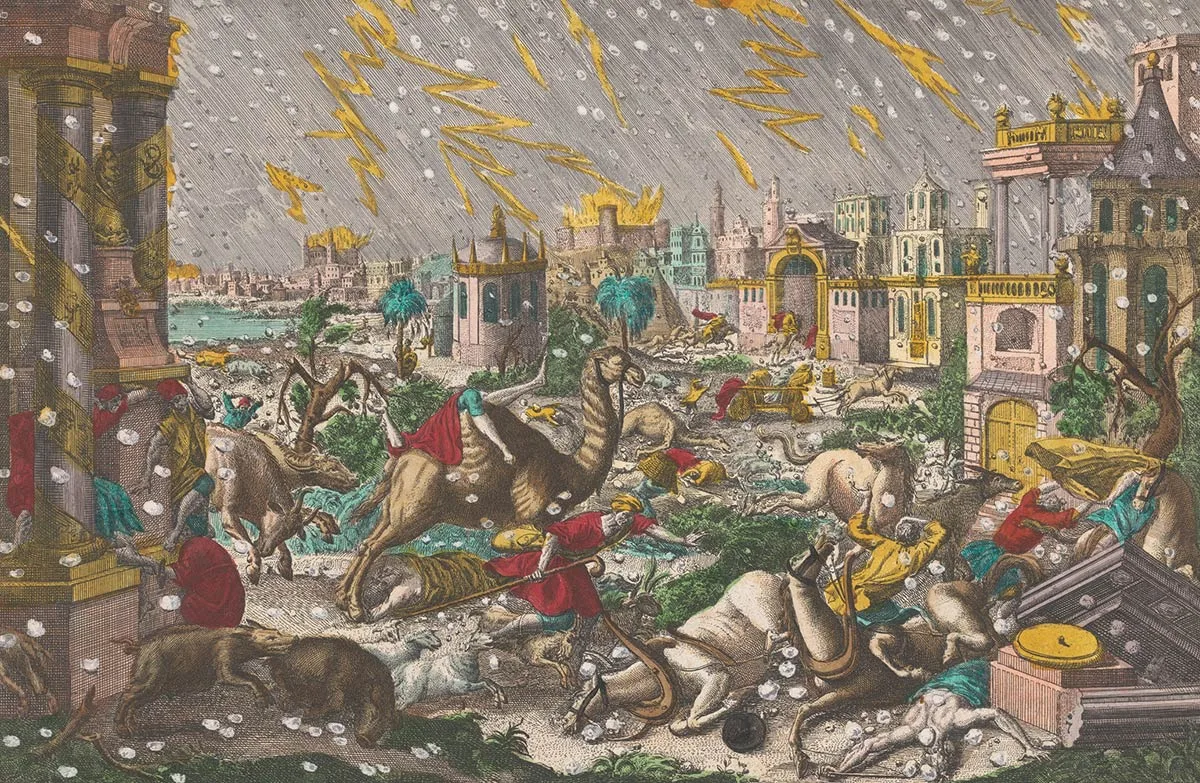
“And the hail struck throughout the whole land of Egypt, all that was in the field, both man and beast; and the hail struck every herb of the field and broke every tree of the field.” In the Second Book of Moses, known as Exodus, hail is one of the ten plagues. Meanwhile, in his Naturales quaestiones, the Roman philosopher Seneca talks about hail-guards appointed by the state in the Greek city of Cleonae near Corinth, who urged people to perform animal and blood sacrifices when storms were gathering to ward off hail.
The seventh plague to afflict Egypt was a hailstorm. Up until the modern era, people interpreted hail as divine punishment or sorcery. It wasn’t until the 18th century that these views changed and people started to view hail as a natural phenomenon.
The seventh plague to afflict Egypt was a hailstorm. Up until the modern era, people interpreted hail as divine punishment or sorcery. It wasn’t until the 18th century that these views changed and people started to view hail as a natural phenomenon. Wikimedia / Rijksmuseum
In order for hailstones to be able to form in a storm cloud in the first place, microscopically small crystallisation nuclei must be present, such as mineral dust, soot, mould spores or bacteria. In the lower layers of the cloud, the water vapour condenses on these nuclei to form droplets. Strong updrafts carry these droplets to a height of up to 15 kilometres, where they freeze and fall down. In the lower part of the cloud, more water accumulates and the ice crystals rise back up. Once this has occurred several times, the hail stones are heavy enough to fall to the ground.
Images of a hailstorm that occurred in the summer of 2022 in the town of Oey-Diemtigen in the canton of Bern. Youtube / Wettermelder Europa
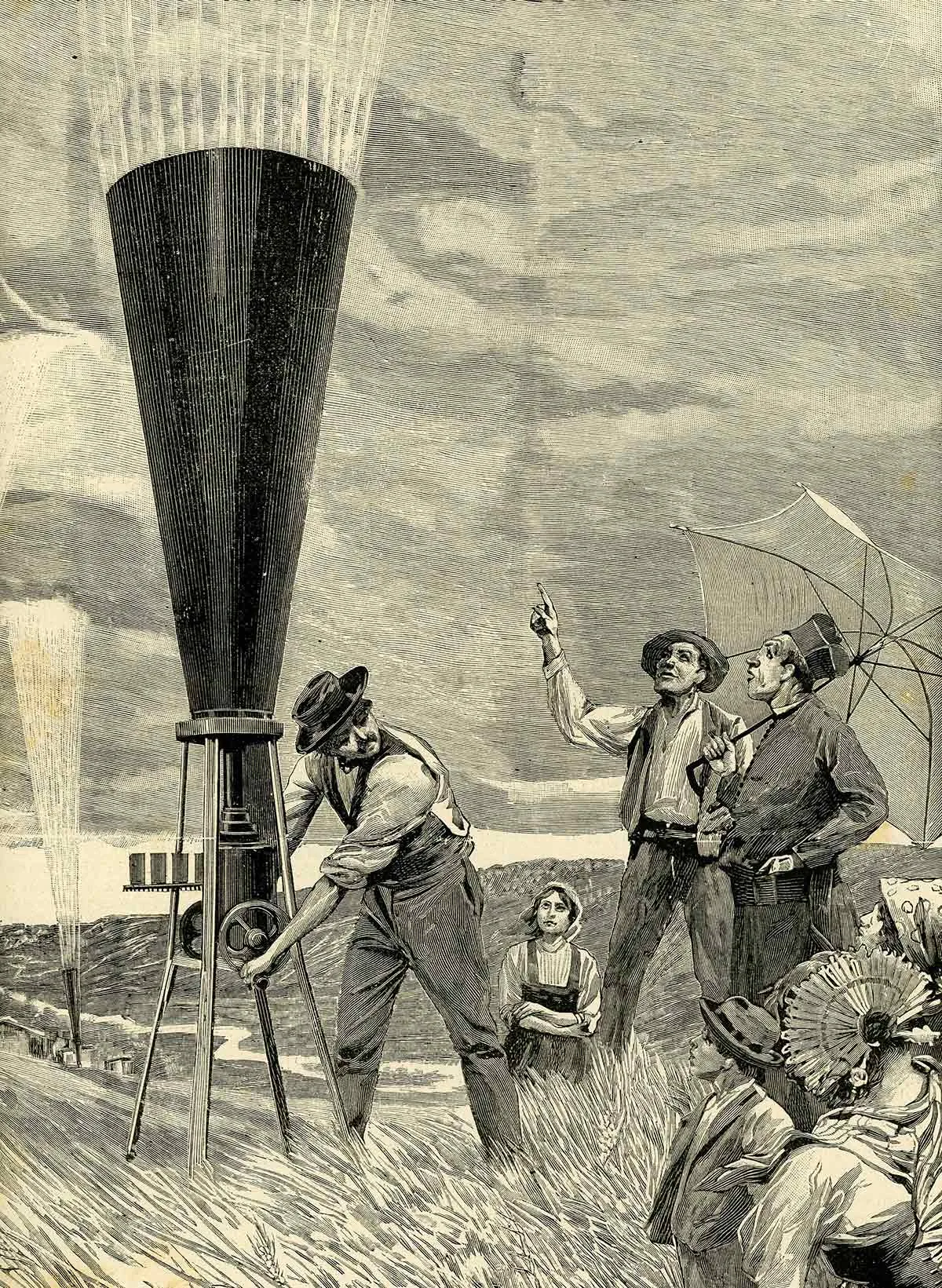
Sacrifices were never sufficient to prevent storms, however. In the 18th century, there was an almost military mobilisation against hail clouds, when France, Germany, Austria-Hungary and Italy used hail cannons to try to prevent hail by detonating inside the clouds. But this too remained unsuccessful. The principle that still applies today was discovered in the early 20th century: dispersing silver iodide – crystals made of yellowish, water-insoluble salt made from silver and iodine – inside a cloud acts as additional crystallisation nuclei. The aim is to significantly increase the number of these nuclei using what is known as ‘cloud seeding’, so that more (and therefore smaller) hailstones form, which cause less damage and may even completely melt as they fall.
Use of hail cannons in an illustration from 1899.
Use of hail cannons in an illustration from 1899. Wikimedia
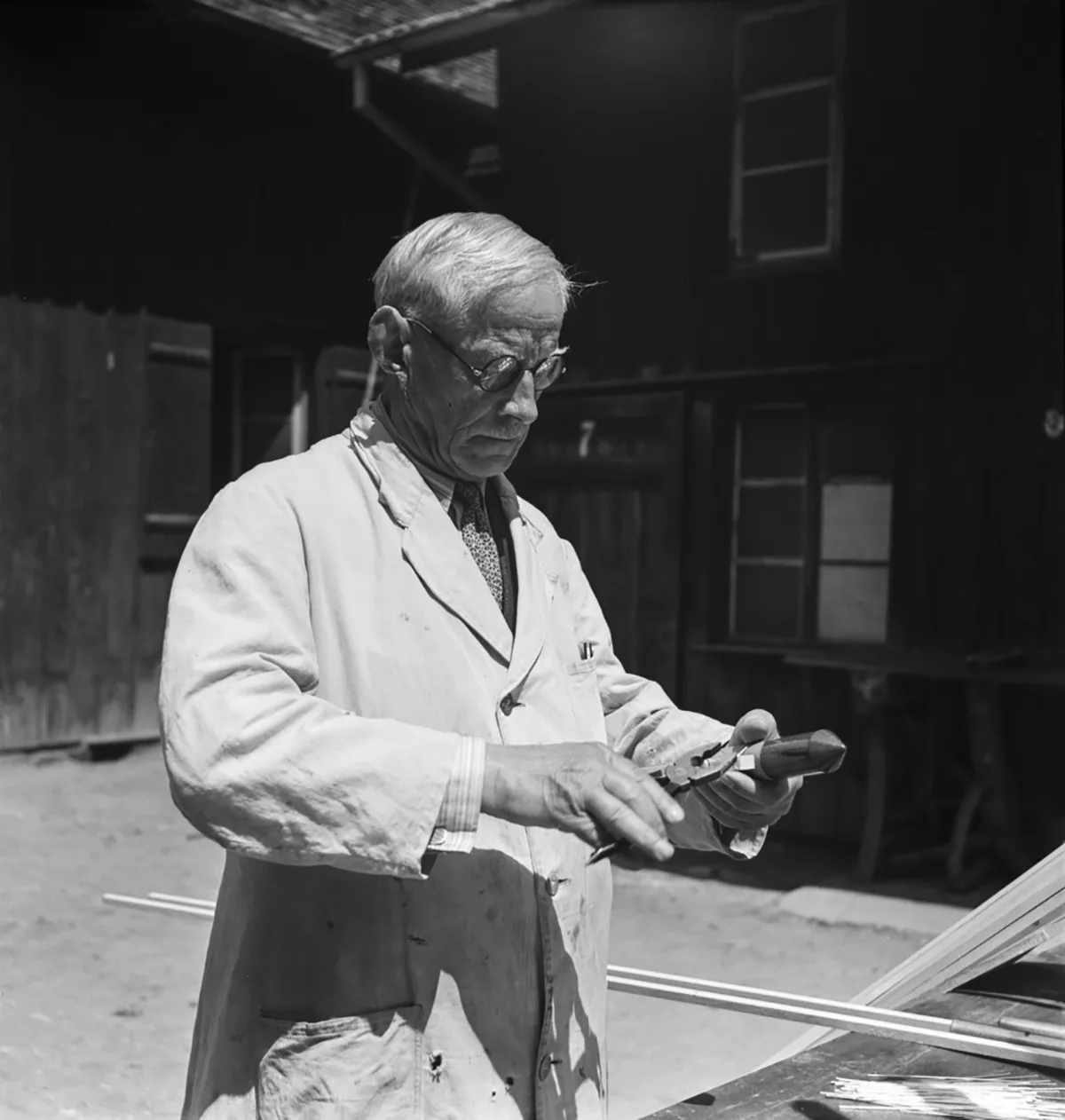
The need for rockets to ‘seed’ hail clouds prompted entrepreneur Karl Müller (1888–1942) from Kreuzlingen to set about building them. As lieutenant colonel of the artillery and head of the eponymous pyrotechnic factory, Müller began building small, powerful rockets that were easy for farmers to launch and that could reliably disperse their silver iodide payloads inside the cloud. To this day Müller is considered the true inventor of the hail rocket, which wasn’t patented by the Müller pyrotechnic factory until years after his death.
The inventor of the hail rocket: Karl Müller in his pyrotechnic factory in Kreuzlingen (canton of Thurgau), 1942.
The inventor of the hail rocket: Karl Müller in his pyrotechnic factory in Kreuzlingen (canton of Thurgau), 1942. Keystone / Photopress-Archiv
But it was not only in Switzerland that live rockets were being fired; the same was happening in eastern Europe and in the former Soviet Union. By launching silver iodide rockets, people believed they could achieve great success: studies claimed that the ‘Soviet method’ allowed 70–90% of expected hail damage to be prevented. That prompted researchers from ETH Zurich, and from France and Italy to get involved in a five-year field trial known as ‘Grossversuch IV’ to test the effectiveness of the ‘Soviet method’ once and for all. The last Oblako rockets were fired into the sky in September 1981. After a total of 76 storm days with some 150 seeded and another 150 unseeded clouds, the research project came to an end. The results were sobering – and scientifically speaking, the ‘Soviet method’ was a flop.
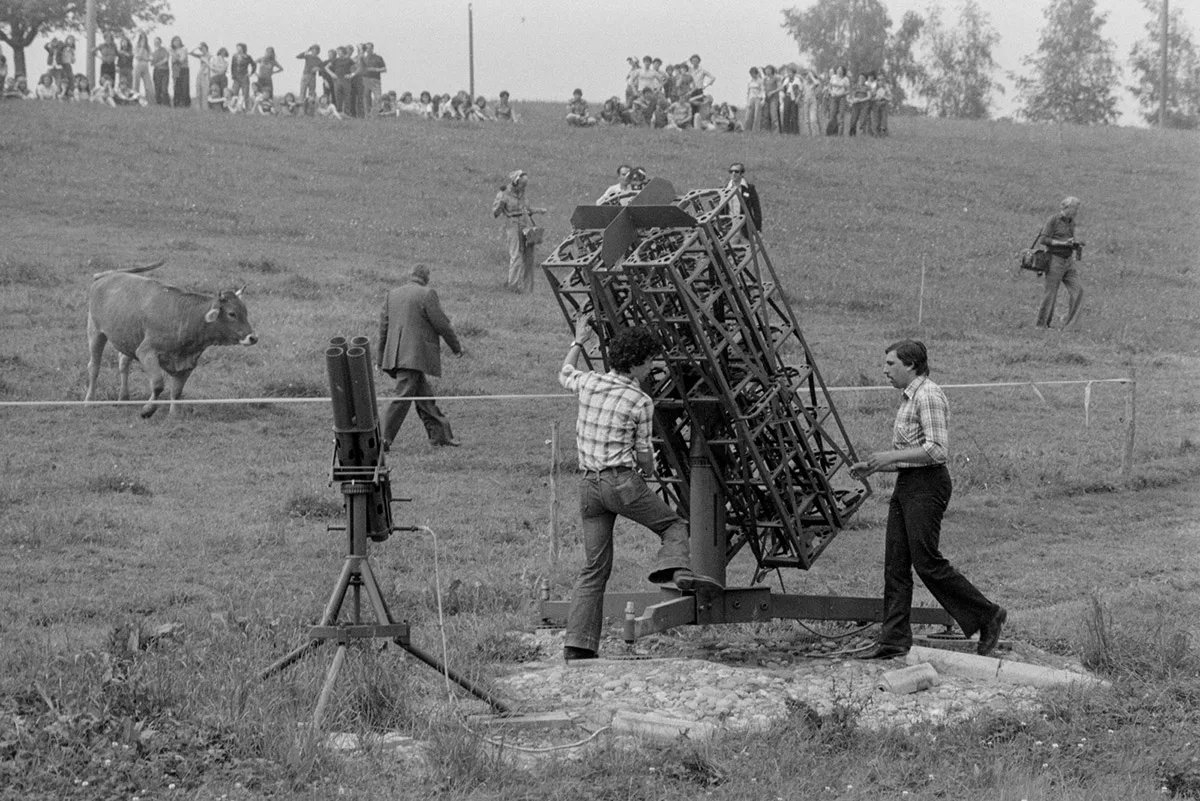
The hail rocket tests, which were conducted in Emmen (canton of Lucerne) in the summer of 1977, attracted many curious onlookers.
The hail rocket tests, which were conducted in Emmen (canton of Lucerne) in the summer of 1977, attracted many curious onlookers. e-pics
The researchers were unable to detect any statistically verifiable difference between seeded and unseeded hail clouds. “If you try to fill a football stadium with a smoke firecracker, we all know that doesn’t work,” explained study lead and ETH atmospheric physicist Albert Waldvogel in a later interview on Swiss television. “They can fill a part of it, but never the whole stadium. That is about the same as what a hail rocket with silver iodide can achieve inside a cloud. There will never be enough silver iodide.”
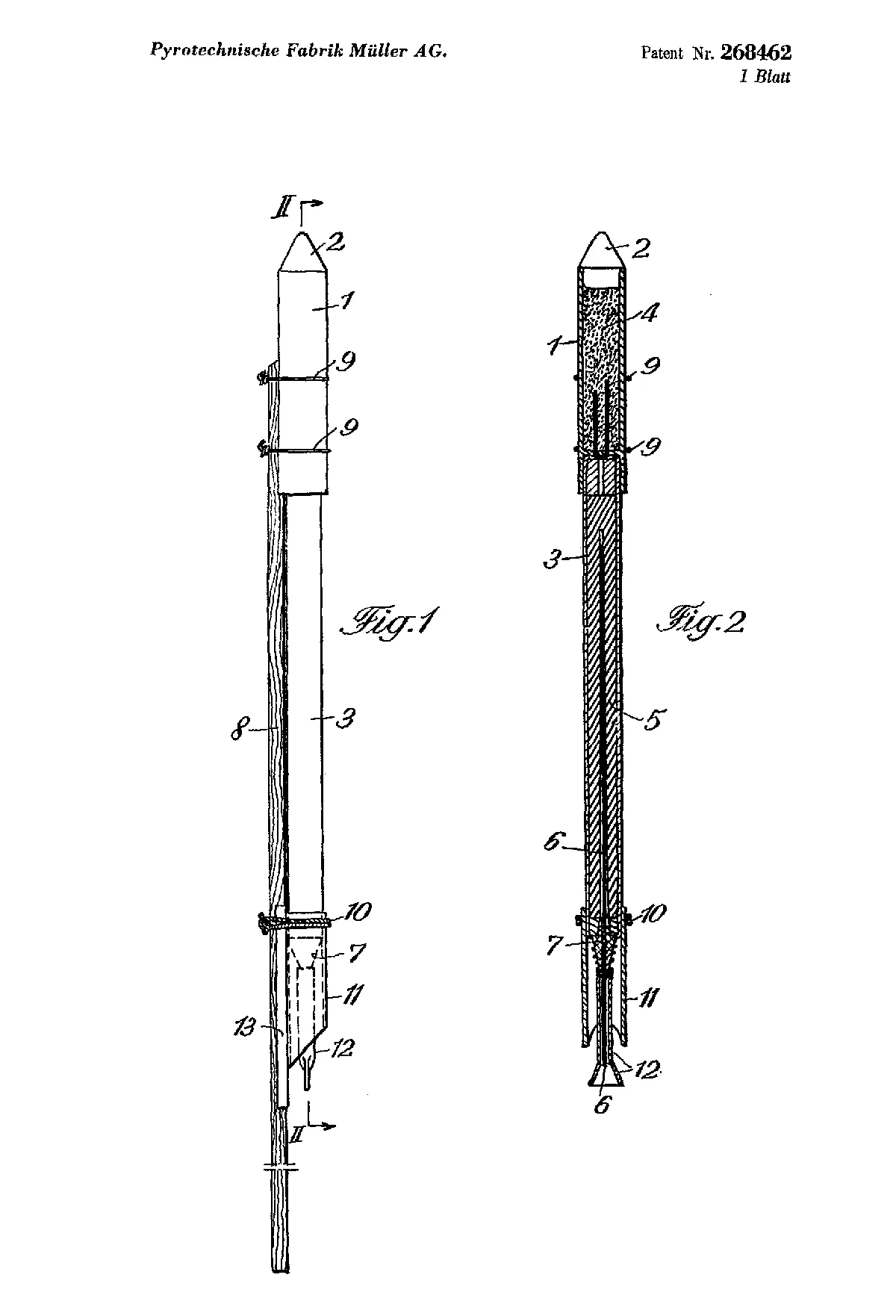
Sketch from Müller’s patent application for his hail rocket, filed in January 1950.
Sketch from Müller’s patent application for his hail rocket, filed in January 1950. Espacenet
Scepticism was growing among the farmers, too. For the many clubs in which the hail shooters had organised themselves since the 1950s, the negative result of the ‘Grossversuch’ came as a heavy blow. The Federal Commission that had been set up to study hail formation and defence was dissolved, and both the federal government and insurance companies stopped financing anti-hail shooting. The Swiss association for hail control was dissolved in 2019, and most recently, in 2024, the 'Hagelflieger’ project – a Cessna that had 'seeded' hail clouds with silver iodide for six years on behalf of the insurance company Baloise – was declared a failure.
TV report on the discontinuation of anti-hail flights in Switzerland in 2024 (in German). SRF
In the end, it seems that only the inhabitants of the Napf region reaped any benefit, as ETH researchers had appealed to them to report the location of any rocket shells they discovered – for a reward of CHF 50.

Further posts