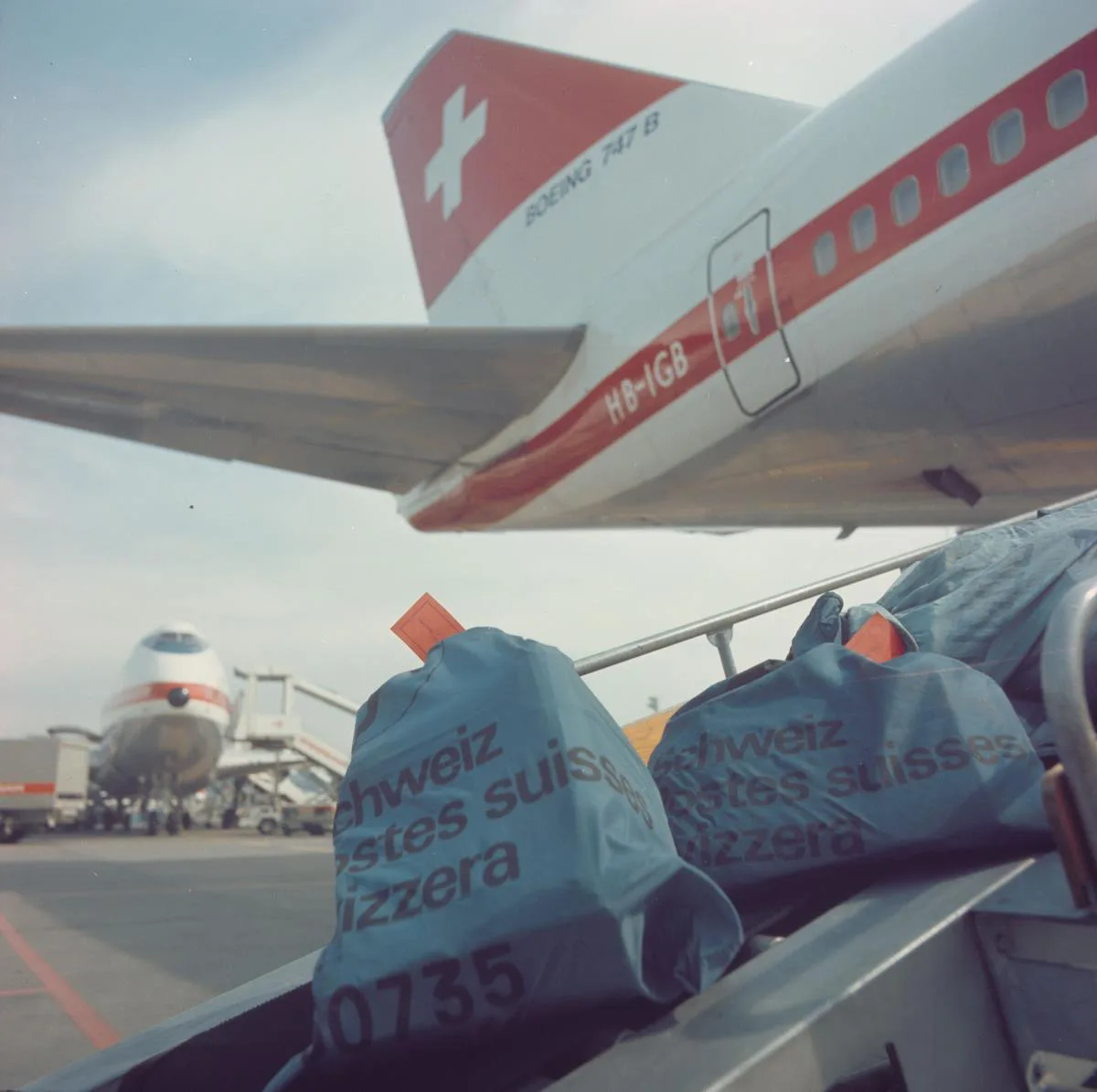
Fighter pilots and the origins of airmail in Switzerland
The mass transport of mail by airplane has long been a central component of global logistics networks. But it experienced a difficult beginning in Switzerland. Moreover, the reasons behind the country’s move to airmail are not what you would expect.

Nicolas Kessler
Nicolas Kessler is curator of the postal and transport history and philately collection at the Museum of Communication and research assistant for the digital archive at the PTT Archive.
According to research conducted by the newspaper Blick, about half a million of these packages arrived in Switzerland daily during August 2024. The exact figure is not known, but it is definitely a very high number. This business practice is coming under increasing criticism, with reports of terrible working conditions in factories and competitive pressures for Swiss industry and retail. Not to mention dubious product quality and the considerable environmental burden from energy-intensive manufacturing plus harmful carbon emissions from air transport.
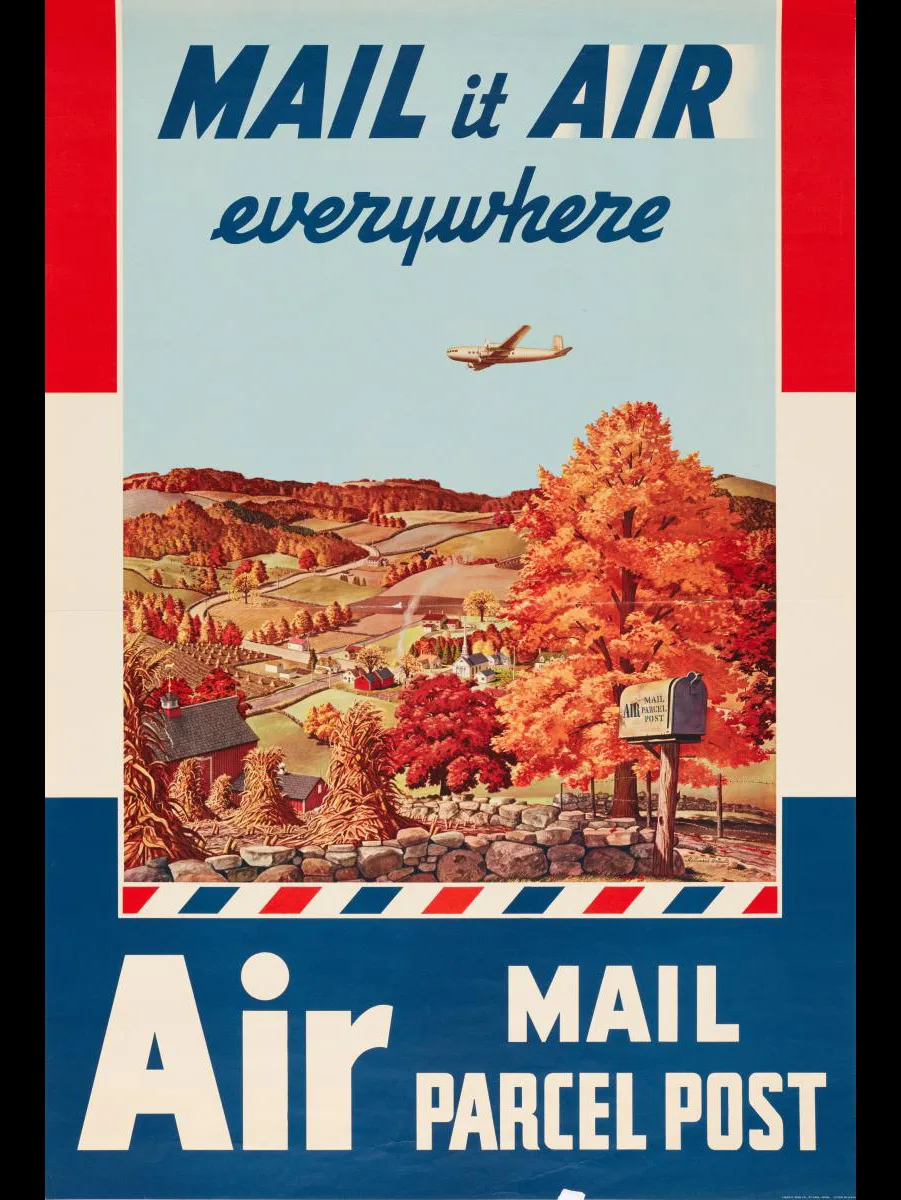
The mass transport of mail items by air has long been a mainstay of global logistics networks. However, in the age of digital communication there are not many letters going back and forth. It’s the insatiable demand for consumer goods that is fuelling the airmail boom.
Airmail: how did it happen?
“Our postal service has always moved with the times with regard to transport: in 1857, railway postal cars began operating. In 1904, the motor vehicle made its debut, and in 1906 the first three post buses started ferrying people around [...].”
So, aerial transport seems to have been the next logical step: “Having started with balloons in 1909, Switzerland’s first use of motorised air transport for mail was in 1913 [...]. Since then, airmail has established itself as a mainstay of international postal traffic [...]”
This narrative presents the inception of airmail as the logical and almost automatic outcome of progress and new technologies. However, this is not borne out by the archival evidence, at least in Switzerland. This article looks at what really happened. The aerial revolution was a global phenomenon, and developments outside Switzerland heavily influenced the emergence of airmail within the country.
How it all began: keeping fighter pilots busy
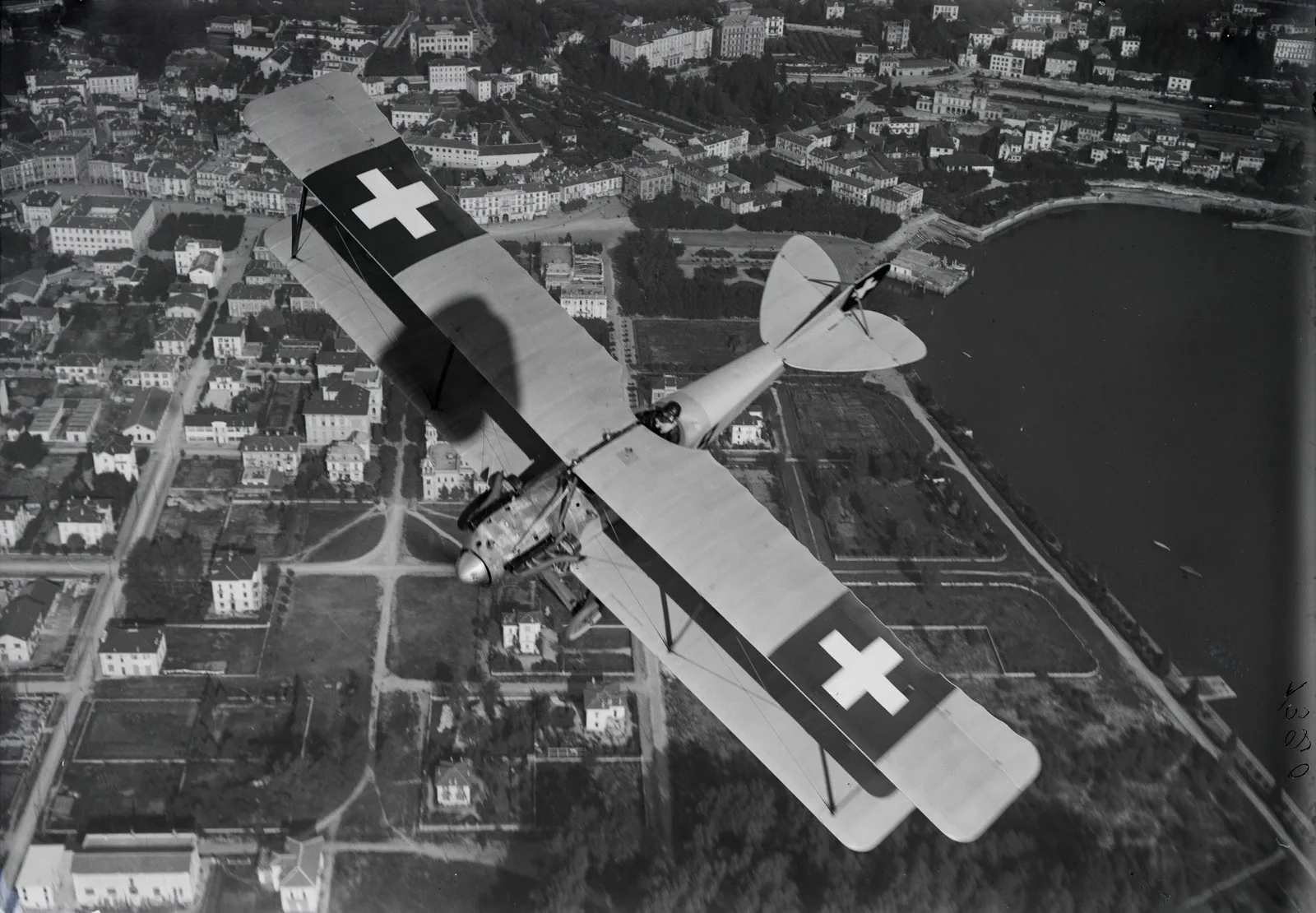
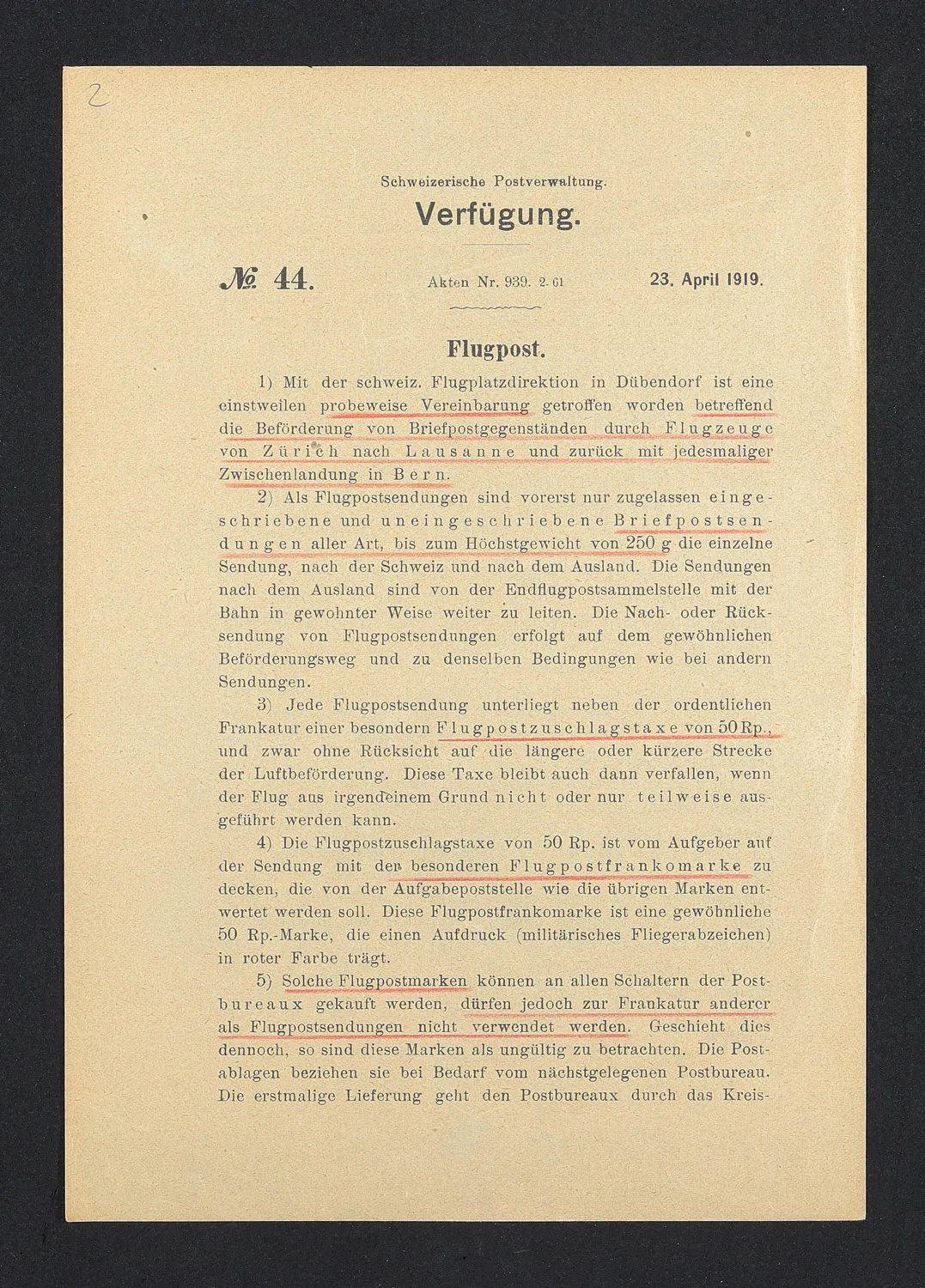
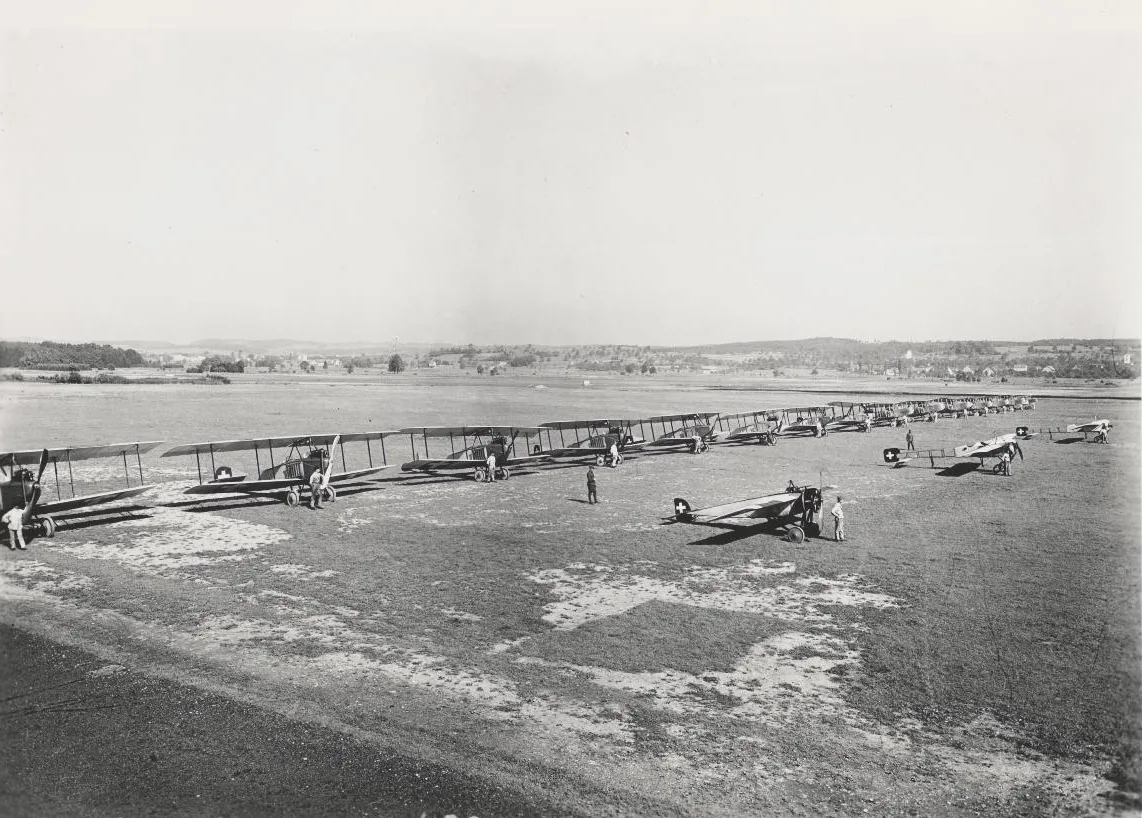
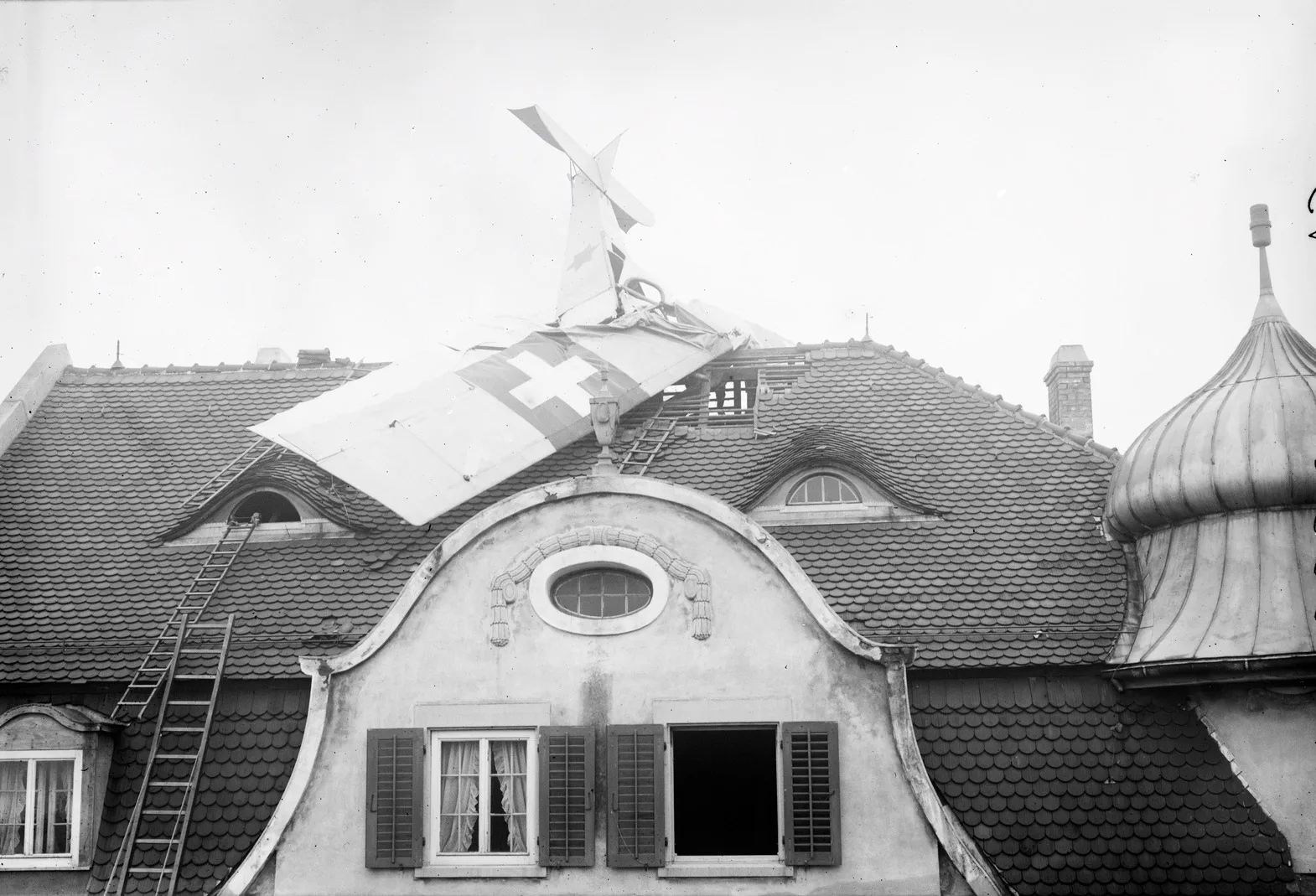
Switzerland started using airmail regularly after the First World War. The Kommando der Schweizer Fliegerabteilung, i.e. the air force, started regular flights between Bern and Zurich from January 1919. Some months later, the route was extended to include Lausanne. The Swiss postal service then started its official trial operation in April. The precise procedures were specified in a decree dated 23 April 1919. As it was a lot more expensive to transport mail by air than by rail, a 50-centime surcharge had to be paid. Special airmail stamps were issued that could only be used for items to be transported by air. Rules were also drawn up for cancelled flights as the reliability of flight connections was not great, due to external factors like the weather.
So, from a commercial perspective airmail failed to deliver, at least initially. But people still kept faith with it, as reported in another NZZ article from 15 October 1919 on the founding of Swiss airline Ad Astra. It claimed it was necessary “to keep moving forward in this promising area to prevent foreign capital and airlines from establishing a firm foothold among us”. The whole thing was a type of “homeland security”, and there was also the matter of “keeping the fighter pilots and plane mechanics, trained by the state at great expense, in practice, giving them a guarantee for their professional existence.”
The world was growing smaller …
It was around this time that the first international airmail routes were emerging. This raised practical questions, for example how was the post to arrive in Lörrach from Basel if it was then to be forwarded on by air to Frankfurt? And how would the duty be paid? This resulted in a charming piece of communications history in June 1920. An airmail flight from Frankfurt to Lörrach was unable to go ahead “due to darkness”. The mail therefore had to be transported by rail (the slower alternative). And how did the German postal authorities communicate what was happening? Naturally, by sending a telegram to the postal directorate in Bern.
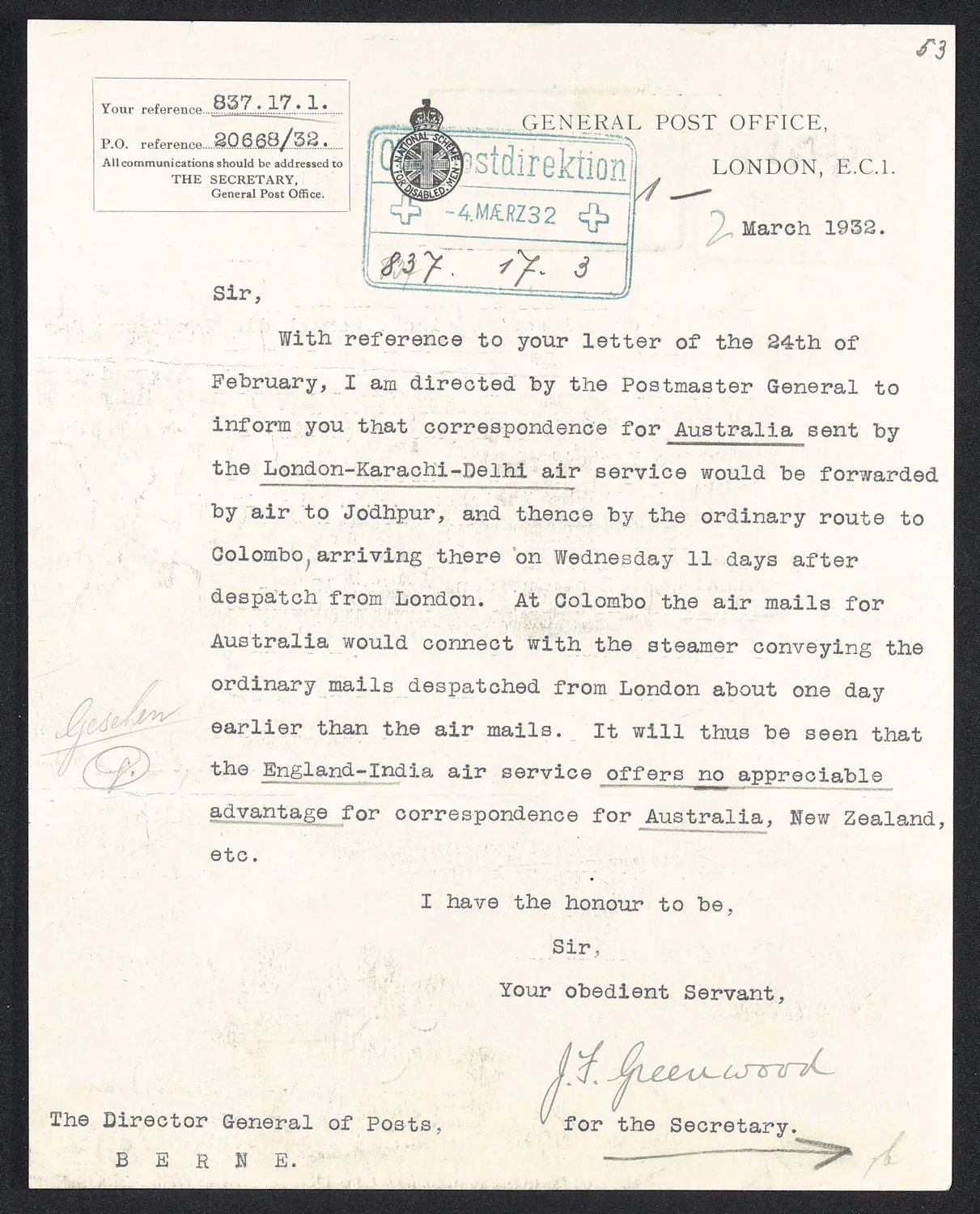
The development of a global airmail network required some degree of coordination. New routes or changes to airmail flights had to be communicated among the different national postal services. And there was also the matter of when to use airmail. For example, in response to a request by the Swiss postal authorities, the General Post Office provided details of connecting flights in the British Empire in March 1932. It was possible to send letters by airmail to Australia. They would start the journey by taking the London–Karachi–Delhi route before going on to Jodhpur, ultimately arriving in Colombo 11 days after having been dispatched from London. For the final leg of the journey to Australia, they were actually put on board the ship that would have sailed from London one day prior to the departure of the first flight. In other words, the England-India air service was hardly worth it when sending post to Australia or New Zealand.
… but at what price?
In some ways things haven’t really changed. Although airmail no longer receives direct state subsidies, the Swiss Confederation loses out on large amounts of fuel tax, as commercial air travel is tax exempt. This is the subject of criticism in view of the ever more pressing need to reduce greenhouse gas emissions.
So, the benefits of airmail in purely postal terms were unimpressive in the early days. Instead planes transported mail as a means of accomplishing other, political goals, for example to cross-subsidise the fledgling Swiss Air Force or to support the airlines. It was only during the post-war years when a global network of air routes evolved that airmail and air freight really took off. The time saving compared to shipping justified the higher transport costs – even if the transport of letters and packages by air is more or less indirectly supported by public funds even today.
This blog post originally appeared on the Museum of Communication's blog.