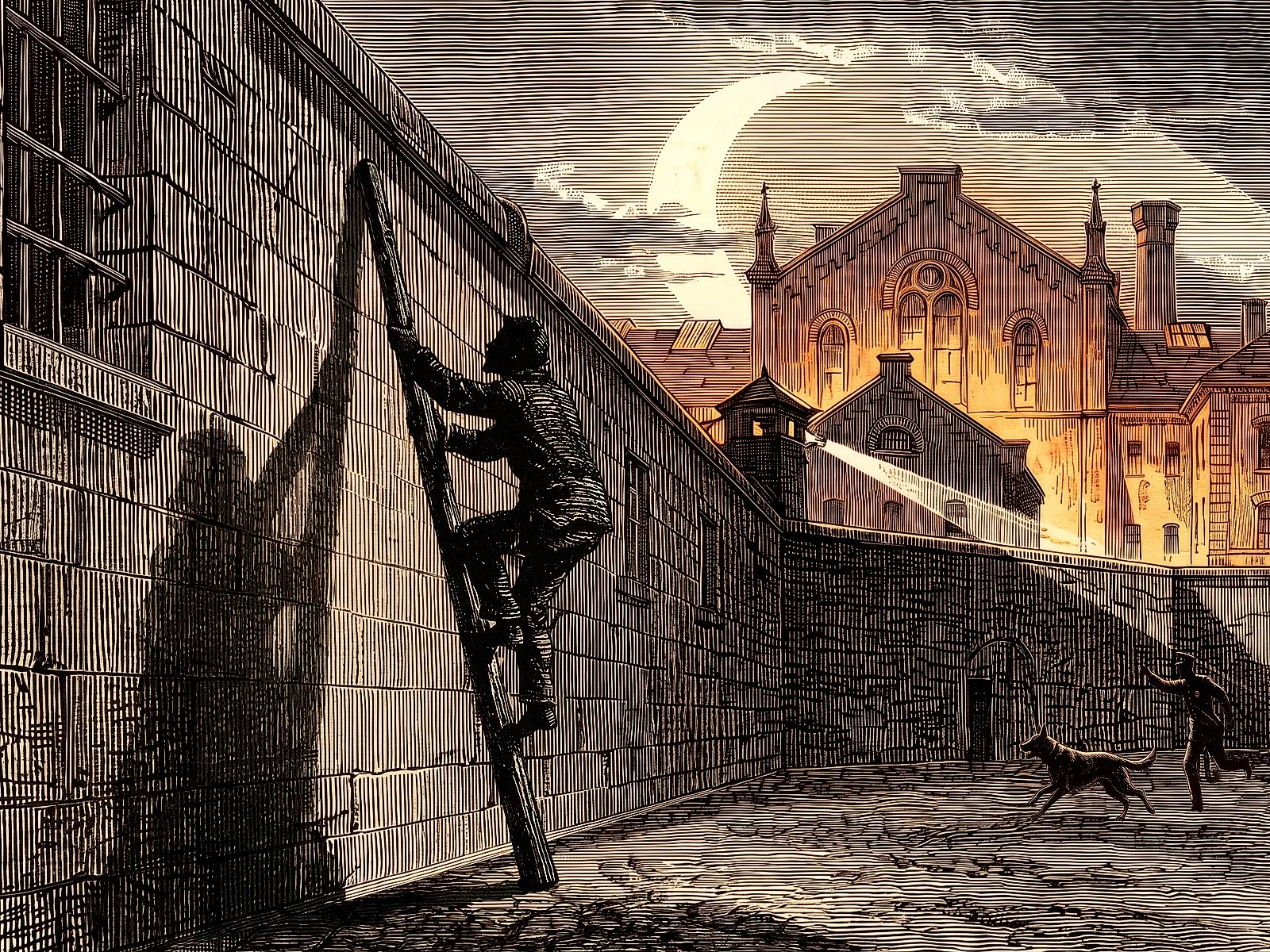
On 20 July 1876, Emil Bienz managed to escape from Basel’s Schällemätteli prison. However, he did not get far and subsequently had to stand trial for a triple murder. Illustration by Marco Heer.
On 20 July 1876, Emil Bienz managed to escape from Basel’s ‘Schällemätteli’ prison. However, he did not get far and subsequently had to stand trial for a triple murder. Illustration by Marco Heer.

The Basel prison breakout of 1876

In July 1876, two inmates broke out of Basel’s ‘Schällemätteli’ prison, killing three guards in the process. Their escape attempt was prompted in part by the dire living conditions in the penitentiary.

Patrik Süess

Patrik Süess

Patrik Süess is a freelance historian.
The two men ‒ Emil Bienz, a local fraudster with multiple previous convictions, and Bernardo Marciali, an Italian serving a sentence for stabbing his gambling partner to death with more than a dozen blows during a fit of rage in a drinking establishment in the city ‒ had spent eight days planning their escape from Basel’s ‘Schällemätteli’ prison.
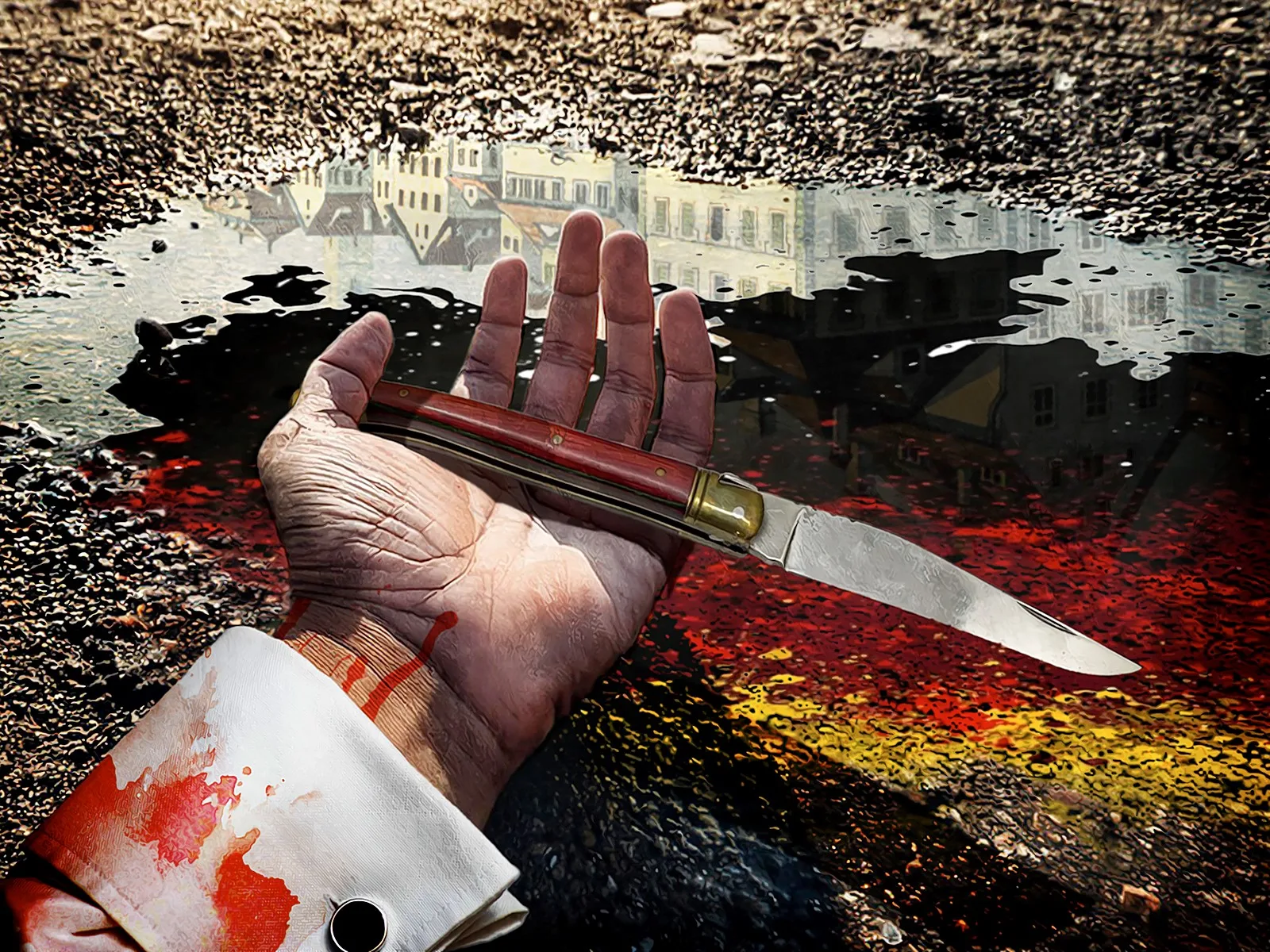
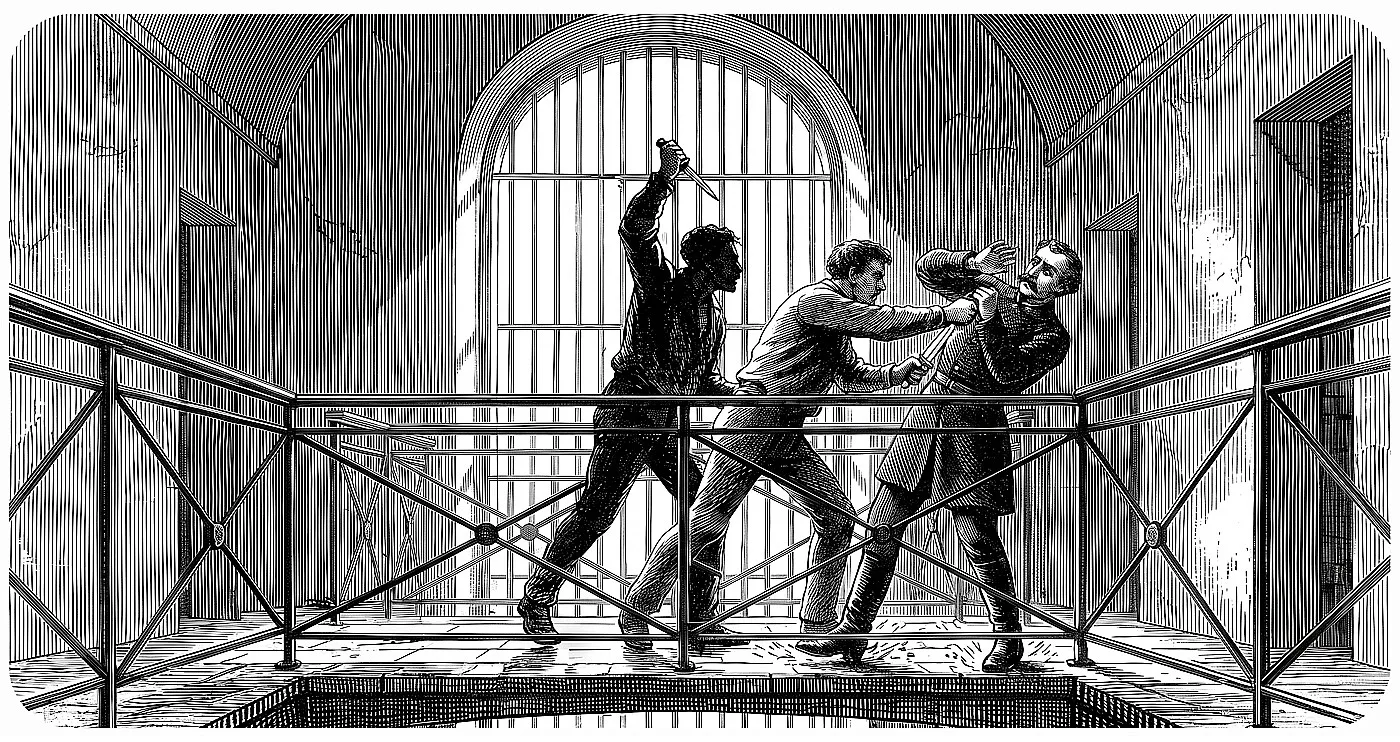
At four o’clock in the morning of 20 July 1876, the time had finally come. Using a duplicate key carved from wood and covered with sheet metal, Bienz and Marciali opened the doors to their cells and stepped out onto the upper gallery of the prison wing. Armed with knives they had smuggled out of the workroom, they immediately fell upon a prison warder named Hess, who was extinguishing the gas lamps on the upper floor at the time. Once they had done attacking him, the badly injured Hess dragged himself into the cell occupied by one Karl Schmitter. He “staggered in and collapsed, uttering the words: ‘Oh Schmitter, I’m done for’”. When the horrified inmate asked what had happened, all the guard could gasp out was “Mar-ci-a”, as Schmitter later told the court. The prisoner laid Hess down on his bunk, where the latter spoke his dying words: “O Jesus, my saviour”.
The two escapees stabbed the first prison guard they encountered right at the start of their escape. Illustration by Marco Heer.
Meantime, the two would-be escapees had made their way downstairs to the ground floor. When another warder, Hiller, emerged from his guard room on hearing the commotion from the floor above, Bienz and Marciali attacked him too with their knives. Bienz then ran into the prison courtyard, where he killed the night warder Pfister. With the aid of a pole, the convict succeeded in climbing over the prison wall and making his getaway. However, by this time, reinforcements had arrived in the form of prison officer Surbeck and the yardmaster Kleiber. They pursued the fleeing Bienz through the nighttime streets of Basel before catching and overpowering him in a wooded area known as the Nachtigallenwäldeli.
Marciali did not even get as far as leaving the prison building. After finishing off warder Hiller, he had gone back upstairs to settle a score with Karl Nick, another convict, who he hated with a vengeance. Having given Nick a good beating, Marciali returned downstairs. But the Italian had wasted valuable time and found himself surrounded by other prison guards who had rushed to the scene. Realising there was no way out, he shot himself with the gun he had previously removed from Hiller.

Breakout prompted by abysmal diet

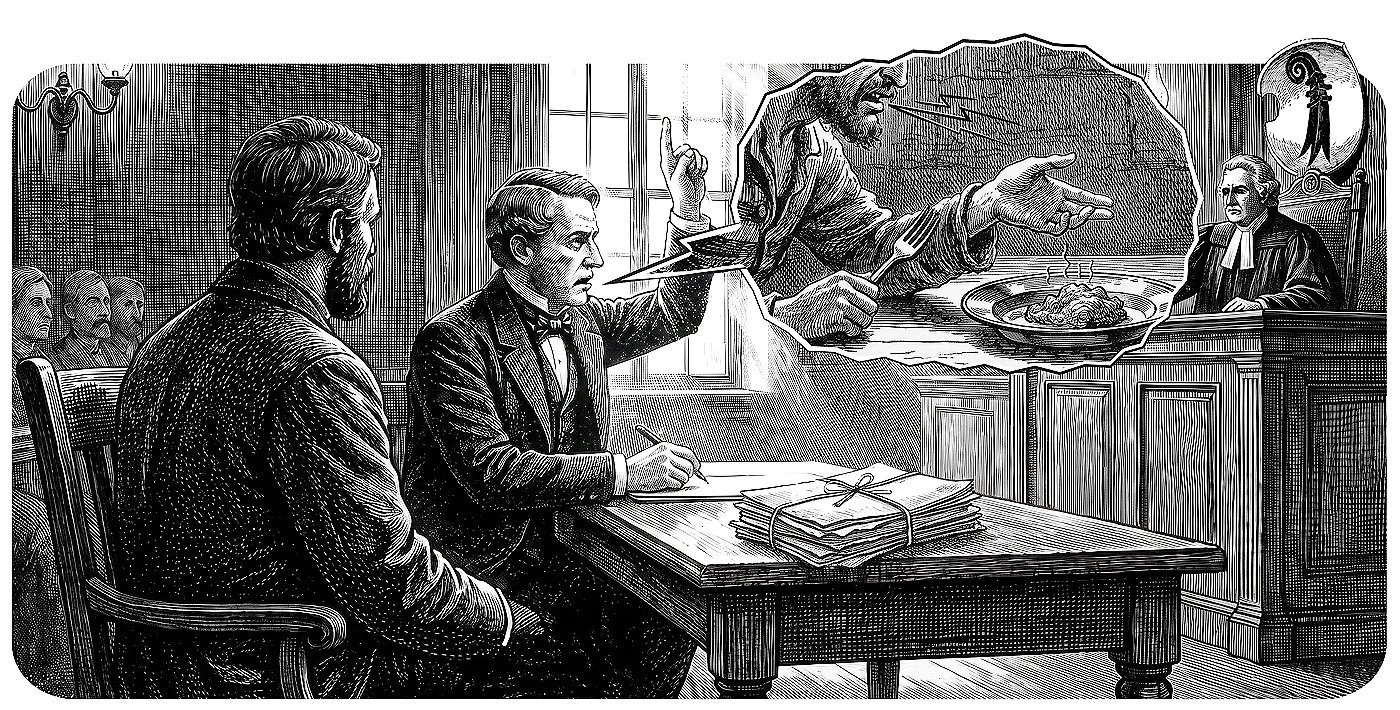
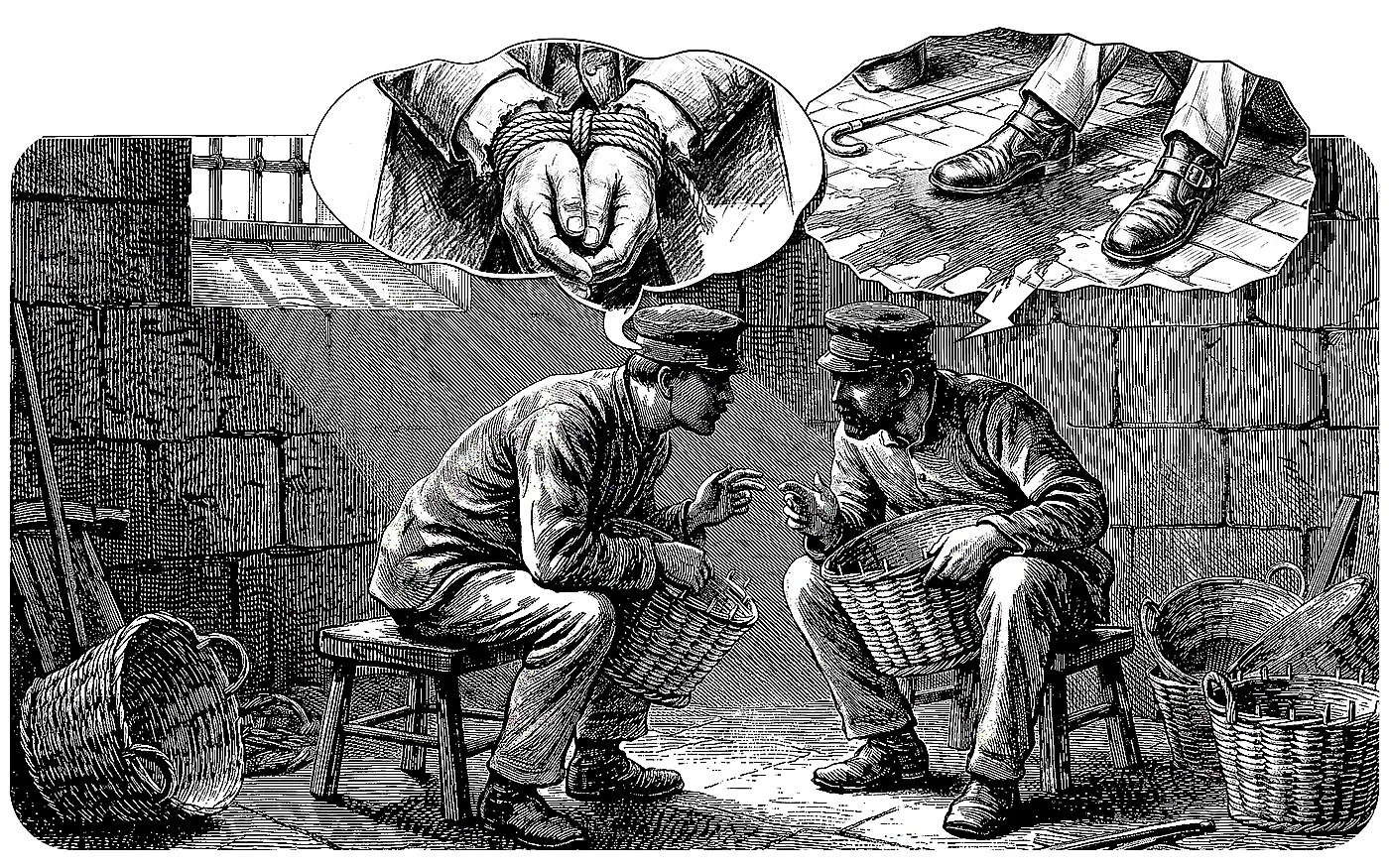
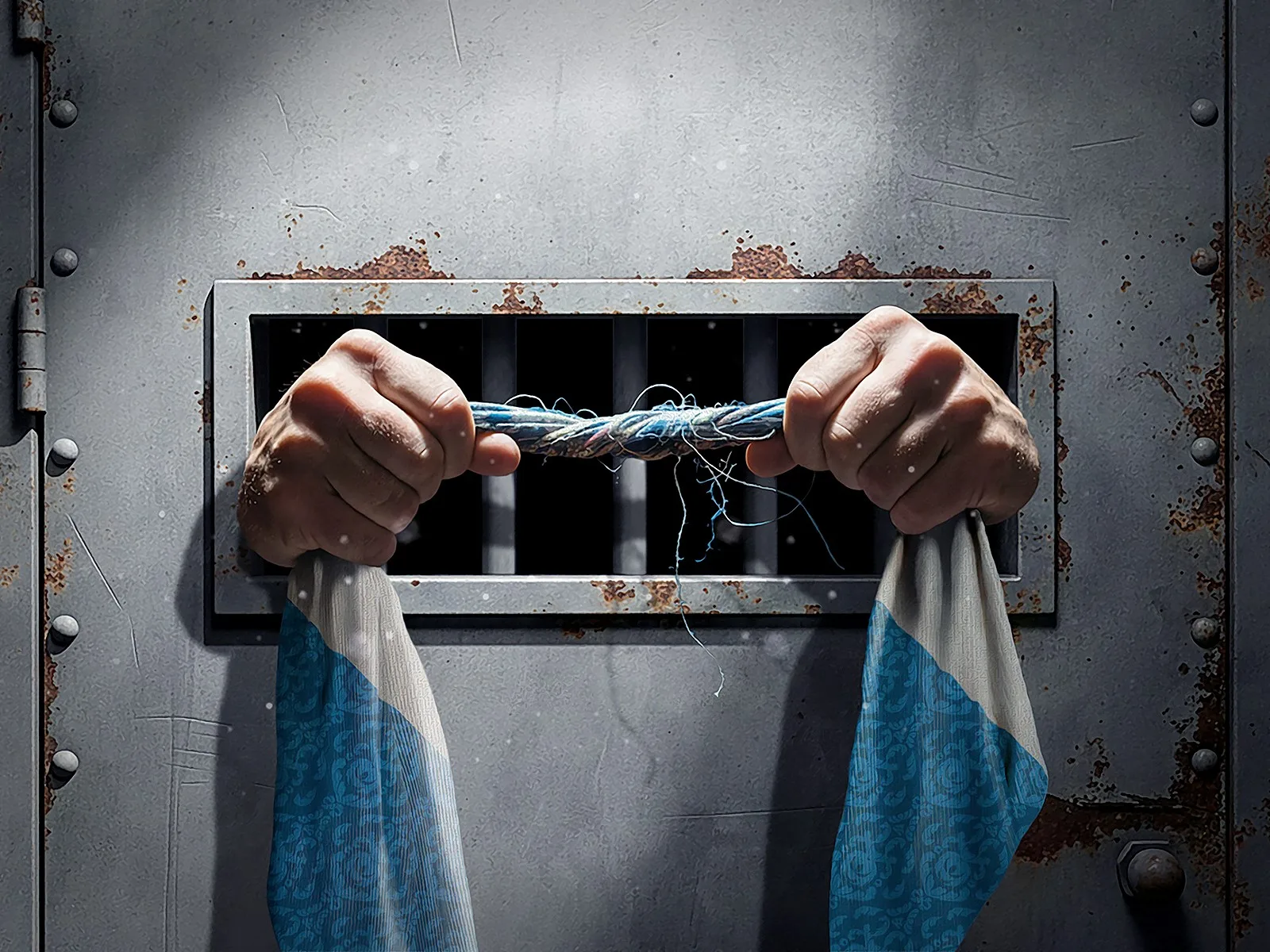
Once back behind bars, Emil Bienz was put on trial in Basel for multiple counts of murder in August 1876. He cited the unsatisfactory prison food as the main reason for his attempted escape, maintaining that light bread, badly prepared soup and sometimes going for a whole week without meat was not enough to sustain him throughout 14 hours’ work a day: “When, despite several requests and attempts to alleviate my situation, I couldn’t even succeed in being given some milk, I foresaw that I would slowly go under. That made me bitter, and I finally started listening to the escape plans Marciali repeatedly suggested while we were busy making baskets.” The original idea had been to open the other cells with the duplicate key and release all the prisoners. The Italian had also had his mind set on killing the prison governor, but Bienz had not agreed to that. He claimed that he and Marciali had only ever intended to tie up the warder Hess, but had no cord or rope to hand, “so we had no other choice but to use the dagger. We were both disturbed by this turn of events.”
In court, Emil Bienz cited inadequate food rations as the main reason for his attempted escape. Illustration by Marco Heer.
Bienz’s defence counsel, Dr Wieland, also criticised the shortcomings of the system in place at the time. He argued that the prison management was primarily interested in boosting the revenue from the goods produced by the inmates, at the expense of discipline, safety and security. He also believed that it aggravated the “deplorable situation” of the food being “too meagre” for those who had to work. These were the very circumstances, he claimed, that had made it possible for “Marciali and Bienz to establish such a close connection,” and it was only “making common cause with Marciali” that had turned Bienz into a murderer.
It was only through his association with Bernardo Marciali that Emil Bienz had become a murderer. At least, that was what Bienz’s defence lawyer later claimed in court. Illustration by Marco Heer.
The prison governor, von Salis, vehemently refuted these assertions, stating that the inmates had been given enough to eat and it was more a question of Bienz having “stirred up dissatisfaction” among the others. Asked how it had been possible for the convicts to smuggle knives back to their cells from the workroom, he answered that “there were hundreds and hundreds of instruments and, as the prisoners left the workroom to return to their cells three times a day, it would have been necessary to subject them to a full body search each time, which was not feasible.”

From banishment to imprisonment

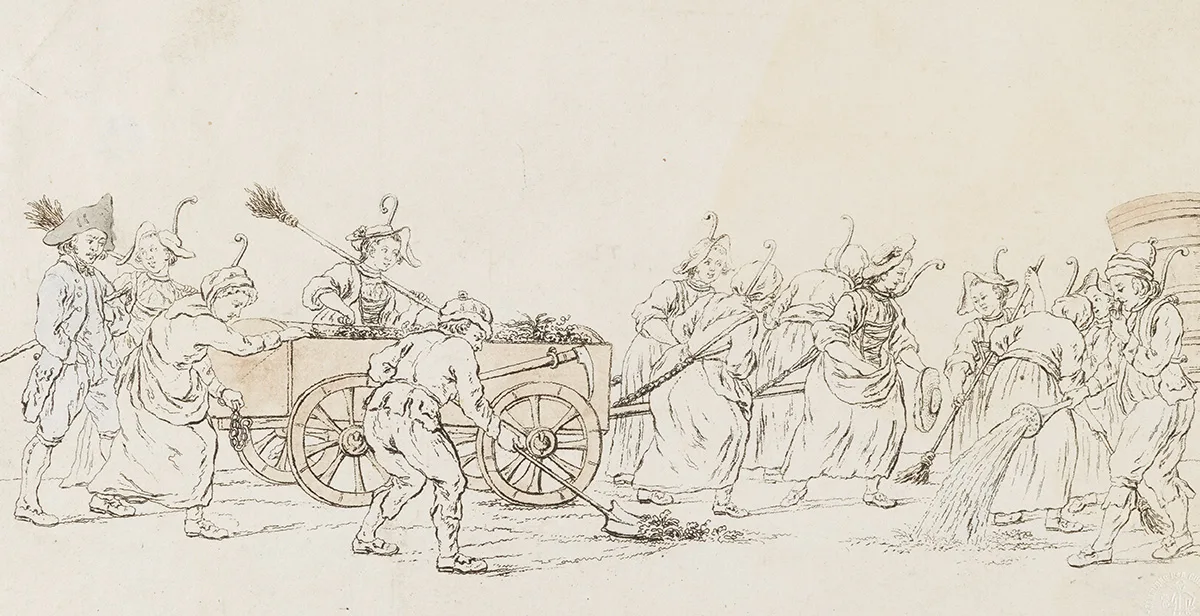
So, what did the prison system look like at the time Wieland criticised it in court? The use of penitentiaries became institutionalised throughout Europe in the 17th and 18th centuries. The archaic penalties of corporal punishment or banishment increasingly gave way to deprivation of liberty, and by around 1800 imprisonment had already become the dominant form of punishment in Switzerland. Before prisons, there had been the Schellenwerke, houses of correction in which beggars, “vagrants” and other undesirables were put to work for the public good. However, the sole purpose of these institutions was to act as a deterrent. Prisons took on the idea of forced labour from the Schellenwerke and used it as a form of criminal punishment.
Public forced labour in Bern, 19th-century pen and ink drawing.
Public forced labour in Bern, 19th-century pen and ink drawing. Wikimedia / Swiss National Library
The prison reform movement of the 1770s that emerged in the United Kingdom before spreading throughout Europe questioned the system’s very purpose, reframing the discussion in the spirit of the Enlightenment. Prison sentences were no longer to serve merely as a form of deterrence and criminal punishment, their primary purpose henceforth was to be the moral improvement of the inmates. It was believed that former delinquents could be taught to become useful citizens by growing accustomed to regular, honest work. However, this could only be achieved by improving the hygienic, disciplinary and moral conditions of the institutions in which they were incarcerated. Accordingly, efforts were made to minimise the adverse health impacts on those serving a sentence, and religious instruction and education were given pride of place alongside work discipline.
The 19th century saw the introduction of the ‘progressive system’. This divided a prison term into several stages, starting with an initial period of strict solitary confinement. Depending on their conduct, inmates could then be permitted social contact with other prisoners and progress to attaining more and more freedoms and privileges until finally, possibly, being granted parole ‒ initially with conditions attached. Despite every pretence towards moral education, the idea that the purpose of imprisonment was punishment remained of the utmost importance; this particular concept of a prison walked a tightrope between welfare and discipline, and between repression and support.
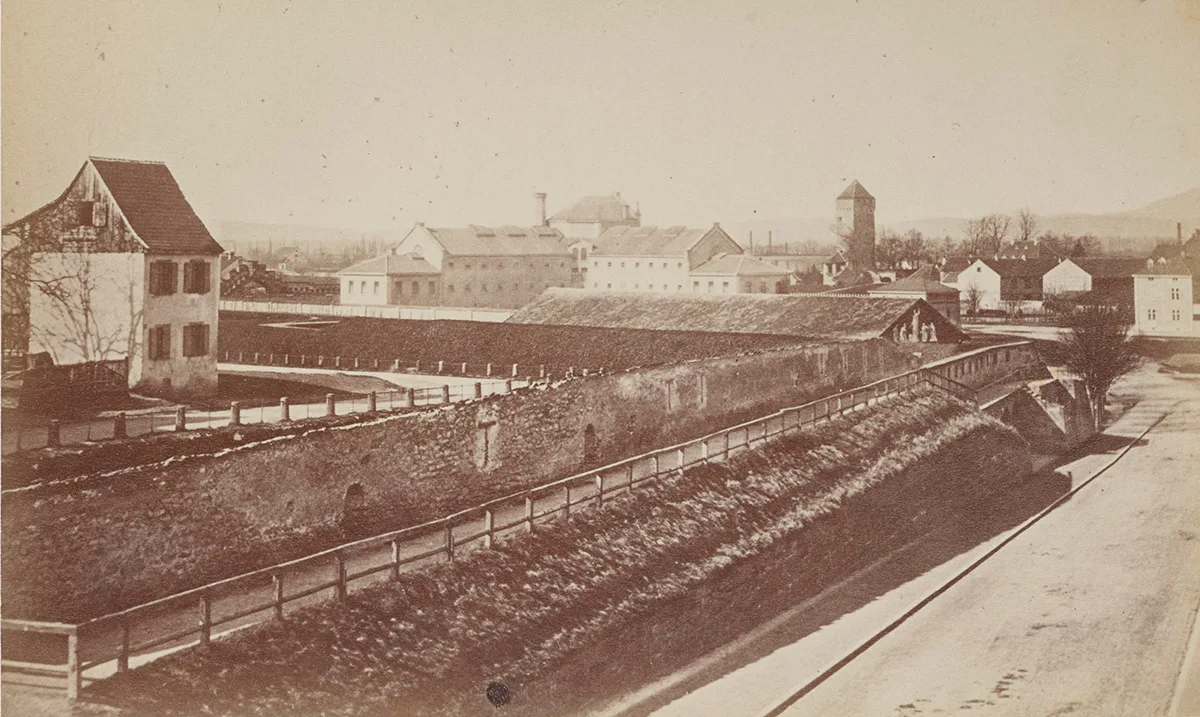
Basel’s ‘Schällemätteli’ prison, which opened in 1864, was conceived in line with these modern ideas. The building contained 93 individual cells, several workshops, bathroom and detention cells, plus a classroom and a church. Here too, the principles of religion, discipline and work were expected to turn the prisoners into reformed men. As far as religion was concerned there was always a chaplain on hand, while a prison minister was responsible for the convicts’ schooling and catechetical instruction. But work also played a key role in this Basel institution. The inmates could occupy themselves with spinning, barrel-making, woodwork or weaving, and even had the chance to undergo training in textile processing.
The ‘Schällemätteli’ penal institution pictured in the 1860s. The site of the future Bernoullianum building can be seen in the foreground.
The ‘Schällemätteli’ penal institution pictured in the 1860s. The site of the future Bernoullianum building can be seen in the foreground. Staatsarchiv Basel-Stadt

Convicts working for private enterprise
In the first half of the 19th century, hiring out prison labour to private companies increasingly became standard practice. By treating their inmates as a cheap labour force, prisons turned themselves into lucrative production facilities for individual manufacturers. As notions of profitability and even financial autonomy moved to the forefront, and more and more penal institutions became geared towards achieving economic gains, the idea that prisons were there to (re)educate criminal offenders began to take a back seat: “Strict adherence to the fundamental principles tailed off in many of Europe’s prisons. […] The main evils were to be found in the constant overcrowding, the abysmal food, the undue exploitation of the workforce, the failure to follow minimum rules of hygiene, the management by unqualified personnel and the failure to provide schooling.” As well as leading to ever greater exploitation of inmates’ labour, this development also came at the expense of safety and security – as the case of Bienz and Marciali in Basel shows. Ultimately, it was incidents like this that compelled the authorities to see reason and admit that penitentiaries could not be run like enterprises and that they would never turn a profit.
The attempted breakout from ‘Schällemätteli’ in 1876 at least resulted in a few immediate changes being made at the prison. Additional guards were hired and the night patrol was specifically organised to ensure greater safety. The bars to the cells were strengthened, and an additional security gate was fitted between the cell wing and the stairway. The tools used by the inmates in the workroom were gathered in each evening. Furthermore, the canton’s executive body asked the Justice Department to produce a comprehensive report on the standard of food provided to the prisoners. After consulting with prison governors from other cantons, the Justice Department finally came to the conclusion that the nutritional regime at ‘Schällemätteli’ was indeed unsatisfactory and should be improved in terms of both quality and quantity. The fact that Basel’s Executive Council reacted to the criticism of a man convicted of murdering three prison warders indicates that there really were certain shortcomings in the care and nutrition of the institution’s prisoners.
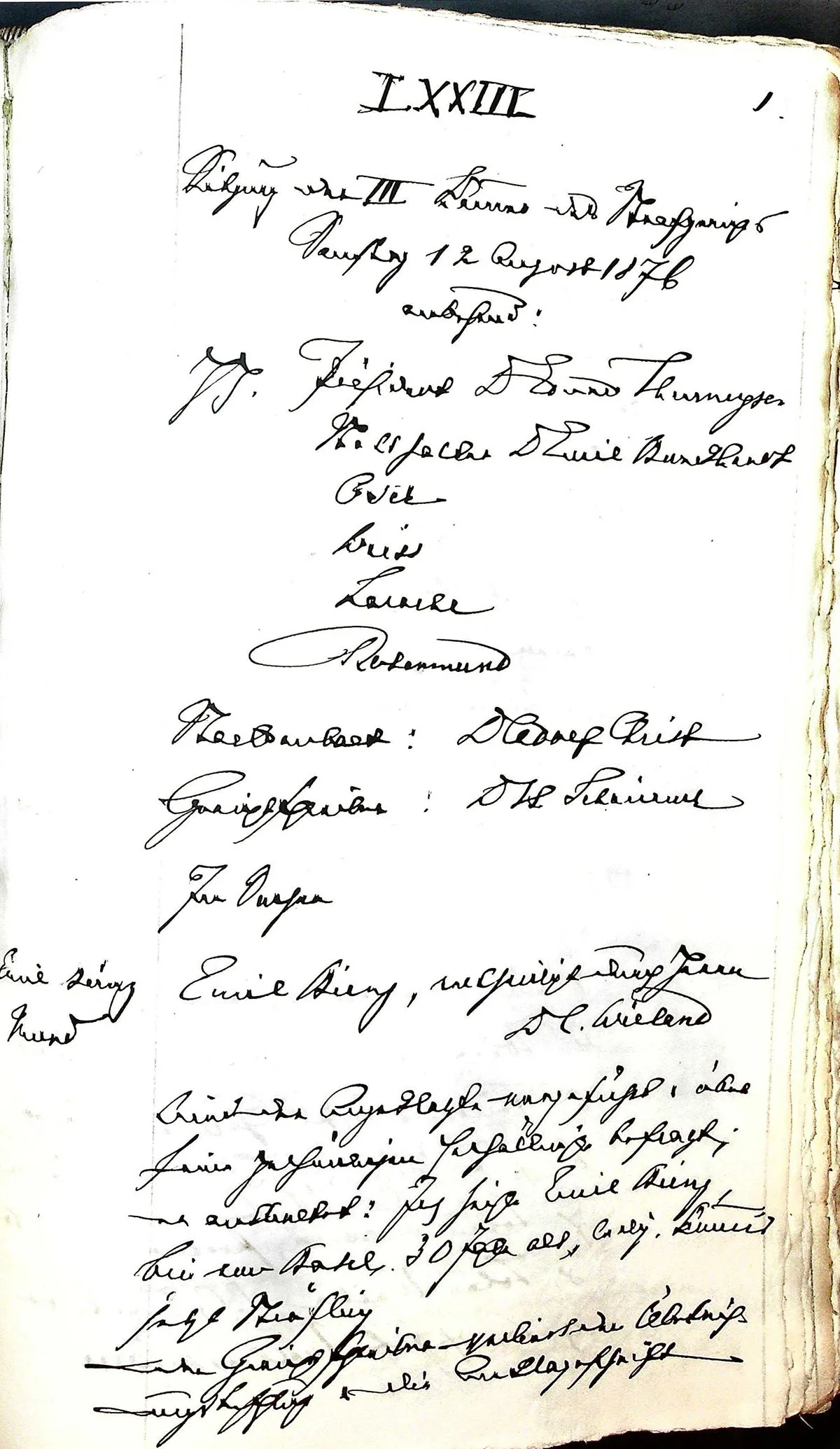
Court judgment of 12 August 1876 sentencing Emil Bienz to life imprisonment.
Court judgment of 12 August 1876 sentencing Emil Bienz to life imprisonment. Staatsarchiv Basel-Stadt / Court archives EE 2 LXXIII
Emil Bienz was sentenced to life imprisonment on 12 August 1876. According to the Berner Volksfreund newspaper, he appeared “unresponsive and indifferent” throughout the trial. Only during his defence speech did he “shed tears”. He closed his plea with the words: “I stand here solely due to a sad set of circumstances. If it hadn’t been for Marciali, I would not be a murderer. I acted rashly, out of desperation. I regret the great unhappiness I have caused, but what happened, happened! As far as the measure of punishment is concerned, I do not ask for a more lenient sentence.” Bienz died in prison of pulmonary tuberculosis in November 1879 at the age of 33.
‘Schällemätteli’ remained in use as a prison until 1977, then served as a remand centre from 1982. However, as the size of the cells no longer satisfied the requirements of the European Convention on Human Rights, the prison was closed for good in 2004 and the building demolished.
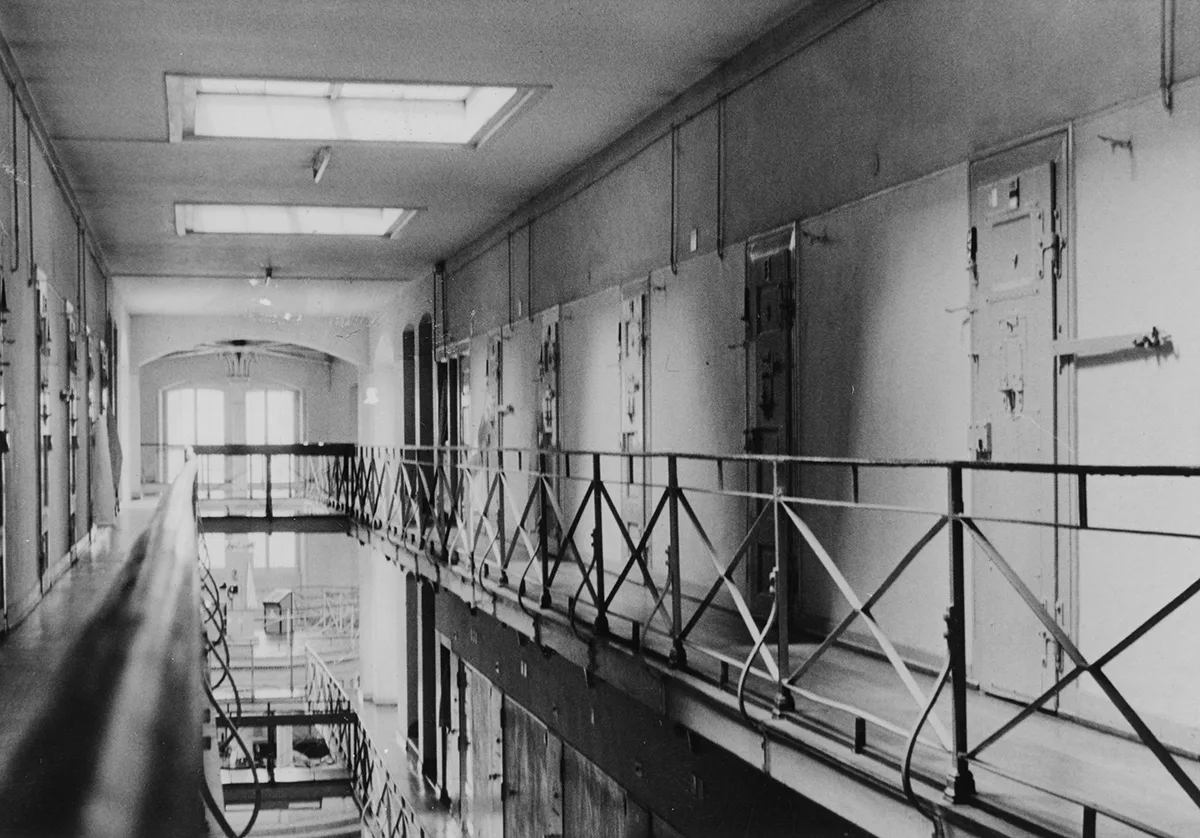
Inside Basel’s ‘Schällemätteli’ prison. This photo was taken in 1975.
Inside Basel’s ‘Schällemätteli’ prison. This photo was taken in 1975. Swiss Social Archives

Further posts