Pistols sing the song of death
Why did two respectable Schaffhausen noblemen have a duel on a freezing cold January afternoon in 1659? And in Solothurn? The story of a long-standing family feud.

Adrian Baschung
Adrian Baschung is historian and director of the Museum Altes Zeughaus in Solothurn.
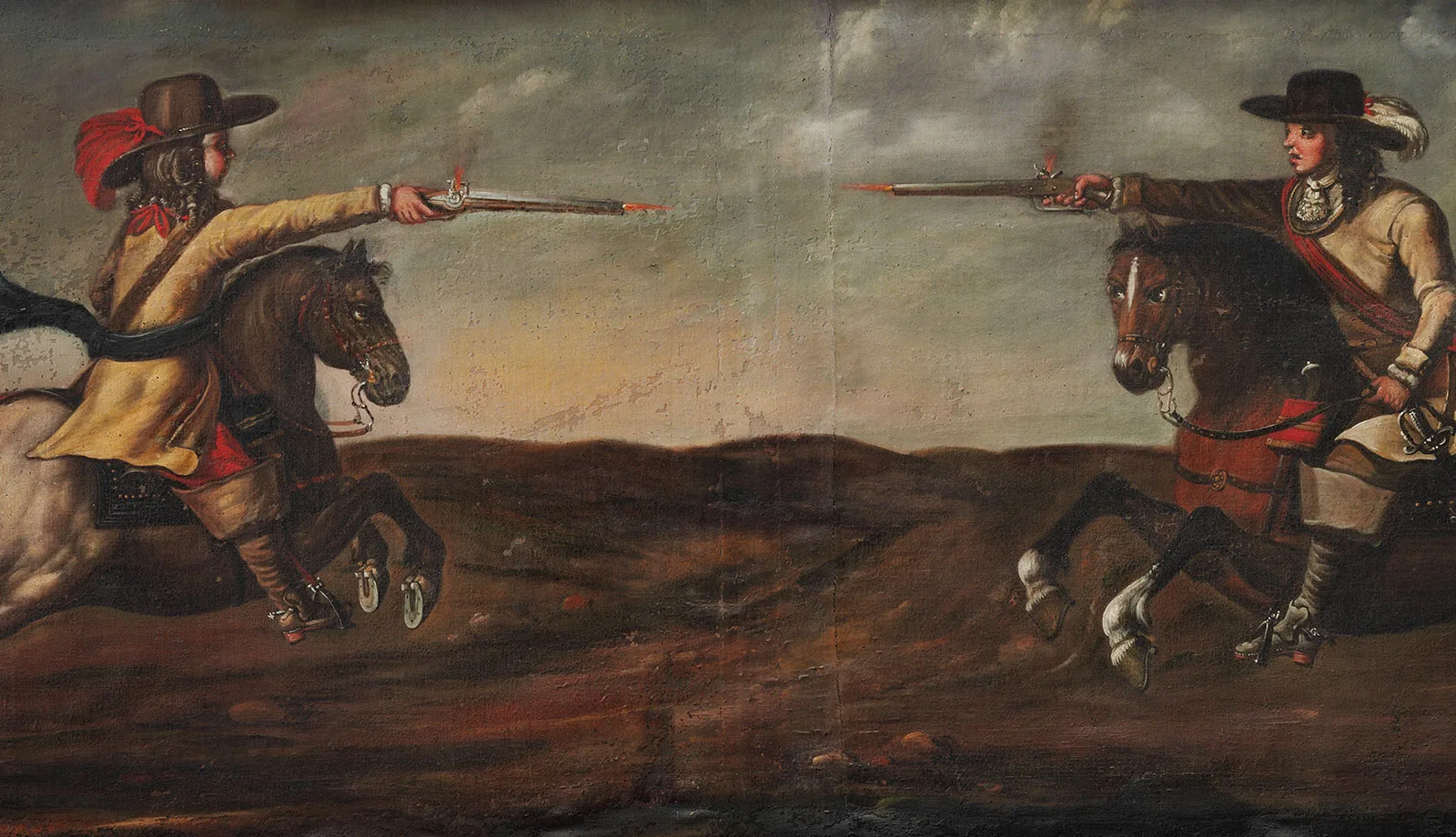
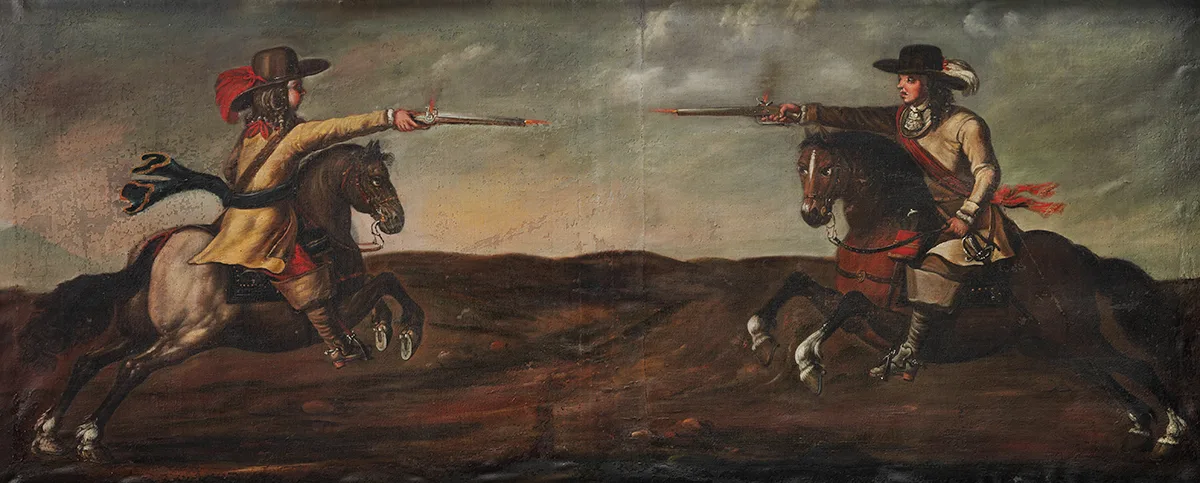
The riders are Major Heinrich Im Thurn (born 1621) and Captain Christoph Ziegler (born 1616). Both men came from influential Schaffhausen families and were in the service of the French crown at the time of the duel. A conflict had been simmering between the Im Thurn and Ziegler families for quite some time, mainly about power and positions in the town on the Rhine.
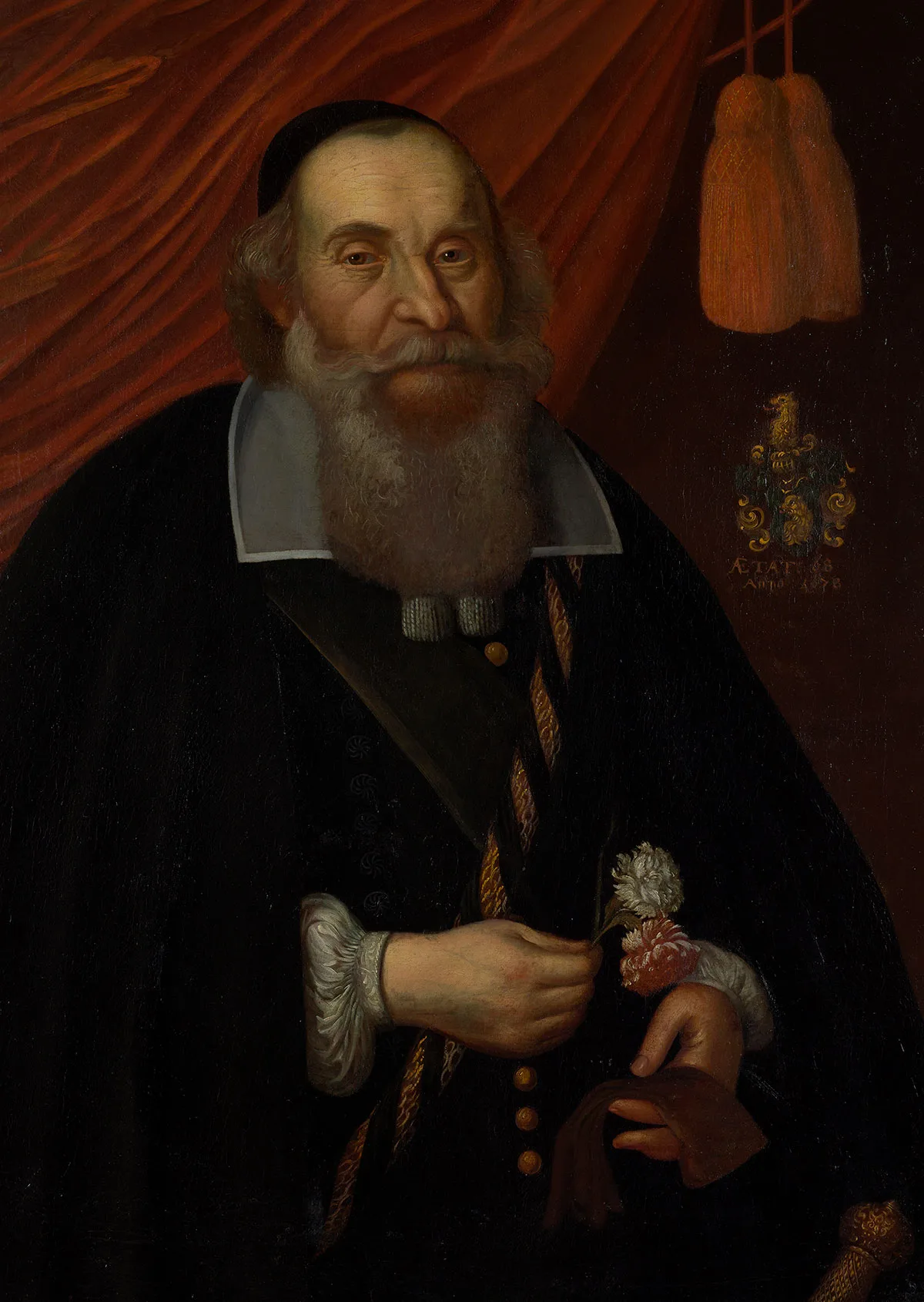
Both families had representatives in the most important political bodies of Schaffhausen in the 17th century – Christoph’s father, Johann Jakob Ziegler (1587–1656), held roles including that of town mayor. The Im Thurn family also boasted an influential mayor from 1632 to 1648 in Hans Im Thurn-Peyer (1579–1648). The struggle between the Ziegler and the Im Thurn families to gain influence in the politics and society of the Schaffhausen area led to accusations of corruption, bribery and illegal enrichment at the expense of the state treasury on both sides...
Violent confrontations were also the order of the day. For example, a relative of Heinrich Im Thurn, the nobleman Hans Friedrich Im Thurn (1610–1681), was attacked in the street. After the latter had openly made an accusation against the mayor Johann Jakob Ziegler during a council meeting in 1654, he was attacked on his way home by the mayor’s sons and brutally beaten and wounded with sticks and rapiers. Among the attackers was Christoph Ziegler, Heinrich im Thurn’s later opponent. Although this attack led to an indictment, Mayor Ziegler came to the defence of his sons and this led to new conflicts.
Insults by messenger
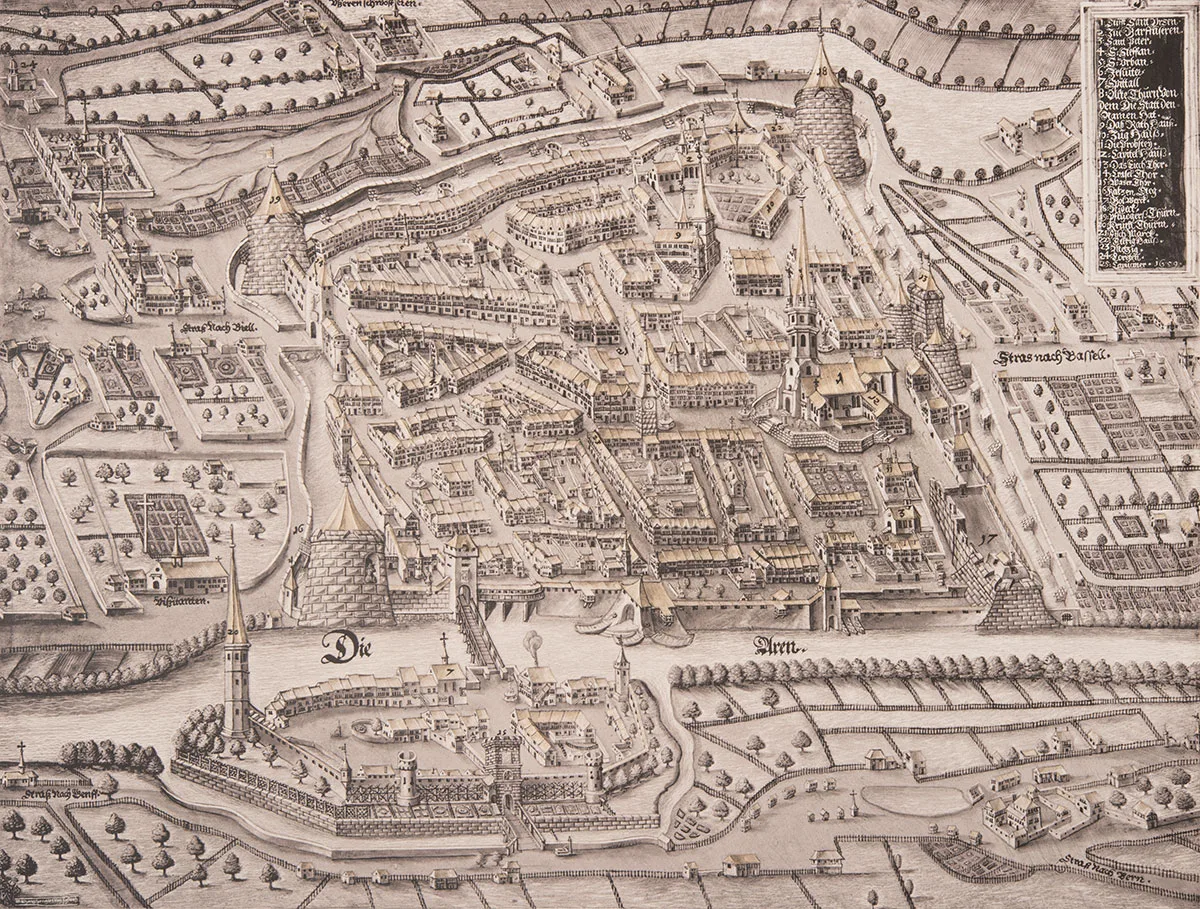
This was the straw that broke the camel’s back. Christoph Ziegler rode to Solothurn with his servant Jakob Guggerli from Aargau, and arrived on 15 January 1659. On the same day, several letters were exchanged between the two Schaffhausen officers where they violently insulted each other in French. This written exchange is now in the State Archives of the Canton of Solothurn. The letters were carried back and forth by two servants, the above-mentioned Guggerli and Heinrich Im Thurn’s servant Hans or Klaus Grau from what is now the Canton of Fribourg.
Double duel
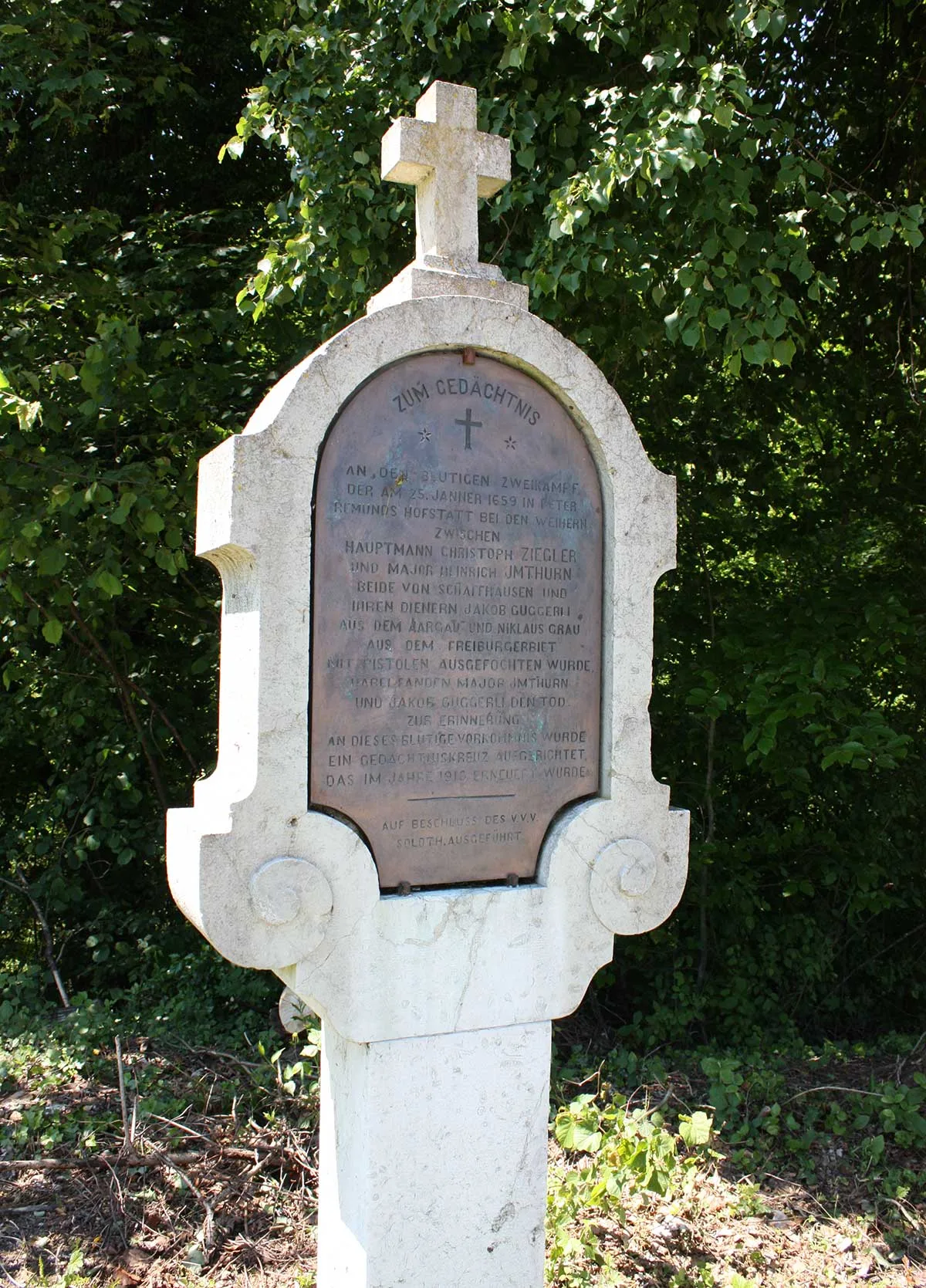
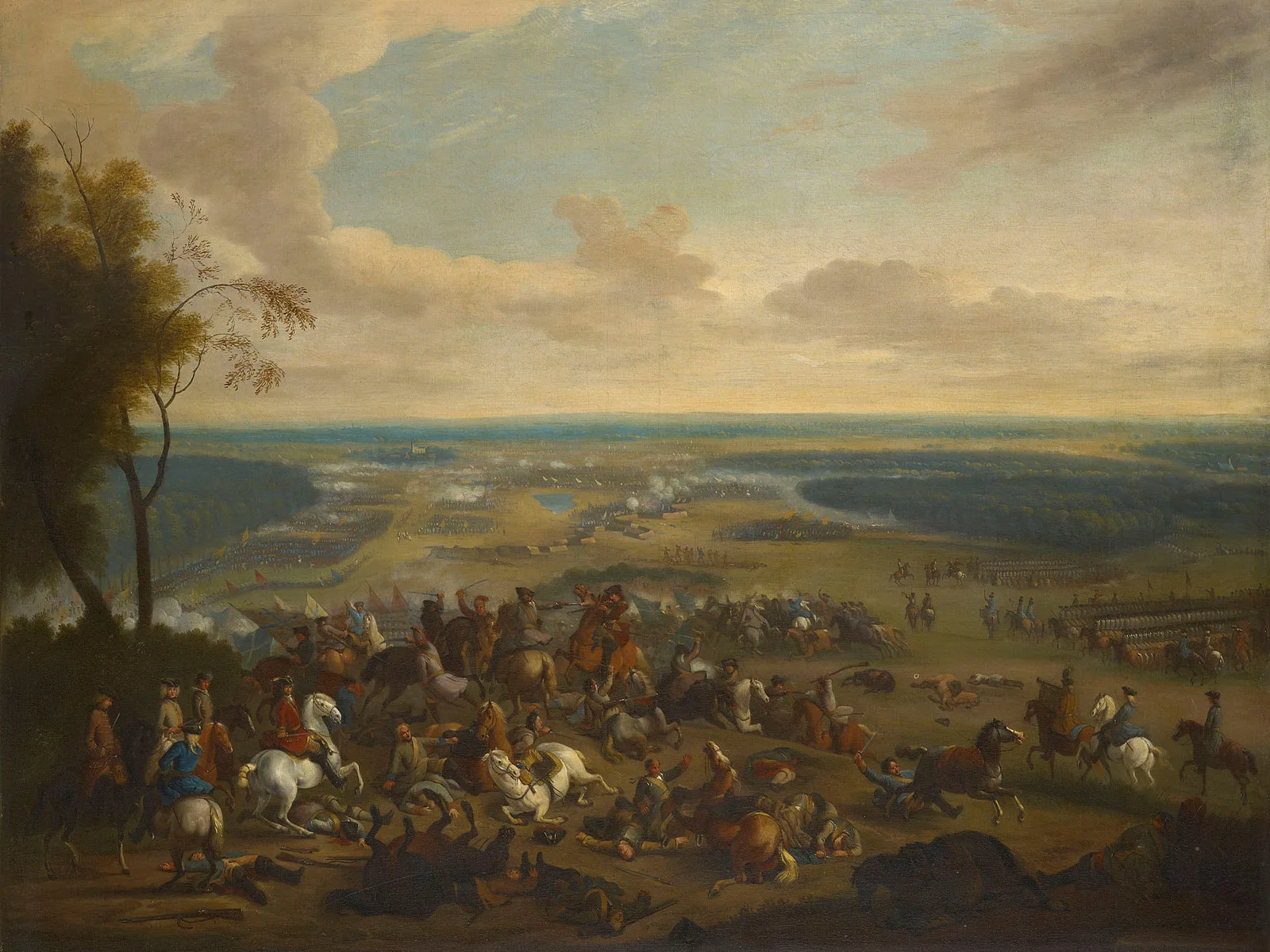
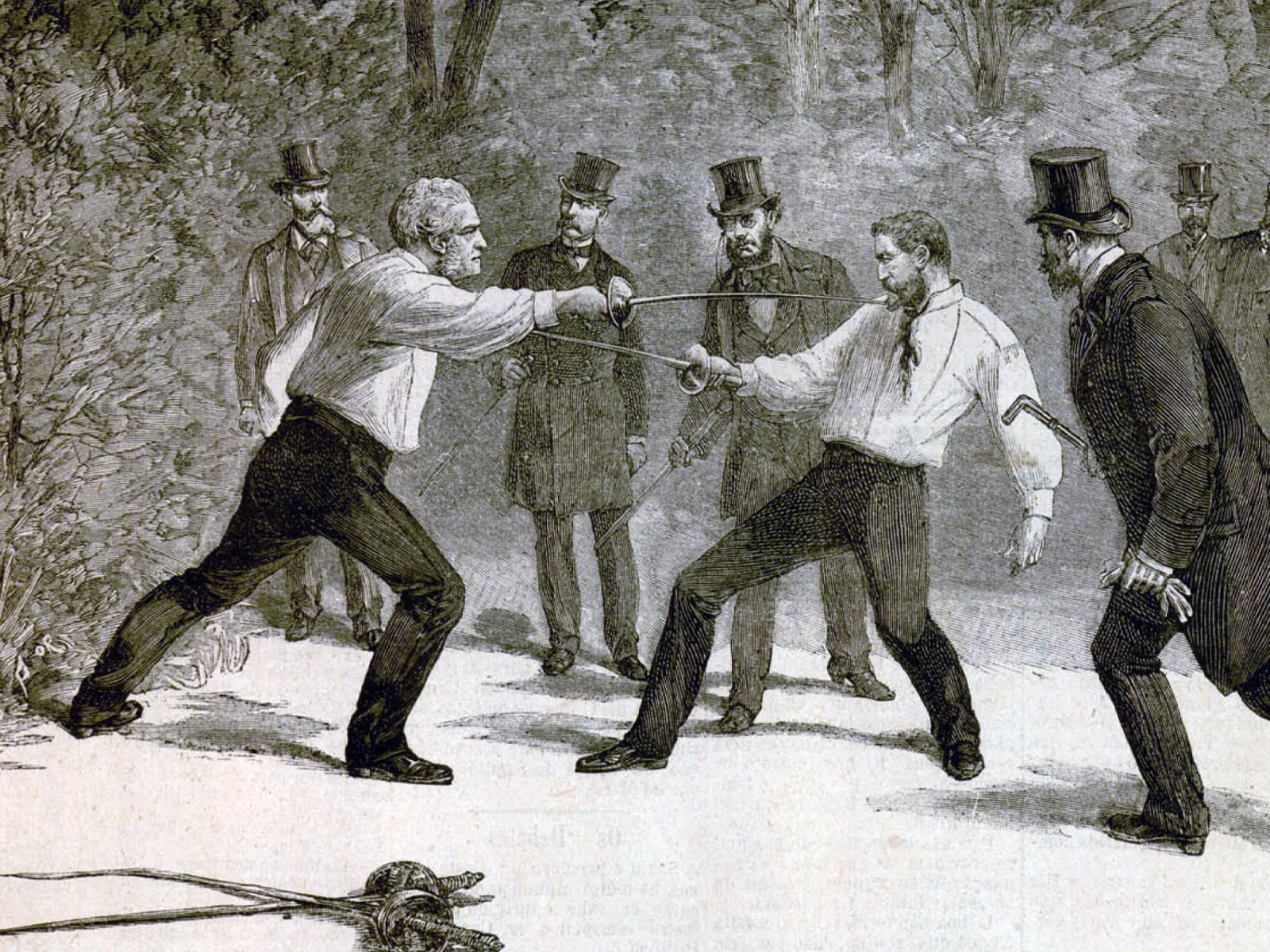
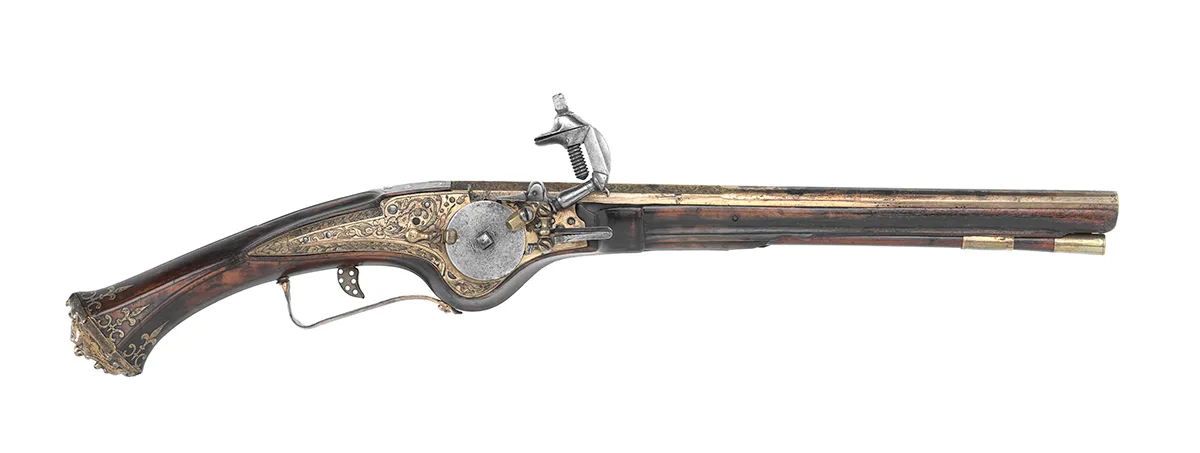
Both officers therefore rode out of the town around afternoon on 15 January 1659 accompanied by their servants, who were presumably to take on the role of seconds. They met near Riedholz right by a farmyard. It remains unknown whether the customs of a courtly duel were observed before the fight, such as arranging seconds, the number of shots and firing, checking the weapons or selecting the duelling ground. Fighting with wheellock pistols as depicted in the painting was only possible at close range, as these weapons were not very accurate. This meant that the duellists had to hold their fire until they were passing as close to each other as possible.
Startled by the exchange of gunfire, the owner of the nearby farm stepped outside and saw the horse with the slumped Heinrich Im Thurn run up to the fence, where the man from Schaffhausen fell from his mount. While Christoph Ziegler disappeared into the distance, Grau came riding into the farmyard and asked for help for his master. However, help came too late. The newly married 38-year-old Major Heinrich Im Thurn, father of a three-month-old boy, was already dead. The farm maid had to bring the body inside the house.
Revenge of the Im Thurn family
The Solothurn authorities were anxious to deal with these kinds of honour quarrels harshly and instigated a criminal investigation, following which both families received heavy fines, with the family of the victim receiving a milder punishment. In addition to the criminal investigation, the duel caused another problem. Where should the body of Heinrich Im Thurn be buried? As a Protestant, Im Thurn could not and was not allowed to be buried according to the reformed rite in Catholic Solothurn. With the help of the French ambassador, the body was finally transferred to Bern territory and buried in the Oberbipp church, where you can still see a gravestone dedicated to Im Thurn. The Im Thurn family spent a lot of money on the burial and donated a new pulpit to the church depicting the Schaffhausen family’s coat of arms out of gratitude.
Christoph Ziegler, banished from the town and the Schaffhausen area for a long time because of the duel, was later pardoned to a large extent and allowed to return to his country estate near Thayngen. However, the killing of Heinrich Im Thurn was not forgotten and Heinrich’s two teenage nephews swore that they would wage a vendetta. On 7 September 1661, they ambushed Christoph Ziegler in front of his manor house – when he came out of the door in the early afternoon on that day, they shot him down with two bullets.