The Dalai Lama’s long journey to Bern
For 60 years, Switzerland has been home to the largest Tibetan community in Europe. But it wasn’t until 1991 that the Dalai Lama was received by the Federal Council for the first time.

Thomas Bürgisser
Thomas Bürgisser is a historian at the Diplomatic Documents of Switzerland (Dodis) research centre.
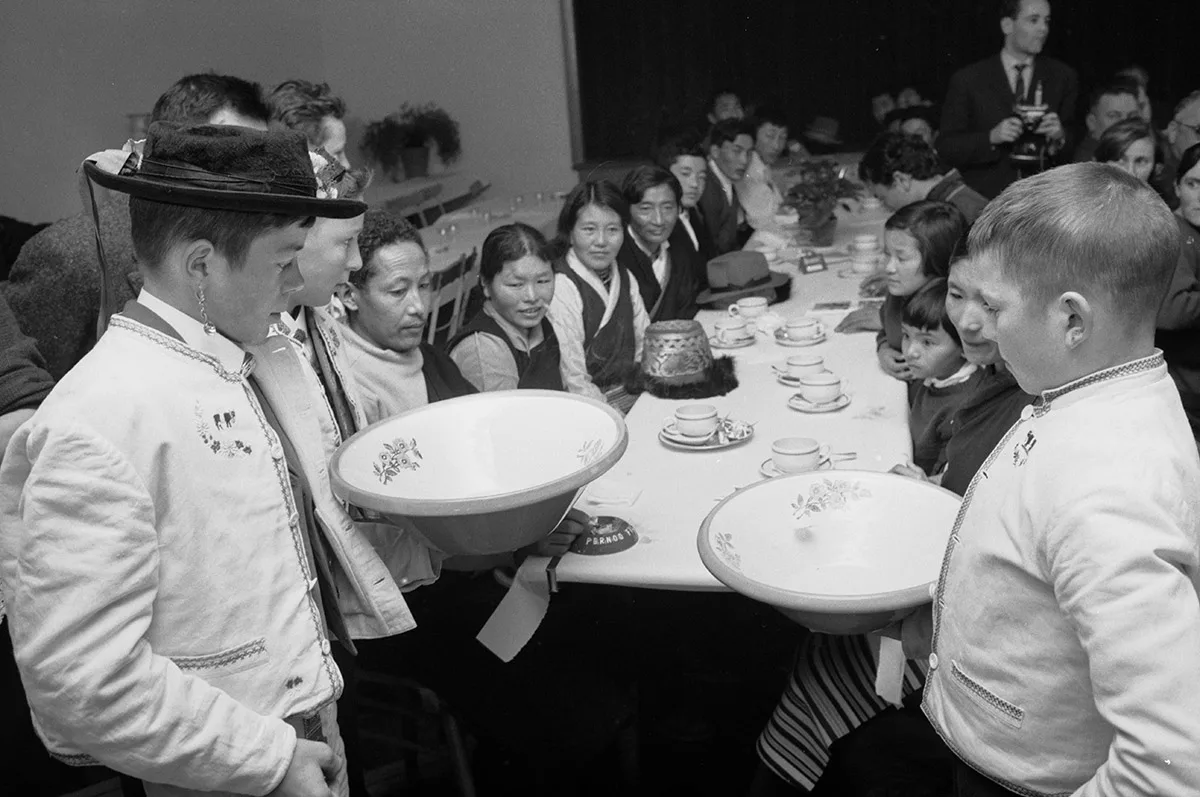
The Association for Tibetan Homes in Switzerland (VTH), founded in the same year with the involvement of the Swiss Red Cross, received approval in 1961 to take in an initial group of 23 Tibetan refugees from Nepal, offering collective accommodation in eastern Switzerland. At the same time, Olten industrialist Charles Aeschimann began the (now highly controversial) placement of 160 children from Tibet with foster families in Switzerland. In March 1963, the Federal Council finally approved the VTH’s application to “bring 1,000 Tibetan refugees into our country”. Since then, Switzerland has been home to Europe’s largest Tibetan community.
Switzerland also worked to support Tibetan refugees locally in Nepal. The Nepali kingdom on the border with China was a priority country for Swiss development cooperation, which was still in its infancy at the time. The assistance programme included a number of agricultural projects, as well as various measures for vocational training and to promote traditional carpet weaving among the exiled Tibetans. Switzerland was therefore of great importance to the Tibetan government in exile in Dharamsala, India. The Dalai Lama requested permission for his personal representative for Europe to set up an office in Geneva. In 1964 the Federal Council granted this permission, on condition that the representative’s activities be limited to religious and cultural issues. The EDA countered China’s protests by referencing Switzerland’s humanitarian tradition, and pointing to the requirements imposed on the representative of the Dalai Lama, who was expected to engage only in activities consistent with Switzerland’s policy of neutrality.
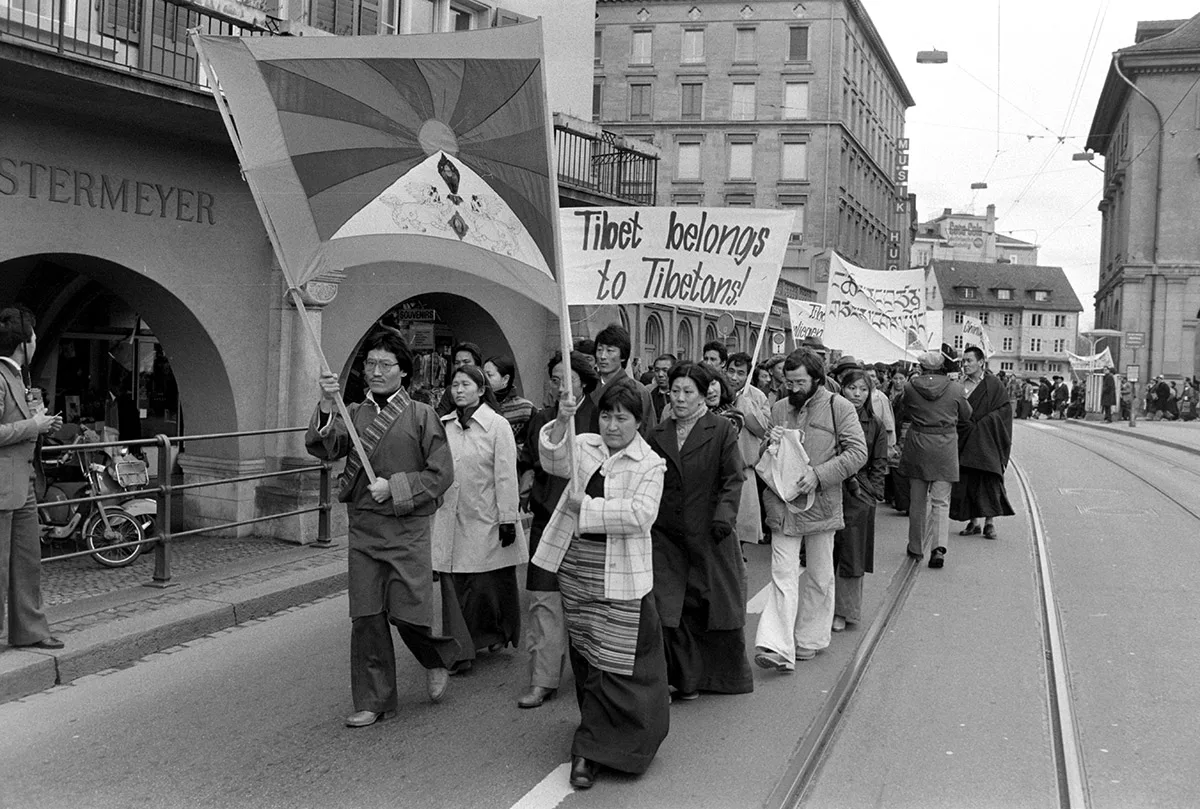
Secretary General Pierre Micheli stated in no uncertain terms that Switzerland, although it was a small country, “has never, in 800 years of history, accepted being subject to the will of foreign states”. In an official announcement, the Federal Council said that it had made sufficient statements to Beijing and would “not be responding to further Chinese démarches in the matter of Tibetan refugees in Switzerland”. Defence Minister Nello Celio, who shepherded the strongly-worded communiqué through the Federal Council on behalf of the absent EDA head, observed tersely that even a breakdown in relations with China would “not be that bad”: “Our export level to China is only about 30 million.” Rarely has the Swiss government dug its heels in so spontaneously and resolutely in defence of its values and refugees.
The Dalai Lama has subsequently visited Switzerland on a regular basis. In August 1983, when he spoke in an article in the “Tribune de Lausanne” about his relationship with Beijing, and the Chinese embassy made representations about these statements, the EDA recommended to the Dalai Lama that he exercise “greater restraint for the remainder of his stay in Switzerland”. The Dalai Lama also repeatedly requested a formal reception and meeting with a member of the Federal Council. The Swiss government justified its refusal by stating that, while Switzerland was in favour of cultural and religious liberties for the Tibetan minority, it did, in agreement with the international community, regard Tibet as an integral part of the People’s Republic of China. The Federal Council wished to avoid creating the impression, by formally receiving him, that the Dalai Lama was regarded also as the Tibetans’ political leader.
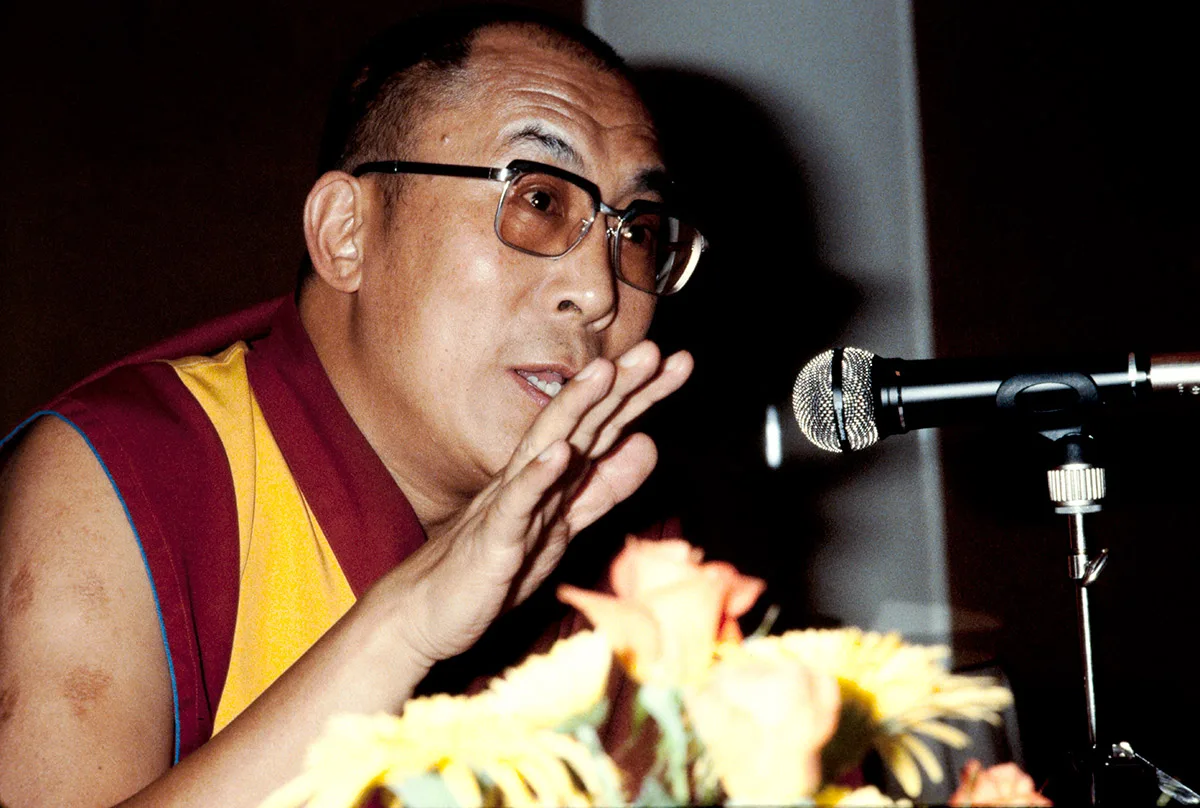
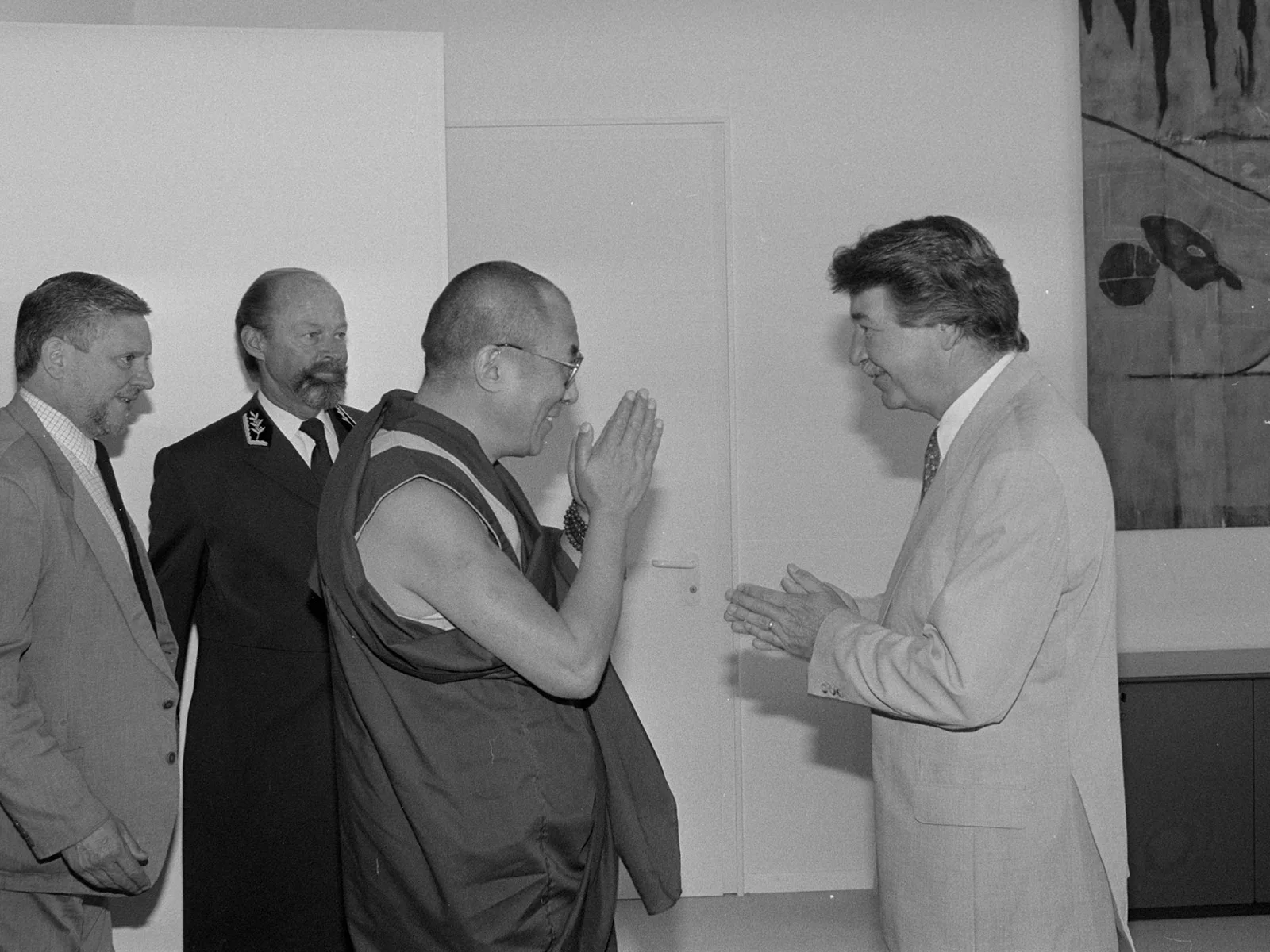
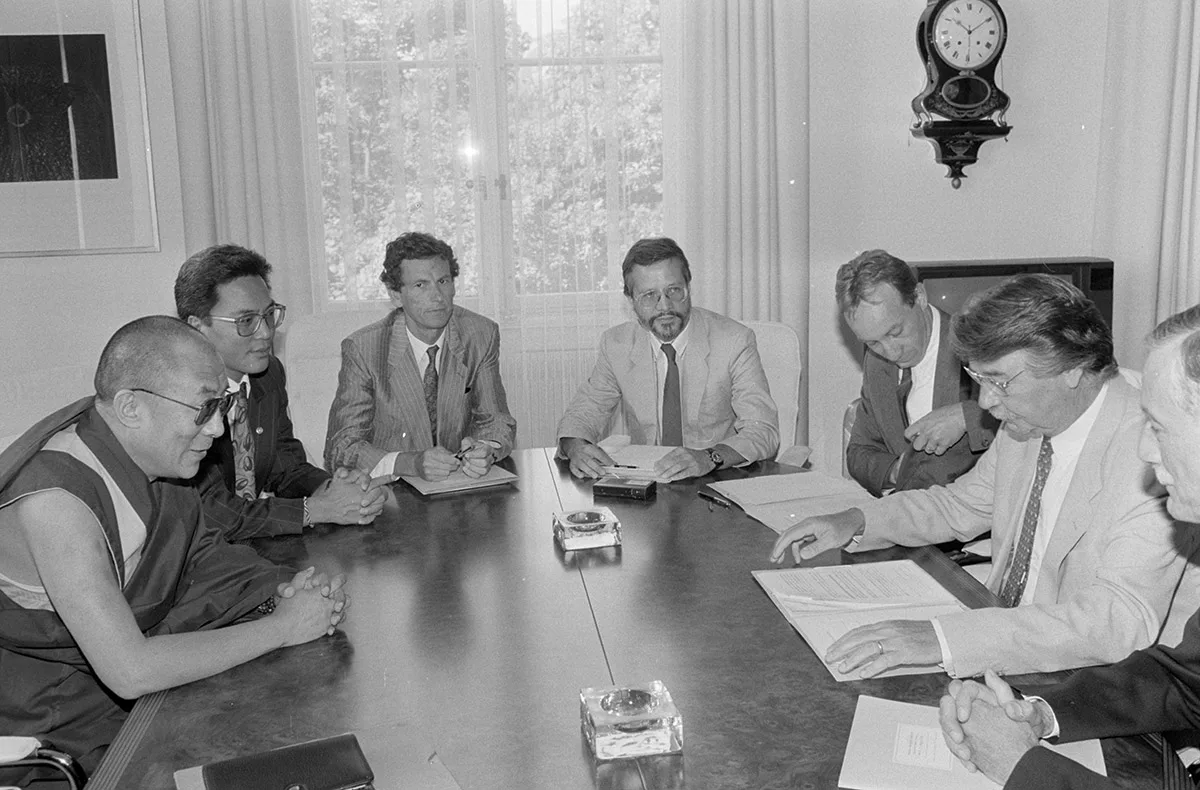
When the Dalai Lama visited Switzerland again the following year, the Department had changed its tune on the criteria in favour of a reception by the Federal Council: “The Dalai Lama, who is noted for a moderate stance on the Tibet question, has, with his calls for respect for human rights (including the protection of minorities), merited an official expression of solidarity from the Swiss authorities”, as stated in a notice issued by the EDA. At the same time, it was stressed that this contact “does not signal any change in Switzerland’s stance on the status of Tibet under international law”. As anticipated, the Chinese Ambassador in Bern condemned the reception by Federal Councillor Felber as “meddling in China’s internal affairs”. However, the Ambassador’s censure was “remarkably mild” and he emphasised to the EDA “that there should be no polemics as a result of this issue”.
The campaign had been a success. No wonder the Dalai Lama was smiling.
Gemeinsame Forschung

This text is the product of a collaboration between the Swiss National Museum and the Diplomatic Documents of Switzerland research centre (Dodis). The SNM is researching images relating to Switzerland’s foreign policy in the archives of the agency Actualités Suisses Lausanne (ASL), and Dodis puts these photographs in context using the official source material. The files for 1991 were be made public on the Dodis online database in January 2022. The documents cited in the text are available online: dodis.ch/C2311.