The dream of a quick profit
Trading in goods has been institutionalised and formalised since the Middle Ages. Places such as stock exchanges have become increasingly important. With the formation of the first joint-stock companies during the Early Modern Period, there was a growing need to co-finance these organisations, and new financial instruments found their way onto the trading floors of the world’s financial markets.

Andrea Weidemann
Andrea Weidemann is the director of the Swiss Finance Museum.
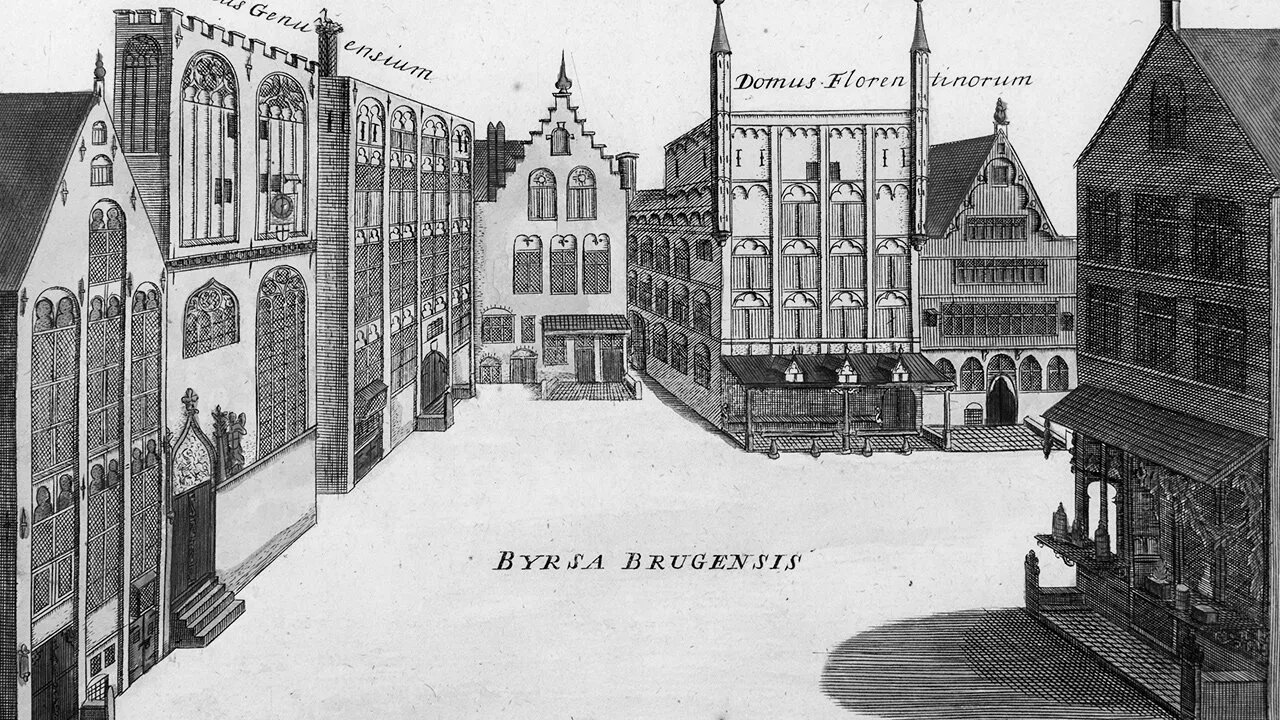
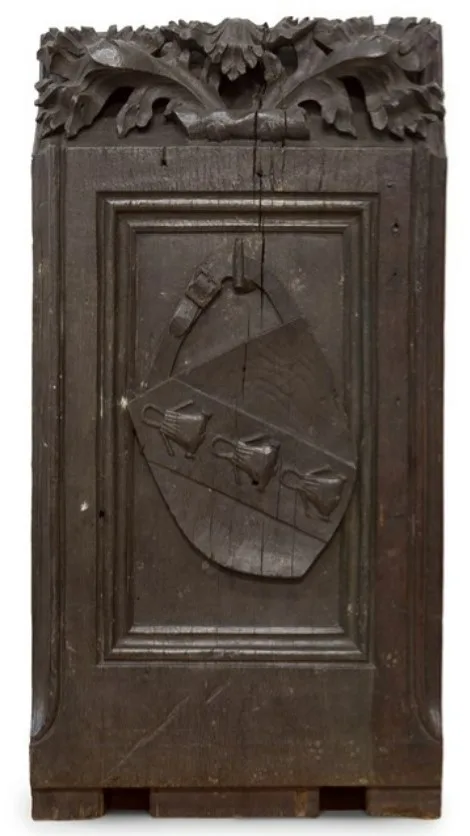
Spices from the East Indies, English fabrics, sugar, and raw materials were stored, traded and sold on the European continent. Stakeholders included the merchants and traders who travelled to these centres or overseas to get the best deals for their business. The Bruges inn run by the “van der Beurs” family was one of these locations. Fittingly, the family coat of arms depicts three purses: going “zu den Beursen” (to the Beursen) had become established as a figure of speech and, legend has it, is the origin of the term “Börse” (stock exchange). A form of initial stock exchange was thus created in 1409. “Beurs” still means stock exchange in Dutch today.
The Antwerp stock exchange of 1531 is considered to be the first place where these transactions were conducted, and the first to be institutionalised as a commodities exchange. Financial instruments such as bills of exchange, promissory notes and letters of credit were the normal practice, and were linked to banking transactions. A bill of exchange is a binding obligation in written form undertaken by a person assuming a debt, committing them to repay a specified sum to the holder of the bill of exchange at the agreed time. To begin with, the bills of exchange were still tied to the merchant as an individual and were directly linked to the trade in goods. However, this was to change over time: financial instruments became transferrable, or could be sold with deduction of interest and a fee. Merchants who dealt largely with financial transactions increasingly became financiers and bankers. A new profession was born.
Bills of exchange and bonds were now bought and sold, and it was no longer only the prices of goods and raw materials that were fixed. These processes were centralised at specific locations. Experts are divided on the question of where the world’s first stock exchange was located. One theory is that the first such formal institution was the Amsterdam Börse, where shares of the Dutch East India Company (Dutch: Vereenigde Oostindische Compagnie, often known as VOC) were traded for the first time in the 17th century. Another holds that the Royal Exchange in London – which burned down in the mid-17th century – was the first, about 30 years earlier than the Amsterdam Börse. Incidentally, the VOC was the first joint-stock company in the world, because as from its establishment on 20 March 1602, it had all the elements of a joint-stock company as we know it today: the “shares” denote collective ownership, a right to share in any profit, and limitation of liability to the nominal value of the share.

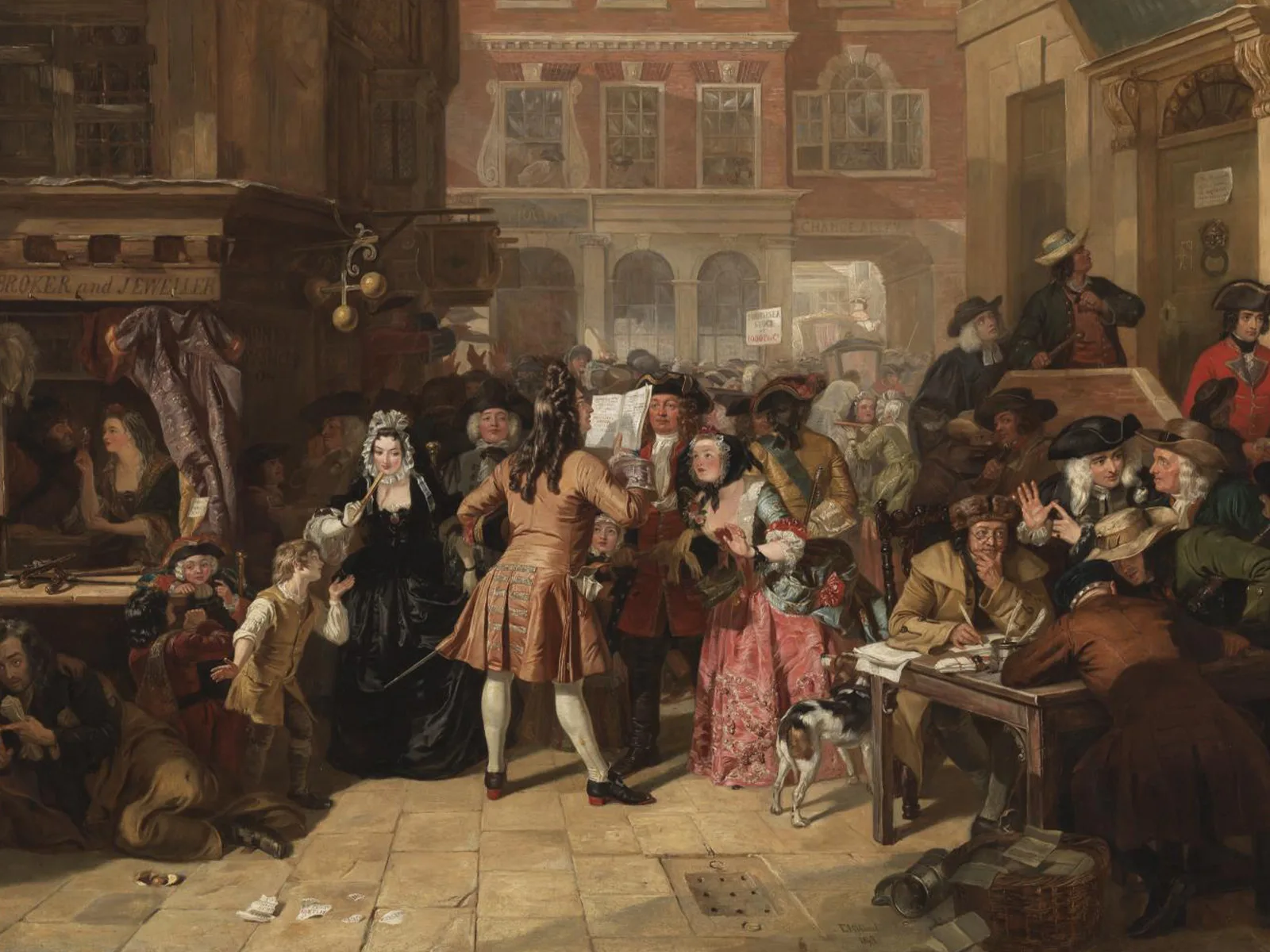
Individuals investing privately, and even cities, began increasingly to buy shares in companies. In 1727, for example, the city of Zurich acquired 120 shares in maritime trading company The South Sea Company, founded in London in 1711. The Zurich Seckelamt – essentially, the national treasury – believed it was worth 100,000 Zurich guilders to invest in the English company. For the Zurich Council, this represented a secure, interest-bearing investment. Just 10 years earlier, the city of Bern had invested in a much larger stake of 1,300 shares. Despite what was known as the “South Sea Bubble”, the share price collapse that went down in global economic history, Bern made a profit on its investment.
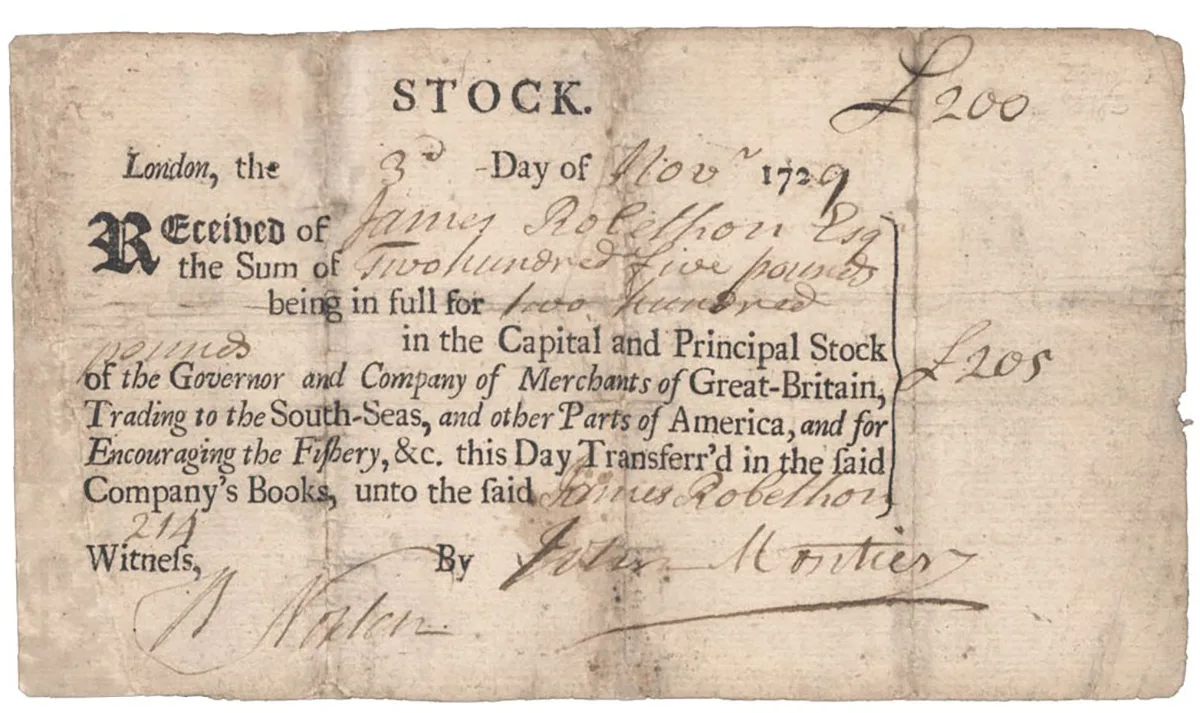

As the industrial era progressed, the number of joint-stock companies increased exponentially. Capital provided by the public at large was needed in order to finance these companies. Accordingly, trading in securities increased. Conversely, people who owned shares also wanted the security of getting their invested money back at a fixed price. What was needed was places like stock exchanges where stock prices were levied in an orderly manner. In Switzerland, share trading would not be institutionalised until a century later. Over the course of the 18th century, and especially after the establishment of the Swiss Confederation in 1848, stock exchanges for the country’s financial business became a necessity. In 1850 the United Brokers Association, an exchange trading institution, was established in Geneva. The Stock Exchange Act of 1856 then created the “à la criée” or “open outcry” trading floor. The Basel stock exchange followed in 1876 and the Zurich stock exchange in 1884; both were under cantonal supervision.