A tropical institute to tackle unemployment
The Swiss Tropical Institute was founded in 1943 out of a fear of post-war unemployment. It was designed to promote the emigration of young people to Africa and the world’s tropical regions.

Gabriel Heim
Gabriel Heim is a book and film author and exhibition organiser. He is principally concerned with research into topics of modern and contemporary history and lives in Basel.
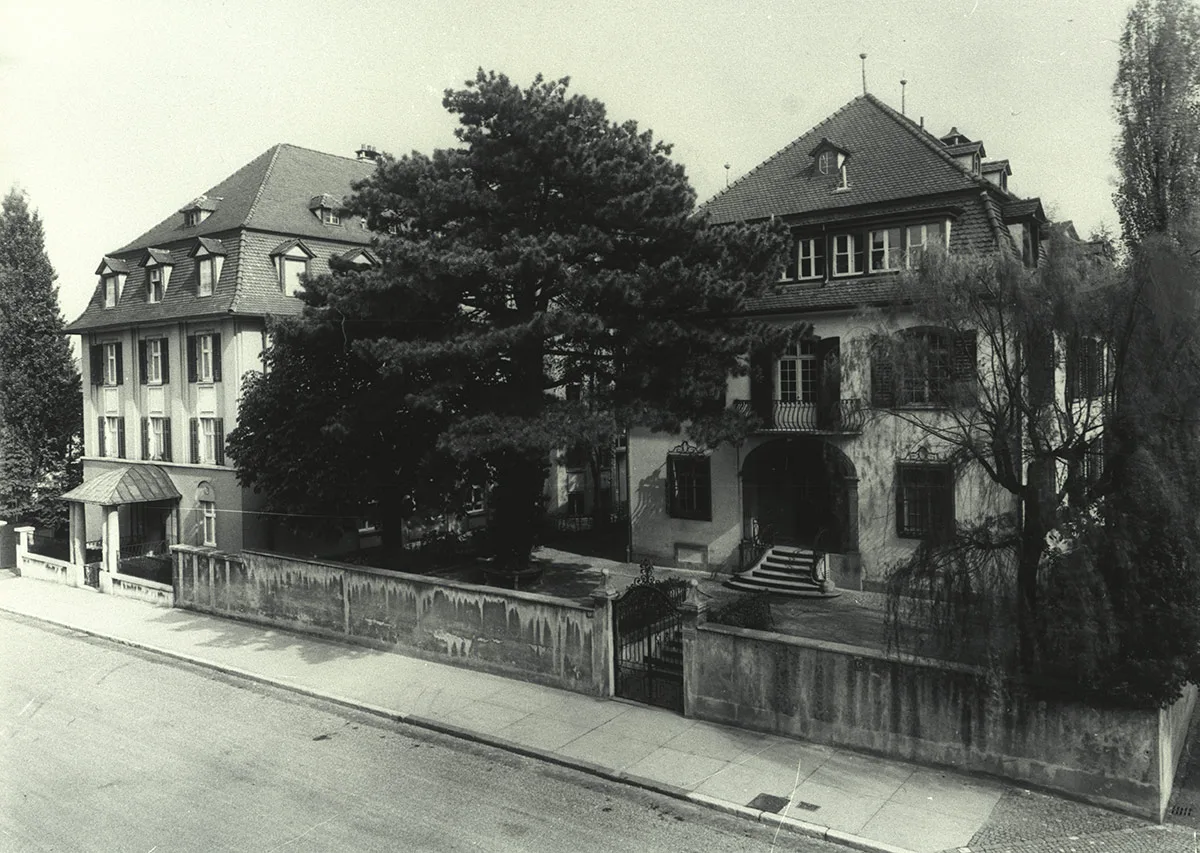
The message from Bern was favourably received at the University of Basel. A group of professors immediately set to work to make the case for the establishment of a national tropical health institute in the cosmopolitan city of Basel. In their arguments the team from Basel made it abundantly clear that there could only be one possible location for such a facility in Switzerland – the canton of Basel-Stadt. They argued that the city, with its worldwide missionary network, its renowned chemical and pharmaceutical industries, its leading ethnological museum and its species-rich Zolli (zoo), had excellent connections to the ‘Dark Continent’ (the phrase commonly used to describe Africa at the time) and the Tropics.

As the concept also envisaged a tropical medicine training programme and even a tropical medicine clinic, these figures were exaggerated to the project’s advantage: “Due to the war, there are currently huge numbers of people from temperate zones in tropical countries. We can therefore expect an influx of people suffering from tropical diseases in Switzerland, too. On top of that, Switzerland, with its mountain resorts, boasts ideal spa towns for those convalescing from malaria.”
And not forgetting – so the assumption went – that training in tropical medicine in Basel could mitigate the surplus of physicians in Switzerland: “This would open up a promising field of work for a large number of young Swiss doctors, which could go some way to absorbing the surplus of physicians.”
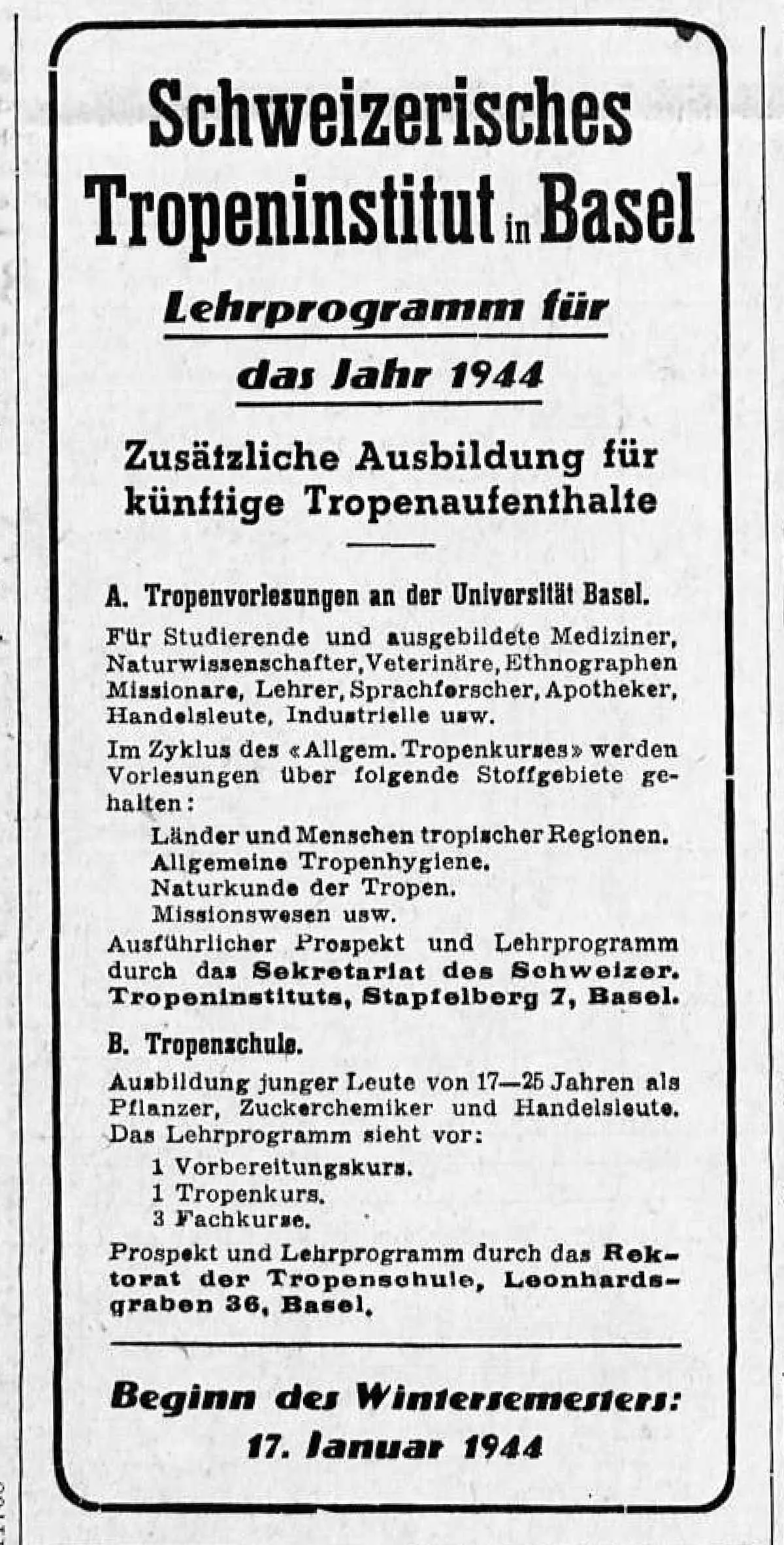
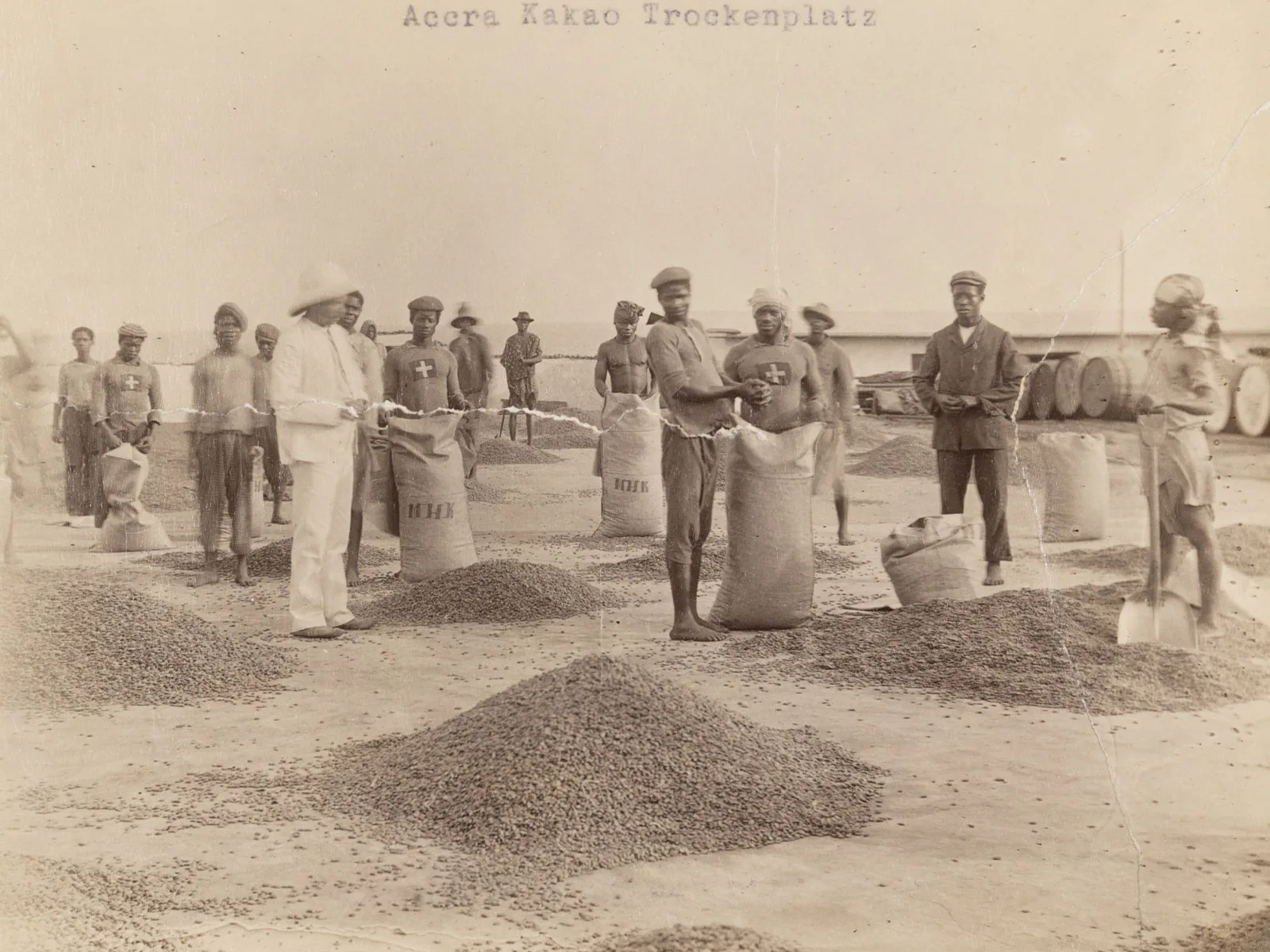
On 17 January 1944, the institute launched its training organisation to promote tropical studies. The first subjects taught at the tropical school were the study of pathogens and carriers of tropical diseases, tropical plants and agriculture, and a course on tropical commodities. There were even lectures on tropical hygiene. In addition to the general preparatory course for emigrants, training programmes were established for prospective planters and chemists in the sugar industry. The broad-based curriculum also covered engine technology, surveying, issues affecting overseas Swiss colonies, termite protection, and the religions of peoples in the Tropics.
Only students who were medically classified as ‘fit for the tropics’ were admitted to the programmes, and the qualification enabled graduates to work on coffee, tea, sisal or rubber plantations overseas. The sugar-industry chemists were promised careers as production managers, and the planters as managers of extensive plantations.
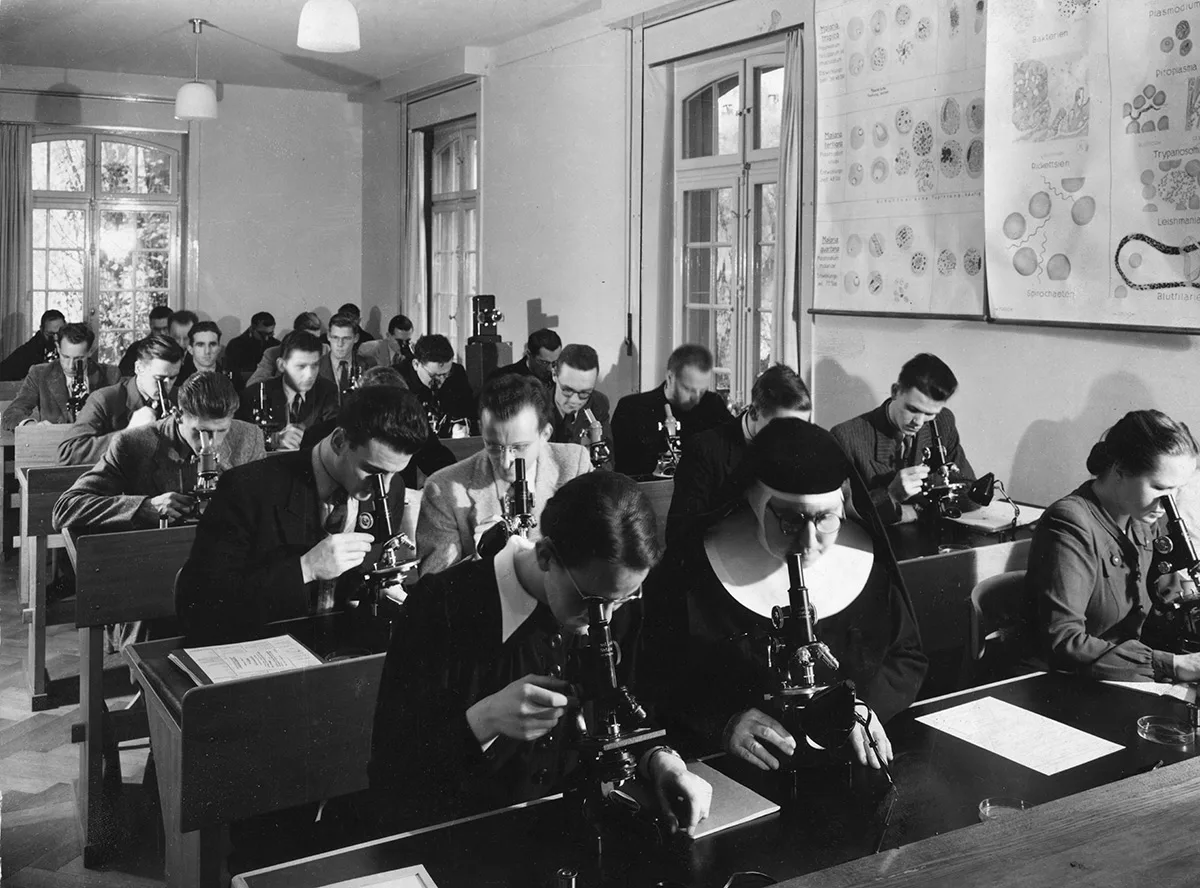
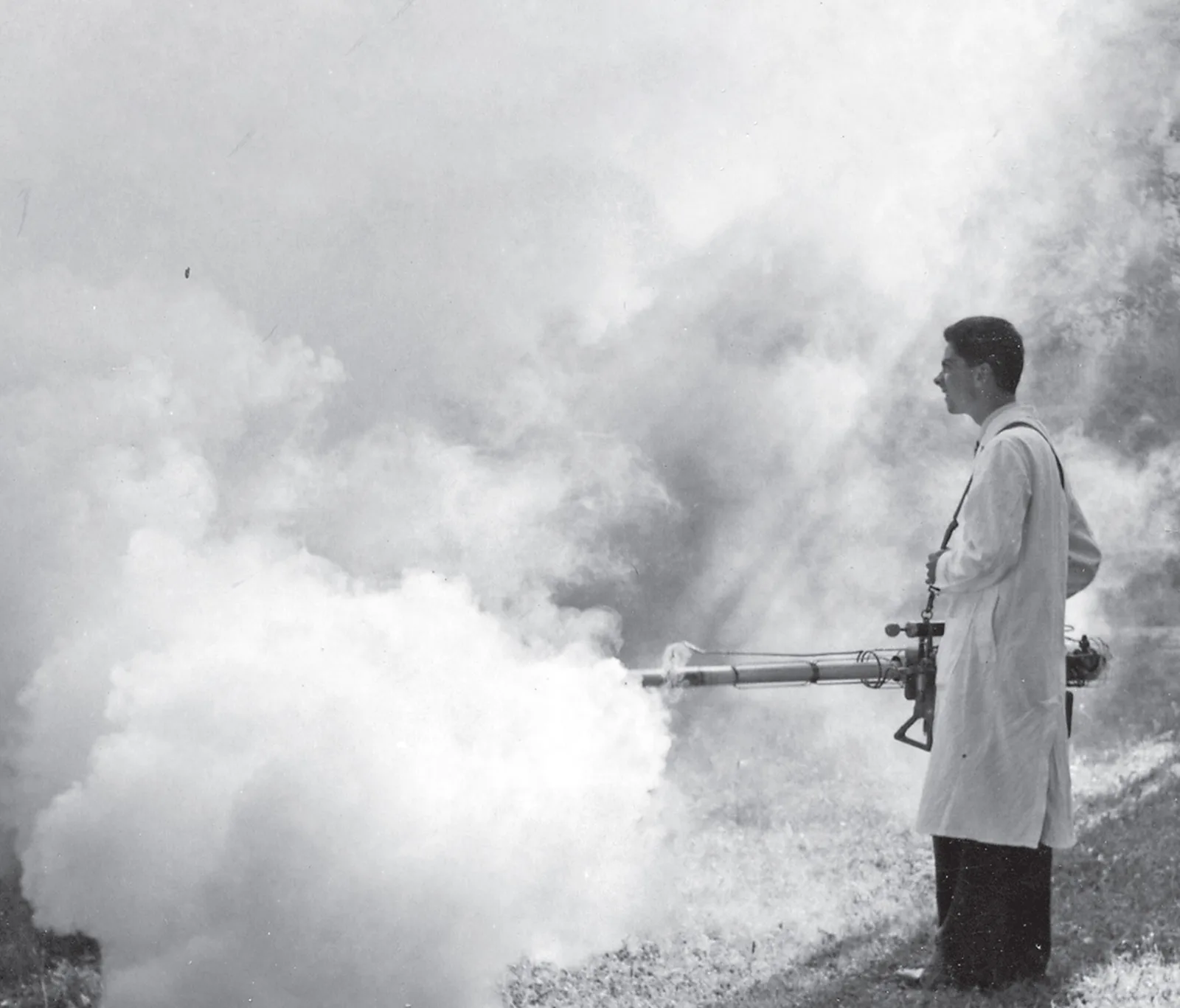
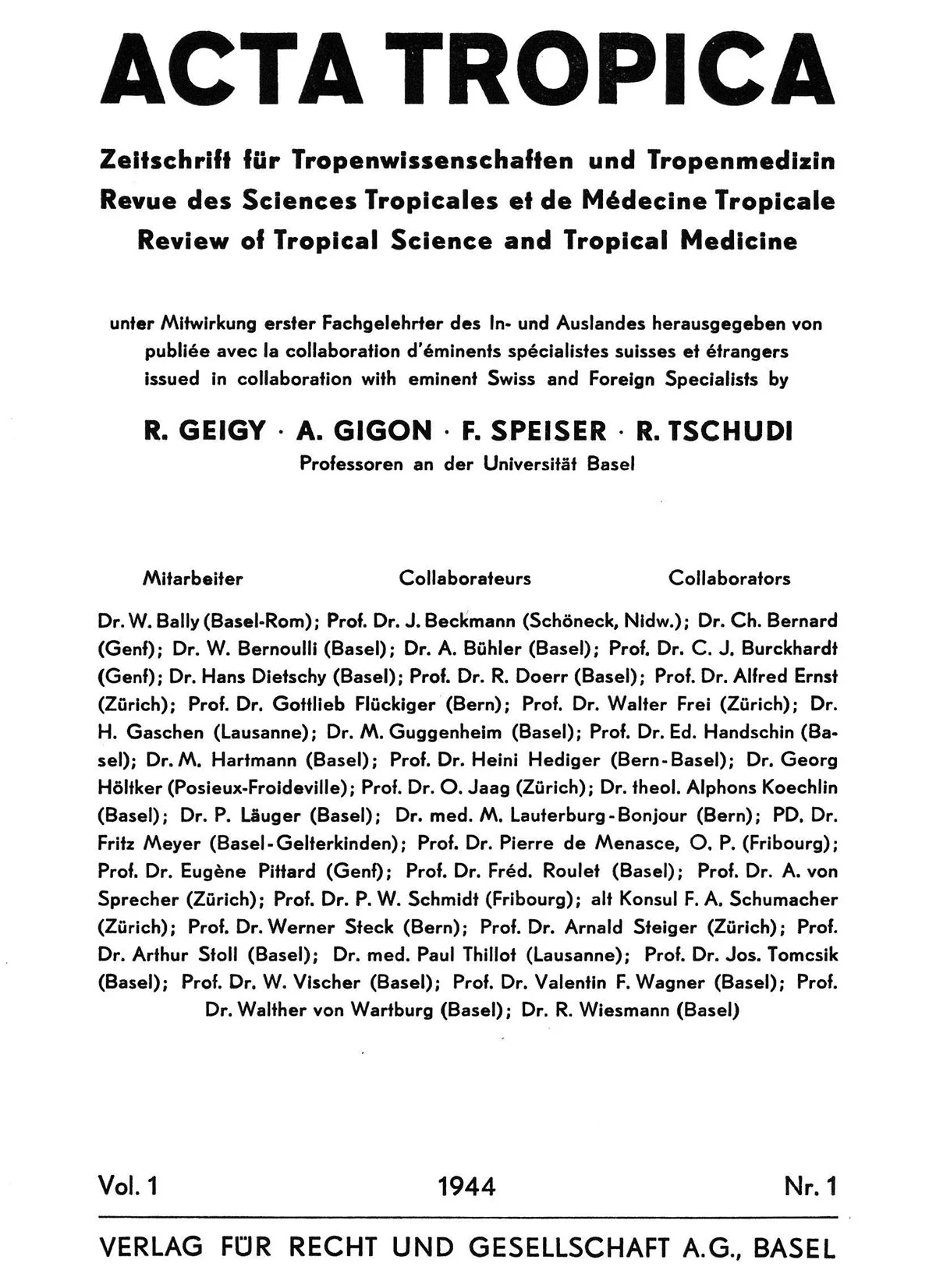
For zoologist Rudolf Geigy, however, who liked to call himself a ‘friend of arthropods’, the development of the Tropical Institute was closely linked to research into tropical diseases and their transmission to humans by insects and ticks, besides intensive teaching. In the very first annual report in 1944, he was recorded as saying: “Our whole organisation can only thrive on the basis of active research.”
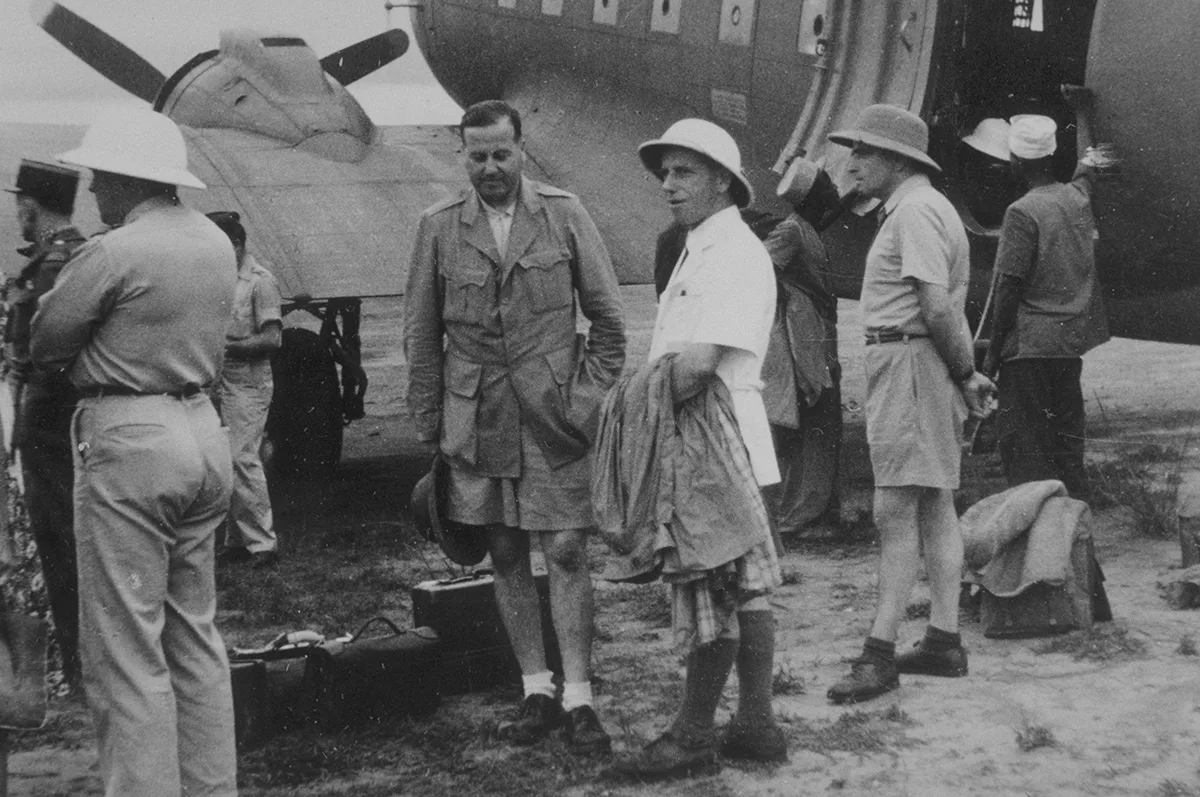
Although that expedition failed to go ahead, there were soon regular expeditions involving field research on the human transmission of parasitic infections such as malaria, sleeping sickness and bilharzia.
The post-war economic boom quickly put paid to the scenarios that predicted gloomy times ahead for Switzerland in the late 1940s. Not only did the federal government stop encouraging people to emigrate, but the Basel Tropical School, the so promisingly touted tropical clinic and the preparatory courses for living and working in the southern hemisphere lost importance due to a lack of interest.
The Swiss Tropical Institute, on the other hand, experienced steady growth thanks to Rudolf Geigy, who shaped the institution for 30 years, and to the foresight of his successors. Today, the Swiss Tropical and Public Health Institute, known as Swiss TPH, has 950 members of staff and operates in 130 countries, in keeping with its mission of making the world a healthier place.