The destruction of Max Huber’s castle
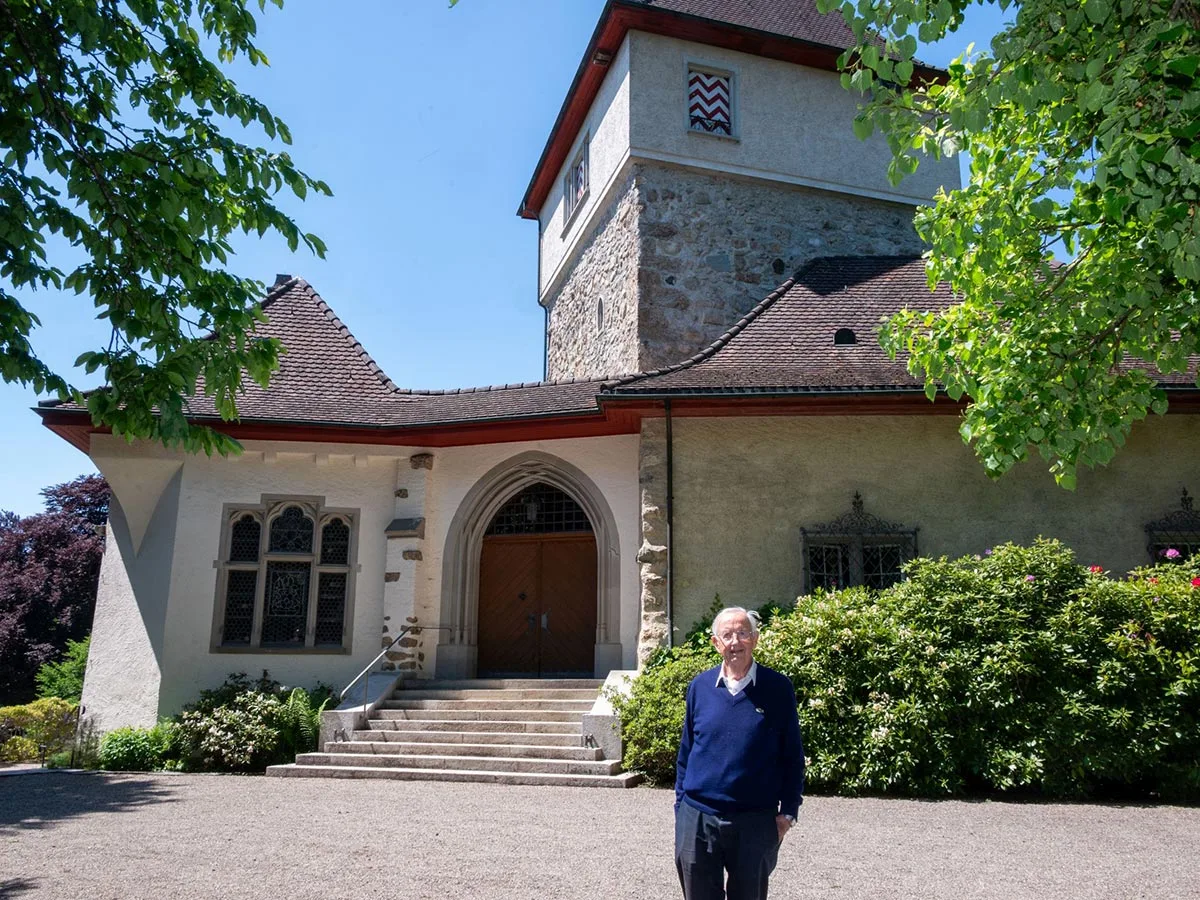
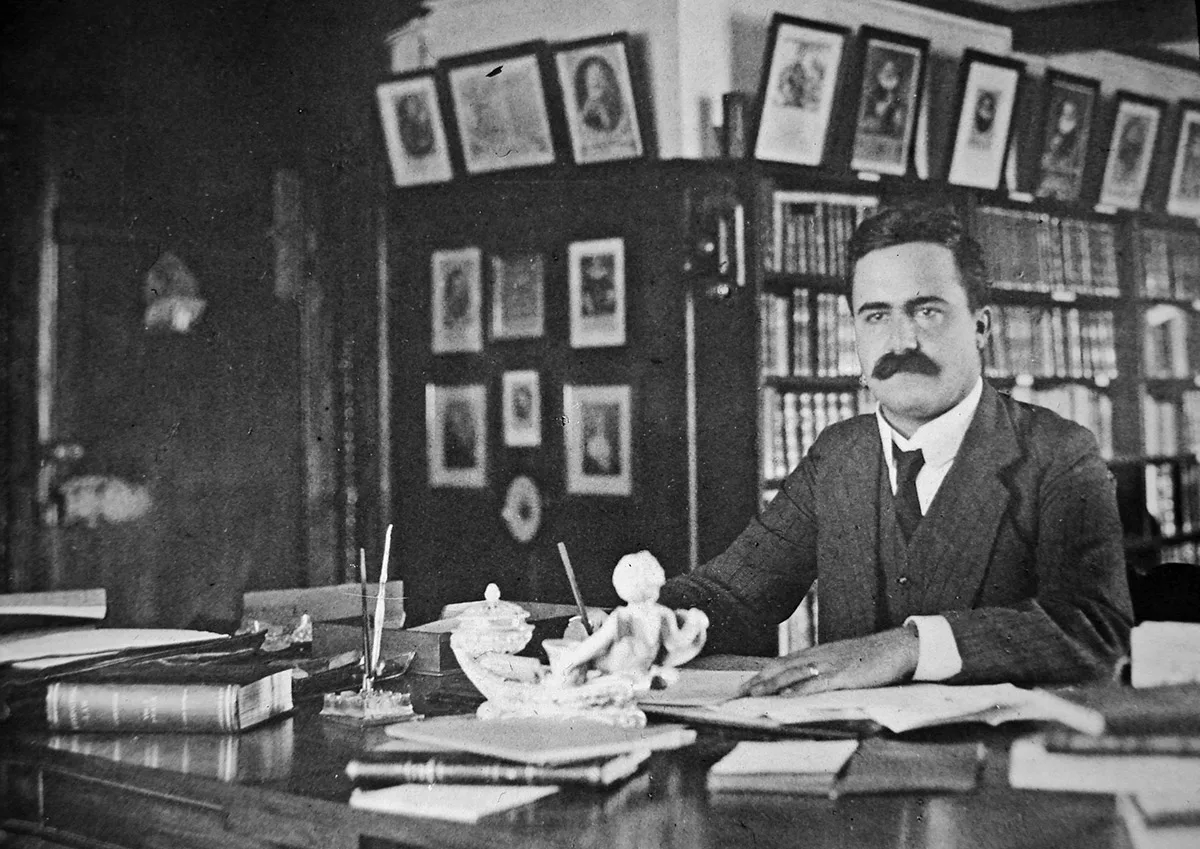
On 19 July 1944, a stricken American bomber crashed into Wyden Castle near Ossingen, the home of Max Huber, professor of international law at Zurich University and president of the Red Cross.

Dominik Landwehr
Dominik Landwehr is a cultural and media scientist and lives in Winterthur.
The castle’s owner was away from home at the time, spending a few days in the mountains above Lake Geneva for the sake of his health. However, some members of his family stayed at the castle. Max Huber’s grandson Ueli still has vivid memories of this terrifying moment today. A wing of the plane, shorn from the fuselage, came to rest hanging in the very tree under which he was playing, its fuel tanks still burning. “I was aware of the terrible noise and the commotion as the fire brigade and soldiers ran around all over the place. Understandably, I took fright and ran off. I was halfway to the village of Ossingen before some strangers stopped me and took me into their home.”
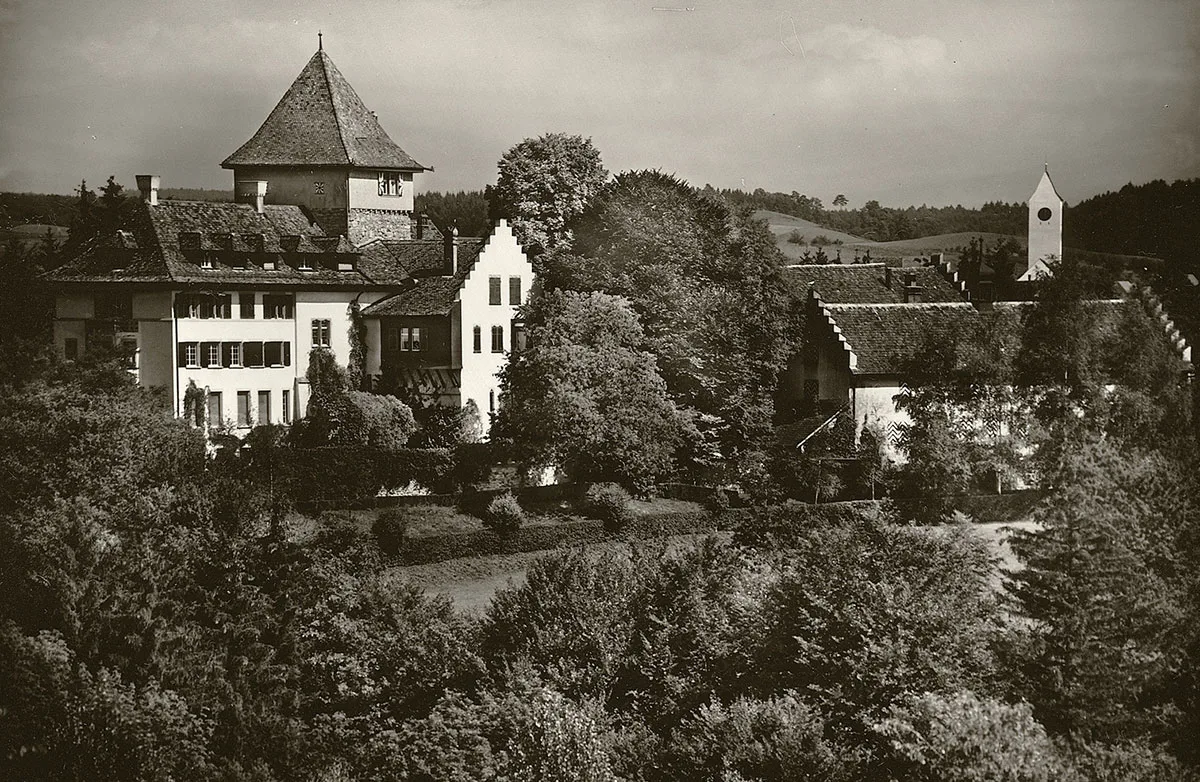
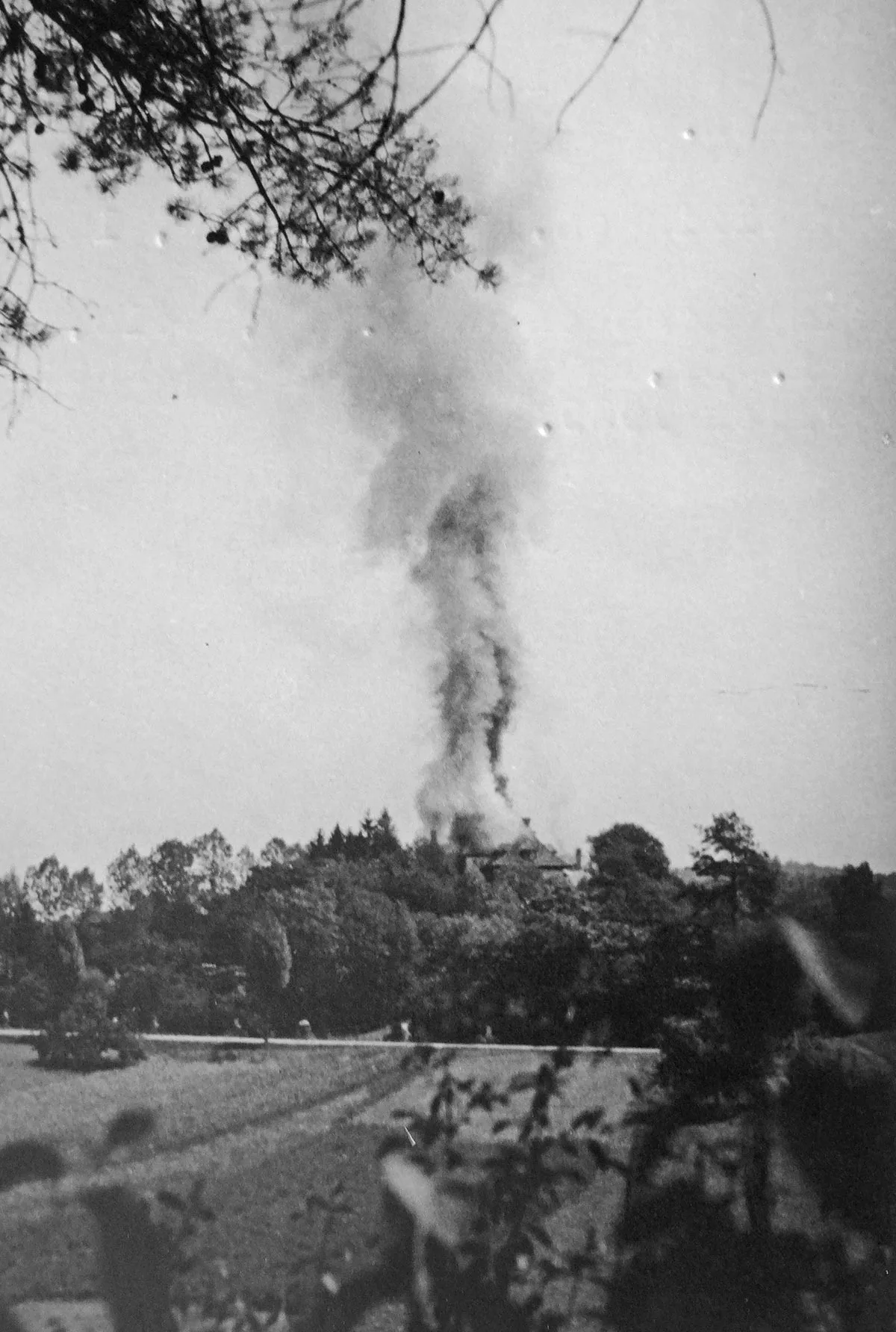
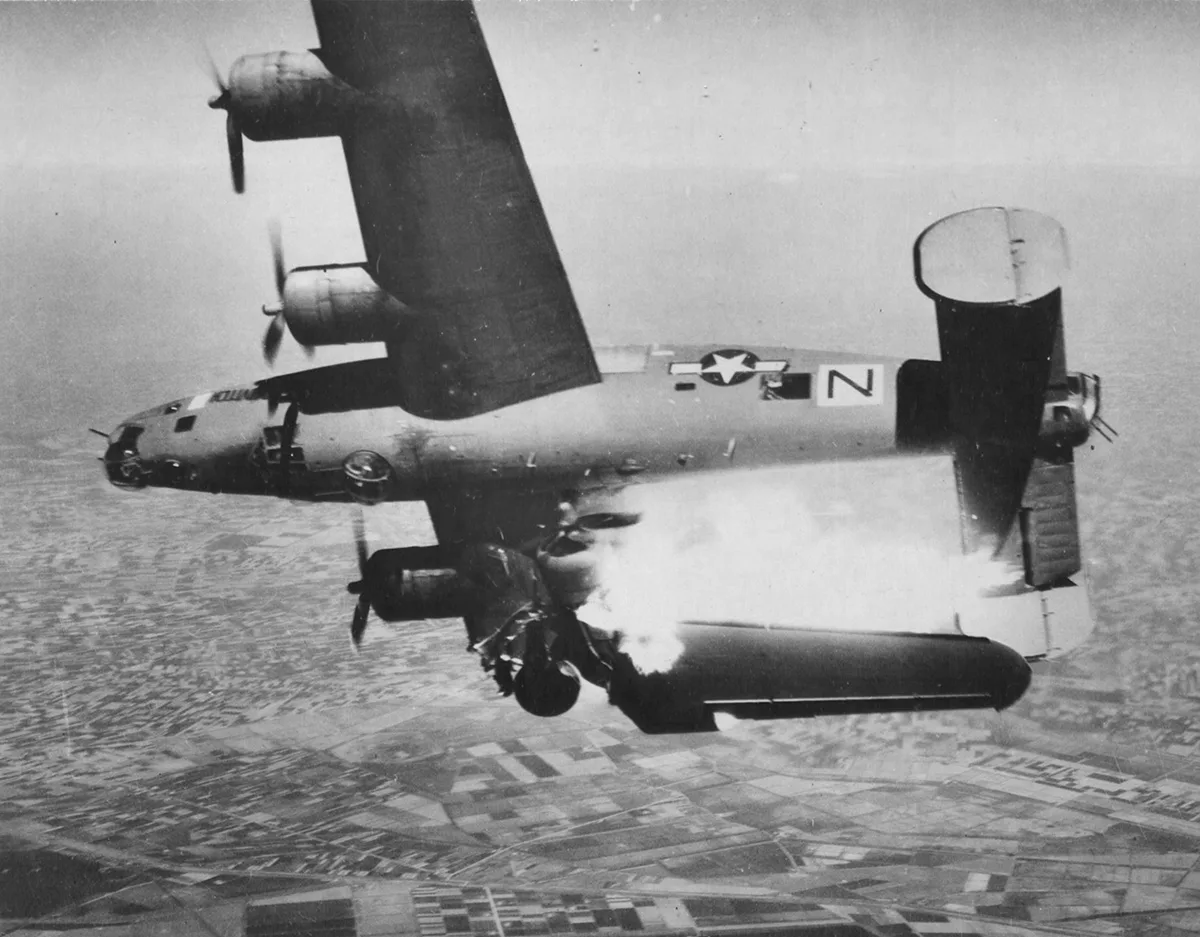
A weekly newspaper reported the calamitous episode in some detail: “On 19 July, around noon, an apparently pilotless American Liberator bomber roared over the Stammheim valley, jets of red hot flame shooting out from one of its engines. The mighty plane suddenly flipped over and began practically nosediving straight towards Wyden Castle. The burning aircraft smashed into the tower; the fuselage came to rest on the chapel roof, one of the wings flew into the overhanging trees, and the cockpit, together with the other wing and a section of the landing gear, was hurled with extreme force into the façade opposite. The entire castle, drenched in flowing oil and gasoline, immediately burst into bright flames.”
The ‘Jackpine Joe’ had suffered engine damage during its bombing mission over Munich before then being hit by flak over Friedrichshafen. The pilot decided to steer the bomber towards Switzerland. However, the navigator bailed out of the plane before it reached the border and was taken prisoner by the Germans. The copilot was killed when his parachute failed to open. The other crew members were able to make their way to safety and spent the rest of the war interned in Switzerland.
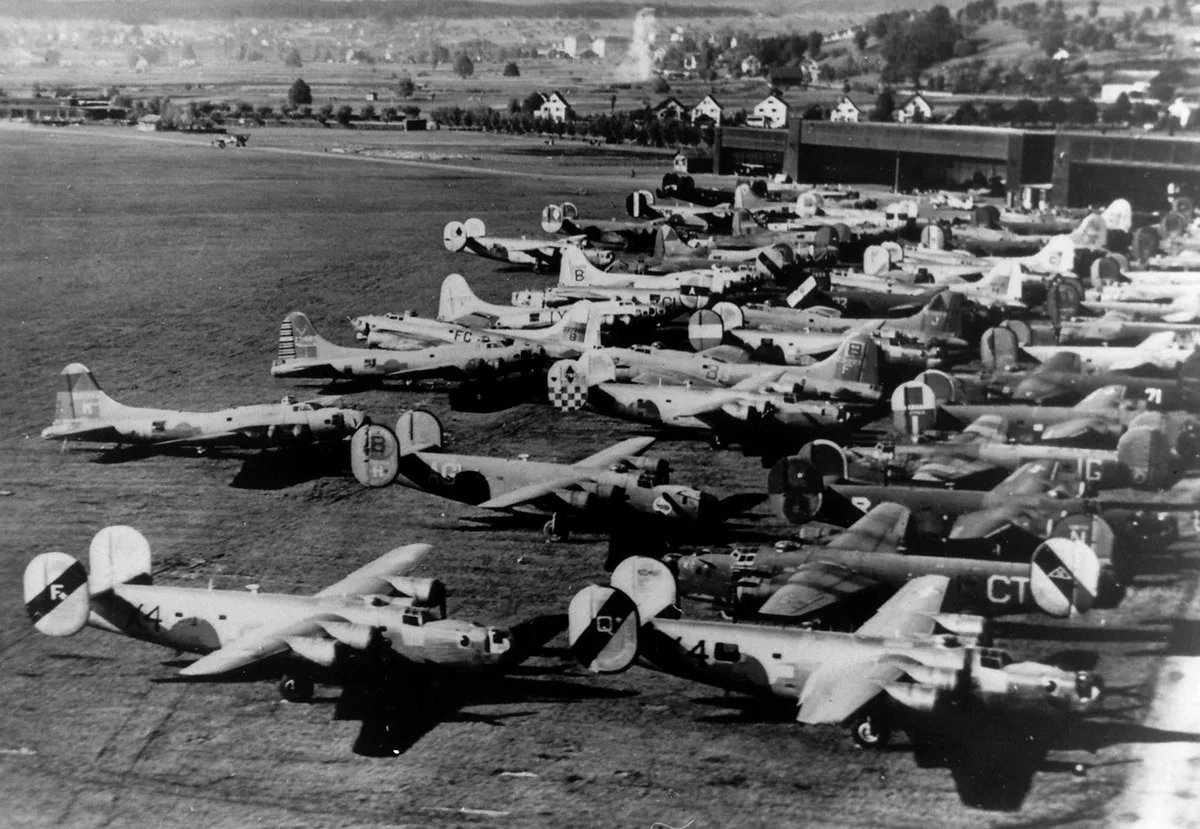
The bomber that fell from the sky above Ossingen was not the only plane to meet this particular fate: during the war, some 250 aircraft ‒ both Allied and Axis, although the latter in much smaller numbers ‒ crashed in Switzerland or were forced to make emergency landings there. The crews were interned under international law and the planes impounded. The majority of confiscated aircraft were subsequently sent to the airfield at Dübendorf near Zurich, where they were held as part of a huge store.
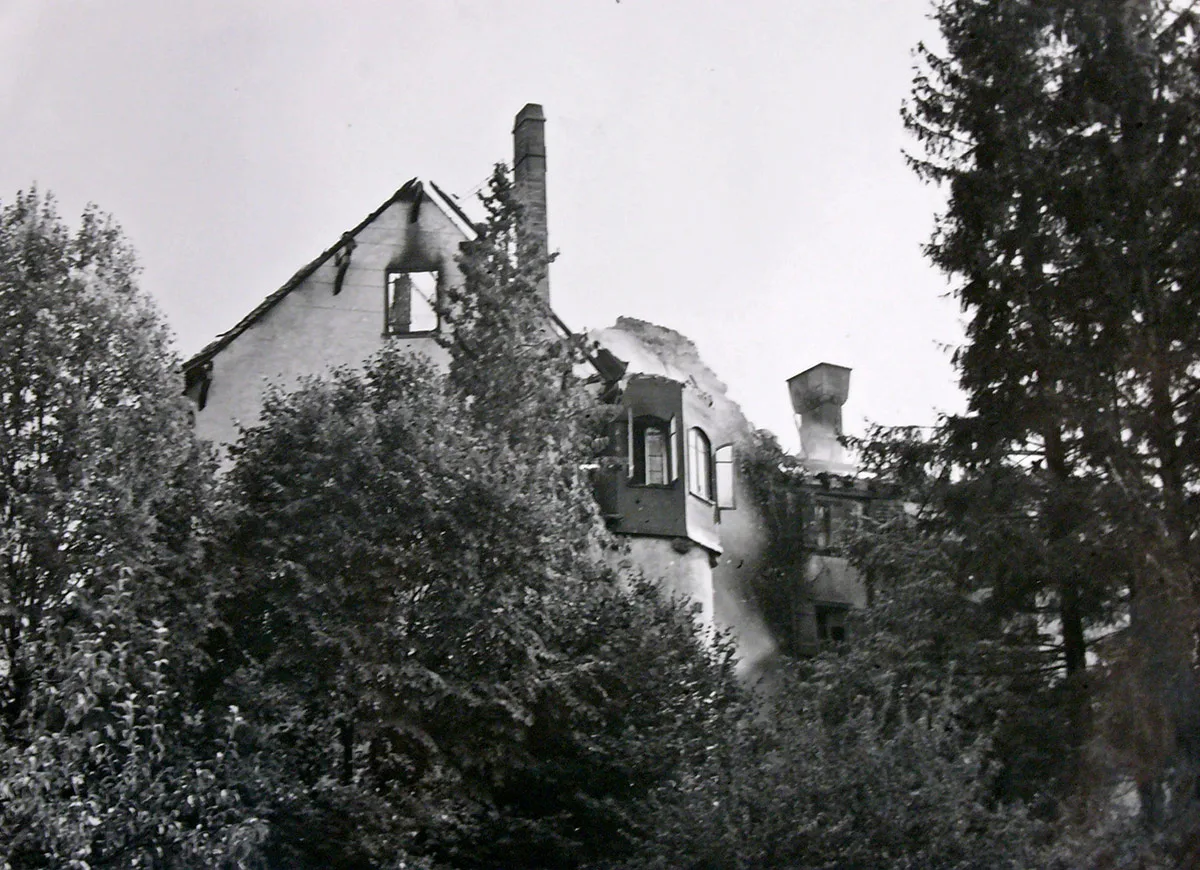
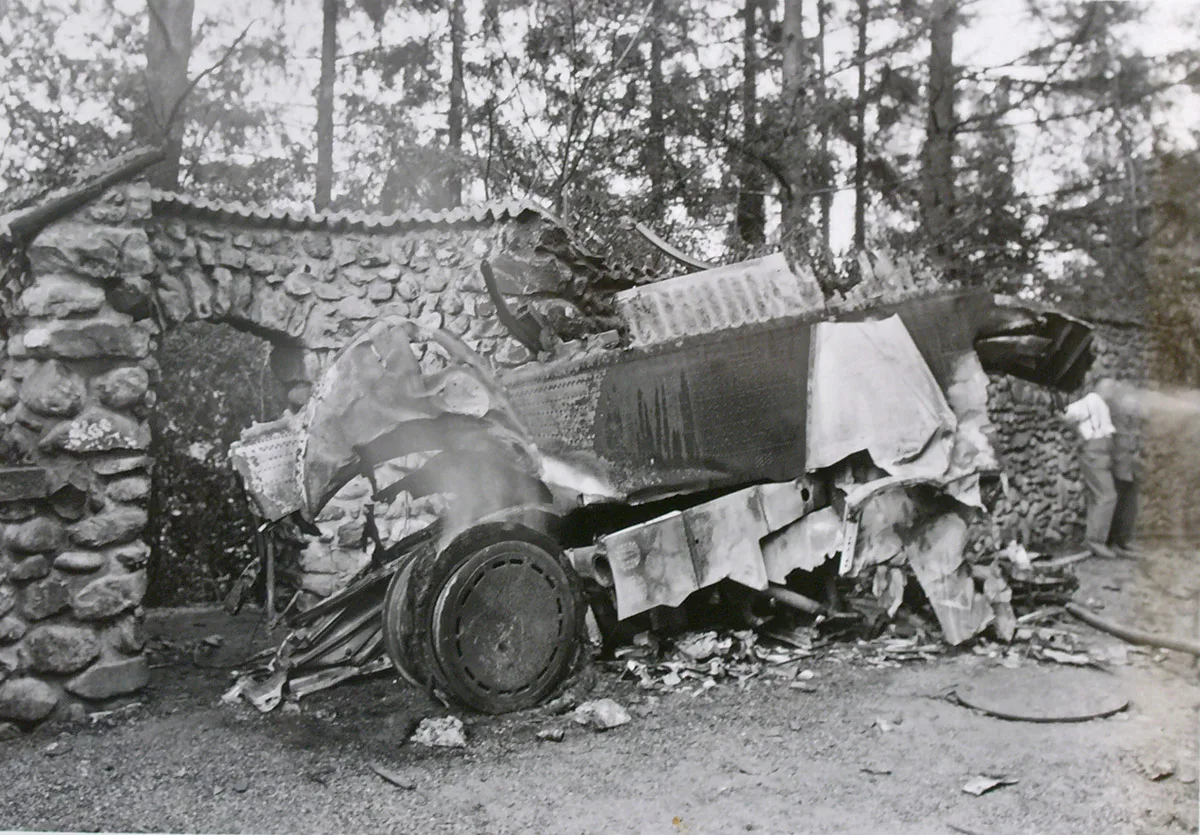
Large parts of the property were destroyed as a result of the crash of the US bomber.
It should therefore come as no surprise that Max Huber was unperturbed when news of the disaster at Ossingen reached him in western Switzerland. He was simply overjoyed that there had been no loss of life. The 69-year-old spent most of the Second World War living in Geneva, partly because his presence as ICRC President was frequently required there. But he also paid regular visits to the sanatorium on Mont Pèlerin above Vevey to restore his ailing health.