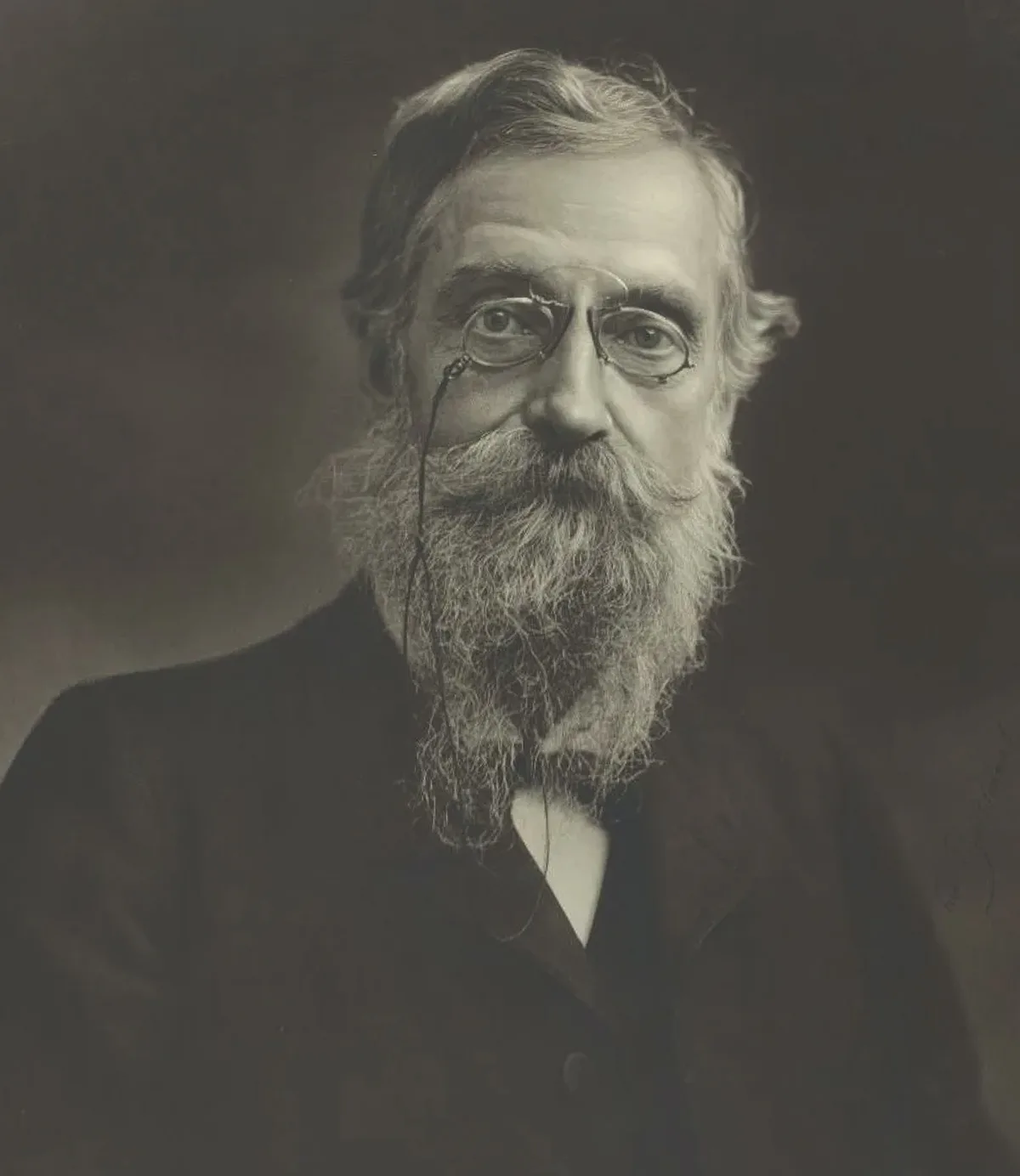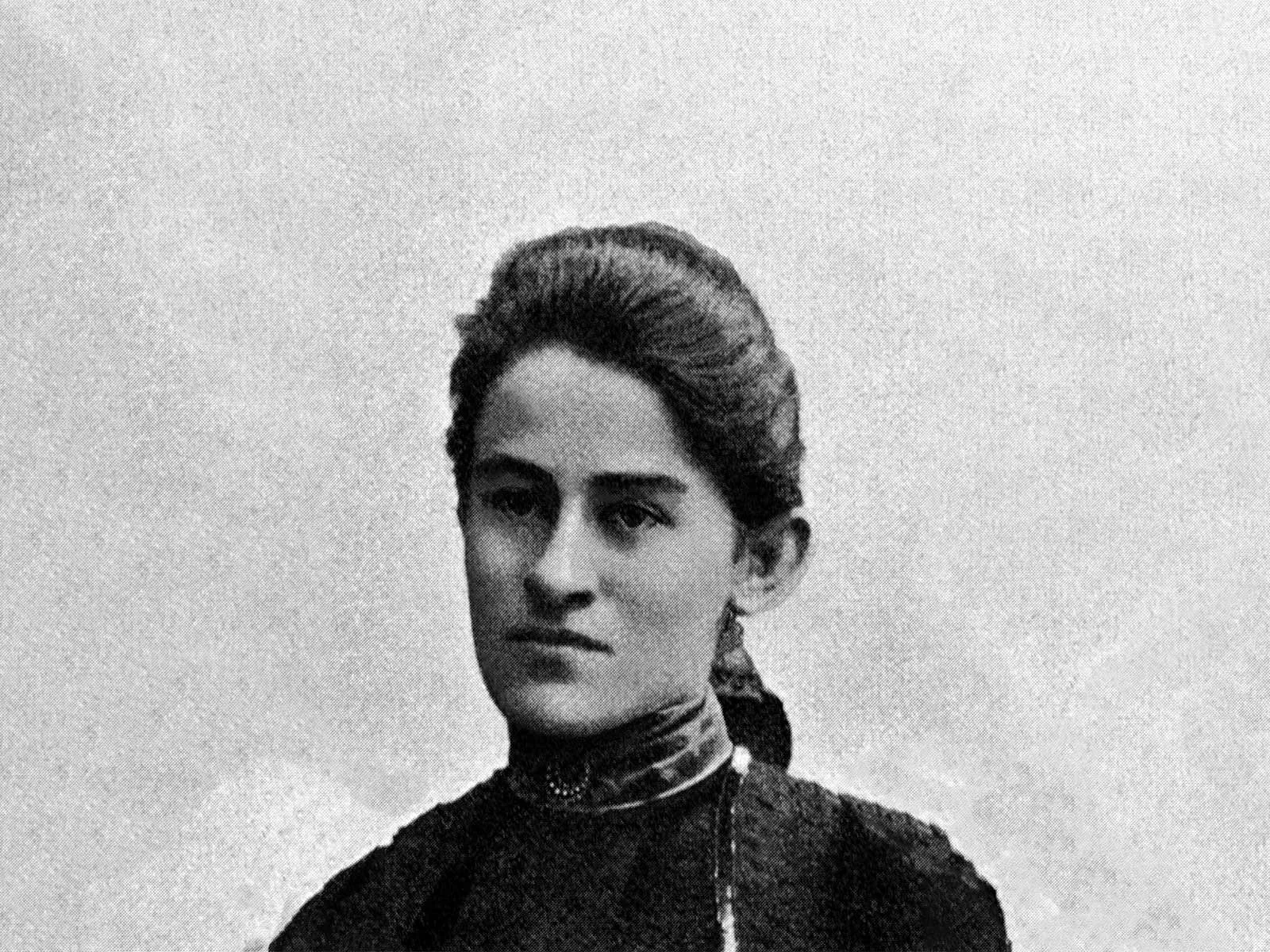
Anna Tumarkin made a name for herself at the dawn of the 20th century in an academic world dominated by men.
Anna Tumarkin made a name for herself at the dawn of the 20th century in an academic world dominated by men. Photo: Die Schweiz, vol. 2., issue 21, Zurich 1898, p. 489

Europe’s first female professor

In 1909, Anna Tumarkin became the first woman in Europe to be appointed a university professor in her own right. She taught at the University of Bern for decades and garnered international respect as an academic.
Franziska Rogger

Franziska Rogger

Franziska Rogger is a freelance historian.

On 7 September 1904, a young woman stepped up to the podium at the International Congress of Philosophy in Geneva to deliver a talk, the first ever female academic with sufficient qualifications to do so. Anna Tumarkin was 29 years old and a lecturer at the University of Bern. She had been confident enough to contact the general secretary of the congress in advance, announcing her intention to speak on ‘Das Spiel der Kräfte in Kants Urtheilskraft’ (‘The play of the faculties in Kant’s view of judgment’).

The congress was a high-profile event, attended by eminent philosophers from Europe, the United States and Russia. Those who came together in Geneva thought of themselves as an intellectual brotherhood, a confraternité intellectuelle. The main topic of discussion was “Kant’s overwhelming greatness”. Social and commemorative events as well as excursions rounded out the programme. There was a noticeably large female presence in the audience, many of whom were members of the recently established Union des femmes de Genève, an organisation that formed the backbone of the early women’s movement in Geneva and Switzerland. Yet Tumarkin was the sole speaker who happened to be both female and a genuine philosopher. Only one other woman gave a talk, but she was a literary scholar.
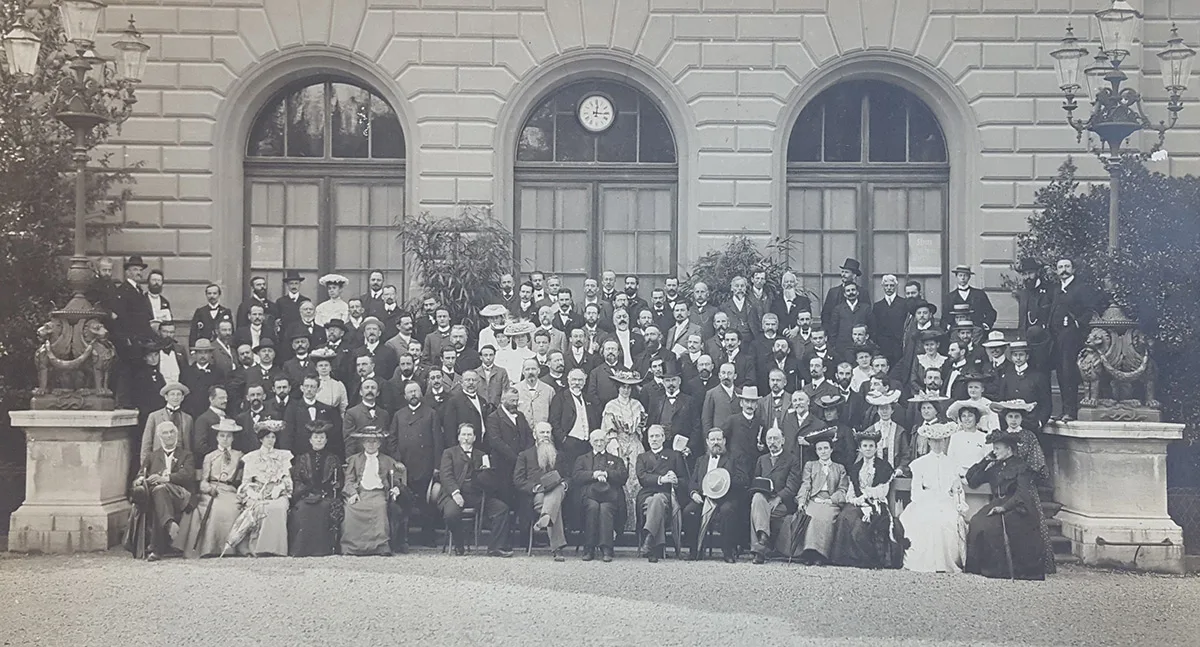
Group photo of attendees at the 1904 congress. Anna Tumarkin is fifth from right in the second row (wearing a dark dress and straw hat).
Group photo of attendees at the 1904 congress. Anna Tumarkin is fifth from right in the second row (wearing a dark dress and straw hat). Bibliothèque de Genève
Henri Fazy, a Liberal member of the Genevan cantonal government and of the National Council, lamented this fact when he addressed the congress in an official capacity. Fazy gallantly stated that he would have liked to have seen a female section, “une section feminine”. Anna Tumarkin’s bravery in stepping on to the podium was therefore instrumental in paving the way for women to become more visible in the academic realm.
Portrait of Henri Fazy, 1906.
Portrait of Henri Fazy, 1906. Bibliothèque de Genève
Who was this courageous woman who symbolically blazed a trail for other female academics by speaking publicly in Geneva?

Anna Tumarkin was born in 1875 in the Tsarist Empire. As a woman who was both Jewish and Russian, her life was never going to be easy. Having already decided at an early age to dedicate her life to philosophy and learning, she faced major social obstacles. Although universities in Europe and the Ivy League schools in the United States admitted very few, if any, women at the time, Tumarkin was forced to leave her hometown of Chișinău (in present-day Moldova) at the tender age of 17 in order to study in Switzerland. Compared with the rest of Europe, Switzerland took a relatively progressive stance towards female education and women were able to study there from the 1860s under certain conditions.
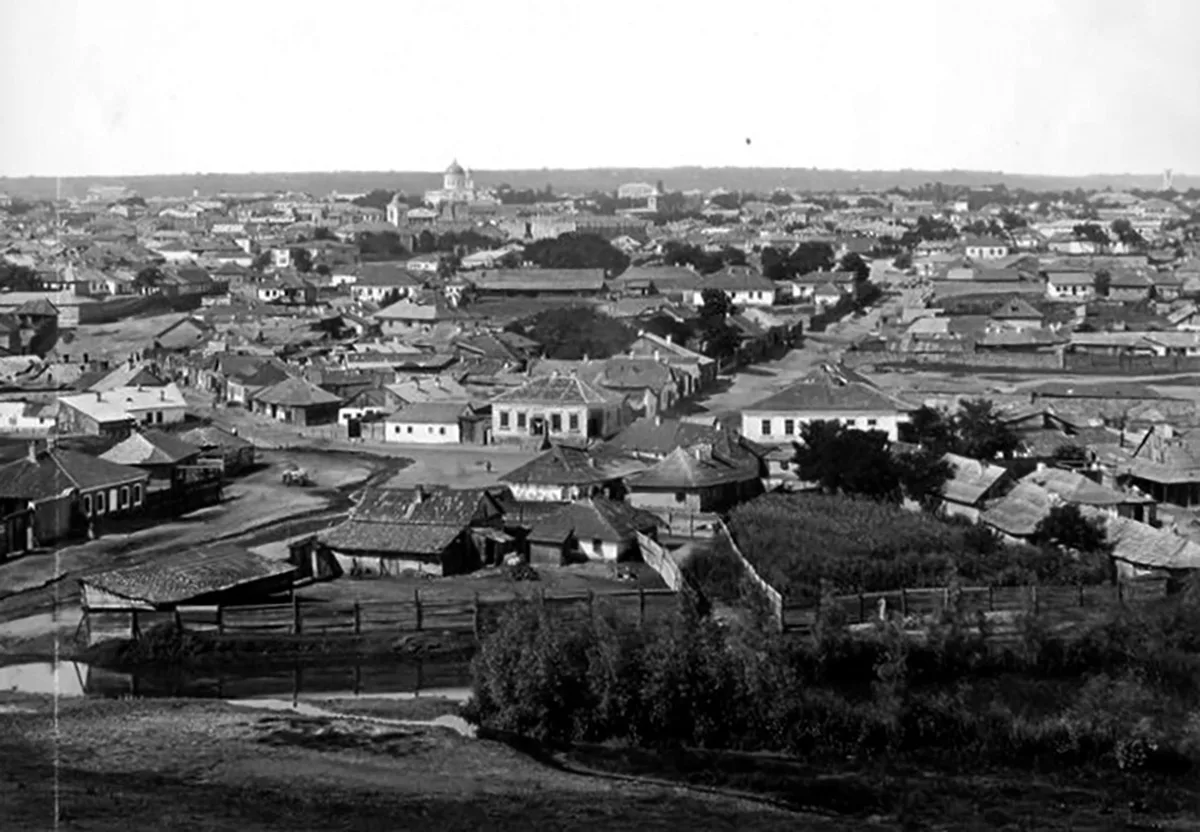
City view of Chisinau, 1889.
A young Anna Tumarkin moved from rural Chișinău... Wikimedia
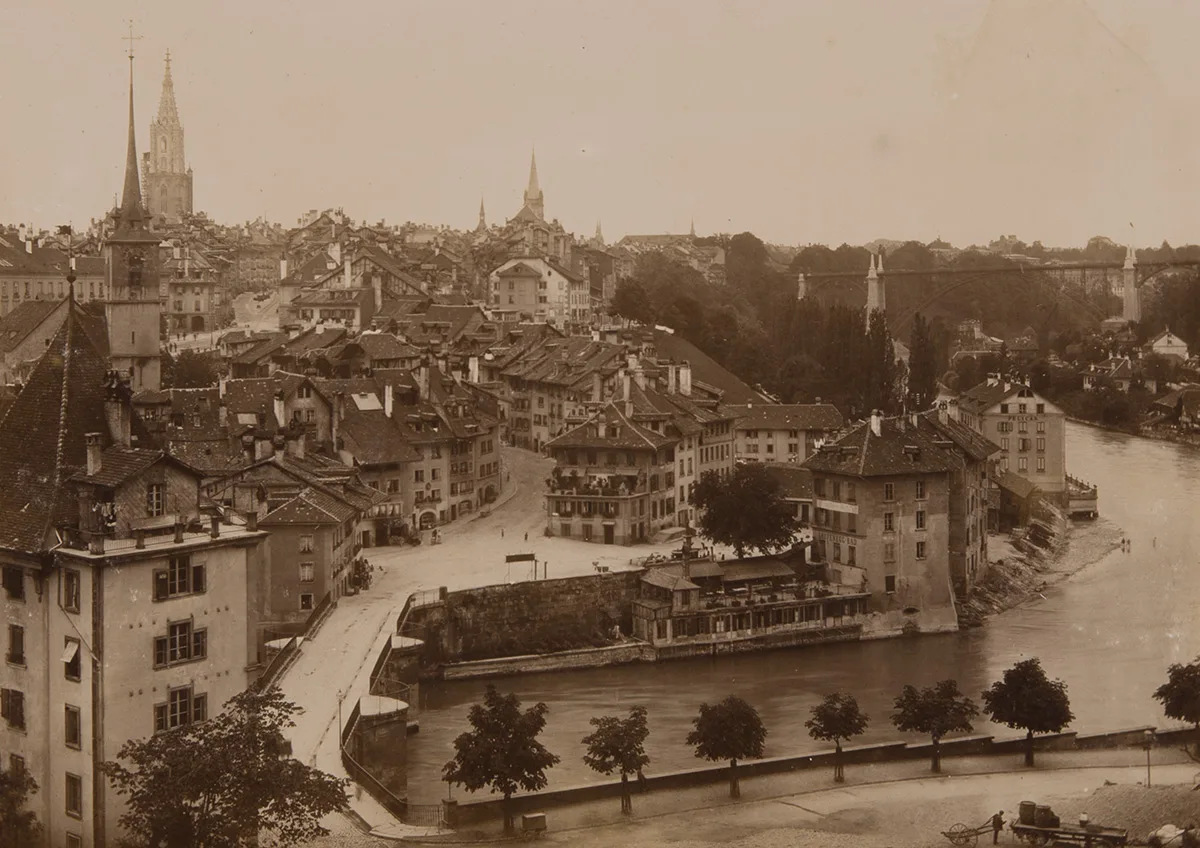
Old town of Bern in a photograph from 1898.
...to the city of Bern to realise her dream of studying. Swiss National Museum
The University of Bern played a pioneering role in this respect. It had opened the doors of its lecture theatres to women back in the 1870s and allowed them to enrol as regular students. Anna Tumarkin pursued her studies in philosophy in Bern before climbing the steep and difficult academic career ladder. Having gradually established herself as an academic, in 1909 she finally became the first female professor in Europe to enjoy full academic rights and the first to have reached this position by following a regular academic career path. As well as teaching, Tumarkin was permitted to examine doctoral and postdoctoral candidates. She was also entitled to have a say on all academic matters at the university as a member of the professorial staff and of the Senate – a hitherto unimaginable breakthrough.

During her 45 years at the University of Bern from 1898 to 1943, she progressed from highly regarded member of the teaching staff to associate professor of philosophy. Her main interests lay in aesthetics and epistemology. She helped 13 students, 8 male and 5 female, to gain their doctorate and oversaw numerous other philosophical works.
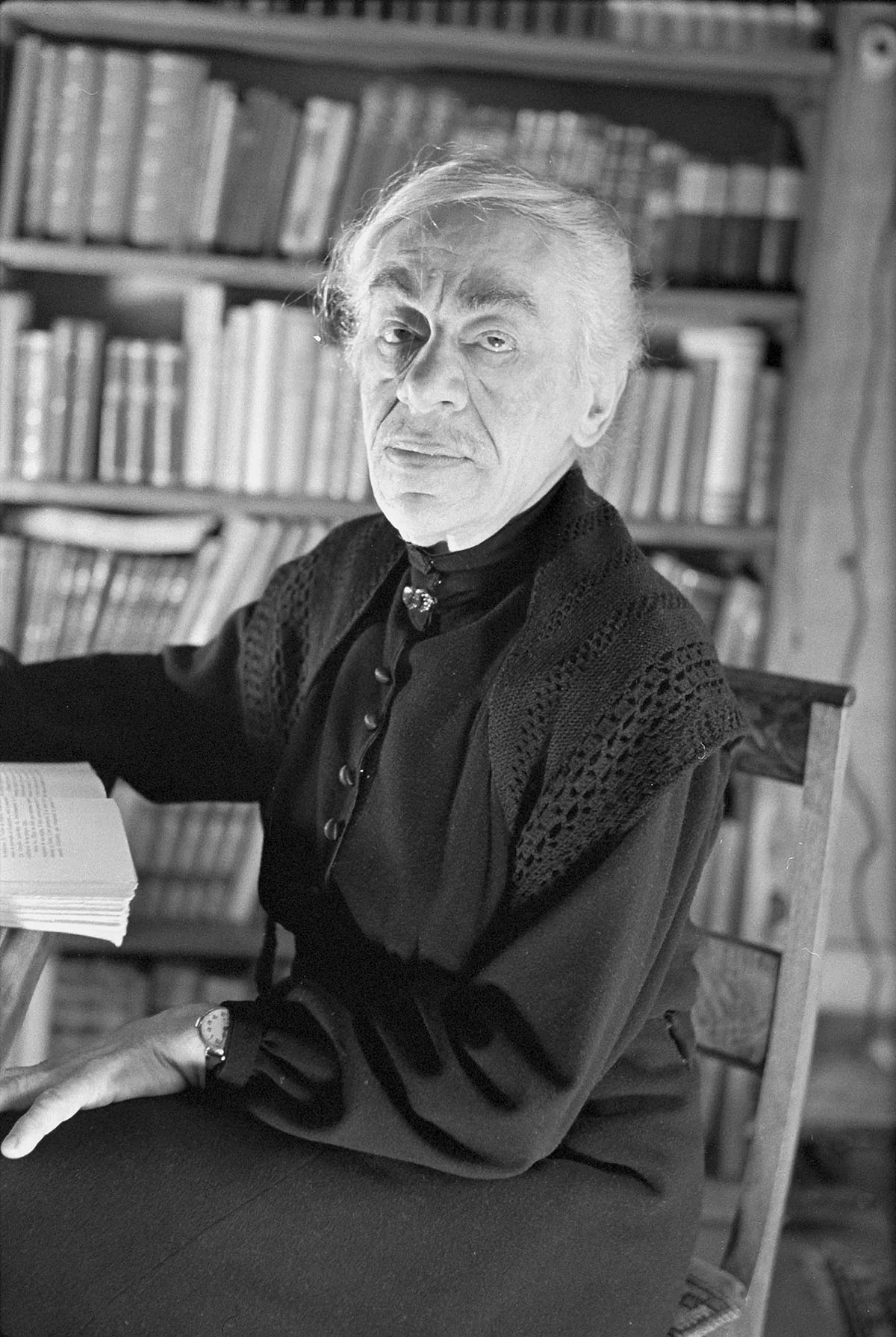
Portrait of Anna Tumarkin, 1945.
Portrait of Anna Tumarkin, 1945. Dukas / RDB
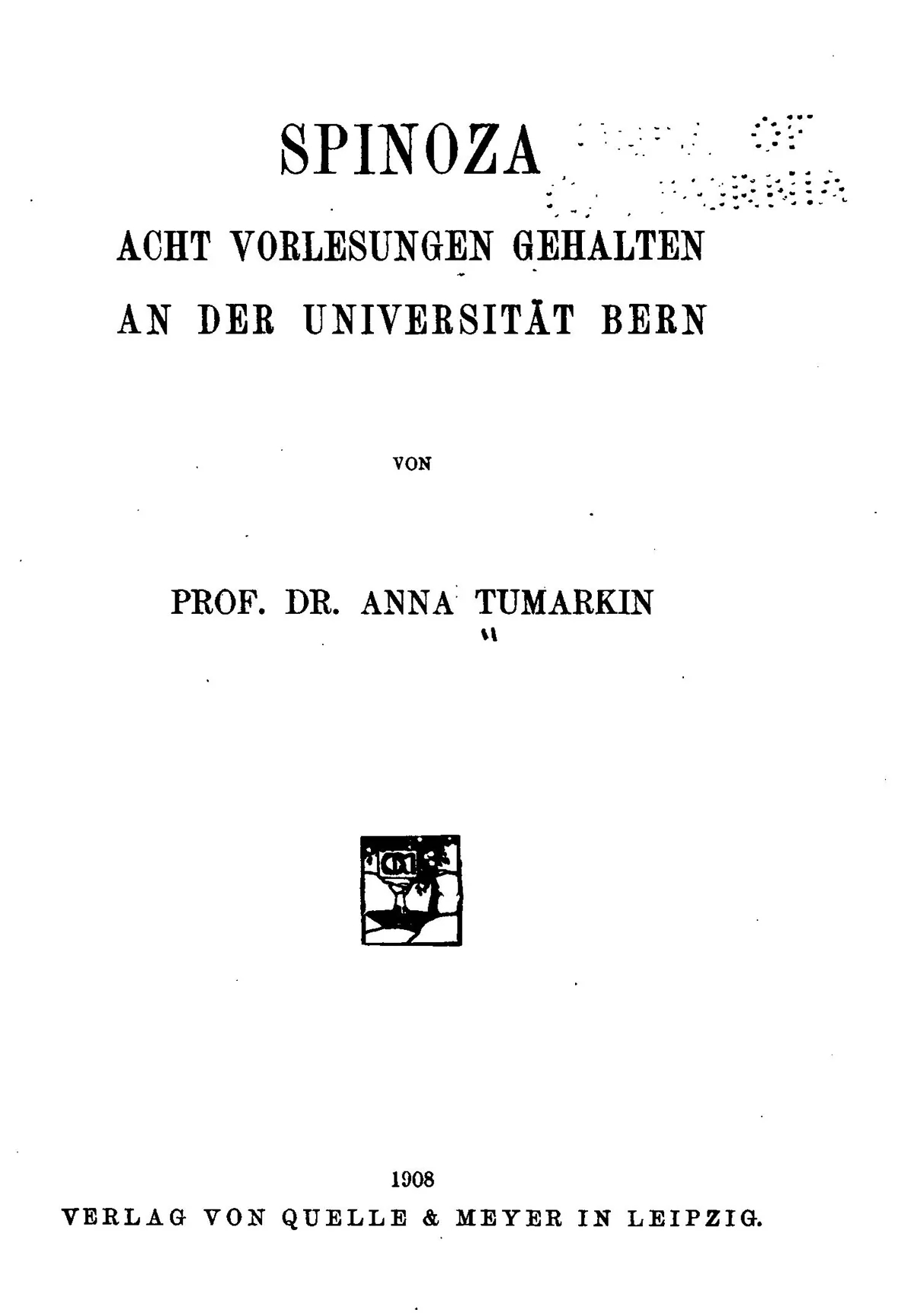
Tumarkin’s Spinoza lectures were published in book form in 1908.
Tumarkin’s Spinoza lectures were published in book form in 1908. Internet Archive
In addition to her passion for philosophy, Anna Tumarkin joined her partner in life Ida Hoff in advocating for women’s suffrage. After becoming a Swiss citizen in 1921, she also played an active role in the spiritual national defence movement. This involved giving talks and producing publications in which she invariably championed a philosophy that was clearly distinct from totalitarian ideologies and which emphasised the independence and objectivity of Swiss thought.

Tumarkin’s importance as an academic is evidenced not merely by her achievements at the University of Bern, but also by the fact that she delivered talks at other International Congresses of Philosophy (including those in 1908 and 1937). Despite all the adversities she faced as a woman, immigrant and female academic, she left behind a body of philosophical work that remains influential today ‒ especially in its analysis of a specifically Swiss philosophy.
Further posts