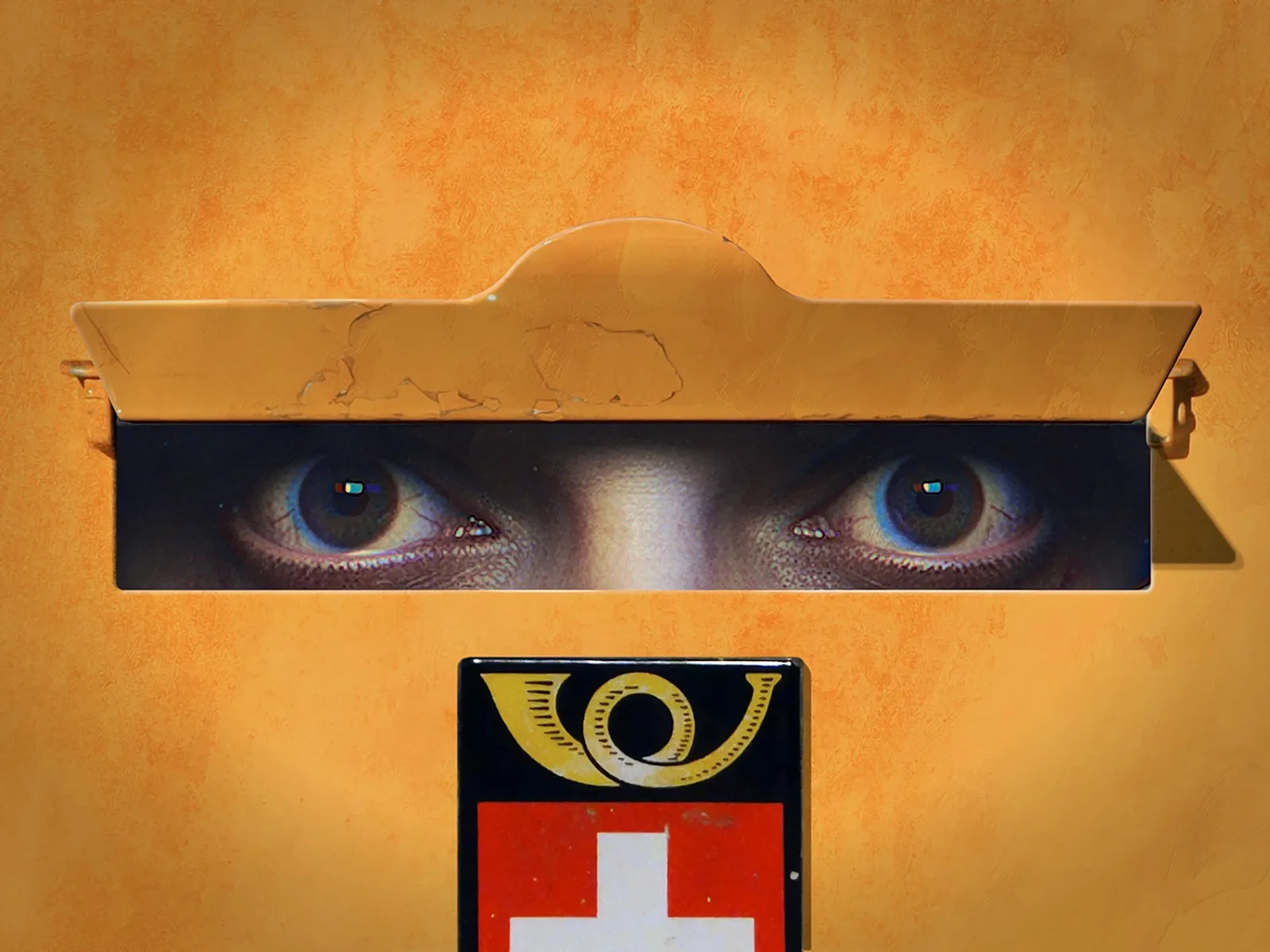
The postal service reads your mail. From the 20th century onwards, it mainly searched for messages written in invisible ink. Illustration by Marco Heer.

The right to privacy, except during wartime

During times of political unrest – especially during the two world wars – state censors monitored private as well as military correspondence. They made no attempt to hide their actions.

Nadja Ackermann

Nadja Ackermann

Nadja Ackermann is a scientific archivist responsible for company archives in the Burgerbibliothek Bern.
Mail secrecy is guaranteed in Switzerland under Article 13 of the Federal Constitution, which upholds the right to privacy. That means enclosed items sent by post may not be opened, nor may their contents be investigated in any way. Any reporting on an individual’s correspondence by mail is also forbidden. This fundamental right can only be curtailed subject to authorisation by the police or a court as part of a criminal prosecution or if there are grounds to suspect a crime is being planned, in which case mail can be opened to prevent a crime being committed. However, this right to privacy does not extend to missives with insulting or immoral content or that advocate criminal behaviour.
This very exception was an issue during the First World War: in order to ensure neutrality during the armed conflict, the post office was repeatedly instructed to remove “open insulting letters or enclosed letters with offensive references to monarchs or statesmen of countries at war” from circulation. The same rule applied to inflammatory press publications.
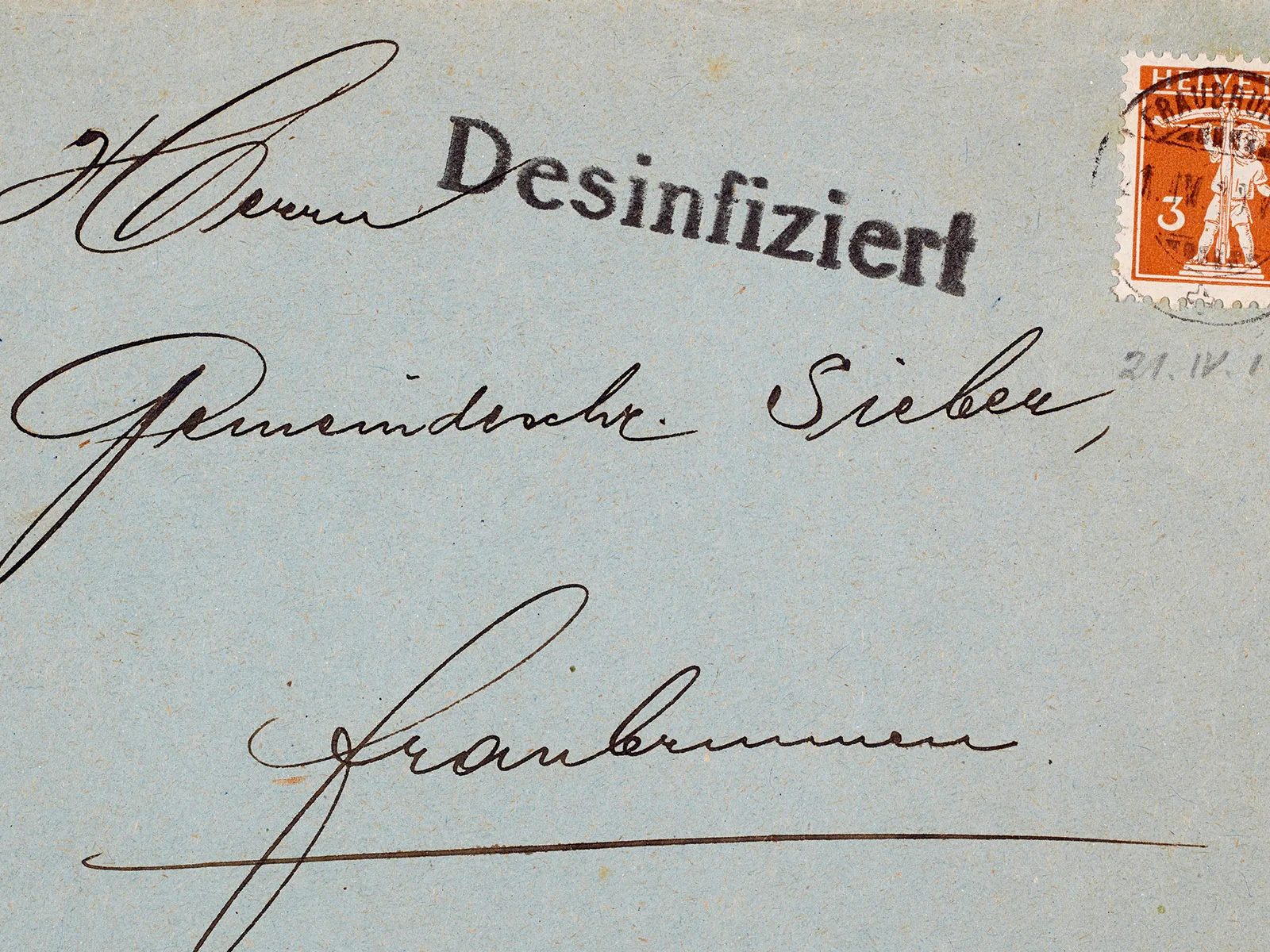
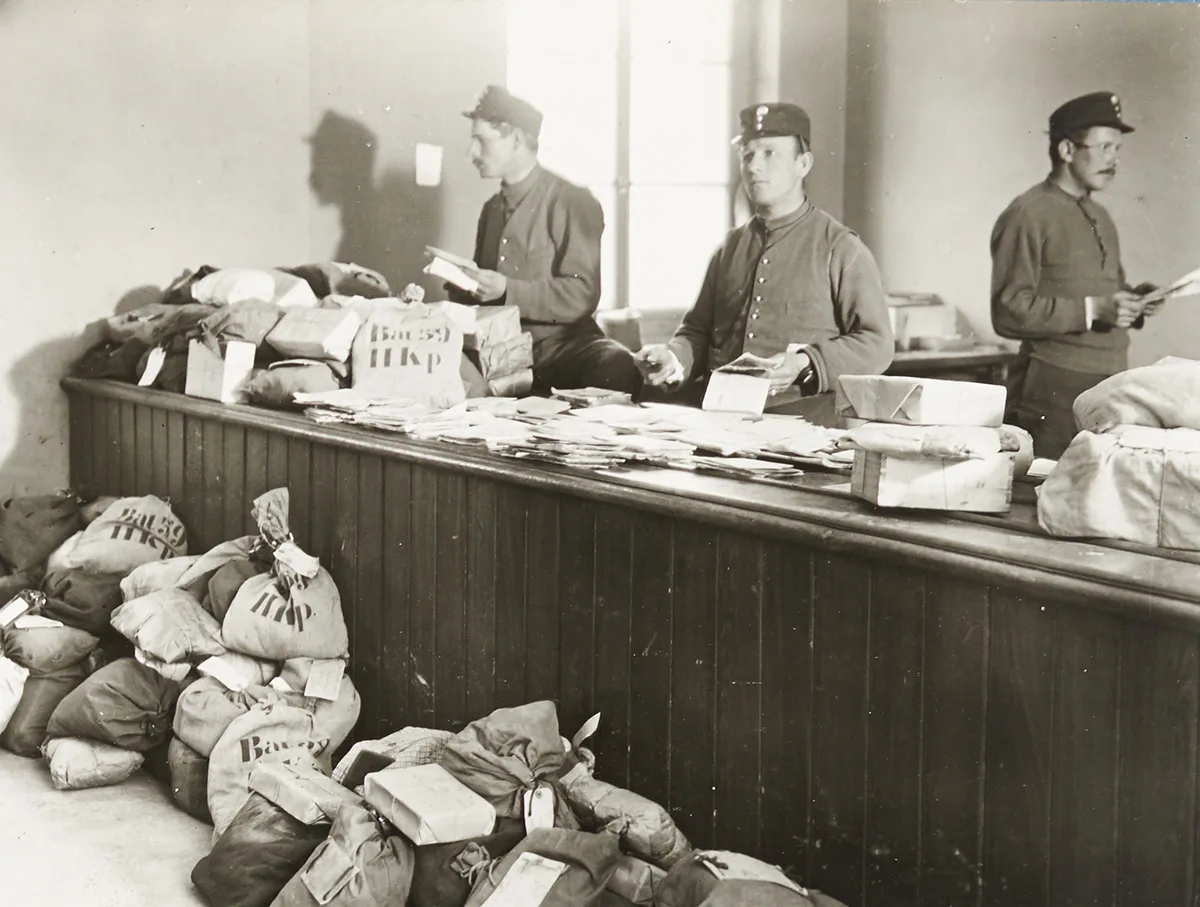
The Swiss Post was kept busy during the First World War. Not least due to censorship.
The Swiss Post was kept busy during the First World War. Not least due to censorship. Swiss National Museum
Swiss neutrality was put to the test once again in the run-up to the Second World War. From 1938, post office staff were repeatedly instructed not to deliver propaganda subversive to the state. After the war broke out, the military and police were also entitled to order the monitoring of letters, telegrams and telephone conversations involving persons suspected of “wanting to undermine or having already attempted to undermine national security”. However, the ways in which mail could be censored remained unspecified. Only the Federal Council had the authority to impose general censorship and even then, only with regard to militarily sensitive areas.
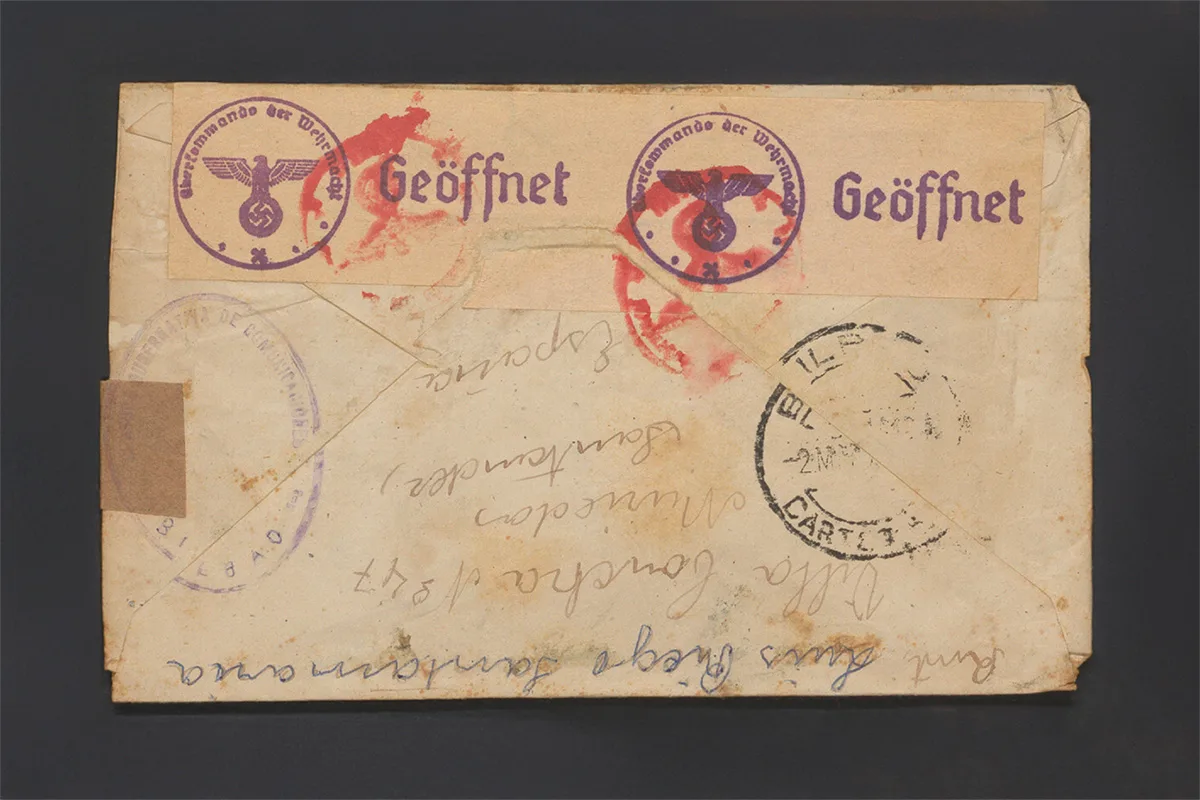
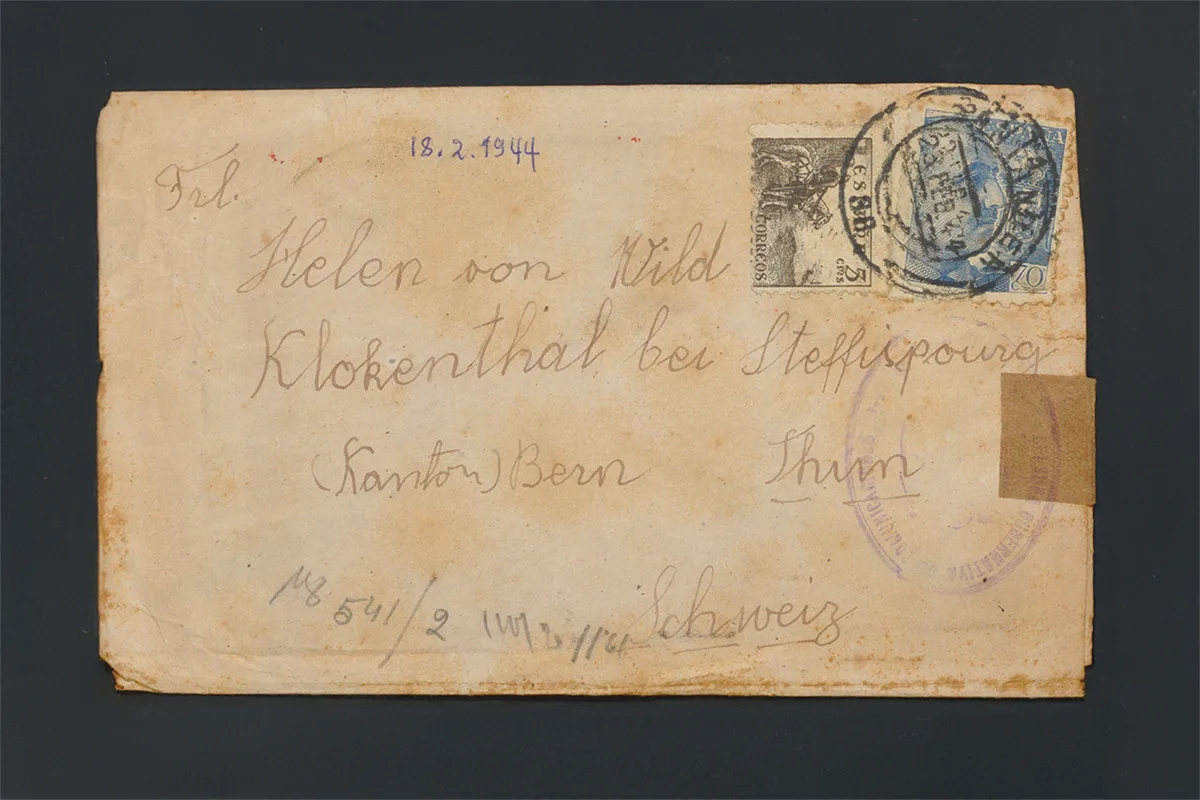
Even if neutral Switzerland did not systematically monitor its people, letters going out of or into the country were susceptible to foreign censorship. During both world wars, official censors of the belligerent nations monitored private as well as military correspondence. They made no attempt to conceal their actions: opened envelopes were closed with adhesive tape and stamped by the censors. It was all part of a deliberate strategy to let people know: “We are watching you.” The correspondence of Helene von Wild (1889–1970) from Bern, for example, shows traces of censorship.
Censored letter from 1944.
Letter, openend by german censors, 1944.
Envelopes stamped by the censor.

Between Bern and Barcelona
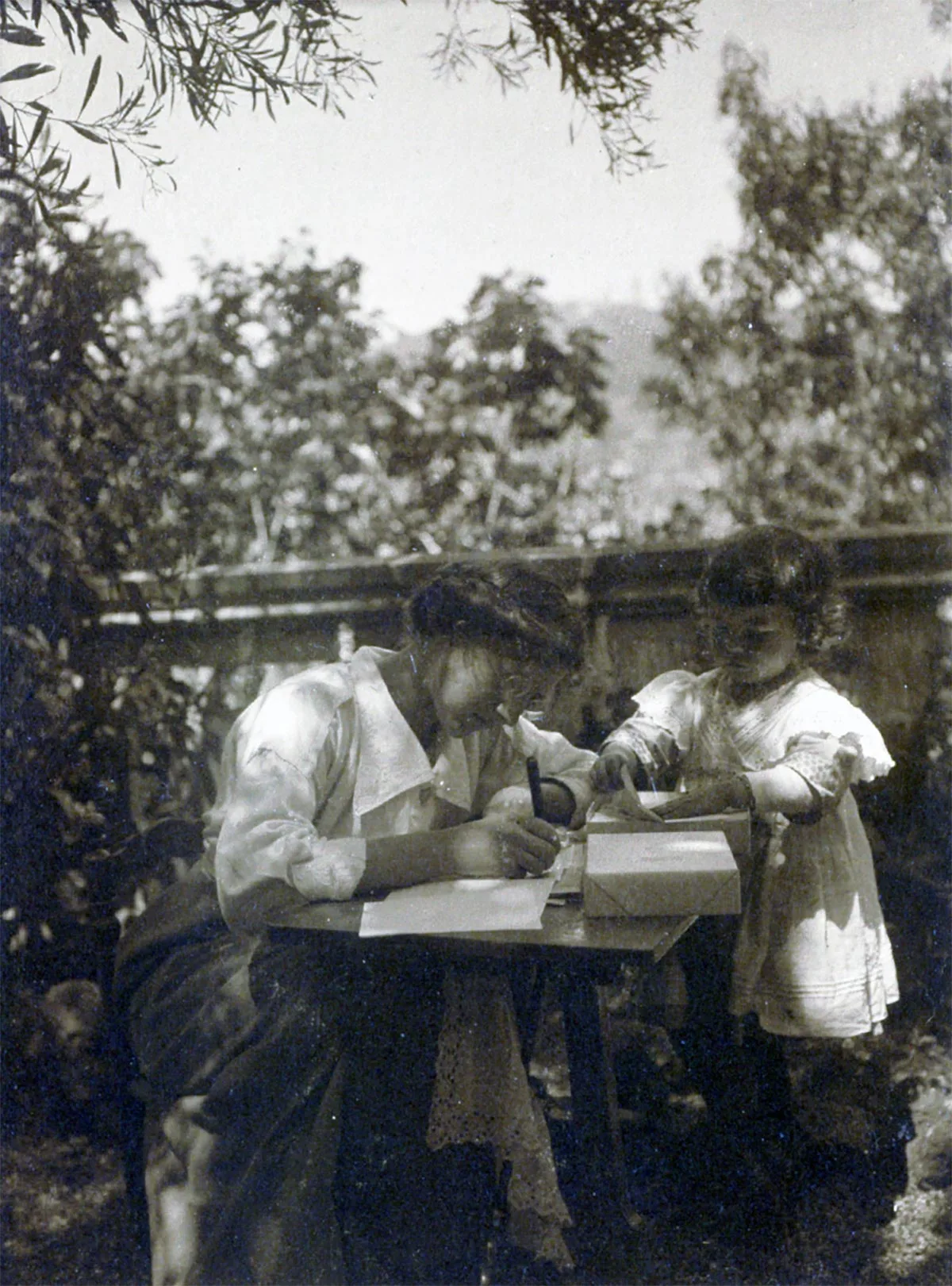
Helene was born in 1889 to pastor Emil Güder and his wife Emma in Aarwangen (canton of Bern). She married engineer Ernst von Wild (1874-1961) in 1910. He worked for a Spanish electrical company and she moved to Barcelona to be with him. Their three children – Ruth, Rudolf and Leni – were born there between 1913 and 1917 and attended the Swiss school. Suddenly confronted by the outbreak of the Spanish civil war in 1936, the family decided to return to Switzerland and stay with Helene’s parents for a while. They did all they could from there to help the people suffering from the war, by sending food parcels for example. After the end of the war the family considered returning to Barcelona. However things had changed so much that after three-and-a-half years Ernst, who had left to 'test the waters', ended up returning to his family in Steffisburg and they remained in Switzerland permanently.
Helene von Wild writing in Barcelona, ca 1920.
Helene von Wild writing in Barcelona, ca 1920. Burgerbibliothek of Berne

Appearances can be deceptive

However, their ties to Barcelona were too strong to ignore. The couple corresponded with friends in Barcelona, particularly during the difficult war years. The authorities clearly considered this international correspondence, which traversed Germany and France, to be suspect. That is why quite a few letters written by Helene von Wild between 1939 and 1945 had colourless and blue lines across the letterhead. What initially looked like ink smudges started to become annoying after three or so letters. In fact the smudges did not come from Helene, they were actually made by the German postal authorities as the letters were inspected by the German censors in Munich on their way from Switzerland to Spain.
The marks were actually the remnants of a chemical censorship method. Chemical solutions were applied to reveal any secret messages. The blue colouring showed messages written with an active agent that concealed the ink. The first industrially produced ink removers came on the market during the 1930s. The authorities feared they could be used to write secret messages. A letter, envelope or postcard was checked by painting blue or brown lines in watercolour over the writing from a top corner across to the bottom one and then probably inspecting  it in ultraviolet light for secret ink (hidden writing). This method would have revealed any concealed text.
The traces of chemical censorship are plain to see on this letter from 1942.
The traces of chemical censorship are plain to see on this letter from 1942. Burgerbibliothek of Berne

The smell of censorship

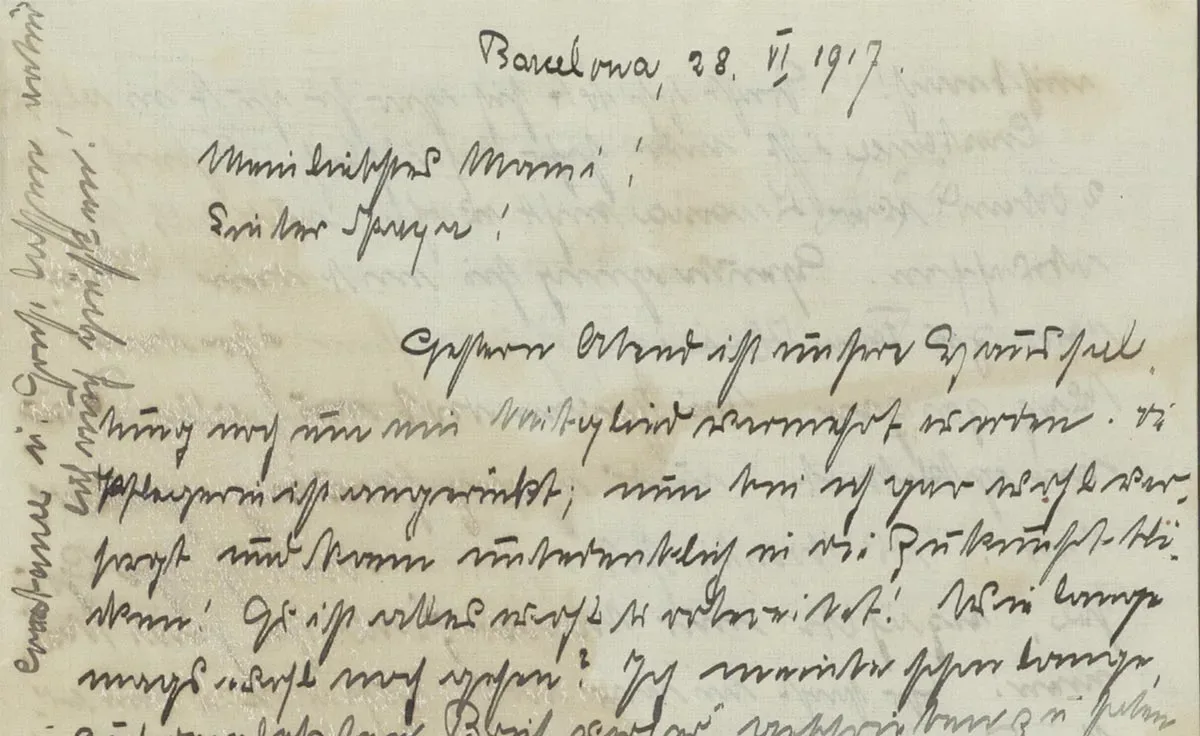
Letter censorship by chemical means predates the Second World War. Traces of similar procedures, albeit less sophisticated, are evident in Helene von Wild’s letters from 1917 and 1918. Written in Barcelona, they were addressed to her mother in Aarwangen. The letters were scoured by the Spanish censors for secret messages as seen by the stamp on the envelope. Granted, Spain was officially neutral in the First World War, but there was volatility simmering beneath the surface. In the summer of 1917, there was a general strike organised by socialists and anarchists in Barcelona. The authorities were alarmed and started monitoring letters, especially cross-border ones, such as those written by Helene von Wild.
Some of her letters from those days still emanate a pungent smell, others have a salty residue. Whereas other documents seem to have been fully impregnated. Samples of the solutions are similar to ones from later years, even if the invisible inks were more rudimentary: at the start of the 20th century, secret messages were written with salt solutions, which became visible when warmed up. Alternatively, people used aspirin and water to make secret ink. The application of a solution comprising alcohol, water, potassium nitrate, acetic acid and carbon tetrachloride revealed the hidden text. Maybe a similar solution was applied to Helene’s letters, which would explain the salty residue.
Letter written during the First World War with traces of chemical postal inspection.
Letter written during the First World War with traces of chemical postal inspection. Burgerbibliothek of Berne
Whether in the First or Second World War – the censorship did not only leave optical and chemical traces, but also systematic codes: combinations of letters and numbers on envelopes, letters and even photographs. These visible traces of censorship probably caused many letter writers to toe the line: better to write nothing that you would not want to be seen by a third party.

von Wild family archive

The censorship of private mail is documented in detail in the von Wild family archive. The inspected letters are more than informal documents. They illustrate a form of censorship reaching deep into private communication. The Burgerbibliothek Bern has released the family’s archive and made it accessible via catalogue.
Further posts