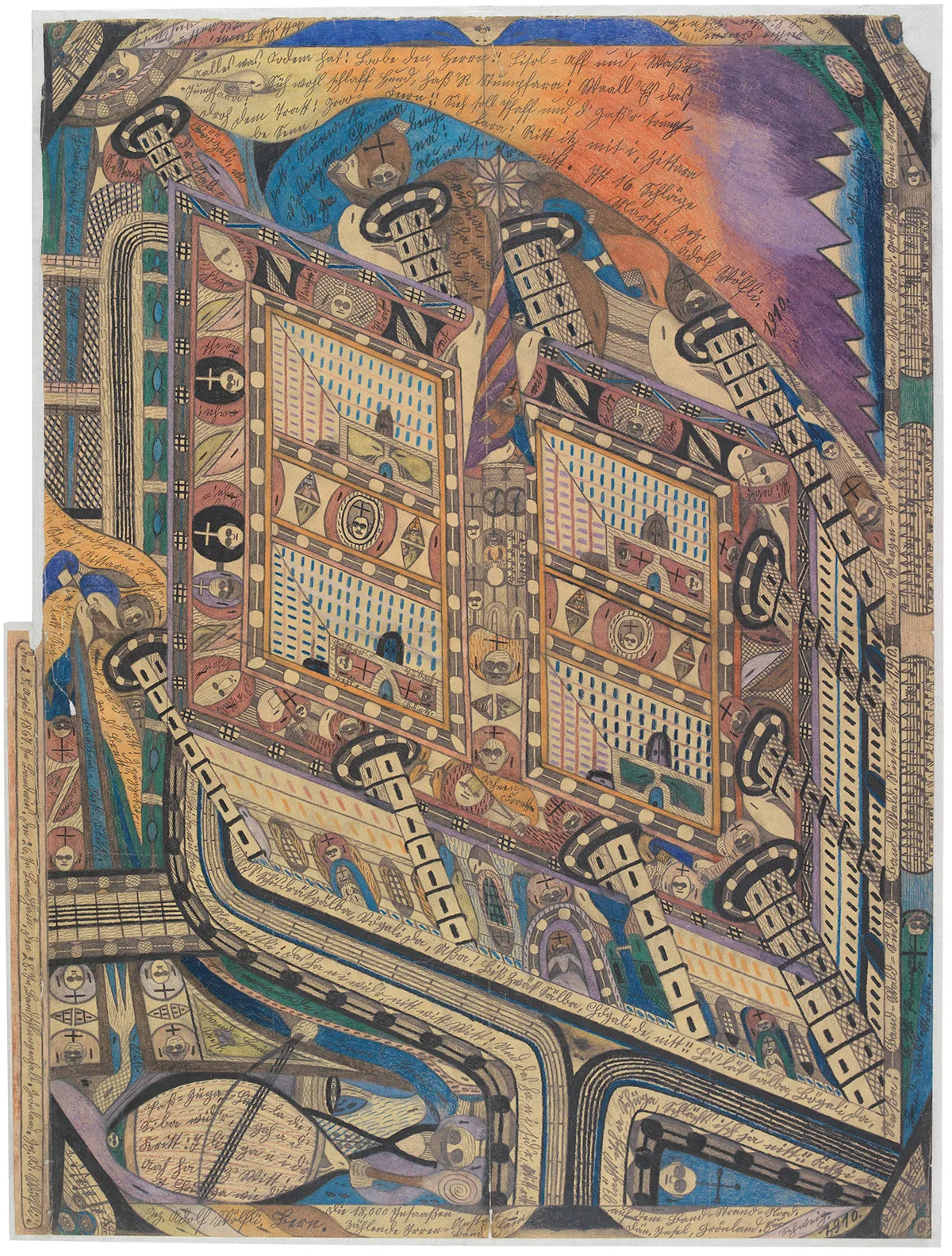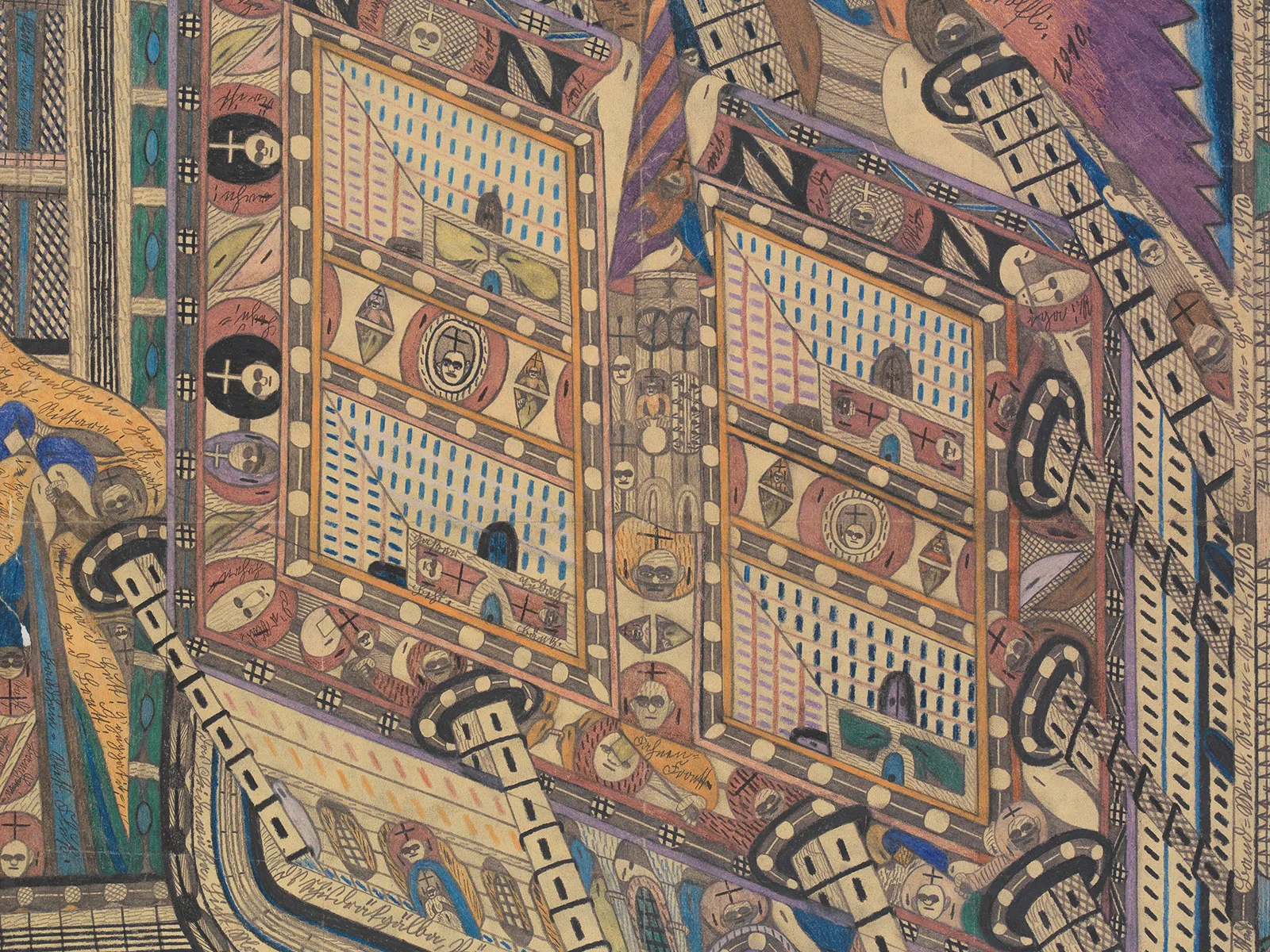
Adolf Wölfli is one of the best-known Swiss proponents of ‘Art brut’ or outsider art. Detail from ‘Irren=Anstalt Band=Hain’, 1910, pencil and coloured pencil on newspaper.
Adolf Wölfli is one of the best-known Swiss proponents of ‘Art brut’ or outsider art. Detail from ‘Irren=Anstalt Band=Hain’, 1910, pencil and coloured pencil on newspaper. Adolf Wölfli-Stiftung, Kunstmuseum Bern

The art of madness

‘Outsider art’ is now an established term in the field of art history. In the early 20th century, works by people who stood outside established social and artistic conventions began to gain recognition. A patron of this art was Bernese psychiatrist Walter Morgenthaler.

Sophie Dänzer

Sophie Dänzer

Sophie Dänzer is a cultural scientist and works as an exhibition coordinator at the Swiss National Museum.
Swiss cantons began setting up their own psychiatric institutions in the 1840s. At the same time, an administrative and legal system was emerging to govern what was termed ‘asylums and lunacy’. Social beliefs were defined in terms of norm and deviation: anyone who failed to fit into this mould was deemed ‘mentally ill’.
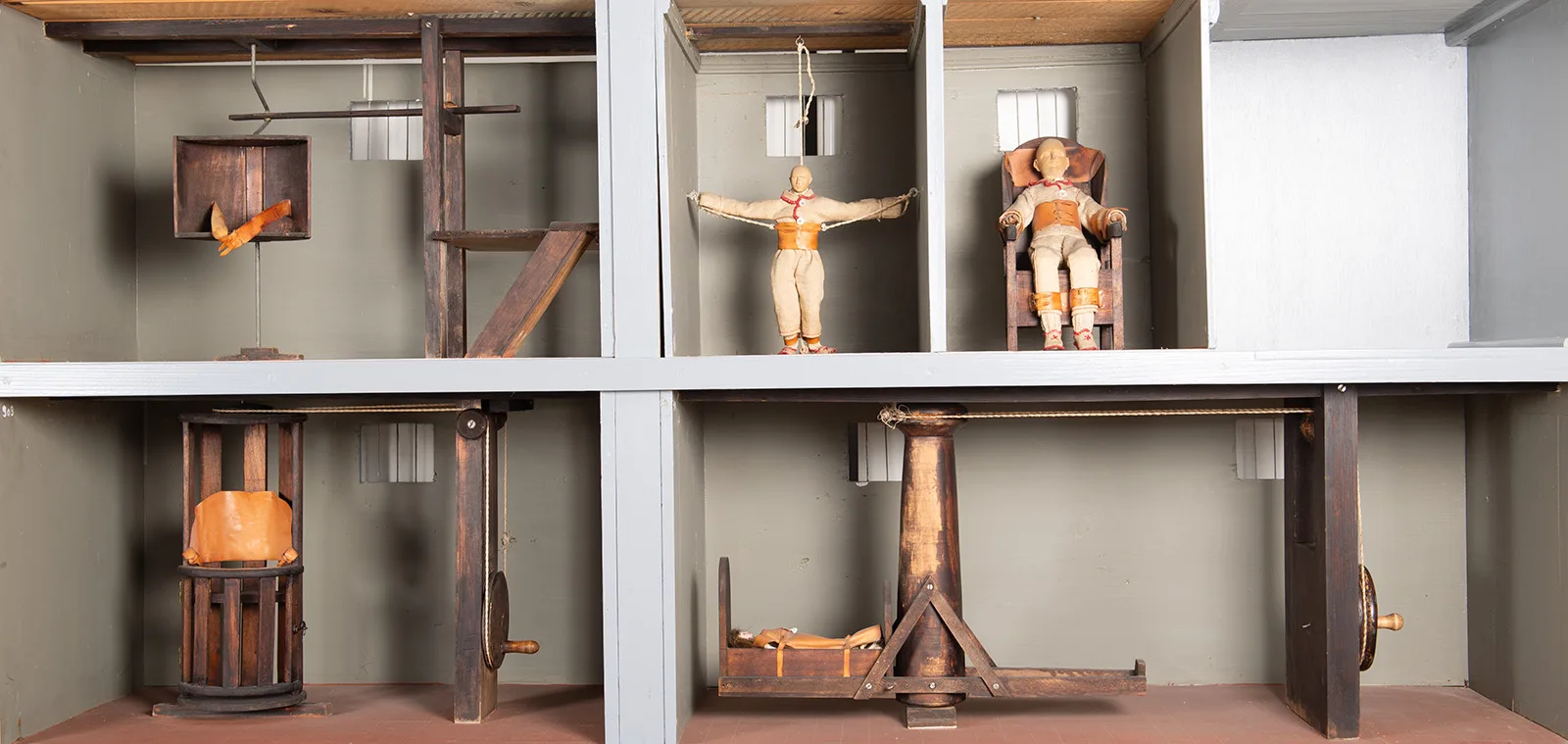
The clinics became places of medical testing. As well as medical observations, corporal methods were used, such as restraint chairs, rotational machines and emetics. They drew on a mechanical understanding of the mind, which had been shaped by the Enlightenment.
The model shows physical treatment methods according to German doctor Ernst Horn (1818). Swiss psychiatrist Dr Walter Morgenthaler produced the model for Switzerland’s national exhibition in Bern in 1914.
The model shows physical treatment methods according to German doctor Ernst Horn (1818). Swiss psychiatrist Walter Morgenthaler produced the model for Switzerland’s national exhibition in Bern in 1914. Psychiatrie-Museum Bern
New treatment methods sought to better understand mental disorders. But the various disorders were not only explored through physical interventions. From a very early stage, creative pursuits – such as drawing or writing – were part of many patients’ daily routines. Selected works found their way into patients’ medical records. Many clinics therefore started collecting pictures as early as the 19th century.

Art, the mind and science

Such collections existed in many cantons. They consisted of drawings, embroideries, small-format pictures and three dimensional objects that patients had produced during their inpatient stays. These collections mainly served diagnostic and documentary purposes, whereby doctors tried to draw conclusions about diseases based on visual worlds and imagery. The aesthetic quality barely featured at first; the key thing was the perceived ‘abnormality’ in the visual expression.
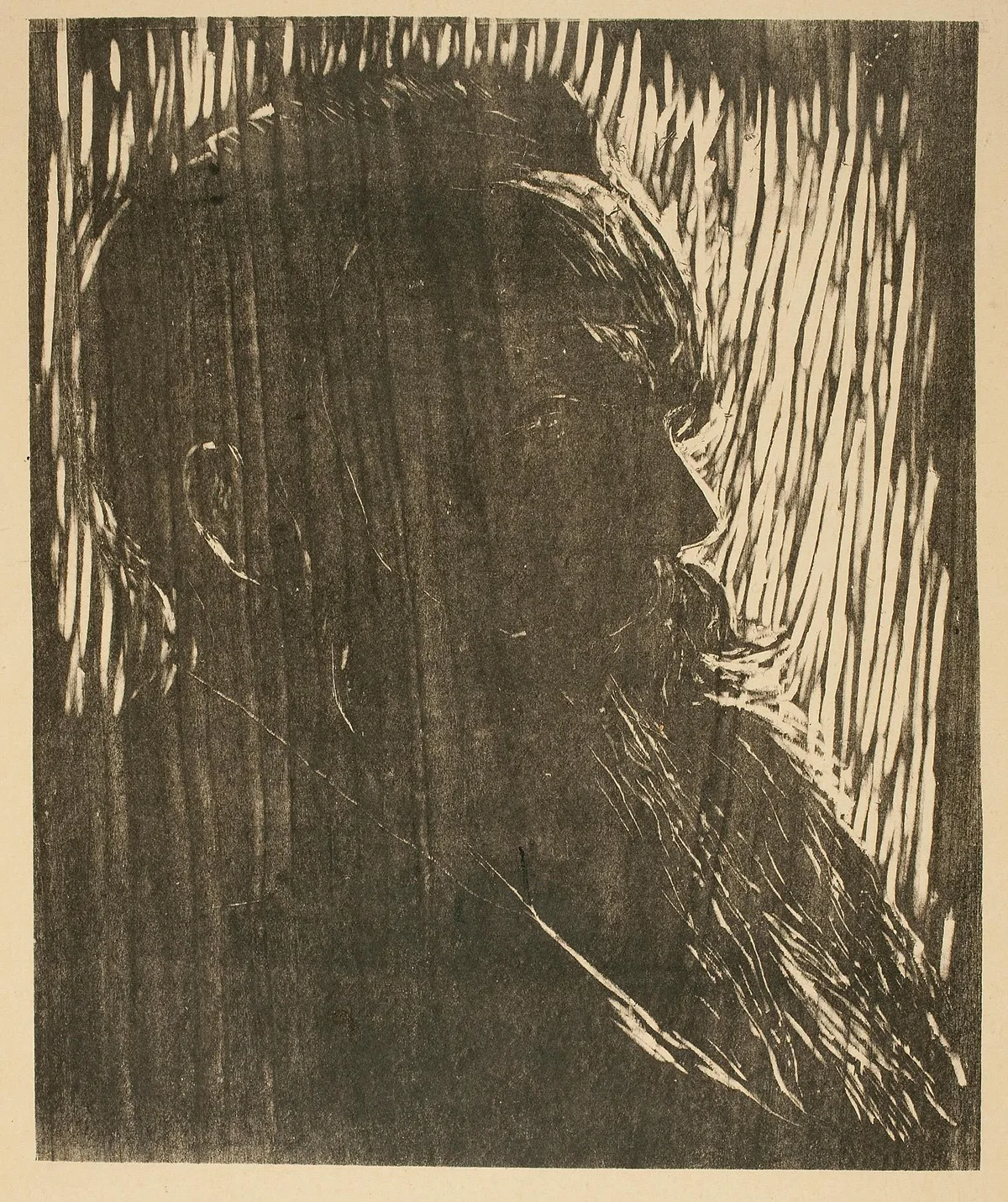
In the second half of the 19th century, there was growing interest as scientific publications supplemented the purely psychopathological view of works by mentally ill patients to include an examination of their creativity and expressiveness. An early exponent of this was French psychiatrist Paul Gaston Meunier (1873–1957) who published under the name Marcel Réja, and described artistic works by patients from a fresh perspective.
Marcel Réja in a print by Edvard Munch, 1896-97.
Marcel Réja in a print by Edvard Munch, 1896-97. Wikimedia
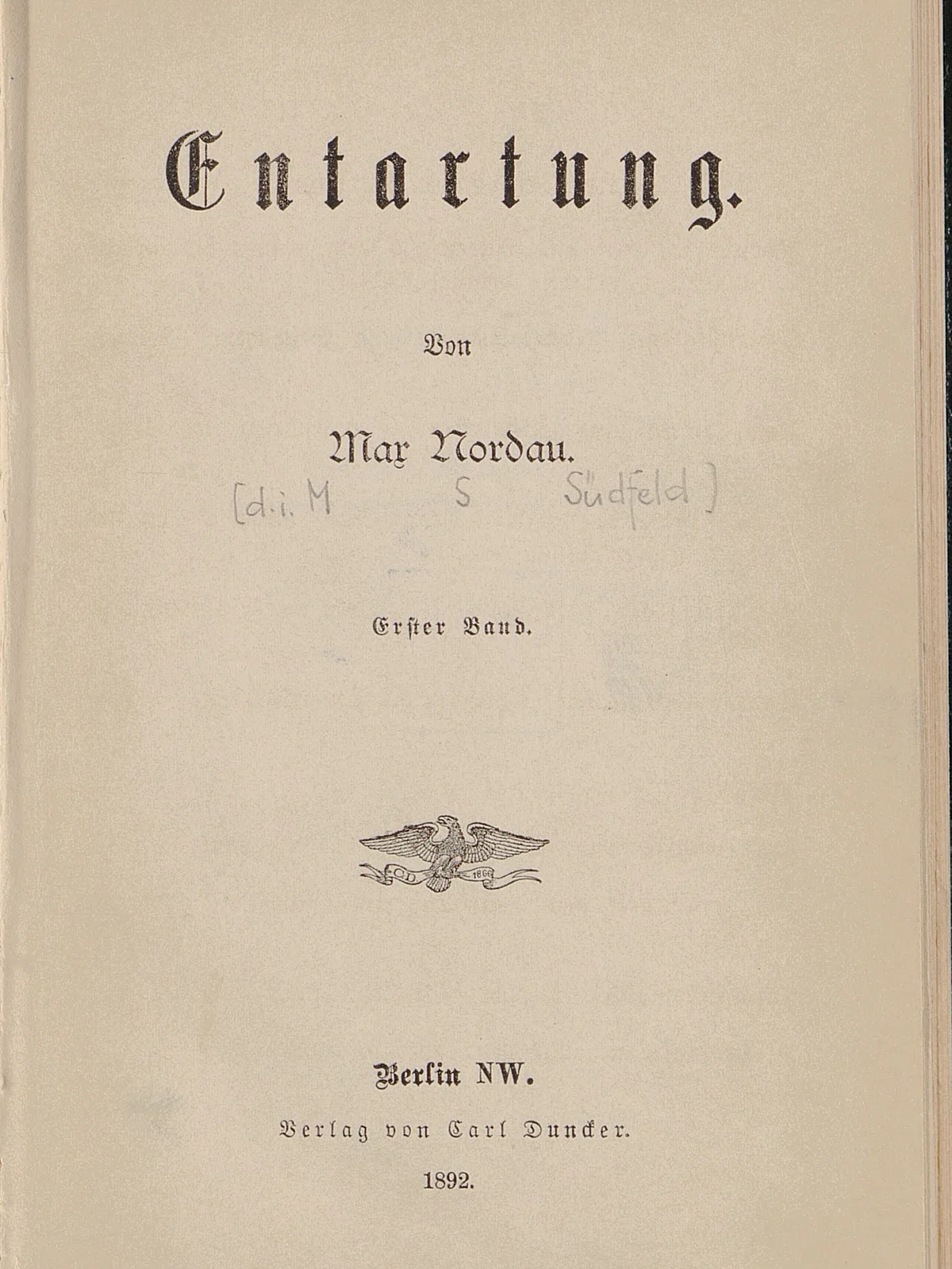
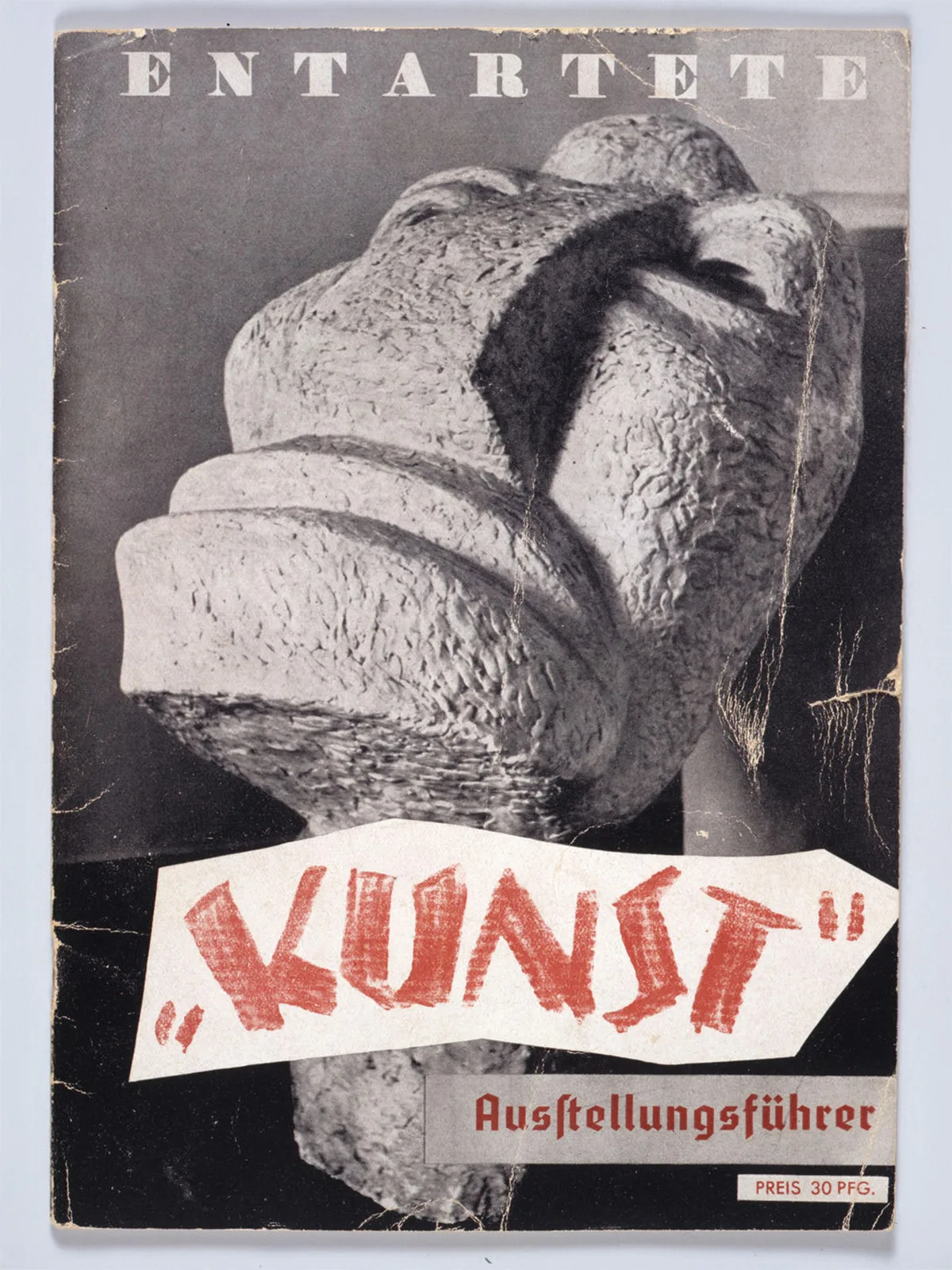
The convergence of art and the psyche was not only driven by doctors, but also by artists. The visual worlds became increasingly abstract and ambiguous. In this context, Jewish writer and doctor Max Nordau (1849–1923) introduced the concept of ‘degenerate’ art in the 1890s. He classed fin de siècle works that had an emotional, asymmetrical or dreamily surreal effect as abnormal. The term ‘degenerate art’ would go on to be used by the National Socialists to label modern artists as somehow morbid and deviant.
Max Nordau introduced the term ‘degeneration’ in 1892. Title page of the first volume.
Max Nordau introduced the term ‘degeneration’ in 1892. Title page of the first volume. University and State Library Düsseldorf
Exhibition guide ‘Degenerate art’, 1937
Exhibition guide ‘Degenerate art’, 1937 German Historical Museum
Around the turn of the 20th century, the examination of dreams and unconscious images gained greater prominence. Sigmund Freud’s theory of the unconscious mind, his interpretation of dreams and his method of allowing patients to speak freely on the couch had a lasting impact on our understanding of people’s inner lives. Meanwhile, Carl Gustav Jung developed the process of active imagination, or creatively engaging with the images from one’s mind and imagination. This gave rise to a field in which art, psychology and medicine were closely intertwined.

The Walter Morgenthaler collection
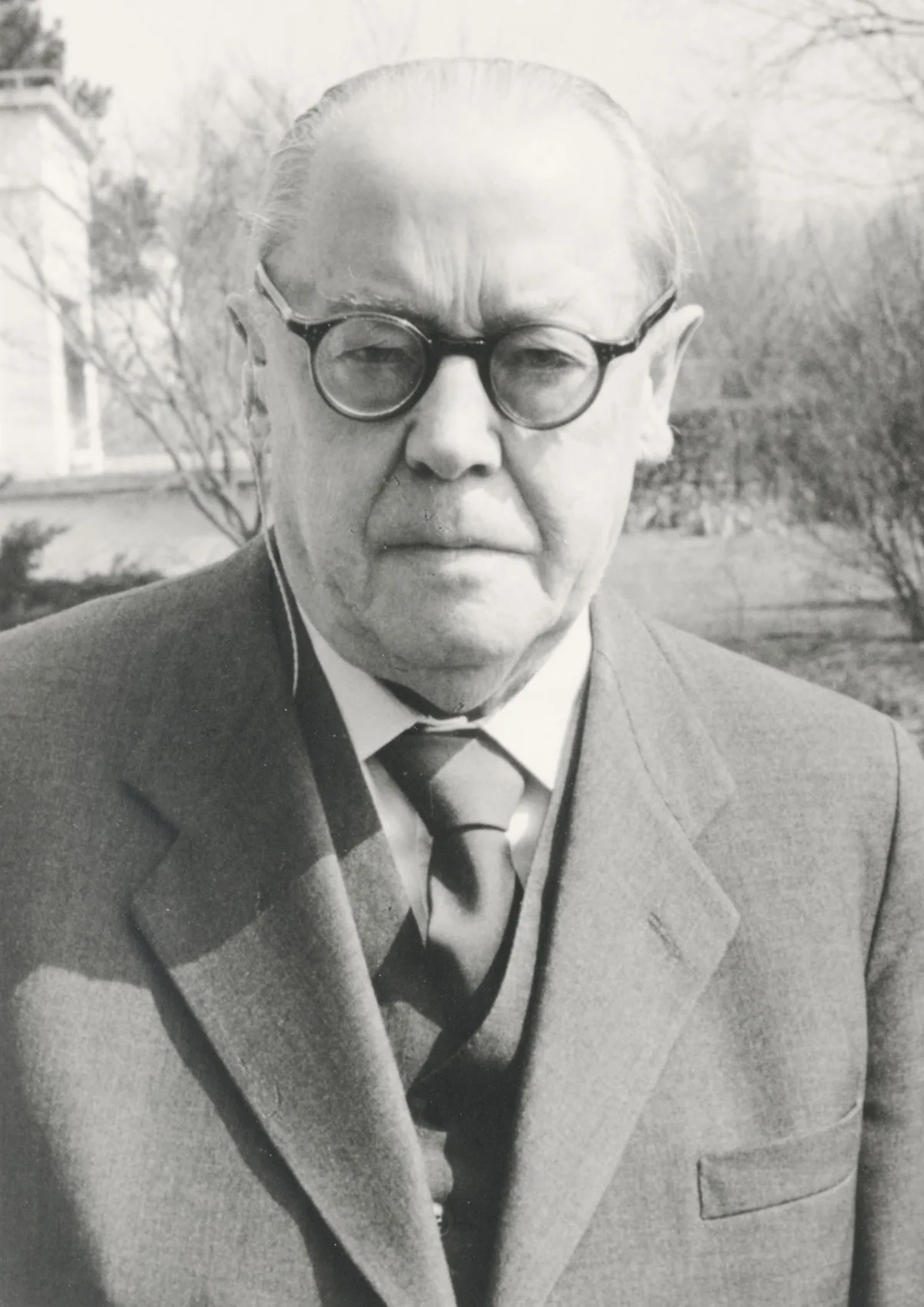
Swiss psychiatrist Walter Morgenthaler (1882–1965) started his career against this backdrop. He worked as an assistant physician with Eugen Bleuler at Zurich’s Burghölzli clinic, where he came into contact with Freud’s psychoanalysis and took a creative approach to the unconscious. In 1908 he moved to what was then known as the ‘Waldau asylum’ in Bern. He later worked in Basel and Münsingen, before moving back to Waldau as a senior physician, and finally becoming head of department in Münchenbuchsee.
Walter Morgenthaler, 1962.
Walter Morgenthaler, 1962. Psychiatrie-Museum Bern
Like many of his colleagues, Morgenthaler got his patients to draw. But his view was different as he recognised the individual, artistic potential in the works, rather than seeing them purely as diagnostic material.
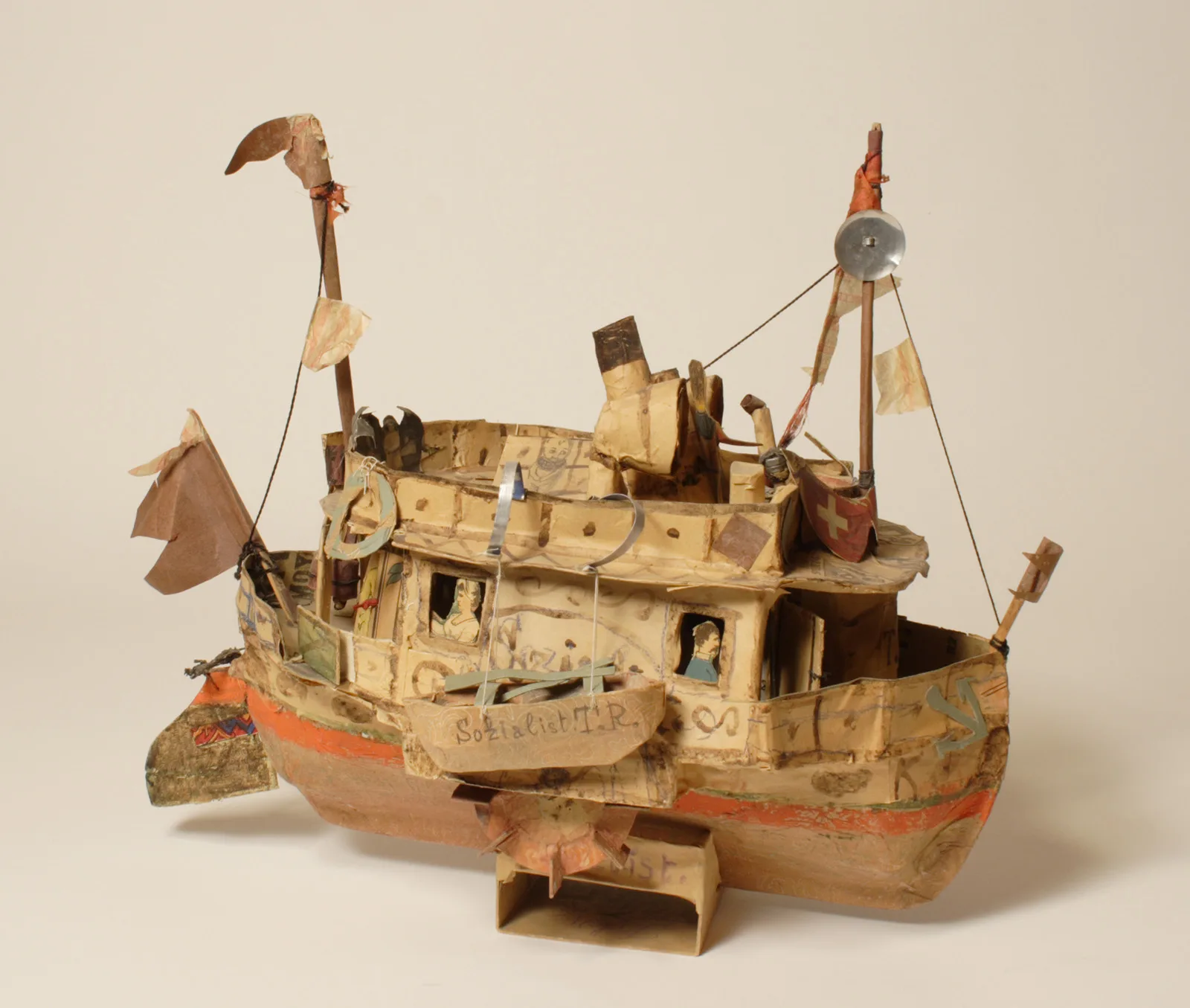
Work by Karl Schneeberger (1880-1948), ‘The ‘Socialist’ model ship’, 1922. Messages are located inside.
Work by Karl Schneeberger (1880-1948), ‘The Socialist model ship’, 1922. Messages are located inside. Psychiatrie Museum Bern
In 1914, Morgenthaler set up a museum of psychiatry in conjunction with the national exhibition at the Waldau. Besides objects related to the history of psychiatry, it showcased pictures from the clinic’s collection. They included many works by Adolf Wölfli (1864–1930). Wölfli was a long-time patient at the Waldau. Morgenthaler studied how urges and impulses were expressed in artistic form. Over time, Wölfli explicitly referred to himself as an artist and was also seen as such by the outside world. He even received commissions and was able to sell his artworks.
‘Irren=Anstalt Band=Hain’ by Adolf Wölfli, 1910, pencil and coloured pencil on newspaper.
‘Irren=Anstalt Band=Hain’ by Adolf Wölfli, 1910, pencil and coloured pencil on newspaper. Adolf Wölfli-Stiftung, Kunstmuseum Bern
Through the study ‘Ein Geisteskranker als Künstler. Adolf Wölfli’ (‘Adolf Wölfli: a mental patient as artist), which Morgenthaler published in 1921, both Wölfli and Morgenthaler achieved international recognition. The book developed as a sort of artist’s biography, in which Wölfli features not merely as an anonymous case number, but is mentioned by name and explicitly recognised as an artist. While Morgenthaler was initially ridiculed in expert circles, the book resonated strongly with some individuals, such as the writer and psychoanalyst Lou Andreas-Salomé, who recommended it to Sigmund Freud.
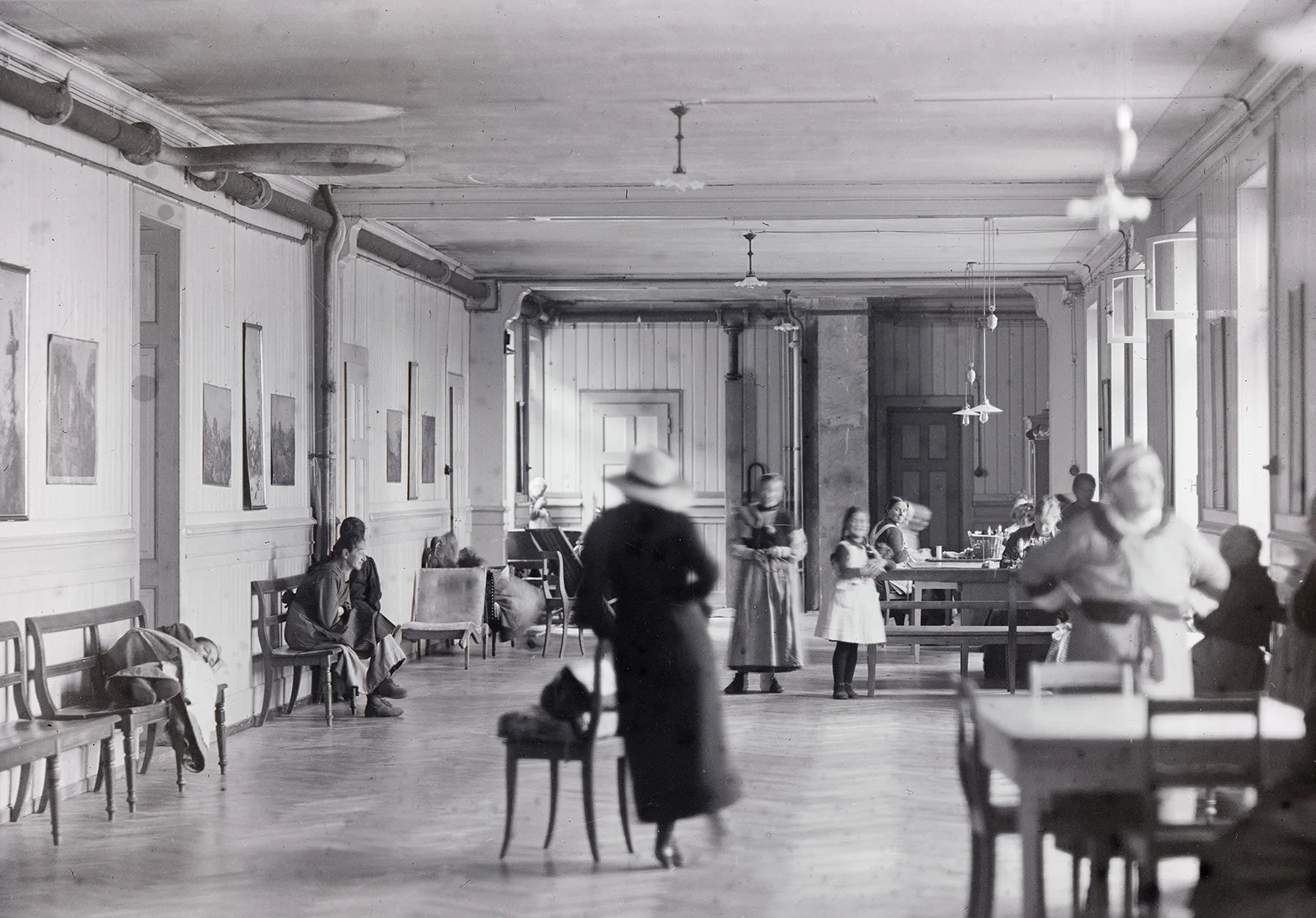
Recreation room at Waldau clinic near Bern, undated.
Recreation room at Waldau clinic near Bern, undated. Psychiatrie Museum Bern

Contemporary debates and parallel developments
How did Morgenthaler manage to position the study about the patient Wölfli less as a psychological work but rather as an artist’s biography? And how did it achieve great recognition from the art world?
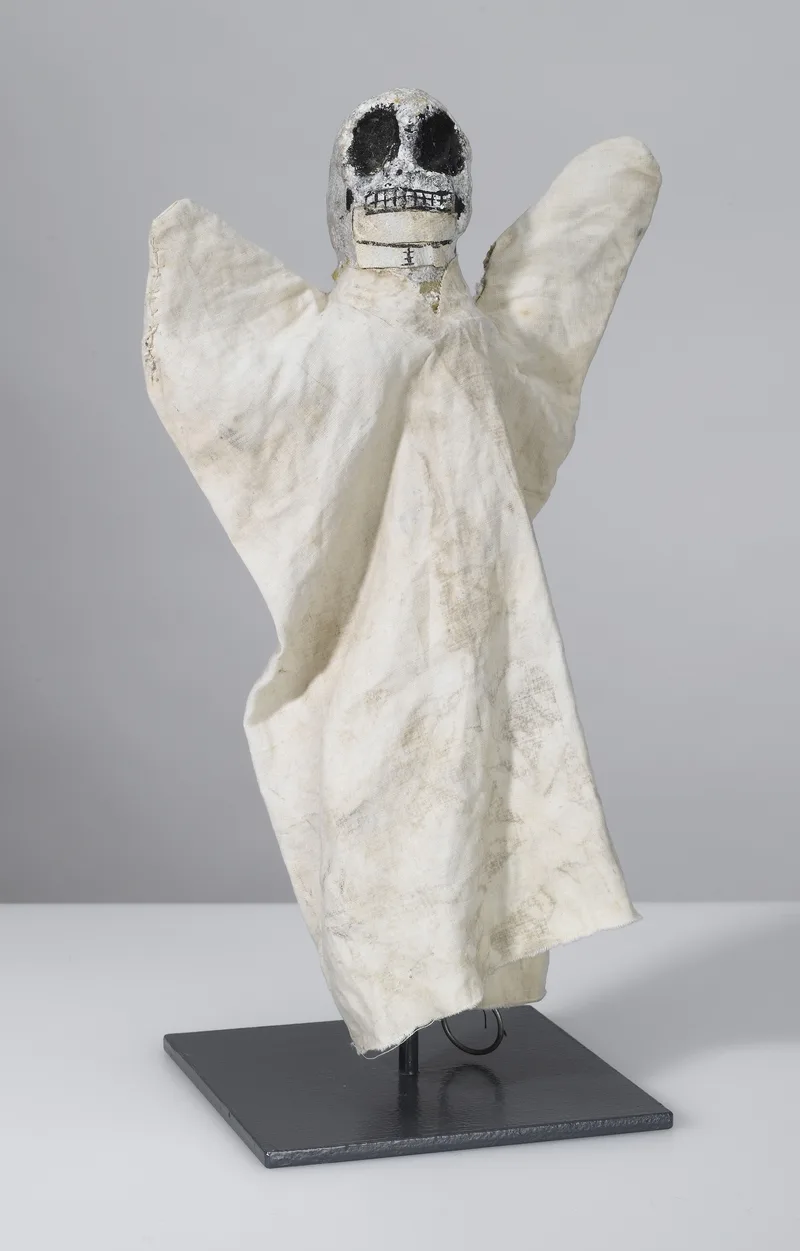
One answer may lie in Morgenthaler’s inner circle: his brother, Ernst Morgenthaler, was a well-connected artist in the Swiss cultural scene and was acquainted with the likes of Robert Walser, Cuno Amiet and Hermann Hesse. His wife, Sasha Morgenthaler, was a prominent puppet designer and sewed the clothes for Paul Klee’s first hand puppets. These close links to the art world may have influenced Walter Morgenthaler’s view of his patients’ works more than was usual in specialist medical discussions at the time.
‘Untitled hand puppet (Mr Death)’, by Paul Klee 1916.
‘Untitled hand puppet (Mr Death)’, by Paul Klee 1916. Zentrum Paul Klee / Wikimedia
The connection between art and psychology, and the examination of psychiatry, images and artistic expression was a subject that flourished in the 1910s. Just a year later, the book ‘Artistry of the Mentally Ill’ by doctor and art historian Hans Prinzhorn was published, which would later become a seminal work for the surrealists. Whether Prinzhorn was directly inspired by Morgenthaler is unclear, but he mentions Morgenthaler’s book in a comment – a sign that the debate was already under way.

Avant-garde sentiment

After the outbreak of the First World War, avant-garde trends changed the artist’s perspective. Rationality and bourgeois standards came under fire, while anti-academic forms of expression gained momentum. The Dada movement in Zurich is just one example of how artists were consciously breaking with convention. This openness also promoted interest in forms of expression that emerged outside of the artistic mainstream. Art was supposed to be in touch with life, real, transgressive, and removed from logic and rationality.
Over the course of the 1920s, the structure of day-to-day life in clinics was changing, as the advent of occupational therapy meant that artistic creation largely moved away from therapeutic settings to recreational ones. After Morgenthaler left the clinic in Waldau, the museum and collection took a backseat.
Patients working as roofers on the burnt-out barn in Waldau, 1921.
Patients working as roofers on the burnt-out barn in Waldau, 1921. Psychiatrie Museum Bern

From the psychiatric archive to recognition by museums
The avant-garde spirit, abstract works and free experimentation in art were not universally popular, however. From the very beginning, the works faced opposition. The National Socialists reclaimed the term ‘degenerate art’ to label avant garde artists as sick.
In the aftermath of the Second World War, a cultural scepticism took hold and there was growing need for a radical new beginning in art. French artist Jean Dubuffet travelled to Switzerland in 1945 in search of unadulterated, impulsive and anti-intellectual art. He visited psychiatric clinics and studied art created by patients in mental institutions, including those by Adolf Wölfli. He was fascinated by the authentic creation – artworks that had been produced without any previous traditional knowledge. This prompted Dubuffet to set up the Companie de l’Art Brut in Paris. This is how the works, which had been created outside of the academic tradition and often in psychiatric clinics, were first recognised as a distinct concept and given their own name.
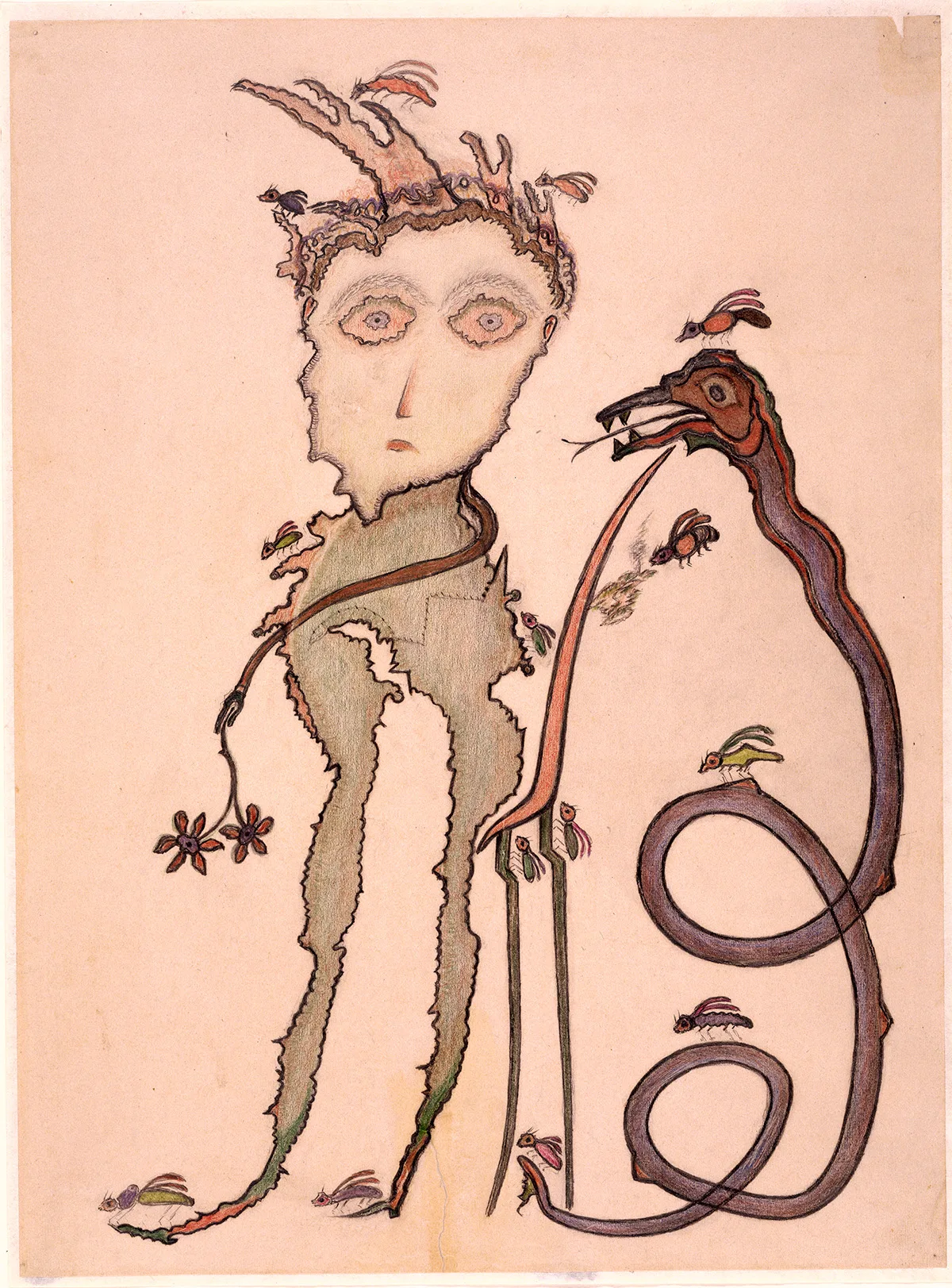
Heinrich Anton Müller, L’HOMME AUX MOUCHES ET LE SERPENT, between 1925 and 1927, coloured pencil on paper.
Heinrich Anton Müller, L’HOMME AUX MOUCHES ET LE SERPENT, between 1925 and 1927, coloured pencil on paper. Collection de l’Art Brut, Lausanne
It was almost 30 years, however, before this art form found its way into museums and gained wider public recognition. Only in the late 1960s as the anti-psychiatry movement gained ground did the works re-emerge from the shadows of medical records.
Jean Dubuffet donated his collection to the city of Lausanne in the 1970s, and this now forms the basis of the Collection de l’Art Brut collection.At the same time, the Adolf Wölfli Foundation was set up at the Kunstmuseum in Bern, and this is where most of his works are still held today. The establishment of the foundation was initiated by Swiss curator Harald Szeemann, who had played a major role in shaping the exhibition practice in the museums. It was also Szeemann who presented Wölfli’s work at documenta 5 in Kassel, thereby helping Wölfli achieve international fame as an artist.
While the collection of Hans Prinzhorn, the doctor mentioned above, grew to 8,000 objects and the eponymous museum in Heidelberg is still an important place for art created by people with exceptional psychological experiences, the Morgenthaler collection with its 5,000 objects has yet to be fully catalogued.
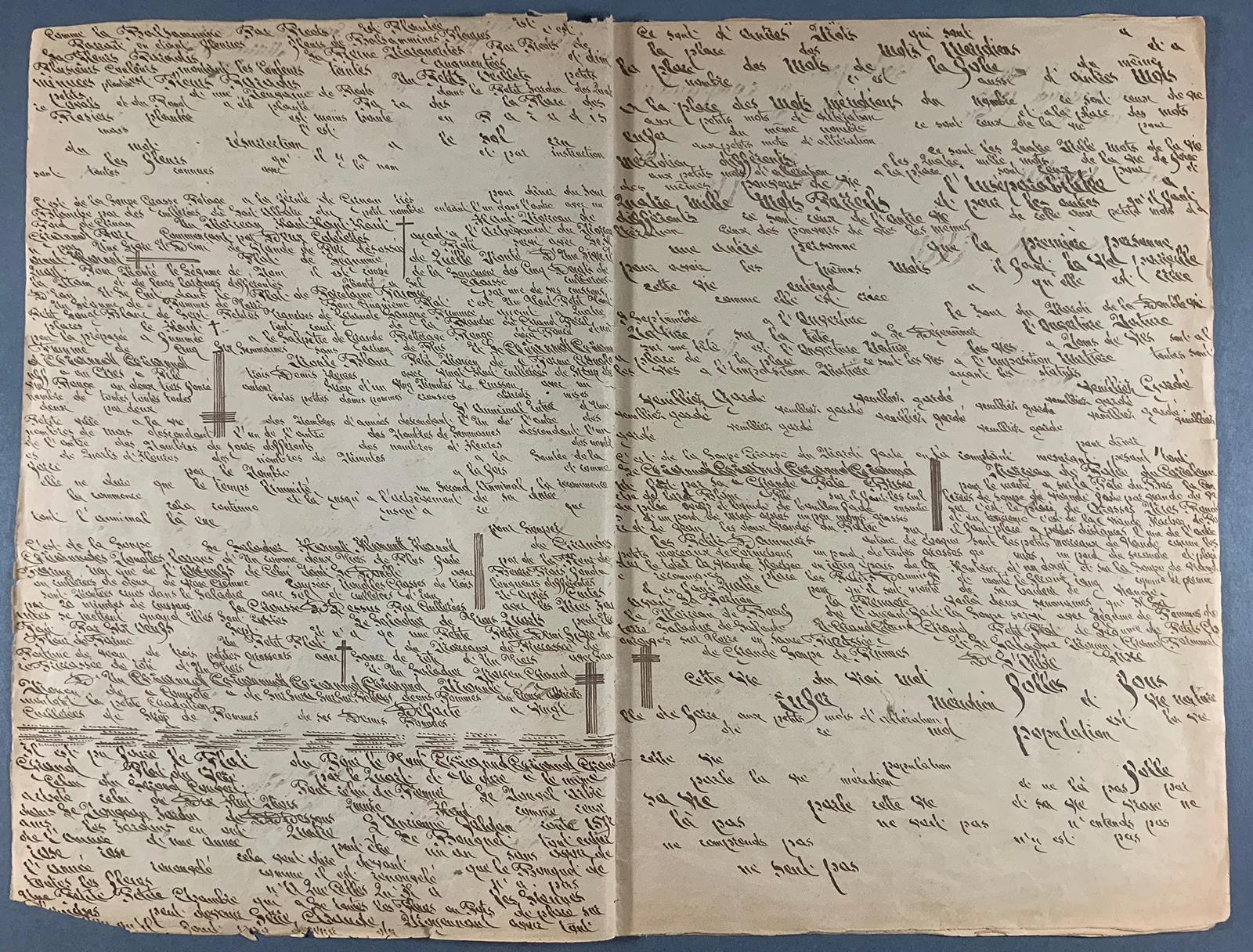
Constance Schwartzlin-Berberat, journal between 1891 and 1909.
Constance Schwartzlin-Berberat, journal between 1891 and 1909. Psychiatrie Museum Bern

Further posts