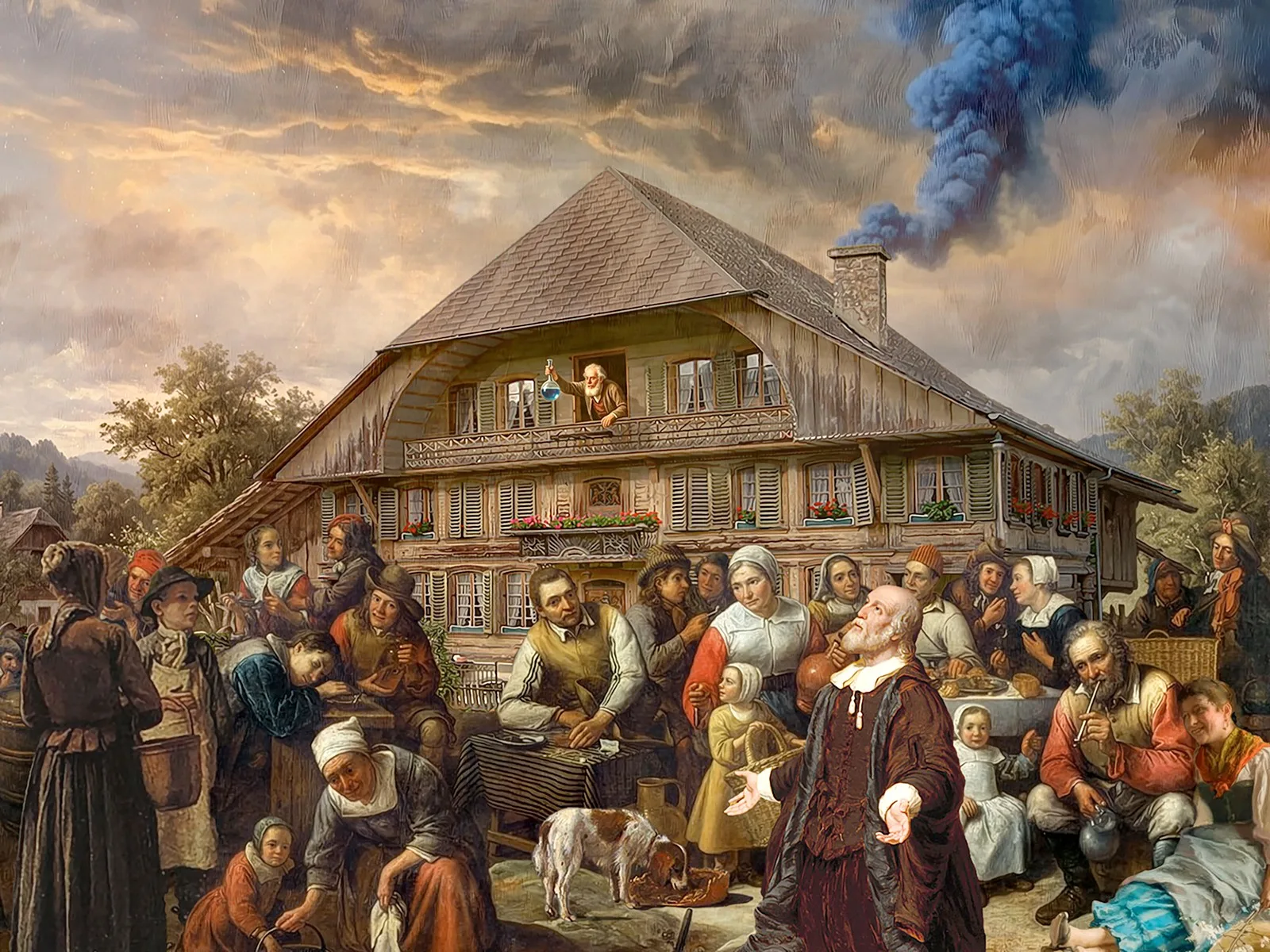
In the mid-19th century, a healer drew crowds to Worb in the canton of Bern. Illustration by Marco Heer
In the mid-19th century, a healer drew crowds to Worb in the canton of Bern. Illustration by Marco Heer.

Längmatthansli and the state crackdown on quack doctors

A healer from Worb in Bern attracted a mass following during the 1840s. However, there was controversy surrounding the methods employed by ‘Längmatthansli’ as he was known and some of his patients even died after being treated by him.

Patrik Süess

Patrik Süess

Patrik Süess is a freelance historian.
When thick yellow smoke came out of his chimney, ‘the master’ Johannes Brechbühl had withdrawn to his secret cabinet in the attic and was struggling with the spirits to force them to reveal their latest secrets. Then the pilgrims who had travelled from near and far to see him sometimes had to wait days and nights in front of his imposing farmhouse. The crowd sang and prayed in the open air to pass the time spent waiting. People from all levels of society from the simple farmer to the distinguished patrician all stood together united in their hope to find healing. When blue smoke finally billowed out of the chimney, the mood shifted to excitement and eager anticipation: the master had finally deigned to return from his higher plane and devote himself to the suffering and ailments of this world.
The people were happy to wait as they knew that Johannes Brechbühl from Längmatt near Worb, known as ‘Längmatthansli’ to his followers “had the gift”. If someone had been chosen to recognise and cure diseases, he was that person. He kept an extensive collection of medical products in his house including a well-equipped laboratory with distillation and extraction devices. Brechbühl’s impressive library included classical works on medicine and surgery as well as books on astrology, alchemy, magic and the occult, black magic, mysticism, chiromancy and palmistry.
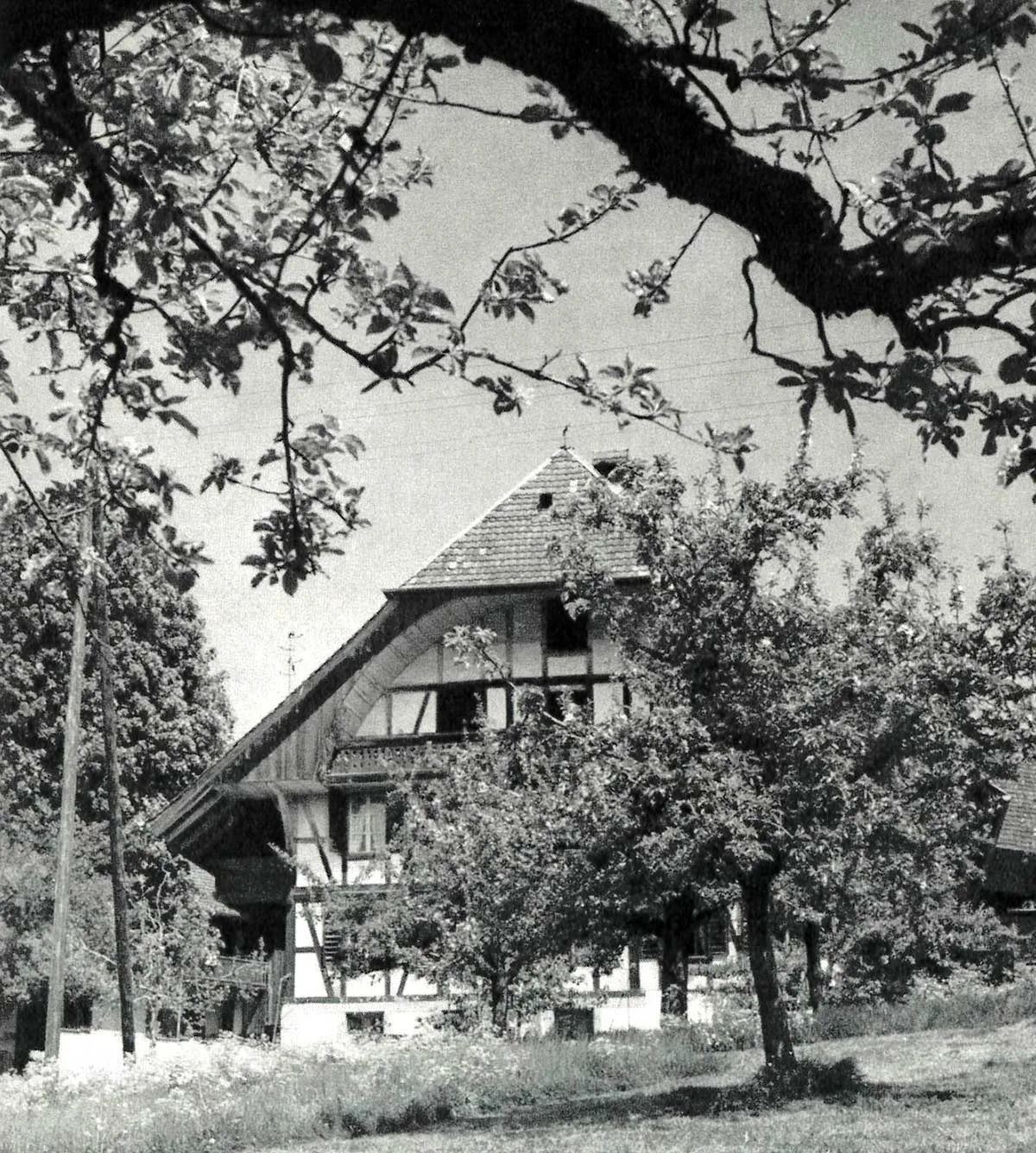
The Längmatt house, photographed in the mid-20th century.
The Längmatt house, photographed in the mid-20th century. From: Carl Müller, Jeremias Gotthelf und die Ärzte, Bern, 1963
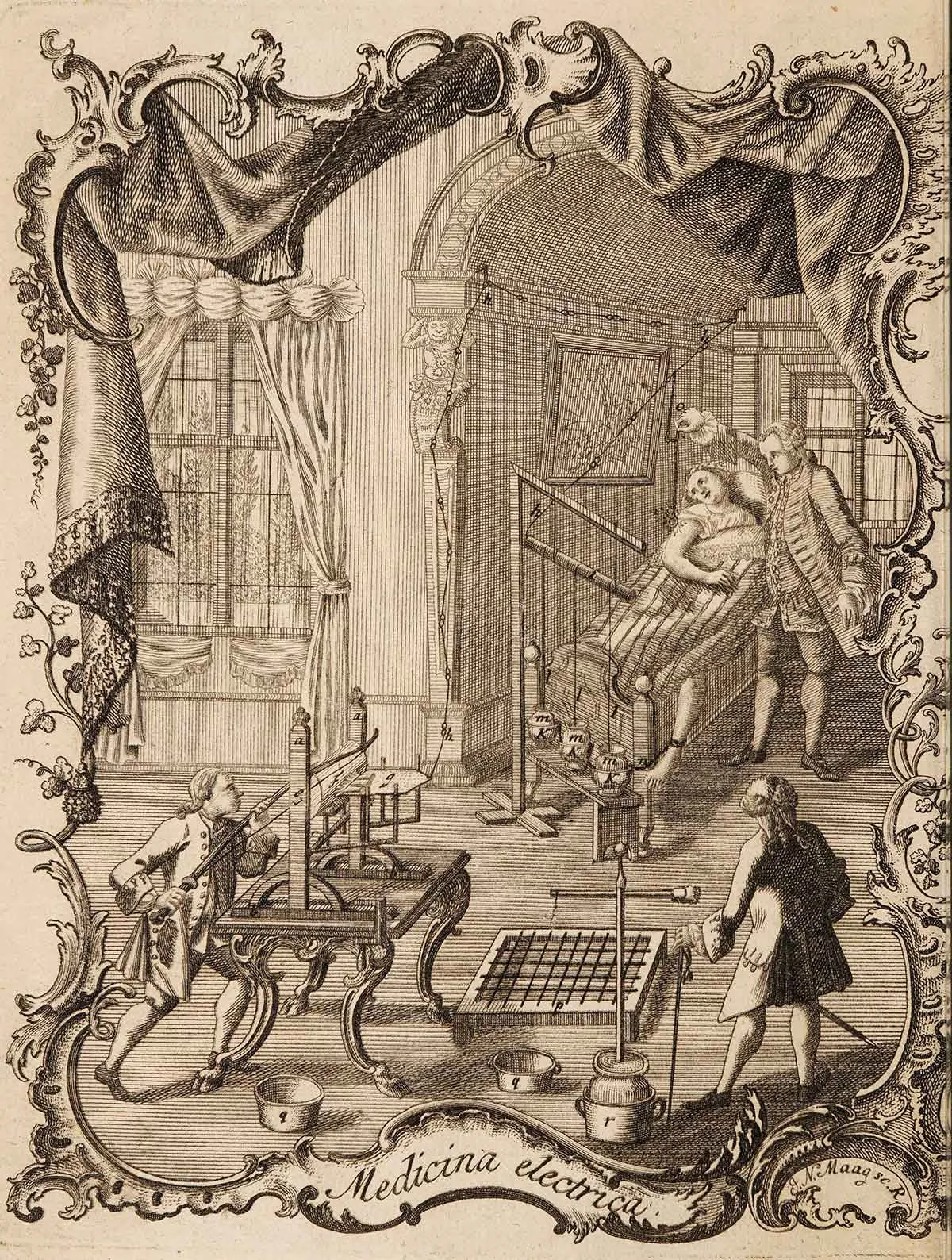
Längmatthansli also worked with mysterious electrical machines in a darkened, low-ceilinged, mystically candlelit room. The peculiar crackling and rattling sounds, the blue glow of the electric discharges, the flashes, the surprising and occasionally painful sensations from touching the sparks. That was how people could directly hear, see and feel the healing power. However, Längmatthansli’s ointments and concoctions were his most popular products. Tales of their potency reached every corner of the country. What did the conventionally educated members of the ‘Berner Sanitätskommission’ (the local health authority at the time) know when they described Längmatthansli in 1843 as one of the most incorrigible and dangerous medical charlatans in the canton? Anyone could learn from books – healing, on the other hand, was a wondrous, supernatural process and the keys to this supernatural world were not found in textbooks.
Johannes Brechbühl also worked with electronic equipment similar to what Johann Gottlieb Schäffer described in his 1766 book ‘Die elektrische Medizin’ (electric medicine).
Johannes Brechbühl also worked with electronic equipment similar to what Johann Gottlieb Schäffer described in his 1766 book ‘Die elektrische Medizin’ (electric medicine). Wellcome collection

Cracking down on quack doctors and charlatans

In the early 1840s, when Brechbühl’s fame was at its peak, Bern Cantonal Council commissioned the Department of Home Affairs to crack down on charlatanism (in the canton). In the 19th century, charlatans meant anyone working in the field of medicine who had not graduated from one of the recognised schools and therefore had no state-issued licence to dispense medical treatment. The use of such terms as ‘quack doctor’, ‘impostor’ or ‘charlatan’ for lay healers was also part of an attempt to enforce a medical treatment monopoly in favour of the medical profession, which was emerging as an autonomous professional grouping by clearly distinguishing its methods and concepts from those of its unlicensed counterparts.
One problem with this strategy against the unlicensed ‘quack doctors’ was that medical practice until the 19th century was more or less identical to folk medicine as practised by resident or travelling herbalists, barber-surgeons, other types of surgeons and midwives. The fundamental transformation in medical expertise took place around the mid-19th century when medical training became closely aligned to the natural sciences making expert knowledge indispensable, thereby clearly distinguishing academically trained doctors from practitioners of folk medicine.

The Enlightenment brought a more scientific approach
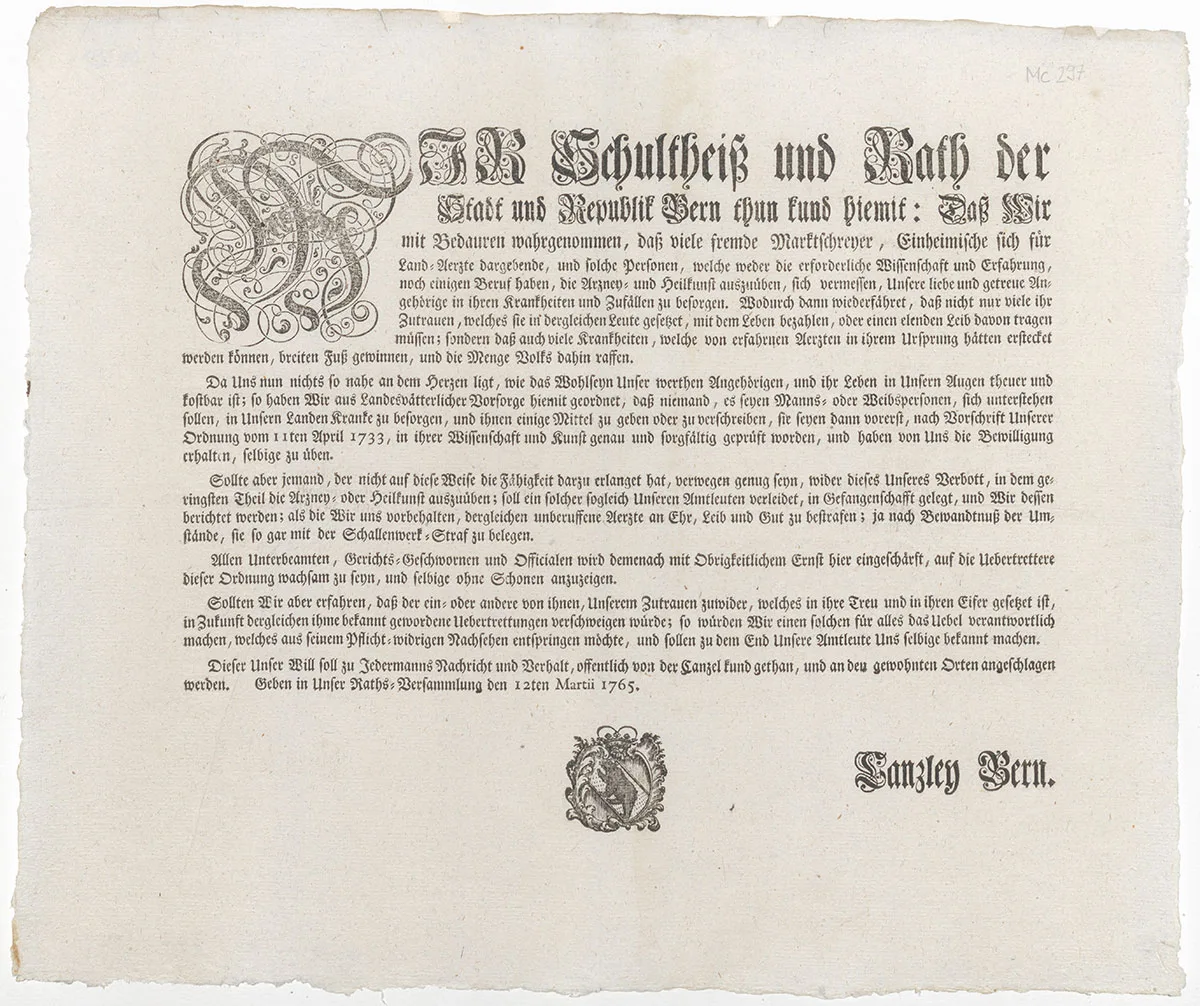
However, the 18th century also saw change with the Enlightenment bringing a new educational paradigm strongly oriented towards empiricism and rationality. The Medizinisch-Chirurgische Institut (medical institute for training surgeons) was founded in Zurich in 1782 to improve the scientific education of city and country doctors. A similar institution was opened in Bern in 1797. These two schools were the direct predecessors of the medical faculties of the universities of Zurich and Bern founded in 1833 and 1834, respectively. The forming of a professional association by Switzerland’s doctors was another important step towards the profession’s exclusivity; the ‘Helvetische Gesellschaft correspondierender Ärzte und Wundärzte’ was founded in 1788. Following the Act of Mediation, cantonal medical associations arose, for example the ‘Medizinisch-chirurgische Gesellschaft des Kantons Bern’ in 1809. All these associations guaranteed equal rights for their members; at the same time they strictly excluded pre-scientifically educated practitioners. This campaign against the ‘quack doctors’ received strong state support for the most part through legislation and the establishing of a dedicated monitoring body ‘Gesundheitspolizei’ to ensure compliance with the law. An ordinance against dilettantes, vagrants, street vendors and quack doctors was passed in the canton of Bern in 1761. Four years later came the regulation against charlatans and non-recognised doctors.
The 1765 Bern regulation against charlatans and non-recognised doctors.
The 1765 Bern regulation against charlatans and non-recognised doctors. Staatsarchiv des Kantons Bern, StABE MC 297
However, the raft of bans brought in against the many different types of non-state-licensed practitioner failed to make much of a difference on the ground. That was because the government bodies did not work together, not even in the canton of Bern. In 1840, the doctors Albrecht Lutz of Signau and Ulrich Scheidegger of Langnau reported Längmatthansli to the cantonal medical board for practising medicine without a licence. The medical board responded by calling on the government official of Konolfingen to severely sanction Längmatthansli for malpractice. The board was particularly unimpressed by his penchant for treating rashes by rubbing in pungent nitric mercury compounds. A Dr Weil reported that six patients had come to him in the previous nine months with mercury rash, having been “treated” by Brechbühl for itching. A member of the Bern Cantonal Parliament died shortly thereafter. There were suspicions that Längmatthansli’s “potent remedies” had contributed to his demise. However, despite repeated reminders, the government official failed to respond to the medical board’s requests to launch an investigation, despite another patient called Anna Gäumann having died in the meantime: during her most recent illness (…) she had been treated by the famous Längmatthansli from Worb with medication taken orally and had died while undergoing this treatment.
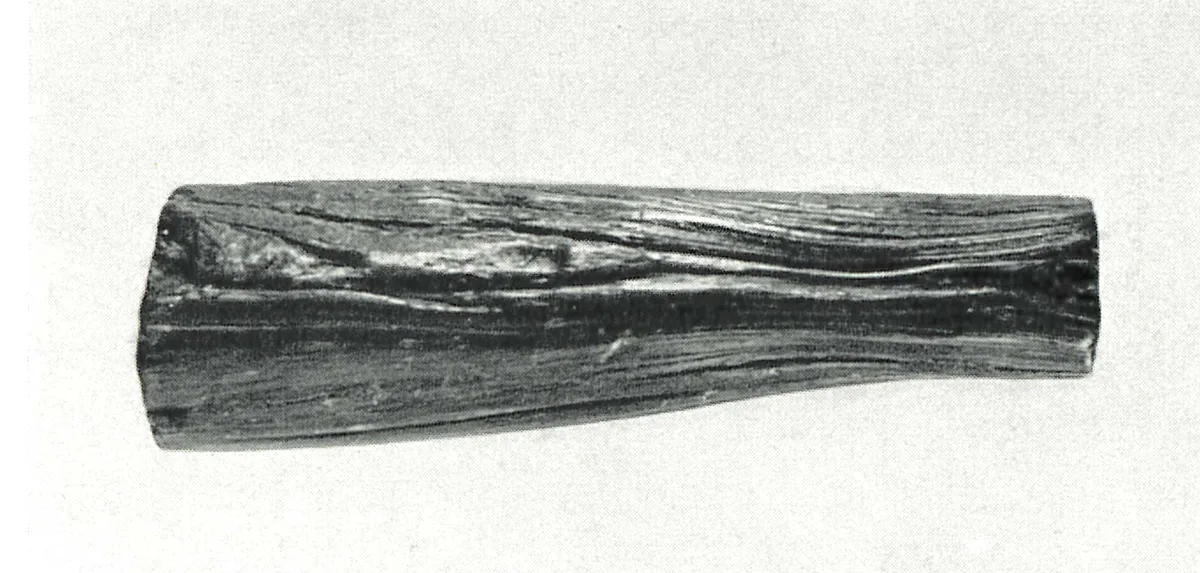
Johannes Brechbühl also used a bandage to treat his patients. Known as the ‘Längmattpflaster’ it was made from boiled lead oxide and linseed or olive oil.
Johannes Brechbühl also used a bandage to treat his patients. Known as the ‘Längmattpflaster’ it was made from boiled lead oxide and linseed or olive oil. From: Carl Müller, Jeremias Gotthelf und die Ärzte, Bern, 1963
One-and-a-half years later, in June 1842 the medical board tried again, as a lady called Anna Barbara Dubsch (…), suffering from parotitis (swollen parotid gland), was treated by the so-called Längmatthansli (…) who applied a pungent substance to the growth, causing the lady great pain for a number of days, so that the epidermis (outer skin) came off and the growth worsened almost by the day. The time had finally come to deal with what the medical board called the insidious and harmful cancer (of malpractice) as soon as possible in the district of Konolfingen. Legal proceedings were launched against Johannes Brechbühl in October 1842. It ended with an acquittal – and, according to the reasons for the judgment given that even a considerable number of government officials had undergone medical treatment with him (Längmatthansli), he could, in the trust they showed him, regard this, as it were, as a form of authorisation to put his knowledge into practice. Moreover, Längmatthansli had many patients declared as untreatable by qualified doctors or who had been otherwise abandoned, especially those with persistent, chronic overt suffering. It was even desirable, as the document flatteringly concluded, “that our qualified doctors with their knowledge, operations and bedside manner would gain the same level of trust as this so-called quack doctor enjoys far and wide.” The judges backed the defendant so resoundingly that the proceedings smacked of a show trial.
But the Bern government was not to be dissuaded. There was a new trial following the death of Christen Bartholome in May 1843. Bartholome, according to the case for the prosecution, had been treated by Längmatthansli for a lung and pericardial inflammation. He had applied treatment in the most absurd way with extremely strong pills and pungent liquid, thereby not only preventing the necessary treatment when it was needed, but also directly harming the patient. A search was conducted of Längmatthansli’s house where toxic substances like sulfuric acid, aqua fortis (nitric acid) and petroleum oil were found in addition to other more harmless products. Brechbühl appeared before the judge for the second time as an incorrigible medical charlatan who had previously been warned on several occasions and who was also charged with running a chemist to sell medicine without authorisation. On that occasion he was fined ten pounds for acting as a doctor despite not having a licence, visiting patients and selling medicine in contravention of the law of 1789 and the ordinance on medical practice (Medizinalverordnung) of 1807. He was also accused of fraud by simulating magic as a way of taking advantage of those who were easily led to take their money.
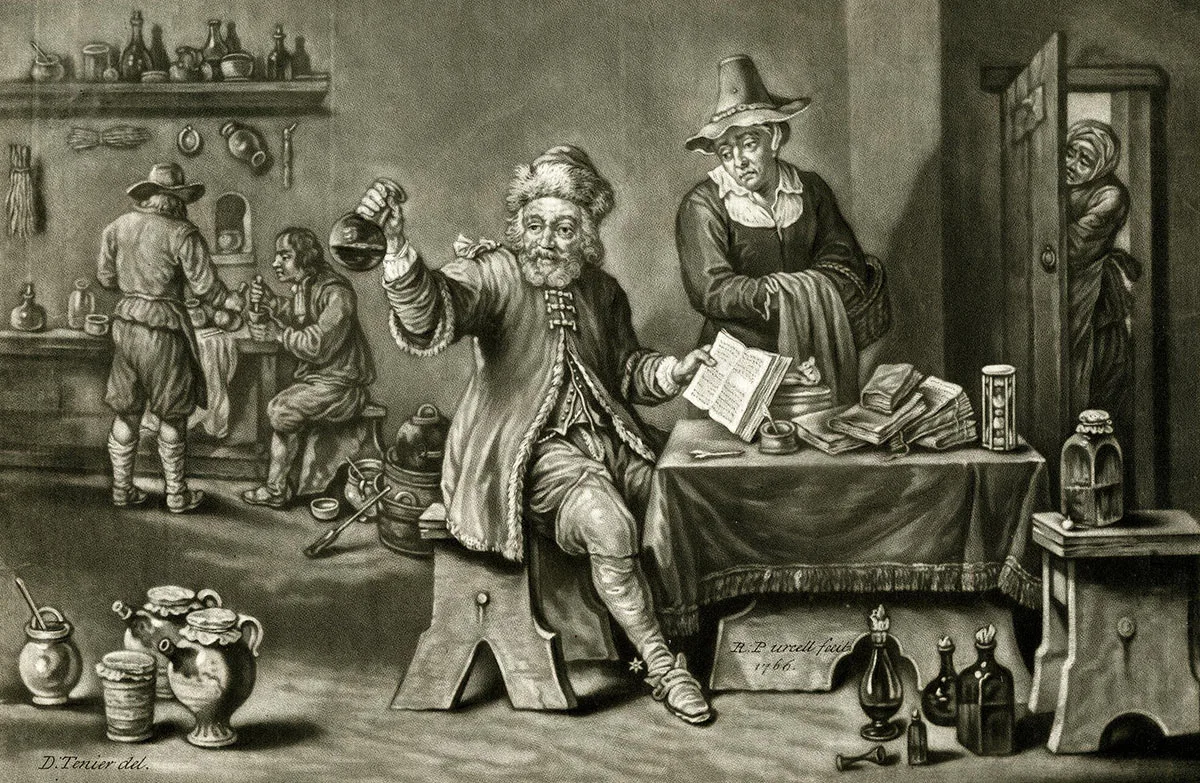
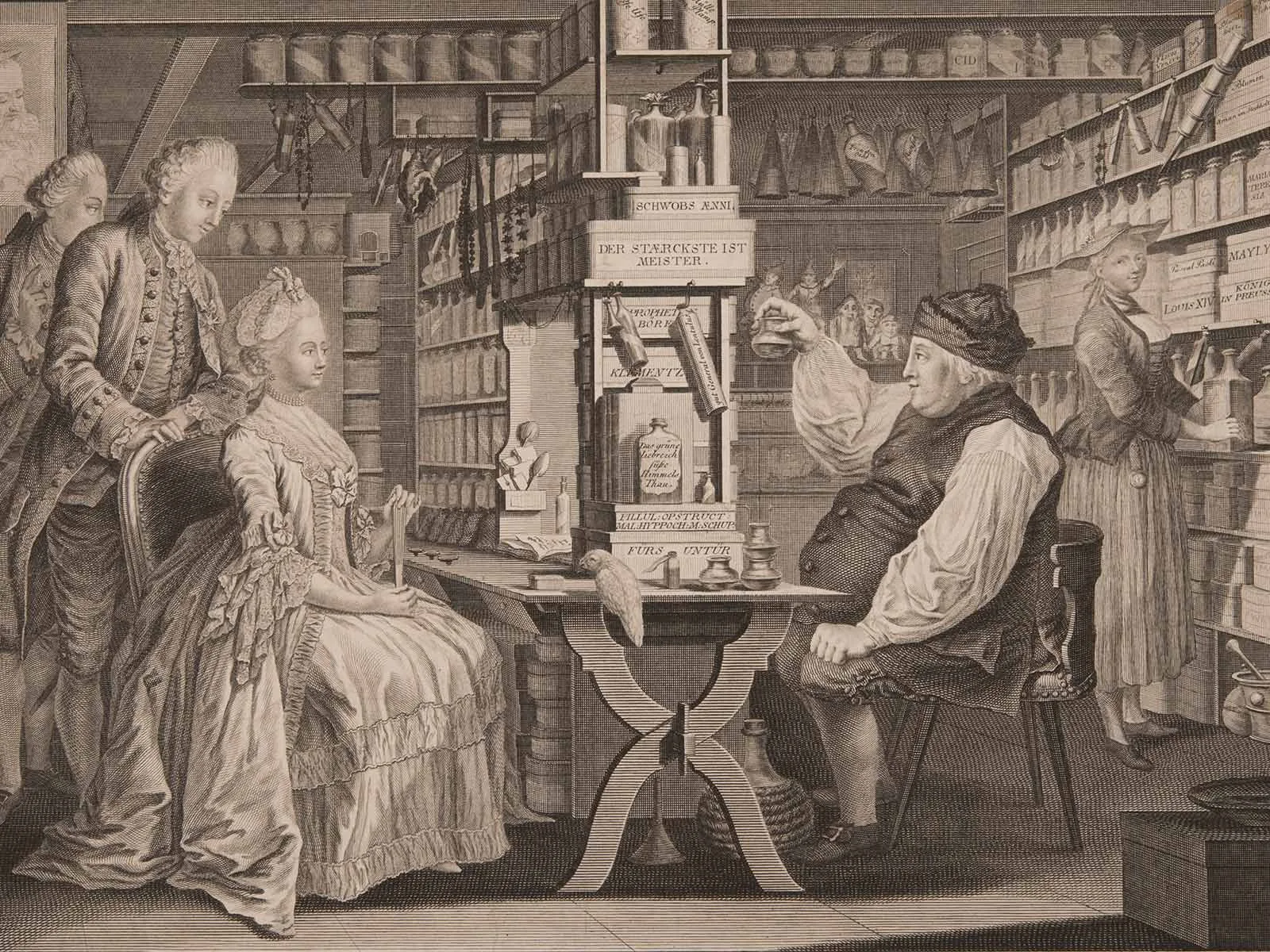
There were many quack doctors and charlatans in the 18th and 19th centuries who led their customers up the garden path. This is a picture of a quack doctor by Richard Purcell from 1766.
There were many quack doctors and charlatans in the 18th and 19th centuries who led their customers up the garden path. This is a picture of a quack doctor by Richard Purcell from 1766. Wikimedia / British Museum
Going by Längmatthansli’s experiences in court, the ‘easily led’ included magistrates and judges. However, it was impossible to determine with any certainty whether he was responsible for the death of Christen Bartholome. Given the very limited diagnostic options of the time, it was difficult to determine the cause of death with sufficient precision.
However, all these efforts by the government to put Längmatthansli out of business were ultimately in vain. In fact demand for his services grew even more and remained high until he died in 1849 at the age of 46. In fact, Längmatthansli’s clientele stayed loyal until well into the 20th century; his secret ‘Längmattpflaster’ allegedly a panacea, was produced into the 1950s by followers of his healing power faithfully following Brechbühl’s formulas. Längmatthansli also provided the template for some of the charlatans and miracle workers described in Jeremias Gotthelf’s book ‘Annebäbi Jowäger’, especially the character of ‘Vehhansli’. Gotthelf wrote the novel in 1843 at the request of the Bern cantonal government as another weapon with which to combat quack doctors.
Almost all the cantons had passed laws against charlatanism by around 1920. Now healing without a licence is only allowed in the canton of Appenzell Ausserrhoden.

Further posts