Liechtenstein fiduciary services and Swiss banks: profitability at a price
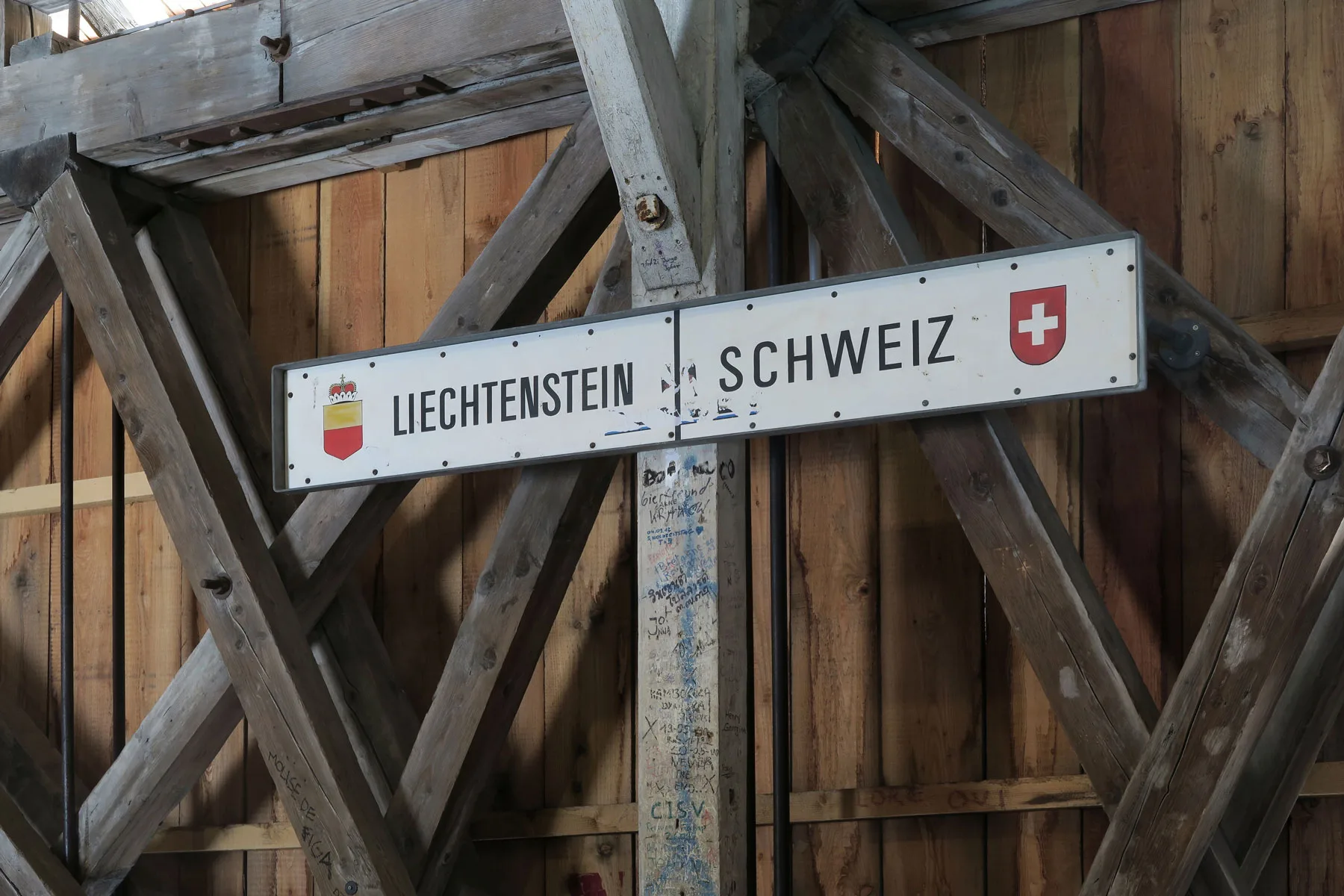
Liechtenstein has evolved into an attractive location for domiciliary and fiduciary companies since the 1920s. Although politicians in Switzerland have repeatedly voiced misgivings about this, it has also been a source of profit for the Swiss financial centre. This has resulted in a close, albeit fraught relationship between the two neighbouring states.

Janick Rüttimann
Janick Rüttimann is an academic researcher at Dodis.
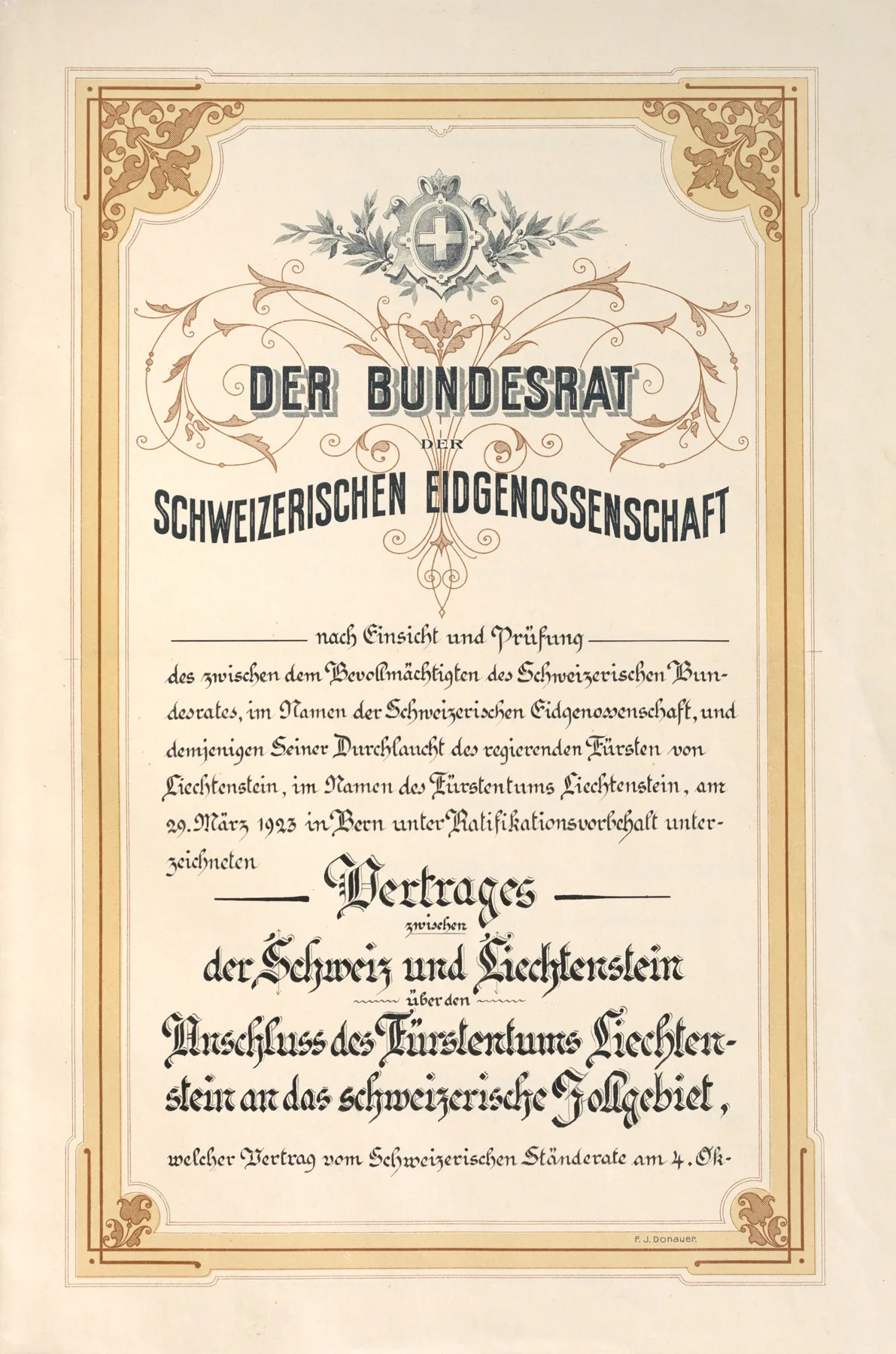
The PGR plus the liberal Tax Act of 1923 made Liechtenstein an appealing destination for foreign capital, specifically through domiciliary and fiduciary companies. Domiciliary companies were companies registered in Liechtenstein which did not actually conduct business in the country, whereas fiduciary companies managed other people’s assets. These structures allowed people to hide their assets from the Swiss tax authorities and thus avoid stamp duty, a tax on certain capital and securities transactions – even though, under the Customs Treaty, the Principality had agreed to apply Swiss stamp duty legislation and have the tax collected by the Federal Administration.
This led to criticism of Liechtenstein company law by Swiss officialdom, while the economic and financial centre was only too happy to make the most of the situation. Swiss banks deliberately channelled foreign clients to the domiciliary companies, which then invested the funds in the Swiss financial market. This resulted in a symbiotic relationship whereby the Liechtenstein domiciliary companies enabled their clients to save on tax and the Swiss economy profited from foreign investment capital.
Joint research
This text is the result of a collaboration between the Swiss National Museum and the Diplomatic Documents of Switzerland (Dodis) research centre and is based on the author’s Master’s dissertation on the bilateral relations between Switzerland and Liechtenstein. An edited version of the dissertation is available on the open-access publication series “Quaderni di Dodis”.
That changed in 1941 when the Federal Council complied with Liechtenstein’s long-held wish for a revision of the Immigration Police Agreement, resulting in all Liechtenstein nationals being entitled to a residence permit for Switzerland. This rapprochement was partly a way for Switzerland to further strengthen its ties with its small neighbour as the Third Reich grew increasingly belligerent. But it was also a quid pro quo arrangement whereby the Federal Council gained the right to veto any application for financial naturalisation.
Number of financial naturalisations in Liechtenstein, 1920–1955
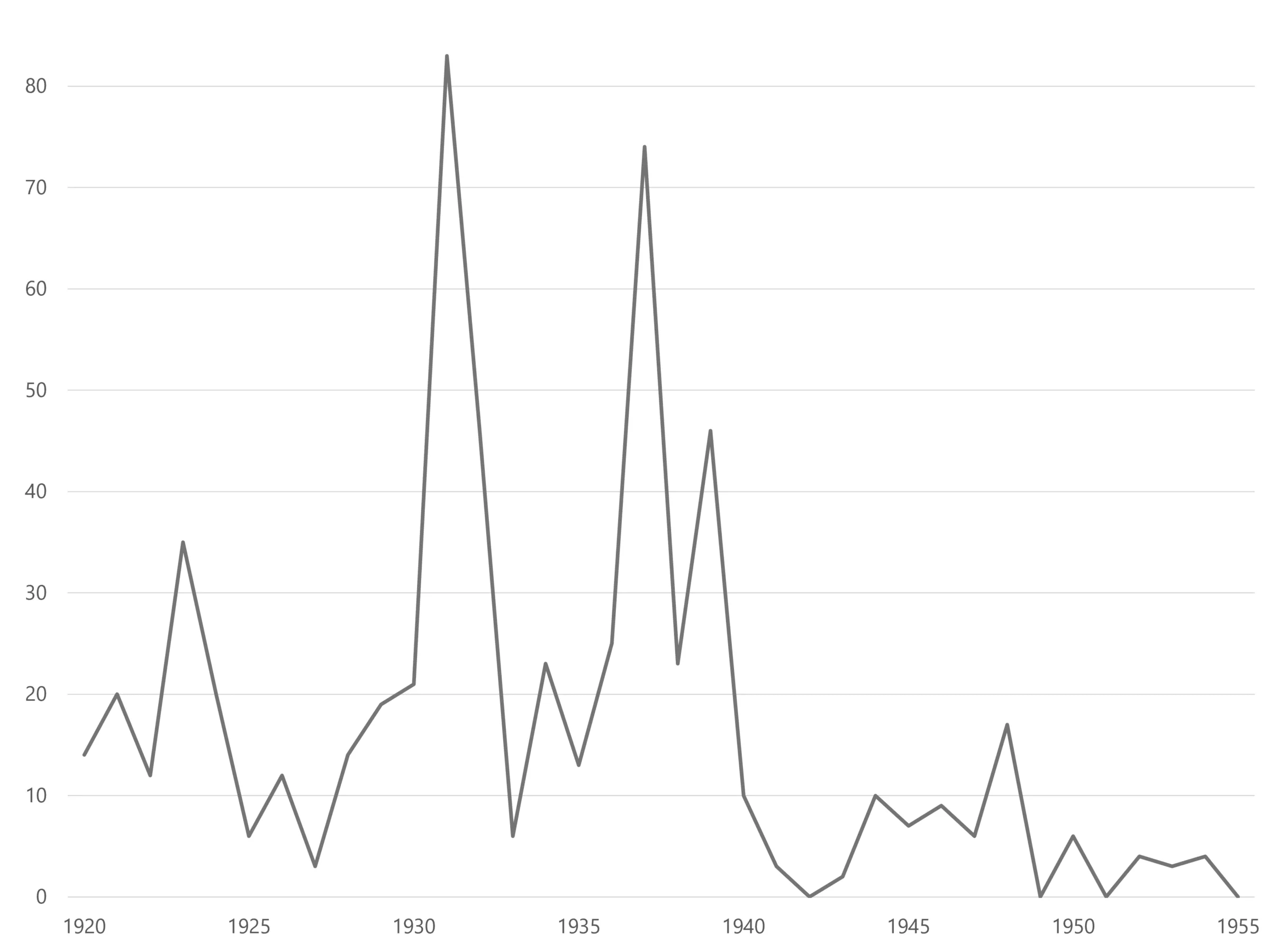
Financial naturalisation was not restricted to the ultra high net worth category. In 1939, it cost about CHF 42,000, equivalent to about CHF 336,000 in 2025. Naturalisation was generally seen as a vehicle for moving capital and avoiding tax until the early 1930s. The main applicants from 1933 onwards were people from Germany, including many with Jewish roots.
Two events in the 1970s shook the Swiss financial centre. After the Second World War, the Bretton-Woods system had ensured stable exchange rates through the gold-dollar-standard. The collapse of this system suddenly exposed many currencies, including the Swiss franc, to major exchange rate fluctuations. In 1977, it also emerged that the Credit Suisse subsidiary in Chiasso had invested undeclared Italian capital in a Liechtenstein financial company, thereby hiding the origin of the funds. The Chiasso scandal brought attention back to the scope for misconduct at the Liechtenstein financial centre.
Liechtenstein reformed its legislation and the Currency Treaty entered into force in 1980. However, the reform made little difference in practice, and the number of holding and domiciliary companies in the country continued to grow unabated between 1980 and 2000. That was because the treaty did not include control mechanisms or banking supervision by the Swiss National Bank.
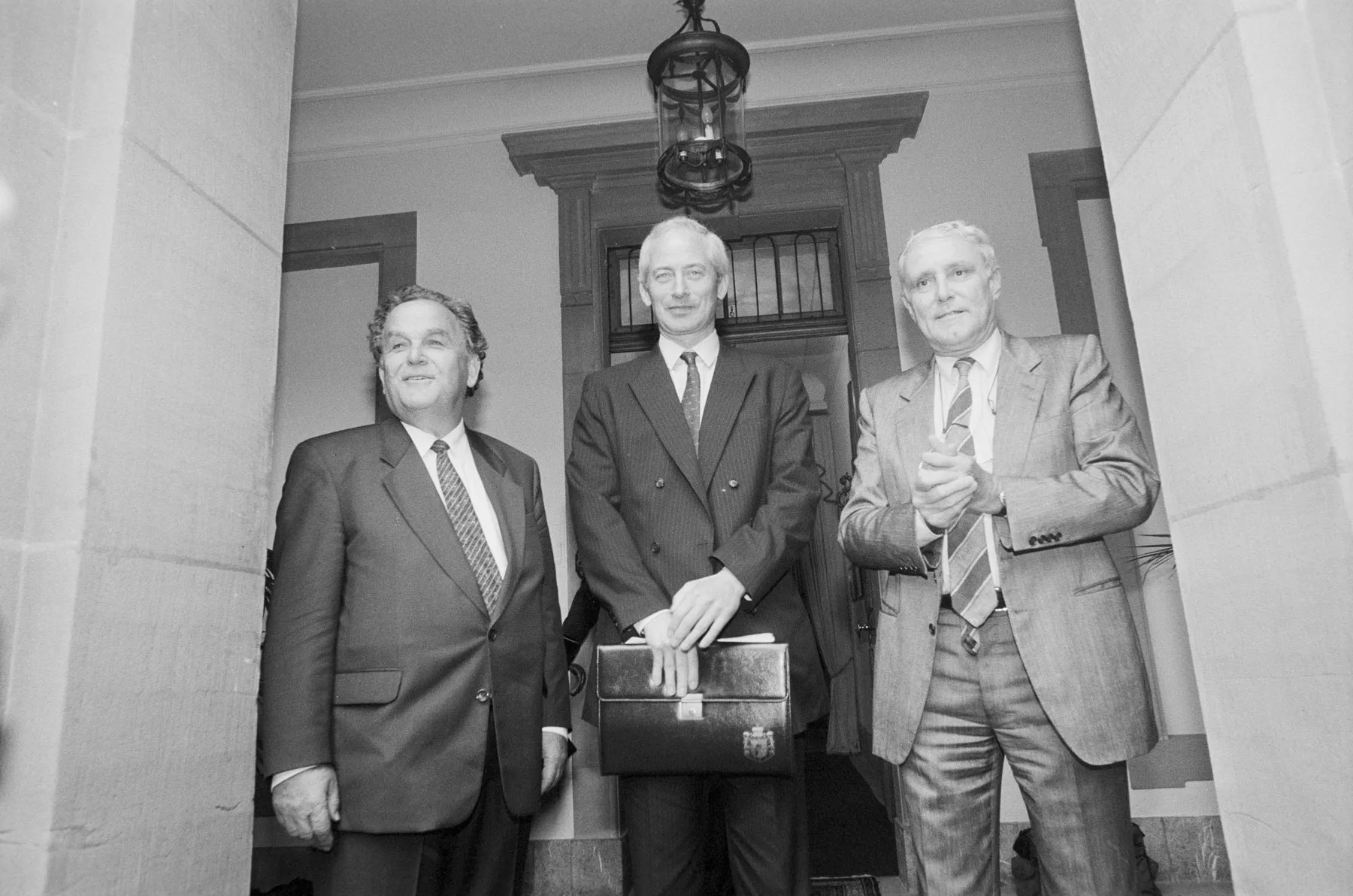
Switzerland had another opportunity to rectify the situation about ten years later. On 6 December 1992, Switzerland opted not to join the European Economic Area (EEA); on 13 December 1992, however, Liechtenstein voted in favour of joining the EEA. This referendum result presented the Federal Administration with “numerous problems of a legal and practical nature”, given that Liechtenstein had wanted to preserve the Customs Treaty of 1923 after joining the EEA.
As this involved a lot of extra administration, the Federal Council was to take up “the Swiss demand to amend the duty of due diligence in a future negotiation platform to redefine the rules governing relations between Switzerland and Liechtenstein as a consequence of Liechtenstein’s accession to the EEA”. Nonetheless, the Principality opposed the tighter rules imposed on Swiss banks when handling funds following the Chiasso scandal.
Liechtenstein thus received a reprieve from the imposition of Swiss banking due diligence requirements. It was not until the Organisation for Economic Co-operation and Development (OECD) started asking questions in 2000 and following the massive scale of tax evasion uncovered in the wake of the 2008 banking crisis that Liechtenstein – again under accumulated external pressure – reformed its banking rules.

Switzerland, the land of banks
Switzerland is one of the world’s leading financial centres – but how did its close association with banking evolve? The exhibition shows how deeply banking is entrenched in Switzerland’s DNA and traces the development of the banking system by displaying an impressive range of items. Jewish moneylenders, Lombardy merchants and, later, urban exchange offices laid the foundation for the modern financial centre. The exhibition goes beyond merely retracing historical developments; it also invites visitors to engage with the land of banks as it is today.