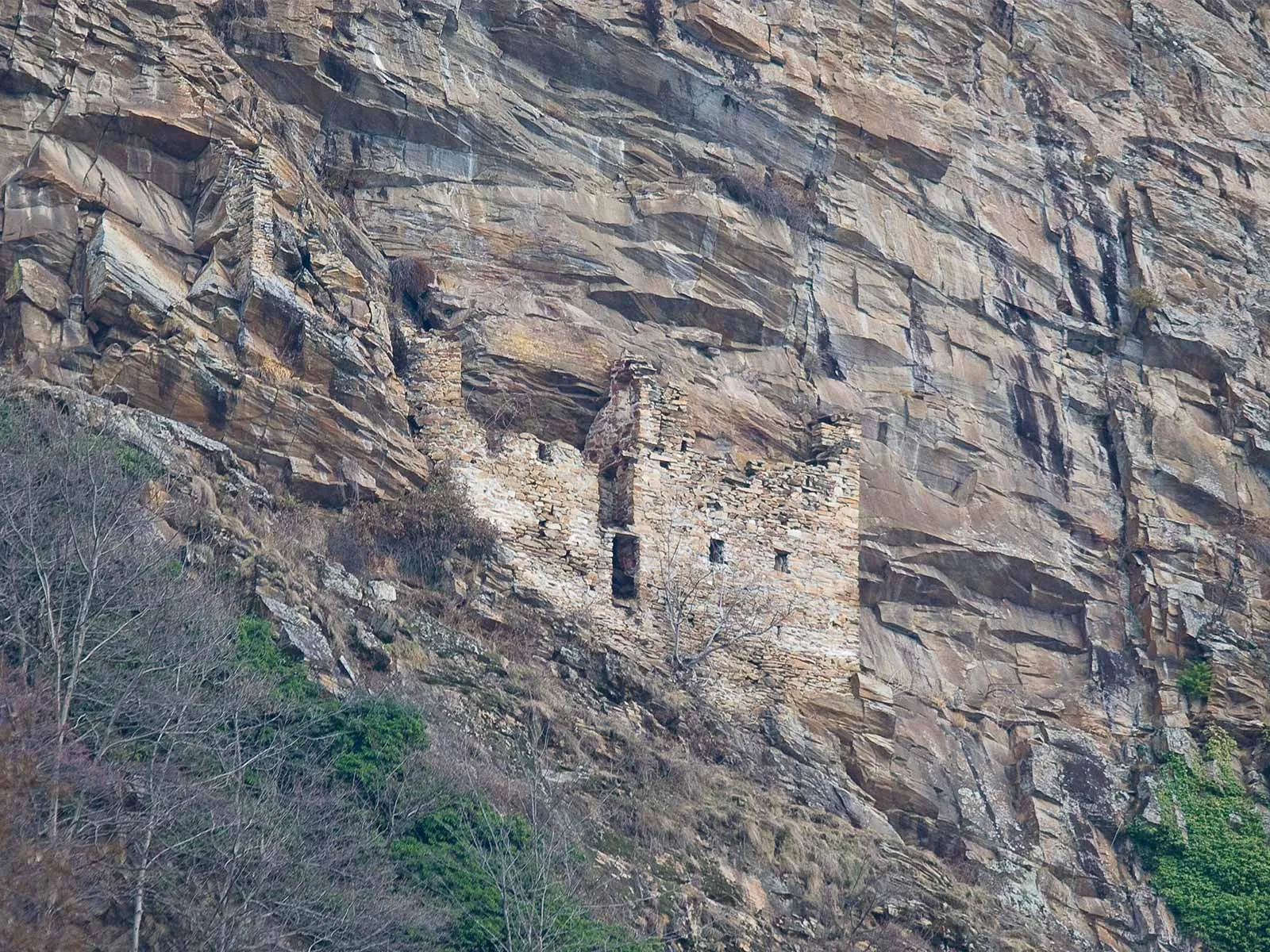
Myths still surround the case dei pagani houses, which are mostly found in the Blenio Valley in Ticino.
Myths still surround the case dei pagani houses, which are mostly found in the Blenio Valley in Ticino. Wikimedia

Of witches and pagans: the mysterious pagan houses of Ticino

Ticino’s Blenio Valley is home to a series of fortified cliff dwellings known as the ‘case dei pagani’ or ‘pagan houses’. These near-inaccessible ruins are the setting of many scary stories and continue to puzzle researchers to this day.

Thomas Weibel

Thomas Weibel

Thomas Weibel is a journalist and professor emeritus of media engineering.
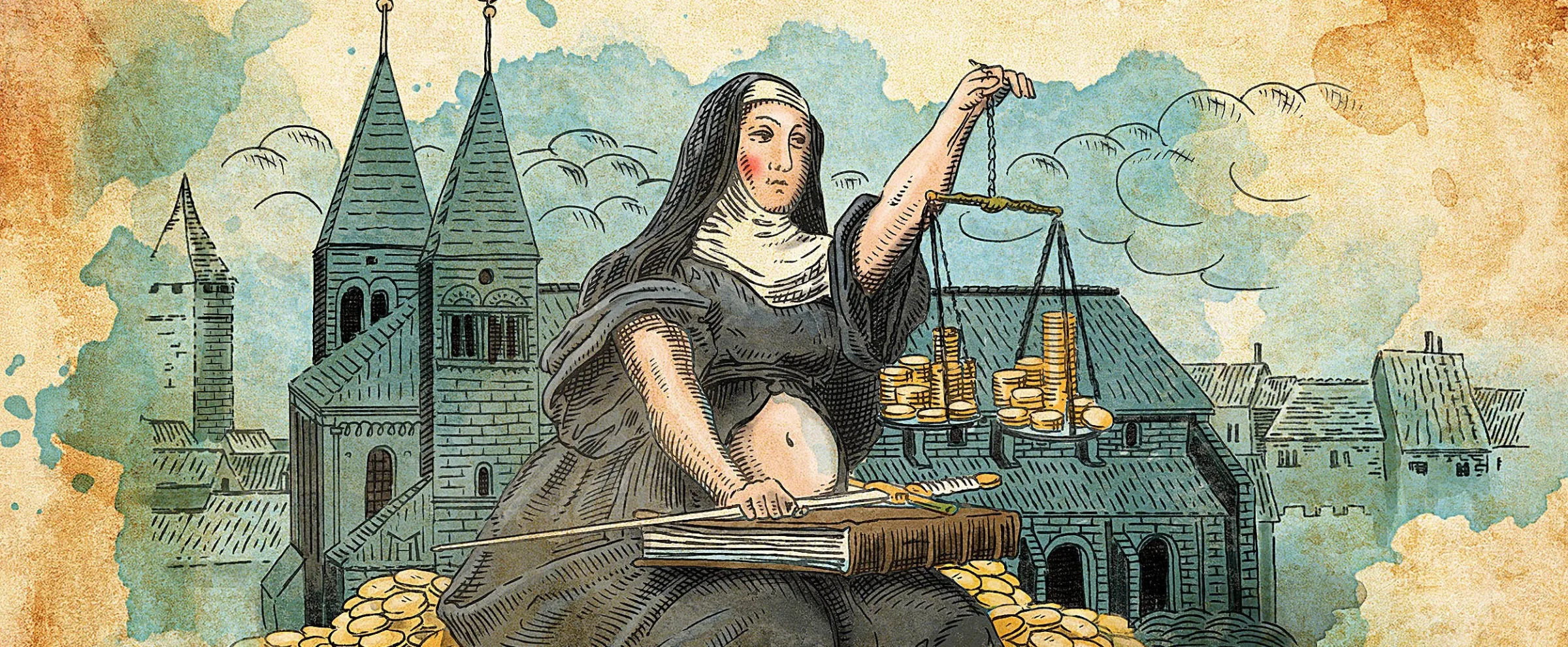
“A pagana – a pagan woman – came to the valley. As always, her aim was to steal children she would fatten up to eat. She snatched a boy and locked him in a wooden cage in a cave. She fed him and kept checking his finger to see whether it was fat enough, as she was very short-sighted. One day, she let the child out and told him to check whether the water was boiling. But the boy shoved the old woman and she fell into the boiling water. And this is how the last pagan woman died.”
In the tiny village of Dongio (population: 300), people have been telling scary stories of pagans, witches and brigands for generations. They are all set in the case dei pagani, those hard-to-reach ‘pagan houses’ high above the valley, clinging to the rock faces like swallows’ nests. They are mainly found in the Blenio Valley (Aquila, Dongio, Malvaglia, Marolta and Torre), but are also dotted about in the Leventina (Chiggiogna), in the Maggia Valley (Losone) and in Sottoceneri (Mendrisio). They were all built into steep mountainsides in hard-to-reach locations, well protected by overhanging rocks or natural caves. Although the fortified cliff dwellings could only be reached by wooden ladders and walkways, they were all situated close to villages. All that remains of many of these structures are remnants of the walls, which tell us little about what they were really like.
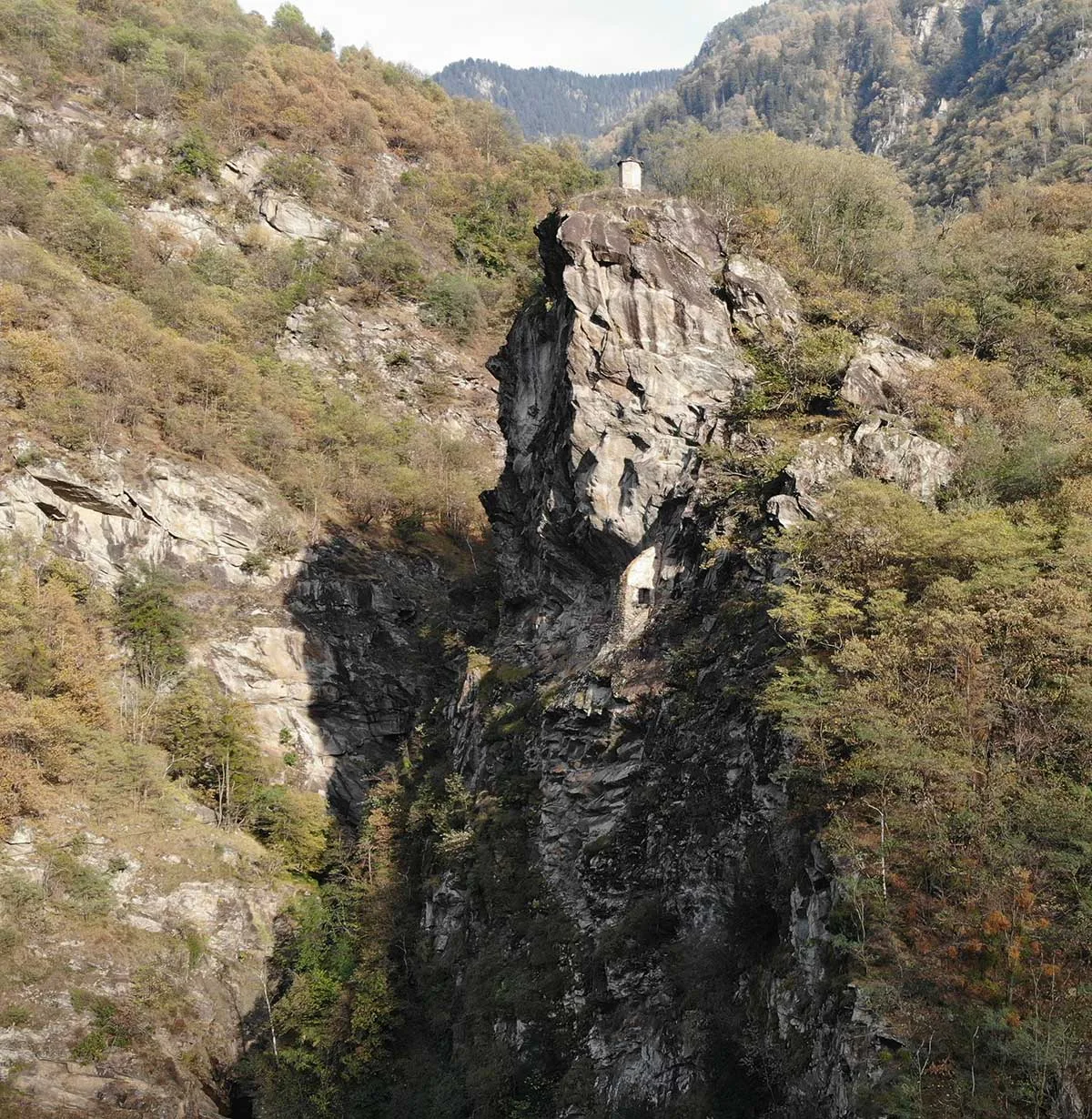
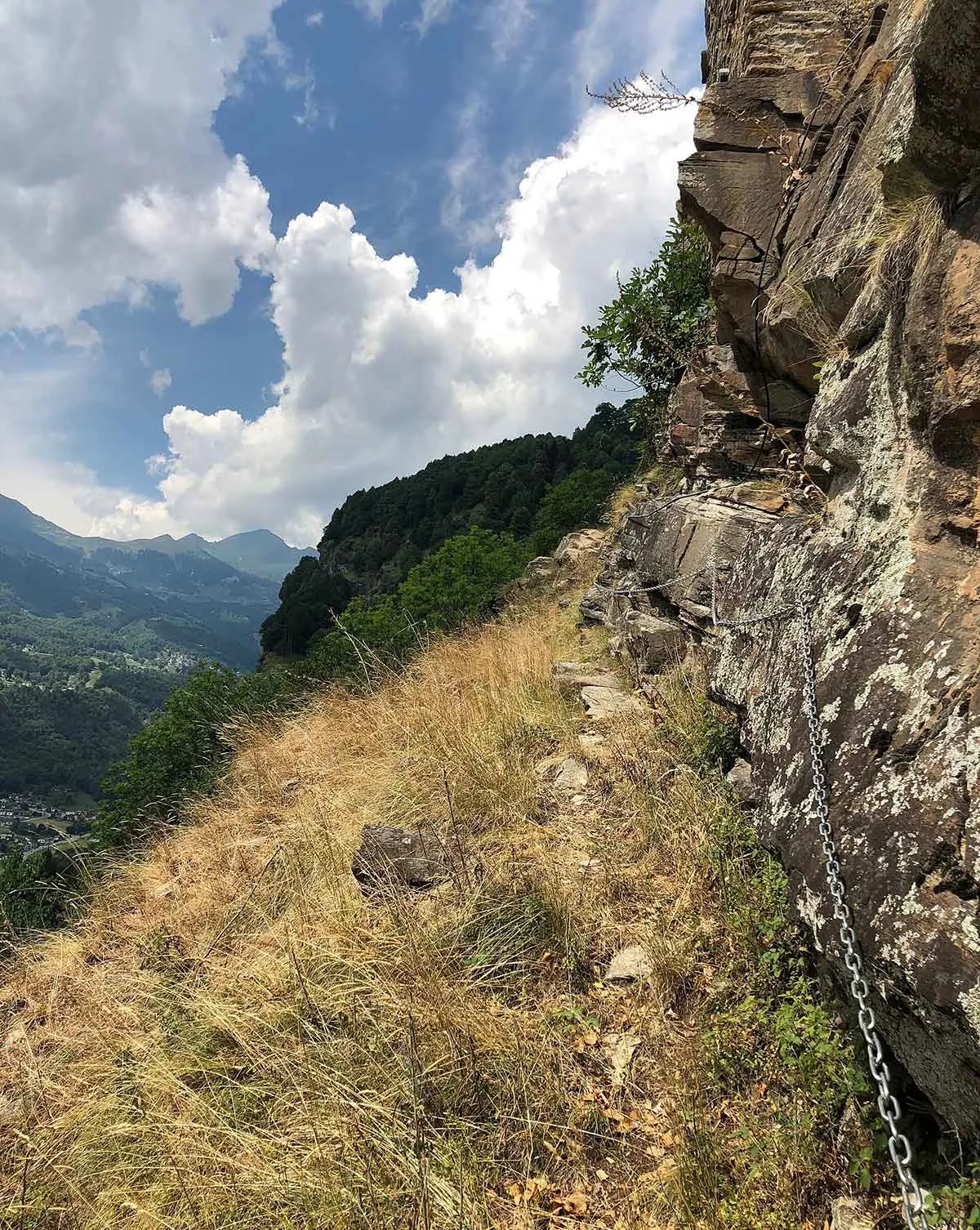
Dongio I can be accessed via a narrow path. On the left the slope plunges precipitously to the valley below. It could therefore be defended very effectively against potential enemies.
Dongio I can be accessed via a narrow path. On the left the slope plunges precipitously to the valley below. It could therefore be defended very effectively against potential enemies. Wikimedia / Adrian Michael
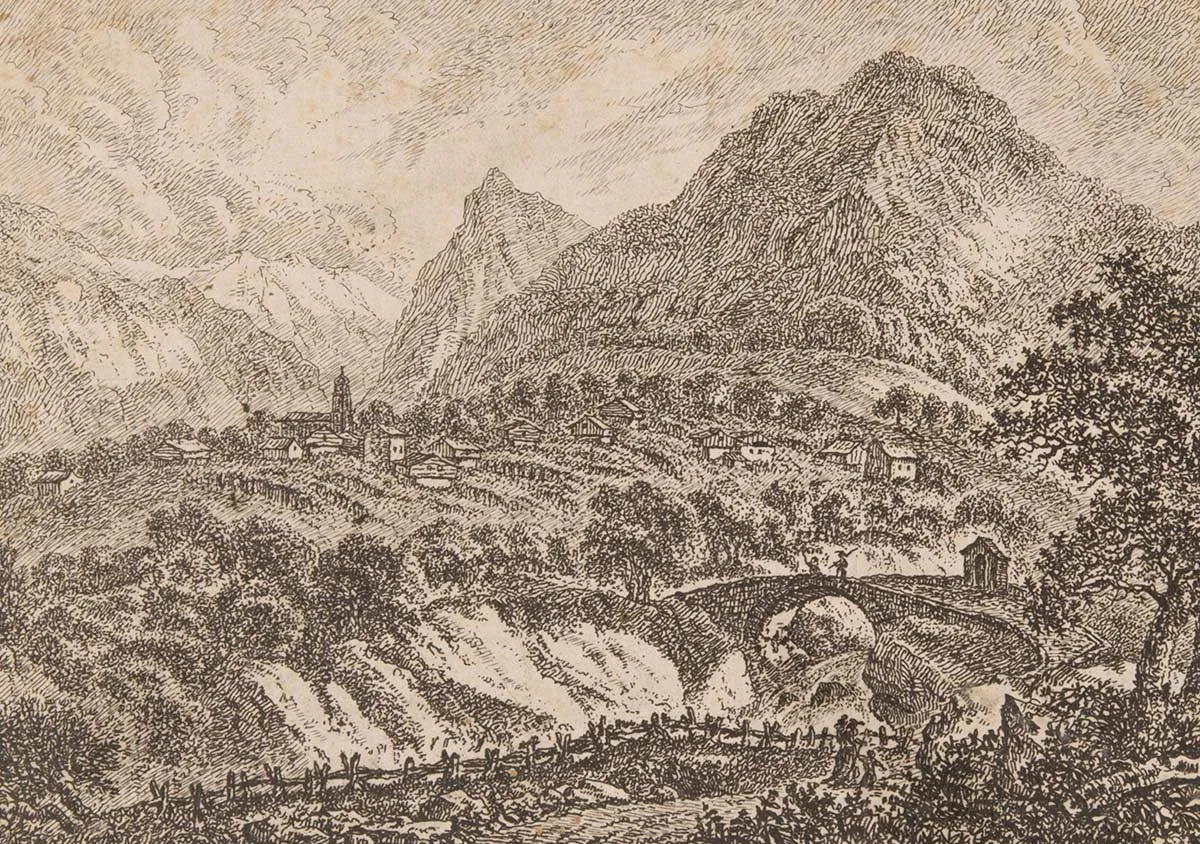
Dongio I is a ruined fortified structure that can be seen from miles around. It was built into a cavity in the rock face above the village of Dongio. The cliff dwelling can only be reached on foot via a steep forest path that winds past the remains of the village of Dongio, which was buried in 1758 by a landslide that destroyed houses and barns and claimed the lives of 34 residents. The village was subsequently rebuilt slightly further north. The main door to Dongio I (there are two other structures with the names Dongio II and Dongio III in the vicinity) can only be reached via three protruding stone steps without any kind of railings – a push from the defenders and an uninvited guest would have plunged to the depths below.
Copper engraving of the village of Dongio, based on an illustration by Ludwig Hess, circa 1817.
Copper engraving of the village of Dongio, based on an illustration by Ludwig Hess, circa 1817. Swiss National Museum
That people actually lived here is certain: the building once had four floors and provided space for at least a dozen people. There was a hearth and a privy, known as a latrine niche – “really comfortable, almost a throne, all that was missing was the newspaper,” jokes Fabrizio Conceprio from the local authority in the village of Dongio, which has been part of Acquarossa since 2004.
Researchers are still puzzling over who built the structure and for what purpose. Was it a refuge for outcasts and outlaws? Or a safe place to store seed? Or was it a base, a staging post for the Saracens, who crossed the Alps in the 10th century, a sanctuary for persecuted pagans, a prison for witches, an infirmary, or a brigands’ lair? There are no written records. But researchers assume that it was a place of refuge, a sort of fortress for a local princely family who sought sanctuary within its easily defensible walls in times of need. Dongio I was no grand building though: the walls consisted of slabs of local granite piled on top of each other, roughly bonded with lime mortar. The impregnable location meant that hefty defensive walls weren’t necessary – they are only between 50 and 90 centimetres thick.
In the late 1970s Zurich architect Lukas Högl researched the mysterious pagan houses, and in 2022 historian and psychologist Massimo Delorenzi undertook new investigations. He had samples taken from spots that had never been studied before. The C14 dating of scaffolding timber from Dongio I suggests that it was built between 970 and 1200. One of the case – the one in Malvaglia – dates back to between the 3rd and 7th centuries. A horseshoe and an animal enclosure suggest that sustenance would have been provided. In the long run, however, the ‘pagan houses’ wouldn’t have been comfortable for occupants as they didn’t have cisterns.
The casa in Malvaglia is probably the oldest of these curious buildings.
The casa in Malvaglia is probably the oldest of these curious buildings. Wikimedia / Adrian Michael
According to Delorenzi, the people who are thought to have built these structures sought a protected spot where no one could ever have imagined living. The reason for this must have been sheer fear as reaching the structures – let alone building them – was difficult and dangerous. Delorenzi believes they were places of refuge, some sort of emergency shelter. And there were plenty of reasons for people to flee at that time: as a key north-south axis, the Blenio Valley was repeatedly crossed by brigands and troops. Broken, bent arrowheads are evidence that the fortifications came under enemy attack.
Some of the houses were built in the period when the first Serravalle Castle was destroyed by the Milanese in the late 1170s. The fortress served as a key staging post for the route via the Lukmanier Pass, and after the defeat of Emperor Barbarossa by the Lombard League, the Blenio Valley once again came under Milan’s sway. This may have something to do with the construction of the case dei pagani. Massimo Delorenzi, however, is more inclined to believe that the houses were intended to provide protection against looming military threats. But as their position was not ideally suited for alerting the inhabitants of the valley, we should also consider the possibility that they were used as real dwellings.
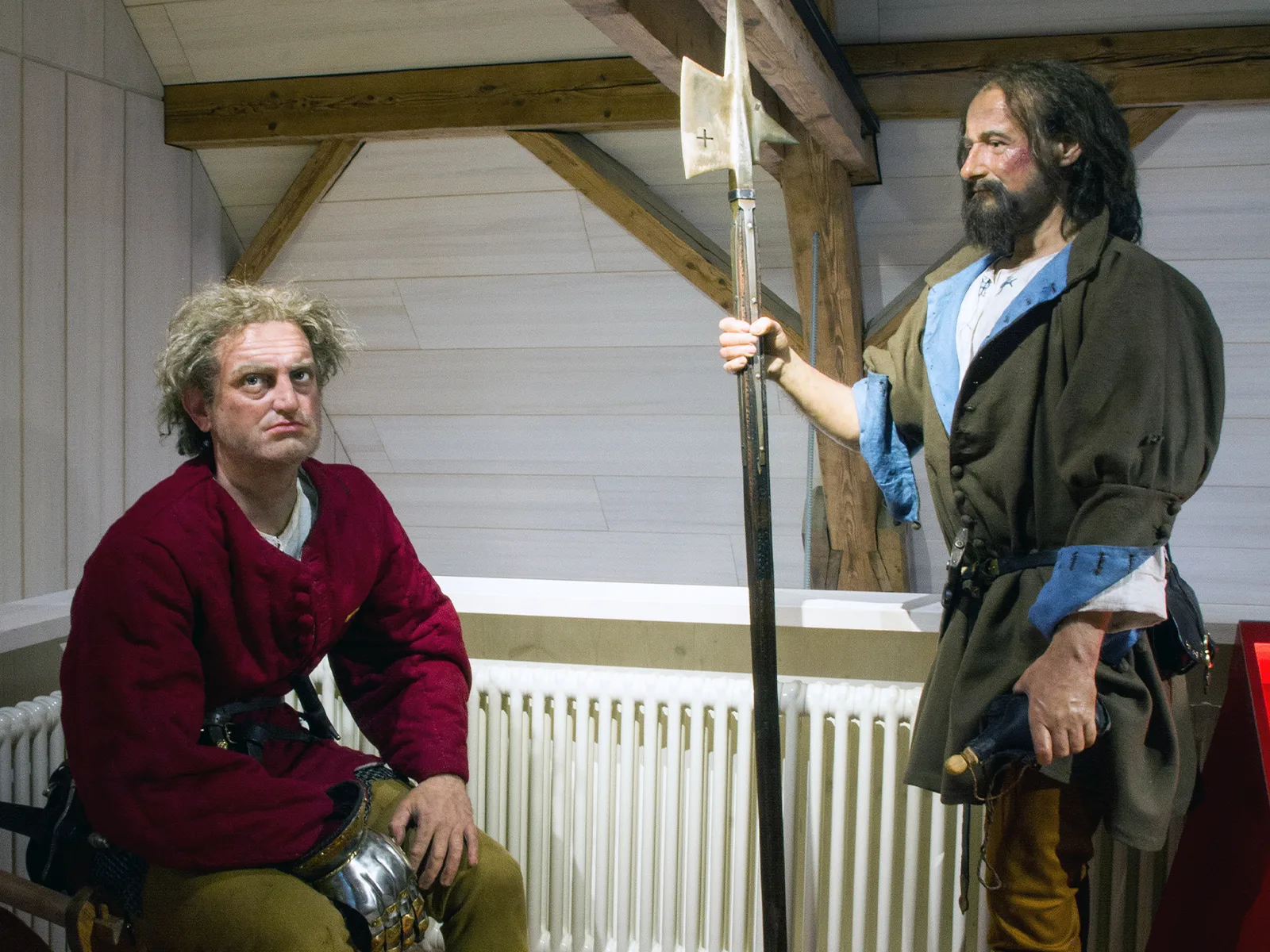
In one of the case dei pagani, the researchers found medieval coins, a precision balance and a sheet of parchment on which the name ‘Martino’ and the date 1 September 1308 could be made out. Someone must have left their valuable possessions in their mountain hideout, never to return.

Further posts