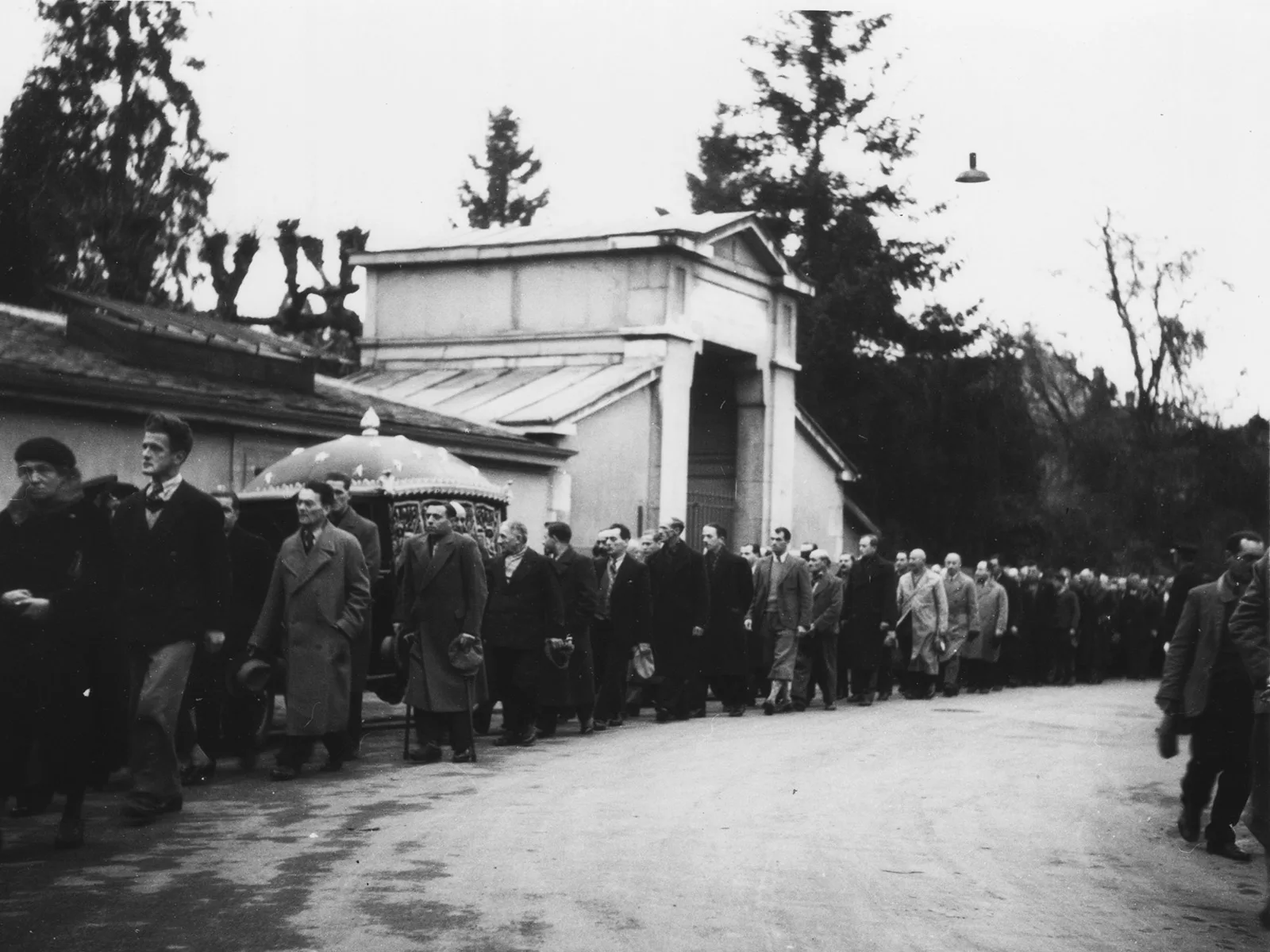
In December 1936, large crowds gathered in Geneva to mourn the Spanish anarchist Ramón Mateo.
In December 1936, large crowds gathered in Geneva to mourn the Spanish anarchist Ramón Mateo. Collège du Travail

A funeral for the Spanish Republic

In early December 1936, the Spanish anarchist Ramón Mateo was laid to rest in Geneva. His funeral procession also became a public demonstration in support of the Spanish Republic.

Sébastien Farré

Sébastien Farré

Sébastien Farré is a historian, director of the Maison d'histoire at the University of Geneva and a specialist in the contemporary history of Spain.
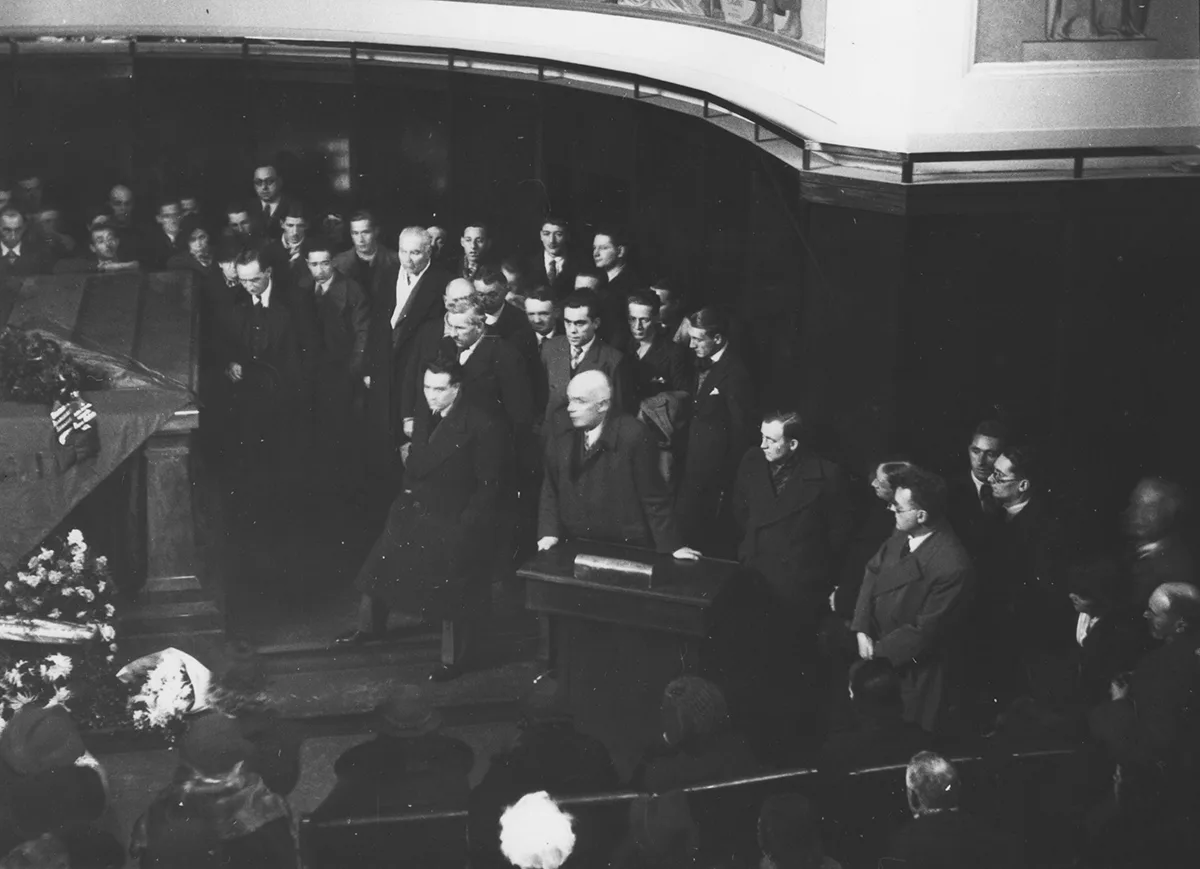
In early December 1936, a funeral procession passes the main entrance to Geneva’s Plainpalais cemetery. Several hundred men remove their hats and salute the leading figures of Geneva’s political left, who are lined up along the cemetery railings: socialist Léon Nicole, anarchists Louis Bertoni, Auguste Cornu and Lucien Tronchet, as well as Cipriano Rivas Cherif, consul of the Spanish Republic. The crowd then moves slowly towards the hearse carrying the remains of a Spanish anarchist activist: Ramón Mateo Chavanel (1890–1936). The funeral cortege subsequently makes its way to the Ange de la Consolation chapel at Saint-Georges cemetery, where a large crowd gathers in tightly packed rows to pay their final respects to the deceased and express their solidarity with the cause of Republican Spain.
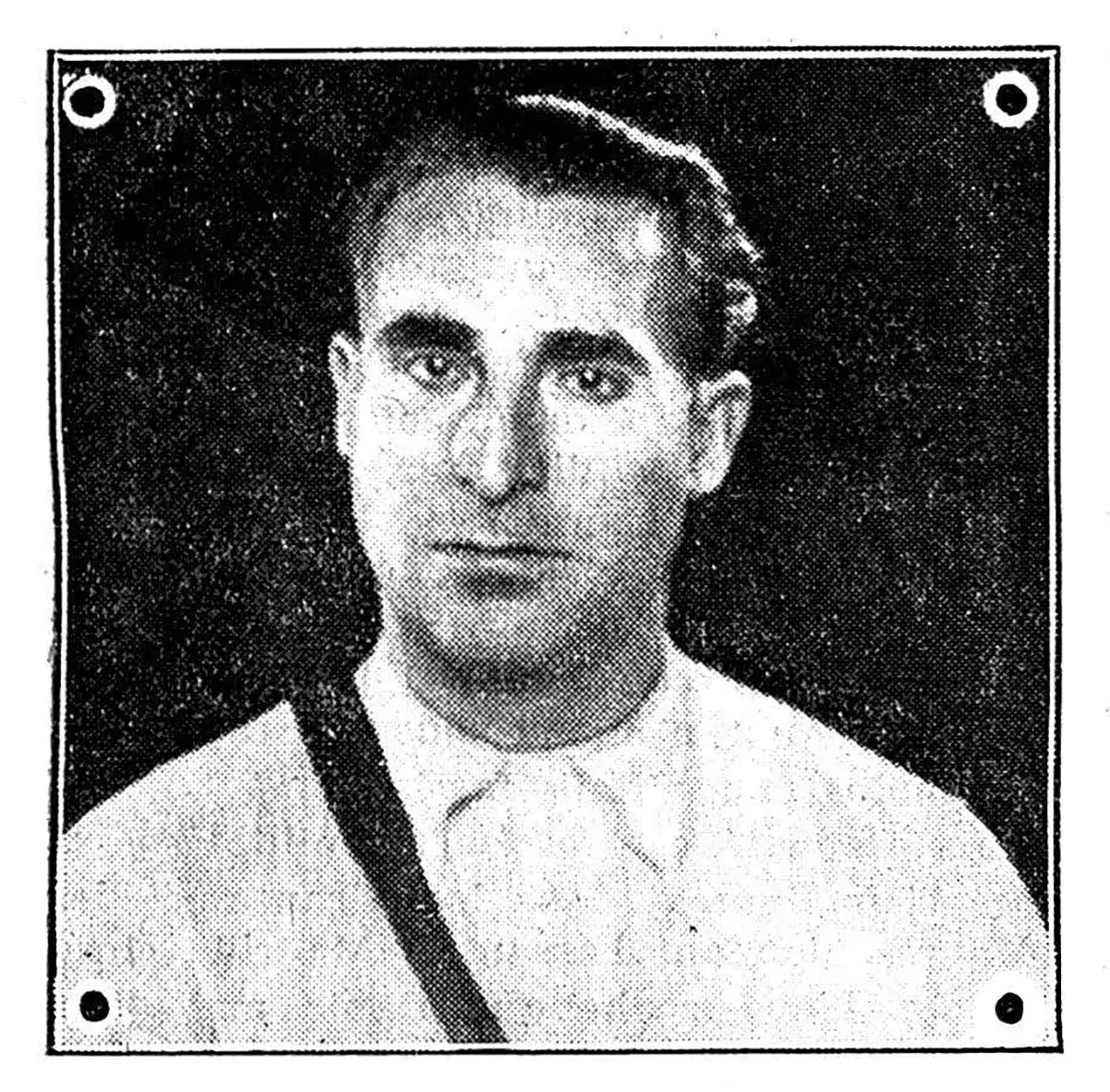
Portrait of the Spanish anarchist Ramón Mateo Chavanel in Le Réveil anarchiste, 12 December 1936.
Portrait of the Spanish anarchist Ramón Mateo Chavanel in Le Réveil anarchiste, 12 December 1936. e-newspaperarchives
This sombre day in the winter of 1936 is documented in 18 photographs held by the Collège du travail – a remarkable record, given the scarcity of photographic evidence of political mobilisation in Switzerland during the Spanish Civil War. Who was the deceased, and why did his funeral draw such a large crowd in Geneva?

A secret arms deal in Switzerland

A few months before his death, Ramón Mateo, a member of the Federación Anarquista Ibérica (FAI), a federation of anarchist groups, took part in a mission to Switzerland to purchase weapons covertly following the outbreak of the Spanish Civil War. In response to the military coup, political parties and trade unions joined forces to fight the insurgents led by General Franco and established anti-fascist militias. The Republican government faced the challenge of forming a new army while bringing together the various revolutionary committees that had emerged in the wake of the coup.
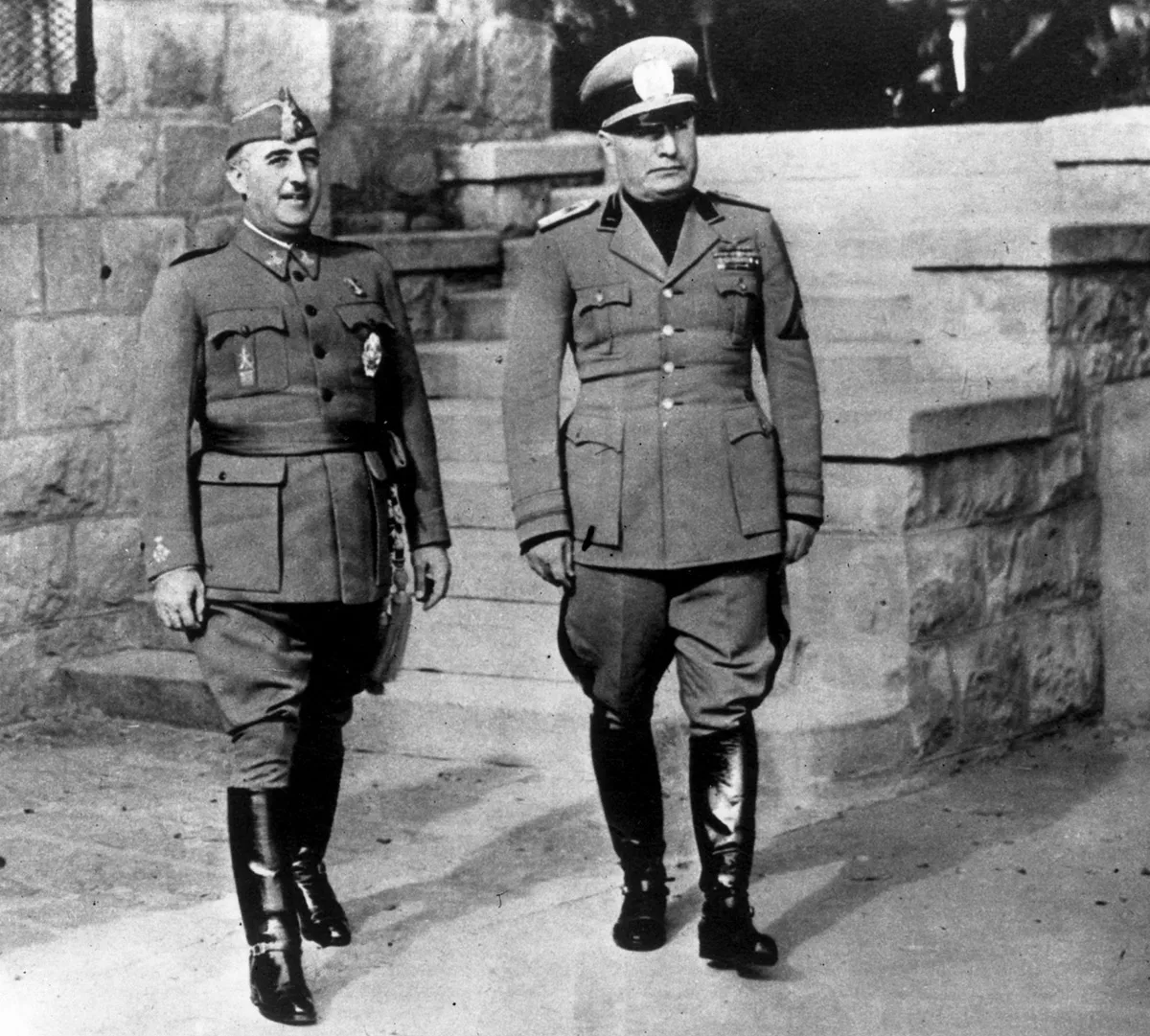
Above all, however, the government needed to procure military equipment. Under French leadership, most democracies had agreed to a policy of non-intervention and banned arms exports to Spain. Italy and Germany, by contrast, supported the rebel generals more or less openly. Weapons were essential if resistance to Franco’s forces was to continue. Purchasing commissions were therefore organised and sent to France, Belgium and Switzerland to procure military supplies.
Benito Mussolini (right) had supported General Franco since the outbreak of the Spanish Civil War in July 1936. This photograph of the two dictators was taken in 1941.
Benito Mussolini (right) had supported General Franco since the outbreak of the Spanish Civil War in July 1936. This photograph of the two dictators was taken in 1941. Wikimedia

A fatal car crash

For Ramón Mateo, the mission to Switzerland ended in tragedy. On 30 September 1936, after passing through the Saint-Genis–Meyrin border crossing, the anarchists’ car struck a tree at high speed. Four injured occupants were taken to Geneva’s cantonal hospital and subsequently detained for violating federal regulations intended to safeguard Swiss neutrality: the police had discovered a large sum of money in the vehicle.
The investigation opened by the public prosecutor concerned a clandestine arms purchase. However, the case was quickly resolved through a diplomatic agreement, and most of the detained Catalan delegation was soon able to leave the country. As part of the diplomatic settlement, the Catalan regional government in Barcelona released a Swiss engineer employed by Hispano-Suiza. He had been arrested that summer and was due to face charges of alleged espionage.
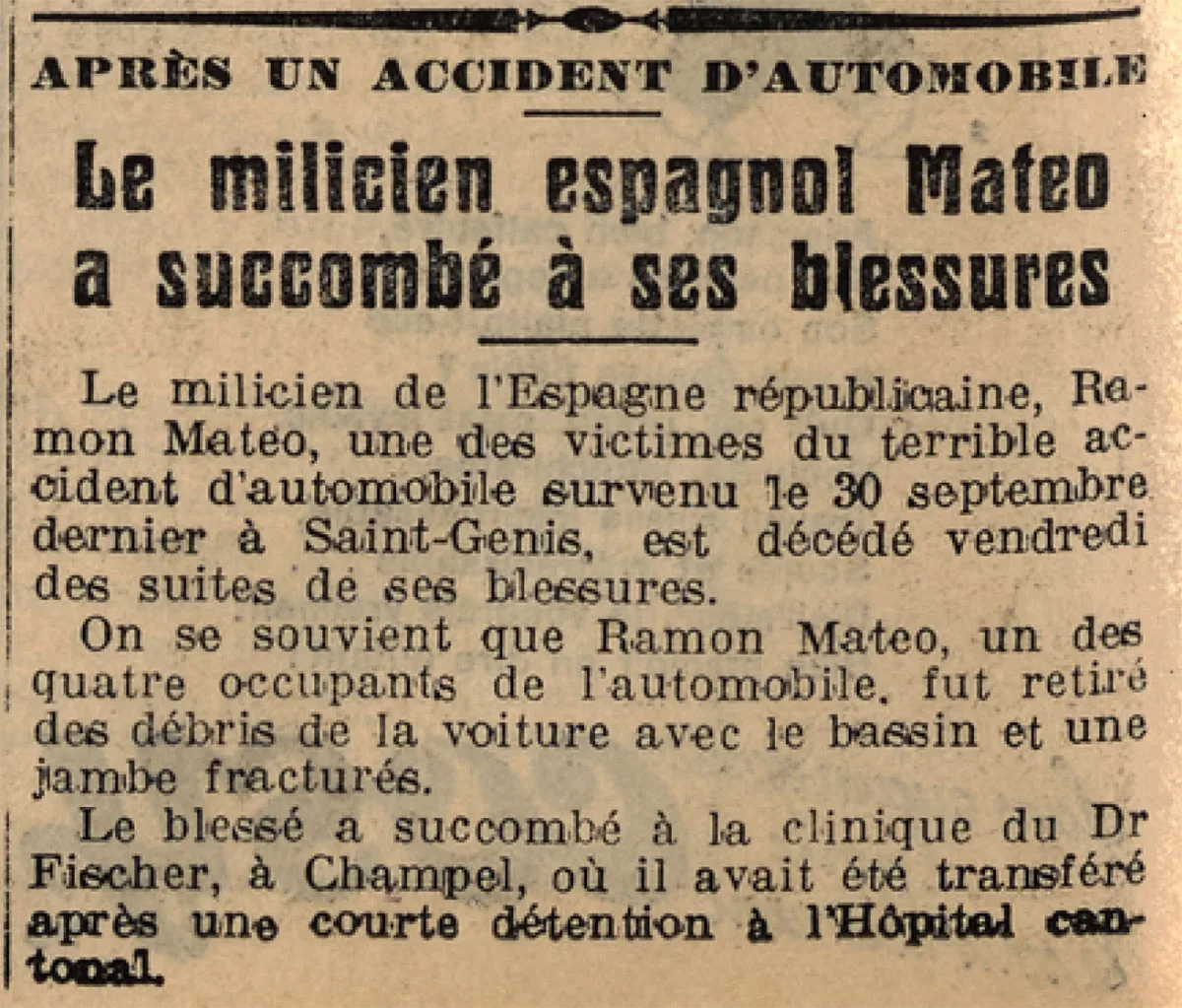
The seriously injured Ramón Mateo, however, remained in Geneva. At the Les Arolles clinic, he was treated by Dr Roger Fischer, a prominent member of Geneva’s political left and a supporter of the Spanish Republic. Despite these efforts, the Catalan anarchist died of an embolism on 4 December 1936. Following the cremation, Lucien Tronchet handed Mateo’s ashes over to his family in Spain. These tragic events did not prevent Tronchet from maintaining his contacts with the Catalan anarchists and organising further arms shipments to Barcelona.
Newspaper report on Ramón Mateo’s death in the Tribune de Genève, 5 December 1936.
Newspaper report on Ramón Mateo’s death in the Tribune de Genève, 5 December 1936. e-newspaperarchives
The ‘Mateo affair’ illustrates the political and diplomatic challenges created by the uprising of a section of the Spanish military. Yet the presence of such a large crowd at the funeral of a Spanish anarchist also reflected the powerful emotions stirred across Europe by the German and Italian air raids on Madrid. From November 1936 onwards, the Spanish capital was subjected to systematic bombardment, with no regard for the civilian population.
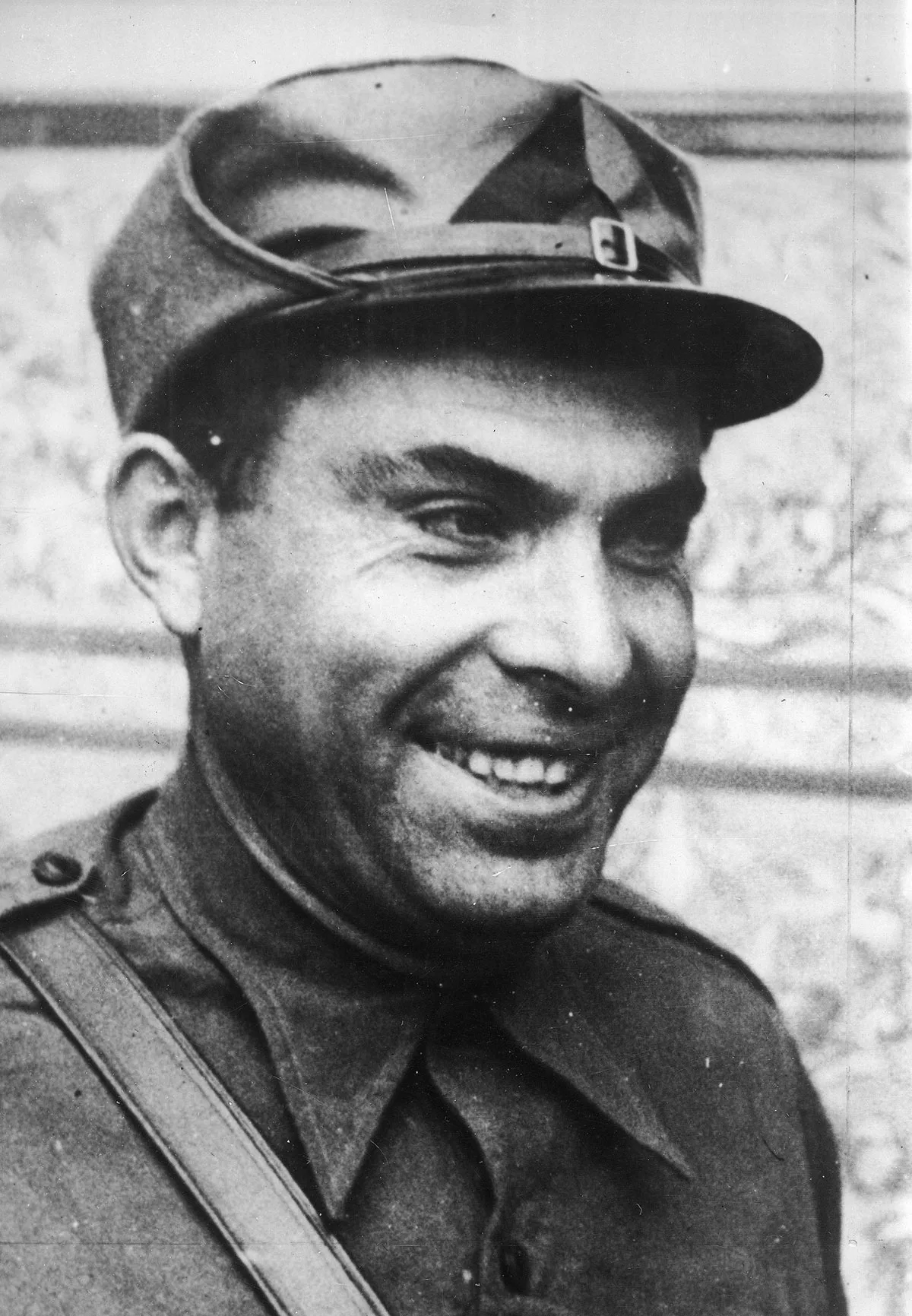
The strong response to Mateo’s death in Geneva may also have stemmed from the shock felt in anarchist circles following the death of Buenaventura Durruti, an iconic figure in the Spanish anarchist movement. Durruti was fatally shot on 19 November while defending Madrid against Franco’s forces. Several hundred thousand people attended his funeral in Barcelona a few days later.
Buenaventura Durruti, photographed in 1936.
Buenaventura Durruti, photographed in 1936. Wikimedia
As the gathering for Mateo in Geneva demonstrates, funeral ceremonies can also convey a political message. It is worth remembering that, from August 1936 onwards, the federal and cantonal authorities had imposed considerable restrictions on public demonstrations in support of the Spanish Republic. Such gatherings were generally permitted only in halls and under strict surveillance. Against this backdrop, Mateo’s funeral may be regarded as one of the most significant outdoor public demonstrations held in Switzerland in support of Republican Spain during the Spanish Civil War.
Geneva’s entire political left paid its last respects to Ramón Mateo on 5 December 1936.
Geneva’s entire political left paid its last respects to Ramón Mateo on 5 December 1936. Collège du Travail

International conference on the Spanish Civil War

17 July 2026 marks the 90th anniversary of the putsch by high-ranking generals against the second Spanish Republic. To mark the occasion, the Swiss Social Archives, St. Gallen University of Teacher Education and the universities of Bern, Fribourg, Geneva and Zurich plus Humboldt University of Berlin are organising an international conference “Ninety Years Since the Spanish Civil War. Experiences, Memories, Concepts (1936–2026)” at the Social Archives in Zurich on 19 and 20 November 2026. Both the conference and the evening lecture are open to the public. Further information is available here: Ninety Years Since the Spanish Civil War
Further posts