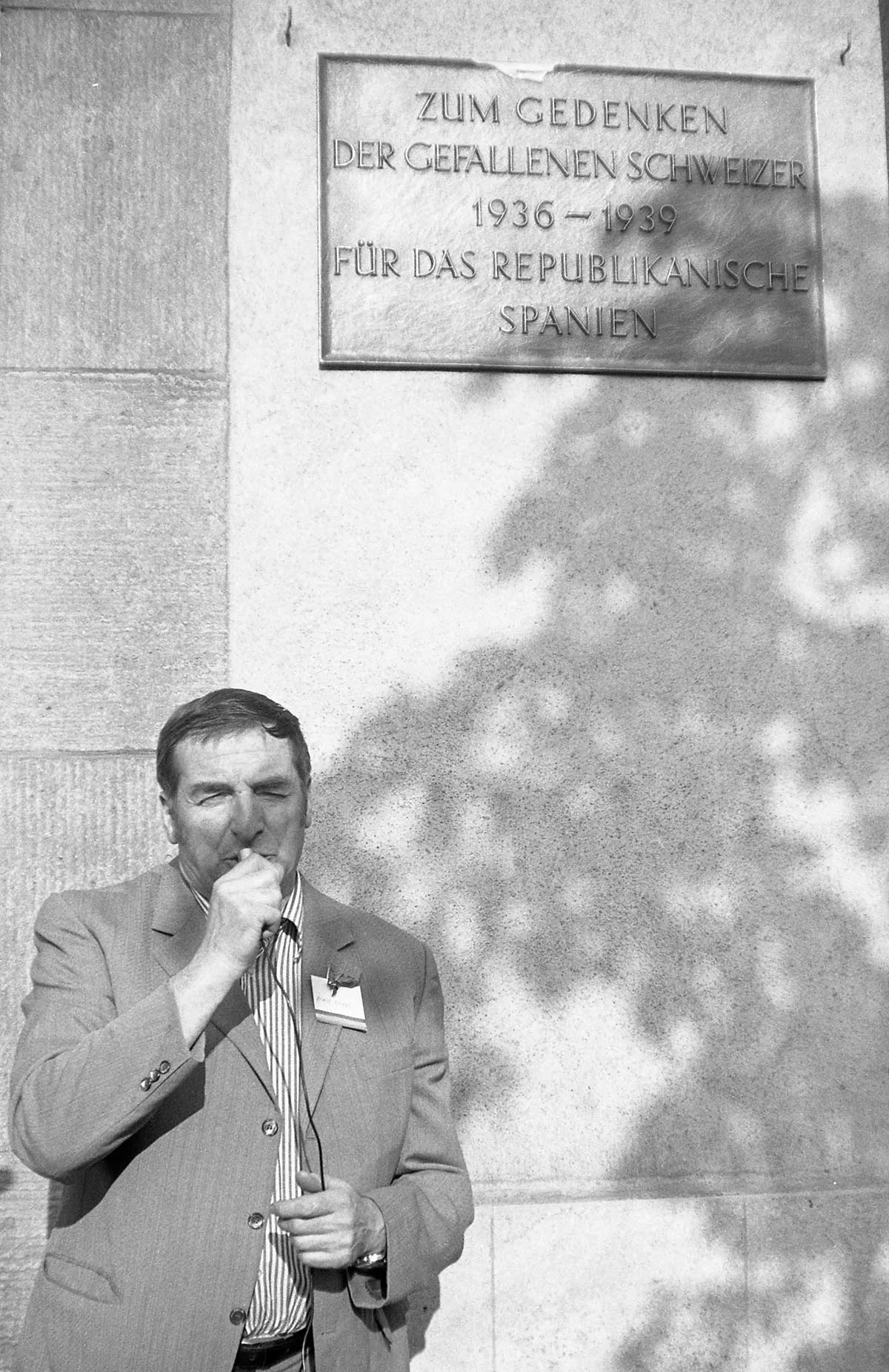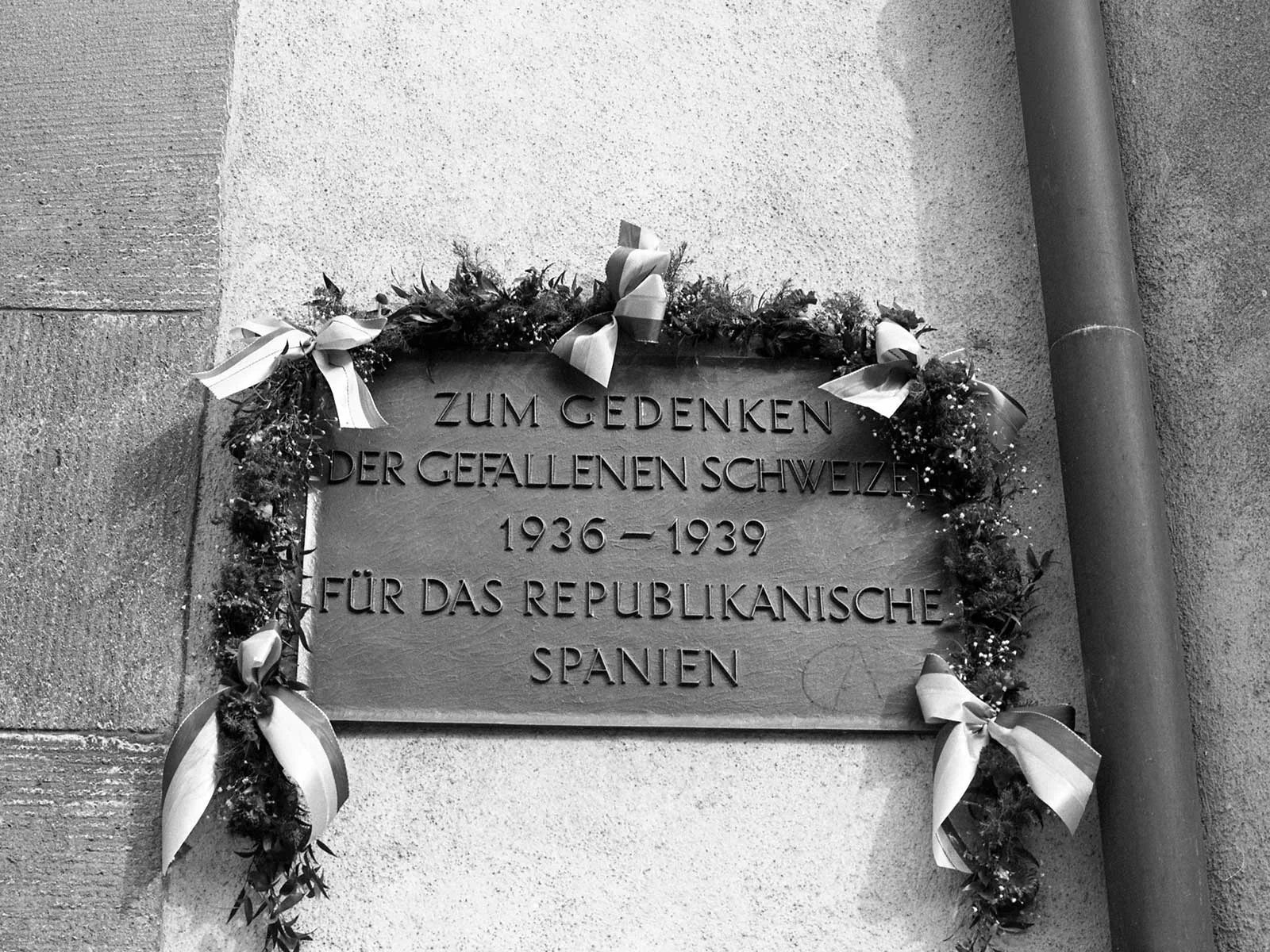
In October 1976, a commemorative plaque was inaugurated in Zurich, dedicated to the fallen Swiss who had fought for the Spanish Republic.
In October 1976, a commemorative plaque was inaugurated in Zurich, dedicated to the fallen Swiss who had fought for the Spanish Republic. Swiss Social Archives

Commemorating the Swiss who fought for Spain

In 1976, members of the association for Swiss veterans of the Spanish Civil War (1936–1939) unveiled a commemorative plaque in Zurich for the fallen fighters. This was the first small step towards official recognition.

Moisés Prieto

Moisés Prieto

Moisés Prieto is a research associate at Humboldt University of Berlin and researches dictatorship and cultures of military violence.
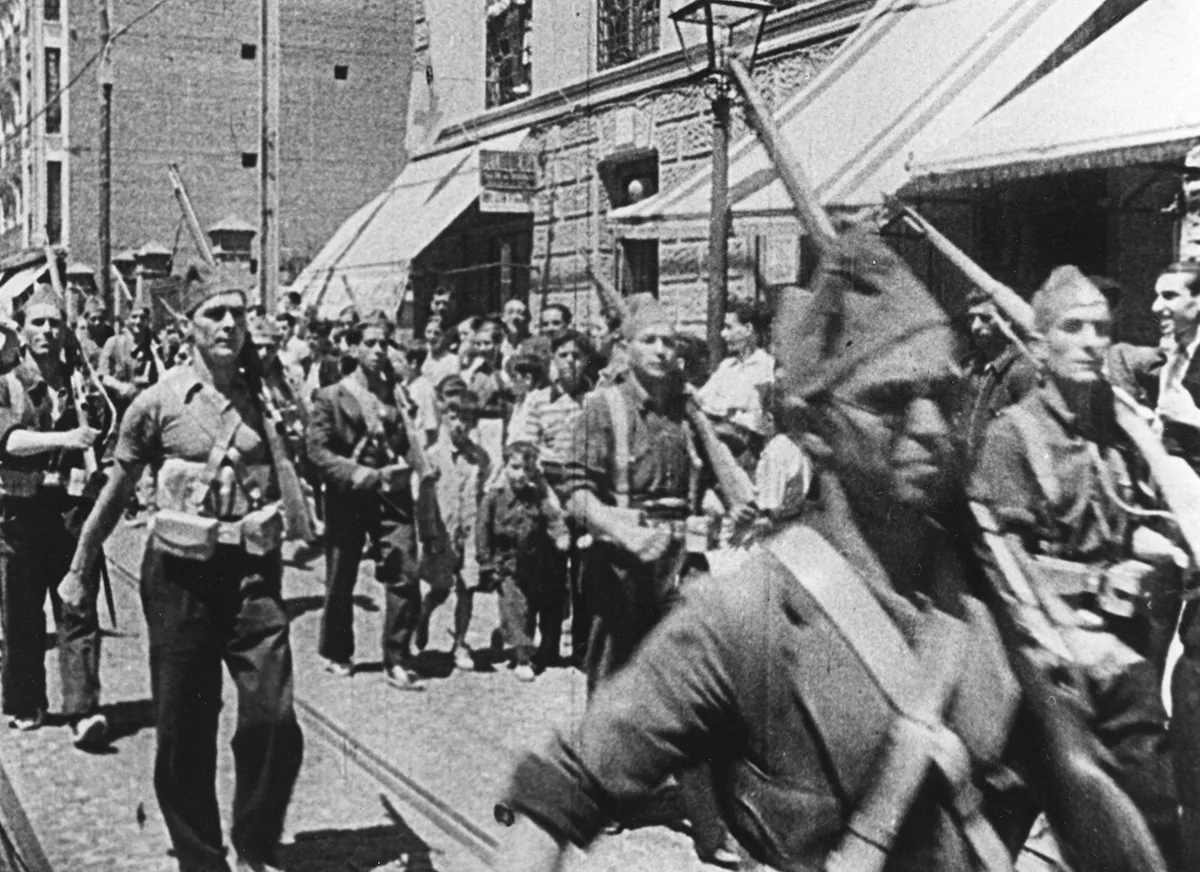
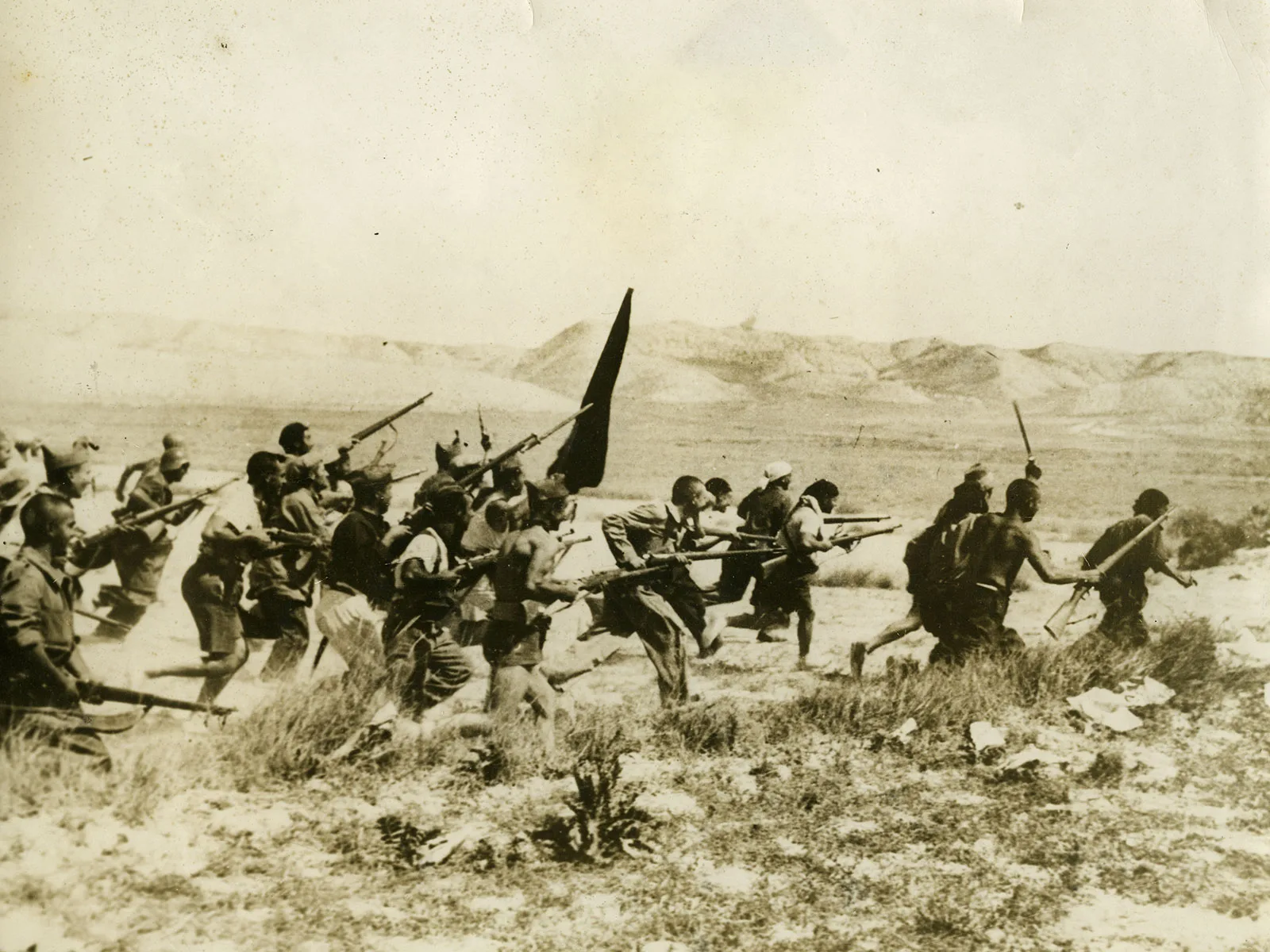
By autumn 1938, after more than two years of resistance against the troops under General Francisco Franco, the defeat of the Spanish Republic was foreseeable. With around a quarter of the just under 800 Swiss volunteer fighters in Spain having fallen or died as a result of injury or disease, the returnees faced an uncertain future. The Swiss military tribunals accused them, among other things, of having breached Article 94 of the Military Penal Code (prohibition against serving in a foreign military). Besides the differing lengths of incarceration – ranging from less than a month to over two years – the majority of these Spanish Civil War fighters were also stripped of their civil rights, such as their right to vote, for up to five years.
Many people from Switzerland joined the International Brigades and fought against Franco’s troops in Spain between 1936 and 1939.
Many people from Switzerland joined the International Brigades and fought against Franco’s troops in Spain between 1936 and 1939. Swiss Social Archives
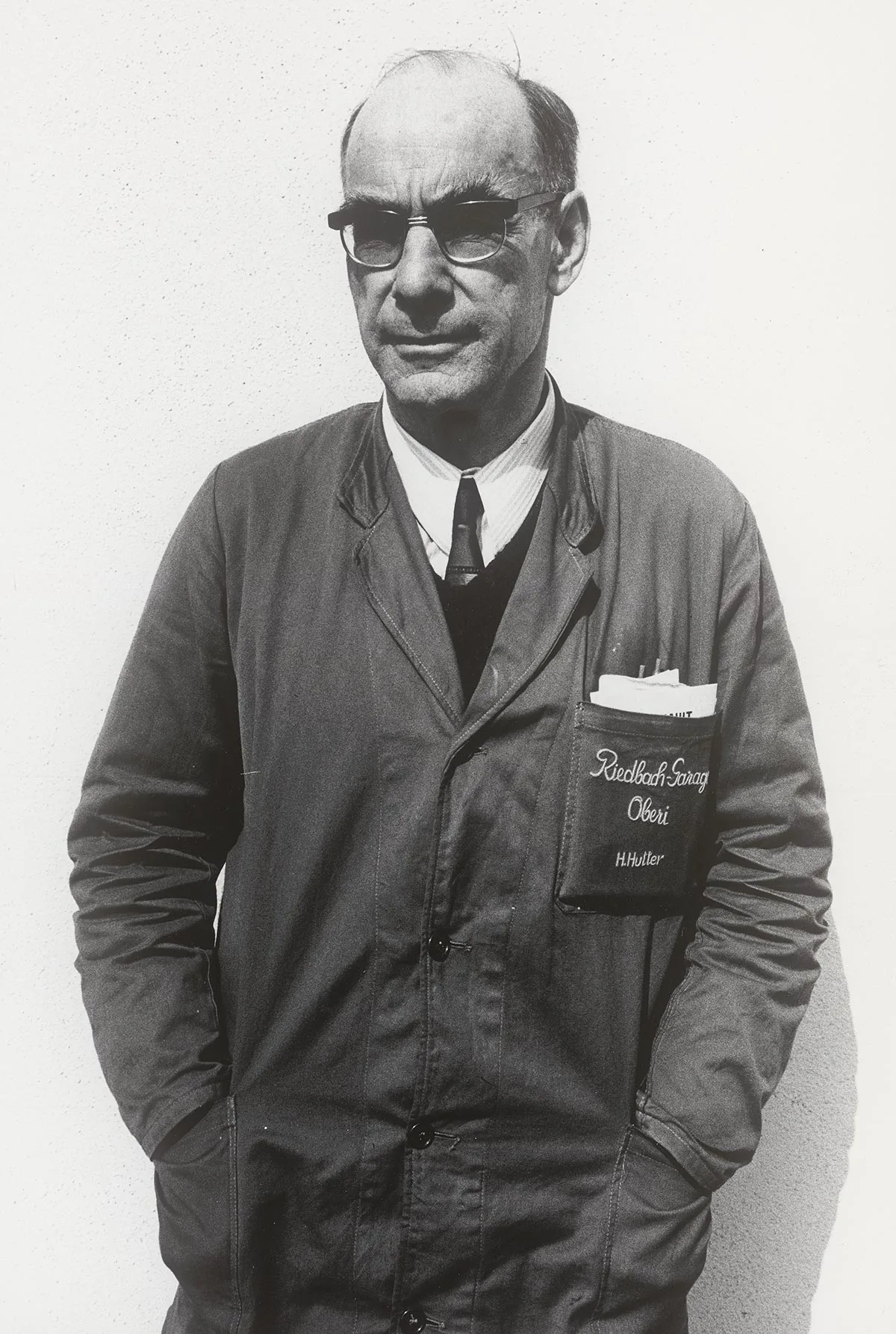
The humiliation also played out in public. The former volunteers were branded ‘extremists’ or ‘Spanienfahrer’ by the centrist and right-wing conservative press for having travelled to Spain to fight. The term ‘Spanienfahrer’ referred to the mercenary tradition of earlier times, when people had fought in the services of European rulers for money. Because of this public ostracism and stigma, it seems understandable that many former Spanish Civil War fighters, such as Lucien Bavaud from Vaud and Hans Hutter from Winterthur, kept their mission secret for a long time.
Former Spanish Civil War fighter Hans Hutter, photographed in the 1970s.
Former Spanish Civil War fighter Hans Hutter, photographed in the 1970s. Swiss Social Archives
Whether they were actual communists or general anti-fascist combatants, the former fighters in the Spanish Civil War struggled to gain a foothold in post-war Switzerland. In a politically broad alliance of liberalism, conservatism and social democracy, the land of spiritual defence of the nation had declared anti-communism the official doctrine and branded communists enemies of the state. In the following years, some former Spanish Civil War fighters were closely monitored by the political police (state security), placed on file, subjected to postal surveillance, or had their phones tapped. As early as 1939, feminist Regina Kägi-Fuchsmann noted that: “Police enquiries about the conduct of returnees who are employed have caused many dismissals as bosses don’t want to have to deal constantly with the police.” The landlord of one former fighter and communist, Wilhelm Wyss from Chur, was even compelled to evict him from his home in the Solothurn town of Grenchen.
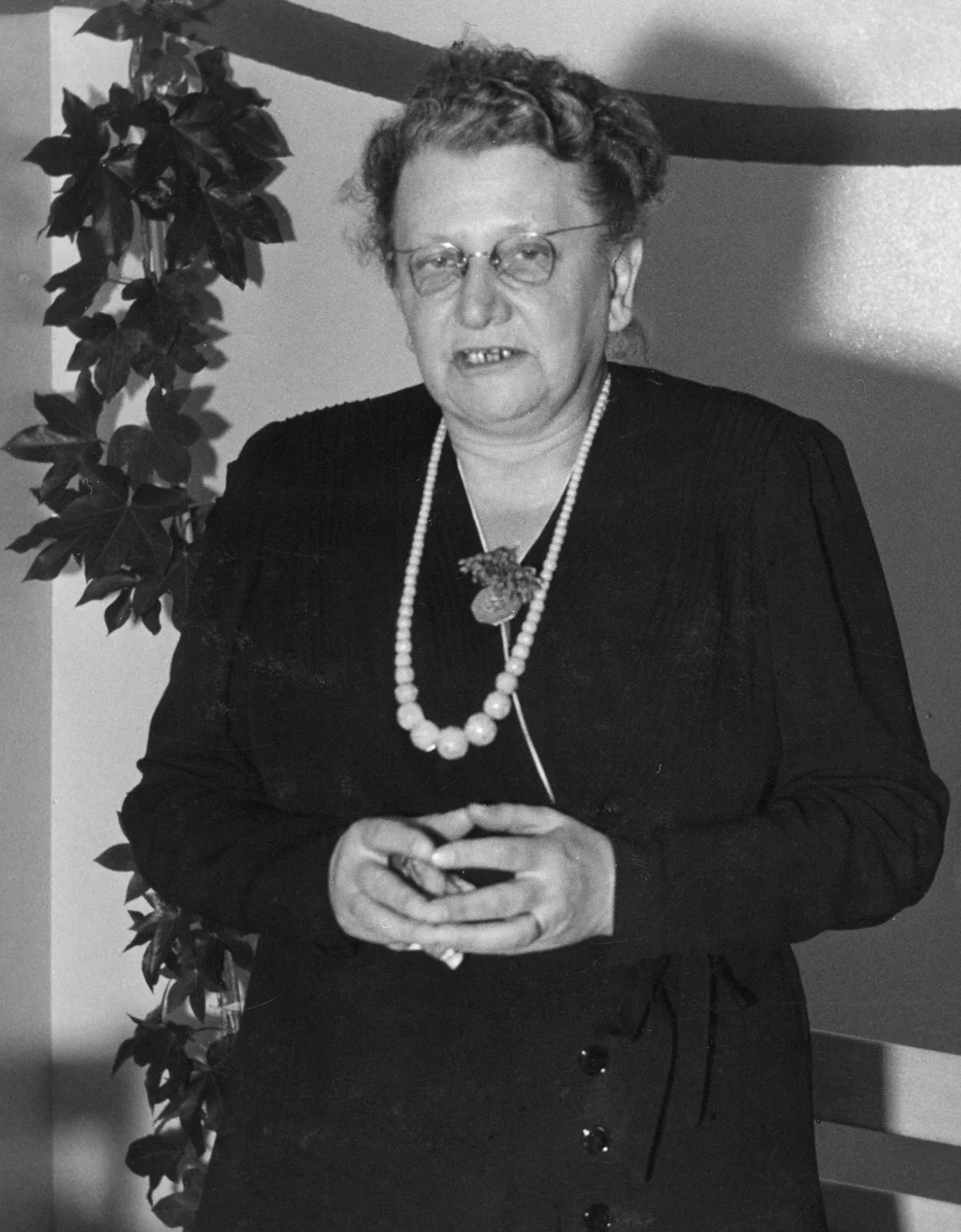
Early on, feminist Regina Kägi campaigned hard for the rights and social reintegration of former volunteer fighters.
Early on, feminist Regina Kägi campaigned hard for the rights and social reintegration of former volunteer fighters. Swiss Social Archives
Because they had a criminal record, the Spanish Civil War fighters faced many obstacles and, for example, were unable to enter public service. For many, becoming self-employed was the only way they could earn a decent living. Emil Hächler from Aargau became a second-hand goods dealer, Otto Brunner and Ernst (known as ‘Johnny’) Linggi opened a tobacconist shop and an antique bookshop respectively in Zurich-Aussersihl, while Hans Hutter and his brothers set up a garage in Oberwinterthur. Ernst Stauffer, who was a Social Democrat from Biel, later even had a political career, and ultimately held a seat in Bern’s cantonal parliament. Others, meanwhile, ended up in precarious situations, relying on the social services in their community, on support from the medical aid association Centrale Sanitaire Suisse or the Swiss Workers’ Relief Agency (SAH), set up in 1936.
In 1939, Brunner and Linggi set up an association for former volunteer fighters in the Spanish Civil War (Interessengemeinschaft der Schweizer Spanienfreiwilligen). Their aim was to continue the fight against the Franco regime and to support the Spanish Republic, to show solidarity with republican Spain, to build and maintain camaraderie between veterans in Switzerland and those in other countries, and last but not least, to promote official acknowledgement of the Swiss fighters’ commitment to helping combat fascism and support for democracy. Alongside this was a determination to preserve the memory of and honour their fallen comrades. The relatively high percentage of communists in the ranks of the Spanish Civil War volunteers – around 60% were members of the Communist Party of Switzerland (KPS) or associated organisations – meant the association was swept into the ban on the KPS by the Federal Council in 1940, and the association itself was banned in 1941. It wasn’t until the summer of 1946 that it was reformed with a new name, again with Brunner and Linggi at the helm. Both men were also members of the Swiss Party of Labour (PdA), the successor organisation of the KPS, which was also set up in 1944. It is therefore hardly surprising that the association also became a target of the political police.
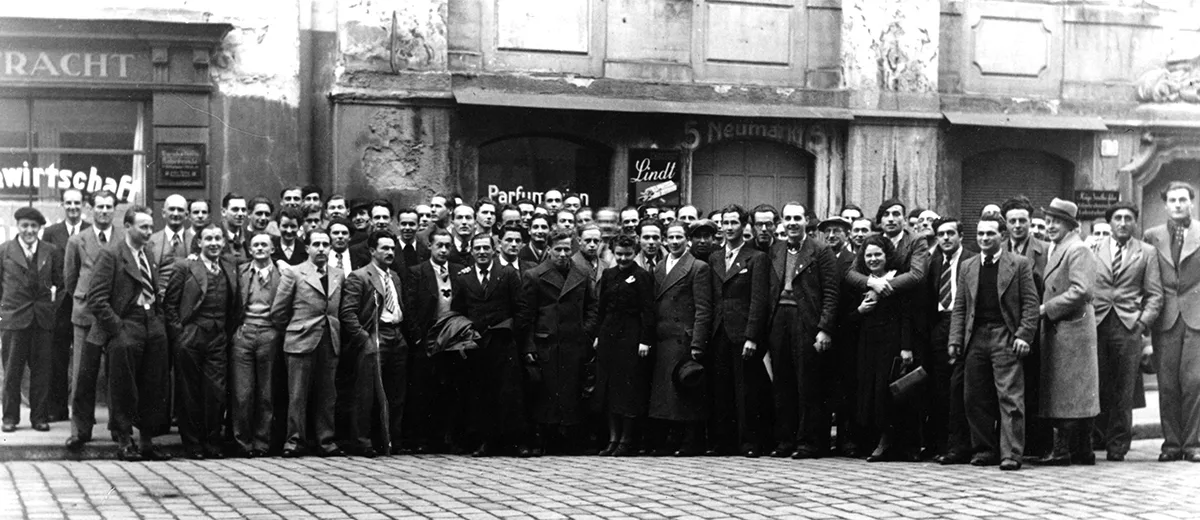
Swiss men and women who had fought in Spain met in Zurich in 1939.
Swiss men and women who had fought in Spain met in Zurich in 1939. Swiss Social Archives
Among the most important solidarity campaigns run by the association were the appeals for donations for the ‘Varsovie’ hospital in Toulouse, south of France, which had been set up by Spanish resistance fighters in 1944 to treat injured anti-Franco militants. The association also enabled the children of exiled Spaniards to spend holidays with Swiss host families. In the subsequent years, the its activities focused on financial support for political prisoners in Spain and their relatives. The association also exchanged letters with veterans’ associations in other countries, such as the Lincoln Brigade (US) and the ones in Italy, and West and East Germany.

Back to Spain

The social stigmatisation and economic hardship shaped key decisions in the lives of former Spanish Civil War volunteers. A certain nostalgia for Spain was evident, for example, in the battle songs sung and Spanish dishes eaten at their annual reunions. In others, their ‘longing for Spain’ was expressed in much more overt ways. Hans Hutter travelled with his wife to Spain in 1950 – notably, at a time when the Franco regime was still internationally ostracised – and visited the spot where his brother Max had fallen in 1937. Others, meanwhile, lived in Spain before the regime had ended, such as Karl (‘Carlos’) Brunner and Rudolf Sigg who had been detained in a Francoist concentration camp in the 1940s, or the communist Werner Nef, co-founder of the PdA, who moved to Spain in 1967 and died there in 1980. In other words, these Spanish Civil War fighters took a considerable risk to relive the memory of their time in Spain.
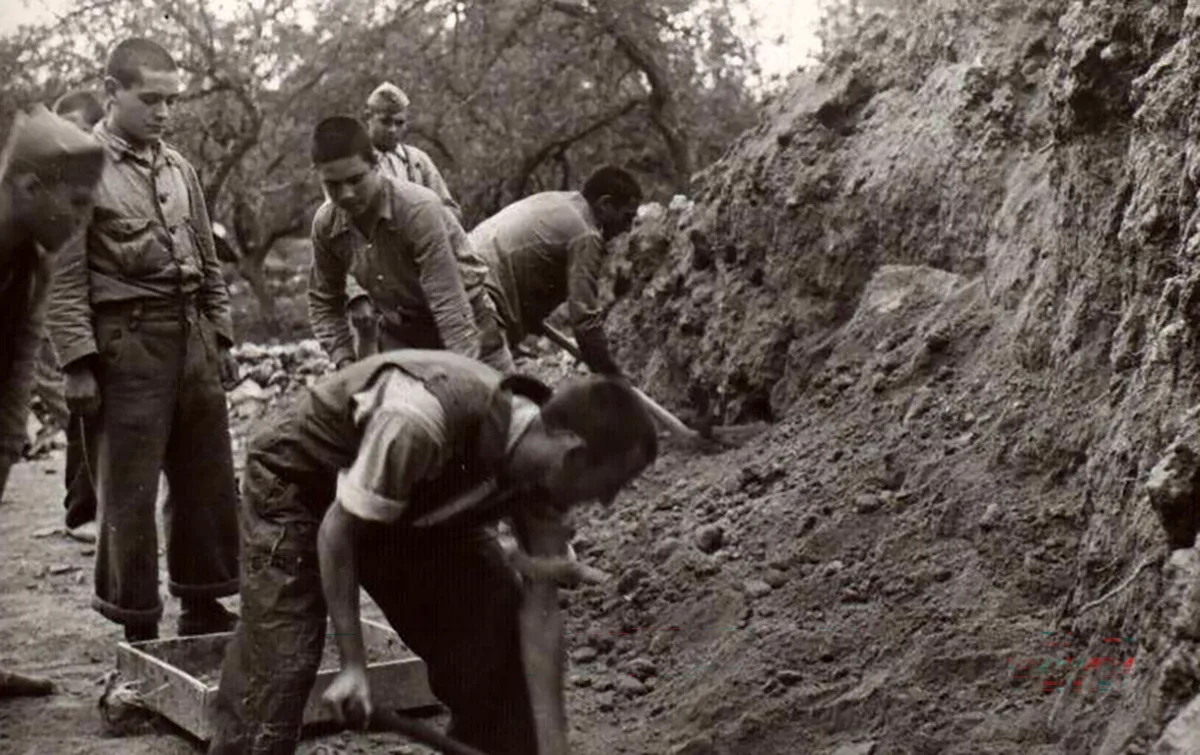
Life in Franco’s internment camps, such as San Pedro de Cardeña depicted here, was hard. The photo was taken in 1938 and shows international prisoners at work. Some Swiss volunteers also languished in such camps.
Life in Franco’s internment camps, such as San Pedro de Cardeña depicted here, was hard. The photo was taken in 1938 and shows international prisoners at work. Some Swiss volunteers also languished in such camps. Biblioteca Nacional de España
From the early 1970s, the tide turned for the former volunteer fighters. The Spanish Civil War was then rediscovered by Swiss historians. Shortly afterwards came the release of Richard Dindo’s 1974 documentary film Schweizer im Spanischen Bürgerkrieg (‘Swiss in the Spanish Civil War’), in which a number of former volunteers, such as Linggi and Hutter, present their side of the story. Dindo later wrote about the film: “What mattered to me, first and foremost, was simply to make this film a ‘memorial’ to these men and women, regardless of their party politics.”
Richard Dindo’s 1974 film (full-length version). YouTube
In the veterans’ association, the question of a real-life memorial was gaining momentum. In October 1973, Linggi had asked the City Council of Zurich for permission to install a commemorative plaque on public ground. He wanted it in Zurich, he said, due to the large number of Spanish Civil War volunteers from the city. In July of the following year, the authorities agreed. The City Council had consulted with the Board of the Volkshaus Foundation in order to mount the plaque in a suitable location. The association opted for a bronze plaque, which was to be mounted on the façade on Stauffacherstrasse. The unveiling was scheduled for 2 October 1976, as the highlight of the fourth congress of the association, which ran until the following day. The date was chosen to coincide with the 40th anniversary of the founding of the International Brigades.
According to the report by the political police, around 150 people attended the inauguration. Ernst Linggi opened the celebration with a speech in which he interpreted the commemorative plaque as a memorial to the living. City councillor and SP member Jürg Kaufmann conveyed the greetings of the city government. This was followed by two short addresses by two SP members of the National Council: Ezio Canonica, president of the Swiss Trade Union Confederation, and Rudolf Welter, president of the Volkshaus Foundation. Writer Max Frisch also took part in the celebration. Frisch had dealt with the subject of Spanish Civil War fighters in his novel Stiller in 1954, using the example of fictional sculptor Anatol Stiller.
Ernst Linggi opened the inauguration ceremony when the commemorative plaque was mounted in Zurich.
Ernst Linggi opened the inauguration ceremony when the commemorative plaque was mounted in Zurich. Swiss Social Archives
It wasn’t only the choice of speakers that reflected a reconciliation between communists and social democrats. The brochure that the association published ahead of the event gave the impression of an equally matched, unified struggle between the two left-wing factions, although in reality there had been five times more communists than social democrats among the Swiss fighters. As a matter of fact, relations between the different political camps had often been strained since the civil war period.
In the subsequent years, the number of memorial events gradually increased, and Swiss television increasingly featured Spanish Civil War volunteer fighters in interviews and reports. After Spain adopted a democratic constitution in 1978, veterans could freely travel to the country whose freedom they had fought for and for which many of their comrades had fallen. “The generation of Spanish Civil War fighters is dying out,” said Max Frisch in his welcome address at the 50th anniversary of the start of the war in Spain. Yet, shortly before the association dissolved itself, one final major tribute took place in 1994 at Zurich's Stadthaus (town hall), featuring a multi-week exhibition and a lecture series.

International conference on the Spanish Civil War

17 July 2026 marks the 90th anniversary of the putsch by high-ranking generals against the second Spanish Republic. To mark the occasion, the Swiss Social Archives, St. Gallen University of Teacher Education and the universities of Bern, Fribourg, Geneva and Zurich plus Humboldt University of Berlin are organising an international conference “Ninety Years Since the Spanish Civil War. Experiences, Memories, Concepts (1936–2026)” at the Social Archives in Zurich on 19 and 20 November 2026. Both the conference and the evening lecture are open to the public. Further information is available here: Ninety Years Since the Spanish Civil War
Further posts